1. Search Result
Search Result
Results for "

transpeptidation

" in MedChemExpress (MCE) Product Catalog:

22

Inhibitors & Agonists

4

Peptides

6

Natural
Products

3

Isotope-Labeled Compounds

Cat. No. Product Name Target Research Areas Chemical Structure
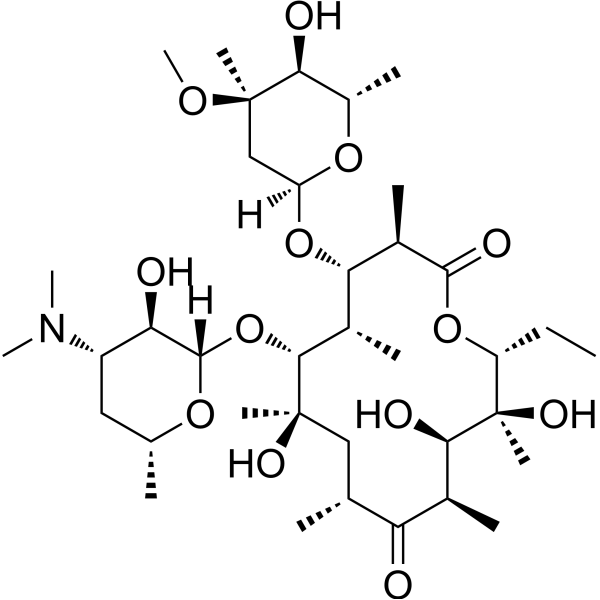
  • HY-B0220
    Erythromycin
    Maximum Cited Publications
    24 Publications Verification

    Bacterial Antibiotic DNA/RNA Synthesis Infection Cancer
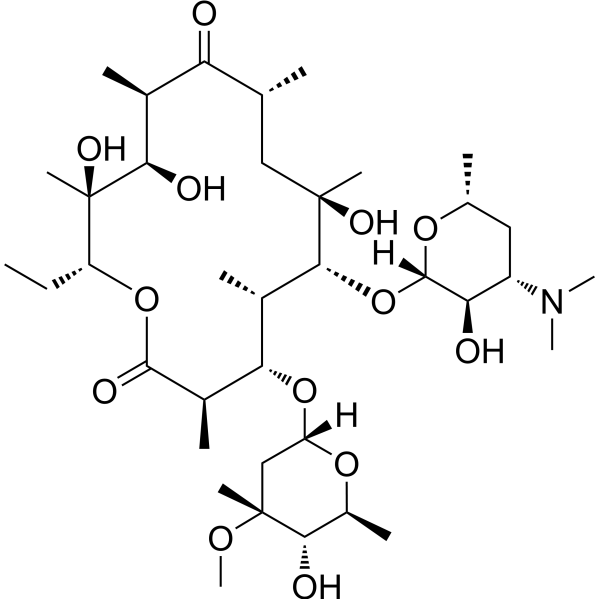
    Erythromycin is a macrolide antibiotic produced by actinomycete?Streptomyces erythreus?with a broad spectrum of antimicrobial activity. Erythromycin binds to bacterial 50S ribosomal subunits and inhibits?RNA-dependent protein synthesis?by blockage of transpeptidation and/or translocation reactions, without affecting synthesis of nucleic acid [1][2]. Erythromycin also exhibits antitumor and neuroprotective effect in different fields of research [3][4].
    Erythromycin
  • HY-B0220D
    Erythromycin thiocyanate
    Maximum Cited Publications
    24 Publications Verification

    Bacterial Antibiotic DNA/RNA Synthesis Infection Cancer
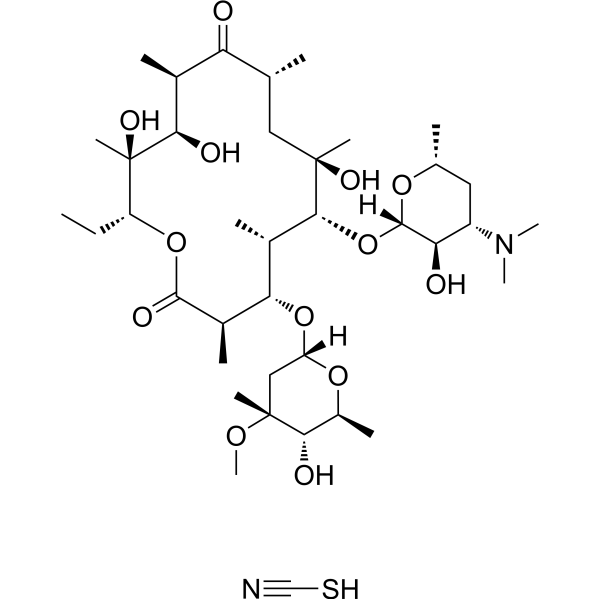
    Erythromycin thiocyanate is a macrolide antibiotic produced by actinomycete Streptomyces erythreus with a broad spectrum of antimicrobial activity. Erythromycin thiocyanate binds to bacterial 50S ribosomal subunits and inhibits RNA-dependent protein synthesis by blockage of transpeptidation and/or translocation reactions, without affecting synthesis of nucleic acid [1][2]. Erythromycin thiocyanate also exhibits antitumor and neuroprotective effect in different fields of research [3][4].
    Erythromycin thiocyanate
  • HY-B0220A
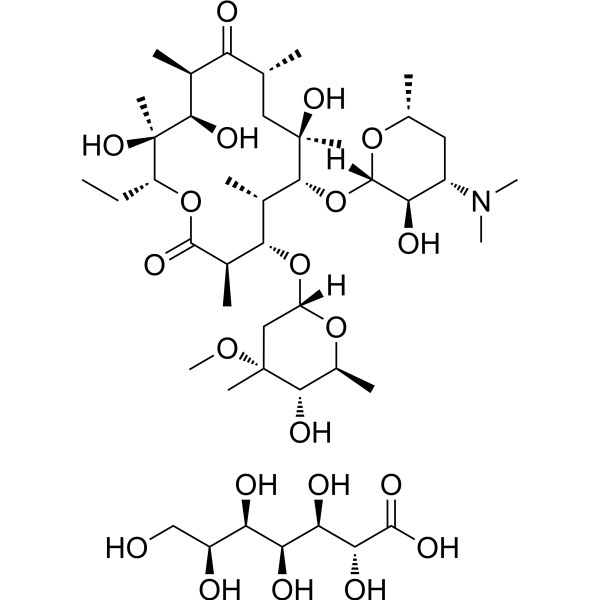
    Erythromycin lactobionate
    Maximum Cited Publications
    24 Publications Verification

    Antibiotic Bacterial DNA/RNA Synthesis Infection Cancer
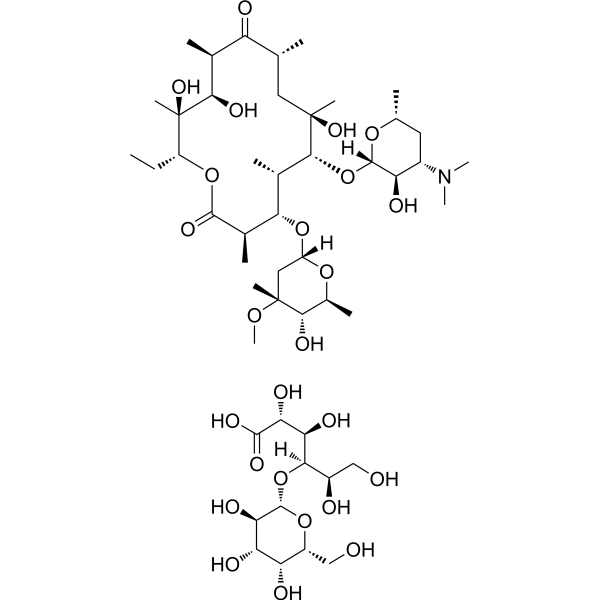
    Erythromycin lactobionate is a macrolide antibiotic produced by actinomycete Streptomyces erythreus with a broad spectrum of antimicrobial activity. Erythromycin lactobionate binds to bacterial 50S ribosomal subunits and inhibits RNA-dependent protein synthesis by blockage of transpeptidation and/or translocation reactions, without affecting synthesis of nucleic acid [1][2]. Erythromycin lactobionate also exhibits antitumor and neuroprotective effect in different fields of research [3][4].
    Erythromycin lactobionate
  • HY-W015450

    D-Alanyl-D-alanine; H-D-Ala-D-Ala-OH

    Endogenous Metabolite Others
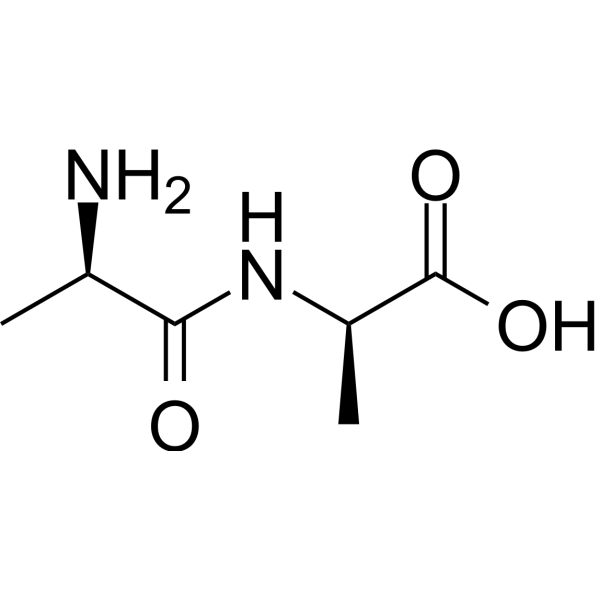
    D-Ala-D-Ala is a bacterial endogenous metabolite. D-Ala-D-Ala constitutes the terminus of the peptide part of the peptidoglycan monomer unit and is involved in the transpeptidation reaction as the substrate. D-Ala-D-Ala is catalyzed by D-Alanine-D-Alanine ligase .
    D-Ala-D-Ala
  • HY-13588

    SCE-129 sodium

    Bacterial Antibiotic Infection
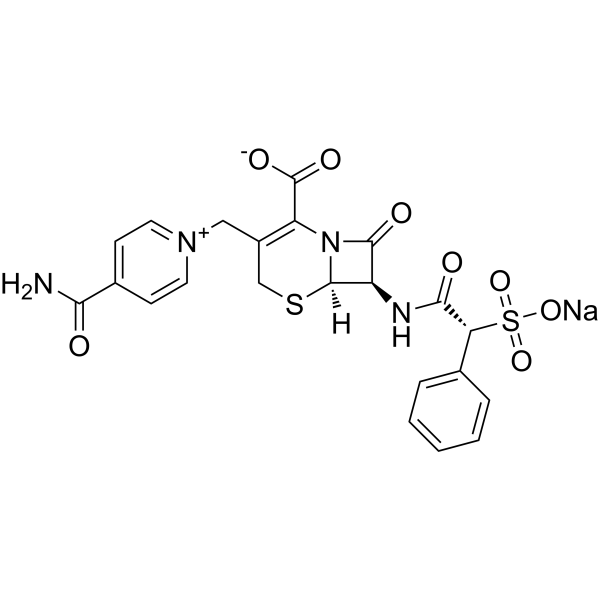
    Cefsulodin (SCE-129) sodium is a third generation β lactam antibiotic and member of the cephems subgroup of antibiotics. Cefsulodin sodium inhibits cell wall synthesis by competitively inhibiting penicillin binding protein (PBP) cross-linking and transpeptidation of peptidogly. Cefsulodin sodium is a potent tyrosine phosphatase inhibitor against mPTPB, a virulent phosphatase from Mycobacterium tuberculosis, with an IC50 value of 16 μM .
    Cefsulodin sodium
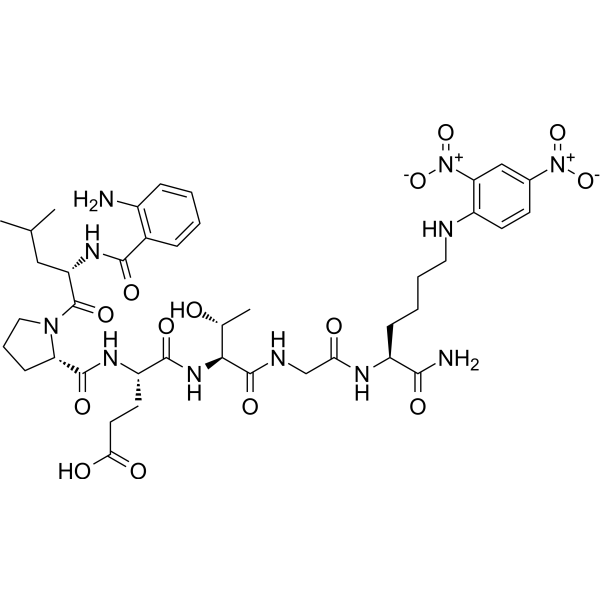
  • HY-P1883A

    Fluorescent Dye Infection
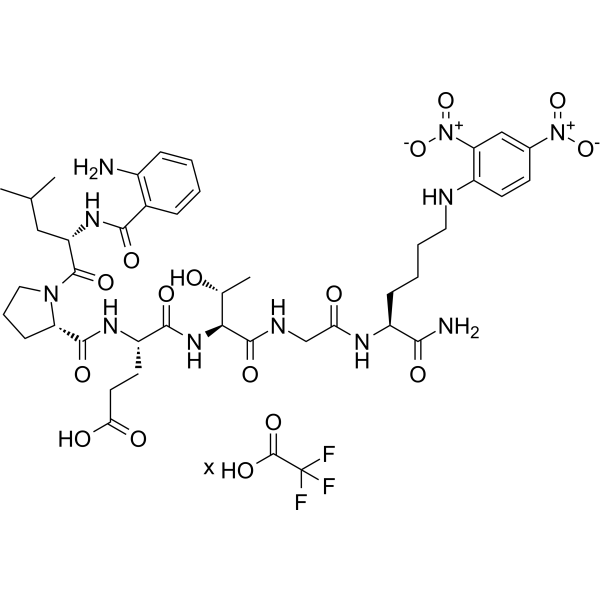
    Bacterial Sortase Substrate III, Abz/DNP TFA is a fluorescent peptide substrate. Bacterial Sortase Substrate III, Abz/DNP TFA undergoes cleavage catalyzed by Staphylococcus aureus sortase A (SrtAΔN24) and Streptococcus pyogenes sortase A (SrtAΔN81), and catalyzes the formation of an amide bond between the carboxyl group of threonine and the amino group of the cell wall cross-bridge. Cleavage of this substrate can be detected at Ex/Em=320 nm/420 nm .
    Bacterial Sortase Substrate III, Abz/DNP TFA
  • HY-138053

    Ristomycin III

    Antibiotic Cardiovascular Disease Infection
    Ristocetin A sulfate (Ristomycin III) is a glycopeptide antibiotic that binds to von Willebrand factor (VWF) and bacterial cell wall components. Ristocetin A sulfate interferes with the biosynthesis of bacterial peptidoglycan by inhibiting transpeptidation. As an inducer of platelet adhesion and aggregation, Ristocetin A sulfate drives conformational changes by binding to the A1 domain of VWF, thereby activating downstream signaling pathways and promoting cytoskeletal rearrangement. Ristocetin A sulfate not only enhances platelet adhesion and spreading on immobilized VWF, but also induces the formation of asymmetric dimers with anticooperativity between platelets and plasma VWF. Ristocetin A sulfate is widely used in studies related to thromboembolic diseases and bacterial infections .
    Ristocetin A sulfate
  • HY-B0220S1

    Isotope-Labeled Compounds Bacterial Antibiotic Infection
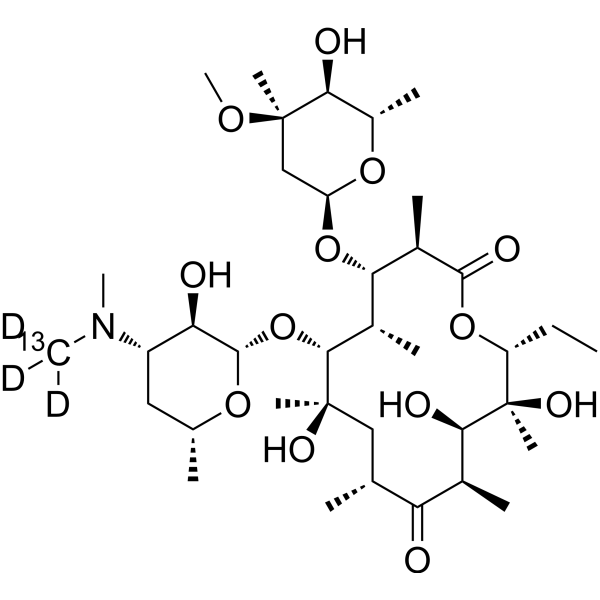
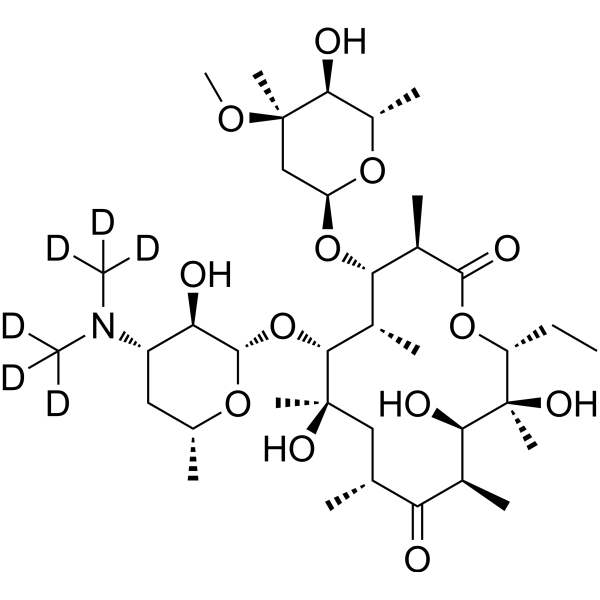
    Erythromycin- 13C,d3 is the 13C- and deuterium labeled Erythromycin. Erythromycin is a macrolide antibiotic produced by actinomycete?Streptomyces erythreus?with a broad spectrum of antimicrobial activity. Erythromycin acts by binding to bacterial 50S ribosomal subunits and inhibits?RNA-dependent protein synthesis?by blockage of transpeptidation and/or translocation reactions, without affecting synthesis of nucleic acid .
    Erythromycin-13C,d3
  • HY-B0220S2

    Bacterial DNA/RNA Synthesis Antibiotic Infection
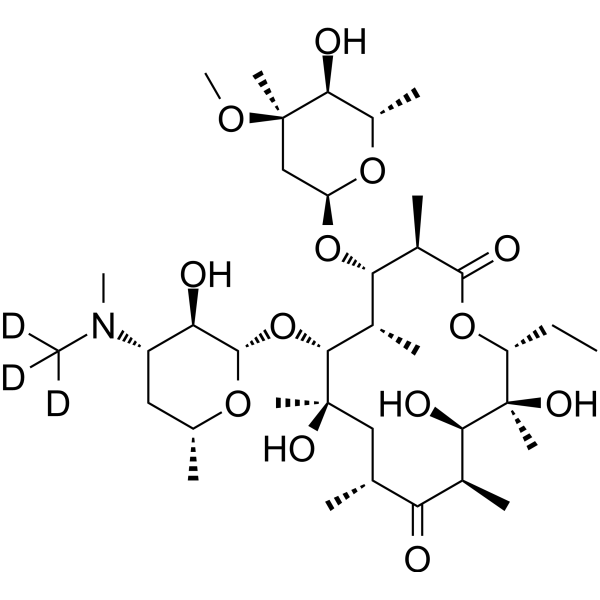
    Erythromycin-d3 is the deuterium labeled Erythromycin . Erythromycin is a macrolide antibiotic produced by actinomycete Streptomyces erythreus with a broad spectrum of antimicrobial activity. Erythromycin binds to bacterial 50S ribosomal subunits and inhibits RNA-dependent protein synthesis by blockage of transpeptidation and/or translocation reactions, without affecting synthesis of nucleic acid. Erythromycin also exhibits antitumor and neuroprotective effect in different fields of research .
    Erythromycin-d3
  • HY-160776

    ADC Linker Cancer
    Diazido-methyltetrazine tri-arm is an ADC linker that can be used to synthesize antibody-drug conjugates (ADCs). Diazido-methyltetrazine tri-arm can be applied to the research of refractory breast cancer .
    Diazido-methyltetrazine tri-arm
  • HY-B0220B

    Antibiotic Bacterial Infection Cancer
    Erythromycin gluceptate is a macrolide antibiotic produced by actinomycete Streptomyces erythreus with a broad spectrum of antimicrobial activity. Erythromycin gluceptate binds to bacterial 50S ribosomal subunits and inhibits RNA-dependent protein synthesis by blockage of transpeptidation and/or translocation reactions, without affecting synthesis of nucleic acid [1][2]. Erythromycin gluceptate also exhibits antitumor and neuroprotective effect in different fields of research [3][4].
    Erythromycin (gluceptate)
  • HY-P1883

    Fluorescent Dye Infection
    Bacterial Sortase Substrate III, Abz/DNP is a fluorescent peptide substrate. Bacterial Sortase Substrate III, Abz/DNP undergoes cleavage catalyzed by Staphylococcus aureus sortase A (SrtAΔN24) and Streptococcus pyogenes sortase A (SrtAΔN81), and catalyzes the formation of an amide bond between the carboxyl group of threonine and the amino group of the cell wall cross-bridge. Cleavage of this substrate can be detected at Ex/Em=320 nm/420 nm .
    Bacterial Sortase Substrate III, Abz/DNP
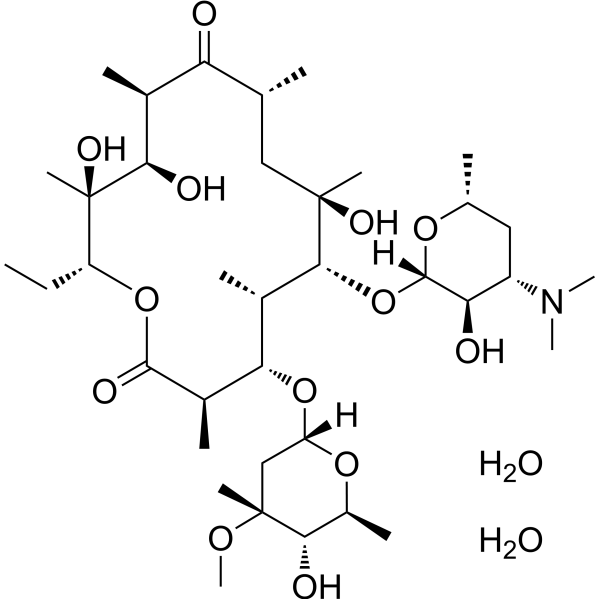
  • HY-B0220E

    Bacterial Antibiotic DNA/RNA Synthesis Infection Cancer
    Erythromycin A dihydrate is a macrolide antibiotic produced by actinomycete Streptomyces erythreus with a broad spectrum of antimicrobial activity. Erythromycin A dihydrate binds to bacterial 50S ribosomal subunits and inhibits RNA-dependent protein synthesis by blockage of transpeptidation and/or translocation reactions, without affecting synthesis of nucleic acid [1][2]. Erythromycin A dihydrate also exhibits antitumor and neuroprotective effect in different fields of research [3][4].
    Erythromycin A dihydrate
  • HY-108875

    Antibiotic Bacterial DNA/RNA Synthesis Infection Cancer
    Erythromycin stearate is a macrolide antibiotic produced by actinomycete Streptomyces erythreus with a broad spectrum of antimicrobial activity. Erythromycin stearate binds to bacterial 50S ribosomal subunits and inhibits RNA-dependent protein synthesis by blockage of transpeptidation and/or translocation reactions, without affecting synthesis of nucleic acid [1][2]. Erythromycin stearate also exhibits antitumor and neuroprotective effect in different fields of research [3][4].
    Erythromycin stearate
  • HY-B0220R
    Erythromycin (Standard)
    Maximum Cited Publications
    24 Publications Verification

    Reference Standards Bacterial Antibiotic DNA/RNA Synthesis Infection Cancer
    Erythromycin (Standard) is the analytical standard of Erythromycin. This product is intended for research and analytical applications. Erythromycin is a macrolide antibiotic produced by actinomycete?Streptomyces erythreus?with a broad spectrum of antimicrobial activity. Erythromycin binds to bacterial 50S ribosomal subunits and inhibits?RNA-dependent protein synthesis?by blockage of transpeptidation and/or translocation reactions, without affecting synthesis of nucleic acid . Erythromycin also exhibits antitumor and neuroprotective effect in different fields of research .
    Erythromycin (Standard)
  • HY-W015450R

    D-Alanyl-D-alanine (Standard); H-D-Ala-D-Ala-OH (Standard)

    Reference Standards Endogenous Metabolite Others
    D-Ala-D-Ala (Standard) is the analytical standard of D-Ala-D-Ala. This product is intended for research and analytical applications. D-Ala-D-Ala is a bacterial endogenous metabolite. D-Ala-D-Ala constitutes the terminus of the peptide part of the peptidoglycan monomer unit and is involved in the transpeptidation reaction as the substrate. D-Ala-D-Ala is catalyzed by D-Alanine-D-Alanine ligase .
    D-Ala-D-Ala (Standard)
  • HY-B0220S

    Bacterial Antibiotic Infection
    Erythromycin-d6 is the deuterium labeled Erythromycin. Erythromycin is a macrolide antibiotic produced by actinomycete?Streptomyces erythreus?with a broad spectrum of antimicrobial activity. Erythromycin acts by binding to bacterial 50S ribosomal subunits and inhibits?RNA-dependent protein synthesis?by blockage of transpeptidation and/or translocation reactions, without affecting synthesis of nucleic acid .
    Erythromycin-d6
  • HY-13588B

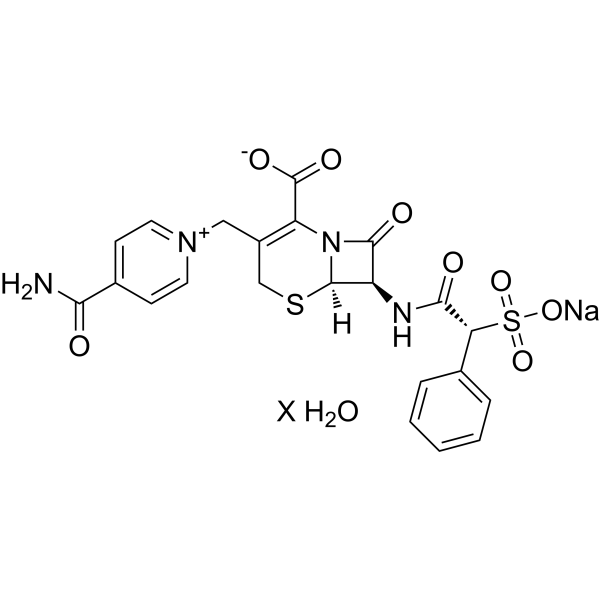
    SCE-129 sodium hydrate

    Antibiotic Bacterial Infection
    Cefsulodin (SCE-129) sodium is a third generation β lactam antibiotic and member of the cephems subgroup of antibiotics. Cefsulodin sodium inhibits cell wall synthesis by competitively inhibiting penicillin binding protein (PBP) cross-linking and transpeptidation of peptidogly. Cefsulodin sodium is a potent tyrosine phosphatase inhibitor against mPTPB, a virulent phosphatase from Mycobacterium tuberculosis, with an IC50 value of 16 μM .
    Cefsulodin sodium hydrate
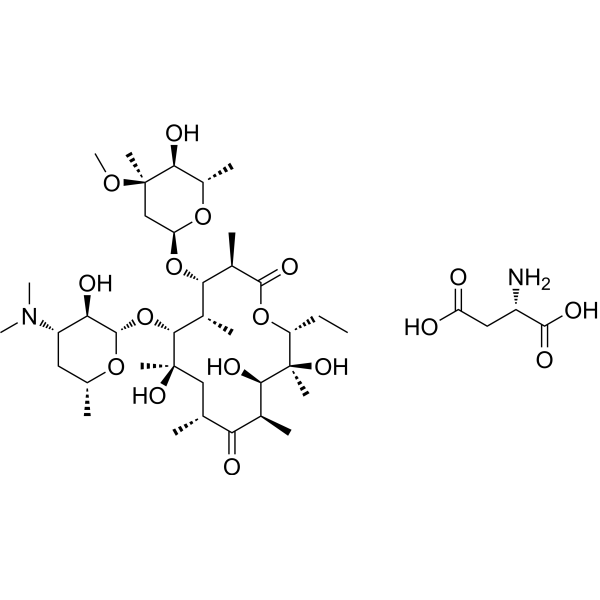
  • HY-B0220C

    Antibiotic Bacterial DNA/RNA Synthesis Infection Cancer
    Erythromycin aspartate is a macrolide antibiotic produced by actinomycete?Streptomyces erythreus?with a broad spectrum of antimicrobial activity. Erythromycin aspartate binds to bacterial 50S ribosomal subunits and inhibits?RNA-dependent protein synthesis?by blockage of transpeptidation and/or translocation reactions, without affecting synthesis of nucleic acid [1][2]. Erythromycin aspartate also exhibits antitumor and neuroprotective effect in different fields of research [3][4].
    Erythromycin (aspartate)
  • HY-B0220F

    Bacterial Antibiotic DNA/RNA Synthesis Infection Cancer
    Erythromycin glutamate is a macrolide antibiotic produced by actinomycete Streptomyces erythreus with a broad spectrum of antimicrobial activity. Erythromycin glutamate binds to bacterial 50S ribosomal subunits and inhibits RNA-dependent protein synthesis by blockage of transpeptidation and/or translocation reactions, without affecting synthesis of nucleic acid [1][2]. Erythromycin glutamate also exhibits antitumor and neuroprotective effect in different fields of research [3][4].
    Erythromycin (glutamate)
  • HY-13588R

    SCE-129 sodium (Standard)

    Reference Standards Bacterial Antibiotic Infection
    Cefsulodin (sodium) (Standard) is the analytical standard of Cefsulodin (sodium). This product is intended for research and analytical applications. Cefsulodin (SCE-129) sodium is a third generation β lactam antibiotic and member of the cephems subgroup of antibiotics. Cefsulodin sodium inhibits cell wall synthesis by competitively inhibiting penicillin binding protein (PBP) cross-linking and transpeptidation of peptidogly. Cefsulodin sodium is a potent tyrosine phosphatase inhibitor against mPTPB, a virulent phosphatase from Mycobacterium tuberculosis, with an IC50 value of 16 μM .
    Cefsulodin sodium (Standard)
  • HY-B0220DR

    Reference Standards Bacterial Antibiotic DNA/RNA Synthesis Infection Cancer
    Erythromycin (thiocyanate) (Standard) is the analytical standard of Erythromycin (thiocyanate). This product is intended for research and analytical applications. Erythromycin thiocyanate is a macrolide antibiotic produced by actinomycete Streptomyces erythreus with a broad spectrum of antimicrobial activity. Erythromycin thiocyanate binds to bacterial 50S ribosomal subunits and inhibits RNA-dependent protein synthesis by blockage of transpeptidation and/or translocation reactions, without affecting synthesis of nucleic acid[1][2]. Erythromycin thiocyanate also exhibits antitumor and neuroprotective effect in different fields of research[3][4].
    Erythromycin thiocyanate (Standard)

Inquiry Online

Your information is safe with us. * Required Fields.

Salutation


Country or Region *

Applicant Name *


Organization Name *

Department *


Email Address *


Product Name *

Cat. No.


Requested quantity *

Phone Number *


Remarks

Inquiry Online

Inquiry Information

Product Name:
Cat. No.:
Quantity:
MCE Japan Authorized Agent:

