1. Search Result
Search Result
Results for "

tryptophan derivative

" in MedChemExpress (MCE) Product Catalog:

29

Inhibitors & Agonists

1

Biochemical Assay Reagents

7

Peptides

6

Natural
Products

4

Isotope-Labeled Compounds

Cat. No. Product Name Target Research Areas Chemical Structure
  • HY-W142080

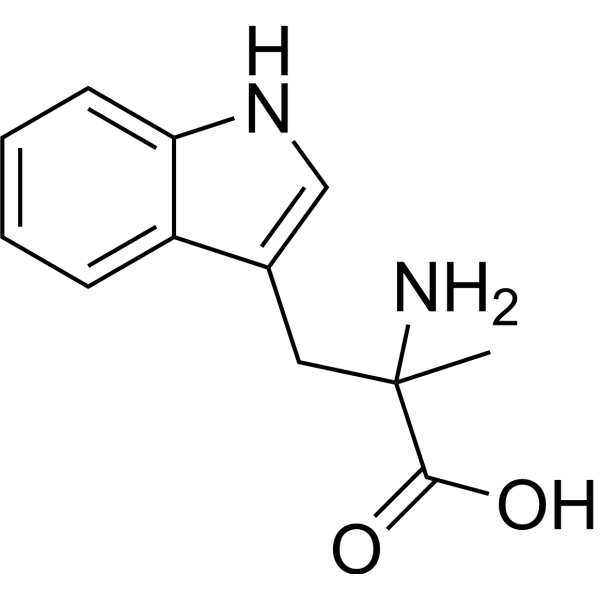
    α-Methyltryptophan

    mTOR Autophagy Apoptosis Amino Acid Derivatives Metabolic Disease Cancer
    α-Methyl-DL-tryptophan (α-Methyltryptophan), a tryptophan derivative, is a selective SLC6A14 blocker. In estrogen receptor (ER)-positive breast cancer cells, α-Methyl-DL-tryptophan inhibits mTOR and activates autophagy and apoptosis. α-Methyl-DL-tryptophan also has the effect of reducing weight .
    α-Methyl-DL-tryptophan
  • HY-B0863
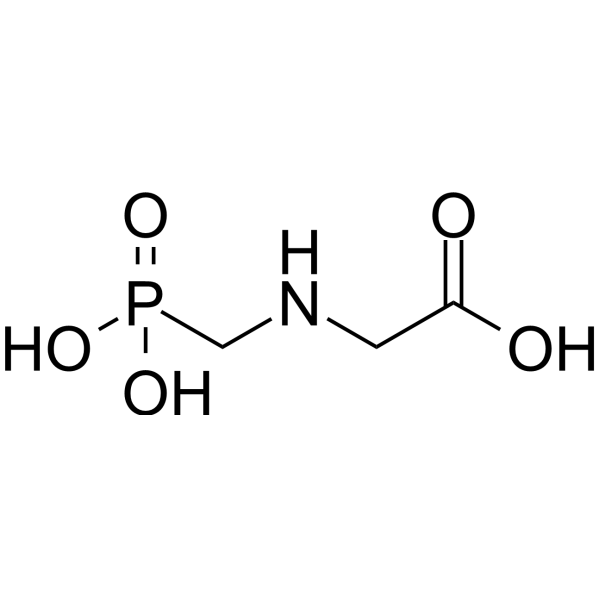
    Glyphosate
    1 Publications Verification

    Environmental Pollutants Necroptosis Apoptosis Autophagy Neurological Disease
    Glyphosate, a non-selective systemic biocide with broad-spectrum activity, is an herbicidal derivative of the amino acid glycine. Glyphosate inhibits the enzymatic activity of the 5-endopyruvylshikimate 3-phosphate synthase (EPSPS) in the shikimic acid pathway, preventing the synthesis of the aromatic amino acids tyrosine, phenylalanine, and tryptophan. Glyphosate induces oxidative stress, neuroinflammation, and mitochondrial dysfunction, processes that lead to neuronal death by autophagia, necrosis, or apoptosis, as well as the appearance of behavioral and motor disorders .
    Glyphosate
  • HY-28247

    Endogenous Metabolite Metabolic Disease
    N-Formylkynurenine is an intermediate in the catabolism of tryptophan. It is a formylated derivative of kynurenine. The formation of N-formylkynurenine is catalyzed by heme dioxygenases.
    N-Formylkynurenine
  • HY-W048688

    Amino Acid Derivatives Others
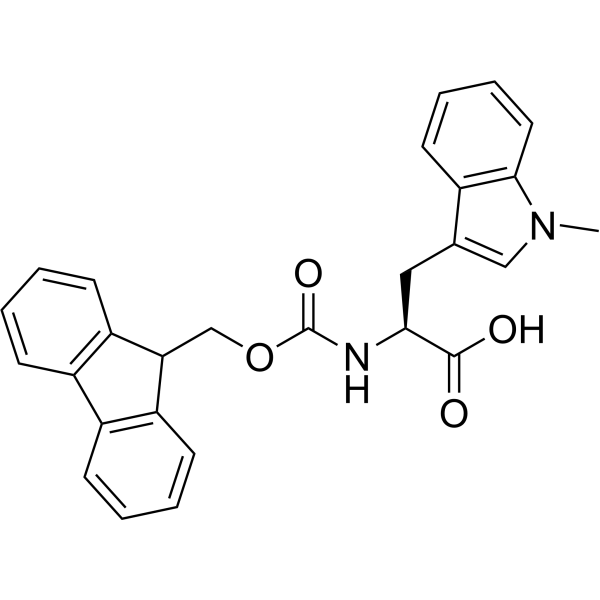
    Fmoc-Trp(Me)-OH is an amino acid derivative. Fmoc-Trp(Me)-OH is formed by introducing a methyl group onto the nitrogen atom (N-1 position) of the indole ring of tryptophan (Trp) and protecting the amino group with Fmoc (9-fluorenylmethyloxycarbonyl). Fmoc-Trp(Me)-OH can be used in the synthesis of proteins or peptides .
    Fmoc-Trp(Me)-OH
  • HY-W050025

    Amino Acid Derivatives Others
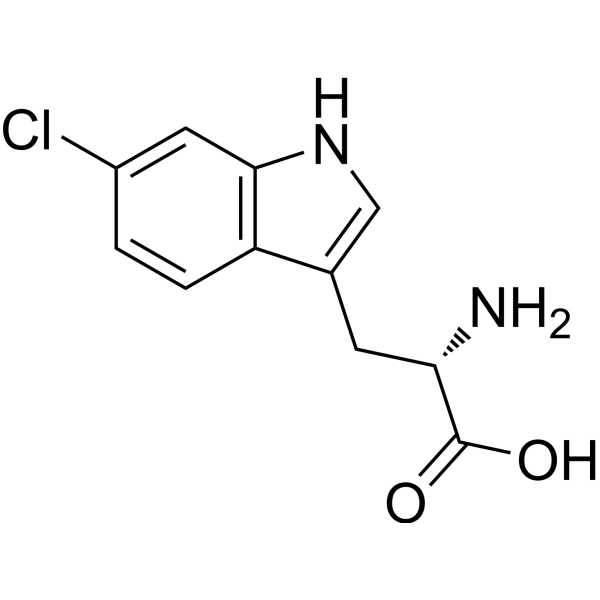
    6-Chloro-L-tryptophan is a Tryptophan derivative. 6-Chloro-L-tryptophan can be used as a substrate for KtzQ .
    6-Chloro-L-tryptophan
  • HY-W014971
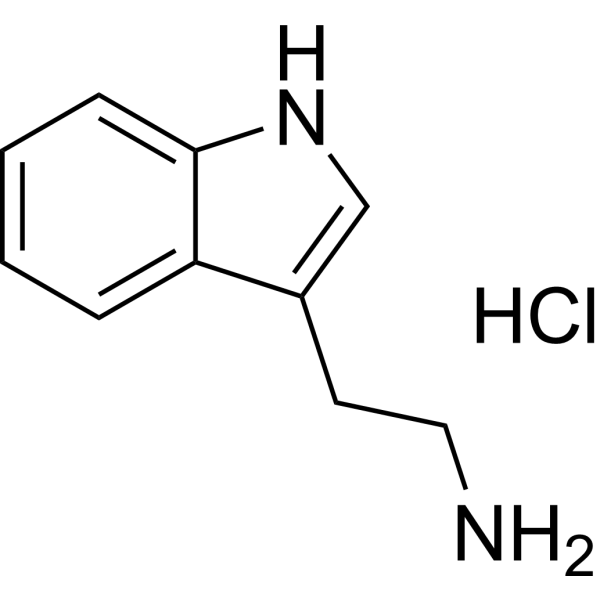
    Tryptamine hydrochloride
    1 Publications Verification

    Biochemical Assay Reagents Others
    Tryptamine hydrochloride belongs to the class of indole alkaloids and is a derivative of the amino acid tryptophan. Tryptamine hydrochloride is psychoactive and acts as a neurotransmitter in the body, affecting mood, perception and cognition. In its hydrochloride form, Tryptamine hydrochloride hydrochloride, it is commonly used as a research chemical and as a starting material for the synthesis of other organic compounds. It can also occur naturally in certain plants and animals, including fungi and mammals. Due to the psychoactive properties of Tryptamine hydrochloride and its derivatives, its use and possession are controlled substances in many countries.
    Tryptamine hydrochloride
  • HY-20897A
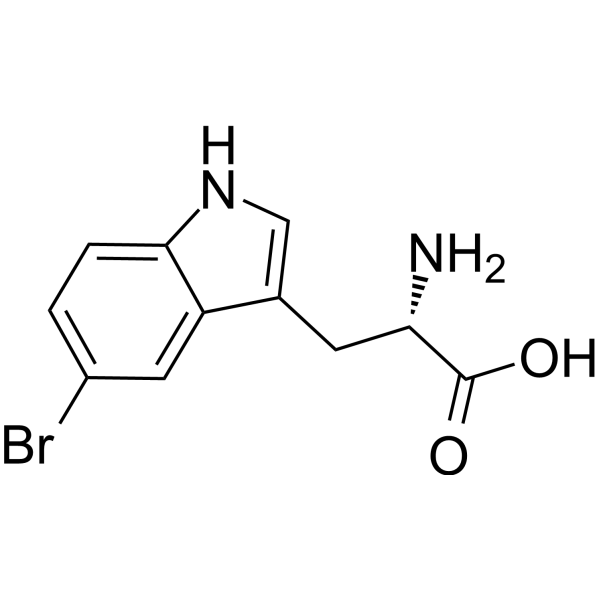
    5-Bromo-L-tryptophan
    1 Publications Verification

    Endogenous Metabolite Amino Acid Derivatives Drug Intermediate Others
    5-Bromo-L-tryptophan is an α-amino acid derivative that can be found in Semenospongia sp.. 5-Bromo-L-tryptophan can be used to synthesize 5-bromoindole (HY-30236) .
    5-Bromo-L-tryptophan
  • HY-W747676

    Isotope-Labeled Compounds Apoptosis Autophagy Necroptosis Neurological Disease
    Glyphosate- 13C is the 13C-labeled Glyphosate (HY-B0863). Glyphosate, a non-selective systemic biocide with broad-spectrum activity, is an herbicidal derivative of the amino acid glycine. Glyphosate inhibits the enzymatic activity of the 5-endopyruvylshikimate 3-phosphate synthase (EPSPS) in the shikimic acid pathway, preventing the synthesis of the aromatic amino acids tyrosine, phenylalanine, and tryptophan. Glyphosate induces oxidative stress, neuroinflammation, and mitochondrial dysfunction, processes that lead to neuronal death by autophagia, necrosis, or apoptosis, as well as the appearance of behavioral and motor disorders .
    Glyphosate-13C
  • HY-33228

    Amino Acid Derivatives Others
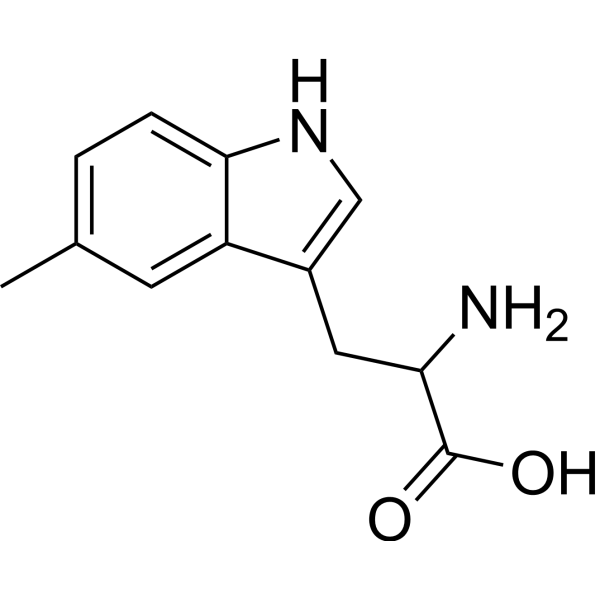
    5-Methyl-DL-tryptophan is aamino acids and their derivatives.
    5-Methyl-DL-tryptophan
  • HY-W142073

    7-Methyltryptophan

    Amino Acid Derivatives Infection
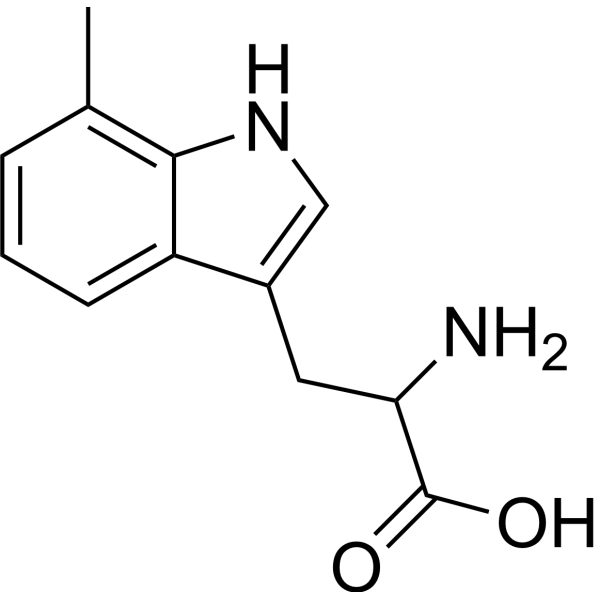
    7-Methyl-DL-tryptophan (7-Methyltryptophan) is an amino acid derivative, which is a key precursor for biosynthesis of many non-ribosomal peptide antibiotics. 7-Methyl-DL-tryptophan plays an important role in synthesis of high-efficiency antibacterial agents and analogues thereof .
    7-Methyl-DL-tryptophan
  • HY-138815

    Glycosidase Metabolic Disease
    (S)-N-(1H-Indole-3-acetyl)tryptophan (compound 4a) is a Tryptophan derivative that weakly inhibits β-D-glucosidase .
    (S)-N-(1H-Indole-3-acetyl)tryptophan
  • HY-59208

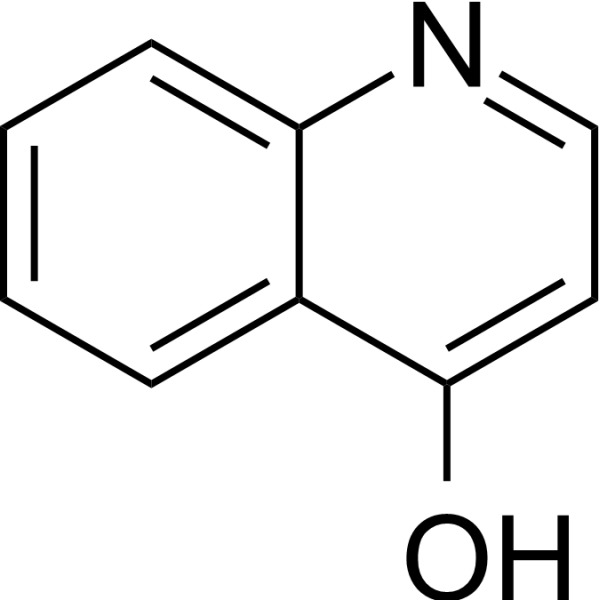
    Kynurine

    Endogenous Metabolite Neurological Disease Cancer
    4-Quinolone (Kynurine) is a quinoline derivative. Kynurine pathway modulates tryptophan metabolism and involves in neuroprotective effect. Kynurine promotes tumor cell survival and motility by suppressing antitumor immune .
    4-Quinolinol
  • HY-N12125

    Others Infection
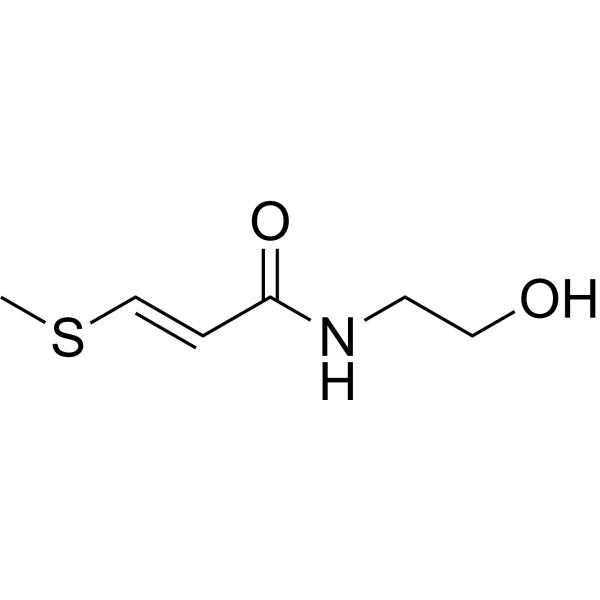
    Entadamide A (compound 1) is a tryptophan derivative. Entadamide A prevents tryptophan depletion by inhibiting indoleamine 2, 3-dioxygenase (IDO), thereby inhibiting HIV replication. Entadamide A can be used in drug and neuropsychiatric studies of redesivir [1].
    Entadamide A
  • HY-W097167

    Z-DL-Trp-OH

    Biochemical Assay Reagents Others
    N-Cbz-DL-tryptophan (Z-DL-Trp-OH) is the enantiomer of tryptophan derivative .
    N-Cbz-DL-tryptophan
  • HY-W923640

    N-Methyltryptophan

    Drug Derivative Others
    N-Methyl-DL-tryptophan (N-Methyltryptophan) is a DL-tryptophan (HY-W012480) derivative with activity to stabilize tryptophan against degradation during acid hydrolysis of protein fibres .
    N-Methyl-DL-tryptophan
  • HY-B0863B

    Apoptosis Autophagy Necroptosis Neurological Disease
    Glyphosate isopropylammonium, a non-selective systemic biocide with broad-spectrum activity, is an herbicidal derivative of the amino acid glycine. Glyphosate isopropylammonium inhibits the enzymatic activity of the 5-endopyruvylshikimate 3-phosphate synthase (EPSPS) in the shikimic acid pathway, preventing the synthesis of the aromatic amino acids tyrosine, phenylalanine, and tryptophan. Glyphosate isopropylammonium induces oxidative stress, neuroinflammation, and mitochondrial dysfunction, processes that lead to neuronal death by autophagia, necrosis, or apoptosis, as well as the appearance of behavioral and motor disorders .
    Glyphosate isopropylammonium
  • HY-20897AR

    Reference Standards Endogenous Metabolite Amino Acid Derivatives Drug Intermediate Others
    5-Bromo-L-tryptophan (Standard) is the analytical standard of 5-Bromo-L-tryptophan (HY-20897A). This product is intended for research and analytical applications. 5-Bromo-L-tryptophan is an α-amino acid derivative that can be found in Semenospongia sp.. 5-Bromo-L-tryptophan can be used to synthesize 5-bromoindole (HY-30236).
    5-Bromo-L-tryptophan (Standard)
  • HY-W166764

    Amino Acid Derivatives Neurological Disease
    5-Nitrotryptophan is a Tryptophan derivative. 5-Nitrotryptophan can be used for the study of neurodegenerative diseases .
    5-Nitrotryptophan
  • HY-148371

    Amino Acid Derivatives Neurological Disease
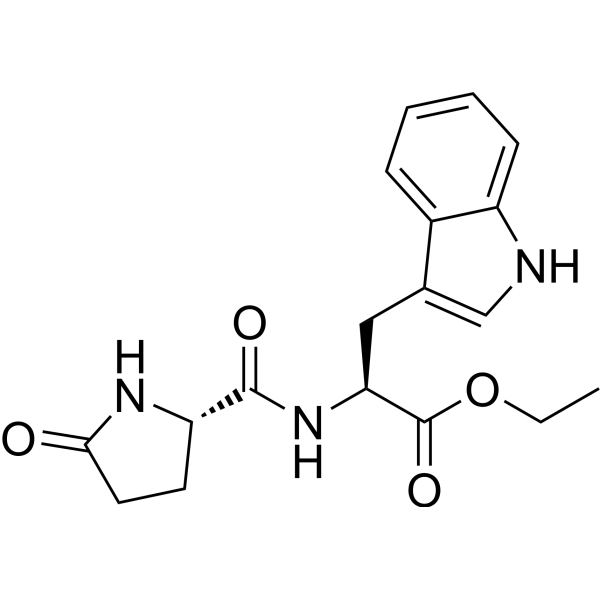
    Glp-Trp-OEt, a pyroglutamyl-tryptophan derivative, is a dipeptide Et ester .
    Glp-Trp-OEt
  • HY-138815S

    Isotope-Labeled Compounds Glycosidase Metabolic Disease
    (S)-N-(1H-Indole-3-acetyl)tryptophan-d4 is deuterium labeled (S)-N-(1H-Indole-3-acetyl)tryptophan. (S)-N-(1H-Indole-3-acetyl)tryptophan (compound 4a) is a Tryptophan derivative that weakly inhibits β-D-glucosidase .
    (S)-N-(1H-Indole-3-acetyl)tryptophan-d4
  • HY-156093

    Tryptophan Hydroxylase Metabolic Disease
    TPH1-IN-1 (compound 40) is a xanthine derivative and an inhibitor of tryptophan hydroxylase TPH1 (IC50: 110.1 nM). TPH1-IN-1 has good in vitro activity and liver microsome stability, and effectively inhibits adipocyte differentiation of T3-L1 cells .
    TPH1-IN-1
  • HY-177557

    Indoleamine 2,3-Dioxygenase (IDO) Infection Neurological Disease Inflammation/Immunology Cancer
    IDO-IN-19 (Compound I) is a free base of an imidazole-isoindole derivative. IDO-IN-19 can inhibit the activity of Indoleamine 2,3-Dioxygenase (IDO). IDO-IN-19 can block the decomposition of tryptophan and restore the function of T cells. IDO-IN-19 can be used for the researches of cancer, immunology, infection and neurological disease, such as breast cancer and Alzheimer's disease .
    IDO-IN-19
  • HY-172782

    Cholinesterase (ChE) Amyloid-β Interleukin Related Reactive Oxygen Species (ROS) NOD-like Receptor (NLR) Neurological Disease Inflammation/Immunology
    BuChE-IN-20 is a selective butyrylcholinesterase (hBuChE) inhibitor (IC50 = 0.13 μM) with BBB permeability. BuChE-IN-20 is a L-Tryptophan derivative. BuChE-IN-20 possesses neuroprotective properties by inhibiting the production of nitric oxide (NO) and lowering the levels of ROS. BuChE-IN-20 is proficient in inhibiting the self-aggregation of amyloid-beta (Aβ) peptides. BuChE-IN-20 can be used in research for Alzheimer’s disease .
    BuChE-IN-20
  • HY-B0863S5

    Isotope-Labeled Compounds Apoptosis Autophagy Necroptosis Neurological Disease
    Glyphosate- 13C, 15N-1 is the 13C- and 15N-labeled Glyphosate (HY-B0863). Glyphosate, a non-selective systemic biocide with broad-spectrum activity, is an herbicidal derivative of the amino acid glycine. Glyphosate inhibits the enzymatic activity of the 5-endopyruvylshikimate 3-phosphate synthase (EPSPS) in the shikimic acid pathway, preventing the synthesis of the aromatic amino acids tyrosine, phenylalanine, and tryptophan. Glyphosate induces oxidative stress, neuroinflammation, and mitochondrial dysfunction, processes that lead to neuronal death by autophagia, necrosis, or apoptosis, as well as the appearance of behavioral and motor disorders .
    Glyphosate-13C,15N-1
  • HY-129860

    Chloroacetyltryptophan

    Drug Derivative Infection
    N-Chloroacetyl-L-tryptophan (Chloroacetyltryptophan) is a hydrolyzable tryptophan derivative. N-Chloroacetyl-L-tryptophan rapidly hydrolyzes to tryptophan in Pseudomonas aurantiaca cultures. N-Chloroacetyl-L-tryptophan increases the level of the antibiotic Pyrrolnitrin (HY-133704) in Pseudomonas aurantiaca fermentation cultures .
    N-Chloroacetyl-L-tryptophan
  • HY-129855

    Octyl 2-amino-3-(1H-indol-3-yl)propanoate hydrochloride

    Amino Acid Derivatives Others
    DL-Tryptophan octyl ester (Octyl 2-amino-3-(1H-indol-3-yl)propanoate) hydrochloride is a tryptophan derivative with an octyl ester protected COOH group.
    DL-Tryptophan octyl ester hydrochloride
  • HY-59208R

    Kynurine (Standard)

    Endogenous Metabolite Reference Standards Neurological Disease Cancer
    4-Quinolinol (Standard) is the analytical standard of 4-Quinolinol. This product is intended for research and analytical applications. 4-Quinolone (Kynurine) is a quinoline derivative. Kynurine pathway modulates tryptophan metabolism and involves in neuroprotective effect. Kynurine promotes tumor cell survival and motility by suppressing antitumor immune .
    4-Quinolinol (Standard)
  • HY-W014971S

    Isotope-Labeled Compounds Biochemical Assay Reagents Others
    Tryptamine-d2-1 hydrochloride is the deuterium labeled Tryptamine hydrochloride (HY-W014971). Tryptamine hydrochloride belongs to the class of indole alkaloids and is a derivative of the amino acid tryptophan. Tryptamine hydrochloride is psychoactive and acts as a neurotransmitter in the body, affecting mood, perception and cognition. In its hydrochloride form, Tryptamine hydrochloride hydrochloride, it is commonly used as a research chemical and as a starting material for the synthesis of other organic compounds. It can also occur naturally in certain plants and animals, including fungi and mammals. Due to the psychoactive properties of Tryptamine hydrochloride and its derivatives, its use and possession are controlled substances in many countries.
    Tryptamine-d2-1 hydrochloride
  • HY-179634

    SARS-CoV HIV Enterovirus Angiotensin-converting Enzyme (ACE) RSV Filovirus Infection
    ASF-006 sodium, a tetrapodal tryptophan derivative, is a potent viral invasion inhibitor. ASF-006 sodium shows potent antiviral activity against different SARS-CoV-2 Omicron variants but not against the ancestral SARS-CoV.2 strain (Wuhan-Hu-1). ASF-006 sodium competitively inhibits receptor-binding domain (RBD)-ACE2 binding via an allosteric mechanism. ASF-006 sodium inhibits Omicron BA.1, Omicron XBB.1.5, respiratory syncytial virus (RSV) and Ebola virus infection with IC50s of 0.02 μM, 0.3 μM, 1.52 μM and 0.2 μM, respectively. ASF-006 sodium inhibits cell entry of both HIV and enterovirus A71[1].
    ASF-006 sodium

Inquiry Online

Your information is safe with us. * Required Fields.

Salutation


Country or Region *

Applicant Name *


Organization Name *

Department *


Email Address *


Product Name *

Cat. No.


Requested quantity *

Phone Number *


Remarks

Inquiry Online

Inquiry Information

Product Name:
Cat. No.:
Quantity:
MCE Japan Authorized Agent:

