22 Results for "

vasodilatation

" in MedChemExpress (MCE) Product Catalog:
Products (22)

22 Results for "vasodilatation" in MCE Product Catalog:

3
3 Cited Publications
Cat. No.: HY-B1277
CAS No.: 52-49-3
Research Areas:  

Neurological Disease

Trihexyphenidyl hydrochloride is a selective and orally active M1 muscarinic receptor antagonist with an IC50 of 3.7 nM for rat cerebral cortex M1 muscarinic receptors. Trihexyphenidyl hydrochloride modulates cholinergic activity, countering acetylcholine supersensitivity in neural pathways. Trihexyphenidyl hydrochloride improves movement disorder, inhibits McN-A-343 (HY-107648)-induced pressor responses, vagally-induced bradycardia and vasodilatation. Trihexyphenidyl hydrochloride can be used for the research of Parkinson's disease. .
loading...
    loading...
2
2 Cited Publications
Cat. No.: HY-B0813
CAS No.: 830354-48-8
Synonyms: UT-15C
Research Areas:  

Endocrinology

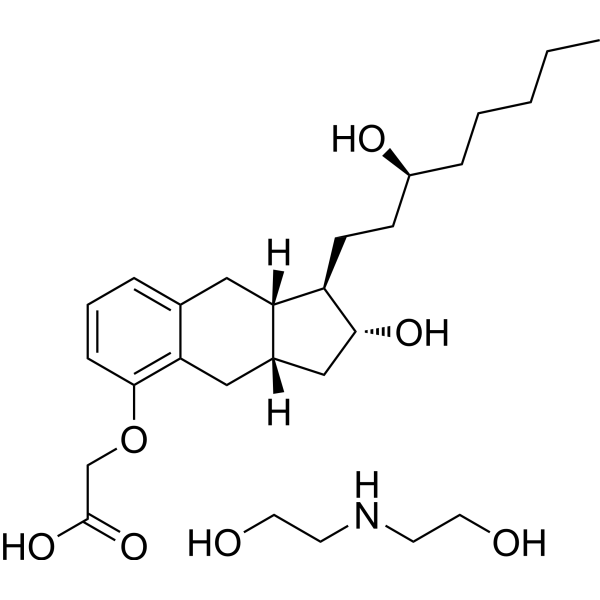
Treprostinil (UT-15C) diethanolamine is a potent EP2, DP1 and IP agonist with Ki values of 3.6, 4.4, 32.1, 212, 826, 2505 and 4680 nM for EP2, DP1, IP, EP1, EP4, EP3 and FP, respectively. Treprostinil (UT-15C) diethanolamine increases upregulation of cAMP toward maintaining homeostasis within the vasculature. Treprostinil (UT-15C) diethanolamine can result in vasodilatation of human pulmonary arteries .
loading...
    loading...
1
1 Cited Publications
Cat. No.: HY-N4081
CAS No.: 643-56-1
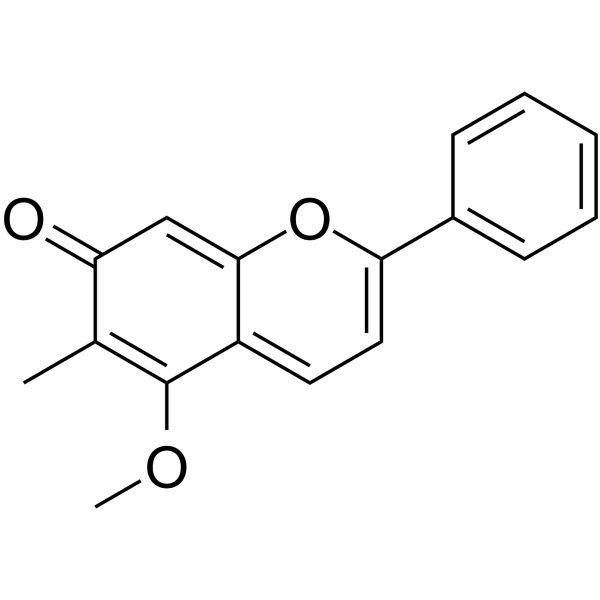
Dracorhodin, the main component in sanguis draconis, is a flavylium compound belonging to the anthocyanin family. Dracorhodin can induce vasodilatation .
loading...
    loading...
Cat. No.: HY-D0850
CAS No.: 6106-24-7
Synonyms: Sodium tartrate dibasic dihydrate; Sodium tartrate dihydrate
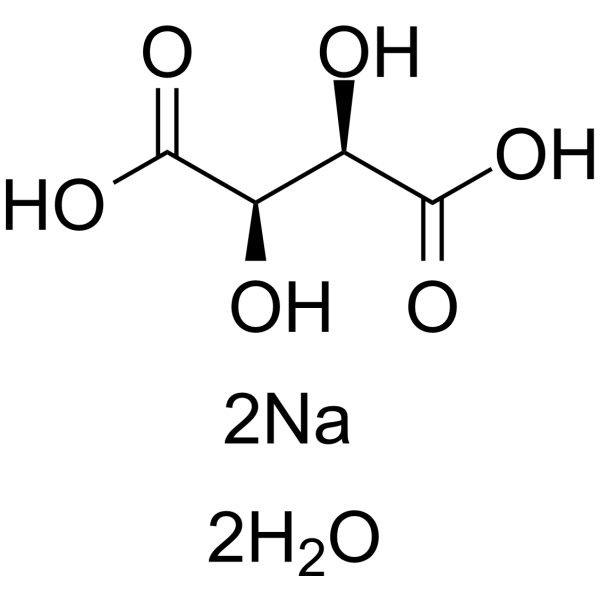
Tartaric acid disodium dehydrate (L-(+) -tartaric acid) is an orally active weak organic acid that can be isolated from grapes. Tartaric acid disodium dehydrate has vasodilatory and antihypertensive effects. Tartaric acid disodium dehydrate can be used as flavorings and antioxidants in a range of foods and beverages. Tartaric acid disodium dehydrate can be used in laser frequency doubling and optical limiting applications .
loading...
    loading...
Cat. No.: HY-B1639
CAS No.: 77671-31-9
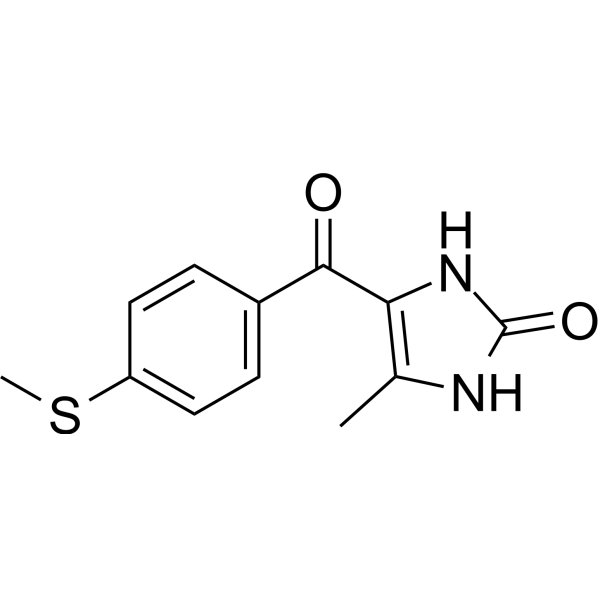
Enoximone is an inotropic vasodilating agent and a selective and orally active phosphodiesterase III (PDE3) inhibitor with an IC50 of 5.9 μM. Enoximone induces vasodilatation and increases intracellular levels of cAMP by inhibiting cGMP-inhibited PDE. Enoximone also exhibits PDE4 inhibitory effect with an IC50 of 21.1 μM for myocardial PDE4A. Enoximone has the potential for congestive heart failure research and has bronchodilatory, antiasthma and anti-inflammatory effects .
loading...
    loading...
Cat. No.: HY-B1695
CAS No.: 93-60-7
Synonyms: Nicotinic acid methyl ester
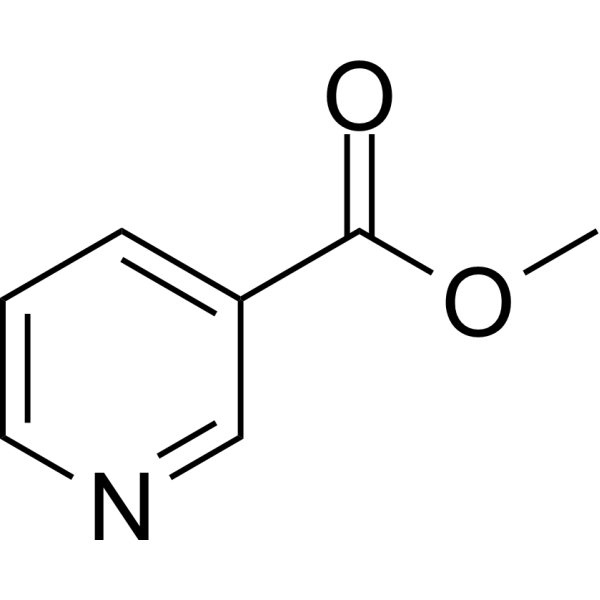
Methyl nicotinate (Nicotinic acid methyl ester) is an orally active vasodilator. Methyl nicotinate has analgesic activity. Methyl nicotinate causes local skin erythema when applied topically to the skin. Methyl nicotinate is used as an active ingredient in over-the-counter topical preparations for the study of muscle and joint pain .
loading...
    loading...
Cat. No.: HY-105068
CAS No.: 250386-15-3
Purity:  99.05%
Synonyms: BMS 068645; DWH 146e
Target:  

Adenosine Receptor

Research Areas:  

Cardiovascular Disease

Apadenoson is an adenosine analog with selective agonist activity for the adenosine A2a receptor and induces coronary vasodilatation .
loading...
    loading...
Cat. No.: HY-B1695R
CAS No.: 93-60-7
Synonyms: Nicotinic acid methyl ester (Standard)
Methyl nicotinate (Standard) is the analytical standard of Methyl nicotinate. This product is intended for research and analytical applications. Methyl nicotinate (Nicotinic acid methyl ester) is an orally active vasodilator. Methyl nicotinate has analgesic activity. Methyl nicotinate causes local skin erythema when applied topically to the skin. Methyl nicotinate is used as an active ingredient in over-the-counter topical preparations for the study of muscle and joint pain .
loading...
    loading...
Cat. No.: HY-W109973
CAS No.: 3164-29-2
Synonyms: L-(+)-Tartaric acid diammonium
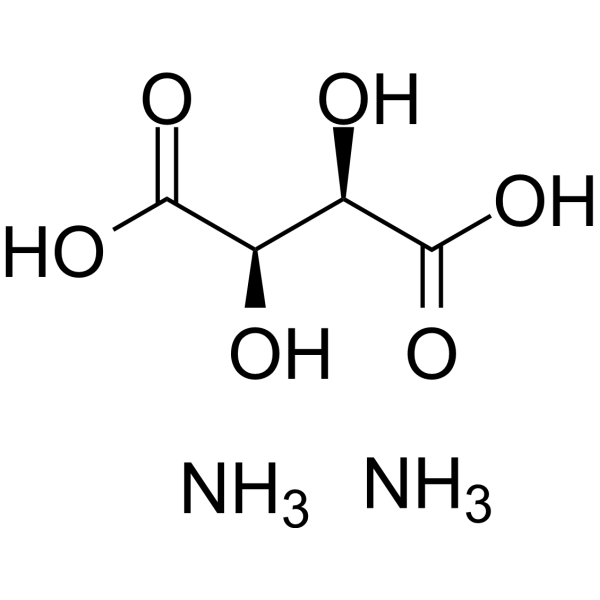
L-Tartaric acid diammonium (L-(+) -tartaric acid) is an orally active weak organic acid that can be isolated from grapes. L-Tartaric acid diammonium has vasodilatory and antihypertensive effects. L-Tartaric acid diammonium can be used as flavorings and antioxidants in a range of foods and beverages. L-Tartaric acid diammonium can be used in laser frequency doubling and optical limiting applications .
loading...
    loading...
Cat. No.: HY-N3931
CAS No.: 34274-91-4
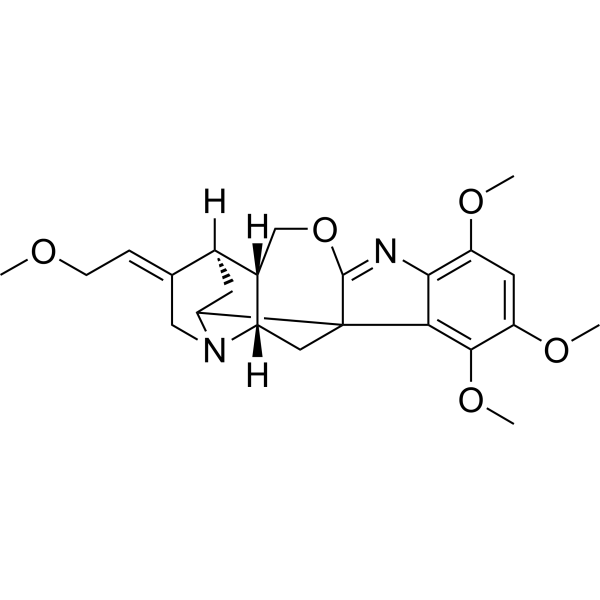
Gardneramine is an orally active alkaloid that acts like papaverine. Gardneramine has peripheral vascular diastolic effect, direct inhibition on myocardium and central inhibition. Gardneramine showed antihypertensive, vasodilatation and atrial inhibition effects in rabbit, dog and guinea pig models, respectively. Gardneramine also inhibits the movement of smooth muscle organs such as the stomach and intestines .
loading...
    loading...
Cat. No.: HY-B1277A
CAS No.: 144-11-6
Trihexyphenidyl is a selective and orally active M1 muscarinic receptor antagonist with an IC50 of 3.7 nM for rat cerebral cortex M1 muscarinic receptors. Trihexyphenidyl modulates cholinergic activity, countering acetylcholine supersensitivity in neural pathways. Trihexyphenidyl improves movement disorder, inhibits McN-A-343 (HY-107648)-induced pressor responses, vagally-induced bradycardia and vasodilatation. Trihexyphenidyl can be used for the research of Parkinson's disease. .
loading...
    loading...
Cat. No.: HY-162677
CAS No.: 1610794-70-1
Research Areas:  

Cardiovascular Disease

MT-1207 is an orally active and selective adrenergic α1 and 5-HT2A receptor antagonist. MT-1207 shows IC50<0.1 nM, 0.15 nM, 1.40 nM and 0.27 nM for α1A, α1B, α1D and 5-HT2A, respectively. MT-1207 achieves an effective blood pressure (BP) reduction in the 2K2C rat model without damaging renal function. MT-1207 is a potent multitarget inhibitor with the potential for vasodilatation research .
loading...
    loading...
Cat. No.: HY-P3805
CAS No.: 89430-34-2
[D-Pro4,D-Trp7,9,Nle11] Substance P (4-11) is a potent neurokinin NK1 antagonist. [D-Pro4,D-Trp7,9,Nle11] Substance P (4-11) inhibits the effects of gold-protein-substance P (GPSP) and substance P (SP) .
loading...
    loading...
Cat. No.: HY-19012
CAS No.: 93750-14-2
Target:  

Adrenergic Receptor

Research Areas:  

Cardiovascular Disease

N-1518 is an α and β adrenergic receptor blocker that has competitive antagonism against β1 and α1 receptors, but does not show selectivity for β1 receptors, but shows about 20-fold selectivity for α1 receptors. N-1518 has vasodilatory effects and can be used in the research field of hypertension treatment .
loading...
    loading...
Cat. No.: HY-B1277S
Trihexyphenidyl-d5 hydrochloride is deuterium labeled Trihexyphenidyl hydrochloride (HY-B1277). Trihexyphenidyl hydrochloride is a selective and orally active M1 muscarinic receptor antagonist with an IC50 of 3.7 nM for rat cerebral cortex M1 muscarinic receptors. Trihexyphenidyl hydrochloride modulates cholinergic activity, countering acetylcholine supersensitivity in neural pathways. Trihexyphenidyl hydrochloride improves movement disorder, inhibits McN-A-343 (HY-107648)-induced pressor responses, vagally-induced bradycardia and vasodilatation. Trihexyphenidyl hydrochloride can be used for the research of Parkinson's disease. .
loading...
    loading...
Cat. No.: HY-B1277AS
Trihexyphenidyl-d5 is deuterium labeled Trihexyphenidyl (HY-B1277A). Trihexyphenidyl is a selective and orally active M1 muscarinic receptor antagonist with an IC50 of 3.7 nM for rat cerebral cortex M1 muscarinic receptors. Trihexyphenidyl modulates cholinergic activity, countering acetylcholine supersensitivity in neural pathways. Trihexyphenidyl improves movement disorder, inhibits McN-A-343 (HY-107648)-induced pressor responses, vagally-induced bradycardia and vasodilatation. Trihexyphenidyl can be used for the research of Parkinson's disease. .
loading...
    loading...
Cat. No.: HY-D0850R
CAS No.: 6106-24-7
Synonyms: Sodium tartrate dibasic dihydrate (Standard); Sodium tartrate dihydrate (Standard)
Tartaric acid (disodium dihydrate) (Standard) is the analytical standard of Tartaric acid (disodium dihydrate). This product is intended for research and analytical applications. Tartaric acid disodium dehydrate (L-(+) -tartaric acid) is an orally active weak organic acid that can be isolated from grapes. Tartaric acid disodium dehydrate has vasodilatory and antihypertensive effects. Tartaric acid disodium dehydrate can be used as flavorings and antioxidants in a range of foods and beverages. Tartaric acid disodium dehydrate can be used in laser frequency doubling and optical limiting applications [4].
loading...
    loading...
Cat. No.: HY-Y0293R
CAS No.: 87-69-4
Synonyms: L-(+)-Tartaric acid (Standard)
L-Tartaric acid (Standard) is the analytical standard of L-Tartaric acid. This product is intended for research and analytical applications. L-tartaric acid (L-(+) -tartaric acid) is an orally active weak organic acid that can be isolated from grapes. L-Tartaric acid has vasodilatory and antihypertensive effects. L-Tartaric acid can be used as flavorings and antioxidants in a range of foods and beverages. L-Tartaric acid can be used in laser frequency doubling and optical limiting applications .
loading...
    loading...
Cat. No.: HY-B1277R
CAS No.: 52-49-3
Trihexyphenidyl hydrochloride (Standard) is the analytical standard of Trihexyphenidyl hydrochloride (HY-B1277). This product is intended for research and analytical applications. Trihexyphenidyl is a selective and orally active M1 muscarinic receptor antagonist with an IC50 of 3.7 nM for rat cerebral cortex M1 muscarinic receptors. Trihexyphenidyl modulates cholinergic activity, countering acetylcholine supersensitivity in neural pathways. Trihexyphenidyl improves movement disorder, inhibits McN-A-343 (HY-107648)-induced pressor responses, vagally-induced bradycardia and vasodilatation. Trihexyphenidyl can be used for the research of Parkinson's disease. .
loading...
    loading...
Cat. No.: HY-129922
CAS No.: 773825-80-2
Research Areas:  

Endocrinology

Prostaglandin I2 is an unstable prostanoid which, through the ‘I prostanoid’ (IP) receptor, inhibits platelet aggregation and promotes vasodilatation in pulmonary vascular beds. AFP 07 is a 7,7-difluoroprostacyclin derivative that acts as a selective and highly potent agonist for the IP receptor (Ki=0.561 nM).1 AFP 07 shows weaker affinity for EP receptors, with Ki values > 100 nM for EP1-3 and > 10 nM for EP4. 16(R)-AFP 07 is an epimer of AFP 07. Its biological properties, particularly through the IP and EP receptors, remain to be evaluated.
loading...
    loading...

