



Methyl nicotinate

Based on 1 Customer Validation
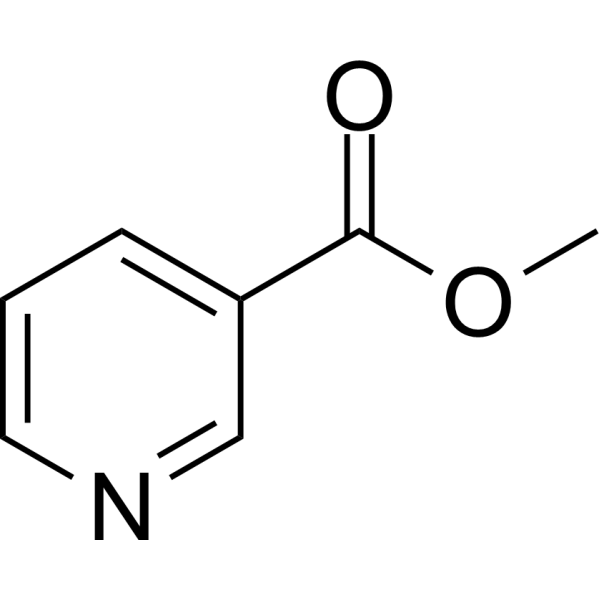
Methyl nicotinate (Nicotinic acid methyl ester) is an orally active vasodilator. Methyl nicotinate has analgesic activity. Methyl nicotinate causes local skin erythema when applied topically to the skin. Methyl nicotinate is used as an active ingredient in over-the-counter topical preparations for the study of muscle and joint pain.
For research use only. We do not sell to patients.
- Purity : 99.95%
- CAS No.: 93-60-7
- Formula: C7H7NO2
- Molecular Weight:137.14
-
Storage:
Store at room temperature 3 years.
In solvent -80°C, 2 years , -20°C, 1 year

To place orders, for customer services and technical support, please contact: MedChemExpress USA
Tel: 609-228-6898 E-mail: [email protected] [email protected]


-
 Biological Activity
-
Chemical Information
-
Solvent & Solubility
- Purity & Documentation
- References
-
 Help & FAQs


-
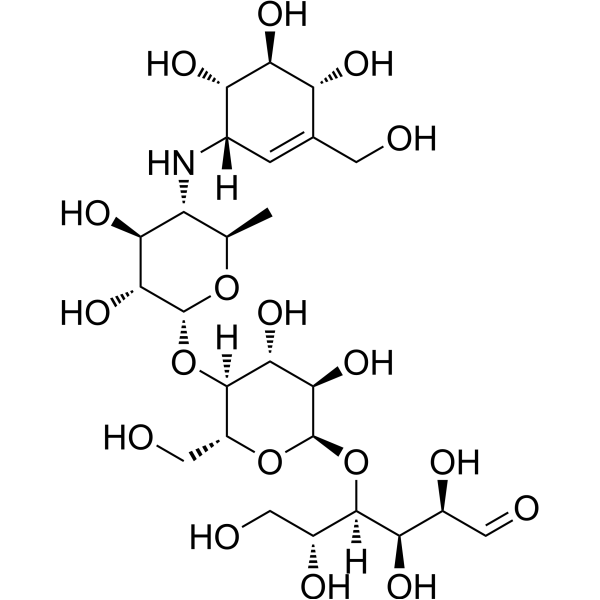
HY-B0089
AcarboseAlpha-Glucosidase Inhibitor -
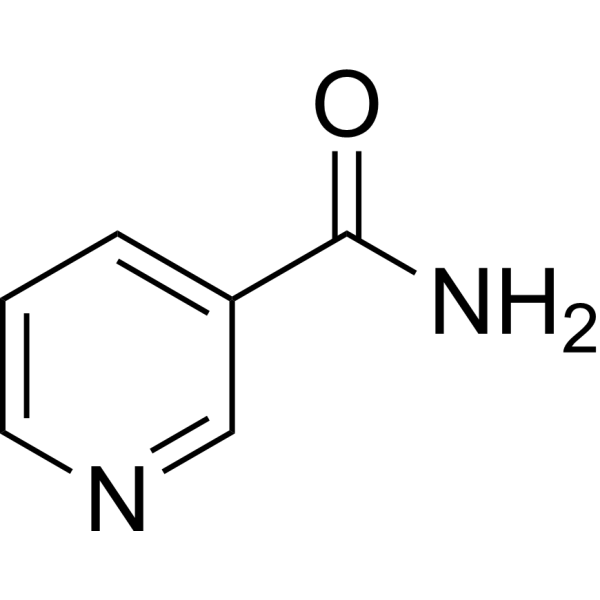
HY-B0150
NicotinamideSIRT Inhibitor -

HY-B1695R
Methyl nicotinate (Standard)Topical Preparations Active Compound, Vasodilator -
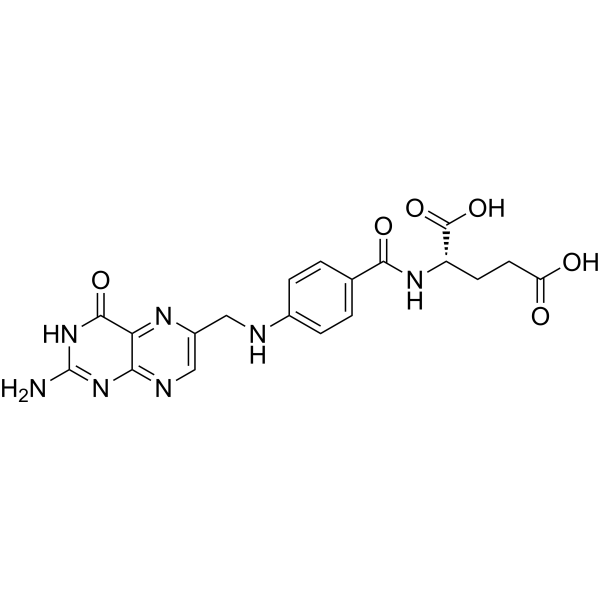
HY-16637
Folic acidB complex -
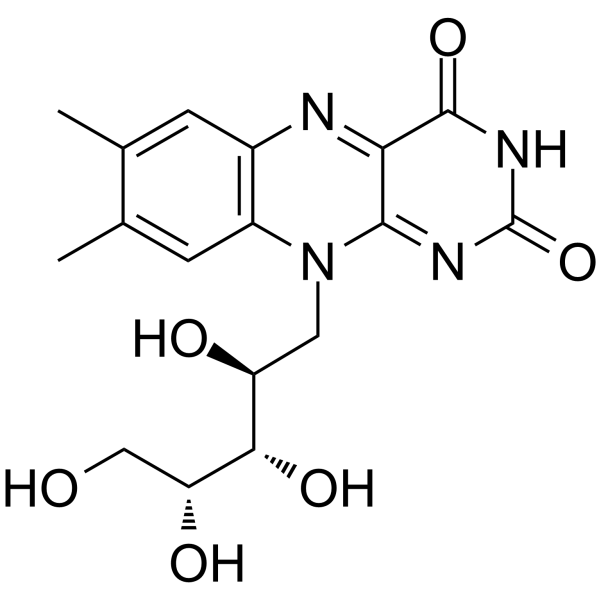
HY-B0456
RiboflavinVitamin B2 -
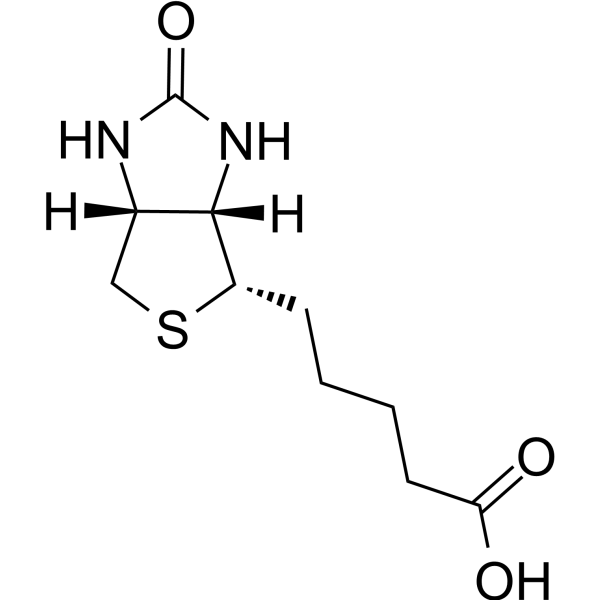
HY-B0511
BiotinVitamin B7 -

HY-16637R
Folic acid (Standard)B complex -

HY-B0456R
Riboflavin (Standard)Vitamin B2 -
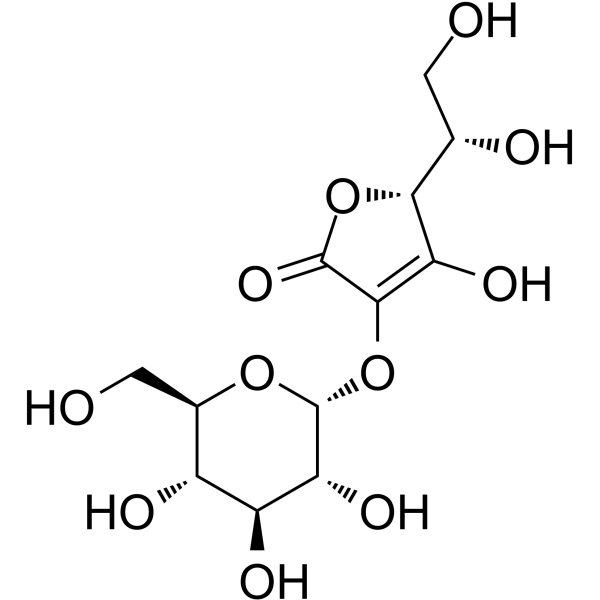
HY-N6821
2-O-α-D-Glucopyranosyl-L-ascorbic AcidGlucoside Derivative -

HY-B0511R
Biotin (Standard)Vitamin B7 -
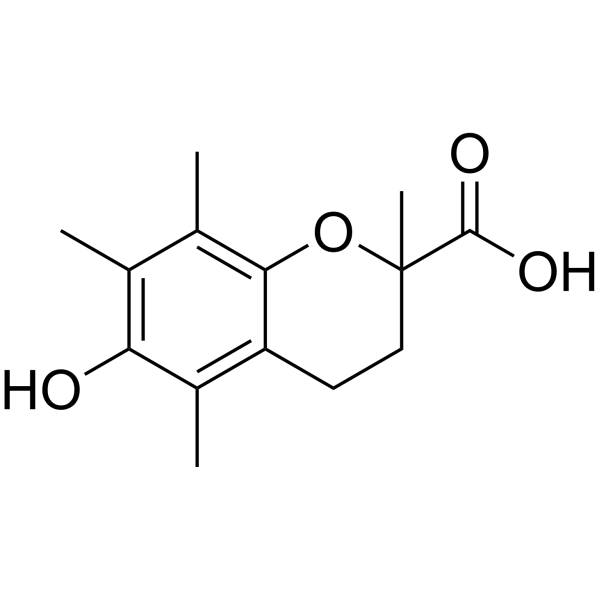
HY-101445
TroloxAntioxidant -
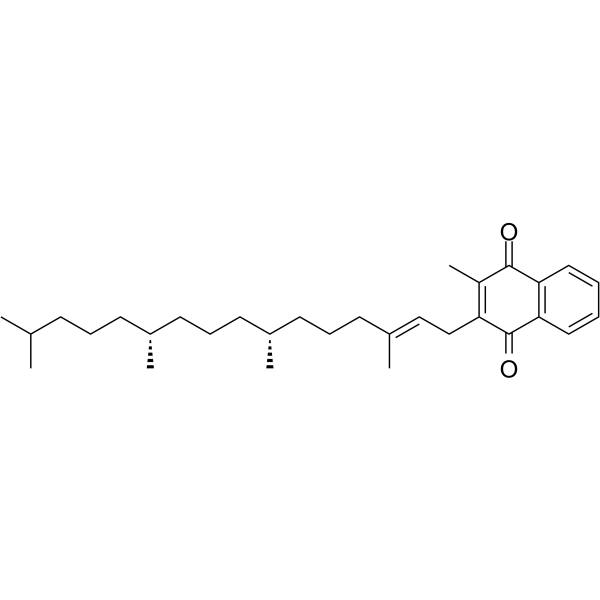
HY-N0684
Vitamin K1Endogenous Metabolite


Biological Activity
Description
In Vitro
Methyl nicotinate (5 mg/mL; 24 h) is not cytotoxic in HDFn cells[2].
MedChemExpress (MCE) has not independently confirmed the accuracy of these methods. They are for reference only.
-
Cell Line:HDFn (Human neonatal fibroblast cell line)
-
Concentration:1 mg/mL, .2.5 mg/L, 5 mg/L, 7.5 mg/L and 10 mg/mL
-
Incubation Time:24 h
-
Result:Was extremely toxic to fibroblasts at 10mg/mL concentration, and 90% of the cells were still alive at5 mg/mL concentration.
In Vivo
Methyl nicotinate (5-10 mg/mL; 30-60 min) has vasodilatory effect in egg embryo eggs[2].
MedChemExpress (MCE) has not independently confirmed the accuracy of these methods. They are for reference only.
-
Animal Model:Writhing model of Swiss albino mice induced by acetic acid[1]
-
Dosage:5 mg/kg, 10 mg/kg
-
Administration:Oral gavage; Single dose. Before Acetic acid treatment (10 mg/kg; i.p.; Single dose)
-
Result:Caused a significant reduction in the number of writhes induced by acetic acid.
At dose of 10 mg/kg, has a similar analgesic effect to Aspirin (HY-14654) within 30 minutes.
-
Animal Model:Hot plate test Swiss albino mouse model[1]
-
Dosage:5 mg/kg, 10 mg/kg
-
Administration:Oral gavage; Single dose
-
Result:Could significantly prolong the latency of mice's response to thermal pain after 30 minutes of administration.
-
Animal Model:Chorioallantoic Membrane (CAM) model[2]
-
Dosage:5 mg/mL/egg, 1 mg/mL/egg, 100 mg/mL/egg
-
Administration:
-
Result:Promoted microvasodilation at 5 mg/mL/egg.
Promoted vasodilation to a greater extent, but mild bleeding occurred at 10 mg/mL/egg.
Caused extreme vasodilation, leading to blood vessel rupture and bleeding at 100 mg/mL/egg.


Chemical Information
-
CAS No. 93-60-7
-
Appearance Solid
-
Molecular Weight 137.14
-
Formula C7H7NO2
-
Color White to off-white
-
SMILES
O=C(C1=CC=CN=C1)OC
-
Synonyms
Nicotinic acid methyl ester
-
Structure Classification
-
Initial Source
Mycobacterium tuberculosis
-
Shipping
Room temperature in continental US; may vary elsewhere.
-
Storage
Store at room temperature 3 years
In solvent -80°C 2 years -20°C 1 year


Solvent & Solubility
In Vitro:
H2O : 100 mg/mL (729.18 mM; Need ultrasonic)
DMSO : 100 mg/mL (729.18 mM; Need ultrasonic; Hygroscopic DMSO has a significant impact on the solubility of product, please use newly opened DMSO)
Please refer to the solubility information to select the appropriate solvent. Once prepared, please aliquot and store the solution to prevent product inactivation from repeated freeze-thaw cycles.
Storage method and period of stock solution: -80°C, 2 years; -20°C, 1 year. When stored at -80°C, please use it within 2 years. When stored at -20°C, please use it within 1 year.
* Note: If you choose water as the stock solution, please dilute it to the working solution, then filter and sterilize it with a 0.22 μm filter before use.
Please refer to the solubility information to select the appropriate solvent. Once prepared, please aliquot and store the solution to prevent product inactivation from repeated freeze-thaw cycles.
Storage method and period of stock solution: -80°C, 2 years; -20°C, 1 year. When stored at -80°C, please use it within 2 years. When stored at -20°C, please use it within 1 year.
* Note: If you choose water as the stock solution, please dilute it to the working solution, then filter and sterilize it with a 0.22 μm filter before use.
Concentration (start) × Volume (start) = Concentration (final) × Volume (final)
In Vivo:
Select the appropriate dissolution method based on your experimental animal and administration route.
- For the following dissolution methods, please ensure to first prepare a clear stock solution using an In Vitro approach and then sequentially add co-solvents:
- To ensure reliable experimental results, the clarified stock solution can be appropriately stored based on storage conditions. As for the working solution for In Vivo experiments, it is recommended to prepare freshly and use it on the same day.
- The percentages shown for the solvents indicate their volumetric ratio in the final prepared solution. If precipitation or phase separation occurs during preparation, heat and/or sonication can be used to aid dissolution.
Add each solvent one by one: 10% DMSO 40% PEG300 5% Tween-80 45% Saline
Solubility: ≥ 2.5 mg/mL (18.23 mM); Clear solution
This protocol yields a clear solution of ≥ 2.5 mg/mL (saturation unknown).
Taking 1 mL working solution as an example, add 100 μL DMSO stock solution (25.0 mg/mL) to 400 μL PEG300, and mix evenly; then add 50 μL Tween-80 and mix evenly; then add 450 μL Saline to adjust the volume to 1 mL.
Preparation of Saline: Dissolve 0.9 g sodium chloride in ddH₂O and dilute to 100 mL to obtain a clear Saline solution.
Add each solvent one by one: 10% DMSO 90% (20% SBE-β-CD in Saline)
Solubility: ≥ 2.5 mg/mL (18.23 mM); Clear solution
This protocol yields a clear solution of ≥ 2.5 mg/mL (saturation unknown).
Taking 1 mL working solution as an example, add 100 μL DMSO stock solution (25.0 mg/mL) to 900 μL 20% SBE-β-CD in Saline, and mix evenly.
Preparation of 20% SBE-β-CD in Saline (4°C, storage for one week): 2 g SBE-β-CD powder is dissolved in 10 mL Saline, completely dissolve until clear.
For the following dissolution methods, please prepare the working solution directly:
It is recommended to prepare fresh solutions and use them promptly within a short period of time.
The percentages shown for the solvents indicate their volumetric ratio in the final prepared solution. If precipitation or phase separation occurs during preparation, heat and/or sonication can be used to aid dissolution.
Add each solvent one by one: PBS
Solubility: 50 mg/mL (364.59 mM); Clear solution; Need ultrasonic
In Vivo Dissolution Calculator
Please enter the basic information of animal experiments:
-
-
-
-
Recommended: Prepare an additional quantity of animals to account for potential losses during experiments.
Working solution concentration: 0.22 mg/mL
This product has good water solubility, please refer to the measured solubility data in water/PBS/Saline for details.


Purity & Documentation
-
Data Sheet (288 KB)
-
SDS (393 KB)
- English - EN (393 KB)
- Français - FR (393 KB)
- Deutsch - DE (393 KB)
- Norwegian - NO (393 KB)
- Español - ES (393 KB)
- Swedish - SV (393 KB)
- Italian - IT (393 KB)
- Korean - KR (393 KB)
- Portuguese - PT (393 KB)
-
Handling Instructions (2659 KB)
References
[1]. Yarosh DB, rt al. Anti-inflammatory activity in skin by biomimetic of Evodia rutaecarpa extract from traditional Chinese medicine. J Dermatol Sci. 2006 Apr;42(1):13-21. [Content Brief]
[2]. Stringasci MD, et al. MAL-associated methyl nicotinate for topical PDT improvement. J Photochem Photobiol B. 2020 Dec;213:112071. [Content Brief]
[3]. Elawa S, et al. The microvascular response in the skin to topical application of methyl nicotinate: Effect of concentration and variation between skin sites. Microvasc Res. 2019 Jul;124:54-60. [Content Brief]


Complete Stock Solution Preparation Table
Please refer to the solubility information to select the appropriate solvent. Once prepared, please aliquot and store the solution to prevent product inactivation from repeated freeze-thaw cycles.
Storage method and period of stock solution: -80°C, 2 years; -20°C, 1 year. When stored at -80°C, please use it within 2 years. When stored at -20°C, please use it within 1 year.
| Optional Solvent | Concentration Solvent Mass | 1 mg | 5 mg | 10 mg | 25 mg |
|---|---|---|---|---|---|
| H2O / DMSO | 1 mM | 7.2918 mL | 36.4591 mL | 72.9182 mL | 182.2955 mL |
| 5 mM | 1.4584 mL | 7.2918 mL | 14.5836 mL | 36.4591 mL | |
| 10 mM | 0.7292 mL | 3.6459 mL | 7.2918 mL | 18.2295 mL | |
| 15 mM | 0.4861 mL | 2.4306 mL | 4.8612 mL | 12.1530 mL | |
| 20 mM | 0.3646 mL | 1.8230 mL | 3.6459 mL | 9.1148 mL | |
| 25 mM | 0.2917 mL | 1.4584 mL | 2.9167 mL | 7.2918 mL | |
| 30 mM | 0.2431 mL | 1.2153 mL | 2.4306 mL | 6.0765 mL | |
| 40 mM | 0.1823 mL | 0.9115 mL | 1.8230 mL | 4.5574 mL | |
| 50 mM | 0.1458 mL | 0.7292 mL | 1.4584 mL | 3.6459 mL | |
| 60 mM | 0.1215 mL | 0.6077 mL | 1.2153 mL | 3.0383 mL | |
| 80 mM | 0.0911 mL | 0.4557 mL | 0.9115 mL | 2.2787 mL | |
| 100 mM | 0.0729 mL | 0.3646 mL | 0.7292 mL | 1.8230 mL |
* Note: If you choose water as the stock solution, please dilute it to the working solution, then filter and sterilize it with a 0.22 μm filter before use.


Methyl nicotinate Related Classifications
HY-B1695 Related Classifications
 Powered by Bioz