



JTC-801
Based on 7 publication(s) in Google Scholar
JTC-801 is a selective opioid receptor-like1 (ORL1) receptor antagonist, binding to ORL1 receptor with a Ki value of 8.2 nM.
For research use only. We do not sell to patients.
- Purity: 98.67%
- CAS No.: 244218-51-7
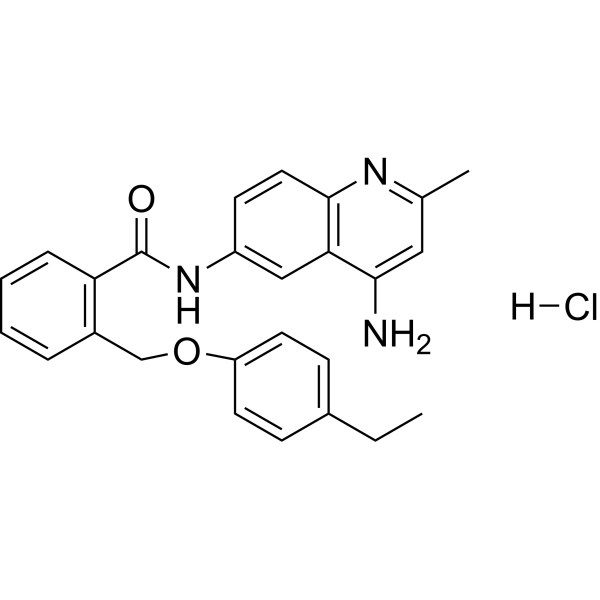
- Formula: C26H26ClN3O2
- Molecular Weight:447.96
-
Storage:
4°C, sealed storage, away from moisture
* In solvent : -80°C, 6 months; -20°C, 1 month (sealed storage, away from moisture)

To place orders, for customer services and technical support, please contact: MedChemExpress USA
Tel: 609-228-6898 E-mail: [email protected] [email protected]


-
 Biological Activity
-
Chemical Information
-
Solvent & Solubility
- Protocol
- Purity & Documentation
- References
-
 Help & FAQs


-
HY-18739
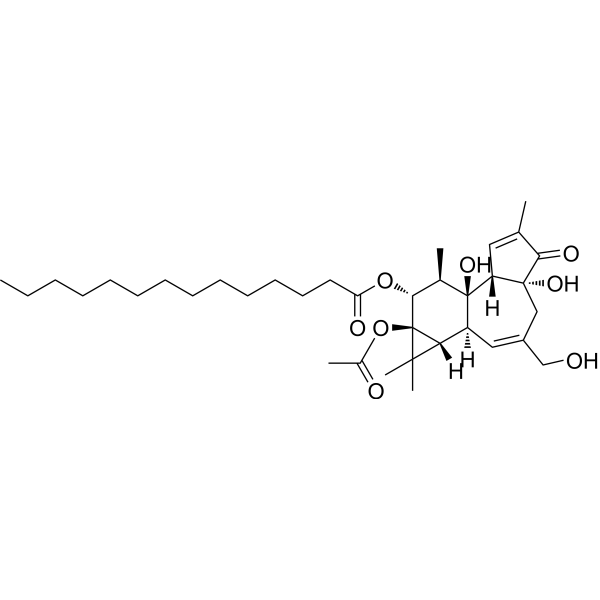
Phorbol 12-myristate 13-acetate
-
HY-P0183
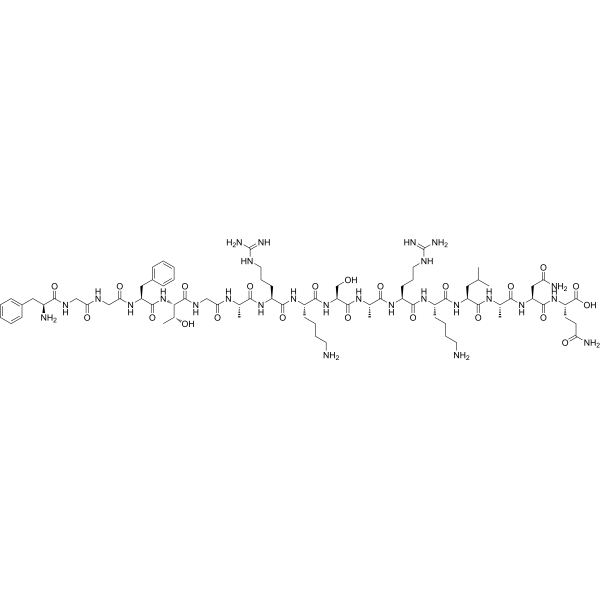
Nociceptin
-
HY-101988
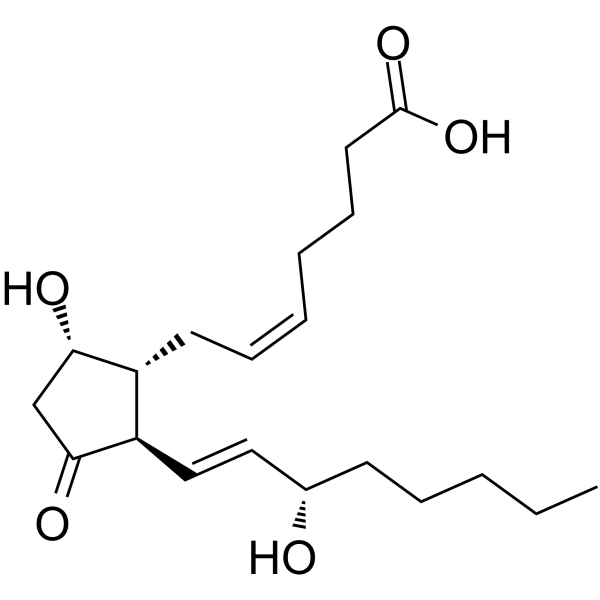
Prostaglandin D2
-
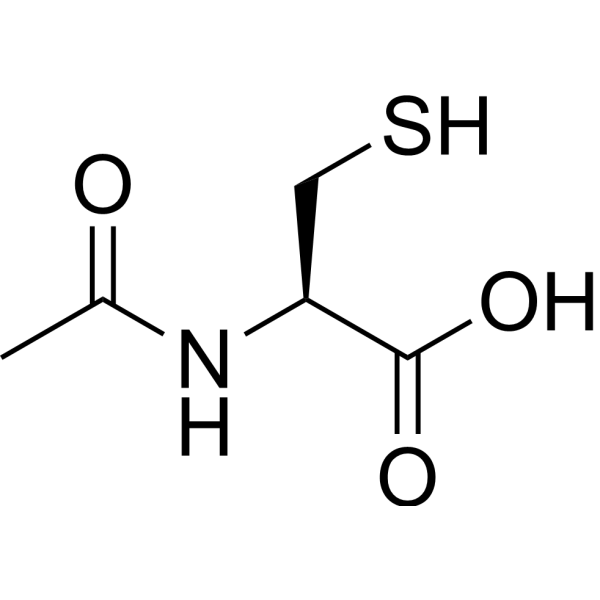
HY-B0215
Acetylcysteine
-
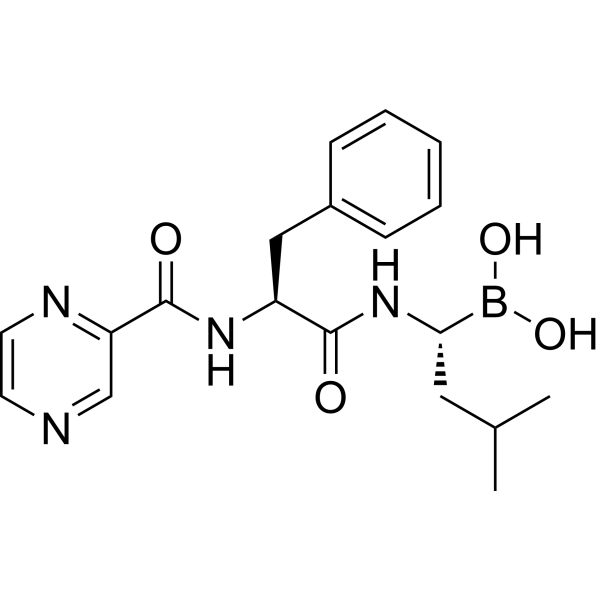
HY-10227
Bortezomib
-
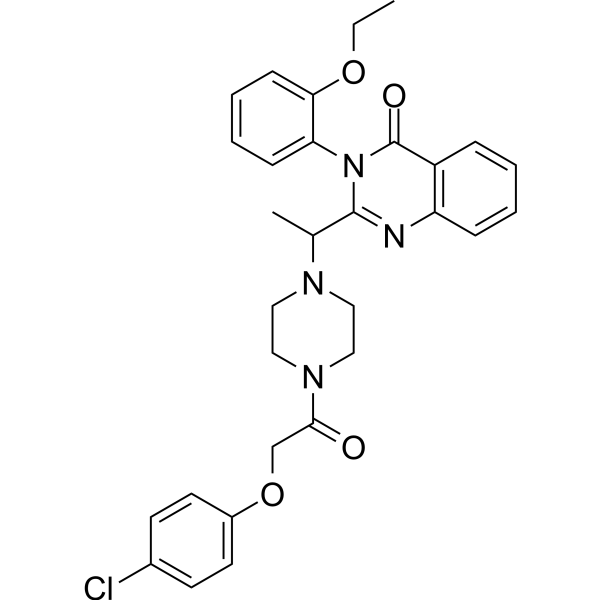
HY-15763
Erastin
-
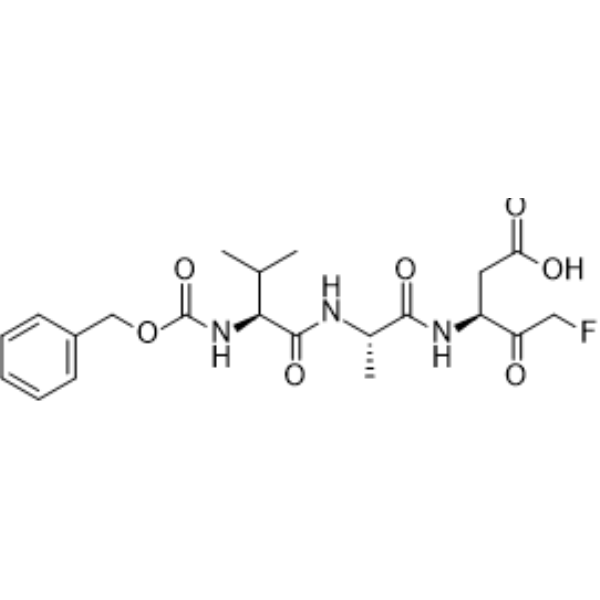
HY-16658B
Z-VAD-FMK
-
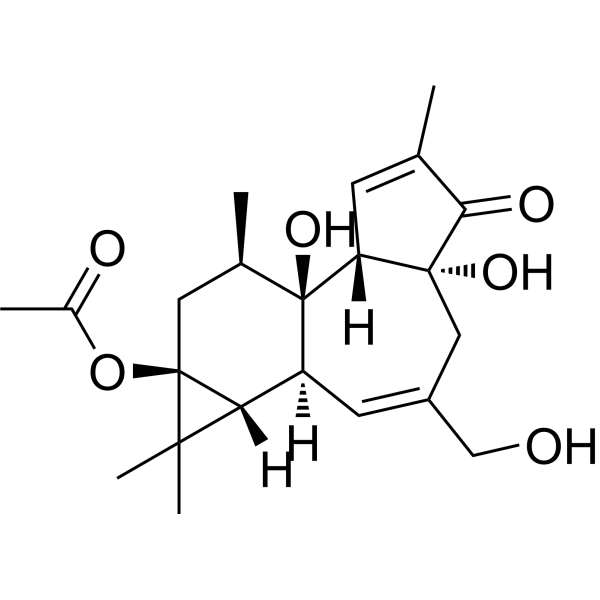
HY-107421
Prostratin
-
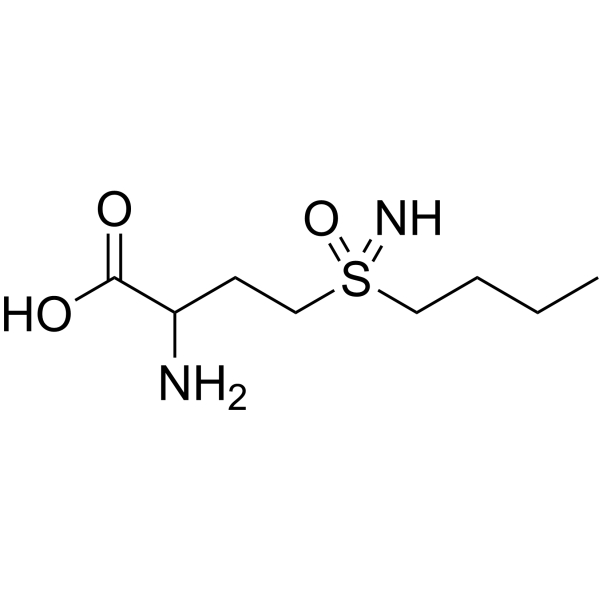
HY-106376
DL-Buthionine-(S,R)-sulfoximine
-
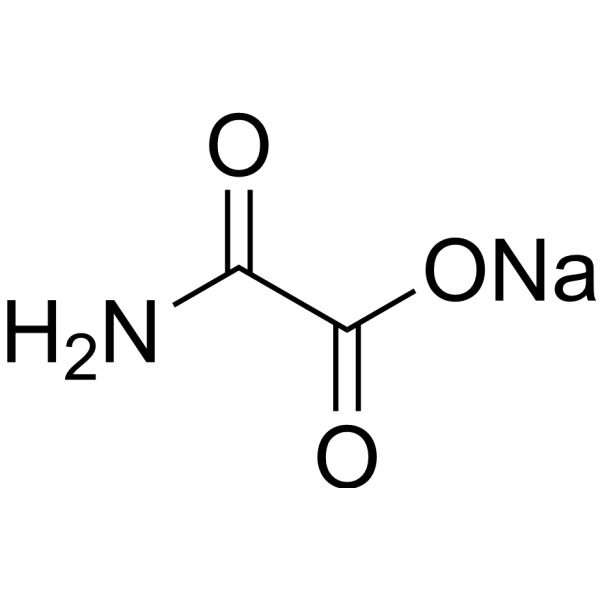
HY-W013032A
Oxamic acid sodium
-
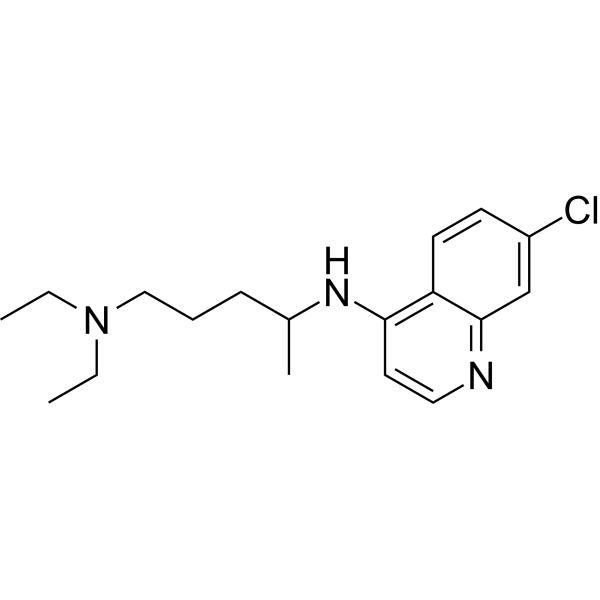
HY-17589A
Chloroquine
-
HY-13962
SGI-1027
Publications Citing Use of MedChemExpress (MCE) JTC-801
More- Neurotherapeutics. 2024 Sep;21(5):e00424. [Abstract]
- Mol Biotechnol. 2025 Jan 6. [Abstract]
- J Pain Res. 2025 Jun 5:18:2775-2790. [Abstract]
- Oncol Lett. 2019 Feb;17(2):1939-1945. [Abstract]
- J Recept Signal Transduct Res. 2018 Apr;38(2):133-140. [Abstract]
- Pharmazie. 2018 May 1;73(5):283-287. [Abstract]
- Med Sci (Paris). 2018 Oct:34 Focus issue F1:8-14. [Abstract]
 Customer Validation & Images

-
WB
-
WB
-
WB
All Opioid Receptor Isoforms
More

Biological Activity
|
NOP Receptor/ORL1 |
JTC-801 inhibits [3H]-nociceptin binding to ORL1 receptor expressed in HeLa cells with an IC50 value of 94±8.6 nm at a [3H]-nociceptin concentration of 50?pM. JTC-801 weakly inhibits the binding of the ligands to human δ receptor (IC50>10?μM), κ receptor (IC50>10?μM), and μ receptor (IC50=325?nM). In rat cerebrocortical membrane, JTC-801 inhibits ORL1 receptor (IC50=472?nM) and μ receptor (IC50=1831?nM). JTC-801 at a concentration of 10?μM reverses the inhibitory action of nociceptin against forskolin-induced increase in cyclic AMP level (IC50: 2.58?μM, 1?nM of nociceptin used). JTC-801 alone does not affect the the production of cyclic AMP[1]. The affinity of JTC-801 for ORL1 receptor, human opioid μ-, κ-, and δ-receptors is 8.2 nM, 102.9 nM, 1057.5 nM and 8647.2 nM[2].
MedChemExpress (MCE) has not independently confirmed the accuracy of these methods. They are for reference only.
MedChemExpress (MCE) has not independently confirmed the accuracy of these methods. They are for reference only.


Chemical Information
-
CAS No. 244218-51-7
-
Appearance Solid
-
Molecular Weight 447.96
-
Formula C26H26ClN3O2
-
Color White to off-white
-
SMILES
NC1=CC(C)=NC2=C1C=C(NC(C3=C(COC4=CC=C(C=C4)CC)C=CC=C3)=O)C=C2.[H]Cl
-
Shipping
Room temperature in continental US; may vary elsewhere.
-
Storage
4°C, sealed storage, away from moisture
* In solvent : -80°C, 6 months; -20°C, 1 month (sealed storage, away from moisture)


Publications (7)
-
Journal Impact Factor
-
Most Recent
-
Neurotherapeutics
LY2940094, an NOPR antagonist, promotes oligodendrocyte generation and myelin recovery in an NOPR independent manner. [Abstract]2024 Sep;21(5):e00424. PMID: 39004556 -
Mol Biotechnol
Identification and Validation of Alkaliptosis Resistance-Associated Genes in Prostate Cancer Via Transcriptome Sequencing and Prediction of Biochemical Recurrence. [Abstract]2025 Jan 6. PMID: 39760809 -
J Pain Res
Spinal Cord Stimulation Alleviates Sensitization of Neuropathic Pain by Upregulating G Protein-Coupled Receptors to Inhibit Overexpression of Cav2.2 and Its Downstream Excitatory Neurotransmitters. [Abstract]2025 Jun 5:18:2775-2790. PMID: 40496674 -
Oncol Lett
JTC-801 inhibits the proliferation and metastasis of the Hep G2 hepatoblastoma cell line by regulating the phosphatidylinositol 3-kinase/protein kinase B signalling pathway. [Abstract]2019 Feb;17(2):1939-1945. PMID: 30675258
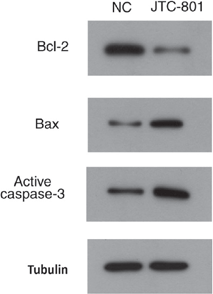
JTC-801 purchased from MedChemExpress. Usage Cited in: Oncol Lett. 2019 Feb;17(2):1939-1945. [Abstract]
Western blot analysis of proteins from Hep G2 cells treated with JTC‑801 for 24 h. The band intensities are quantified.
-
J Recept Signal Transduct Res
JTC-801 exerts anti-proliferative effects in human osteosarcoma cells by inducing apoptosis. [Abstract]2018 Apr;38(2):133-140. PMID: 29447541
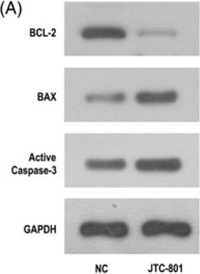
JTC-801 purchased from MedChemExpress. Usage Cited in: J Recept Signal Transduct Res. 2018 Apr;38(2):133-140. [Abstract]
JTC-801 down-regulates BCL-2 expression, and up-regulates BAX, Caspase-3 expression in U2OS cells.
-
Pharmazie
JTC-801 inhibits the proliferation and metastasis of ovarian cancer cell SKOV3 through inhibition of the PI3K - AKT signaling pathway. [Abstract]2018 May 1;73(5):283-287. PMID: 29724295
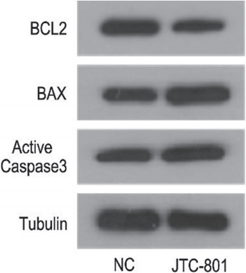
JTC-801 purchased from MedChemExpress. Usage Cited in: Pharmazie. 2018 May 1;73(5):283-287. [Abstract]
Expression levels of proteins (BCL2, BAX and Active Caspase3) involved in the apoptotic pathway in the different SKOV3 groups, as detected by western blotting.
-
Med Sci (Paris)
2018 Oct:34 Focus issue F1:8-14. PMID: 30403168


Solvent & Solubility
DMSO : 100 mg/mL (223.23 mM; Need ultrasonic; Hygroscopic DMSO has a significant impact on the solubility of product, please use newly opened DMSO)
H2O : ≥ 0.33 mg/mL (0.74 mM)
* "≥" means soluble, but saturation unknown.
Please refer to the solubility information to select the appropriate solvent. Once prepared, please aliquot and store the solution to prevent product inactivation from repeated freeze-thaw cycles.
Storage method and period of stock solution: -80°C, 6 months; -20°C, 1 month (sealed storage, away from moisture). When stored at -80°C, please use it within 6 months. When stored at -20°C, please use it within 1 month.
* Note: If you choose water as the stock solution, please dilute it to the working solution, then filter and sterilize it with a 0.22 μm filter before use.
Please refer to the solubility information to select the appropriate solvent. Once prepared, please aliquot and store the solution to prevent product inactivation from repeated freeze-thaw cycles.
Storage method and period of stock solution: -80°C, 6 months; -20°C, 1 month (sealed storage, away from moisture). When stored at -80°C, please use it within 6 months. When stored at -20°C, please use it within 1 month.
* Note: If you choose water as the stock solution, please dilute it to the working solution, then filter and sterilize it with a 0.22 μm filter before use.
Concentration (start) × Volume (start) = Concentration (final) × Volume (final)
Select the appropriate dissolution method based on your experimental animal and administration route.
- For the following dissolution methods, please ensure to first prepare a clear stock solution using an In Vitro approach and then sequentially add co-solvents:
- To ensure reliable experimental results, the clarified stock solution can be appropriately stored based on storage conditions. As for the working solution for In Vivo experiments, it is recommended to prepare freshly and use it on the same day.
- The percentages shown for the solvents indicate their volumetric ratio in the final prepared solution. If precipitation or phase separation occurs during preparation, heat and/or sonication can be used to aid dissolution.
Add each solvent one by one: 10% DMSO 40% PEG300 5% Tween-80 45% Saline
Solubility: ≥ 2.5 mg/mL (5.58 mM); Clear solution
This protocol yields a clear solution of ≥ 2.5 mg/mL (saturation unknown).
Taking 1 mL working solution as an example, add 100 μL DMSO stock solution (25.0 mg/mL) to 400 μL PEG300, and mix evenly; then add 50 μL Tween-80 and mix evenly; then add 450 μL Saline to adjust the volume to 1 mL.
Preparation of Saline: Dissolve 0.9 g sodium chloride in ddH₂O and dilute to 100 mL to obtain a clear Saline solution.
Add each solvent one by one: 10% DMSO 90% (20% SBE-β-CD in Saline)
Solubility: ≥ 2.5 mg/mL (5.58 mM); Clear solution
This protocol yields a clear solution of ≥ 2.5 mg/mL (saturation unknown).
Taking 1 mL working solution as an example, add 100 μL DMSO stock solution (25.0 mg/mL) to 900 μL 20% SBE-β-CD in Saline, and mix evenly.
Preparation of 20% SBE-β-CD in Saline (4°C, storage for one week): 2 g SBE-β-CD powder is dissolved in 10 mL Saline, completely dissolve until clear.
Please enter the basic information of animal experiments:
-
-
-
-
Recommended: Prepare an additional quantity of animals to account for potential losses during experiments.
Please enter your animal formula composition:
-
%DMSO +
Recommended: Keep the proportion of DMSO in working solution below 2% if your animal is weak.
-
%+
-
+%Tween-80 + +
-
%Saline +
The co-solvents required include: DMSO, . All of co-solvents are available by MedChemExpress (MCE). , Tween 80. All of co-solvents are available by MedChemExpress (MCE).
Working solution concentration: 0.22 mg/mL
Method for preparing stock solution: mg drug dissolved in μL DMSO. Stock solution concentration: mg/mL. * In solvent : -80°C, 6 months; -20°C, 1 month (sealed storage, away from moisture)
1. Take μL DMSO stock solution;
2. Add μL .
μL , mix evenly;
3. Then add μL Tween 80, mix evenly;
4. Then add μL
Please ensure that the stock solution in the first step is dissolved to a clear state, and add co-solvents in sequence. You can use ultrasonic heating (ultrasonic cleaner, recommended frequency 20-40 kHz), vortexing, etc. to assist dissolution.

Protocol
A suspension of membranes from human μ-opioid receptor-expressing CHO-K1 cells in 50 mM Tris-HCl buffer (pH 7.4) containing 5 mM MgCl2 and 10% sucrose is incubated at room temperature for 2.5 h with 0.33 nM 3H-labeled diprenorphine and various concentrations of JTC-801. The membranes are collected by filtration using Whatman 934-AH, and radioactivity is counted with a TopCount A9912V scintillation counter. Nonspecific binding (6.4%) is determined with 10 μM naloxone. Specific binding is calculated by subtracting nonspecific binding from the total binding. Data are the mean±SE (n=3).
MedChemExpress (MCE) has not independently confirmed the accuracy of these methods. They are for reference only.
The antagonistic effect of naloxone, a non-specific opioid antagonist, on the anti-nociceptive effect of JTC-801 and morphine is examined by formalin stimulation test. Limb licking response is induced by subcutaneous injection of 50 μL of 5% formalin to the left hind limb of each rat. The first 5 min (from immediately after the injection of formalin) and the subsequent 15 min (15-30 min post-injection) are designated as the first and second phases, respectively. The limb licking time during each of the phases is measured and used as an indicator of pain. Fifteen min before the injection of formalin, naloxone (10 mg/kg, dissolved in physiological saline) is given subcutaneously. Five min before the injection of formalin, JTC-801 and morphine are dissolved in 5% sorbitol and given into the tail vein at doses of 0.03 and 1.0 mg/kg, respectively. JTC-801 (3.0 mg/kg) and morphine (30 mg/kg) are administered orally 60 min before the formalin injection.
MedChemExpress (MCE) has not independently confirmed the accuracy of these methods. They are for reference only.


Purity & Documentation
-
Data Sheet (282 KB)
-
SDS (393 KB)
- English - EN (393 KB)
- Français - FR (393 KB)
- Deutsch - DE (393 KB)
- Norwegian - NO (393 KB)
- Español - ES (393 KB)
- Swedish - SV (393 KB)
- Italian - IT (393 KB)
- Korean - KR (393 KB)
- Portuguese - PT (393 KB)
-
Handling Instructions (2659 KB)
References
[1]. Yamada H, et al. Pharmacological profiles of a novel opioid receptor-like1 (ORL(1)) receptor antagonist, JTC-801. Br J Pharmacol, 2002, 135(2), 323-332. [Content Brief]
[2]. Koyama T, et al. Nociceptin receptor antagonist JTC-801 inhibits nitrous oxide-induced analgesia in mice. J Anesth. 2009;23(2):301-3. [Content Brief]
[3]. Shinkai H, et al. 4-Aminoquinolines: novel nociceptin antagonists with analgesic activity. J Med Chem, 2000, 43(24), 4667-4677. [Content Brief]
[4]. Zhang Y, et al. Nociceptin/orphanin FQ peptide receptor antagonist JTC-801 reverses pain and anxiety symptoms in a rat model of post-traumatic stress disorder. Br J Pharmacol. 2015 Jan;172(2):571-82. [Content Brief]


Complete Stock Solution Preparation Table
Please refer to the solubility information to select the appropriate solvent. Once prepared, please aliquot and store the solution to prevent product inactivation from repeated freeze-thaw cycles.
Storage method and period of stock solution: -80°C, 6 months; -20°C, 1 month (sealed storage, away from moisture). When stored at -80°C, please use it within 6 months. When stored at -20°C, please use it within 1 month.
| Optional Solvent | Concentration Solvent Mass | 1 mg | 5 mg | 10 mg | 25 mg |
|---|---|---|---|---|---|
| DMSO | 1 mM | 2.2323 mL | 11.1617 mL | 22.3234 mL | 55.8086 mL |
| 5 mM | 0.4465 mL | 2.2323 mL | 4.4647 mL | 11.1617 mL | |
| 10 mM | 0.2232 mL | 1.1162 mL | 2.2323 mL | 5.5809 mL | |
| 15 mM | 0.1488 mL | 0.7441 mL | 1.4882 mL | 3.7206 mL | |
| 20 mM | 0.1116 mL | 0.5581 mL | 1.1162 mL | 2.7904 mL | |
| 25 mM | 0.0893 mL | 0.4465 mL | 0.8929 mL | 2.2323 mL | |
| 30 mM | 0.0744 mL | 0.3721 mL | 0.7441 mL | 1.8603 mL | |
| 40 mM | 0.0558 mL | 0.2790 mL | 0.5581 mL | 1.3952 mL | |
| 50 mM | 0.0446 mL | 0.2232 mL | 0.4465 mL | 1.1162 mL | |
| 60 mM | 0.0372 mL | 0.1860 mL | 0.3721 mL | 0.9301 mL | |
| 80 mM | 0.0279 mL | 0.1395 mL | 0.2790 mL | 0.6976 mL | |
| 100 mM | 0.0223 mL | 0.1116 mL | 0.2232 mL | 0.5581 mL |
* Note: If you choose water as the stock solution, please dilute it to the working solution, then filter and sterilize it with a 0.22 μm filter before use.


JTC-801 Related Classifications
HY-13274 Related Classifications
 Powered by Bioz