



Nelivaptan
Based on 1 publication(s) in Google Scholar
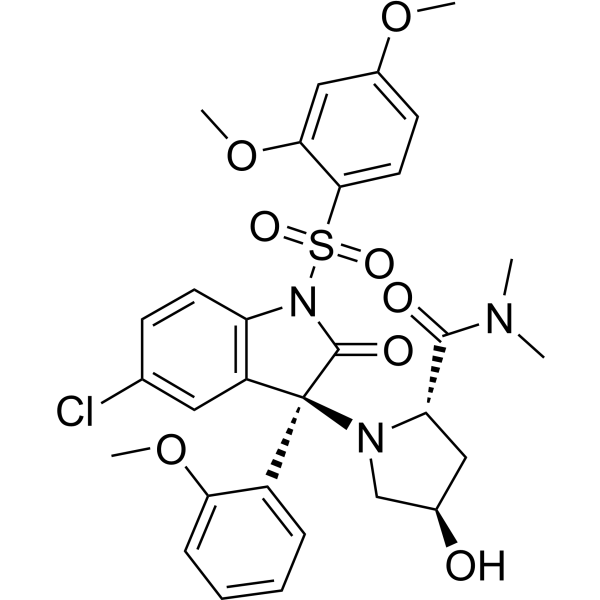
Nelivaptan (SSR-149415) is a selective and orally active vasopressin V1b receptor antagonist (Ki: 3.7 and 1.3 nM for native and recombinant rat V1b receptors, respectively). Nelivaptan inhibits arginine vasopressin (AVP)-induced Ca2+ increase and corticotropin secretion. Nelivaptan can be used for research of stress, anxiety and depression.
For research use only. We do not sell to patients.
- Purity: 99.89%
- CAS No.: 439687-69-1
- Formula: C30H32ClN3O8S
- Molecular Weight:630.11
-
Storage:
4°C, protect from light
* In solvent : -80°C, 6 months; -20°C, 1 month (protect from light)

To place orders, for customer services and technical support, please contact: MedChemExpress USA
Tel: 609-228-6898 E-mail: [email protected] [email protected]


-
 Biological Activity
-
Chemical Information
-
Solvent & Solubility
- Purity & Documentation
- References
-
 Help & FAQs


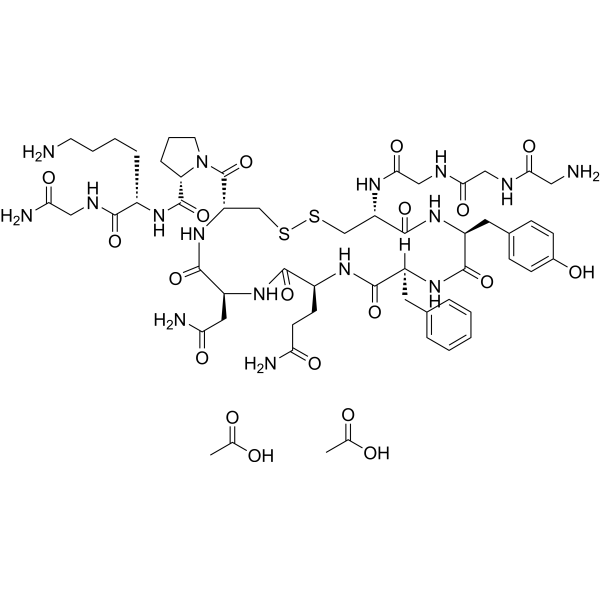
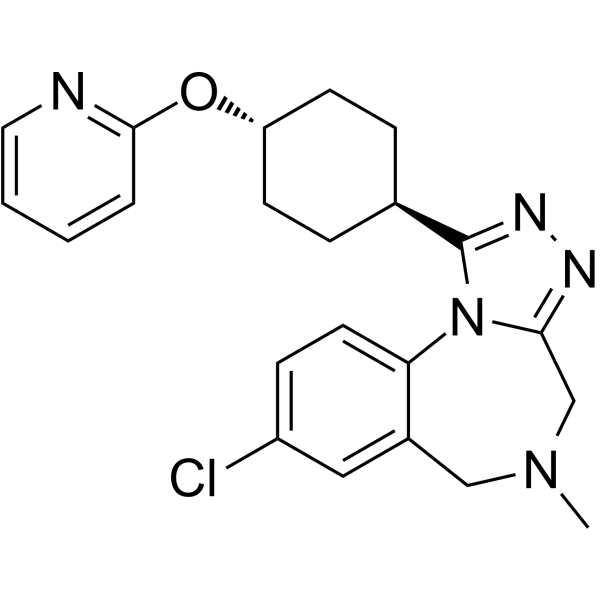
![d[Cha4]-AVP](https://file.medchemexpress.com/product_pic/hy-p1390.gif)
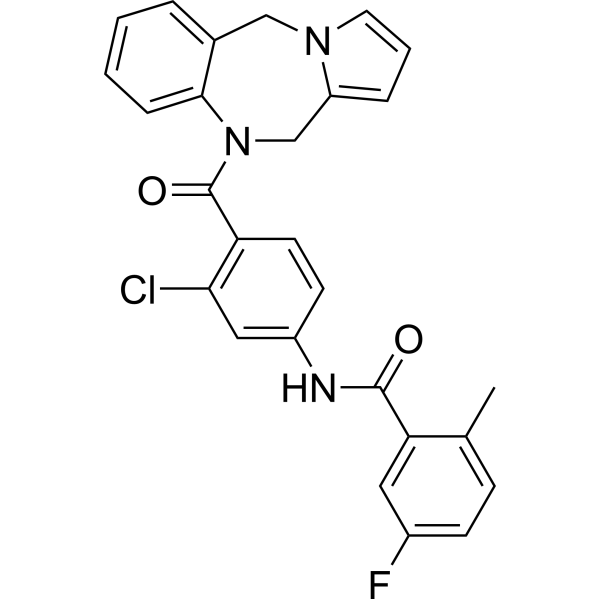
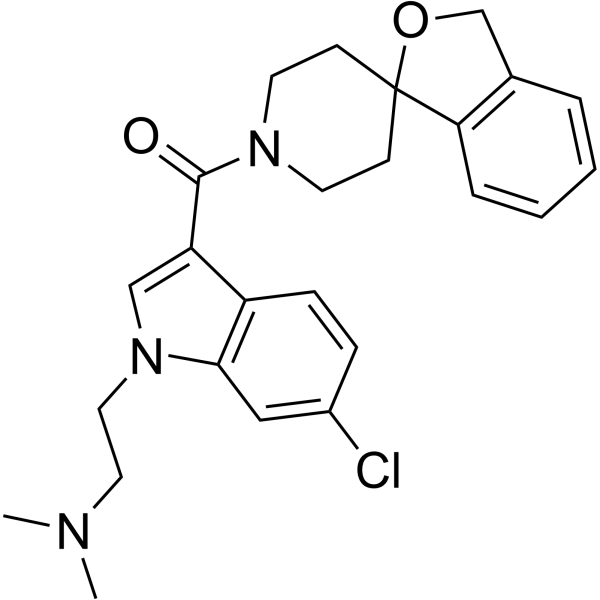
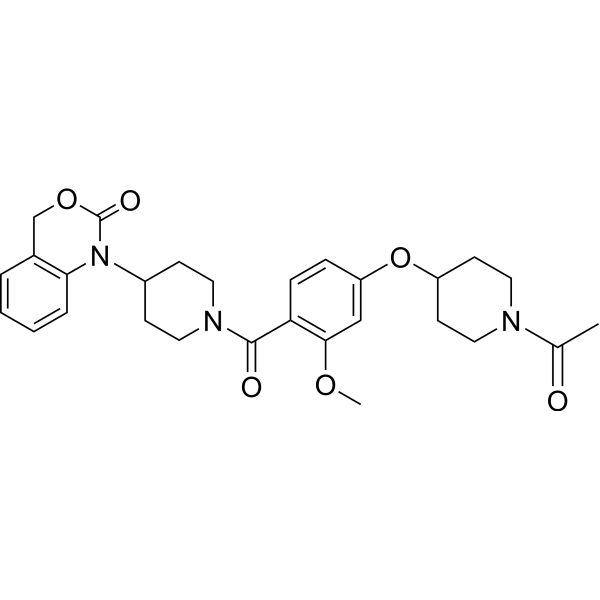
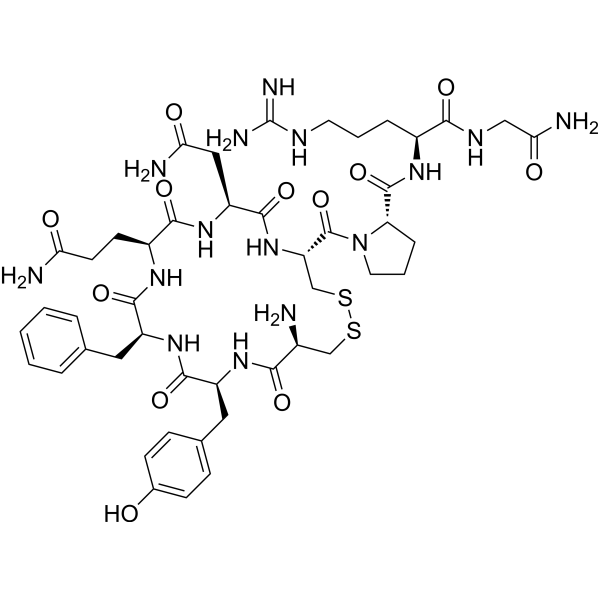
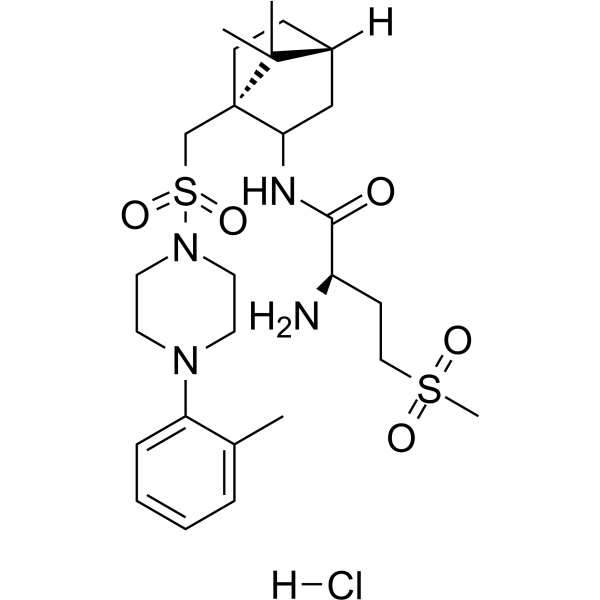
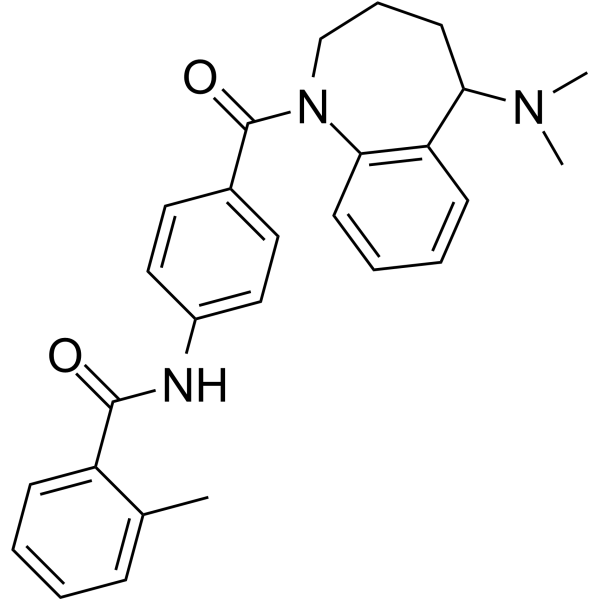
Publications Citing Use of MedChemExpress (MCE) Nelivaptan
MoreAll Vasopressin Receptor Isoforms
More

Biological Activity
Nelivaptan (0.1-100 nM, 20 min) potently inhibits arginine vasopressin (AVP)-induced Ca2 increase in CHO cells transfected with the human V1b receptor[1].
Nelivaptan (0.9-15 nM, 45 min) inhibits [3H]AVP binding in a competitive manner in CHO cells transfected with the human V1b receptor[1].
MedChemExpress (MCE) has not independently confirmed the accuracy of these methods. They are for reference only.
Nelivaptan (1-10 mg/kg; p.o.; 1, 2, 3, 4, and 6 h before the AVP challenge) produces powerful dose-dependent inhibition of the corticotropin increase in response to exogenous AVP plus corticotropin-releasing factor (CRF) in Sprague-Dawley rats[1].
Nelivaptan (1-10 mg/kg; i.p. 30 min or 60 min before test; or p.o. for 7 days) displays anxiolytic-like activity after acute and 7-day repeated administrations in male NMRI mice [1].
Nelivaptan (30 mg/kg; i.p.; daily for two weeks) retains efficacy in reducing both measured indices of depression-like behavior (learned helplessness and anhedonia), even when neurogenesis is blocked in male Wistar rats with chronic mild stress[2].
MedChemExpress (MCE) has not independently confirmed the accuracy of these methods. They are for reference only.
-
Animal Model:Male Wistar rats (300-400 g, aged 3 months) with chronic mild stress[2]
-
Dosage:30 mg/kg
-
Administration:Intraperitoneal injection (i.p.); daily for two weeks
-
Result:Chronic administration reversed learned helplessness and anhedonia even when methylazoxymethanol (MAM) was administered.
Attenuated these depressive-like behaviors after 1 week.
Restored the density of Ki-67-positive cells to control levels.
-
Animal Model:Male Sprague-Dawley CD rats (275-300 g)[1]
-
Dosage:1, 3, 10, 30 mg/kg
-
Administration:Intraperitoneal injection (i.p.) or Oral gavage (p.o.); 30 min i.p. or 2 h p.o. before an exogenous AVP injection
-
Result:Antagonized AVP-induced corticotropin secretion in a dose-dependent manner by both intraperitoneal and oral routes.
The inhibition was significant from 10 mg/kg p.o. and 3 mg/kg i.p. upwards.
The inhibitory action lasted significantly for more than 2 h at 10 mg/kg i.p. and up to 4 h at 10 mg/kg p.o..
Had no effect on basal corticotropin plasma levels up to 30 mg/kg p.o..
-
Animal Model:Male Sprague-Dawley CD rats (275-300 g)[1]
-
Dosage:1, 3, 10 mg/kg
-
Administration:Oral gavage (p.o.); 1, 2, 3, 4, and 6 h before the AVP challenge (10 mg/kg)
-
Result:Produced powerful dose-dependent inhibition of the corticotropin increase in response to exogenous AVP plus corticoliberin; the effect was significant from the dose of 3 mg/kg p.o.. Complete blockade was achieved at 10 mg/kg.
Showed a fast onset of action, the inhibitory effect was maximal at 1 h after administration.
The inhibitory effect on corticotropin secretion lasted significantly more than 4 h, demonstrating a long-lasting oral effect in a specific V1b-related model.
-
Animal Model:Male NMRI mice (20 g)[1]
-
Dosage:1, 3, 10 mg/kg
-
Administration:Intraperitoneal injection (i.p.) or Oral gavage (p.o.); i.p. (1, 3, 10 mg/kg) 30 min or 60 min befeore; p.o. (10 mg/kg) for 7 days,
-
Result:In the acute experiments, i.p. and p.o. compound increased the number of punished crossings showing marked anxiolytic effects.
Post hoc analysis revealed that these effects reached statistical significance from 3 mg/kg p.o. and i.p.
The anxiolytic-like activity was still significantly maintained when given repeatedly at 10 mg/kg p.o. for 7 days.
The oral time course of the anxiolytic-like action performed at 10 mg/kg indicated that effects lasted for more than 4 h.
| NCT Number | Sponsor | Condition | Start Date |
Phase

|
|---|---|---|---|---|
| NCT01329991 | Plexxikon| | 2011-05 | PHASE1 |


Chemical Information
-
CAS No. 439687-69-1
-
Appearance Solid
-
Molecular Weight 630.11
-
Formula C30H32ClN3O8S
-
Color White to off-white
-
SMILES
O=S(N(C(C=C1)=C2C=C1Cl)C([C@@]2(C3=CC=CC=C3OC)N4[C@@H](C[C@@H](O)C4)C(N(C)C)=O)=O)(C(C(OC)=C5)=CC=C5OC)=O
-
Synonyms
SSR-149415
-
Shipping
Room temperature in continental US; may vary elsewhere.
-
Storage
4°C, protect from light
* In solvent : -80°C, 6 months; -20°C, 1 month (protect from light)


Publications (1)
-
Journal Impact Factor
-
Most Recent


Solvent & Solubility
DMSO : 100 mg/mL (158.70 mM; Need ultrasonic; Hygroscopic DMSO has a significant impact on the solubility of product, please use newly opened DMSO)
Please refer to the solubility information to select the appropriate solvent. Once prepared, please aliquot and store the solution to prevent product inactivation from repeated freeze-thaw cycles.
Storage method and period of stock solution: -80°C, 6 months; -20°C, 1 month (protect from light). When stored at -80°C, please use it within 6 months. When stored at -20°C, please use it within 1 month.
Please refer to the solubility information to select the appropriate solvent. Once prepared, please aliquot and store the solution to prevent product inactivation from repeated freeze-thaw cycles.
Storage method and period of stock solution: -80°C, 6 months; -20°C, 1 month (protect from light). When stored at -80°C, please use it within 6 months. When stored at -20°C, please use it within 1 month.
Concentration (start) × Volume (start) = Concentration (final) × Volume (final)
Select the appropriate dissolution method based on your experimental animal and administration route.
- For the following dissolution methods, please ensure to first prepare a clear stock solution using an In Vitro approach and then sequentially add co-solvents:
- To ensure reliable experimental results, the clarified stock solution can be appropriately stored based on storage conditions. As for the working solution for In Vivo experiments, it is recommended to prepare freshly and use it on the same day.
- The percentages shown for the solvents indicate their volumetric ratio in the final prepared solution. If precipitation or phase separation occurs during preparation, heat and/or sonication can be used to aid dissolution.
Add each solvent one by one: 10% DMSO 40% PEG300 5% Tween-80 45% Saline
Solubility: ≥ 2.5 mg/mL (3.97 mM); Clear solution
This protocol yields a clear solution of ≥ 2.5 mg/mL (saturation unknown).
Taking 1 mL working solution as an example, add 100 μL DMSO stock solution (25.0 mg/mL) to 400 μL PEG300, and mix evenly; then add 50 μL Tween-80 and mix evenly; then add 450 μL Saline to adjust the volume to 1 mL.
Preparation of Saline: Dissolve 0.9 g sodium chloride in ddH₂O and dilute to 100 mL to obtain a clear Saline solution.
Please enter the basic information of animal experiments:
-
-
-
-
Recommended: Prepare an additional quantity of animals to account for potential losses during experiments.
Please enter your animal formula composition:
-
%DMSO +
Recommended: Keep the proportion of DMSO in working solution below 2% if your animal is weak.
-
%+
-
+%Tween-80 + +
-
%Saline +
The co-solvents required include: DMSO, . All of co-solvents are available by MedChemExpress (MCE). , Tween 80. All of co-solvents are available by MedChemExpress (MCE).
Working solution concentration: 0.22 mg/mL
Method for preparing stock solution: mg drug dissolved in μL DMSO. Stock solution concentration: mg/mL. * In solvent : -80°C, 6 months; -20°C, 1 month (protect from light)
1. Take μL DMSO stock solution;
2. Add μL .
μL , mix evenly;
3. Then add μL Tween 80, mix evenly;
4. Then add μL
Please ensure that the stock solution in the first step is dissolved to a clear state, and add co-solvents in sequence. You can use ultrasonic heating (ultrasonic cleaner, recommended frequency 20-40 kHz), vortexing, etc. to assist dissolution.


Purity & Documentation
-
Data Sheet (290 KB)
-
SDS (393 KB)
- English - EN (393 KB)
- Français - FR (393 KB)
- Deutsch - DE (393 KB)
- Norwegian - NO (393 KB)
- Español - ES (393 KB)
- Swedish - SV (393 KB)
- Italian - IT (393 KB)
- Korean - KR (393 KB)
- Portuguese - PT (393 KB)
-
Handling Instructions (2659 KB)
References
[1]. Serradeil-Le Gal C, et al. Characterization of (2S,4R)-1-[5-chloro-1-[(2,4-dimethoxyphenyl)sulfonyl]-3-(2-methoxy-phenyl)-2-oxo-2,3-dihydro-1H-indol-3-yl]-4-hydroxy-N,N-dimethyl-2-pyrrolidine carboxamide (SSR149415), a selective and orally active vasopressin V1b receptor antagonist. J Pharmacol Exp Ther. 2002 Mar;300(3):1122-30. [Content Brief]
[2]. Bessa JM, et al. The mood-improving actions of antidepressants do not depend on neurogenesis but are associated with neuronal remodeling. Mol Psychiatry. 2009 Aug;14(8):764-73, 739. [Content Brief]


Complete Stock Solution Preparation Table
Please refer to the solubility information to select the appropriate solvent. Once prepared, please aliquot and store the solution to prevent product inactivation from repeated freeze-thaw cycles.
Storage method and period of stock solution: -80°C, 6 months; -20°C, 1 month (protect from light). When stored at -80°C, please use it within 6 months. When stored at -20°C, please use it within 1 month.
| Optional Solvent | Concentration Solvent Mass | 1 mg | 5 mg | 10 mg | 25 mg |
|---|---|---|---|---|---|
| DMSO | 1 mM | 1.5870 mL | 7.9351 mL | 15.8702 mL | 39.6756 mL |
| 5 mM | 0.3174 mL | 1.5870 mL | 3.1740 mL | 7.9351 mL | |
| 10 mM | 0.1587 mL | 0.7935 mL | 1.5870 mL | 3.9676 mL | |
| 15 mM | 0.1058 mL | 0.5290 mL | 1.0580 mL | 2.6450 mL | |
| 20 mM | 0.0794 mL | 0.3968 mL | 0.7935 mL | 1.9838 mL | |
| 25 mM | 0.0635 mL | 0.3174 mL | 0.6348 mL | 1.5870 mL | |
| 30 mM | 0.0529 mL | 0.2645 mL | 0.5290 mL | 1.3225 mL | |
| 40 mM | 0.0397 mL | 0.1984 mL | 0.3968 mL | 0.9919 mL | |
| 50 mM | 0.0317 mL | 0.1587 mL | 0.3174 mL | 0.7935 mL | |
| 60 mM | 0.0265 mL | 0.1323 mL | 0.2645 mL | 0.6613 mL | |
| 80 mM | 0.0198 mL | 0.0992 mL | 0.1984 mL | 0.4959 mL | |
| 100 mM | 0.0159 mL | 0.0794 mL | 0.1587 mL | 0.3968 mL |


Nelivaptan Related Classifications
HY-10066 Related Classifications
 Powered by Bioz