



L-371,257
Based on 1 publication(s) in Google Scholar
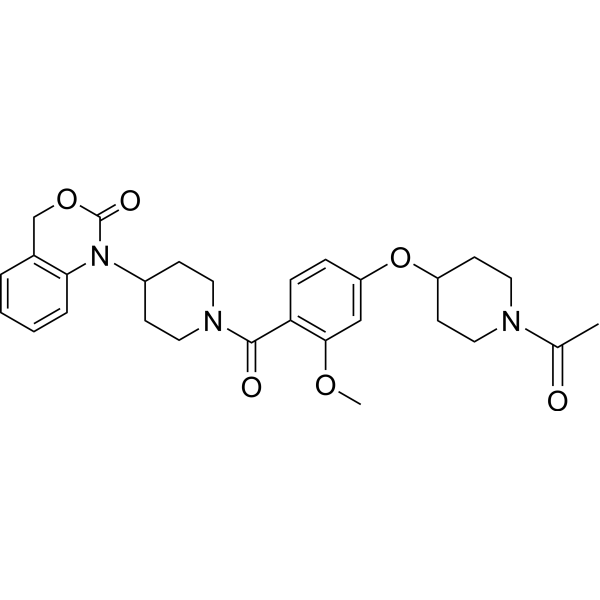
L-371,257 is an orally bioavailable, non-blood-brain barrier penetrant, selective and competitive antagonist of oxytocin receptor (pA2=8.4) with high affinity at both the oxytocin receptor (Ki=19 nM) and vasopressin V1a receptor (Ki=3.7 nM).
For research use only. We do not sell to patients.
- Purity : 99.34%
- CAS No.: 162042-44-6
- Formula: C28H33N3O6
- Molecular Weight:507.58
-
Storage:Powder -20°C, 3 years , 4°C, 2 years ; In solvent -80°C, 6 months , -20°C, 1 month

To place orders, for customer services and technical support, please contact: MedChemExpress USA
Tel: 609-228-6898 E-mail: [email protected] [email protected]


-
 Biological Activity
-
Chemical Information
-
Solvent & Solubility
- Purity & Documentation
- References
-
 Help & FAQs


-
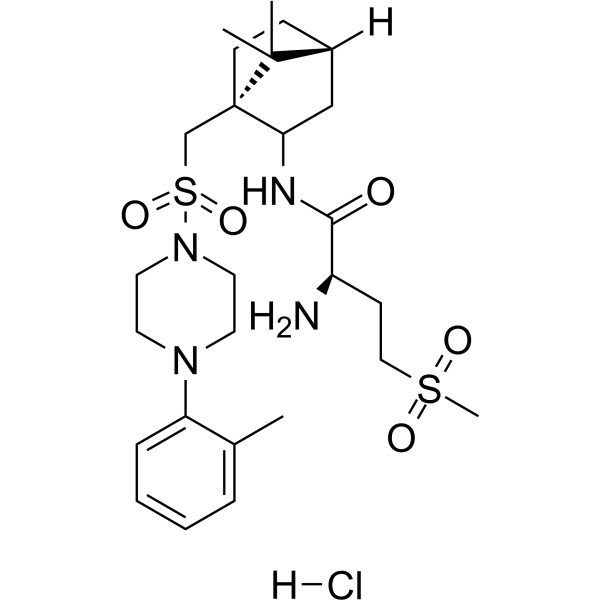
HY-108677
L-368,899 hydrochlorideOxytocin Antagonist -
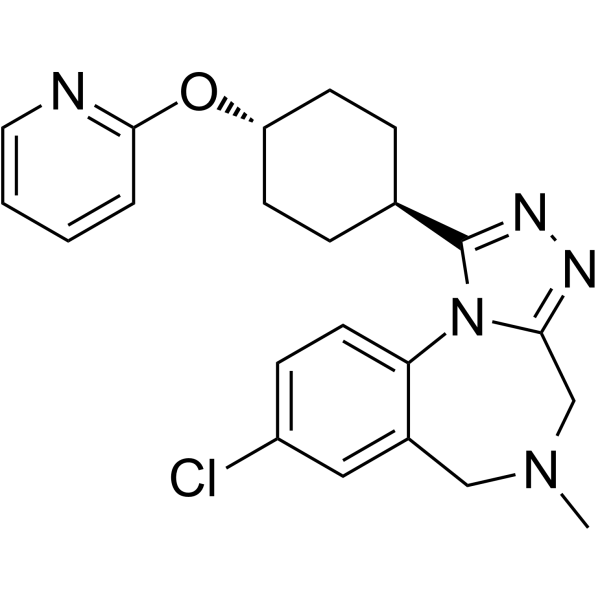
HY-109024
BalovaptanhV1a Receptor Antagonist -
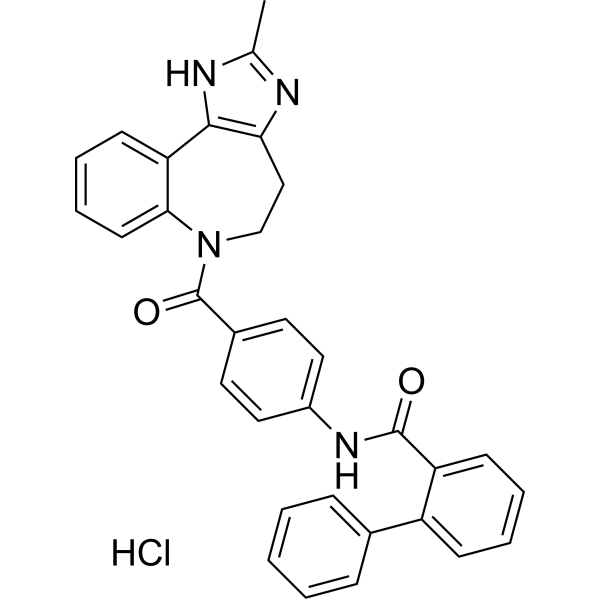
HY-18347A
Conivaptan hydrochlorideVasopressin V1a/V2 Receptor Antagonist -
HY-18345
SR 49059Vasopressin V1a Antagonist -
HY-17000
TolvaptanV2R Antagonist -
HY-17571
OxytocinHypothalamic Peptide -
HY-15522
WAY-267464Oxytocin Receptor (OTR) Agonist -
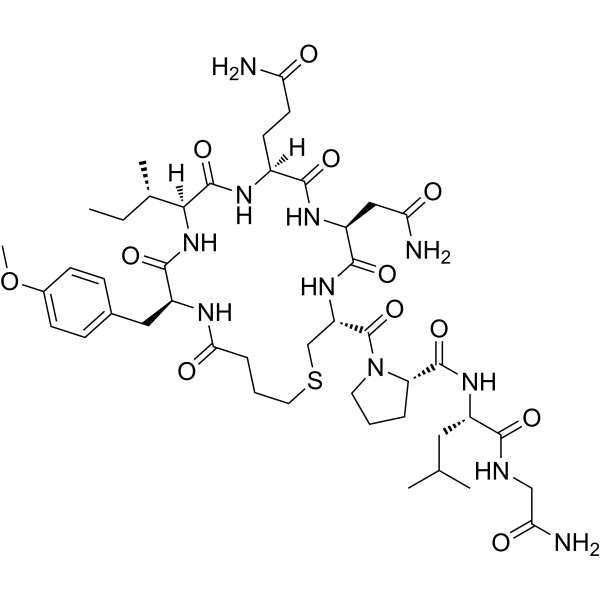
HY-17573
CarbetocinOxytocin Receptor Agonist -
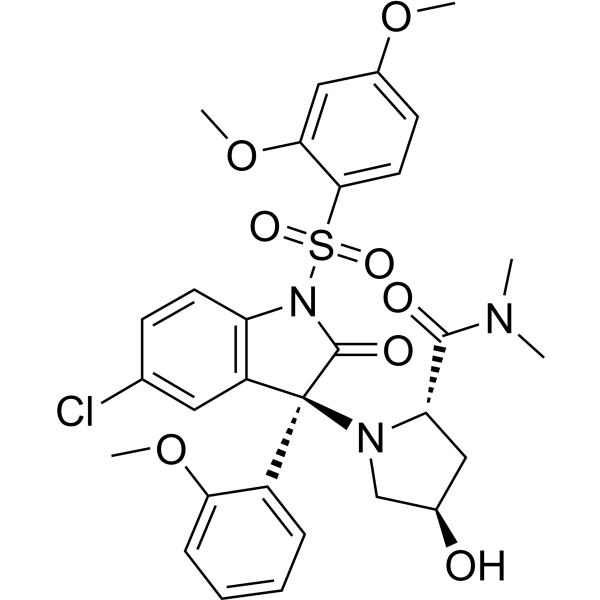
HY-10066
NelivaptanV1b Receptor Antagonist -
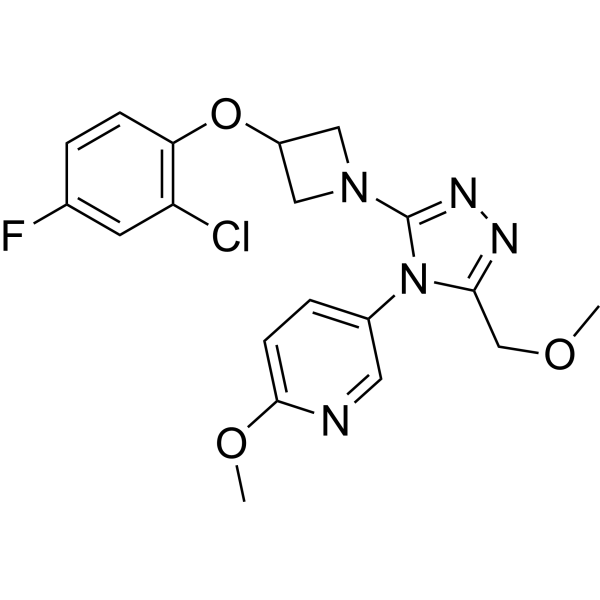
HY-15023
CligosibanOxytocin Receptor Antagonist -
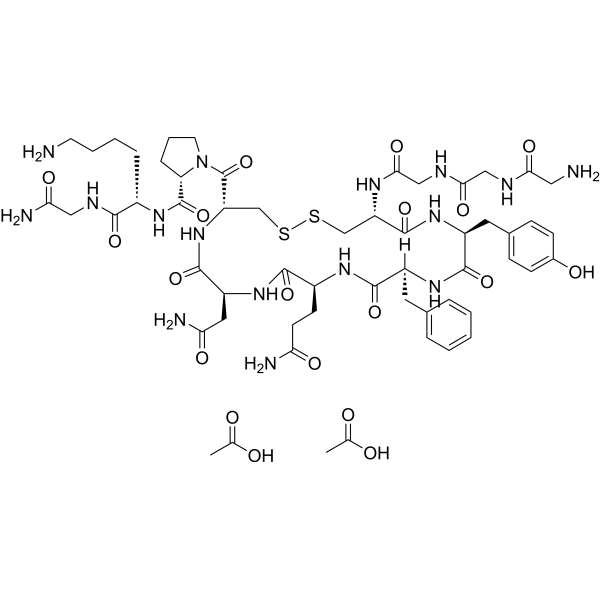
HY-12554A
Terlipressin diacetateVasopressin V1 Receptor Agonist -
HY-14778
RetosibanOxytocin Receptor Antagonist
Publications Citing Use of MedChemExpress (MCE) L-371,257
MoreAll Vasopressin Receptor Isoforms
More

Biological Activity
Description
IC50 & Target
Ki: 19 nM (oxytocin receptor), 3.7 nM (vasopressin V1a receptor)[2]
Cellular Effect
|
Cell Line

|
Type | Value | Description | References |
|---|---|---|---|---|
| CHO | EC50 |
3200 nM
Compound: 4 L-371257
|
Activity at human vasopressin V1a receptor expressed in CHO cells by NFAT-luciferase gene reporter assay
Activity at human vasopressin V1a receptor expressed in CHO cells by NFAT-luciferase gene reporter assay
|
[PMID: 20104850] |
| CHO | EC50 |
4.6 nM
Compound: 4 L-371257
|
Activity at human oxytocin receptor expressed in CHO cells by NFAT-luciferase gene reporter assay
Activity at human oxytocin receptor expressed in CHO cells by NFAT-luciferase gene reporter assay
|
[PMID: 20104850] |
| CHO | EC50 |
37 μM
Compound: 4 L-371257
|
Activity at human vasopressin V2 receptor expressed in CHO cells by NFAT-luciferase gene reporter assay
Activity at human vasopressin V2 receptor expressed in CHO cells by NFAT-luciferase gene reporter assay
|
[PMID: 20104850] |
In Vivo
MedChemExpress (MCE) has not independently confirmed the accuracy of these methods. They are for reference only.
-
Animal Model:Six-hour fasted rats[3]
-
Dosage:0.5 and 1.0 mg/kg
-
Administration:Intraperitoneal injection (a single) 30-45 minutes prior to the start of the dark cycle and access to food; Intraperitoneal injection (given repeatedly) over 6 days.
-
Result:A single injection significantly stimulated weight gain at 0.5 and 1.0 mg/kg relative to vehicle treatment.
When given repeatedly over 6 days, 0.5 mg/kg significantly stimulated body weight gain (10.5±2.2 g) relative to vehicle treatment (4.7±2.7 g).


Chemical Information
-
CAS No. 162042-44-6
-
Appearance Solid
-
Molecular Weight 507.58
-
Formula C28H33N3O6
-
Color White to off-white
-
SMILES
O=C(OC1)N(C2CCN(C(C3=C(OC)C=C(OC4CCN(C(C)=O)CC4)C=C3)=O)CC2)C5=C1C=CC=C5
-
Shipping
Room temperature in continental US; may vary elsewhere.
-
Storage
Powder -20°C 3 years 4°C 2 years In solvent -80°C 6 months -20°C 1 month


Publications (1)
-
Journal Impact Factor
-
Most Recent
-
J Biosci Bioeng
Outer root sheath cells secrete oxytocin for hair growth promotion and stem cell proliferation. [Abstract]2026 Mar 17:S1389-1723(26)00090-3. PMID: 41850949


Solvent & Solubility
In Vitro:
DMSO : 8.33 mg/mL (16.41 mM; Need ultrasonic; Hygroscopic DMSO has a significant impact on the solubility of product, please use newly opened DMSO)
Please refer to the solubility information to select the appropriate solvent. Once prepared, please aliquot and store the solution to prevent product inactivation from repeated freeze-thaw cycles.
Storage method and period of stock solution: -80°C, 6 months; -20°C, 1 month. When stored at -80°C, please use it within 6 months. When stored at -20°C, please use it within 1 month.
Please refer to the solubility information to select the appropriate solvent. Once prepared, please aliquot and store the solution to prevent product inactivation from repeated freeze-thaw cycles.
Storage method and period of stock solution: -80°C, 6 months; -20°C, 1 month. When stored at -80°C, please use it within 6 months. When stored at -20°C, please use it within 1 month.
Concentration (start) × Volume (start) = Concentration (final) × Volume (final)
In Vivo:
Select the appropriate dissolution method based on your experimental animal and administration route.
- For the following dissolution methods, please ensure to first prepare a clear stock solution using an In Vitro approach and then sequentially add co-solvents:
- To ensure reliable experimental results, the clarified stock solution can be appropriately stored based on storage conditions. As for the working solution for In Vivo experiments, it is recommended to prepare freshly and use it on the same day.
- The percentages shown for the solvents indicate their volumetric ratio in the final prepared solution. If precipitation or phase separation occurs during preparation, heat and/or sonication can be used to aid dissolution.
Add each solvent one by one: 10% DMSO 40% PEG300 5% Tween-80 45% Saline
Solubility: ≥ 0.83 mg/mL (1.64 mM); Clear solution
This protocol yields a clear solution of ≥ 0.83 mg/mL (saturation unknown).
Taking 1 mL working solution as an example, add 100 μL DMSO stock solution (8.3 mg/mL) to 400 μL PEG300, and mix evenly; then add 50 μL Tween-80 and mix evenly; then add 450 μL Saline to adjust the volume to 1 mL.
Preparation of Saline: Dissolve 0.9 g sodium chloride in ddH₂O and dilute to 100 mL to obtain a clear Saline solution.
Add each solvent one by one: 10% DMSO 90% (20% SBE-β-CD in Saline)
Solubility: ≥ 0.83 mg/mL (1.64 mM); Clear solution
This protocol yields a clear solution of ≥ 0.83 mg/mL (saturation unknown).
Taking 1 mL working solution as an example, add 100 μL DMSO stock solution (8.3 mg/mL) to 900 μL 20% SBE-β-CD in Saline, and mix evenly.
Preparation of 20% SBE-β-CD in Saline (4°C, storage for one week): 2 g SBE-β-CD powder is dissolved in 10 mL Saline, completely dissolve until clear.
In Vivo Dissolution Calculator
Please enter the basic information of animal experiments:
-
-
-
-
Recommended: Prepare an additional quantity of animals to account for potential losses during experiments.
Please enter your animal formula composition:
-
%DMSO +
Recommended: Keep the proportion of DMSO in working solution below 2% if your animal is weak.
-
%+
-
+%Tween-80 + +
-
%Saline +
The co-solvents required include: DMSO, . All of co-solvents are available by MedChemExpress (MCE). , Tween 80. All of co-solvents are available by MedChemExpress (MCE).
Working solution concentration: 0.22 mg/mL
Method for preparing stock solution: mg drug dissolved in μL DMSO. Stock solution concentration: mg/mL.
1. Take μL DMSO stock solution;
2. Add μL .
μL , mix evenly;
3. Then add μL Tween 80, mix evenly;
4. Then add μL
Please ensure that the stock solution in the first step is dissolved to a clear state, and add co-solvents in sequence. You can use ultrasonic heating (ultrasonic cleaner, recommended frequency 20-40 kHz), vortexing, etc. to assist dissolution.


Purity & Documentation
-
Data Sheet (273 KB)
-
SDS (254 KB)
- English - EN (254 KB)
- Français - FR (254 KB)
- Deutsch - DE (254 KB)
- Norwegian - NO (254 KB)
- Español - ES (254 KB)
- Swedish - SV (254 KB)
- Italian - IT (254 KB)
- Korean - KR (254 KB)
- Portuguese - PT (254 KB)
-
Handling Instructions (2659 KB)
References
[1]. Williams PD, et al. 1-(1-[4-[(N-acetyl-4-piperidinyl)oxy]-2-methoxybenzoyl]piperidin-4- yl)-4H-3,1-benzoxazin-2(1H)-one (L-371,257): a new, orally bioavailable, non-peptide oxytocin antagonist. J Med Chem. 1995 Nov 10;38(23):4634-6. [Content Brief]
[2]. Tunstall BJ, et al. Oxytocin blocks enhanced motivation for alcohol in alcohol dependence and blocks alcohol effects on GABAergic transmission in the central amygdala. PLoS Biol. 2019 Apr 16;17(4):e2006421. [Content Brief]
[3]. Jacqueline M Ho, et al. Hindbrain oxytocin receptors contribute to the effects of circulating oxytocin on food intake in male rats. Endocrinology. 2014 Aug;155(8):2845-57. [Content Brief]


Complete Stock Solution Preparation Table
Please refer to the solubility information to select the appropriate solvent. Once prepared, please aliquot and store the solution to prevent product inactivation from repeated freeze-thaw cycles.
Storage method and period of stock solution: -80°C, 6 months; -20°C, 1 month. When stored at -80°C, please use it within 6 months. When stored at -20°C, please use it within 1 month.
| Optional Solvent | Concentration Solvent Mass | 1 mg | 5 mg | 10 mg | 25 mg |
|---|---|---|---|---|---|
| DMSO | 1 mM | 1.9701 mL | 9.8507 mL | 19.7013 mL | 49.2533 mL |
| 5 mM | 0.3940 mL | 1.9701 mL | 3.9403 mL | 9.8507 mL | |
| 10 mM | 0.1970 mL | 0.9851 mL | 1.9701 mL | 4.9253 mL | |
| 15 mM | 0.1313 mL | 0.6567 mL | 1.3134 mL | 3.2836 mL |


L-371,257 Related Classifications
HY-15010 Related Classifications
 Powered by Bioz