



CSN5i-3
Based on 25 publication(s) in Google Scholar
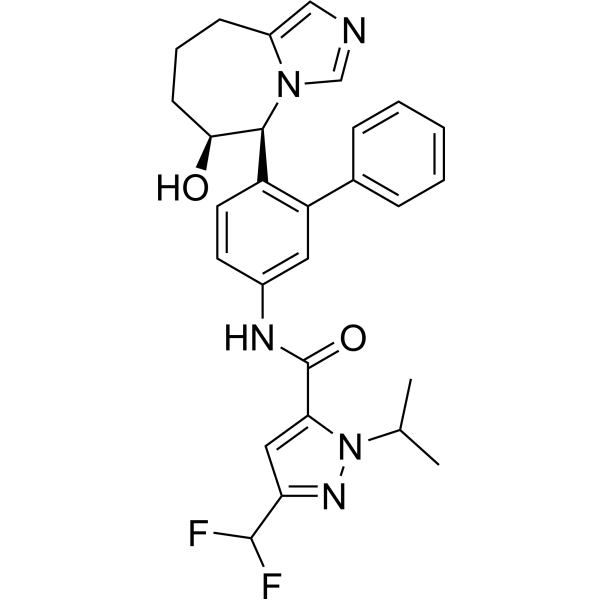
CSN5i-3 is a potent, selective and orally available inhibitor of CSN5/Jab1, and inhibits CSN-catalysed Cul1 deneddylation with an IC50 value of 5.8 nM.
For research use only. We do not sell to patients.
- Purity : 99.95%
- CAS No.: 2375740-98-8
- Formula: C28H29F2N5O2
- Molecular Weight:505.56
-
Storage:
-20°C, protect from light, stored under nitrogen
* In solvent : -80°C, 6 months; -20°C, 1 month (protect from light, stored under nitrogen)

To place orders, for customer services and technical support, please contact: MedChemExpress USA
Tel: 609-228-6898 E-mail: [email protected] [email protected]


-
 Biological Activity
-
Chemical Information
-
Solvent & Solubility
- Purity & Documentation
- References
-
 Help & FAQs


-
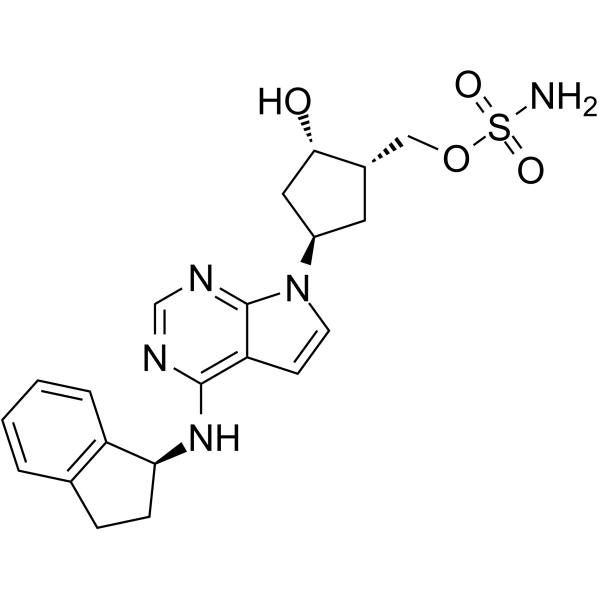
HY-70062
PevonedistatNAE Inhibitor -
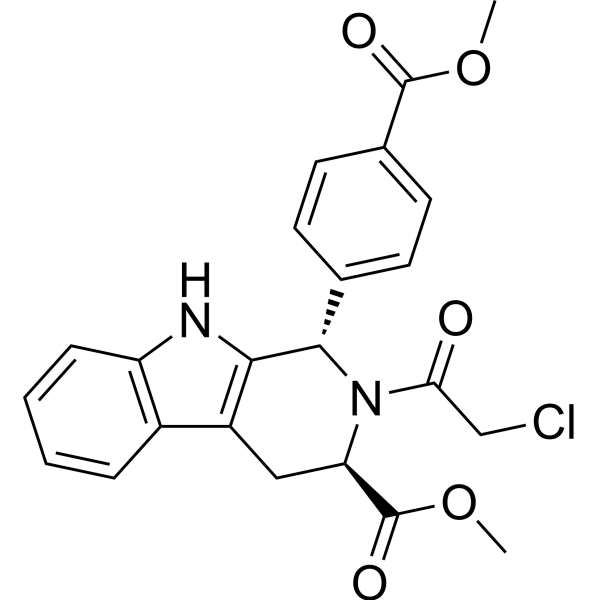
HY-100218A
RSL3GPX4 Inhibitor -
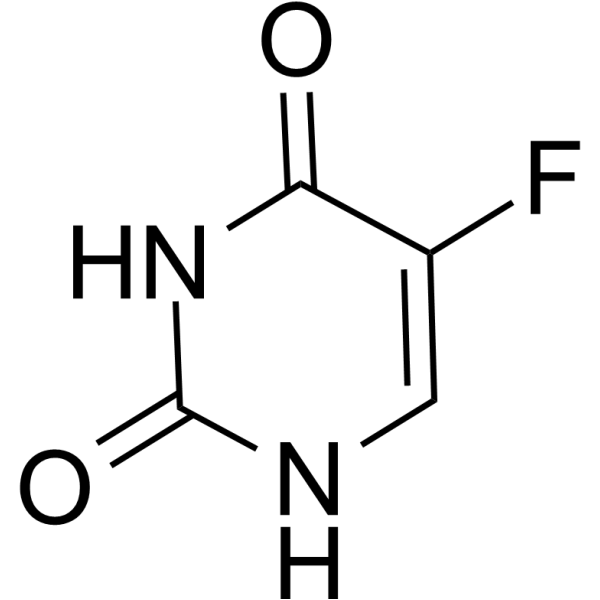
HY-90006
5-FluorouracilThymidylate Synthase Inhibitor -
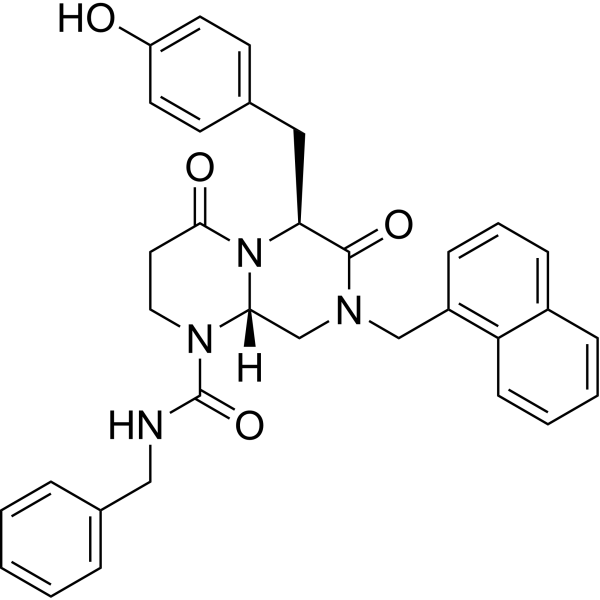
HY-14428
ICG-001Apoptosis Inducer -
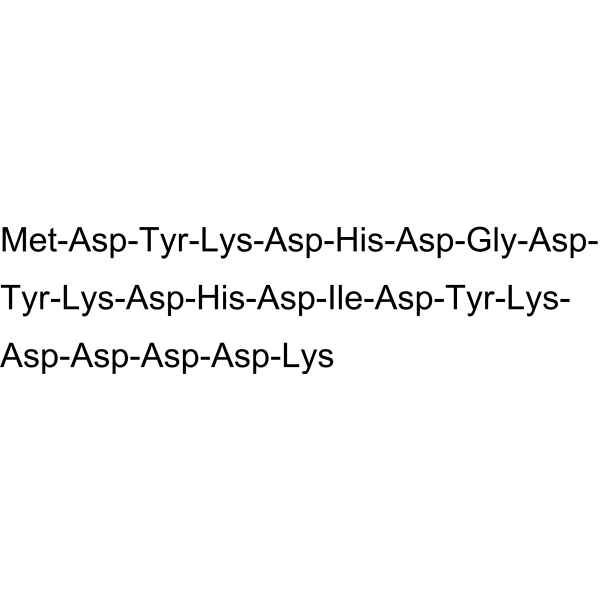
HY-P0319
3X FLAG peptideProtein Marker -
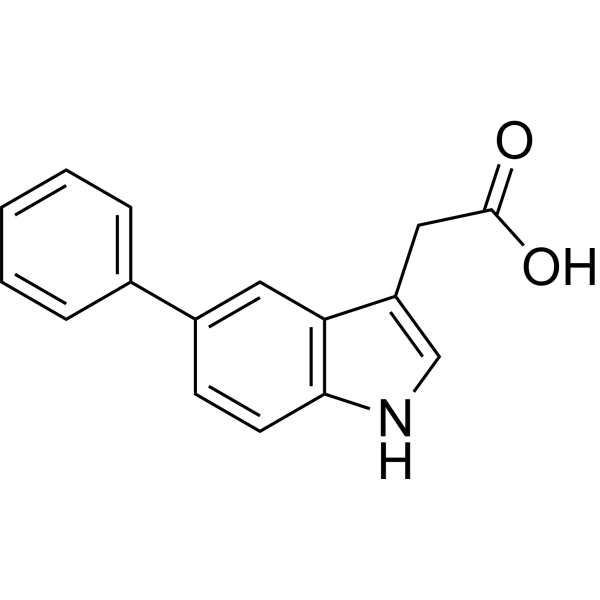
HY-134653
5-Ph-IAAAID2 Ligand -
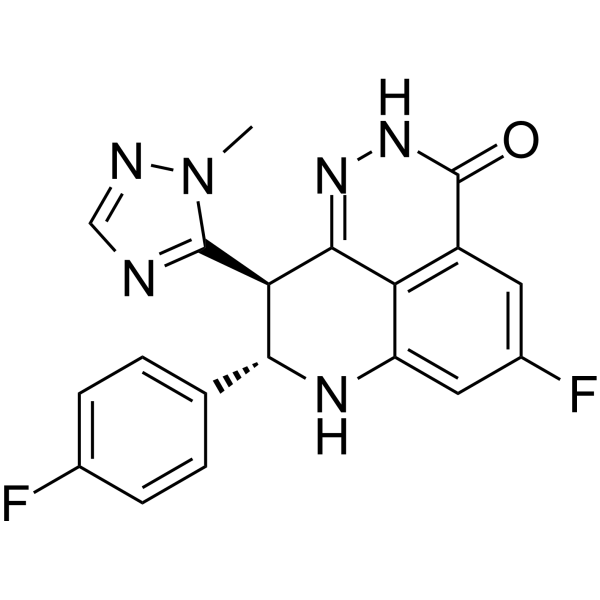
HY-16106
TalazoparibPARP Inhibitor -
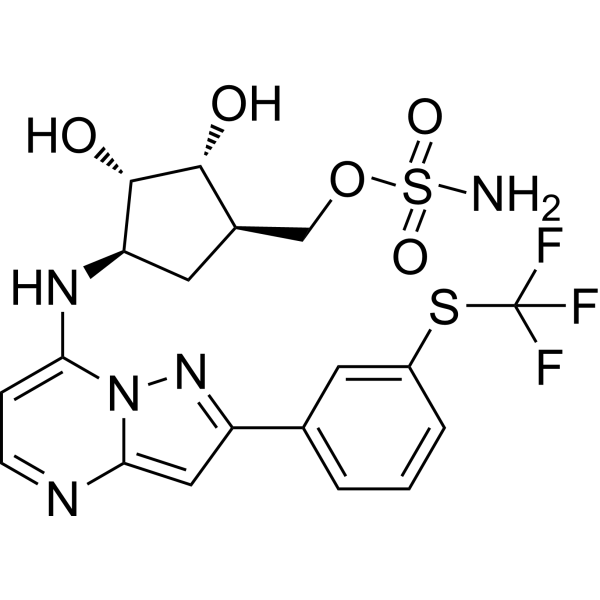
HY-100487
TAK-243UAE/E1 Inhibitor -
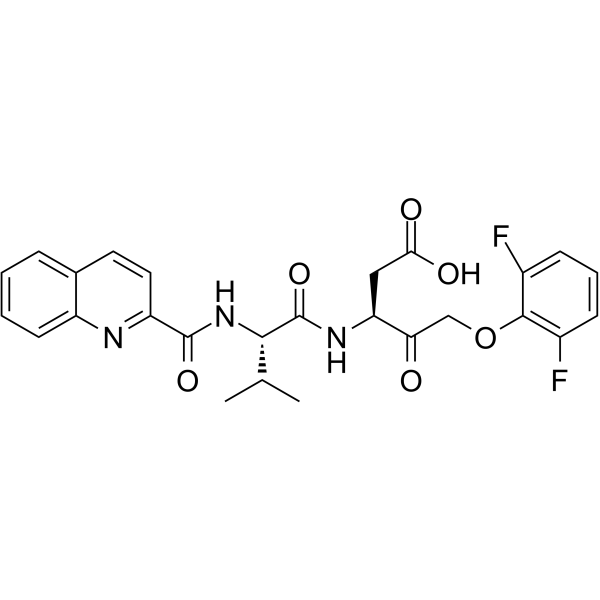
HY-12305
Q-VD-OPhPan-caspase Inhibitor -
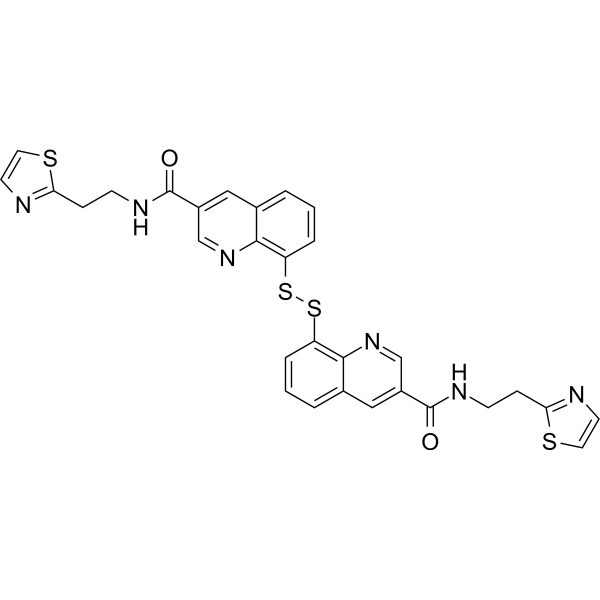
HY-110404
CapziminRpn11 Inhibitor -
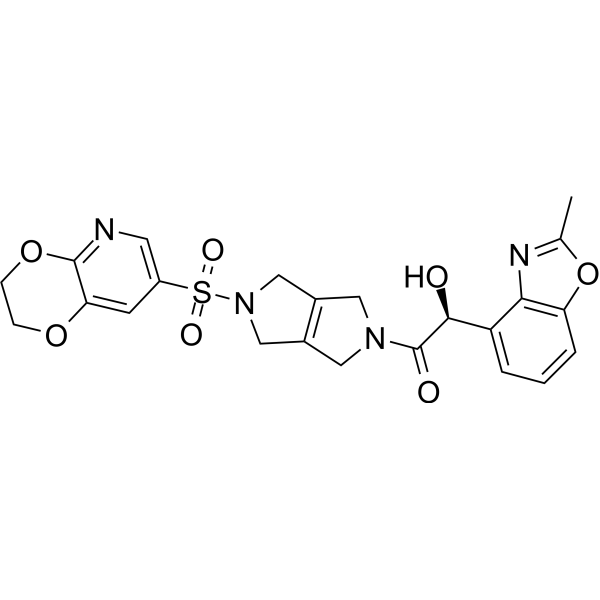
HY-145967
FT709USP9X Inhibitor
Publications Citing Use of MedChemExpress (MCE) CSN5i-3
More- Nature. 2026 Apr;652(8112):1375-1383. [Abstract]
- Nature. 2025 Feb;638(8050):519-527. [Abstract]
- Cell. 2023 Apr 27;186(9):1895-1911.e21. [Abstract]
- Nat Commun. 2025 Jul 24;16(1):6831. [Abstract]
- Sci Immunol. 2021 Apr 30;6(58):eabe2933. [Abstract]
- Mol Cell. 2026 Apr 2;86(7):1397-1416.e11. [Abstract]
- Mol Cell. 2023 Mar 2;83(5):770-786.e9. [Abstract]
- Nat Chem Biol. 2023 Dec;19(12):1513-1523. [Abstract]
- J Clin Invest. 2025 Aug 5:e183761. [Abstract]
- Int J Biol Sci. 2024 Jan 27;20(4):1279-1296. [Abstract]
- Nat Struct Mol Biol. 2024 Feb;31(2):323-335. [Abstract]
- Cell Rep. 2024 Oct 3;43(10):114802. [Abstract]
- Gastric Cancer. 2025 Oct 2. [Abstract]
- EMBO Rep. 2025 Mar;26(5):1344-1366. [Abstract]
- Structure. 2026 Mar 20:S0969-2126(26)00056-0. [Abstract]
- iScience. 2025 Oct 30;28(11):113912. [Abstract]
- iScience. 2024 Jan 17;27(2):108933. [Abstract]
- Am J Physiol Heart Circ Physiol. 2026 Jul 1;331(1):H130-H141.
- ACS Chem Biol. 2024 Sep 20;19(9):1942-1952. [Abstract]
- Biochem Biophys Res Commun. 2025 Oct 30:786:152772. [Abstract]
- Biochem Biophys Res Commun. 2022 Dec 31:637:341-347. [Abstract]
- bioRxiv. 2025 Aug 6:2025.08.04.668450. [Abstract]
- bioRxiv. 2025 April 08.
- Research Square Preprint. 2023 May 3.
- bioRxiv. August 09, 2021.
 Customer Validation & Images

-
Bio/Physico-chemical Assay
-
Bio/Physico-chemical Assay
-
Bio/Physico-chemical Assay
-
IP
-
IP


Biological Activity
Description
IC50 & Target
IC50: 5.8 nM (CSN5)[1]
In Vitro
CSN5i-3 traps CRLs in the neddylated state, which leads to inactivation of a subset of CRLs by inducing degradation of their substrate recognition module[1].
MedChemExpress (MCE) has not independently confirmed the accuracy of these methods. They are for reference only.
In Vivo


Chemical Information
-
CAS No. 2375740-98-8
-
Appearance Solid
-
Molecular Weight 505.56
-
Formula C28H29F2N5O2
-
Color White to light yellow
-
SMILES
O=C(C1=CC(C(F)F)=NN1C(C)C)NC2=CC(C3=CC=CC=C3)=C([C@@H]4N5C(CCC[C@@H]4O)=CN=C5)C=C2
-
Shipping
Room temperature in continental US; may vary elsewhere.
-
Storage
-20°C, protect from light, stored under nitrogen
* In solvent : -80°C, 6 months; -20°C, 1 month (protect from light, stored under nitrogen)


Publications (25)
-
Journal Impact Factor
-
Most Recent
-
Nature
2026 Apr;652(8112):1375-1383. PMID: 41673158
CSN5i-3 purchased from MedChemExpress. Usage Cited in: Nature. 2026 Apr;652(8112):1375-1383. [Abstract]
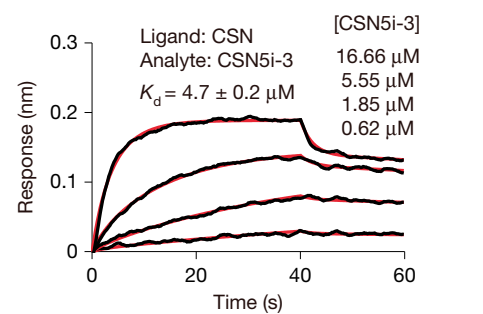
The binding affinity of CSN5i-3 to CSN measured by BLI.
CSN5i-3 purchased from MedChemExpress. Usage Cited in: Nature. 2026 Apr;652(8112):1375-1383. [Abstract]
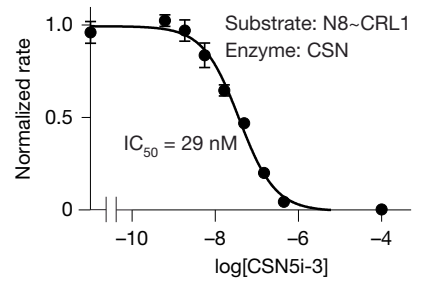
The potency of CSN5i-3 in inhibiting the iso-peptidase activity of CSN towards N8~CRL1 in vitro.
CSN5i-3 purchased from MedChemExpress. Usage Cited in: Nature. 2026 Apr;652(8112):1375-1383. [Abstract]
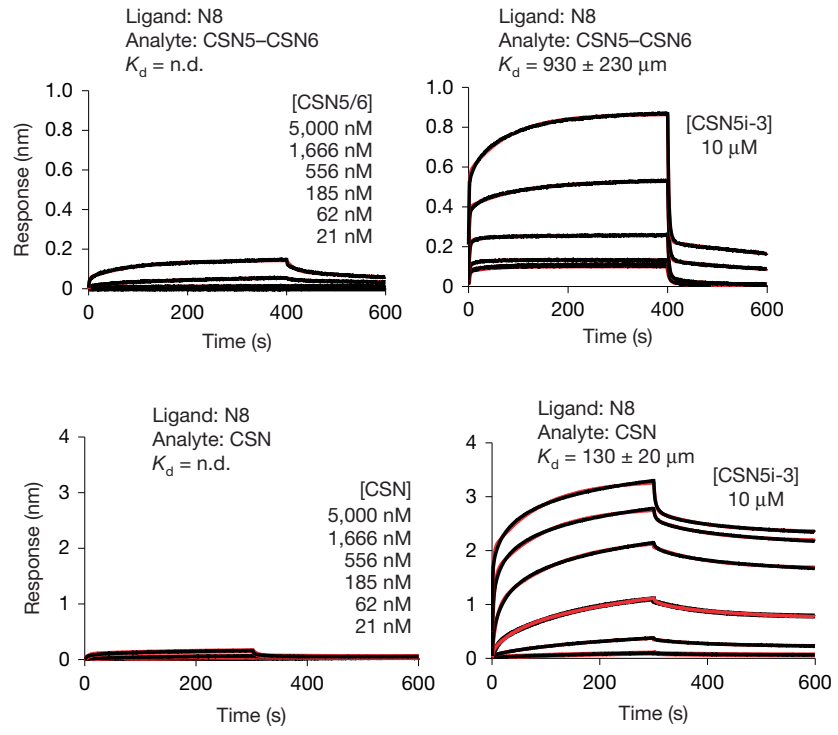
N8 binding to CSN5-CSN6 or CSN in the absence and presence of CSN5i-3 determined by BLI.
CSN5i-3 purchased from MedChemExpress. Usage Cited in: Nature. 2026 Apr;652(8112):1375-1383. [Abstract]
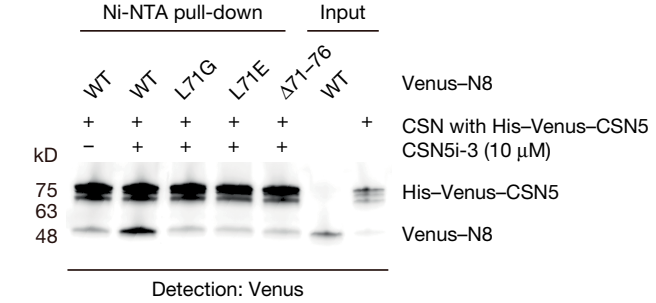
The impact of N8 C-terminal tail truncation and mutations on CSN5i-3-enhanced N8-CSN interactions. The protein samples were not boiled before SDS-PAGE analysis.
-
Nature
2025 Feb;638(8050):519-527. PMID: 39880951 -
Cell
2023 Apr 27;186(9):1895-1911.e21. PMID: 37028429 -
Nat Commun
2025 Jul 24;16(1):6831. PMID: 40707481 -
Sci Immunol
Pharmacological targeting of NLRP3 deubiquitination for treatment of NLRP3-associated inflammatory diseases. [Abstract]2021 Apr 30;6(58):eabe2933. PMID: 33931568 -
Mol Cell
An interactome-based framework for DDB1- and CUL4-associated factor prioritization in targeted protein degradation. [Abstract]2026 Apr 2;86(7):1397-1416.e11. PMID: 41932313 -
Mol Cell
2023 Mar 2;83(5):770-786.e9. PMID: 36805027 -
Nat Chem Biol
2023 Dec;19(12):1513-1523. PMID: 37653169
CSN5i-3 purchased from MedChemExpress. Usage Cited in: Nat Chem Biol. 2023 Dec;19(12):1513-1523. [Abstract]
IPs using N8C_Fab3b from K562 cells treated with DMSO (D), the neddylation inhibitor MLN4924 (M) or the cullin deneddylase inhibitor CSN5i-3 (C) for 2 h, probed for indicated CRL components by immunoblotting. Slower migrating forms of cullins lost by MLN4924 treatment are interpreted as NEDD8-modified, whereas faster-migrating forms accumulating upon MLN4924 treatment are interpreted as unneddylated. An asterisk indicates band cross-reacting with anti-CUL4 or anti-CUL5 antibody. Shown results are representative of two independent experiments. GAPDH serves as a sample processing control.
-
J Clin Invest
Jab1 promotes immune evasion and progression in acute myeloid leukemia models under oxidative stress. [Abstract]2025 Aug 5:e183761. PMID: 40763038 -
Int J Biol Sci
A novel CSN5/CRT O-GlcNAc/ER stress regulatory axis in platinum resistance of epithelial ovarian cancer. [Abstract]2024 Jan 27;20(4):1279-1296. PMID: 38385070 -
Nat Struct Mol Biol
2024 Feb;31(2):323-335. PMID: 38177676 -
Cell Rep
2024 Oct 3;43(10):114802. PMID: 39365702 -
Gastric Cancer
COPS5 inhibition synergizes with the antitumor effect of trastuzumab by PTEN upregulation in HER2-amplified gastric cancer. [Abstract]2025 Oct 2. PMID: 41039054 -
EMBO Rep
HSC70 coordinates COP9 signalosome and SCF ubiquitin ligase activity to enable a prompt stress response. [Abstract]2025 Mar;26(5):1344-1366. PMID: 39915298 -
Structure
CAND1 and CAND2 drive CUL4 substrate receptor exchange with largely comparable biochemical efficiency, unlike their relative effects on CUL1. [Abstract]2026 Mar 20:S0969-2126(26)00056-0. PMID: 41864201 -
iScience
2025 Oct 30;28(11):113912. PMID: 41312386 -
iScience
Cullin-RING E3 ubiquitin ligase 4 regulates neurite morphogenesis during neurodevelopment. [Abstract]2024 Jan 17;27(2):108933. PMID: 38318354 -
-
ACS Chem Biol
Identification and Characterization of Novel Small-Molecule Enhancers of the CUL3LZTR1 E3 Ligase KRAS Complex. [Abstract]2024 Sep 20;19(9):1942-1952. PMID: 39194017 -
Biochem Biophys Res Commun
2025 Oct 30:786:152772. PMID: 41066978 -
Biochem Biophys Res Commun
Differential dynamics of cullin deneddylation via COP9 signalosome subunit 5 interaction. [Abstract]2022 Dec 31:637:341-347. PMID: 36423380 -
bioRxiv
Targeting the COP9 signalosome overcomes platinum resistance in ovarian cancer through two distinct genome stability mechanisms. [Abstract]2025 Aug 6:2025.08.04.668450. PMID: 40799594 -
-
-


Solvent & Solubility
In Vitro:
DMSO : ≥ 100 mg/mL (197.80 mM; Hygroscopic DMSO has a significant impact on the solubility of product, please use newly opened DMSO)
Ethanol : 50 mg/mL (98.90 mM; Need ultrasonic)
* "≥" means soluble, but saturation unknown.
Please refer to the solubility information to select the appropriate solvent. Once prepared, please aliquot and store the solution to prevent product inactivation from repeated freeze-thaw cycles.
Storage method and period of stock solution: -80°C, 6 months; -20°C, 1 month (protect from light, stored under nitrogen). When stored at -80°C, please use it within 6 months. When stored at -20°C, please use it within 1 month.
Please refer to the solubility information to select the appropriate solvent. Once prepared, please aliquot and store the solution to prevent product inactivation from repeated freeze-thaw cycles.
Storage method and period of stock solution: -80°C, 6 months; -20°C, 1 month (protect from light, stored under nitrogen). When stored at -80°C, please use it within 6 months. When stored at -20°C, please use it within 1 month.
Concentration (start) × Volume (start) = Concentration (final) × Volume (final)
In Vivo:
Select the appropriate dissolution method based on your experimental animal and administration route.
- For the following dissolution methods, please ensure to first prepare a clear stock solution using an In Vitro approach and then sequentially add co-solvents:
- To ensure reliable experimental results, the clarified stock solution can be appropriately stored based on storage conditions. As for the working solution for In Vivo experiments, it is recommended to prepare freshly and use it on the same day.
- The percentages shown for the solvents indicate their volumetric ratio in the final prepared solution. If precipitation or phase separation occurs during preparation, heat and/or sonication can be used to aid dissolution.
Add each solvent one by one: 10% DMSO 40% PEG300 5% Tween-80 45% Saline
Solubility: ≥ 2.5 mg/mL (4.95 mM); Clear solution
This protocol yields a clear solution of ≥ 2.5 mg/mL (saturation unknown).
Taking 1 mL working solution as an example, add 100 μL DMSO stock solution (25.0 mg/mL) to 400 μL PEG300, and mix evenly; then add 50 μL Tween-80 and mix evenly; then add 450 μL Saline to adjust the volume to 1 mL.
Preparation of Saline: Dissolve 0.9 g sodium chloride in ddH₂O and dilute to 100 mL to obtain a clear Saline solution.
In Vivo Dissolution Calculator
Please enter the basic information of animal experiments:
-
-
-
-
Recommended: Prepare an additional quantity of animals to account for potential losses during experiments.
Please enter your animal formula composition:
-
%DMSO +
Recommended: Keep the proportion of DMSO in working solution below 2% if your animal is weak.
-
%+
-
+%Tween-80 + +
-
%Saline +
The co-solvents required include: DMSO, . All of co-solvents are available by MedChemExpress (MCE). , Tween 80. All of co-solvents are available by MedChemExpress (MCE).
Working solution concentration: 0.22 mg/mL
Method for preparing stock solution: mg drug dissolved in μL DMSO. Stock solution concentration: mg/mL. * In solvent : -80°C, 6 months; -20°C, 1 month (protect from light, stored under nitrogen)
1. Take μL DMSO stock solution;
2. Add μL .
μL , mix evenly;
3. Then add μL Tween 80, mix evenly;
4. Then add μL
Please ensure that the stock solution in the first step is dissolved to a clear state, and add co-solvents in sequence. You can use ultrasonic heating (ultrasonic cleaner, recommended frequency 20-40 kHz), vortexing, etc. to assist dissolution.


Purity & Documentation
-
Data Sheet (277 KB)
-
SDS (252 KB)
- English - EN (252 KB)
- Français - FR (252 KB)
- Deutsch - DE (252 KB)
- Norwegian - NO (252 KB)
- Español - ES (252 KB)
- Swedish - SV (252 KB)
- Italian - IT (252 KB)
- Korean - KR (252 KB)
- Portuguese - PT (252 KB)
-
Handling Instructions (2659 KB)
References


Complete Stock Solution Preparation Table
Please refer to the solubility information to select the appropriate solvent. Once prepared, please aliquot and store the solution to prevent product inactivation from repeated freeze-thaw cycles.
Storage method and period of stock solution: -80°C, 6 months; -20°C, 1 month (protect from light, stored under nitrogen). When stored at -80°C, please use it within 6 months. When stored at -20°C, please use it within 1 month.
| Optional Solvent | Concentration Solvent Mass | 1 mg | 5 mg | 10 mg | 25 mg |
|---|---|---|---|---|---|
| Ethanol / DMSO | 1 mM | 1.9780 mL | 9.8900 mL | 19.7800 mL | 49.4501 mL |
| 5 mM | 0.3956 mL | 1.9780 mL | 3.9560 mL | 9.8900 mL | |
| 10 mM | 0.1978 mL | 0.9890 mL | 1.9780 mL | 4.9450 mL | |
| 15 mM | 0.1319 mL | 0.6593 mL | 1.3187 mL | 3.2967 mL | |
| 20 mM | 0.0989 mL | 0.4945 mL | 0.9890 mL | 2.4725 mL | |
| 25 mM | 0.0791 mL | 0.3956 mL | 0.7912 mL | 1.9780 mL | |
| 30 mM | 0.0659 mL | 0.3297 mL | 0.6593 mL | 1.6483 mL | |
| 40 mM | 0.0495 mL | 0.2473 mL | 0.4945 mL | 1.2363 mL | |
| 50 mM | 0.0396 mL | 0.1978 mL | 0.3956 mL | 0.9890 mL | |
| 60 mM | 0.0330 mL | 0.1648 mL | 0.3297 mL | 0.8242 mL | |
| 80 mM | 0.0247 mL | 0.1236 mL | 0.2473 mL | 0.6181 mL | |
| DMSO | 100 mM | 0.0198 mL | 0.0989 mL | 0.1978 mL | 0.4945 mL |


CSN5i-3 Related Classifications
HY-112134 Related Classifications
 Powered by Bioz