



Pexmetinib
Based on 2 publication(s) in Google Scholar
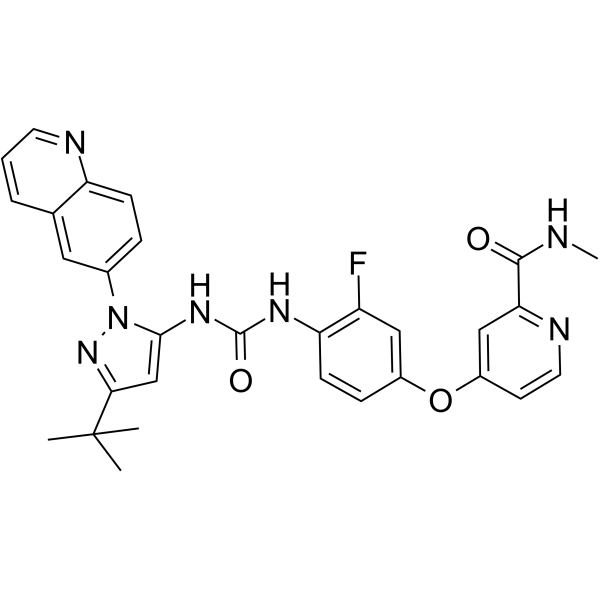
Pexmetinib (ARRY-614) is an orally active dual Tie-2 and p38 MAPK inhibitor. Pexmetinib binds to Tie-2 and p38 MAPK in a "DFG-out" conformation, attenuates the phosphorylation of p38, inhibits STAT3 activation, reduces the promoter-binding activity of NFATc1, and decreases the expression of MMPs. Pexmetinib inhibits leukemia cell proliferation, abrogates TNF-α-mediated myelosuppression of healthy hematopoietic stem cells, stimulates hematopoiesis in primary myelodysplastic syndrome (MDS) samples, inhibits RANKL-induced osteoclast formation and bone resorption, and suppresses migration, invasion and induced osteolysis of breast cancer cells. Pexmetinib can be used in research related to myelodysplastic syndrome, acute myeloid leukemia and breast cancer-induced osteolysis.
Nos produits utilisent uniquement pour la recherche. Nous ne vendons pas aux patients.
- Pureté : 99.81%
- CAS No.: 945614-12-0
- Formule: C31H33FN6O3
- Masse moléculaire:556.63
-
Stockage:Powder -20°C, 3 years ; In solvent -80°C, 6 months , -20°C, 1 month

To place orders, for customer services and technical support, please contact: MedChemExpress USA
Tel: 609-228-6898 E-mail: [email protected] [email protected]


-
 Activité biologique
-
Chemical Information
-
Solvant et solubilité
- Protocole
- Pureté et documentation
- Références
-
 Help & FAQs


-
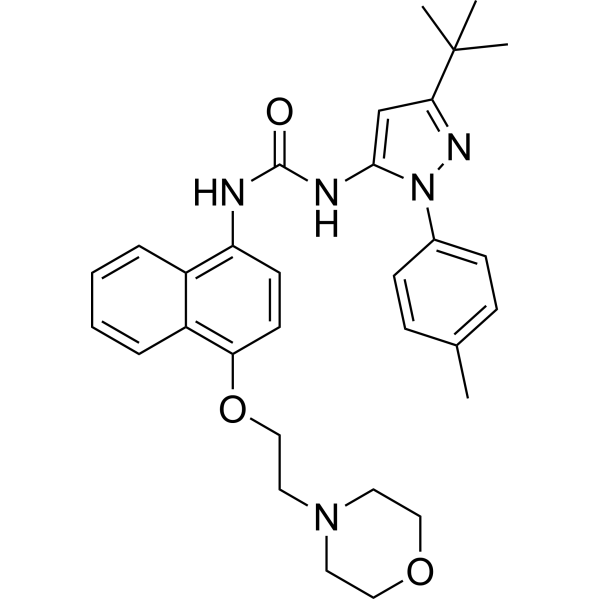
HY-10320
Doramapimodp38 MAPK Inhibitor -
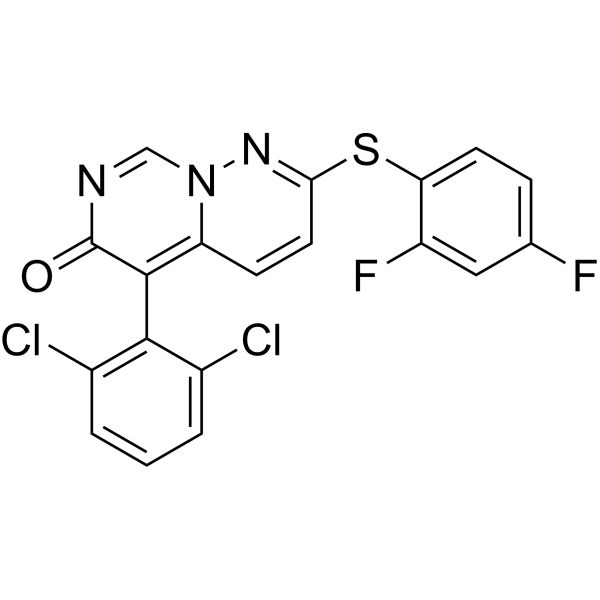
HY-10328
Neflamapimodp38α Inhibitor -
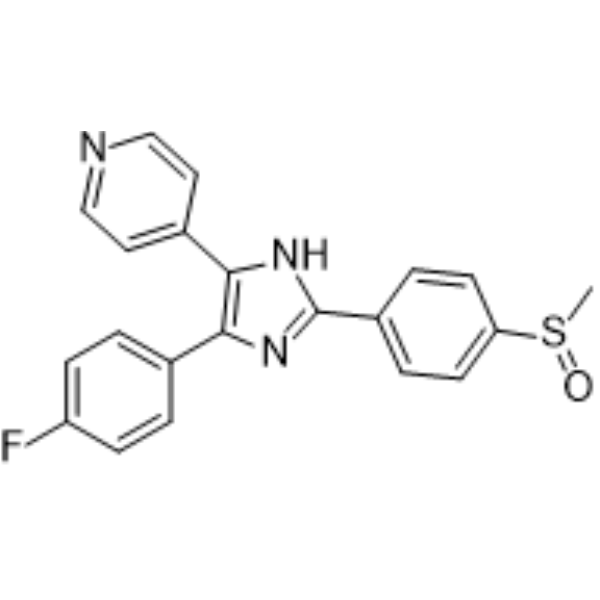
HY-10256
Adezmapimodp38 MAPK Inhibitor -
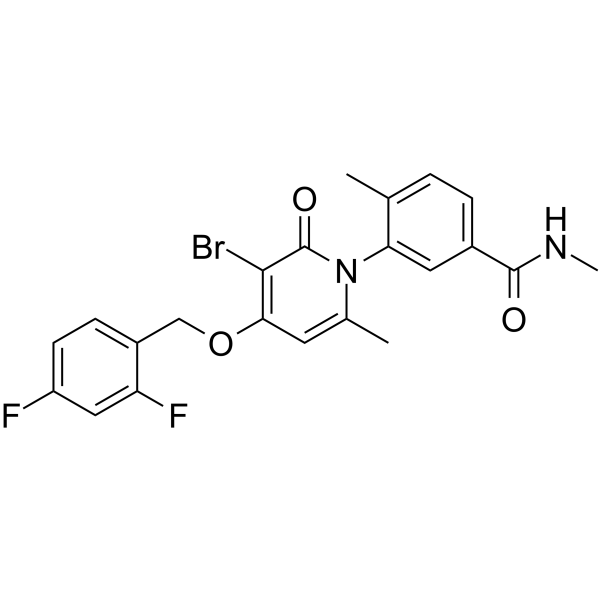
HY-10403
PH-797804p38α/β Inhibitor -
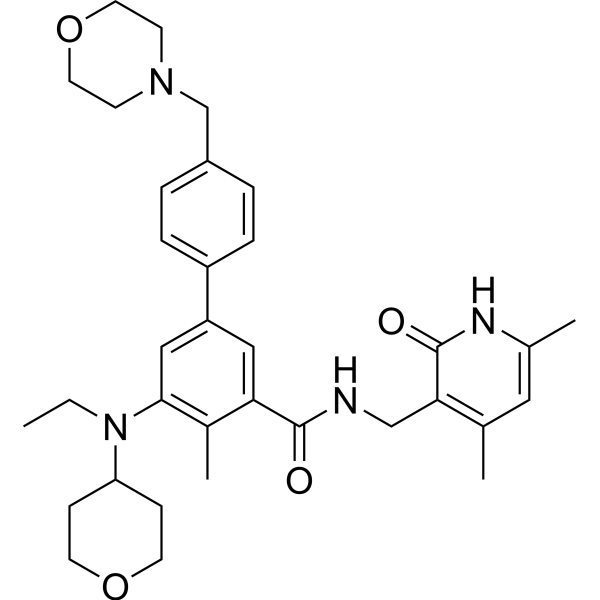
HY-13803
TazemetostatEZH2 Inhibitor -
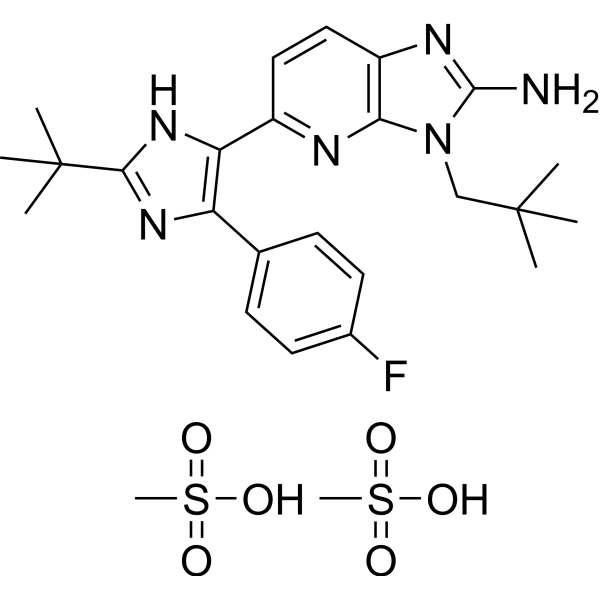
HY-13241
Ralimetinib dimesylateApoptosis Inducer -
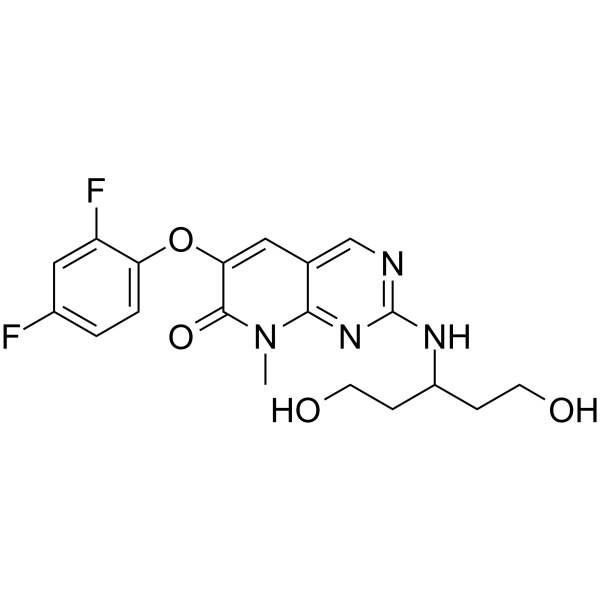
HY-10405
Pamapimodp38α Inhibitor -
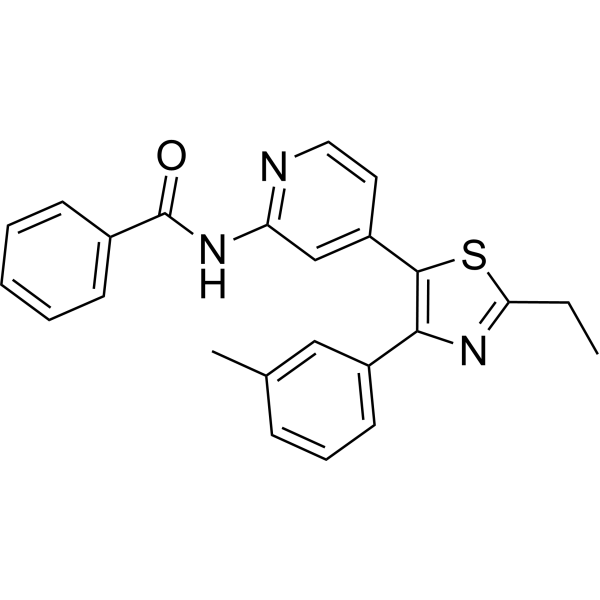
HY-10456
TAK-715p38 MAPK Inhibitor -
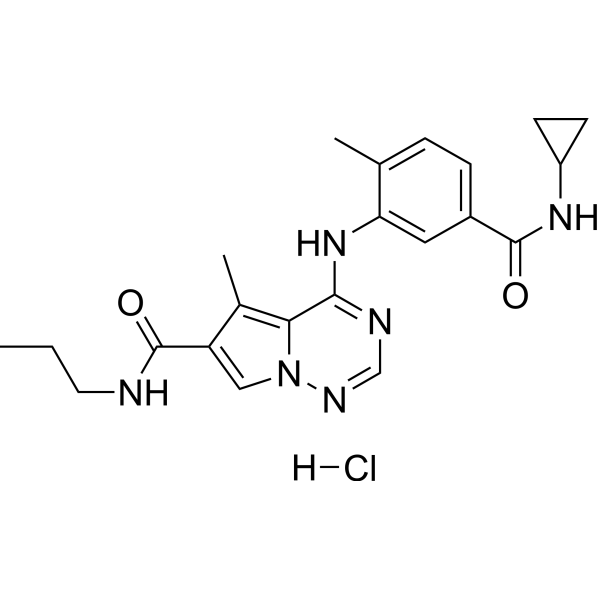
HY-14305A
BMS-582949 hydrochloridep38α MAPK Inhibitor -
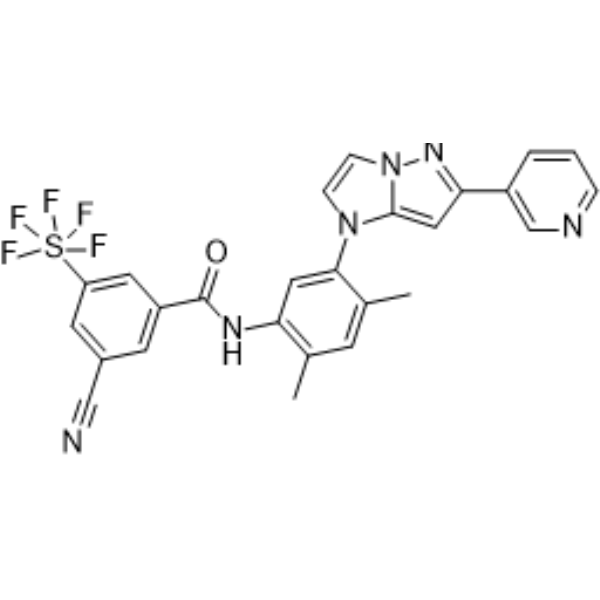
HY-100756
BAY-826TIE2 Inhibitor -
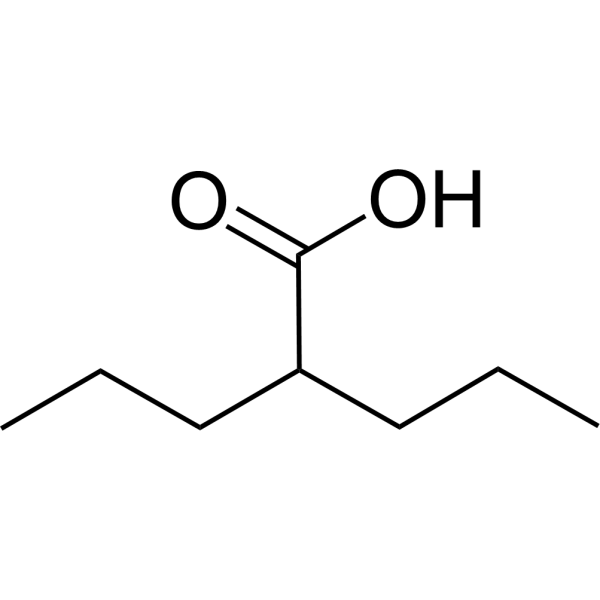
HY-10585
Valproic acidHDAC Inhibitor -
HY-13024
RebastinibKinase Inhibitor
Publications Citing Use of MedChemExpress (MCE) Pexmetinib
MoreVoir tous les produits spécifiques à Isoform TNF Receptor
More

Activité biologique
Description
IC50 & Target
|
Tie2 |
MMP-9 |
MMP-2 |
TNF-α |
STAT3 |
In Vitro
Pexmetinib potently inhibits the proliferation of KG1 and CMK acute myeloid leukemia (AML) cell lines in vitro[1].
Pexmetinib (0-64 μM; 48-96 h) reduces the viability of human MDA-MB-231 breast cancer cells in a concentration-dependent manner, with an IC50 of 17.43 μM at 96 h[2].
Pexmetinib (4 μM; 0-24 h) inhibits the phosphorylation of p38 and STAT3 in human MDA-MB-231 breast cancer cells[2].
Pexmetinib (2 h) inhibits doxycycline (HY-N0565)-induced phosphorylation of Tie-2 and p38 MAPK in HEK-Tie2 cells, as well as anisomycin (HY-18982)-stimulated phosphorylation of Tie-2 and p38 MAPK in HUVECs, while also suppressing their respective downstream mediators pHsp27 and pAkt[1].
Pexmetinib (0.1 μM; 14 days) reverses TNF-α-mediated myelosuppression of erythroid (BFU-E) and myeloid (CFU-GM) colony formation in primary CD34+ hematopoietic stem cells from healthy humans[1].
Pexmetinib (for 14-17 days) stimulates hematopoietic differentiation and increases the number and size of erythroid (BFU-E) and myeloid (CFU-GM) colonies in primary monocytes from patients with myelodysplastic syndrome (MDS)[1].
Pexmetinib (0.1-0.4 μM; 5 days) inhibits RANKL-induced osteoclast formation in primary bone marrow macrophages in a concentration-dependent manner[2].
Pexmetinib (0.1-0.4 μM; 3 days) reduces the bone resorptive activity of mature osteoclasts differentiated from primary bone marrow macrophages in a dose-dependent manner, with an approximately 88% reduction in bone resorptive activity following treatment with 0.4 μM for 3 days[2].
Pexmetinib (0.1-0.4 μM; 5 days) inhibits the expression of osteoclast-specific genes in RANKL-induced primary bone marrow macrophages[2].
Pexmetinib (0.4 μM; 3-5 days) inhibits RANKL-induced NFATc1 and CTSK protein expression in primary bone marrow macrophages after 3 and 5 days of incubation[2].
Pexmetinib (0.4 μM; 2 h pretreatment, followed by RANKL stimulation for 0-60 min) specifically inhibits RANKL-induced p38 phosphorylation and subsequent STAT3 activation in primary bone marrow macrophages[2].
Pexmetinib (0.4 μM; 48 h) reduces the binding of STAT3 to the NFATc1 promoter in RAW264.7 cells stimulated with RANKL for 48 h[2].
MedChemExpress (MCE) has not independently confirmed the accuracy of these methods. They are for reference only.
-
Cell Line:primary bone marrow macrophage cells (BMMs)
-
Concentration:0, 0.1, 0.2, 0.4 μM
-
Incubation Time:5 days
-
Result:Significantly suppressed the RANKL-induced upregulation of osteoclast differentiation-related genes including Nfatc1, Dc-stamp, Ctsk, Trap, Atp6v0d2, and Mmp9 in a concentration-dependent manner.
-
Cell Line:primary bone marrow macrophage cells (BMMs)
-
Concentration:0.4 μM
-
Incubation Time:3 days; 5 days
-
Result:Significantly reduced the RANKL-induced increases in NFATc1 protein expression observed at 3 and 5 days in control cultures.
Significantly reduced the RANKL-induced increases in CTSK protein expression observed at 3 and 5 days in control cultures.
-
Cell Line:primary bone marrow macrophage cells (BMMs)
-
Concentration:0.4 μM
-
Incubation Time:2 h pretreatment, followed by RANKL stimulation for 0, 5, 15, 30, 60 min
-
Result:Specifically attenuated RANKL-induced p38 phosphorylation with no effect on JNK or ERK1/2 phosphorylation.
Reduced RANKL-stimulated STAT3 phosphorylation.
-
Cell Line:human MDA-MB-231 breast cancer cells
-
Concentration:0, 0.25, 0.5, 1, 2, 4, 8, 16, 32, 64 μM
-
Incubation Time:48 h; 96 h
-
Result:Reduced MDA-MB-231 cell viability in a concentration-dependent manner.
Exhibited an IC50 value of 17.43 μM at 96 h.
-
Cell Line:human MDA-MB-231 breast cancer cells
-
Concentration:4 μM
-
Incubation Time:0, 6, 12, 24 h
-
Result:Repressed phosphorylation of p38 in MDA-MB-231 cells over time.
Repressed phosphorylation of STAT3 in MDA-MB-231 cells over time.
In Vivo
MedChemExpress (MCE) has not independently confirmed the accuracy of these methods. They are for reference only.
-
Animal Model:BALB/c nu/nu[2]
-
Dosage:10 mg/kg
-
Administration:i.p.; every three days; 28 days
-
Result:Reduced tissue volume, length, and weight compared to vehicle controls.
Increased trabecular bone volume per tissue volume (BV/TV) and trabecular number, and reduced trabecular separation compared to vehicle controls.
Decreased bone damage and tumor tissue compared to vehicle controls.
Reduced number of TRAP-positive osteoclasts compared to vehicle controls.
Reduced p-STAT3 levels compared to vehicle controls.
- Western Blot
- RNA extraction experimental
- BrdU Incorporation Assay
- Cell migration
- Somatic Cell Culture
- CFSE Dye Dilution Proliferation Assay
- Dye-dilution cell tracking and proliferation staining
- CCK-8/WST-8 Cell Proliferation Assay
- Protocol for Cell Cycle
- Cell Counting-Based Growth Curve Assay
- Colony Formation (Clonogenic) Assay
- Breast Cancer Modeling
- Cell Viability Determination by MTT Colorimetric Assay
- Kinase activity and phosphorylation assays
- EdU Incorporation Assay (Click Chemistry-Based DNA Synthesis Measurement)
- Ki-67 Immunostaining Proliferation Assay
- PCNA Immunodetection Proliferation Assay
- Protocol for Cell Counting and Cell Density Analysis
- Cell invasion
- Protocol for Kinase activity and phosphorylation assays
- MTT Cell Proliferation Assay
- Osteoclast differentiation from monocyte/macrophage precursors
Essai clinique
| NCT Number | Sponsor | Condition | Start Date |
Phase

|
|---|---|---|---|---|
| NCT01329991 | 2011-05 | PHASE1 |


Chemical Information
-
CAS No. 945614-12-0
-
Appearance Solid
-
Masse moléculaire 556.63
-
Formule C31H33FN6O3
-
Color White to off-white
-
SMILES
O=C(NCC1=CC(F)=CC=C1OC2=CC3=C(N(CCO)N=C3)C=C2)NC4=CC(C(C)(C)C)=NN4C5=CC=C(C)C=C5
-
Synonyms
ARRY-614
-
Livraison
Room temperature in continental US; may vary elsewhere.
-
Stockage
Powder -20°C 3 years In solvent -80°C 6 months -20°C 1 month


Publications (2)
-
Journal Impact Factor
-
Most Recent
-
Cancer Res
SMAD4 and KRAS Status Shape Cancer Cell-Stromal Crosstalk and Therapeutic Response in Pancreatic Cancer. [Abstract]2025 Apr 15;85(8):1368-1389. PMID: 39841099 -
Mol Hum Reprod
Angiopoietin 2 stimulates trophoblast invasion via a mechanism associated with JNK signaling. [Abstract]2021 Feb 27;27(3):gaab014. PMID: 33629098


Solvant et solubilité
In Vitro:
DMSO : ≥ 125 mg/mL (224.57 mM; Hygroscopic DMSO has a significant impact on the solubility of product, please use newly opened DMSO)
* "≥" means soluble, but saturation unknown.
Please refer to the solubility information to select the appropriate solvent. Once prepared, please aliquot and store the solution to prevent product inactivation from repeated freeze-thaw cycles.
Storage method and period of stock solution: -80°C, 6 months; -20°C, 1 month. When stored at -80°C, please use it within 6 months. When stored at -20°C, please use it within 1 month.
Please refer to the solubility information to select the appropriate solvent. Once prepared, please aliquot and store the solution to prevent product inactivation from repeated freeze-thaw cycles.
Storage method and period of stock solution: -80°C, 6 months; -20°C, 1 month. When stored at -80°C, please use it within 6 months. When stored at -20°C, please use it within 1 month.
Concentration (start) × Volume (start) = Concentration (final) × Volume (final)
In Vivo:
Select the appropriate dissolution method based on your experimental animal and administration route.
- For the following dissolution methods, please ensure to first prepare a clear stock solution using an In Vitro approach and then sequentially add co-solvents:
- To ensure reliable experimental results, the clarified stock solution can be appropriately stored based on storage conditions. As for the working solution for In Vivo experiments, it is recommended to prepare freshly and use it on the same day.
- The percentages shown for the solvents indicate their volumetric ratio in the final prepared solution. If precipitation or phase separation occurs during preparation, heat and/or sonication can be used to aid dissolution.
Add each solvent one by one: 10% DMSO 40% PEG300 5% Tween-80 45% Saline
Solubility: ≥ 2.08 mg/mL (3.74 mM); Clear solution
This protocol yields a clear solution of ≥ 2.08 mg/mL (saturation unknown).
Taking 1 mL working solution as an example, add 100 μL DMSO stock solution (20.8 mg/mL) to 400 μL PEG300, and mix evenly; then add 50 μL Tween-80 and mix evenly; then add 450 μL Saline to adjust the volume to 1 mL.
Preparation of Saline: Dissolve 0.9 g sodium chloride in ddH₂O and dilute to 100 mL to obtain a clear Saline solution.
Add each solvent one by one: 10% DMSO 90% (20% SBE-β-CD in Saline)
Solubility: ≥ 2.08 mg/mL (3.74 mM); Clear solution
This protocol yields a clear solution of ≥ 2.08 mg/mL (saturation unknown).
Taking 1 mL working solution as an example, add 100 μL DMSO stock solution (20.8 mg/mL) to 900 μL 20% SBE-β-CD in Saline, and mix evenly.
Preparation of 20% SBE-β-CD in Saline (4°C, storage for one week): 2 g SBE-β-CD powder is dissolved in 10 mL Saline, completely dissolve until clear.
In Vivo Dissolution Calculator
Please enter the basic information of animal experiments:
-
-
-
-
Recommended: Prepare an additional quantity of animals to account for potential losses during experiments.
Please enter your animal formula composition:
-
%DMSO +
Recommended: Keep the proportion of DMSO in working solution below 2% if your animal is weak.
-
%+
-
+%Tween-80 + +
-
%Saline +
The co-solvents required include: DMSO, . All of co-solvents are available by MedChemExpress (MCE). , Tween 80. All of co-solvents are available by MedChemExpress (MCE).
Working solution concentration: 0.22 mg/mL
Method for preparing stock solution: mg drug dissolved in μL DMSO. Stock solution concentration: mg/mL.
1. Take μL DMSO stock solution;
2. Add μL .
μL , mix evenly;
3. Then add μL Tween 80, mix evenly;
4. Then add μL
Please ensure that the stock solution in the first step is dissolved to a clear state, and add co-solvents in sequence. You can use ultrasonic heating (ultrasonic cleaner, recommended frequency 20-40 kHz), vortexing, etc. to assist dissolution.


Pureté et documentation
-
Fiche technique (303 KB)
-
SDS (393 KB)
- English - EN (393 KB)
- Français - FR (393 KB)
- Deutsch - DE (393 KB)
- Norwegian - NO (393 KB)
- Español - ES (393 KB)
- Swedish - SV (393 KB)
- Italian - IT (393 KB)
- Korean - KR (393 KB)
- Portuguese - PT (393 KB)
-
Instruction de manipulation (2659 KB)
Références


Complete Stock Solution Preparation Table
Please refer to the solubility information to select the appropriate solvent. Once prepared, please aliquot and store the solution to prevent product inactivation from repeated freeze-thaw cycles.
Storage method and period of stock solution: -80°C, 6 months; -20°C, 1 month. When stored at -80°C, please use it within 6 months. When stored at -20°C, please use it within 1 month.
| Optional Solvent | Concentration Solvent Mass | 1 mg | 5 mg | 10 mg | 25 mg |
|---|---|---|---|---|---|
| DMSO | 1 mM | 1.7965 mL | 8.9826 mL | 17.9653 mL | 44.9131 mL |
| 5 mM | 0.3593 mL | 1.7965 mL | 3.5931 mL | 8.9826 mL | |
| 10 mM | 0.1797 mL | 0.8983 mL | 1.7965 mL | 4.4913 mL | |
| 15 mM | 0.1198 mL | 0.5988 mL | 1.1977 mL | 2.9942 mL | |
| 20 mM | 0.0898 mL | 0.4491 mL | 0.8983 mL | 2.2457 mL | |
| 25 mM | 0.0719 mL | 0.3593 mL | 0.7186 mL | 1.7965 mL | |
| 30 mM | 0.0599 mL | 0.2994 mL | 0.5988 mL | 1.4971 mL | |
| 40 mM | 0.0449 mL | 0.2246 mL | 0.4491 mL | 1.1228 mL | |
| 50 mM | 0.0359 mL | 0.1797 mL | 0.3593 mL | 0.8983 mL | |
| 60 mM | 0.0299 mL | 0.1497 mL | 0.2994 mL | 0.7486 mL | |
| 80 mM | 0.0225 mL | 0.1123 mL | 0.2246 mL | 0.5614 mL | |
| 100 mM | 0.0180 mL | 0.0898 mL | 0.1797 mL | 0.4491 mL |


Pexmetinib Related Classifications
HY-16782 Related Classifications
 Powered by Bioz