Cholinesterase (ChE)
Cholinesterase (ChE) is a family of enzymes present in the central nervous system, particularly in nervous tissue, muscle and red cells, which catalyze the hydrolysis of the neurotransmitter acetylcholine into choline and acetic acid, a reaction necessary to allow a cholinergic neuron to return to its resting state after activation. It is one of many important enzymes needed for the proper functioning of the nervous systems of humans.
There are two types: acetylcholinesterase (AChE, acetylcholine hydrolase) and butyrylcholinesterase (BChE, acylcholine acylhydrolase), also known as nonspecific cholinesterase or pseudocholinesterase. AChE is primarily found in the blood on red blood cell membranes, in neuromuscular junctions, and in neural synapses, while BChE is produced in the liver and found primarily in plasma. The difference between the two types of cholinesterase is their relative preferences for substrates: AChE hydrolyzes acetylcholine faster while BChE hydrolyzes butyrylcholine faster.
Cholinesterase (ChE) Isoform Specific Products
All Product Categories
-
Cholinesterase (ChE) Inhibitors
(910)
View all products
-
Cholinesterase (ChE) Agonists
(5)
View all products
-
Cholinesterase (ChE) Antagonists
(10)
View all products
-
Cholinesterase (ChE) Activators
(32)
View all products
-
Cholinesterase (ChE) Modulators
(10)
View all products
-
Cholinesterase (ChE) Chemical
(1)
View all products
-
Cholinesterase (ChE) Inducer
(1)
View all products
-
Cholinesterase (ChE) Controls
(6)
View all products
-
Cholinesterase (ChE) Substrates
(2)
View all products
-
Cholinesterase (ChE) Related Products (1058)
Related Products (1058)

-
Antibodies (2)
-
Cholinesterase (ChE) Isoform Comparison
-
Aldicarb sulfone-13C2,d3
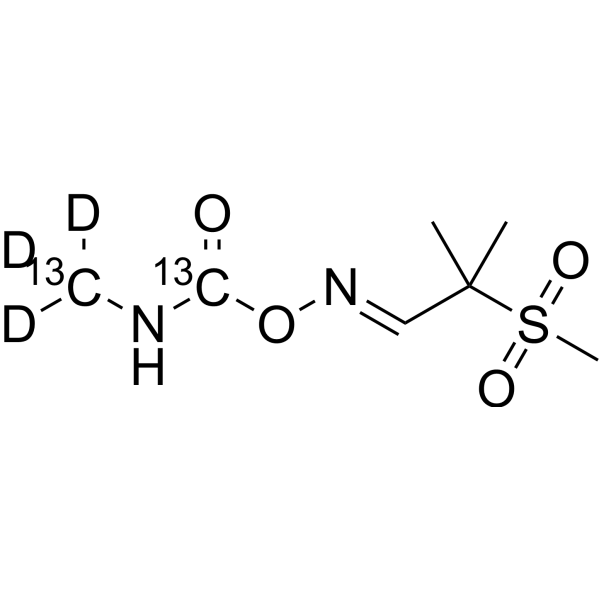 0 ImagesCat. No.: HY-17530SCAS No.: 1261170-76-6Aldicarb sulfone-13C2,d3 is the deuterium and 13C labeled Aldicarb sulfone (HY-17530). Aldicarb sulfone is one of the metabolites of the carbamate pesticide Aldicarb and has insecticidal activity. Aldicarb sulfone is also an inhibitor of cholinesterase.
-
CAI/II-IN-5
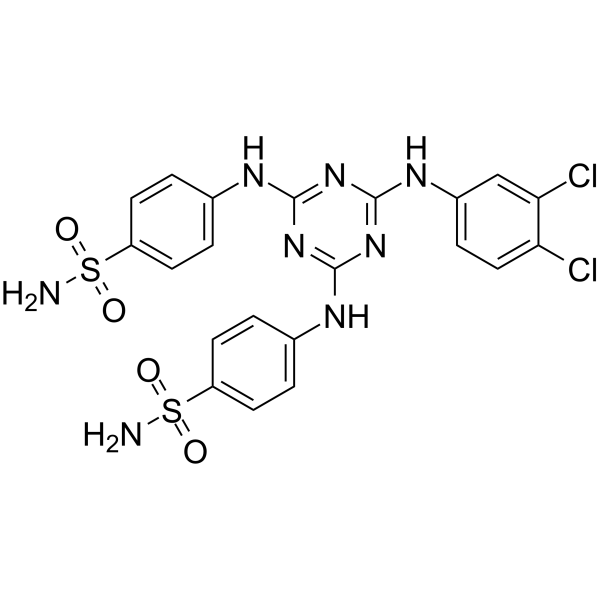 0 ImagesCat. No.: HY-147955CAS No.: 2428389-67-5CAI/II-IN-5 (compound MZ8) is a potent hCA I and hCA II (human carbonic anhydrase isoenzymes I and II) inhibitor, with IC50 values of 37.88 and 45.23 nM, respectively. CAI/II-IN-5 also shows inhibition profile against α-Glycosidase and AChE, with IC50 values of 48.98 and 420.14 nM, respectively. CAI/II-IN-5 can be used for the research of many diseases such as diabetes, Alzheimer’s disease, heart failure, ulcer, and epilepsy.
-
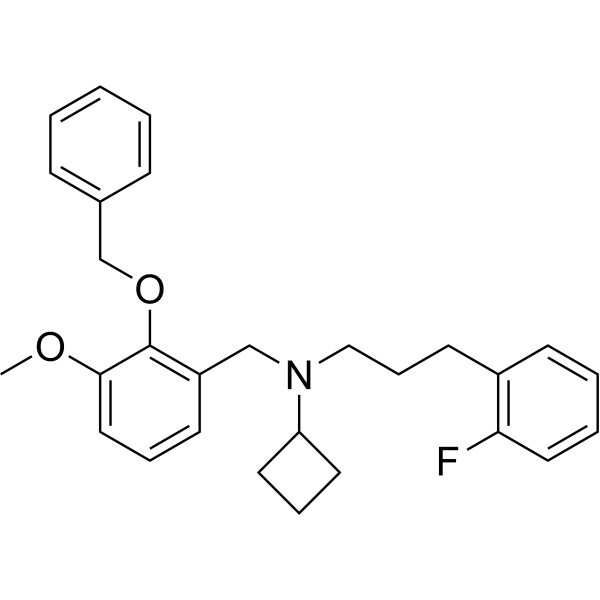
H3R antagonist 4
 0 ImagesCat. No.: HY-162812H3R antagonist 4 (compound 11L) was a dual inhibitor of cholinesterase and histamine receptor (H3R), with corresponding IC50 of 7.04 μM (eeAChE), 9.73 μM (hAChE)(reversible) and 1.09 nM (H3R) , respectively. H3R antagonist 4 inhibited the aggregation of Aβ1-42 induced by itself and Cu2+ (95.48% and 88.63%) , and degraded the Aβ1-42 fibrils induced by itself and Cu2+ (80.16% and 89.30%) . H3R antagonist 4 chelate biometals such as Cu2+, Zn2+, Al3+, and Fe2+. H3R antagonist 4 significantly reduced tau protein hyperphosphorylation induced by Aβ1-42 and inhibited RSL-3-induced apoptosis and ferroptosis in PC12 cells. H3R antagonist 4 had the best blood-brain barrier permeability and intestinal absorption in hCMEC/D3 and hPepT1-MDCK cells.H3R antagonist 4 ameliorates learning and memory impairment in a mouse model of Alzheimer's disease induced by scopolamine (HY-N0296) .
-
Donepezil (Standard)
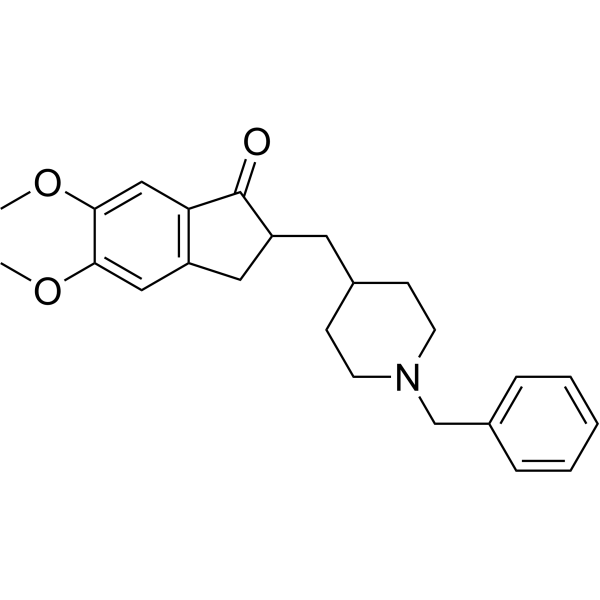 0 ImagesSynonyms: E2020 free base (Standard)
-
(Rac)-TZ3O
 0 ImagesCat. No.: HY-163646CAS No.: 2218754-19-7(Rac)-TZ3O is the (Rac) isomer of TZ3O. TZ3O is an anticholinergic compound with neuroprotective activity. TZ3O improves memory impairment and cognitive decline in a scopolamine-induced Alzheimer's disease rat model and can be used in the study of Alzheimer's disease.
-
AChE-IN-74
 0 ImagesCat. No.: HY-162657AChE-IN-74 (Compound 10) is a modulator for cholinesterase. AChE-IN-74 inhibits the proliferation of liver cancer cell Hep3B and SkHep1 with IC50 of 3.6 and 19.9 μM. AChE-IN-74 exhibits a low embryonic toxicity in zebrafish models (10-15 μM).
-
Multitarget AD inhibitor-2
 0 ImagesCat. No.: HY-158978Multitarget AD inhibitor-2 (Compound VN-19) is a multitargeting inhibitor acetylcholinesterase (AChE, IC50=0.14 μM), butyrylcholinesterase (BChE, IC50=11.6 μM), monoamine oxidase B (MAO B, IC50=0.45 μM). Multitarget AD inhibitor-2 inhibits self-induced aggregation of amyloid beta protein Aβ1-42 (inhibition rate is 47.3% at 20 μM), and downregulates the level of ROS in SH-SY5Y (80 inhibition rate at 25 μM). Multitarget AD inhibitor-2 ameliorates the cognitive decline in Scopolamine (HY-N0296)-induced Alzheimer’s Disease zebrafish models.
-
Picfeltarraenin IB (Standard)
 0 ImagesCat. No.: HY-N2211RCAS No.: 97230-46-1Picfeltarraenin IB (Standard) is the analytical standard of Picfeltarraenin IB. This product is intended for research and analytical applications. Picfeltarraenin IB, a triterpenoid obtained from Picriafel-terrae Lour (P.fel-terrae), is an acetylcholinesterase (AChE) inhibitor. Picfeltarraenin IB can be used for the treatment of herpes infections, cancer and inflammation.
-
BuChE-IN-6
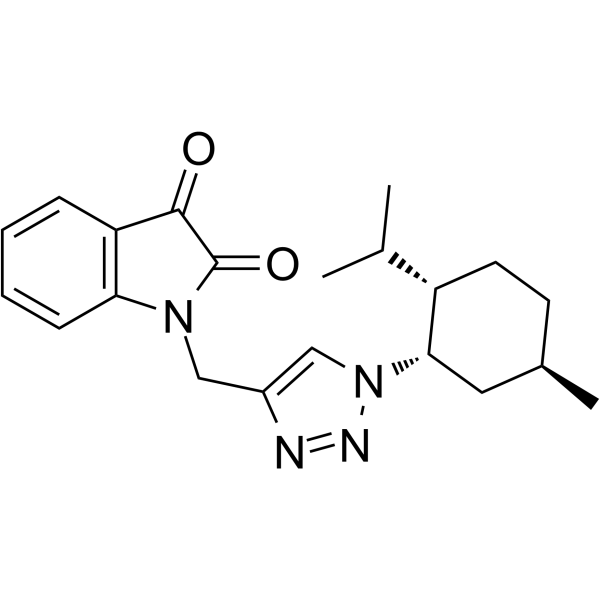 0 ImagesCat. No.: HY-146251CAS No.: 2003213-07-6BuChE-IN-6 (compound 1b) is a potent and selective BuChE (butyrylcholinesterase) inhibitor, with IC50 values of 0.46 and 0.51 μM for eqBuChE and hBuChE, respectively. BuChE-IN-6 also inhibits Aβ42 self-aggregation.
-
Butalamine hydrochloride
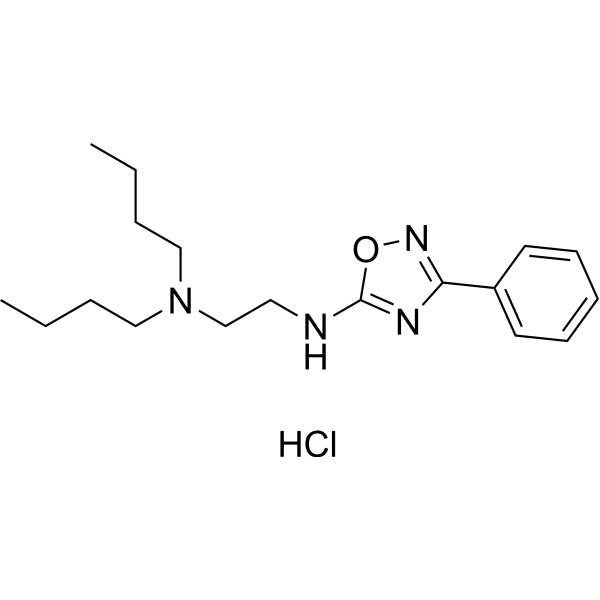 0 ImagesCat. No.: HY-105651ACAS No.: 56974-46-0Butalamine (hydrochloride) is a peripheral vasodilator with local anesthetic effects. :Butalamine (hydrochloride) can produce in animals coronary vasodilation, local anaesthesia, analgesia and a papaverine like action in duodenal preparations. Butalamine (hydrochloride) causes a slowing in rate of spontaneous activity, a decrease in amplitude and a reduction in isolated human smooth muscle.
-
Neoeriocitrin (Standard)
 0 ImagesCat. No.: HY-N4119RCAS No.: 13241-32-2Neoeriocitrin (Standard) is the analytical standard of Neoeriocitrin (HY-N4119). This product is intended for research and analytical applications. Neoeriocitrin is a Naringin (HY-N0153) analogue found in Drynaria Rhizome. Neoeriocitrin induces cells proliferation, differentiation, up-regulates type I collagen, osteocalcin, and key osteogenic markers, and increases ALP activity. Neoeriocitrin increases expression of Runx2, COL I, OCN and Beclin1. Neoeriocitrin inhibits phosphorylation of P38 mitogen-activated protein kinase, reduces acetylcholinesterase (AChE) activity, and increases choline acetyltransferase (ChAT) activity. Neoeriocitrin reduces apoptosis and induces autophagy. Neoeriocitrin can be used for the researches of osteoporosis and Alzheimer's disease.
-
hAChE/hBACE-1-IN-1
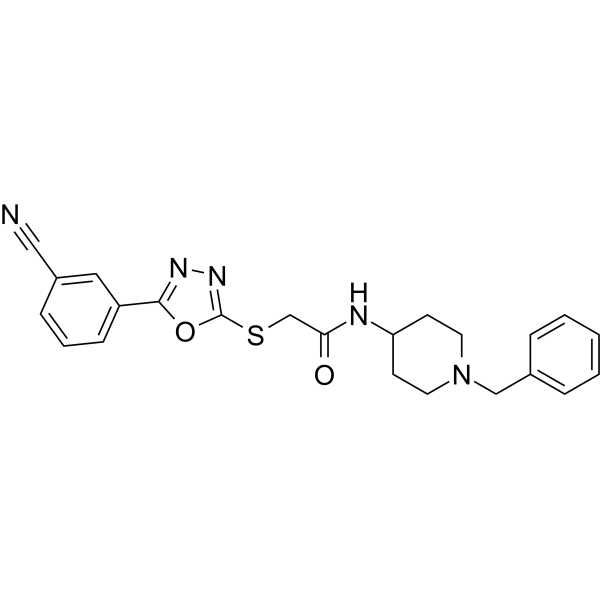 0 ImagesCat. No.: HY-149287hAChE/hBACE-1-IN-1 (compounds 5d) is an orally active inhibitor of hAChE with blood-brain permeability. hAChE/hBACE-1-IN-1 inhibits hAChE and hBACE-1 with IC50 values of 0.076 and 0.23 μM, respectively. hAChE/hBACE-1-IN-1 inhibits Aβ1-42 aggregation and improves mouse learning and memory ability. hAChE/hBACE-1-IN-1 can be used to research in Alzheimer's disease.
-
Phenylethyl isovalerate
 0 ImagesCat. No.: HY-W101609CAS No.: 140-26-1Phenylethyl isovalerate is a synthetic flavoring substance with very low acute oral toxicity. Phenylethyl isovalerate after long-term low-dose intake increases the activity of alanine aminotransferase (ALT) and the level of sulfhydryl groups in the serum, but decreases the activity of cholinesterase (ChE).
-
Cyclopenin
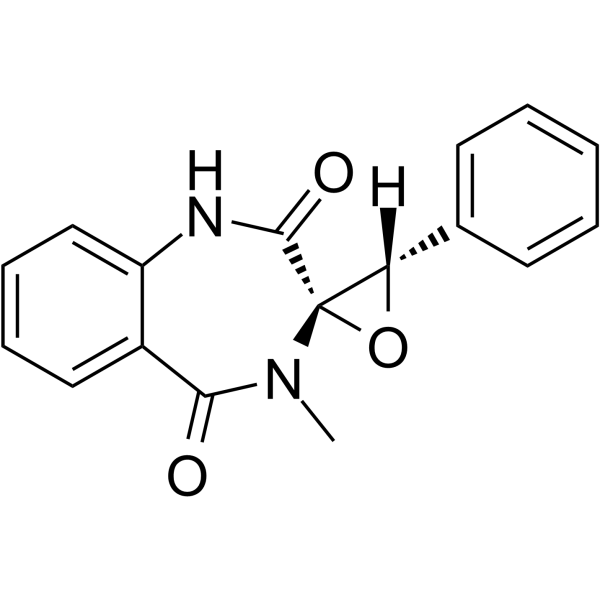 0 ImagesCat. No.: HY-113626ACAS No.: 19553-26-5Synonyms: (±)-IsocyclopenineCyclopenin ((±)-Isocyclopenine) is a racemate.