



Cholinesterase (ChE)
Cholinesterase (ChE) is a family of enzymes present in the central nervous system, particularly in nervous tissue, muscle and red cells, which catalyze the hydrolysis of the neurotransmitter acetylcholine into choline and acetic acid, a reaction necessary to allow a cholinergic neuron to return to its resting state after activation. It is one of many important enzymes needed for the proper functioning of the nervous systems of humans.
There are two types: acetylcholinesterase (AChE, acetylcholine hydrolase) and butyrylcholinesterase (BChE, acylcholine acylhydrolase), also known as nonspecific cholinesterase or pseudocholinesterase. AChE is primarily found in the blood on red blood cell membranes, in neuromuscular junctions, and in neural synapses, while BChE is produced in the liver and found primarily in plasma. The difference between the two types of cholinesterase is their relative preferences for substrates: AChE hydrolyzes acetylcholine faster while BChE hydrolyzes butyrylcholine faster.
Cholinesterase (ChE) Isoform Specific Products
All Product Categories
-
Cholinesterase (ChE) Inhibitors
(913)
View all products
-
Cholinesterase (ChE) Agonists
(5)
View all products
-
Cholinesterase (ChE) Antagonists
(10)
View all products
-
Cholinesterase (ChE) Activators
(32)
View all products
-
Cholinesterase (ChE) Modulators
(10)
View all products
-
Cholinesterase (ChE) Chemical
(1)
View all products
-
Cholinesterase (ChE) Inducer
(1)
View all products
-
Cholinesterase (ChE) Controls
(6)
View all products
-
Cholinesterase (ChE) Substrates
(2)
View all products
-
Cholinesterase (ChE) Related Products (1062)
Related Products (1062)

-
Antibodies (2)
-
Cholinesterase (ChE) Isoform Comparison
-
AP2238
 0 ImagesCat. No.: HY-119292CAS No.: 553681-56-4AP2238 is a dual-function acetylcholinesterase (AChE) inhibitor with Ki values for human AChE (HuAChE) and butyrylcholinesterase (BuChE) of 21.7 and 48.9 μM respectively. AP2238 blocks the pro-fibrotic interaction between the peripheral site of AChE and Aβ, and can inhibit Aβ aggregation. AP2238 can be used for the research of Alzheimer's disease.
-
AChE-IN-57
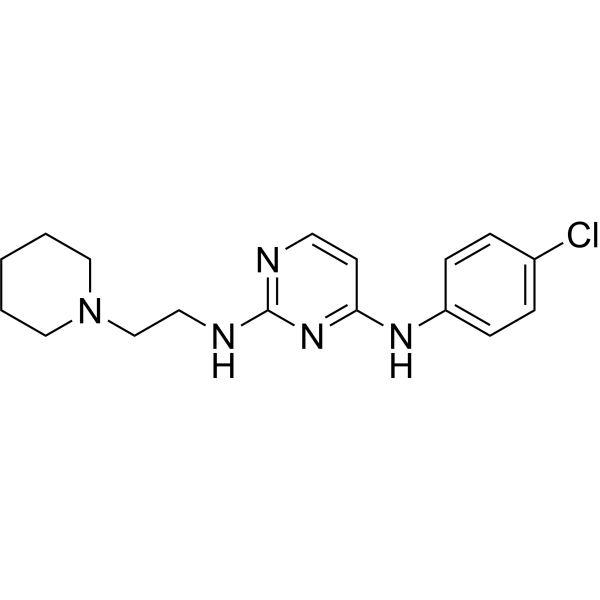 0 ImagesCat. No.: HY-162258AChE-IN-57 (compound 5b(SP-2)) is a potent AChE inhibitor. AChE-IN-57 improves cognitive defects. AChE-IN-57 restores the biochemical mediators and inhibits reactive oxygen and nitrogen species implicated in the neuroinflammation mechanism. AChE-IN-57 has the potential for the research of Alzheimer.
-
Protopine (Standard)
 0 ImagesProtopine (Standard) is the analytical standard of Protopine. This product is intended for research and analytical applications. Protopine (Corydinine), an isoquinoline alkaloid, is a specific reversible and competitive inhibitor of acetylcholinesterase. Protopine exhibits anti-inflammation, anti-microbial, anti-angiogenic and anti-tumour activity.
-
AChE-IN-23-d10
 0 ImagesCat. No.: HY-W077226SSynonyms: 4-Amino-Alpha-diethyl amino-o-cresol-d10 dihydrochlorideAChE-IN-23-d10 (4-Amino-Alpha-diethyl amino-o-cresol-d10 (dihydrochloride)) is the deuterium labeled AChE-IN-23 (HY-W077226). AChE-IN-23 (compound 3h) is an acetylcholinesterase (AChE) inhibitor with an IC50 value of 48.3 μM.
-
BChE-IN-10
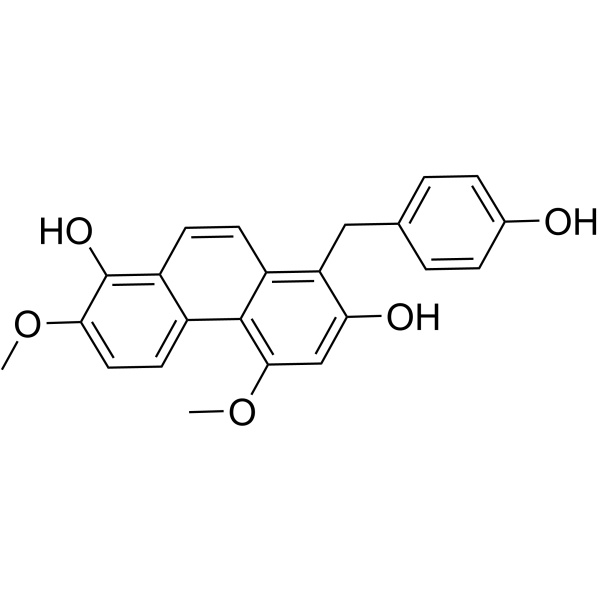 0 ImagesCat. No.: HY-N10486CAS No.: 2185837-61-8BChE-IN-10 (compound 6) is a potent butyrylcholinesterase (BChE) mixed-type inhibitor with an IC50 value of 6.4 μM. BChE-IN-10 can be isolated from Bletilla striata. BChE-IN-10 can be used for the research of Alzheimer's disease (AD).
-
MAO-A-IN-4
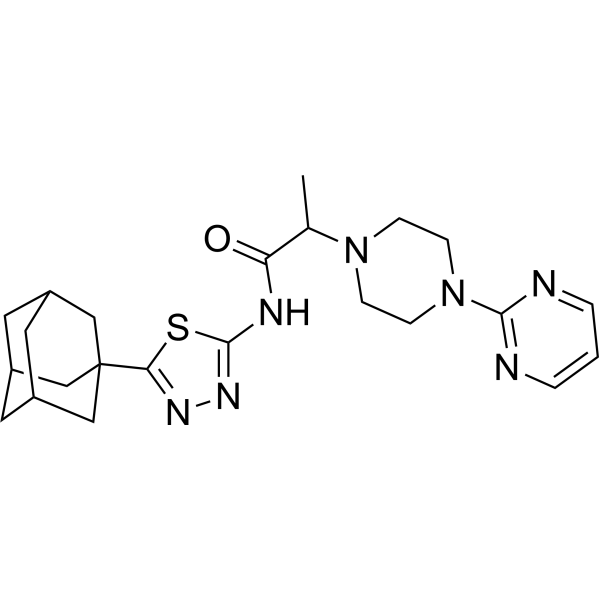
 0 ImagesCat. No.: HY-181110MAO-A-IN-4 is a highly selective and reversible inhibitor of monoamine oxidase A (MAO-A), with an IC50 of 0.06 μM against hMAO-A. MAO-A-IN-4 exhibits anti-inflammatory, antioxidant, neuroprotective, and antidepressant activities. MAO-A-IN-4 possesses favorable ADME properties and is suitable for research related to depression.
-
Edrophonium chloride (Standard)
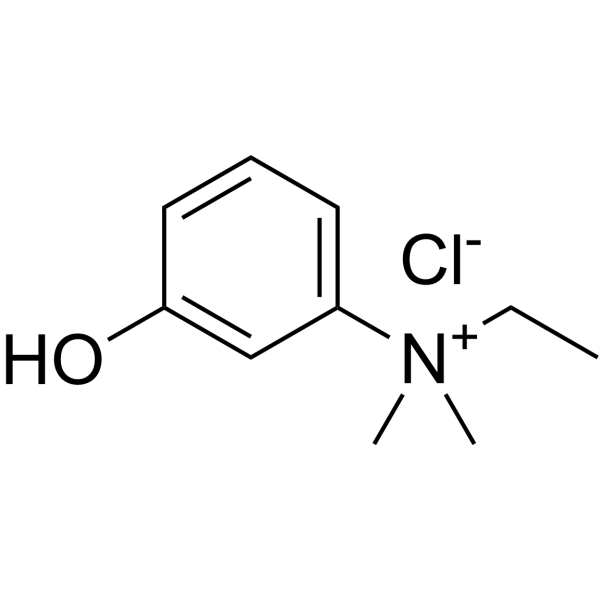 0 ImagesEdrophonium chloride (Standard) is the analytical standard of Edrophonium chloride (HY-B0882). This product is intended for research and analytical applications. Edrophonium chloride is a short-acting acetylcholinesterase (AChE) inhibitor. Edrophonium chloride has Ki values of 0.2, 0.2, and 0.4 μM and IC50 values of 0.2, 0.05, and 0.5 μM for AChE in human erythrocytes, purified calf forebrain, and purified octopus brain, respectively. Edrophonium chloride can be used to detect early digitalis toxicity and in the study of myasthenia gravis.
-
AD-35
 0 ImagesCat. No.: HY-117710BCAS No.: 1531586-64-7AD-35 is an orally active, blood-brain barrier-permeable acetylcholinesterase inhibitor with an IC50 of 793 nM. AD-35 inhibits metal-induced amyloid-β aggregation and disassembles preformed amyloid-β aggregates. In rat models of cognitive impairment, AD-35 attenuates Aβ25-35-induced astrocyte activation, TNF-α and IL-1β release, inhibits ERK phosphorylation, and alleviates learning and memory deficits. AD-35 can be used for research on Alzheimer's disease.
-
Chuanbeinone
 0 ImagesCat. No.: HY-107272CAS No.: 103530-47-8Synonyms: 22-EpidelavinoneChuanbeinone (22-Epidelavinone) is an orally active alkaloid found in Fritillaria pallidiflora. Chuanbeinone shows cytotoxicity against mutiple cancer cells and can induces apoptosis and S phase arrest. Chuanbeinone downregulates Bcl-2, upregulates Bax, and activates caspase-3. Chuanbeinone exerts anti-inflammatory and antitussive effects by reducing pro-inflammatory cytokine (IL-1β, IL-6 and TNF-α) production and mRNA expression, and inhibiting TRIF-, MyD88-, NF-κB-, and MAPK-dependent signaling pathways. Chuanbeinone inhibits AChE and BChE with IC50 values of 7.7 and 0.7 μM. Chuanbeinone can be used for the researches of lung carcinoma, cough, inflammatory diseases.

-
Acephate-d3
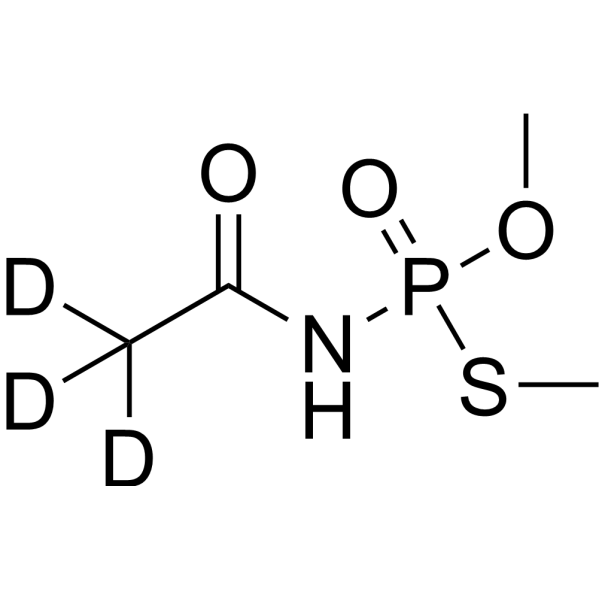 0 ImagesCat. No.: HY-B0841SCAS No.: 2140327-70-2Acephate-d3 is the deuterium labeled Acephate. Acephate is an anticholinesterase insecticide that produces cholinotoxicity. Acephate displays weak inhibition of rat AChE but potently inhibits cockroach AChE.
-
AChE/MAO-B-IN-8
 0 ImagesCat. No.: HY-181141AChE/MAO-B-IN-8 is an acetylcholinesterase (AChE) and monoamine oxidase B (MAO-B) inhibitor with IC50 values of 0.72 and 0.19 μM. AChE/MAO-B-IN-8 interactions with AChE and MAO-B active-site amino acid residues. AChE/MAO-B-IN-8 can be used for the research of Alzheimer’s disease.
-
CAI/II-IN-8
 0 ImagesCat. No.: HY-161507CAS No.: 3036136-18-9CAI/II-IN-8 (Compound 8) is a hydrazide derivative based on 4-hydroxybenzaldehyde. CAI/II-IN-8 primarily targets human carbonic anhydrase isomerase I (hCA I) and II (hCA II) for inhibition (IC50 = 21.35 ± 0.39 nM (CA I); 7.12 ± 0.12 nM (CA II)). CAI/II-IN-8 inhibits AChE and BChE as well(IC50 = 46.27 ±0.75 nM (AChE); 43.38 ± 0.83 nM (BChE)). ..
-
Hydrangenol 8-O-glucoside
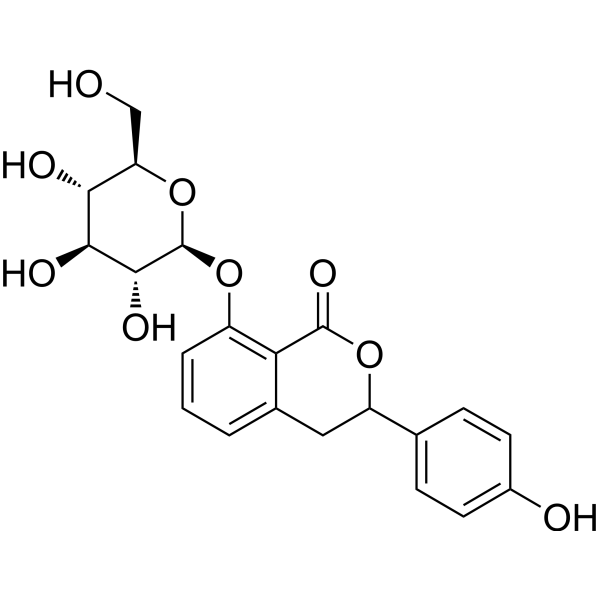 0 ImagesCat. No.: HY-N4027CAS No.: 67600-94-6Synonyms: Hydrangenol 8-O-β-D-glucopyranosideHydrangenol 8-O-glucoside (Hydrangenol 8-O-β-D-glucopyranoside) can be isolated from Hydrangea macrophyllu. Hydrangenol 8-O-glucoside is an AChE inhibitor (IC50: 22.66 μM). Hydrangenol 8-O-glucoside inhibits passive cutaneous anaphylaxis (PCA) reaction.
-
AChE-IN-117
 0 ImagesCat. No.: HY-184140AChE-IN-117 is an AChE/nAChR inhibitor with larvicidal activity against Culex pipiens third-instar larvae. AChE-IN-117 forms stable catalytic site interactions to disrupt cholinergic signaling. AChE-IN-117 binds to its receptor via hydrogen bonding and π-cation interactions to interfere with cholinergic synaptic transmission. AChE-IN-117 induces neurotoxic symptoms including hyperactivity, erratic movement, tremors, paralysis, and larval mortality. AChE-IN-117 can be used for the research of mosquito-borne infectious diseases.

-
Itopride
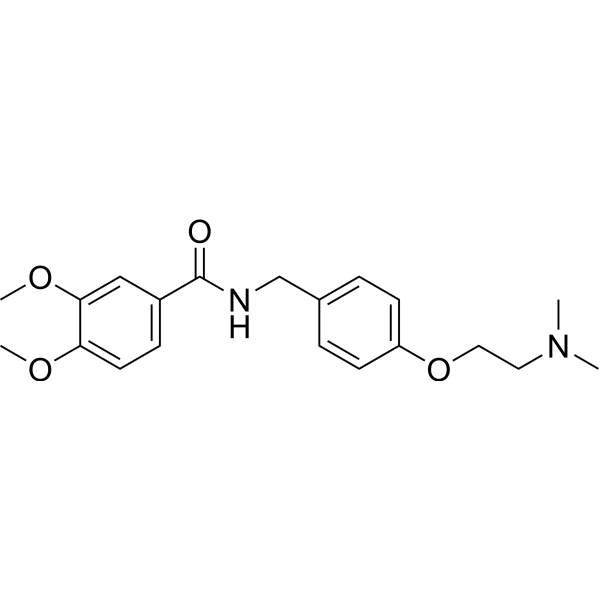 0 ImagesCat. No.: HY-B0732ACAS No.: 122898-67-3Synonyms: HSR803 free baseItopride (HSR803 free base) is a potent and orally active dopamine-2 antagonist and an acetylcholine esterase (AChE) inhibitor. Itopride enhances gastric motility through both antidopaminergic and anti-acetylcholinesterasic actions, can be used as a gastrointestinal prokinetic agent. Itopride can be used for researching gastro-esophageal reflux disease (GERD).
-
S16–1029
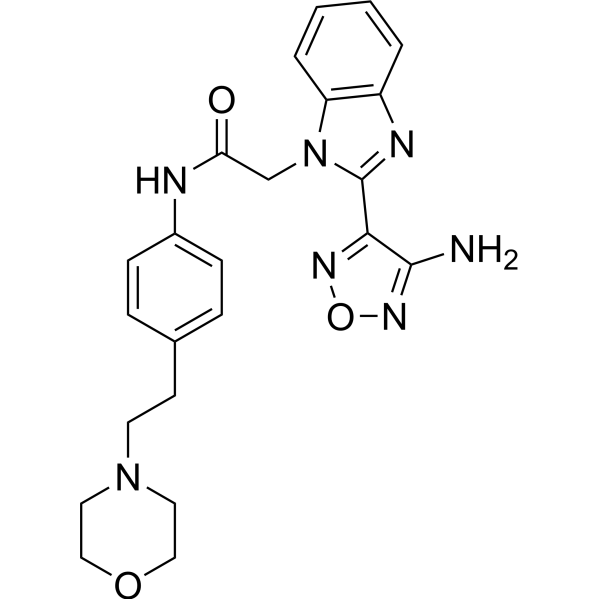 0 ImagesCat. No.: HY-161331CAS No.: 2653349-51-8S16–1029 is a selective and orally active butyrylcholinesterase (BChE) inhibitor with IC50s of 11.35 nM and 48.1 nM for eqBChE and hBChE, respectively. S16–1029 could cross the blood-brain barrier (BBB) and reach the central nervous system (CNS). S16–1029 can be used for Alzheimer's disease (AD) research.
-
AChE/BChE-IN-21
 0 ImagesCat. No.: HY-168031CAS No.: 2756368-79-1AChE/BChE-IN-21 is a histamine H3 receptor antagonist, calcium channel blocker, and acetylcholinesterase inhibitor. AChE/BChE-IN-21 exhibits neuroprotective activity against H2O2 and Aβ1-40, and can restore cognitive function in AD mice.




