



Cholinesterase (ChE)
Cholinesterase (ChE) is a family of enzymes present in the central nervous system, particularly in nervous tissue, muscle and red cells, which catalyze the hydrolysis of the neurotransmitter acetylcholine into choline and acetic acid, a reaction necessary to allow a cholinergic neuron to return to its resting state after activation. It is one of many important enzymes needed for the proper functioning of the nervous systems of humans.
There are two types: acetylcholinesterase (AChE, acetylcholine hydrolase) and butyrylcholinesterase (BChE, acylcholine acylhydrolase), also known as nonspecific cholinesterase or pseudocholinesterase. AChE is primarily found in the blood on red blood cell membranes, in neuromuscular junctions, and in neural synapses, while BChE is produced in the liver and found primarily in plasma. The difference between the two types of cholinesterase is their relative preferences for substrates: AChE hydrolyzes acetylcholine faster while BChE hydrolyzes butyrylcholine faster.
Cholinesterase (ChE) Isoform Specific Products
All Product Categories
-
Cholinesterase (ChE) Inhibitors
(910)
View all products
-
Cholinesterase (ChE) Agonists
(5)
View all products
-
Cholinesterase (ChE) Antagonists
(10)
View all products
-
Cholinesterase (ChE) Activators
(32)
View all products
-
Cholinesterase (ChE) Modulators
(10)
View all products
-
Cholinesterase (ChE) Chemical
(1)
View all products
-
Cholinesterase (ChE) Inducer
(1)
View all products
-
Cholinesterase (ChE) Controls
(6)
View all products
-
Cholinesterase (ChE) Substrates
(2)
View all products
-
Cholinesterase (ChE) Related Products (1058)
Related Products (1058)

-
Antibodies (2)
-
Cholinesterase (ChE) Isoform Comparison
-
Pralidoxime methanesulfonate
 0 ImagesPralidoxime methanesulfonate is a potent reactivator of acetylcholinesterase (AChE). Pralidoxime methanesulfonate reactivates nerve agent-inhibited AChE via direct nucleophilic attack by the oxime moiety on the phosphorus center of the bound nerve agent. Pralidoxime methanesulfonate is an antidote for organophosphate poisoning.
-
Multi-kinase-IN-10
 0 ImagesCat. No.: HY-180892Multi-kinase-IN-10 (Compound IIIk) is a multi-kinase inhibitor. Multi-kinase-IN-10 exhibits significant calcium channel blocking activity, with its IC50 being 26.67 μM. Multi-kinase-IN-10 is a potent dual cholinesterase inhibitor, with its IC50 values for hAChE and hBuChE being 0.304 μM and 1.033 μM respectively. Multi-kinase-IN-10 has antioxidant and neuroprotective activities, and shows significant anti-amnesia activity. Multi-kinase-IN-10 can be used for research on Alzheimer's disease.
-
AChE/HDAC-IN-1
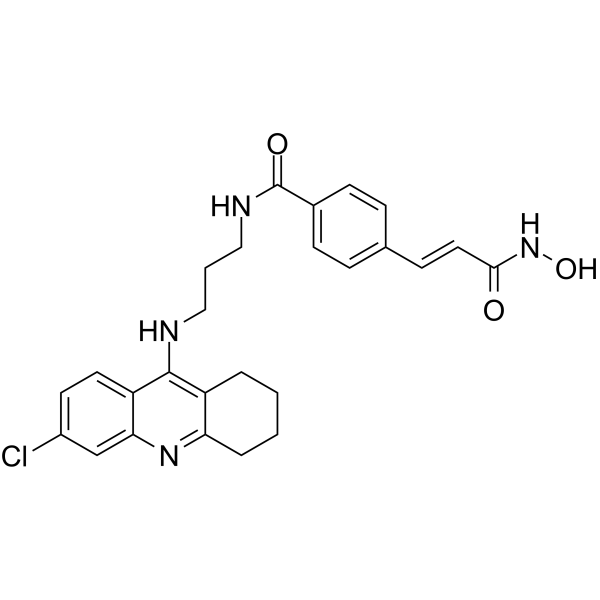 0 ImagesCat. No.: HY-147962CAS No.: 2414053-06-6COX-2-IN-23 (compound A10) is a potent both AChE and HDAC inhibitor with IC50 values of 0.12 and 0.23 nM. COX-2-IN-23 exhibits antioxidant activity and metal chelating properties. COX-2-IN-23 can be used in alzheimer's disease research.
-
Mimopezil
 0 ImagesCat. No.: HY-14795CAS No.: 180694-97-7Synonyms: ZT-1Mimopezil (ZT-1) is an cholinesterase (ChE) inhibitor that rapidly degrades into the active metabolite Huperzine A (HY-17388) in water or aqueous organic solvents. After oral administration, Mimopezil is rapidly absorbed but has low bioavailability (0.37%) in rats. However, after metabolism, it is converted into Huperzine A, which accumulates in the blood and exhibits strong activity. Following intravenous administration, Mimopezil reaches higher blood concentrations and is also rapidly metabolized into Huperzine A.
-
Uridine 5'-monophosphate-13C9,15N2 dilithium
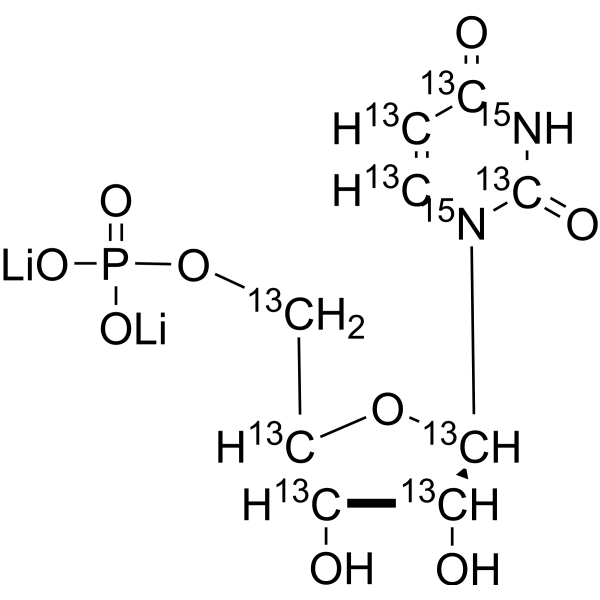 0 ImagesCat. No.: HY-101981S3CAS No.: 2483830-55-1Synonyms: 5'-Uridylic acid-13C9,15N2 dilithiumUridine 5'-monophosphate-13C9,15N2 (5'- Uridylic acid-13C9,15N2) dilithium is 13C and 15N-labeled Uridine 5'-monophosphate (HY-101981). Uridine 5'-monophosphate (5'-Uridylic acid) is an orally active mitochondrial ATP-dependent potassium channel activator that has a protective effect on the heart. Uridine 5'-monophosphate can promote the synthesis of CDP-choline and induce apoptosis in intestinal epithelial cells, which is beneficial for gut development and reduces diarrhea.
-
Insecticidal agent 33
 0 ImagesCat. No.: HY-183949Insecticidal agent 33 is an AChE inhibitor with nematicidal activity. Insecticidal agent 33 impairs locomotor activity of Caenorhabditis elegans, and induces oxidative damage in Caenorhabditis elegans, including elevated reactive oxygen species (ROS) levels, lipofuscin accumulation, lipid deposition, and disrupted cellular homeostasis. Insecticidal agent 33 can be used for the research of plant-parasitic nematode infection.
-
Linarin (Standard)
 0 ImagesLinarin (Standard) is the analytical standard of Linarin. This product is intended for research and analytical applications. Linarin (Buddleoside) is an orally active and selective inhibitor of acetylcholinesterase (AChE). Linarin has many activities, such as anti-inflammatory, antioxidant, sleep aid and sedation, bone differentiation, anti-tumor, antibacterial and antiviral. Linarin can be used to study diseases such as the nervous system, osteoporosis and cancer.
-
AChE/BChE-IN-37
 0 ImagesCat. No.: HY-183760AChE/BChE-IN-37 is a blood-brain barrier-permeable AChE/BChE inhibitor, with an IC50 of 73.65 μM against electric eel-derived AChE and an IC50 of 82.93 μM against horse-derived BChE. AChE/BChE-IN-37 exhibits chelating activity towards Cu2+, Ca2+, Mg2+, Fe2+ and Zn2+. AChE/BChE-IN-37 interacts with HSP90AA1 and GSK-3β. AChE/BChE-IN-37 inhibits the self-induced aggregation of Aβ1-42. AChE/BChE-IN-37 suppresses LPS-induced NO production in cells. AChE/BChE-IN-37 can be used in research related to Alzheimer's disease and inflammatory diseases.
-
Omeprazole sulfone N-oxide-13C,d3
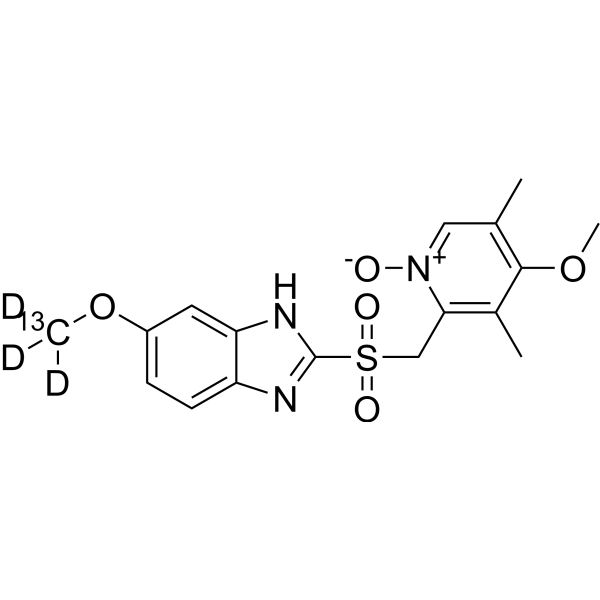 0 ImagesCat. No.: HY-138199SCAS No.: 2740875-18-5Omeprazole sulfone N-Oxide-13C,d3 is the 13C,d3 Omeprazole sulfone N-Oxide (HY-138199). Omeprazole sulfone N-Oxide is an Omeprazole (HY-B0113) analog with binding affinity to Nilaparvata lugens choline acetyltransferase (ChAT).
-
(3β,5α,6α,16β)-8,14-Didehydrocevane-3,6,16,20-tetrol
 0 ImagesCat. No.: HY-N10032CAS No.: 126594-75-0


-
AChE/BuChE-IN-2
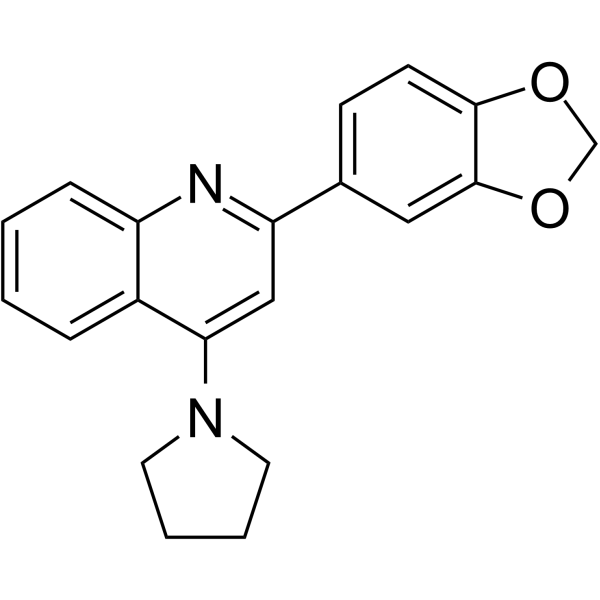 0 ImagesCat. No.: HY-146142CAS No.: 1946008-31-6AChE/BuChE-IN-2 (Compound 5f) is an orally active AChE and BuChE inhibitor with IC50 values of 0.72 μM and 0.16 μM, respectively. AChE/BuChE-IN-2 shows a non-competitive inhibition with AChE and shows potent self-induced β-amyloid (Aβ) aggregation inhibition with an IC50 of 62.52 μM. AChE/BuChE-IN-2 can cross the BBB.
-
Monardic acid A
 0 ImagesCat. No.: HY-N16715CAS No.: 1607436-76-9Monardic acid A is a selective inhibitor of AChE, with an IC50 of 53.1 μM against AChE from electric eel. Monardic acid A shows weak inhibitory activity against human erythrocyte AChE (IC50 >100 μM) and has no significant inhibitory effect on BChE. Monardic acid A reduces acetylcholine breakdown by inhibiting AChE activity, and also exhibits inhibitory activity against histamine release and hyaluronidase, thus exerting anti-inflammatory and neurotransmitter regulatory effects. Monardic acid A can be isolated from lungwort (Pulmonaria officinalis) and thyme (Thymus gobicus), and is mainly used in the development of anti-inflammatory drugs and drugs related to neurodegenerative diseases.
-
H3R antagonist 2
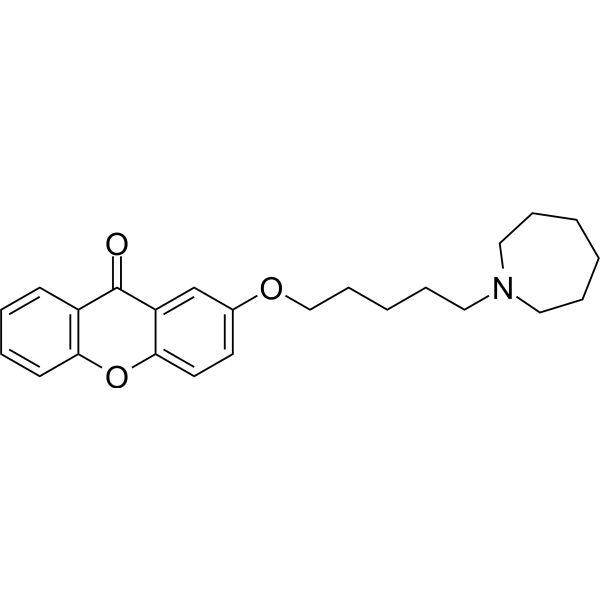 0 ImagesCat. No.: HY-146383CAS No.: 2970985-05-6H3R antagonist 2 (Compound 23) is a multitarget histamine H3 receptor (H3R) antagonist with a Ki of 170 nM for hH3R . H3R antagonist 2 shows inhibitory effects with IC50 values of 180, 880 and 775 nM for acetylcholinesterase, butyrylcholinesterase and human monoamine oxidase B (hMAO B), respectively. H3R antagonist 2 shows favorable anti-neuropathic pain and memory-enhancing effects. H3R can across BBB.
-
Multitarget AD inhibitor-1
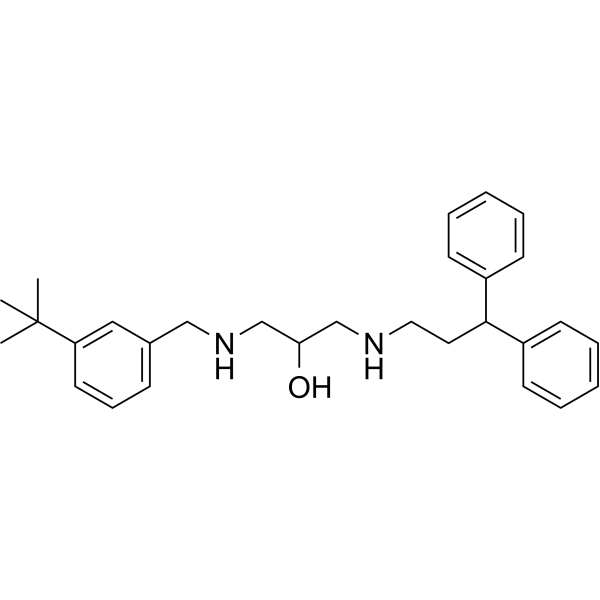 0 ImagesCat. No.: HY-136813CAS No.: 2205015-77-4Multitarget AD inhibitor-1 is a selective and reversible butyrylcholinesterase (BuChE) inhibitor with IC50s of 7.22 μM and 1.55 μM for hBuChE and eqBuChE (BuChE from equine serum), respectively. Multitarget AD inhibitor-1 inhibits β-secretase (IC50hBACE-1=41.60 μM), amyloid β aggregation (IC50Aβ=3.09 μM), tau aggregation. Multitarget AD inhibitor-1, a diphenylpropylamine derivative, has the potential for multifunctional disease-modifying anti-Alzheimer’s research.
-
AChE-IN-107
 0 ImagesCat. No.: HY-181161AChE-IN-107 is a selective acetylcholinesterase (AChE) inhibitor with an IC50 of 0.22 μM and a Ki of 0.207 μM. AChE-IN-107 shows no inhibitory effect on equine serum BChE at 10 μM. AChE-IN-107 exhibits mixed-type inhibition of electric eel acetylcholinesterase, binding to both free enzyme and enzyme-substrate complex. AChE-IN-107 acts as a cytotoxin, reduces cell viability in hepatocellular carcinoma HepG2 cells.AChE-IN-107 can be used for the research of alzheimer's disease.
-
Drofenine
 0 ImagesDrofenine (Cycloadiphene; Hexahydroadiphenine) is an brain-penetrant antispasmodic agent. Drofenine is a Kv2.1 channel inhibitor with human IC50 of 9.53 μM. Drofenine is a butyrylcholinesterase (BChE) inhibitor with Ki of 0.003 mM, and is a TRPV3 activator. Drofenine blocks Kv2.1-dependent potassium efflux, inhibits Kv2.1/JNK/NF-κB and IkBa/NF-kB signaling, suppresses Kv2.1 mRNA/protein expression. Drofenine suppresses oligomeric Aβ-induced microglial NLRP3 inflammasome activation and neuronal Tau hyperphosphorylation, improves cognitive impairment, promotes neurite outgrowth. Drofenine induces calcium influx in keratinocytes and exert cytotoxicity against keratinocytes. Drofenine ameliorates diabetic peripheral neuropathy -like pathology. Drofenine can be used for the researches of Alzheimer's disease, diabetic peripheral neuropathy and smooth muscle spasm.
-
AChE/BuChE/MAO-B-IN-2
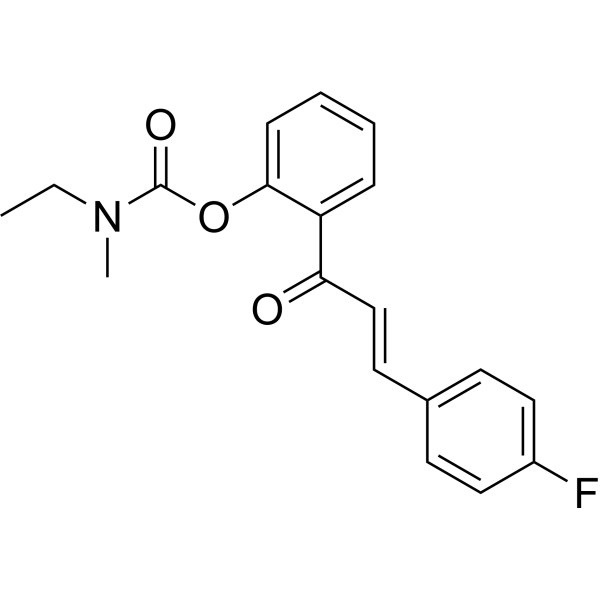 0 ImagesCat. No.: HY-149090CAS No.: 3044829-88-8AChE/BuChE/MAO-B-IN-2 (compound 4b) is a potent AChE/BuChE inhibitor and showed good blood brain barrier (BBB) permeability in vitro with an IC50 value of 5.3 μM, 12.4 μM, 1.9±0.08 μM, for AChE, BuChE, huMAO-B, respectively. AChE/BuChE/MAO-B-IN-2 (compound 4b) can inhibit excess AChE/BuChE in Alzheimer's disease (AD) brain. AChE/BuChE/MAO-B-IN-2 (compound 4b) can be used in anti-Alzheimer's research.
-
S 1432
 0 ImagesCat. No.: HY-117162CAS No.: 24932-86-3S 1432 is a central nervous system depressant with anticonvulsant and muscle relaxant effects. S 1432 significantly reduces acetylcholine levels in the striatum inhibits convulsions induced by pentylenetetrazol. S 1432 can be used in the development of psychotropic drugs.




