



Apoptosis Inducer
-
PROTAC BET Degrader-15
 0 ImagesCat. No.: HY-181729
PROTAC BET Degrader-15 is a BET PROTAC degrader with DC50 values of <0.10 nM, <0.01 nM, and <0.01 nM against BRD2, BRD3, and BRD4, respectively. PROTAC BET Degrader-15 induces significant G2/M phase cell cycle arrest and triggers apoptosis. PROTAC BET Degrader-15 causes marked downregulation of c-Myc, accompanied by upregulation of the cell cycle inhibitory protein p21, downregulation of CDK6, and an increase in the apoptosis marker cleaved PARP. PROTAC BET Degrader-15 is applicable to the research of hematologic malignancies and lung cancer.
-
EGFR/VEGFR2-IN-9
 0 ImagesCat. No.: HY-178942
EGFR/VEGFR2-IN-9 (Compound 9b) is an inhibitor of VEGFR-2 (IC50 = 1.325 μM) and EGFR (IC50 = 1.891 μM). EGFR/VEGFR2-IN-9 significantly inhibits the proliferation of multiple cancer cell lines, particularly leukemia cells. EGFR/VEGFR2-IN-9 upregulates the expression levels of Bax, caspase-3, and p53, while downregulating the expression of Bcl-2. EGFR/VEGFR2-IN-9 induces apoptosis and arrests the cell cycle in the G1 phase. EGFR/VEGFR2-IN-9 can be used to investigate anti-tumor angiogenesis and multi-drug resistant cancers.
-
Apoptosis inducer 39
 0 ImagesCat. No.: HY-174992
Apoptosis inducer 39 is an apoptosis inducer with IC50s of 4.53 and 15.42 μM against MDA-MB-231 and A549 cells. Apoptosis inducer 39 exerts in vitro anti-tumor activity by decreasing the expression of the anti-apoptotic protein Bcl-2 while increasing the expression of the pro-apoptotic protein Bax. Apoptosis inducer 39 can be used for the study of breast cancer and non-small lung cancer.
-
Bcl-2-IN-20
 0 ImagesCat. No.: HY-161786
Bcl-2-IN-20 (Compound 81) is an inhibitor for Bcl-2 with IC50 <10 μM (79.1% inhibition at 9 μM). Bcl-2-IN-20 exhibits cytotoxicity in SK-MEL-28 (IC50>10 μM), A549 (IC50=6.1 μM), HepG2 (IC50>10 μM), MCF-7 (IC50=8.9 μM), HCT116 (IC50>10 μM) and HEK-293 (IC50=14.1 μM). Bcl-2-IN-20 promotes the ROS production, induces apoptosis and DNA damage.
-
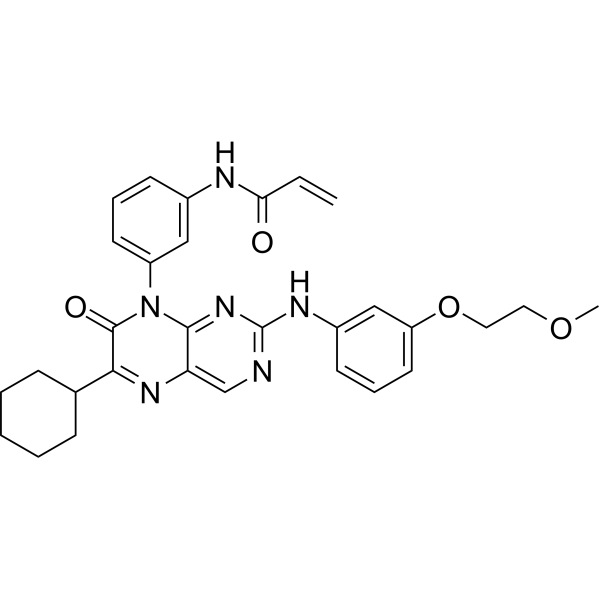
Thalidomide-piperidine-C-2,6-diazaspiro[3.3]heptane-C2-OH
![Thalidomide-piperidine-C-2,6-diazaspiro[3.3]heptane-C2-OH](https://file.medchemexpress.com/product_pic/hy-161190.gif "Click to View Thalidomide-piperidine-C-2,6-diazaspiro[3.3]heptane-C2-OH Product Detail") 0 ImagesCat. No.: HY-161190
0 ImagesCat. No.: HY-161190Thalidomide-piperidine-C-2,6-diazaspiro[3.3]heptane-C2-OH is a conjugate of E3 ligase ligand and linker, consisting of Thalidomide (HY-14658) and the corresponding Linker. Thalidomide-piperidine-C-2,6-diazaspiro[3.3]heptane-C2-OH can serve as a Cereblon ligand to recruit CRBN protein and serve as a key intermediate for the synthesis of complete PROTAC molecules.
-
Cyclopiazonic acid (Standard)
 0 ImagesCat. No.: HY-N6771RCAS No.: 18172-33-3
Ancitabine (hydrochloride) (Standard) is the analytical standard of Ancitabine (hydrochloride). This product is intended for research and analytical applications. 0
-
Apoptosis inducer 59
 0 ImagesCat. No.: HY-181274
Apoptosis inducer 59, a camphorsulfonamide-based thiazolylhydrazone derivative, is a apoptosis inducer with antitumor activity. Apoptosis inducer 59 can inhibit cell migration and invasiveness, cause S phase arrest, induce ROS production and depolarise mitochondrial membrane potential. Apoptosis inducer 59 can be used for the research of cancer, such as breast cancer.
-
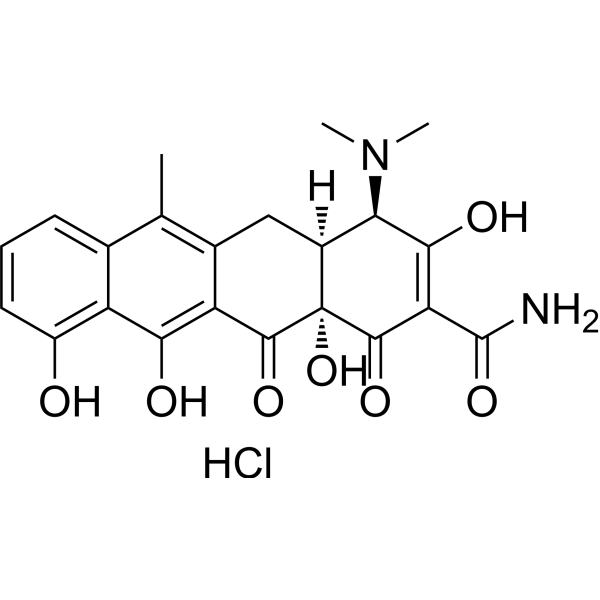
4-Epianhydrotetracycline hydrochloride
 0 Images
4-Epianhydrotetracycline hydrochloride is a major intermediate product of Tetracycline (HY-A0107). 4-Epianhydrotetracycline hydrochloride shows lethal effects and induces cell apoptosis of zebrafish embryos. 4-Epianhydrotetracycline hydrochloride inhibits Shewanella, E. coli and P. aeruginosa with MIC values of 2, 1 and 64 mg/L, respectively.
-
Anticancer agent 358
 0 ImagesCat. No.: HY-187679CAS No.: 3087062-38-9
Anticancer agent 358 is a PARP inhibitor with antiproliferative activity against lung cancer cells and low toxicity to normal hepatocytes. Anticancer agent 358 binds to the active site of PARP via hydrogen bonds and π-π interactions with key residues, thereby promoting the accumulation of DNA damage. Anticancer agent 358 induces DNA damage, apoptosis, and autophagy in lung cancer cells. Anticancer agent 358 can be used for the research of non-small cell lung cancer.
-
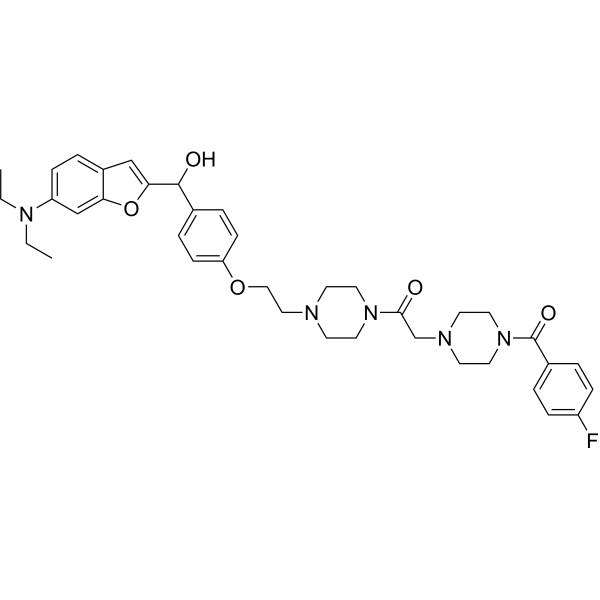
Anticancer agent 130
 0 ImagesCat. No.: HY-149890CAS No.: 3038738-52-9
Anticancer agent 130 (compound 8d) is an anticancer agent that can significantly induce apoptosis in A549 cells.

-
PI3Kα-IN-30
 0 ImagesCat. No.: HY-182368
PI3Kα-IN-30 is an orally active, selective PI3Kα inhibitor with an IC50 of 2.8 nM. PI3Kα-IN-30 inhibits cancer cell proliferation, as well as the phosphorylation of Akt (S473) and pS6 (S240/244). PI3Kα-IN-30 shows low growth inhibitory activity against normal somatic cell lines at a concentration of 30 μM. PI3Kα-IN-30 induces cancer cell apoptosis and exerts anti-tumor efficacy in xenograft models. PI3Kα-IN-30 can be used for the research of breast cancer.
-
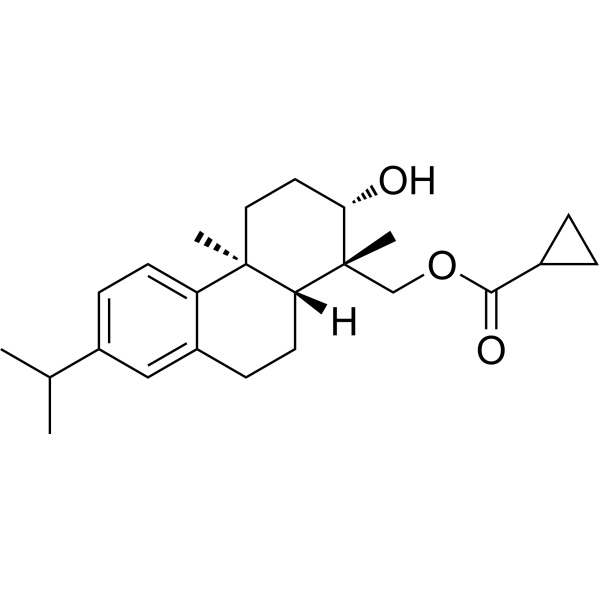
Antitumor agent-97
 0 ImagesCat. No.: HY-149829CAS No.: 2654024-16-3
Antitumor agent-97 (compound 42) is an anticancer agent. Antitumor agent-97 can effectively inhibit the proliferation and autophagy of MGC 803 cells, and induce apoptosis. Antitumor agent-97 also enhances ROS accumulation in MGC 803 cells. Antitumor agent-97 can be used in cancer research.
-
TTNPB (Standard)
 0 ImagesSynonyms: Ro 13-7410 (Standard); Arotinoid acid (Standard); AGN191183 (Standard)
TTNPB (Standard) is the analytical standard of TTNPB. This product is intended for research and analytical applications. TTNPB is a highly potent RAR agonist. Competitive binding assays using human RARs yield IC50s of α=5.1 nM, β= 4.5 nM, and γ=9.3 nM, respectively.
-
Ac-DEVDD-TPP
 0 ImagesCat. No.: HY-P10656CAS No.: 2950171-24-9
Ac-DEVDD-TPP is a porphyrin derivative that can be converted into D-TPP by caspase-3 cleavage and laser irradiation. The formed porphyrin nanofibers can effectively induce Apoptosis and Pyroptosis. Ac-DEVDD-TPP has antitumor activity.
-
FLT3-IN-21
 0 ImagesCat. No.: HY-155226
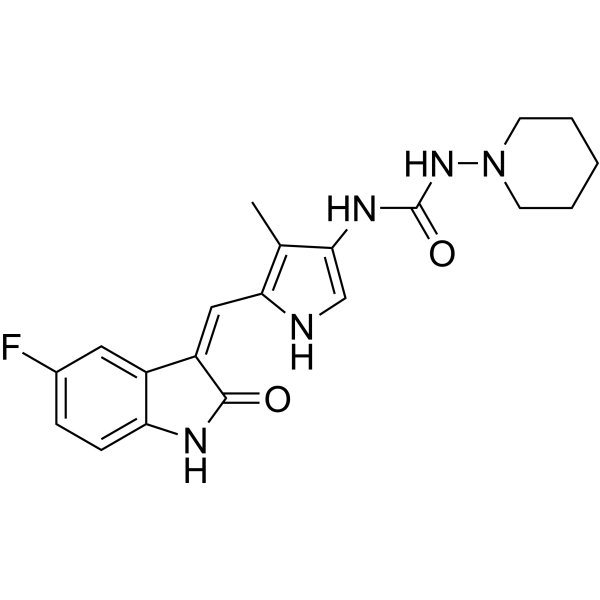
FLT3-IN-21 (compound LC-3) is a potent FLT3 inhibitor (IC50: 8.4 nM) and induces apoptosis. FLT3-IN-21 can arrest the cell cycle in the G1 phase and inhibit the proliferation of FLT3-ITD-positive AML cells MV-4-11 (IC50: 5.3 nM). In mice, FLT3-IN-21 (10 mg/kg/d) inhibited tumor growth in the MV-4-11 xenograft model (TGI=92.16%).
-
ABT-751 hydrochloride
 0 ImagesCat. No.: HY-13270ACAS No.: 141450-48-8Synonyms: E7010 hydrochloride
ABT-751 (E7010) hydrochloride is a novel, highly orally bioavailable sulfonamides antimitotic compound and tubulin binder. It prevents tubulin aggregation by binding to the colchicine site on β-tubulin, leading to cell cycle arrest in G2/M phase and inducing apoptosis, thus effectively preventing cell division. ABT-751 (E7010) hydrochloride induces autophagy by inhibiting the AKT/MTOR signaling pathway. ABT-751 (E7010) hydrochloride showed significant inhibition against various types of cancer cells, including lung, gastric, colon, and breast cancer.
-
EGFR T790M/FAK-IN-2
 0 ImagesCat. No.: HY-183120CAS No.: 2143104-11-2
EGFR T790M/FAK-IN-2 is an orally active dual FAK and EGFRT790M kinase inhibitor, with an IC50 of 1.03 nM against FAK and an IC50 of 3.89 nM against EGFRT790M. EGFR T790M/FAK-IN-2 exerts antiproliferative effects in drug-resistant cancer cells overexpressing FAK, inducing apoptosis and cell cycle arrest. EGFR T790M/FAK-IN-2 exhibits antitumor activity in a pancreatic cancer xenograft mouse model. EGFR T790M/FAK-IN-2 can be used for the research of pancreatic cancer, breast cancer and non-small cell lung cancer.
-
Apoptosis inducer 17
 0 ImagesCat. No.: HY-163451CAS No.: 3126845-21-1
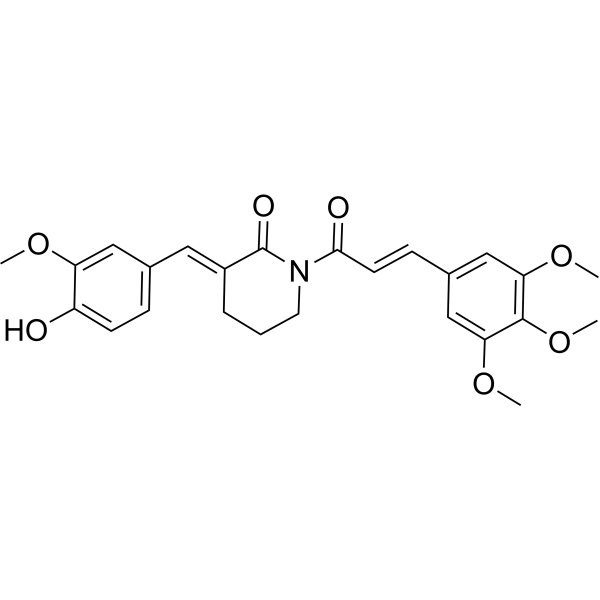
Apoptosis inducer 17 is a Curcumin-Piperlongumine hybrid molecule that increases cell cycle arrest and apoptosis through activating JNK signaling pathway in lung cancer cells.



