



Bacterial
Anything that destroys bacteria or suppresses their growth or their ability to reproduce. Heat, chemicals such as chlorine, and antibiotic drugs all have antibacterial properties. Many antibacterial products for cleaning and handwashing are sold today. Such products do not reduce the risk for symptoms of viral infectious diseases in otherwise healthy persons. This does not preclude the potential contribution of antibacterial products to reducing symptoms of bacterial diseases in the home.
All Product Categories
-
Bacterial Inhibitors
(7439)
View all products
-
Bacterial Agonists
(3)
View all products
-
Bacterial Antagonists
(9)
View all products
-
Bacterial Activators
(23)
View all products
-
Bacterial Modulators
(23)
View all products
-
Bacterial Chemicals
(2)
View all products
-
Bacterial Inducers
(7)
View all products
-
Bacterial Controls
(14)
View all products
-
Bacterial Substrates
(2)
View all products
-
Bacterial Ligand
(1)
View all products
-
Bacterial Related Products (8745)
Related Products (8745)

-
Antibodies (14)
-
Related Compound Screening Libraries (1)
-
Herbimycin C
 0 ImagesCat. No.: HY-126699CAS No.: 91700-92-4Synonyms: Antibiotic TAN 420DHerbimycin C is a bacterial metabolite originally isolated from S. hygroscopicus. It is cytotoxic to HeLa and Ehrlich cells (IC50s=7.3 and 1.2 μg/mL, respectively).
-
LL-37 GKE
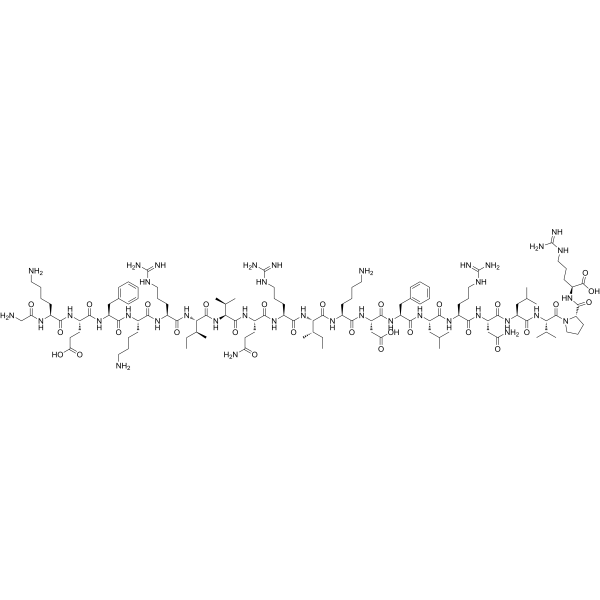 0 ImagesCat. No.: HY-P4747CAS No.: 913736-92-2LL-37 GKE is an active domain of LL-37. LL-37 GKE has antibacterial activity and has potential applications in antibiotics.
-
Tobramycin sulfate (Standard)
 0 ImagesCat. No.: HY-B0441ARCAS No.: 49842-07-1Synonyms: Nebramycin Factor 6 sulfate (Standard); Deoxykanamycin B sulfate (Standard)Tobramycin (sulfate) (Standard) is the analytical standard of Tobramycin (sulfate). This product is intended for research and analytical applications. Tobramycin sulfate (Nebramycin Factor 6 sulfate) is a parenterally administered, broad spectrum aminoglycoside antibiotic that is widely used in the treatment of moderate to severe bacterial infections due to sensitive organisms[1].
-
Josamycin hydrochloride
 0 ImagesCat. No.: HY-B1920ACAS No.: 11033-19-5Synonyms: EN-141 hydrochlorideJosamycin (EN-141) hydrochloride is an orally active macrolide antibiotic exhibiting antimicrobial activity against a wide spectrum of pathogens, such as bacteria. The dissociation constant Kd from ribosome for Josamycin hydrochloride is 5.5 nM.
-
Petroselinic acid (Standard)
 0 ImagesCat. No.: HY-113362RCAS No.: 593-39-5Petroselinic acid (Standard) is the analytical standard of Petroselinic acid. This product is intended for research and analytical applications. Petroselinic acid, a positional isomer of oleic acid, is isolated from the vegetable oil of Coriandrum sativum fruits. Petroselinic acid is used as substrate for sophorolipid fermentation. Petroselinic acid inhibits the biofilm formation in microorganisms, exhibits antibacterial and antifungal activities. Petroselinic acid is orally active[4.
-
Antibacterial agent 70
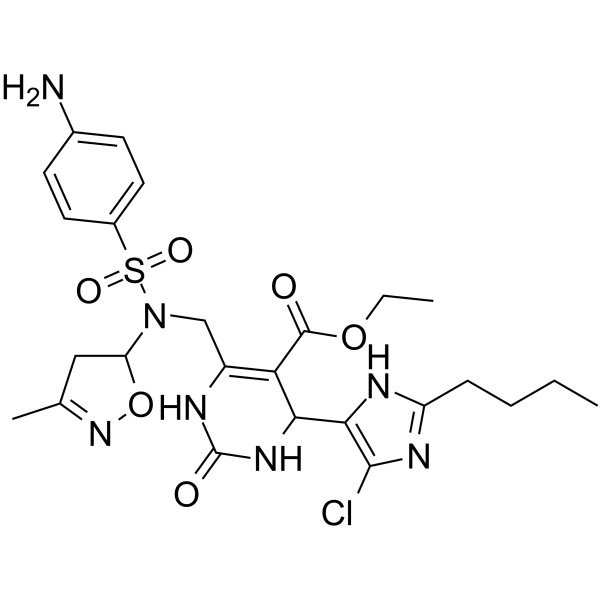 0 ImagesCat. No.: HY-144255Antibacterial agent 70 is an antibacterial agent that interacts with DNA, with a MIC value of 0.5 μg/mL against K. pneumonia and A. baumanii. Antibacterial agent 70 exhibits rapid bactericidal activity, low cytotoxicity to mammalian cells, and low tendency to induce drug resistance. Antibacterial agent 70 intercalates into DNA, disrupts bacterial membrane integrity, increases intracellular ROS production, reduces GSH activity, regulates membrane depolarization, enhances outer membrane permeability, and induces inner membrane damage. Antibacterial agent 70 can be used in studies related to multidrug-resistant bacterial infections and infections caused by drug-resistant Gram-negative pathogens.
-
Phenethicillin sodium
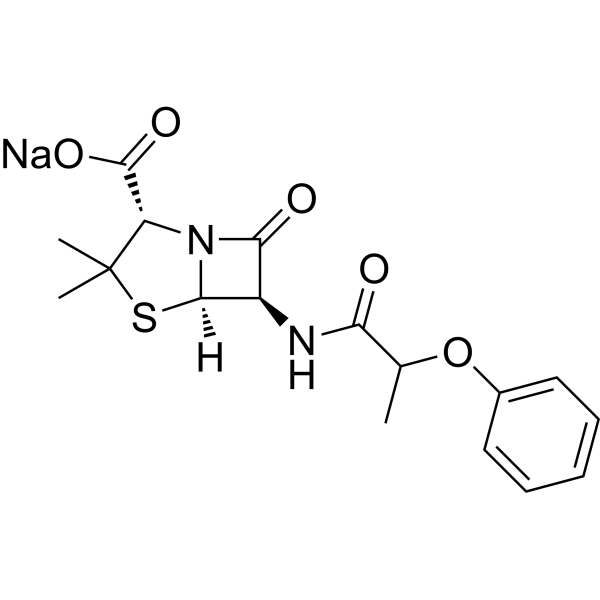 0 ImagesCat. No.: HY-137945CAS No.: 30302-52-4Synonyms: Pheneticillin sodium; α-Phenoxyethylpenicillin sodiumPhenethicillin (α-Phenoxyethylpenicillin) sodium is a Penicillin, and has antimicrobial activity.
-
Quorum sensing-IN-7
 0 ImagesCat. No.: HY-159170Quorum sensing-IN-7 (compound HSL 4) is a potent quorum sensing (QS) inhibitor. Quorum sensing-IN-7 interacts with Leu 72 and Gln 95 in the CviR binding pocket. Quorum sensing-IN-7, an antibacterial agent, is highly effective at inhibiting the production of homoserine lactones (HSLs) and biofilm in C. violaceum at 0.25-1 mg/mL.
-
PC170942
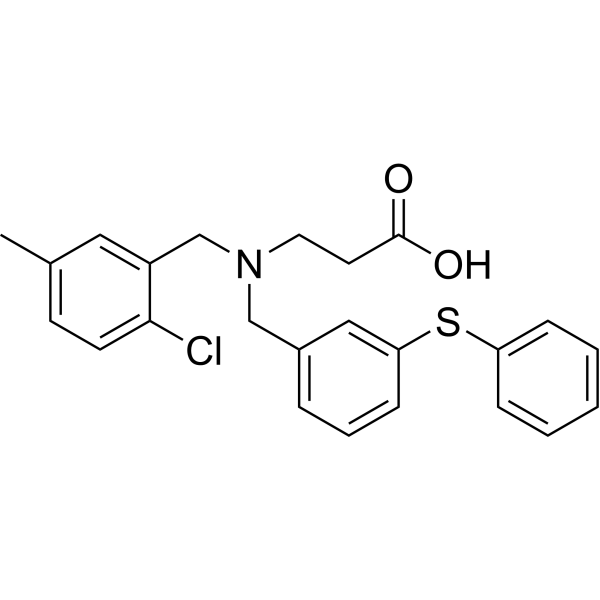 0 ImagesCat. No.: HY-123711CAS No.: 867207-49-6PC170942, a PC58538 analogue, is a potent FtsZ protein inhibitor. PC170942 is a cell division inhibitor, and shows antibacterial activities.
-
4,4'-Dicyanostilbene
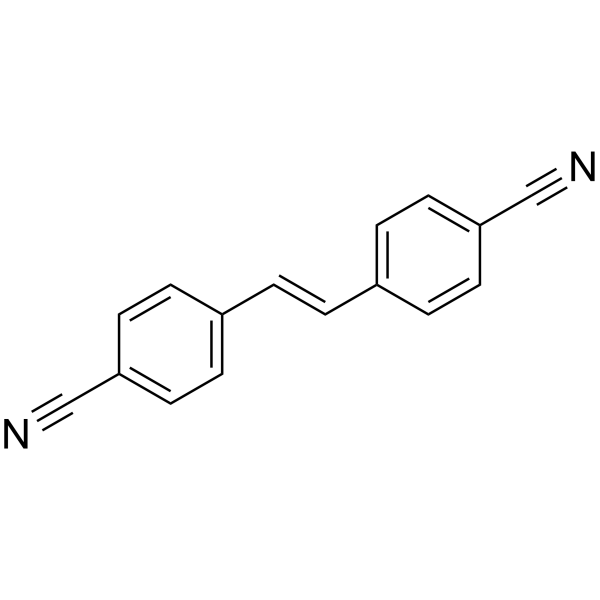 0 ImagesCat. No.: HY-W112166ACAS No.: 5216-37-54,4'-Dicyanostilbene (compound 43) is a potent antimalarial agent against the Dd2 strain, with an EC50 of 27 nM. 4,4'-Dicyanostilbene exhibits in vivo efficacy against methicillin-resistant Staphylococcus aureus (MRSA).
-
Sarafloxacin (Standard)
 0 ImagesCat. No.: HY-B0343RCAS No.: 98105-99-8Synonyms: A-56620 (Standard)Sarafloxacin (Standard) (A-56620 (Standard)) is the analytical standard of Sarafloxacin (HY-B0343). This product is intended for research and analytical applications. Sarafloxacin (A-56620) is a fluoroquinolone Antibacterial agent. Sarafloxacin inhibits the growth of Staphylococcus aureus, Enterobacteriaceae, and both aminoglycoside-sensitive and aminoglycoside-resistant strains of Pseudomonas aeruginosa.
-
Chalcomycin
 0 ImagesCat. No.: HY-121182CAS No.: 20283-48-1Chalcomycin is a macrolide antibiotic, which exhibits antimicrobial activities against gram-positive Staphylococcus aureus and Streptococcus pyogenes. Chalcomycin protects mice from infection with a variety of staphylococci and streptococc, without significant toxicity (LD50 >2500 mg/kg).
-
Antituberculosis agent-9
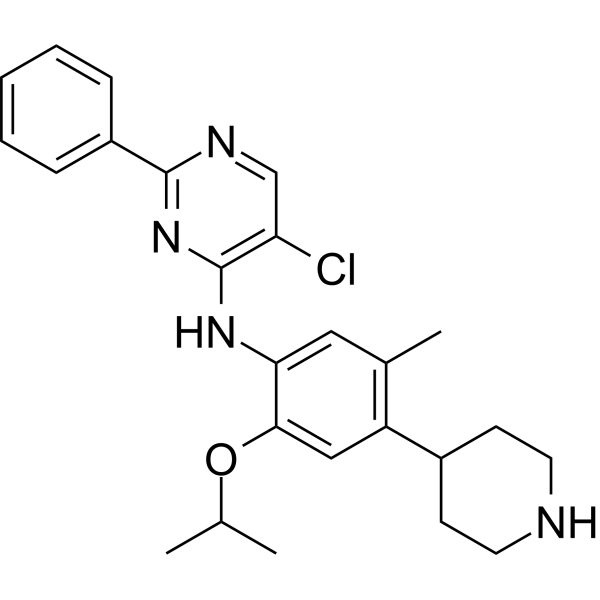 0 ImagesCat. No.: HY-149064CAS No.: 2998587-72-5Antituberculosis agent-9 (Compound 5a) is an orally active antitubercular agent with an MIC of 0.5 μg/mL against H37Ra.
-
Pseudomonic acid C
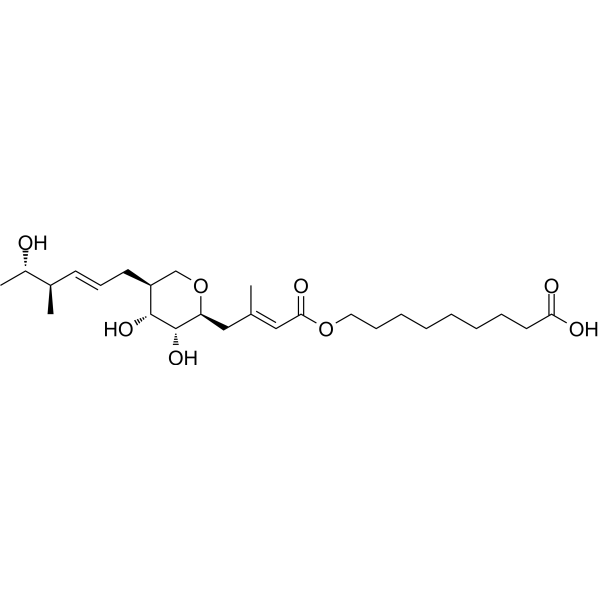 0 ImagesPseudomonic acid C, an antibiotic, possesses antibacterial activity.
-
DNA Gyrase-IN-11
 0 ImagesCat. No.: HY-161788CAS No.: 2497486-58-3DNA Gyrase-IN-11 (Compound 23Be) is an inhibitor for protein synthesis (IC50 is 0.74 μM) and DNA replication. DNA Gyrase-IN-11 inhibits DNA gyrase, that inhibits E. coli DNA supercoiling with IC50 of 11.9 μM. DNA Gyrase-IN-11 exhibits antibacterial efficacy, that inhibits Streptococcus pneumoniae, Streptococcus pyogenes, Haemophilus influenzae and Staphylococcus aureus, with MICs of 0.008-0.25 μg/mL.
-
Periplanetasin-4
 0 ImagesCat. No.: HY-P11114CAS No.: 2206807-06-7Periplanetasin-4 is an antimicrobial peptide that can be derived from the American cockroach (Periplaneta americana). Periplanetasin-4 reduces cell rounding and apoptosis. Periplanetasin-4 blocks Clostridium difficile toxin A-induced ROS production and the activation of downstream p38 MAPK and p21. Periplanetasin-4 significantly increases mitochondrial calcium level, reduces DPH fluorescence intensity and vacuolar dysfunction in Candida albicans ATCC 90028 cells. Periplanetasin-4 significantly ameliorates toxin A-induced mucosal damage in the mouse gut. Periplanetasin-4 can be used for the study of colitis.
-
3-Acetyl-28-N-(3-guanidinobutoxy)-oleanolic acid
 0 ImagesCat. No.: HY-1682043-Acetyl-28-N–(3–guanidinobutoxy)-oleanolic acid (compound J1) is a potent antimicrobial agent. 3-Acetyl-28-N–(3–guanidinobutoxy)-oleanolic acid shows anti-gram-positive bacteria and fungi activity. 3-Acetyl-28-N–(3–guanidinobutoxy)-oleanolic acid can be used as antibiotic adjuvants. 3-Acetyl-28-N–(3–guanidinobutoxy)-oleanolic disrupts the bacterial cell membrane, inserts into the DNA, and binds to DNA gyrase. 3-Acetyl-28-N–(3–guanidinobutoxy)-oleanolic reduces microbial count in a mouse MRSA skin infection model and accelerates wound healing.
-
BaENR-IN-1
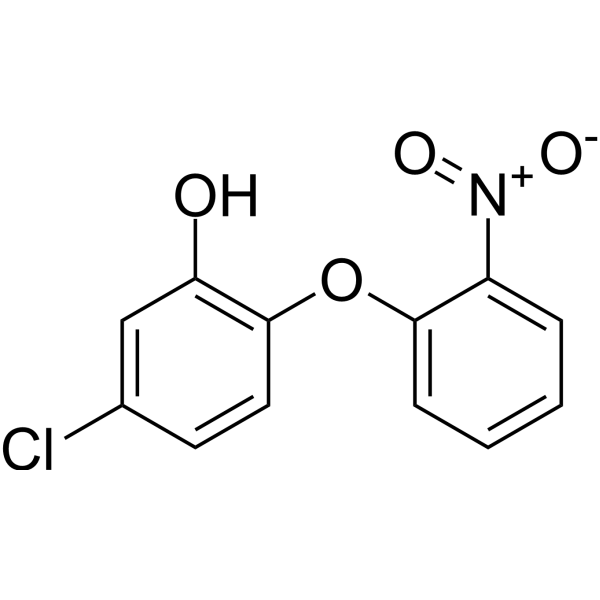 0 ImagesCat. No.: HY-160679CAS No.: 1071966-17-0
-
Millet extract
 0 ImagesCat. No.: HY-N20554Synonyms: Foxtail millet extractMillet extract (Foxtail millet extract) is an extract of millet (Finger millet) that has anti-diabetic, antioxidant, cholesterol-lowering, and antibacterial effects.
-
Ocotillone
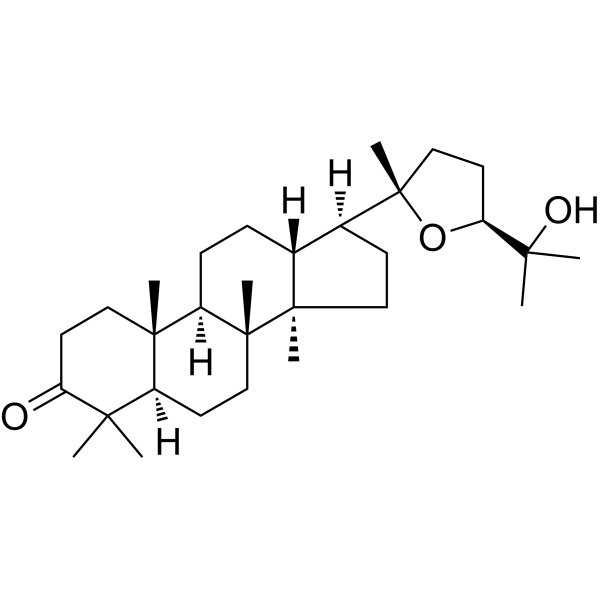 0 ImagesCat. No.: HY-N2980CAS No.: 35761-54-7Synonyms: CabraleoneOcotillone ((24S)-20,24-Epoxy-25-hydroxydammaran-3-one) is a triterpenoids that can be isolated from the fruits of Dysoxylum richii. Ocotillone has antibacterial activities against P. aeruginosa and S. typhimurium without hemolytic activity.




