



Caspase 9 Agonist
-
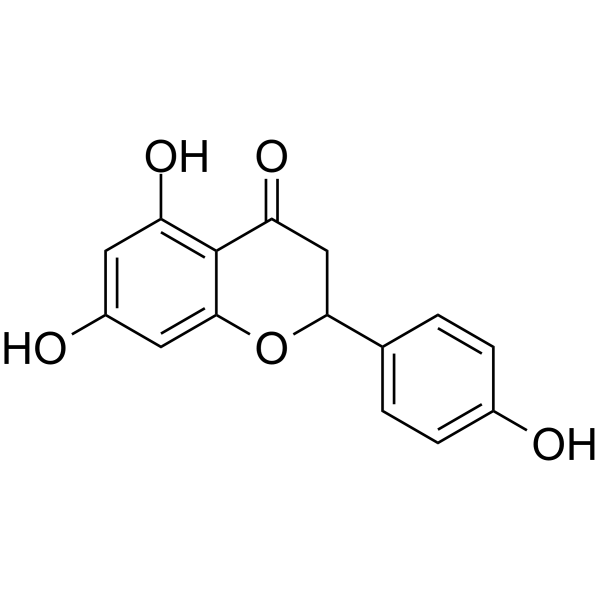
(±)-Naringenin
 0 Images
(±)-Naringenin is an orally available anti-inflammatory agent that can regulate both acute and chronic inflammation responses, while also showing antioxidant, neuroprotective, liver-protective, and anti-cancer effects. (±)-Naringenin promotes vasodilation in endothelial cells by activating BKCa channels in muscle cells. It also exerts protective effects against experimental colitis by inhibiting Toll-like receptor 4/NF-κB signaling, making it useful in studies related to sepsis, fulminant hepatitis, fibrosis, and cancer research.
-
Berubicin
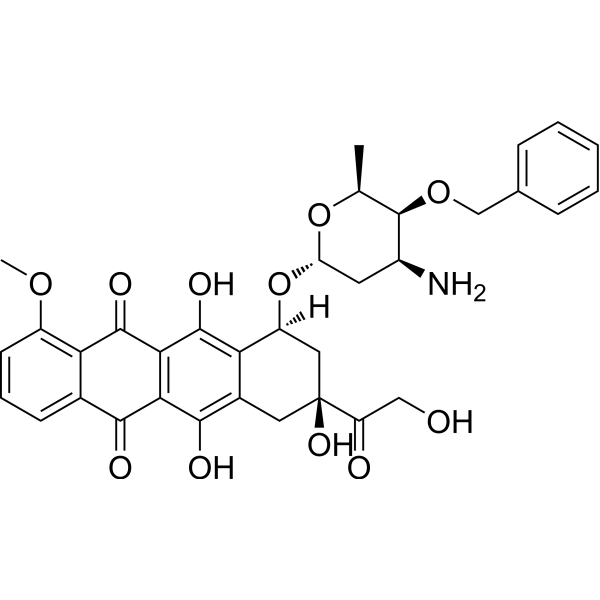 0 ImagesCat. No.: HY-14942CAS No.: 677017-23-1Synonyms: RTA 744 free base; WP 744 free base; WP 769
Berubicin (RTA 744 free base) is a Doxorubicin (HY-15142A) analog that can cross the blood-brain barrier. Berubicin inhibits P-gp and MRP1-mediated efflux and suppresses glioblastoma multiforme (GBM). Berubicin exerts toxic effects on leukemia cells by activating nuclear factor κB (NF-κB) and induces apoptosis in neuroblastoma cells. Berubicin can be used in the study of tumors related to the nervous system.
-
VEGFR-2-IN-70
 0 ImagesCat. No.: HY-175019
VEGFR-2-IN-70 is a potent VEGFR-2 inhibitor with an IC50 of 18.04 nM. VEGFR-2-IN-70 exhibits cytotoxicity against A549 and MCF-7 cancer cells with IC50 values of 0.43 μM and 3.8 μM, respectively. VEGFR-2-IN-70 induces G1 cell cycle arrest and apoptosis in lung cancer cells. VEGFR-2-IN-70 is useful in cancer research.
-
TP-110
 0 ImagesCat. No.: HY-118522CAS No.: 688737-95-3
TP-110 is a proteasome inhibitor. TP-110 specifically inhibits the protease-like activity of the 20S proteasome, but does not affect the trypsin-like or peptidyl-glutamyl peptide hydrolysis activity. TP-110 inhibits the NF-κB pathway, activates caspase-8, -9, and -3, and causes PARP cleavage, significantly reducing the levels of cIAP-1 and XIAP. TP-110 causes cell cycle arrest at the G2/M phase and promotes apoptosis of cancer cells. TP-110 can be used in cancer research of prostate cancer and multiple myeloma, etc.
-
STAT3/NF-κB-IN-1
 0 ImagesCat. No.: HY-175227
STAT3/NF-κB-IN-1 is a potentSTAT3 and NF-κB inhibitor with IC50s of 5.86 (STAT3) and 4.22 μM (NF-κB) in 4T1 cells. STAT3/NF-κB-IN-1 is able to induce apoptosis via its upregulation on key apoptotic regulators; caspases-3/9, Bax and downregulation of Bcl-2. STAT3/NF-κB-IN-1 exerts considerable anticancer activity against breast cancer cell lines and reduces tumor volume in vivo. STAT3/NF-κB-IN-1 can be used for the study of breast cancer.
-
Stigmast-5-en-3-ol
 0 Images
Stigmast-5-en-3-ol induces cancer cell apoptosis and inhibits proliferation by increasing the production of Bax, Caspase-9, p53, and PARP cleavage and reducing Bcl-xl expression. Stigmast-5-en-3-ol exhibits potent inhibitory activity against glucoamylase and α-amylase and possesses high antioxidant activity. Stigmast-5-en-3-ol can be used in the research of diseases such as leukemia, breast cancer, type 2 diabetes, and obesity.
-
Apoptosis inducer 45
 0 ImagesCat. No.: HY-178099
Apoptosis inducer 45 is an apoptosis inducer. Apoptosis inducer 45 is cytotoxically active against the MCF-7 cell line. Apoptosis inducer 45 elicits MCF-7 cell apoptosis via the mitochondrial pathway (increases the Bax/Bcl-2 ratio) by activating cleavage of caspase-9, thereby inducing the fragmentation of DNA repair protein PARP. Apoptosis inducer 45 also can induce caspase-8 cleavage, subsequently initiating cleavage of caspase-3 and its downstream protein PARP to culminate in the extrinsic apoptosis. Apoptosis inducer 45 can be used in the research of breast cancer.
-
HDAC-IN-91
 0 ImagesCat. No.: HY-175021
HDAC-IN-91 is a multiple inhibitor of HDAC (IC50 = 134.22 nM for HDAC1, 66.29 nM for HDAC2), carbonic anhydrase (CA) (Ki = 72.03 nM for CA IX, 50.76 nM for XII), and tubulin polymerization ( IC50 = 2.56 μM). HDAC-IN-91 inhibits PARP1 and increases the Bax/Bcl-2 ratio. HDAC-IN-91 blocks the cell cycle at the G2/M phase and induces apoptosis through a mitochondrial apoptosis activation mechanism. HDAC-IN-91 can exert potent cytotoxic activity through tubulin polymerization inhibition. HDAC-IN-91 can be used in breast, colorectal, cervical and lung cancer research.
-
4-Methoxycinnamic acid ethyl ester
 0 Images
4-Methoxycinnamic acid ethyl ester (Ethyl p-methoxycinnamate) is an orally active natural compound found. 4-Methoxycinnamic acid ethyl ester exerts anti-inflammatory effects by inhibiting cyclooxygenase (COX-1 (IC50 = 1.12 μM) and COX-2 (IC50 = 0.83 μM)), NF-κB (IC50 = 88.7 μM) and cytokine production (TNF-α (IC50 = 96.84 μg/mL) and IL-1β (IC50 = 166.4 μg/mL)). 4-Methoxycinnamic acid ethyl ester inhibits tumor cell proliferation, migration and cancer metabolism and induces apoptosis.4-Methoxycinnamic acid ethyl ester inhibits VEGF expression, thereby inhibiting angiogenesis. 4-Methoxycinnamic acid ethyl ester has a significant inhibitory effect on dengue virus and Mycobacterium tuberculosis. 4-Methoxycinnamic acid ethyl ester has analgesic effects in rats.



