



PROTACs
-
PROTACs Related Products (458)
Related Products (458)

-
PROTAC survivin degrader-1
 0 ImagesCat. No.: HY-186212CAS No.: 3079079-69-6
-
MS115
 0 ImagesCat. No.: HY-173561CAS No.: 3109377-60-5MS115 is a selective PRMT5/MEP50 PROTAC degrader, with DC50 values of 17.4 nM and 11.3 nM for PRMT5 and MEP50, respectively. MS115 promotes PRMT5/MEP50 ubiquitination and degradation. MS115 shows anticancer activity against breast cancer.
-
aTAG 4531
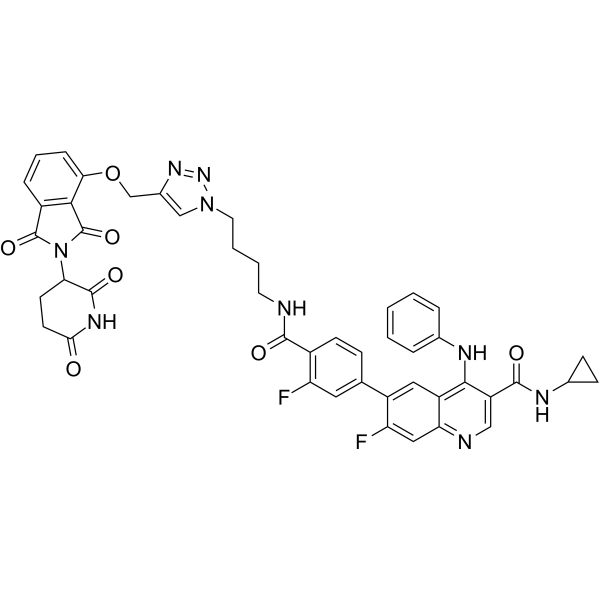 0 ImagesSynonyms: CFT-4531aTAG 4531 (CFT-4531) is a PROTAC-class degrader that induces the degradation of the MTH1/aTAG fusion protein by recruiting cereblon, with a DC50 of 0.28 nM in Jurkat cells. aTAG 4531 inhibits MTH1 enzymatic activity, with a Ki of 1.8 nM. aTAG 4531 rapidly, selectively and reversibly regulates SMART-CAR protein levels, CAR-mediated target cell killing and IL-2 release, and is applicable both in vitro and in vivo. aTAG 4531 can be used in studies of targeted protein degradation, target validation and CAR-T activity regulation.
-
ZBP1 Covalent PROTAC-1
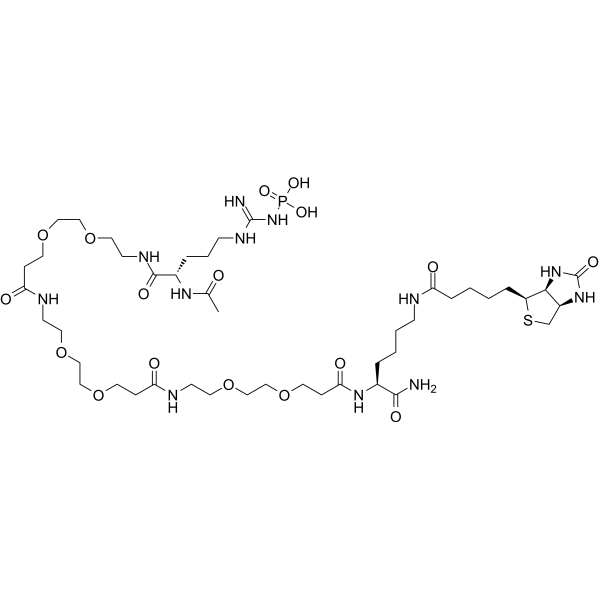
 0 ImagesCat. No.: HY-177119ZBP1 Covalent PROTAC-1 is a covalent PROTAC degrader targeting ZBP1, with a DC50 of 25.69 nM. ZBP1 Covalent PROTAC-1 integrates a ZBP1-binding DNA aptamer, a linker containing covalent NASA, and an E3 ligase-recruiting moiety to guide ubiquitin-proteasome system-mediated degradation of ZBP1. ZBP1 Covalent PROTAC-1 exhibits inhibitory activity against necroptosis signaling pathways and inflammatory responses. ZBP1 Covalent PROTAC-1 can be used for research on viral pneumonia.
-
PROTAC TRIB2 degrader-1
 0 ImagesCat. No.: HY-168274CAS No.: 3100306-42-8PROTAC TRIB2 degrader-1 is a selective TRIB2 PROTAC degrader with a DC50 of 16.84 nM in PC3 cells. PROTAC TRIB2 degrader-1 directly interacts with TRIB2 and induces its degradation via the CRBN-dependent ubiquitin-proteasome pathway. PROTAC TRIB2 degrader-1 inhibits cancer cell proliferation and promotes apoptosis by inducing PARP cleavage. PROTAC TRIB2 degrader-1 is applicable to relevant research on prostate cancer.
-
SJ1008030
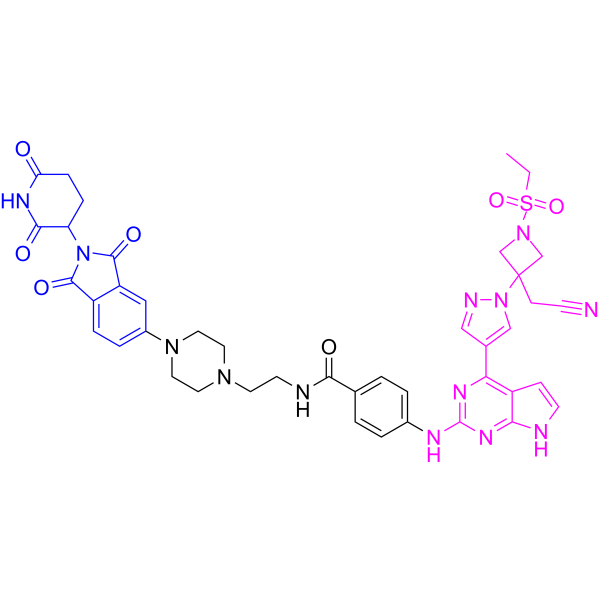 0 ImagesCat. No.: HY-147330CAS No.: 2863634-96-0
-
(4S)-PROTAC SOS1 degrader-1 diTFA
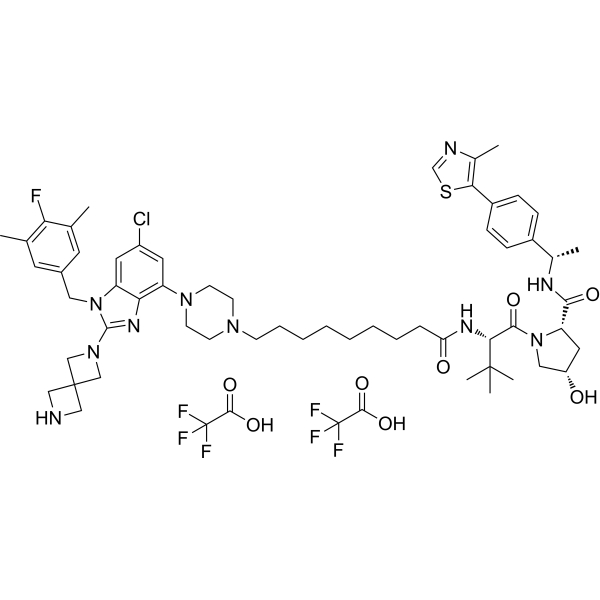 0 ImagesCat. No.: HY-144657APurity: 98.09%
-
PROTAC eDHFR Degrader-1
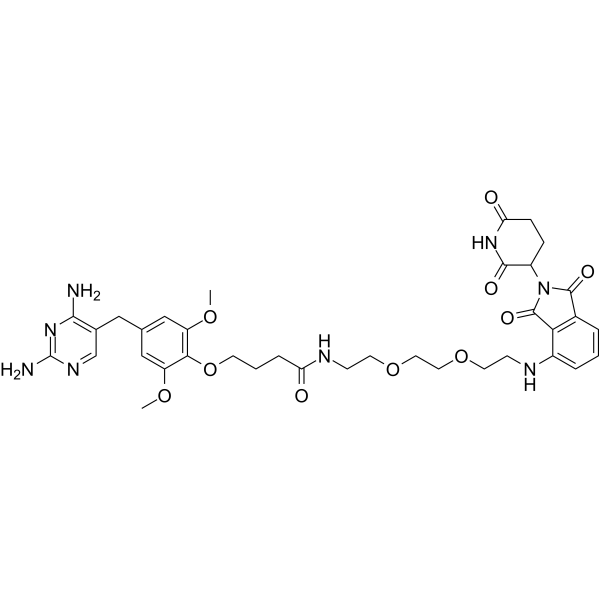 0 ImagesPROTAC eDHFR Degrader-1 is a PROTAC eDHFR degrader. PROTAC eDHFR Degrader-1 binds eDHFR-tagged proteins and Cereblon, thereby driving ternary complex formation, ubiquitination and proteasomal degradation. PROTAC eDHFR Degrader-1 degrades eDHFR-tagged proteins in multiple cell types and rodent models, and enables multiplex orthogonal protein regulation. PROTAC eDHFR Degrader-1 can be used in research related to metastatic ovarian cancer.
-
PROTAC EGFR degrader 7 diTFA
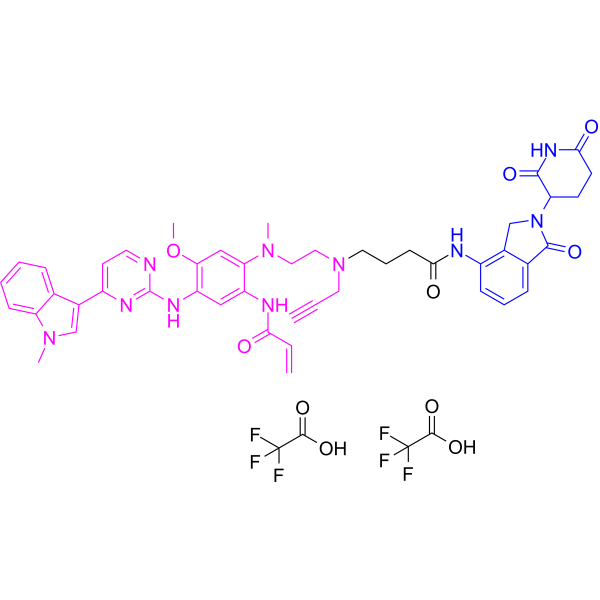 0 ImagesCat. No.: HY-147858APROTAC EGFR degrader 7 (compound 13b) diTFA is a potent and selective CRBN-recruiting PROTAC EGFRL858R/T790M degrader, with a DC50 of 13.2 nM. PROTAC EGFR degrader 7 diTFA inhibits NCI–H1975 cells proliferation, with an IC50 of 46.82 nM. PROTAC EGFR degrader 7 diTFA significantly induces apoptosis and G2/M phase arrest in NCI–H1975 cell. PROTAC EGFR degrader 7 diTFA shows antitumor activity, and can be used for non-small cell lung cancer (NSCLC) research. PROTAC EGFR degrader 7 diTFA is a click chemistry reagent, it contains an Alkyne group and can undergo copper-catalyzed azide-alkyne cycloaddition (CuAAc) with molecules containing Azide groups.
-
LD-110
 0 ImagesCat. No.: HY-178825LD-110 is a highly efficient and effective LSD1 PROTAC degrader (DC50 = 0.44 μM). LD-110 promotes LSD1 degradation and increases the level of H3K4 dimethylation in a ubiquitin-proteasome-dependent manner. LD-110 inhibits the growth and survival of multiple esophagus squamous cancer cell (ESCC) lines by inducing apoptosis. LD-110 can be used for the study of esophagus squamous cancer.
-
BTR2004
 0 ImagesBTR2004 is a selective BET family (BRD2/3/4) protein PROTAC degrader. BTR2004 forms a ternary complex with BRD proteins and KLHL20, inducing ubiquitination and proteasomal degradation through the UPS pathway. BTR2004 is promising for research of PC3 prostate cancer and MDA-MB-231 breast cancer cell lines.

-
PROTAC AAK1 degrader-1
 0 ImagesCat. No.: HY-181293CAS No.: 3113123-63-7
-
BacPROTAC-1
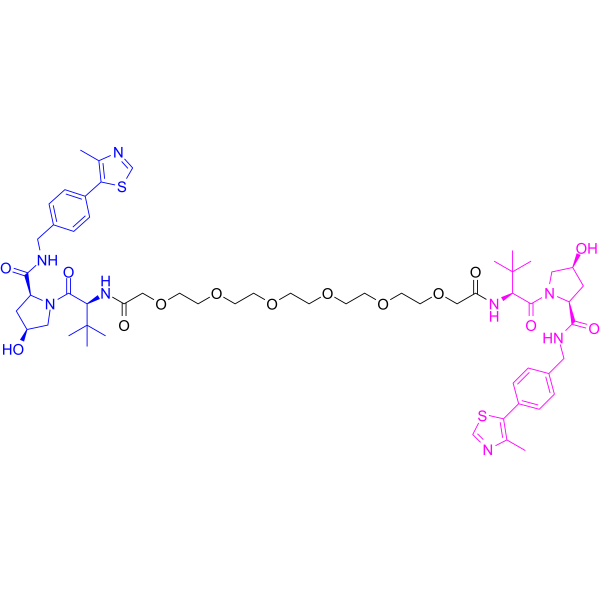
 0 ImagesCat. No.: HY-153575BacPROTAC-1 is a BacPROTAC degrader that induces the degradation of the target protein mSA by recruiting ClpC/ClpC1. BacPROTAC-1 binds to mSA, Bacillus subtilis ClpCNTD and Mycobacterium smegmatis ClpC1NTD with Kd values of 3.9, 2.8 and 0.69 μM, respectively. BacPROTAC-1 forms a ternary complex between the substrate and ClpC, promotes ClpC reassembly and activation, and induces ATP-dependent degradation of mSA and mSA fusion model substrates via the ClpCP or ClpC1P1P2 protease system. BacPROTAC-1 can be used in studies on bacterial targeted protein degradation, bacterial protein homeostasis and antibacterial target discovery.
-
DBt-10
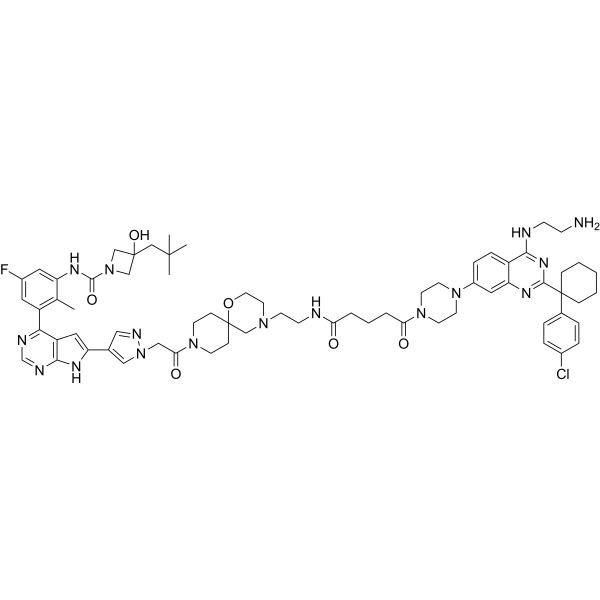 0 ImagesCat. No.: HY-156746DBt-10 is a PROTAC degrader that targets and degrades BTK by recruiting DCAF1. It degrades BTK in TMD8 BTK-GFP/mCherry cells with a DC50 of 137 nM. DBt-10 induces CRL4DCAF1-dependent ubiquitination and proteasomal degradation of BTK, and retains BTK-degrading and antiproliferative activities in TMD8 cells that are resistant to CRBN-BTK PROTACs due to loss of CRBN expression. DBt-10 has a high survival window and exhibits extremely weak apoptosis-inducing effects on lymphoma cells. DBt-10 can be used for research on diffuse large B-cell lymphoma.
-
dIRF4-2
 0 ImagesCat. No.: HY-185697CAS No.: 3136609-62-3dIRF4-2 is a selective IRF4 PROTAC degrader with a DC50 value of 2.2 μM. dIRF4-2 forms a ternary complex between IRF4 and CRBN, inducing ubiquitination and proteasomal degradation of IRF4. dIRF4-2 downregulates MYC. dIRF4-2 exhibits anticancer activity against myeloma. dIRF4-2 acts as a chemical probe for investigating IRF4 function, mimicking the IRF4 gene knockout phenotype. dIRF4-2 can be used in the research of multiple myeloma.
-
FAK PROTAC B5
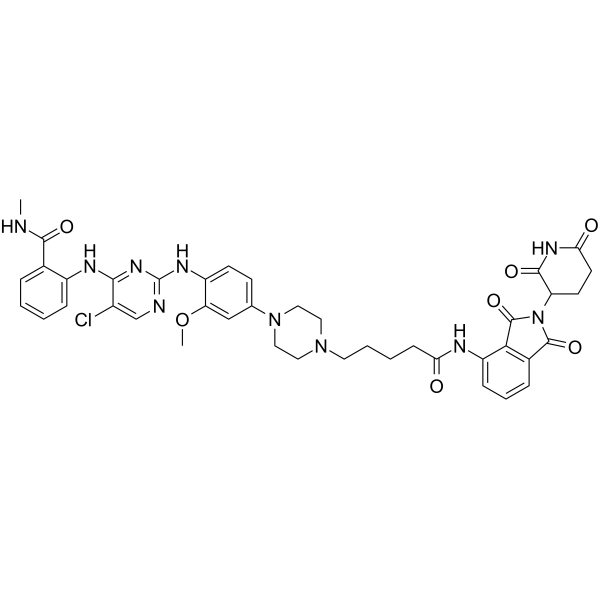 0 ImagesCat. No.: HY-143458CAS No.: 2471525-44-5FAK PROTAC B5 is a FAK PROTAC degrader with an IC50 of 14.9 nM. FAK PROTAC B5 induces FAK degradation via the ubiquitin-proteasome pathway by simultaneously binding to FAK and the CRBN E3 ligase. FAK PROTAC B5 inhibits the proliferation, migration and invasion of cancer cells. FAK PROTAC B5 can be used for the research of non-small cell lung cancer.
-
ZS3-046
 0 ImagesCat. No.: HY-176457CAS No.: 3087879-97-5



