



Teicoplanin
Based on 1 publication(s) in Google Scholar
Teicoplanin is a glycopeptide antibiotic indicated for use in serious infections caused by Gram-positive bacteria, including Methicillin-resistant Staphylococcus aureus and Enterococcus aureus.Teicoplanin shows antiviral activity for HIV-1, SARS-CoV1 and SARS-CoV2. Teicoplanin sodium shows anti-MRSA activity.
Nur für Forschungszwecke. Wir verkaufen nicht an Patienten.
- Reinheit : 86.70%
- CAS. Nr.: 61036-62-2
- Molecular Weight:1564.3-1907.7
-
Speicherung:Powder -20°C, 3 years , 4°C, 2 years
* The compound is unstable in solutions, freshly prepared is recommended.

To place orders, for customer services and technical support, please contact: MedChemExpress USA
Tel: 609-228-6898 E-mail: [email protected] [email protected]


-
 Biologische Aktivität
-
Chemical Information
-
Lösungsmittel & Löslichkeit
- Protokoll
- Reinheit & Dokumentation
- Verweise
-
 Help & FAQs


-
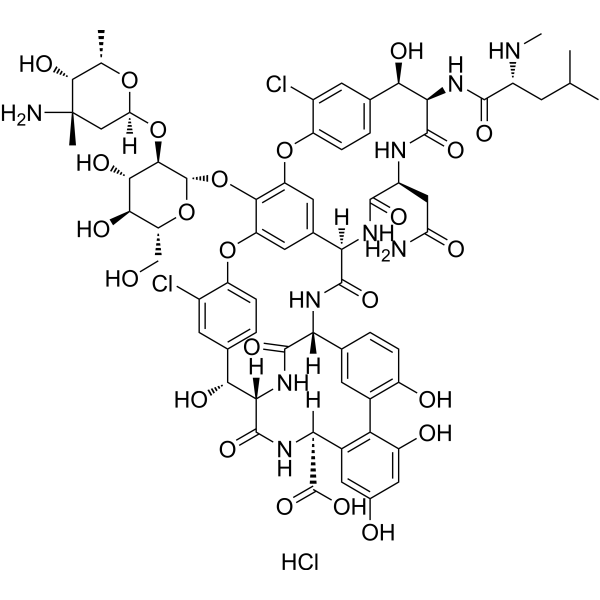
HY-17362
Vancomycin hydrochlorideAntibiotic -
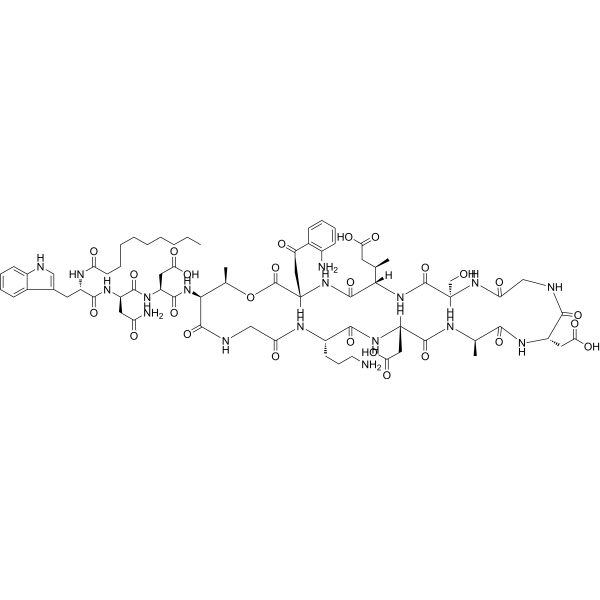
HY-B0108
DaptomycinBacterial Inhibitor -
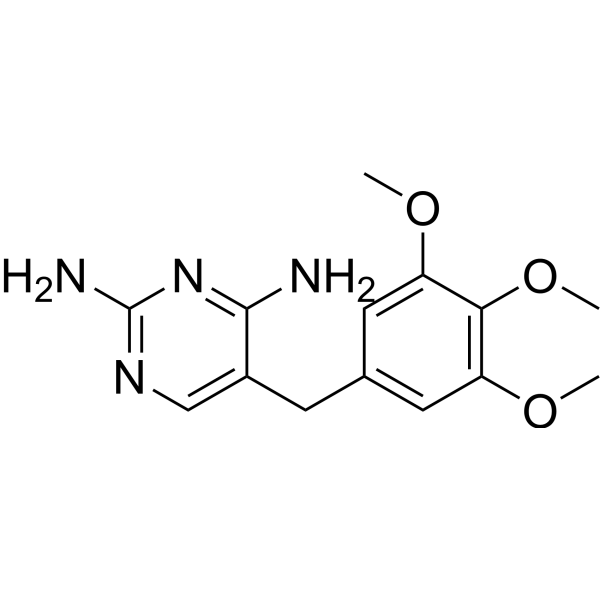
HY-B0510
TrimethoprimBacteriostatic Antibiotic -
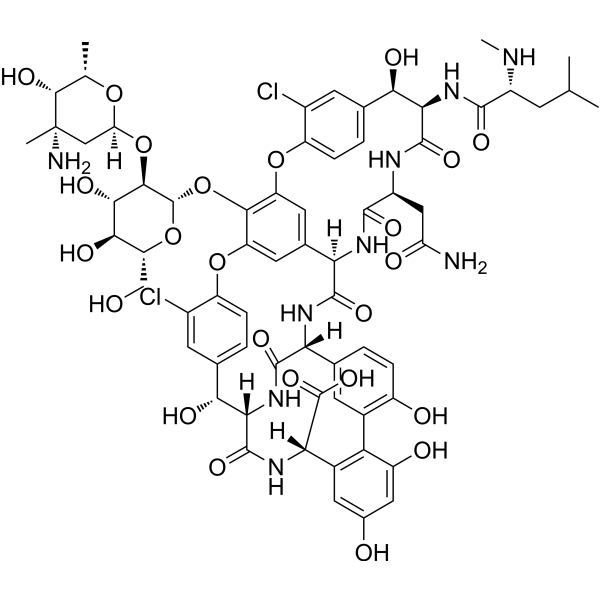
HY-B0671
VancomycinAntibiotic -
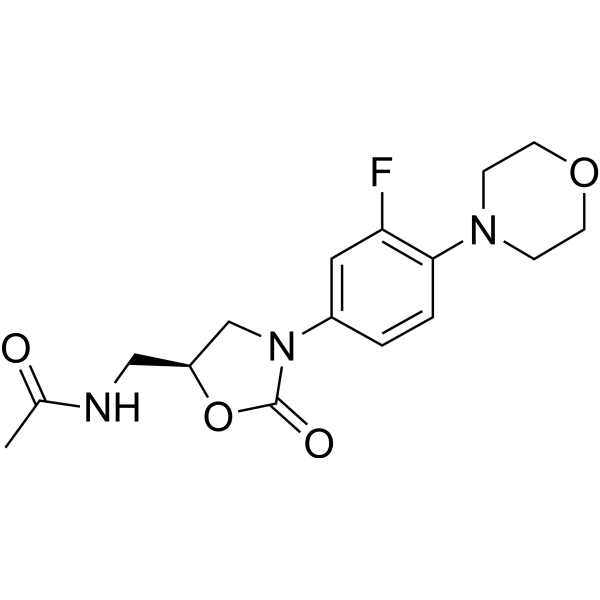
HY-10394
LinezolidAntibiotic -
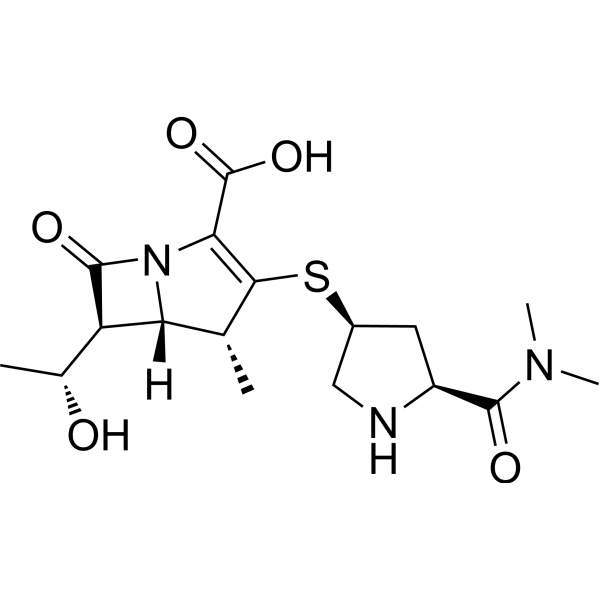
HY-13678
MeropenemAntimicrobial Agent -
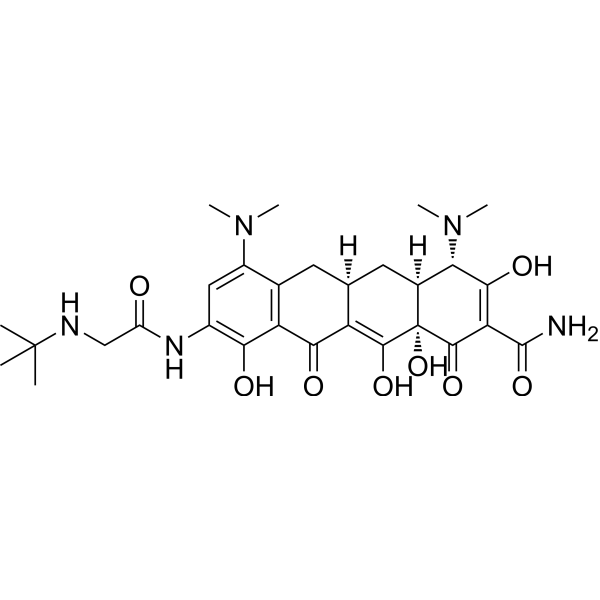
HY-B0117
TigecyclineBacterial Inhibitor -
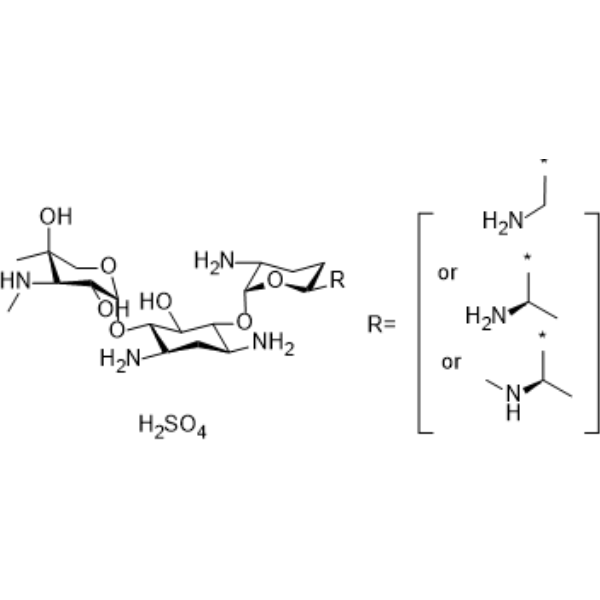
HY-A0276
Gentamicin sulfateAminoglycoside Antibiotic -
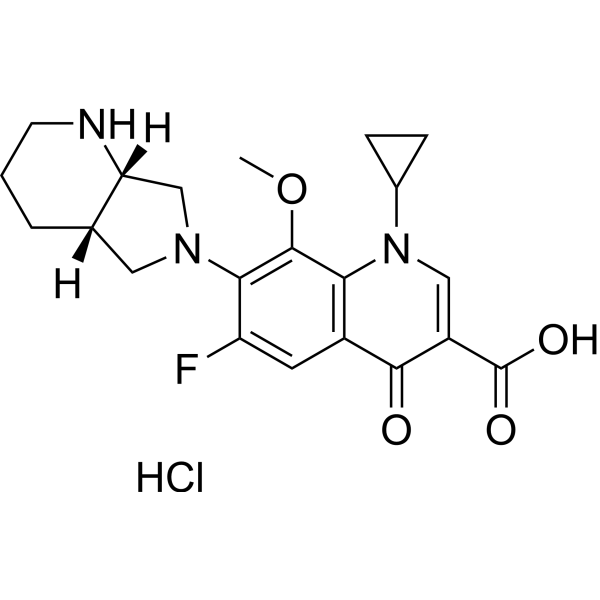
HY-66011
Moxifloxacin HydrochlorideAntibacterial Agent -
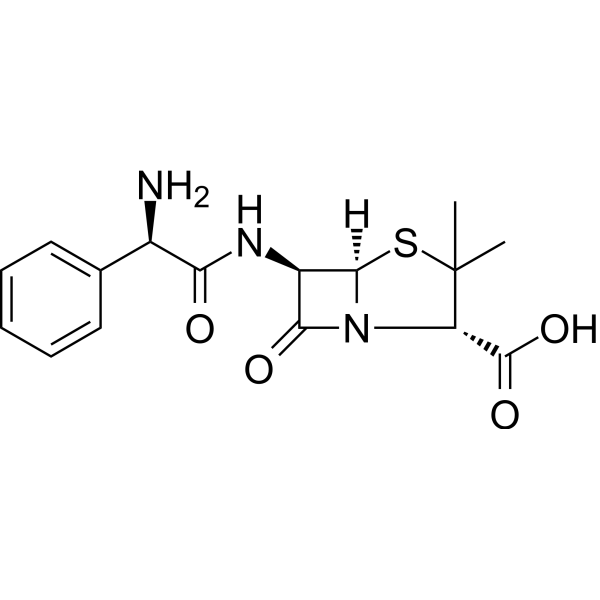
HY-B0522
AmpicillinBacterial Inhibitor -
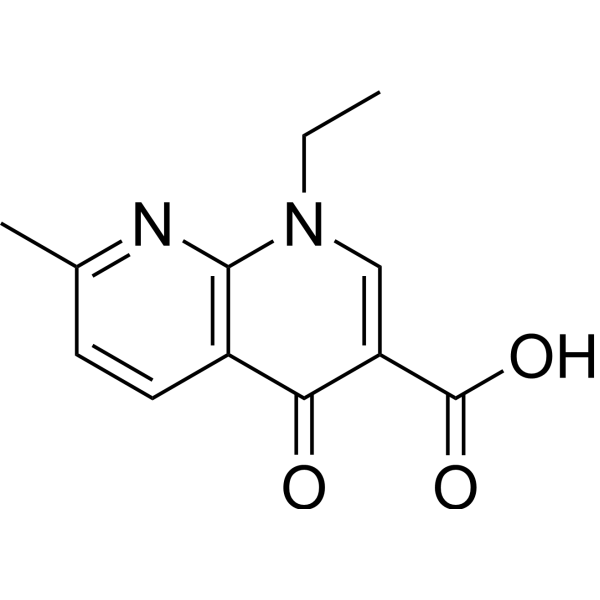
HY-B0398
Nalidixic acidAntibiotic -
HY-B1117
Cefoxitin sodiumAntibiotic
Publications Citing Use of MedChemExpress (MCE) Teicoplanin
MoreAlle Antibiotic Isoform-spezifische Produkte anzeigen
More

Biologische Aktivität
Beschreibung
IC50 & Target
|
Glycopeptide |
In Vitro
Teicoplanin shows antiviral activity with IC50s of 0.39, 1.66, 15.7 µM for HIV-luc/SARS-CoV-S pseudotyped viruses in HEK293T cells, 2019-nCoV-Spike-pseudoviruses in A549 cells, SARS-CoV-2 in Vero E6 cells, respectively[1].
Teicoplanin can inhibit HIV-1 virus in human CEM cell culture with EC50 value of 17 µM[1].
The mechanism is the inhibition of the cathepsin L protease through the interaction of the teicoplanin lipophilic moiety with the enzyme and inhibits cathepsin L activity, stops the SARS-CoV release from the late endosome[1].
Teicoplanin shows anti-MRSA activity with MICs of 0.5 mg/L in MRSA ATCC 43300[2].
MedChemExpress (MCE) has not independently confirmed the accuracy of these methods. They are for reference only.
In Vivo
MedChemExpress (MCE) has not independently confirmed the accuracy of these methods. They are for reference only.
-
Animal Model:20-30 g, Male CD1 mice (2 * 106 cfu/mL MRSA (43 300) 50 µL; murine thigh infection model)[2]
-
Dosage:10, 30 mg/kg
-
Administration:I.v.; once every 12 h
-
Result:Showed a dose-dependent decline in the total bacterial density with the total bactericidal effect was achieved with dosages of ≥10 mg/kg/day and suppression of resistance with dosages ≥30 mg/kg/day.


Chemical Information
-
CAS. Nr. 61036-62-2
-
Appearance Solid
-
Molecular Weight 1564.3-1907.7
-
Color White to off-white
-
SMILES
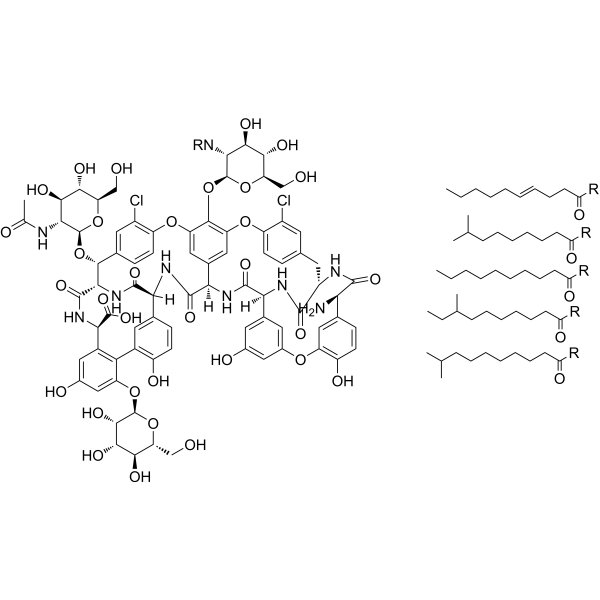
ClC1=C(OC2=CC3=CC(OC4=CC=C5C=C4Cl)=C2O[C@@H]6O[C@H](CO)[C@@H](O)[C@H](O)[C@H]6[N][R])C=CC([C@H]([C@@H]7NC([C@](C8=CC(C9=C([C@H](C(O)=O)NC7=O)C=C(O)C=C9O[C@@H]%10[C@@H](O)[C@@H](O)[C@H](O)[C@@H](CO)O%10)=C(O)C=C8)([H])NC([C@]3([H])NC([C@@](C%11=CC(O)=CC(OC%12=C(O)C=CC([C@@H](N)C%13=O)=C%12)=C%11)([H])NC([C@@H](N%13)C5)=O)=O)=O)=O)O[C@@H]%14O[C@H](CO)[C@@H](O)[C@H](O)[C@H]%14NC(C)=O)=C1.CCCCC/C=C/CCC([R])=O.CC(C)CCCCCCC([R])=O.CCCCCCCCCC([R])=O.CCC(C)CCCCCCC([R])=O.CC(C)CCCCCCCC([R])=O
-
Synonyms
Antibiotic MDL-507; MDL-507
-
Structure Classification
-
Initial Source
actinobacterium Actinoplanes teichomyceticus
-
Versand
Room temperature in continental US; may vary elsewhere.
-
Speicherung
Powder -20°C 3 years 4°C 2 years * The compound is unstable in solutions, freshly prepared is recommended.


Publications (1)
-
Journal Impact Factor
-
Most Recent
-
Infect Drug Resist
In Vitro Activity of Vancomycin, Teicoplanin, Linezolid and Daptomycin Against Methicillin-Resistant Staphylococcus aureus Isolates Collected from Chinese Hospitals in 2018-2020. [Abstract]2021 Dec 16;14:5449-5456. PMID: 34949928


Lösungsmittel & Löslichkeit
In Vitro:
DMSO : 100 mg/mL (Need ultrasonic; Hygroscopic DMSO has a significant impact on the solubility of product, please use newly opened DMSO)
H2O : 50 mg/mL (Need ultrasonic)
In Vivo:
Select the appropriate dissolution method based on your experimental animal and administration route.
- For the following dissolution methods, please ensure to first prepare a clear stock solution using an In Vitro approach and then sequentially add co-solvents:
- To ensure reliable experimental results, the clarified stock solution can be appropriately stored based on storage conditions. As for the working solution for In Vivo experiments, it is recommended to prepare freshly and use it on the same day.
- The percentages shown for the solvents indicate their volumetric ratio in the final prepared solution. If precipitation or phase separation occurs during preparation, heat and/or sonication can be used to aid dissolution.
Add each solvent one by one: 10% DMSO 40% PEG300 5% Tween-80 45% Saline
Solubility: ≥ 2.5 mg/mL; Clear solution
This protocol yields a clear solution of ≥ 2.5 mg/mL (saturation unknown).
Taking 1 mL working solution as an example, add 100 μL DMSO stock solution (25.0 mg/mL) to 400 μL PEG300, and mix evenly; then add 50 μL Tween-80 and mix evenly; then add 450 μL Saline to adjust the volume to 1 mL.
Preparation of Saline: Dissolve 0.9 g sodium chloride in ddH₂O and dilute to 100 mL to obtain a clear Saline solution.
Add each solvent one by one: 10% DMSO 90% (20% SBE-β-CD in Saline)
Solubility: ≥ 2.5 mg/mL; Clear solution
This protocol yields a clear solution of ≥ 2.5 mg/mL (saturation unknown).
Taking 1 mL working solution as an example, add 100 μL DMSO stock solution (25.0 mg/mL) to 900 μL 20% SBE-β-CD in Saline, and mix evenly.
Preparation of 20% SBE-β-CD in Saline (4°C, storage for one week): 2 g SBE-β-CD powder is dissolved in 10 mL Saline, completely dissolve until clear.
In Vivo Dissolution Calculator
Please enter the basic information of animal experiments:
-
-
-
-
Recommended: Prepare an additional quantity of animals to account for potential losses during experiments.
Working solution concentration: 0.22 mg/mL
This product has good water solubility, please refer to the measured solubility data in water/PBS/Saline for details.


Reinheit & Dokumentation
-
Data Sheet (282 KB)
-
SDS (394 KB)
- English - EN (394 KB)
- Français - FR (394 KB)
- Deutsch - DE (394 KB)
- Norwegian - NO (394 KB)
- Español - ES (394 KB)
- Swedish - SV (394 KB)
- Italian - IT (394 KB)
- Korean - KR (394 KB)
- Portuguese - PT (394 KB)
-
Handling Instructions (2659 KB)
Verweise

Calculators
Konzentration (Stammlösung) × Volumen (Stammlösung) = Konzentration (Ziellösung) × Volumen (Ziellösung)


Teicoplanin Related Classifications
HY-A0097 Related Classifications
 Powered by Bioz