



Alagebrium bromide
Based on 6 publication(s) in Google Scholar
Alagebrium bromide is an analog of Alagebrium Chloride (HY-106024B), a glucose cross-link blocker. Alagebrium Chloride disrupts glucose cross-links and may improve ventricular and arterial compliance. Alagebrium Chloride improves left ventricular diastolic filling and has the potential to inhibit diastolic heart failure (DHF).
Nur für Forschungszwecke. Wir verkaufen nicht an Patienten.
- CAS. Nr.: 181069-80-7
- Formel: C13H14BrNOS
- Molecular Weight:312.23
-
Speicherung:
Please store the product under the recommended conditions in the Certificate of Analysis.


To place orders, for customer services and technical support, please contact: MedChemExpress USA
Tel: 609-228-6898 E-mail: [email protected] [email protected]


-
 Biologische Aktivität
-
Chemical Information
- Reinheit & Dokumentation
- Verweise
-
 Help & FAQs


Publications Citing Use of MedChemExpress (MCE) Alagebrium bromide
More Customer Validation & Images

-
WB

-
Cell Proliferation/Viability Assay

-
WB

-
Cell Migration/Invasion Assay

-
RT-PCR


Biologische Aktivität
Beschreibung


Chemical Information
-
CAS. Nr. 181069-80-7
-
Molecular Weight 312.23
-
Formel C13H14BrNOS
-
SMILES
O=C(C1=CC=CC=C1)C[N+]2=CSC(C)=C2C.[Br-]
-
Synonyms
ALT711 bromide
-
Versand
Room temperature in continental US; may vary elsewhere.
-
Speicherung
Please store the product under the recommended conditions in the Certificate of Analysis.


Publications (6)
-
Journal Impact Factor
-
Most Recent
-
Biomaterials
Extracellular matrix glycation epigenetically regulates brain aging and neurodegeneration in the in vitro aged neurovascular model. [Abstract]2026 Jan:324:123504. PMID: 40543324
Alagebrium bromide purchased from MedChemExpress. Usage Cited in: Biomaterials. 2026 Jan:324:123504. [Abstract]
Alagebrium chloride (ALT-711; ALT; 100 μM; 3 days) suppressed RAGE expression in both neurons and bECs in the aged NV model with Aβ treatment.
Alagebrium bromide purchased from MedChemExpress. Usage Cited in: Biomaterials. 2026 Jan:324:123504. [Abstract]
Alagebrium chloride (ALT-711; ALT; 100 μM; 3 days) recovered neuronal cell viability under aged conditions.
-
Mol Med
D-mannose promotes diabetic wound healing through inhibiting advanced glycation end products formation in keratinocytes. [Abstract]2025 Jan 18;31(1):15. PMID: 39827347
Alagebrium bromide purchased from MedChemExpress. Usage Cited in: Mol Med. 2025 Jan 18;31(1):15. [Abstract]
Alagebrium chloride (ALT711; 10 μM; ahead 2 h; 24-48 h) decreased the protein expression of p-AMPK, Nrf2, and HO-1, could eliminate the differences between D-mannose treated or untreated high-glucose-induced NHEK in NHEK cells.
Alagebrium bromide purchased from MedChemExpress. Usage Cited in: Mol Med. 2025 Jan 18;31(1):15. [Abstract]
Alagebrium chloride (ALT711; 10 μM; 48 h) recovered high-glucose and D-mannose-induced cell migration in NHEK cells.
Alagebrium bromide purchased from MedChemExpress. Usage Cited in: Mol Med. 2025 Jan 18;31(1):15. [Abstract]
Alagebrium chloride (ALT711; 10 μM) recovered high-glucose and D-mannose-inhibited mRNA expression of involucrin, Loricrin, and filaggrin in NHEK cells.

Alagebrium bromide purchased from MedChemExpress. Usage Cited in: Mol Med. 2025 Jan 18;31(1):15. [Abstract]
Alagebrium chloride (ALT711; 10 μM) decreased high-glucose and D-mannose-induced mRNA expression of TNF-α and IL-8 in NHEK cells.
-
Free Radic Biol Med
APOE4 impairs Nrf2-PINK1/Parkin-dependent mitochondrial clearance through disrupted antioxidant and mitophagy signaling. [Abstract]2025 Nov 21:243:245-259. PMID: 41275935 -
-
Am J Transl Res
Alagebrium targets the miR-27b/TSP-1 signaling pathway to rescue Nε-carboxymethyl-lysine-induced endothelial dysfunction. [Abstract]2019 Mar 15;11(3):1569-1580. PMID: 30972183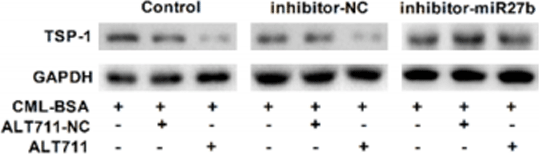
Alagebrium bromide purchased from MedChemExpress. Usage Cited in: Am J Transl Res. 2019 Mar 15;11(3):1569-1580. [Abstract]
Western blotting analysis of TSP-1 protein expression, and results show that TSP-1 expression in HUVECs treated with ALT-711 under CML-BSA condition is enhanced by miR-27b inhibitor.
-
Cell Biomater
Diabetic hyperglycemia-induced glycation regulates tumor vasculature integrity via NF-κB-mediated GM-CSF secretion by tumor cells. [Abstract]2025 Aug 26:100186. PMID: 41058997


Reinheit & Dokumentation
Verweise

Calculators
Konzentration (Stammlösung) × Volumen (Stammlösung) = Konzentration (Ziellösung) × Volumen (Ziellösung)


Alagebrium bromide Related Classifications
HY-106024A Related Classifications
 Powered by Bioz