



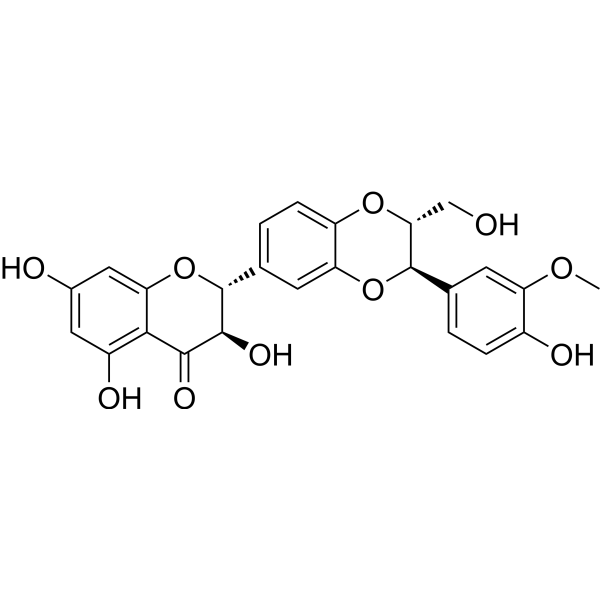
Silybin A
Based on 11 publication(s) in Google Scholar
Silybin A (Silibinin A), an effective anti-cancer and chemopreventive agent, has been shown to exert multiple effects on cancer cells, including inhibition of both cell proliferation and migration.
Nur für Forschungszwecke. Wir verkaufen nicht an Patienten.
- Reinheit : 99.94%
- CAS. Nr.: 22888-70-6
- Formel: C25H22O10
- Molecular Weight:482.44
-
Speicherung:Powder -20°C, 3 years , 4°C, 2 years ; In solvent -80°C, 6 months , -20°C, 1 month

To place orders, for customer services and technical support, please contact: MedChemExpress USA
Tel: 609-228-6898 E-mail: [email protected] [email protected]


-
 Biologische Aktivität
-
Chemical Information
-
Lösungsmittel & Löslichkeit
- Protokoll
- Reinheit & Dokumentation
- Verweise
-
 Help & FAQs


-
HY-N7046
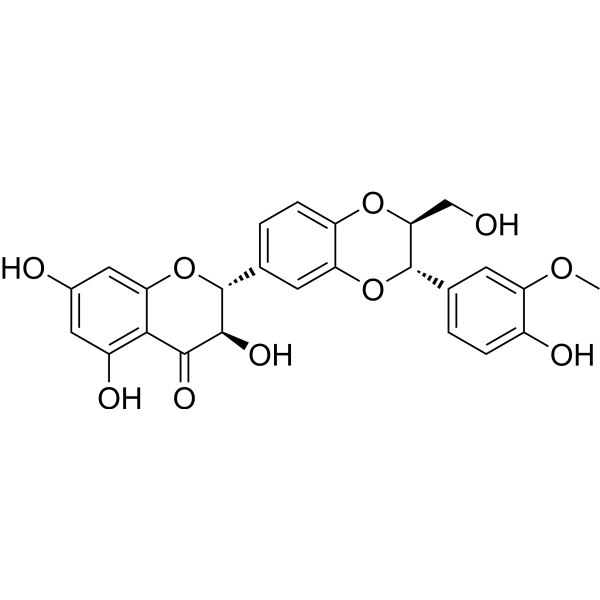
Silybin BAnti-cancer Agent -
HY-B0015
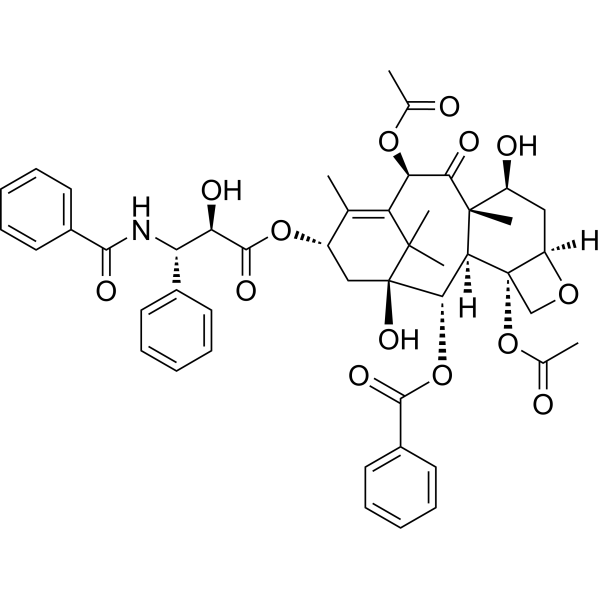
PaclitaxelAntitumor Agent -
HY-32735
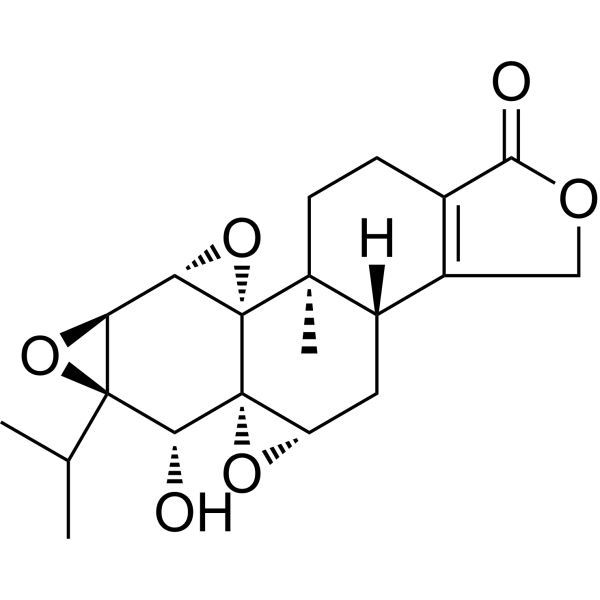
TriptolideImmunosuppressive Agent -
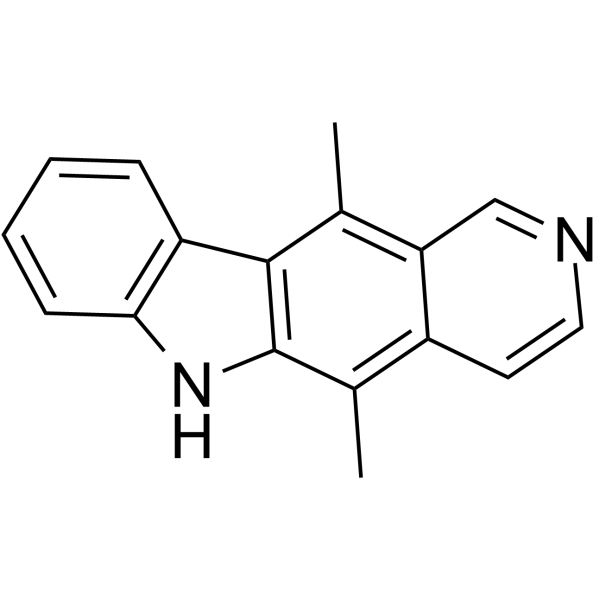
HY-15753
EllipticineTopoisomerase Inhibitor -
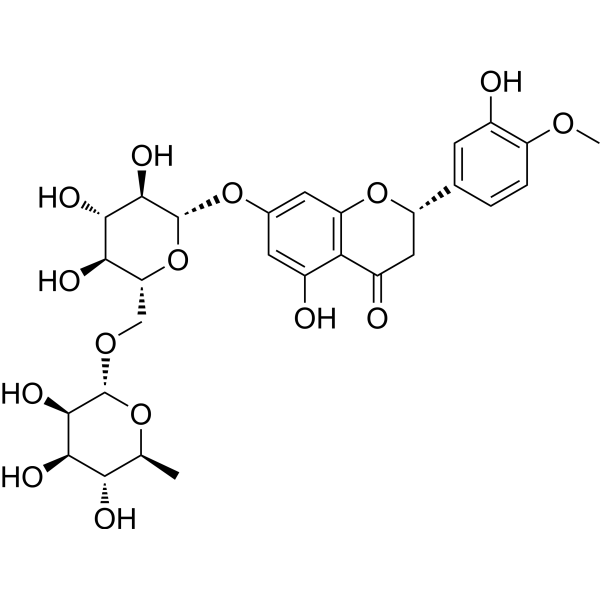
HY-15337
HesperidinAntioxidant -
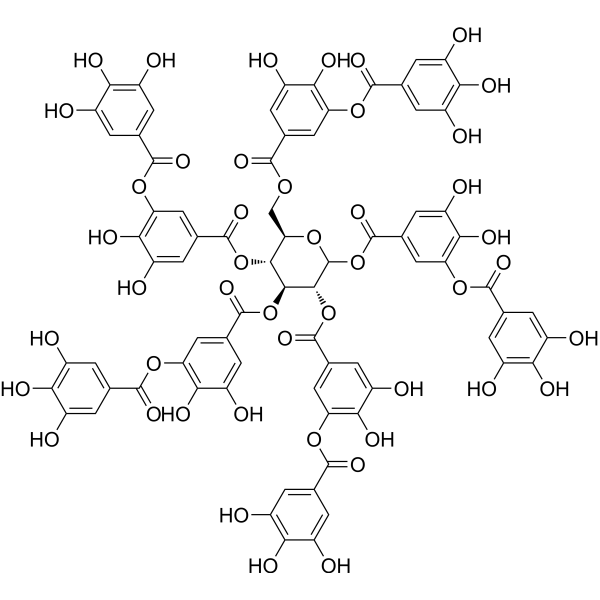
HY-B2136
Tannic acidhERG Channel Blocker -
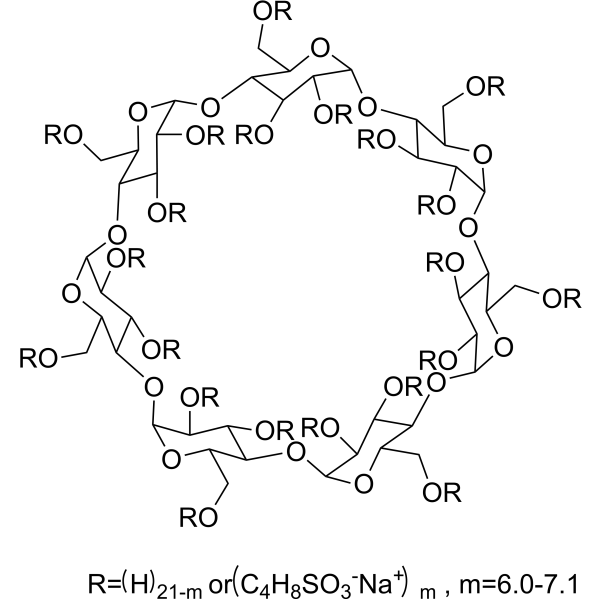
HY-17031
SBE-β-CDExcipient -

HY-N7073
SilymarinMpro Inhibitor -
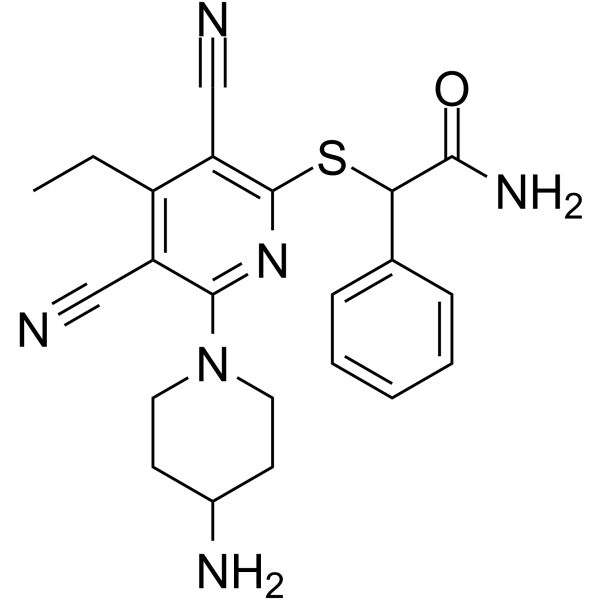
HY-139664
GSK-3685032DNMT1 Inhibitor -
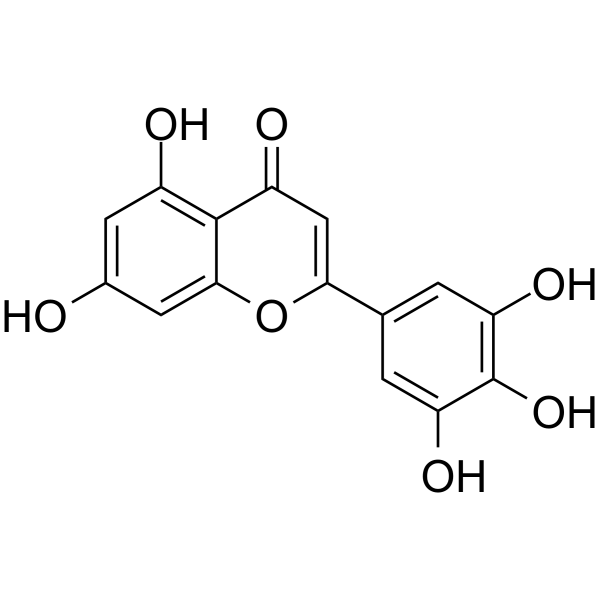
HY-131592
TricetinKeap1-Nrf2 PPI Inhibitor -
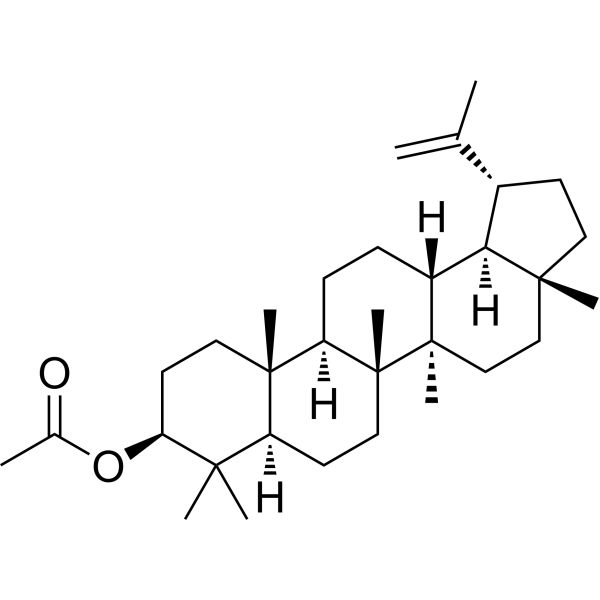
HY-126114
Lupeol acetateAnti-inflammatory Agent
Publications Citing Use of MedChemExpress (MCE) Silybin A
More- Microbiome. 2019 Mar 20;7(1):43. [Abstract]
- Acta Pharm Sin B. 2021 Jan;11(1):143-155. [Abstract]
- Cell Death Dis. 2020 Aug 14;11(8):630. [Abstract]
- Phytomedicine. 2022 Oct:105:154349. [Abstract]
- J Biomed Inform. 2023 Jun:142:104383. [Abstract]
- Viruses. 2020 Jun 10;12(6):628. [Abstract]
- Acta Histochem. 2020 Dec;122(8):151620. [Abstract]
- J Mol Histol. 2022 Aug;53(4):729-740. [Abstract]
- Biochem Biophys Res Commun. 2022 Jan 22:589:1-8. [Abstract]
- bioRxiv. 2025 July 17.
- Laurea Magistrale in Biomedical Engineering, Politecnico di Milano. 2019 Jun.
 Customer Validation & Images

-
IHC
-
WB


Biologische Aktivität
Beschreibung
Cellular Effect
|
Cell Line

|
Type | Value | Description | References |
|---|---|---|---|---|
| B16-4A5 | IC50 |
>100 μM
Compound: 5
|
Toxicity in mouse B16-4A5 cells assessed as inhibition of cell proliferation in presence of 1 mM theophylline after 72 hrs by WST8 dye reduction assay
Toxicity in mouse B16-4A5 cells assessed as inhibition of cell proliferation in presence of 1 mM theophylline after 72 hrs by WST8 dye reduction assay
|
[PMID: 20189399] |
| B16-4A5 | IC50 |
21 μM
Compound: 5
|
Inhibition of theophylline-stimulated melanogenesis in mouse B16-4A5 cells after 72 hrs
Inhibition of theophylline-stimulated melanogenesis in mouse B16-4A5 cells after 72 hrs
|
[PMID: 20189399] |
| HEK293 | IC50 |
2.7 μM
Compound: Silybin A
|
Inhibition of OATP1B3 (unknown origin) expressed in HEK293 cells assessed as reduction of [3H]estradiol-17beta-glucuronide uptake after 3 mins by beta-counting
Inhibition of OATP1B3 (unknown origin) expressed in HEK293 cells assessed as reduction of [3H]estradiol-17beta-glucuronide uptake after 3 mins by beta-counting
|
[PMID: 23401473] |
| HEK293 | IC50 |
9.7 μM
Compound: Silybin A
|
Inhibition of OATP1B1 (unknown origin) expressed in HEK293 cells assessed as reduction of [3H]estradiol-17beta-glucuronide uptake after 3 mins by beta-counting
Inhibition of OATP1B1 (unknown origin) expressed in HEK293 cells assessed as reduction of [3H]estradiol-17beta-glucuronide uptake after 3 mins by beta-counting
|
[PMID: 23401473] |
| Hepatocyte | IC50 |
29.9 μM
Compound: Silybin
|
Hepatoprotective activity against D-GaIN/TNFalpha-induced cell death in mouse hepatocyte at 100 uM relative to control
Hepatoprotective activity against D-GaIN/TNFalpha-induced cell death in mouse hepatocyte at 100 uM relative to control
|
[PMID: 29353722] |
| Hepatocyte | IC50 |
33.6 μM
Compound: Silybin
|
Hepatoprotective activity against D-GaIN/TNFalpha-induced cell death in mouse hepatocyte at 100 uM
Hepatoprotective activity against D-GaIN/TNFalpha-induced cell death in mouse hepatocyte at 100 uM
|
[PMID: 29353722] |
| Hepatocyte | IC50 |
38.8 μM
Compound: Silybin
|
Hepatoprotective activity against D-GaIN-induced toxicity in mouse hepatocyte relative to control
Hepatoprotective activity against D-GaIN-induced toxicity in mouse hepatocyte relative to control
|
[PMID: 29353722] |
| HepG2 | EC50 |
75.7 μM
Compound: Silybin
|
Cytotoxicity against human HepG2 cells assessed as reduction in cell viability by SRB assay
Cytotoxicity against human HepG2 cells assessed as reduction in cell viability by SRB assay
|
[PMID: 29353722] |
| Huh-7 | IC50 |
80 μM
Compound: 1
|
Cytotoxicity against human Huh7.5.1 cells after 72 hrs
Cytotoxicity against human Huh7.5.1 cells after 72 hrs
|
[PMID: 23673225] |
| Huh7.5.1 | CC50 |
80 μM
Compound: 3
|
Cytotoxicity against human Huh7.5.1 cells after 72 hrs by ATPlite assay
Cytotoxicity against human Huh7.5.1 cells after 72 hrs by ATPlite assay
|
[PMID: 30485098] |
| HUVEC | IC50 |
62.33 μM
Compound: 1a, (2R,3R,10R,11R)
|
Cytotoxicity against HUVEC assessed as cell viability after 16 hrs by MTT assay
Cytotoxicity against HUVEC assessed as cell viability after 16 hrs by MTT assay
|
[PMID: 21928794] |
| HUVEC | IC50 |
8.83 μM
Compound: 1a, (2R,3R,10R,11R)
|
Antiproliferative activity against HUVEC assessed as inhibition of cell growth after 3 days by MTT assay
Antiproliferative activity against HUVEC assessed as inhibition of cell growth after 3 days by MTT assay
|
[PMID: 21928794] |
| LoVo | IC50 |
50 μM
Compound: Silybin A; Silibinin
|
Cytotoxicity against human LoVo cells assessed as reduction in cell growth after 24 hrs by trypan blue exclusion assay
Cytotoxicity against human LoVo cells assessed as reduction in cell growth after 24 hrs by trypan blue exclusion assay
|
[PMID: 27517806] |
| LX-2 | IC50 |
151.1 μM
Compound: Silybin
|
Cytotoxicity against human LX2 cells assessed as reduction in cell viability by MTT assay
Cytotoxicity against human LX2 cells assessed as reduction in cell viability by MTT assay
|
[PMID: 33775837] |
| LX-2 | IC50 |
164.4 μM
Compound: Silybin
|
Inhibition of hyaluronic acid deposition in human LX2 cells
Inhibition of hyaluronic acid deposition in human LX2 cells
|
[PMID: 33775837] |
| LX-2 | IC50 |
51.5 μM
Compound: Silybin
|
Inhibition of collagen type 1 deposition in human LX2 cells
Inhibition of collagen type 1 deposition in human LX2 cells
|
[PMID: 33775837] |
| LX-2 | IC50 |
83.7 μM
Compound: Silybin
|
Inhibition of laminin deposition in human LX2 cells
Inhibition of laminin deposition in human LX2 cells
|
[PMID: 33775837] |
| MCF7 | IC50 |
222.8 μM
Compound: 1
|
Cytotoxicity in human MCF7 cells assessed as reduction in cell viability incubated for 68 hrs by MTT assay
Cytotoxicity in human MCF7 cells assessed as reduction in cell viability incubated for 68 hrs by MTT assay
|
[PMID: 28411546] |
| MDCK-II | IC50 |
4.5 μM
Compound: Silybin A
|
Inhibition of OATP2B1 (unknown origin) expressed in MDCK2 cells assessed as reduction of [3H]estrone-3-sulfate uptake after 3 mins by beta-counting
Inhibition of OATP2B1 (unknown origin) expressed in MDCK2 cells assessed as reduction of [3H]estrone-3-sulfate uptake after 3 mins by beta-counting
|
[PMID: 23401473] |
| T47D | IC50 |
110 μM
Compound: Silybin A; Silibinin
|
Cytotoxicity against human T47D cells assessed as reduction in cell viability after 24 hrs by MTT assay
Cytotoxicity against human T47D cells assessed as reduction in cell viability after 24 hrs by MTT assay
|
[PMID: 27517806] |
| T47D | IC50 |
12 μM
Compound: Silybin A; Silibinin
|
Downregulation of telomerase expression in human T47D cells after 72 hrs in presence of curcumin by SYBR green-dye based RT-PCR analysis
Downregulation of telomerase expression in human T47D cells after 72 hrs in presence of curcumin by SYBR green-dye based RT-PCR analysis
|
[PMID: 27517806] |
| T47D | IC50 |
20 μM
Compound: Silybin A; Silibinin
|
Cytotoxicity against human T47D cells assessed as reduction in cell viability after 24 hrs in presence of curcumin by MTT assay
Cytotoxicity against human T47D cells assessed as reduction in cell viability after 24 hrs in presence of curcumin by MTT assay
|
[PMID: 27517806] |
In Vitro
Silybin A (Silybin) significantly induced the expression of the non-steroidal anti-inflammatory drug-activated gene-1 (NAG-1) in both p53 wild-type and p53-null cancer cell lines[1].
Silybin A (Silybin) induced cell death in human breast cancer cell lines MCF7 and MDA-MB-231[2].
Silybin A (Silybin) treatment resulted in a dose- and time-dependent inhibition of HCC cell viability[3].
Silybin A (Silybin) treatment decreased the expression of the Notch1 intracellular domain (NICD), RBP-Jκ, and Hes1 proteins, upregulated the apoptosis pathway-related protein Bax, and downregulated Bcl2, survivin, and cyclin D1[3].
MedChemExpress (MCE) has not independently confirmed the accuracy of these methods. They are for reference only.
In Vivo
The kidney cortex of vehicle-treated control OVE26 mice displayed greater Nox4 expression and twice as much superoxide production than cortex of silybin-treated mice. The glomeruli of control OVE26 mice displayed 35% podocyte drop out that was not present in the silybin-treated mice[5].
MedChemExpress (MCE) has not independently confirmed the accuracy of these methods. They are for reference only.
- BrdU Incorporation Assay
- Cell migration
- Somatic Cell Culture
- CFSE Dye Dilution Proliferation Assay
- Dye-dilution cell tracking and proliferation staining
- CCK-8/WST-8 Cell Proliferation Assay
- Protocol for Cell Cycle
- Cell Counting-Based Growth Curve Assay
- Colony Formation (Clonogenic) Assay
- Cell Viability Determination by MTT Colorimetric Assay
- EdU Incorporation Assay (Click Chemistry-Based DNA Synthesis Measurement)
- Ki-67 Immunostaining Proliferation Assay
- PCNA Immunodetection Proliferation Assay
- Protocol for Cell Counting and Cell Density Analysis
- MTT Cell Proliferation Assay
Clinical Trial
| NCT Number | Sponsor | Condition | Start Date |
Phase
|
|---|---|---|---|---|
| NCT01329991 | 2011-05 | PHASE1 |


Chemical Information
-
CAS. Nr. 22888-70-6
-
Appearance Solid
-
Molecular Weight 482.44
-
Formel C25H22O10
-
Color White to off-white
-
SMILES
O=C1[C@H](O)[C@@H](C2=CC=C(O[C@H](CO)[C@@H](C3=CC=C(O)C(OC)=C3)O4)C4=C2)OC5=CC(O)=CC(O)=C15
-
Synonyms
Silibinin A
-
Structure Classification
-
Versand
Room temperature in continental US; may vary elsewhere.
-
Speicherung
Powder -20°C 3 years 4°C 2 years In solvent -80°C 6 months -20°C 1 month


Publications (11)
-
Journal Impact Factor
-
Most Recent
-
Microbiome
Species-specific enhancement of enterohemorrhagic E. coli pathogenesis mediated by microbiome metabolites. [Abstract]2019 Mar 20;7(1):43. PMID: 30890187 -
Acta Pharm Sin B
Chrysin serves as a novel inhibitor of DGK α/FAK interaction to suppress the malignancy of esophageal squamous cell carcinoma (ESCC). [Abstract]2021 Jan;11(1):143-155. PMID: 33532186 -
Cell Death Dis
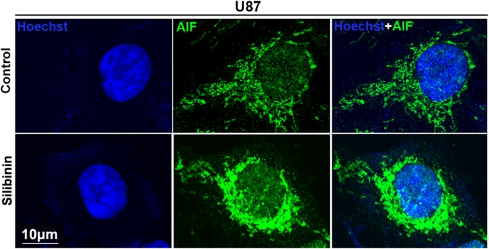
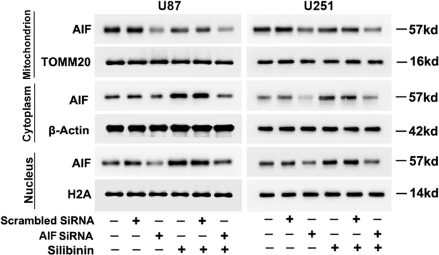
Autophagy activated by silibinin contributes to glioma cell death via induction of oxidative stress-mediated BNIP3-dependent nuclear translocation of AIF. [Abstract]2020 Aug 14;11(8):630. PMID: 32801360
Silybin A purchased from MedChemExpress. Usage Cited in: Cell Death Dis. 2020 Aug 14;11(8):630. [Abstract]
Representative images acquired by confocal microscopy combined with immunochemical staining shows that Silibinin (200 μM) induced accumulation of AIF in the nucleus of U87 cell.
Silybin A purchased from MedChemExpress. Usage Cited in: Cell Death Dis. 2020 Aug 14;11(8):630. [Abstract]
Silibinin (200 μM)-induced accumulation of AIF in nuclear fraction is decreased in the cells transfected with AIF SiRNA.
-
Phytomedicine
Demethylzeylasteral attenuates hepatic stellate cell activation and liver fibrosis by inhibiting AGAP2 mediated signaling. [Abstract]2022 Oct:105:154349. PMID: 35905567 -
J Biomed Inform
2023 Jun:142:104383. PMID: 37196989 -
Viruses
Broad-Spectrum Host-Based Antivirals Targeting the Interferon and Lipogenesis Pathways as Potential Treatment Options for the Pandemic Coronavirus Disease 2019 (COVID-19). [Abstract]2020 Jun 10;12(6):628. PMID: 32532085 -
Acta Histochem
Silibinin ameliorats H2O2-induced cell apoptosis and oxidative stress response by activating Nrf2 signaling in trophoblast cells. [Abstract]2020 Dec;122(8):151620. PMID: 33068964 -
J Mol Histol
Silibinin ameliorates cisplatin-induced acute kidney injury via activating Nfe2l1-mediated antioxidative response to suppress the ROS/MAPK signaling pathway. [Abstract]2022 Aug;53(4):729-740. PMID: 35727472 -
Biochem Biophys Res Commun
BNIP3 contributes to silibinin-induced DNA double strand breaks in glioma cells via inhibition of mTOR. [Abstract]2022 Jan 22:589:1-8. PMID: 34883284 -
-


Lösungsmittel & Löslichkeit
In Vitro:
DMSO : 233.33 mg/mL (483.65 mM; Need ultrasonic; Hygroscopic DMSO has a significant impact on the solubility of product, please use newly opened DMSO)
Please refer to the solubility information to select the appropriate solvent. Once prepared, please aliquot and store the solution to prevent product inactivation from repeated freeze-thaw cycles.
Storage method and period of stock solution: -80°C, 6 months; -20°C, 1 month. When stored at -80°C, please use it within 6 months. When stored at -20°C, please use it within 1 month.
Please refer to the solubility information to select the appropriate solvent. Once prepared, please aliquot and store the solution to prevent product inactivation from repeated freeze-thaw cycles.
Storage method and period of stock solution: -80°C, 6 months; -20°C, 1 month. When stored at -80°C, please use it within 6 months. When stored at -20°C, please use it within 1 month.
Konzentration (Stammlösung) × Volumen (Stammlösung) = Konzentration (Ziellösung) × Volumen (Ziellösung)
In Vivo:
Select the appropriate dissolution method based on your experimental animal and administration route.
- For the following dissolution methods, please ensure to first prepare a clear stock solution using an In Vitro approach and then sequentially add co-solvents:
- To ensure reliable experimental results, the clarified stock solution can be appropriately stored based on storage conditions. As for the working solution for In Vivo experiments, it is recommended to prepare freshly and use it on the same day.
- The percentages shown for the solvents indicate their volumetric ratio in the final prepared solution. If precipitation or phase separation occurs during preparation, heat and/or sonication can be used to aid dissolution.
Add each solvent one by one: 10% DMSO 40% PEG300 5% Tween-80 45% Saline
Solubility: ≥ 2.5 mg/mL (5.18 mM); Clear solution
This protocol yields a clear solution of ≥ 2.5 mg/mL (saturation unknown).
Taking 1 mL working solution as an example, add 100 μL DMSO stock solution (25.0 mg/mL) to 400 μL PEG300, and mix evenly; then add 50 μL Tween-80 and mix evenly; then add 450 μL Saline to adjust the volume to 1 mL.
Preparation of Saline: Dissolve 0.9 g sodium chloride in ddH₂O and dilute to 100 mL to obtain a clear Saline solution.
Add each solvent one by one: 10% DMSO 90% (20% SBE-β-CD in Saline)
Solubility: ≥ 2.5 mg/mL (5.18 mM); Clear solution
This protocol yields a clear solution of ≥ 2.5 mg/mL (saturation unknown).
Taking 1 mL working solution as an example, add 100 μL DMSO stock solution (25.0 mg/mL) to 900 μL 20% SBE-β-CD in Saline, and mix evenly.
Preparation of 20% SBE-β-CD in Saline (4°C, storage for one week): 2 g SBE-β-CD powder is dissolved in 10 mL Saline, completely dissolve until clear.
In Vivo Dissolution Calculator
Please enter the basic information of animal experiments:
-
-
-
-
Recommended: Prepare an additional quantity of animals to account for potential losses during experiments.
Please enter your animal formula composition:
-
%DMSO +
Recommended: Keep the proportion of DMSO in working solution below 2% if your animal is weak.
-
%+
-
+%Tween-80 + +
-
%Saline +
The co-solvents required include: DMSO, . All of co-solvents are available by MedChemExpress (MCE). , Tween 80. All of co-solvents are available by MedChemExpress (MCE).
Working solution concentration: 0.22 mg/mL
Method for preparing stock solution: mg drug dissolved in μL DMSO. Stock solution concentration: mg/mL.
1. Take μL DMSO stock solution;
2. Add μL .
μL , mix evenly;
3. Then add μL Tween 80, mix evenly;
4. Then add μL
Please ensure that the stock solution in the first step is dissolved to a clear state, and add co-solvents in sequence. You can use ultrasonic heating (ultrasonic cleaner, recommended frequency 20-40 kHz), vortexing, etc. to assist dissolution.


Reinheit & Dokumentation
-
Data Sheet (276 KB)
-
SDS (393 KB)
- English - EN (393 KB)
- Français - FR (393 KB)
- Deutsch - DE (393 KB)
- Norwegian - NO (393 KB)
- Español - ES (393 KB)
- Swedish - SV (393 KB)
- Italian - IT (393 KB)
- Korean - KR (393 KB)
- Portuguese - PT (393 KB)
-
Handling Instructions (2659 KB)
Verweise
[1]. Woo SM, et al. Silibinin induces apoptosis of HT29 colon carcinoma cells through early growth response-1 (EGR-1)-mediated non-steroidal anti-inflammatory drug-activated gene-1 (NAG-1) up-regulation. Chem Biol Interact. 2014 Jan 16;211C:36-43. [Content Brief]
[2]. Kim TH, et al. Silibinin induces cell death through ROS-dependent down-regulation of Notch-1/ERK/Akt signaling in human breast cancer cells. J Pharmacol Exp Ther. 2014 Jan 28. [Content Brief]
[3]. Zhang S, et al. Silybin-mediated inhibition of Notch signaling exerts antitumor activity in human hepatocellular carcinoma cells. PLoS One. 2013 Dec 27;8(12):e83699. [Content Brief]
[4]. Khan AQ, et al. Silibinin Inhibits Tumor Promotional Triggers and Tumorigenesis Against Chemically Induced Two-Stage Skin Carcinogenesis in Swiss Albino Mice: Possible Role of Oxidative Stress and Inflammation. Nutr Cancer. 2013 Dec 23. [Content Brief]
[5]. Khazim K, et al. The antioxidant silybin prevents high glucose-induced oxidative stress and podocyte injury in vitro and in vivo. Am J Physiol Renal Physiol. 2013 Sep 1;305(5):F691-700. [Content Brief]


Complete Stock Solution Preparation Table
Please refer to the solubility information to select the appropriate solvent. Once prepared, please aliquot and store the solution to prevent product inactivation from repeated freeze-thaw cycles.
Storage method and period of stock solution: -80°C, 6 months; -20°C, 1 month. When stored at -80°C, please use it within 6 months. When stored at -20°C, please use it within 1 month.
| Optional Solvent | Concentration Solvent Mass | 1 mg | 5 mg | 10 mg | 25 mg |
|---|---|---|---|---|---|
| DMSO | 1 mM | 2.0728 mL | 10.3640 mL | 20.7280 mL | 51.8199 mL |
| 5 mM | 0.4146 mL | 2.0728 mL | 4.1456 mL | 10.3640 mL | |
| 10 mM | 0.2073 mL | 1.0364 mL | 2.0728 mL | 5.1820 mL | |
| 15 mM | 0.1382 mL | 0.6909 mL | 1.3819 mL | 3.4547 mL | |
| 20 mM | 0.1036 mL | 0.5182 mL | 1.0364 mL | 2.5910 mL | |
| 25 mM | 0.0829 mL | 0.4146 mL | 0.8291 mL | 2.0728 mL | |
| 30 mM | 0.0691 mL | 0.3455 mL | 0.6909 mL | 1.7273 mL | |
| 40 mM | 0.0518 mL | 0.2591 mL | 0.5182 mL | 1.2955 mL | |
| 50 mM | 0.0415 mL | 0.2073 mL | 0.4146 mL | 1.0364 mL | |
| 60 mM | 0.0345 mL | 0.1727 mL | 0.3455 mL | 0.8637 mL | |
| 80 mM | 0.0259 mL | 0.1295 mL | 0.2591 mL | 0.6477 mL | |
| 100 mM | 0.0207 mL | 0.1036 mL | 0.2073 mL | 0.5182 mL |


Silybin A Related Classifications
HY-13748 Related Classifications
 Powered by Bioz