



Anthraquinone
Based on 3 publication(s) in Google Scholar
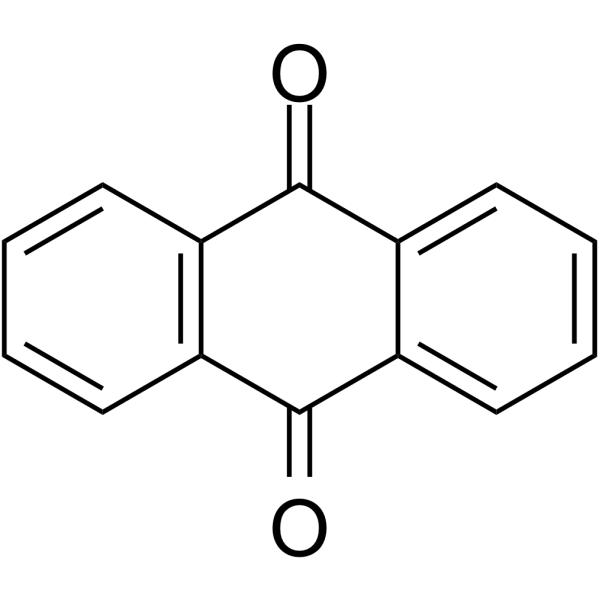
Anthraquinone is used as a precursor for dye formation and agrochemicals, existing in different organisms, such as bacteria, fungi, plants, and some animals. Anthraquinone has biological activities: anticancer, antiinflammatory, diuretic, antiarthritic, antifungal, antibacterial, antimalarial and antioxidant. Anthraquinone also plays an important role in the primary metabolism of plants by acting on the electron transport chain through the inhibition of energy transfer in the photosynthetic process. Anthraquinone can intercalates into DNA and inhibits the topoisomerase II (topo II) enzyme, resulting in cell death via Apoptosis.
For research use only. We do not sell to patients.
- Purity: 99.80%
- CAS No.: 84-65-1
- Formula: C14H8O2
- Molecular Weight:208.22
-
Storage:Powder -20°C, 3 years , 4°C, 2 years ; In solvent -80°C, 6 months , -20°C, 1 month

To place orders, for customer services and technical support, please contact: MedChemExpress USA
Tel: 609-228-6898 E-mail: [email protected] [email protected]


-
 Biological Activity
-
Chemical Information
-
Solvent & Solubility
- Purity & Documentation
- References
-
 Help & FAQs


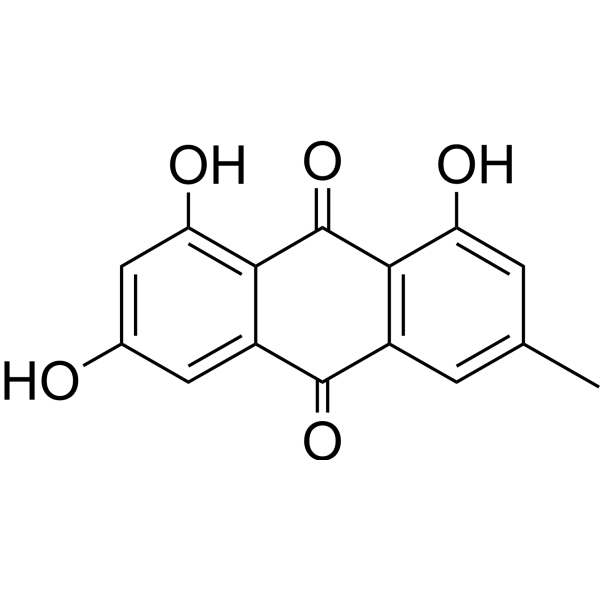
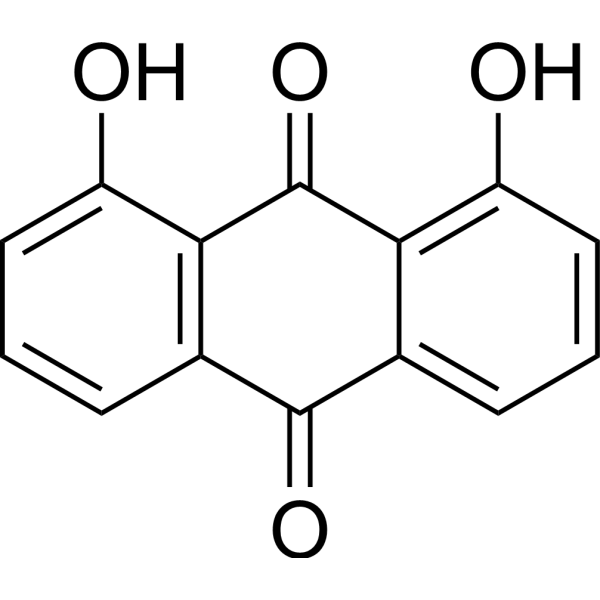
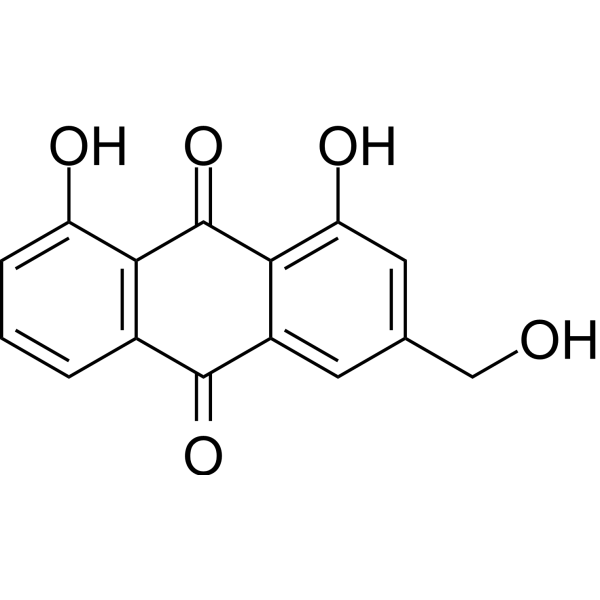
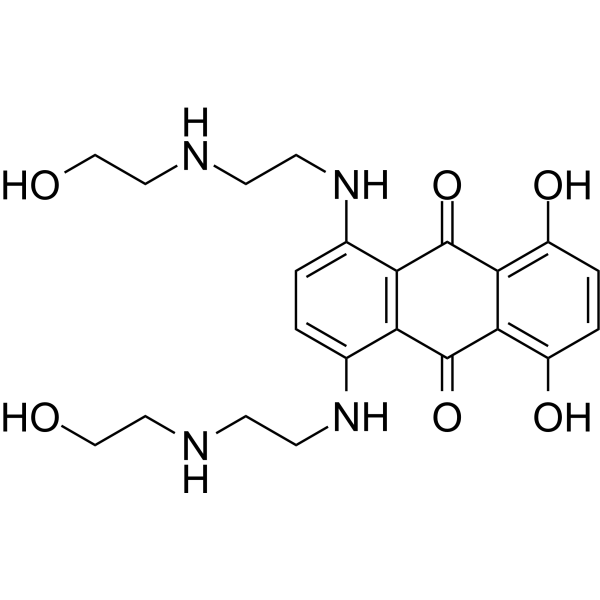
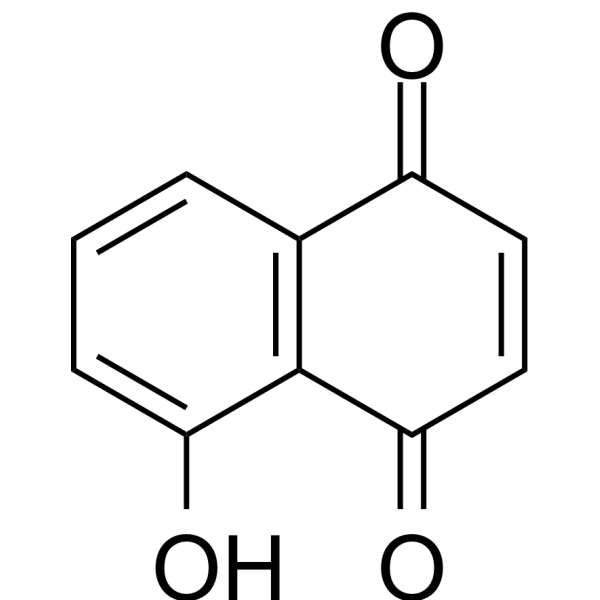
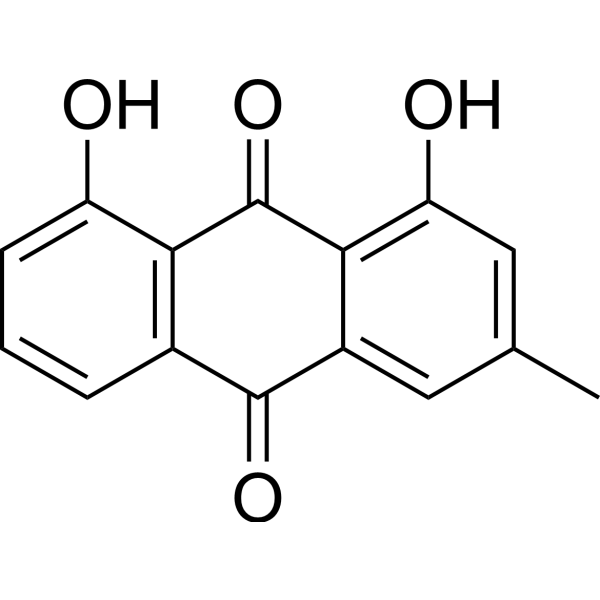
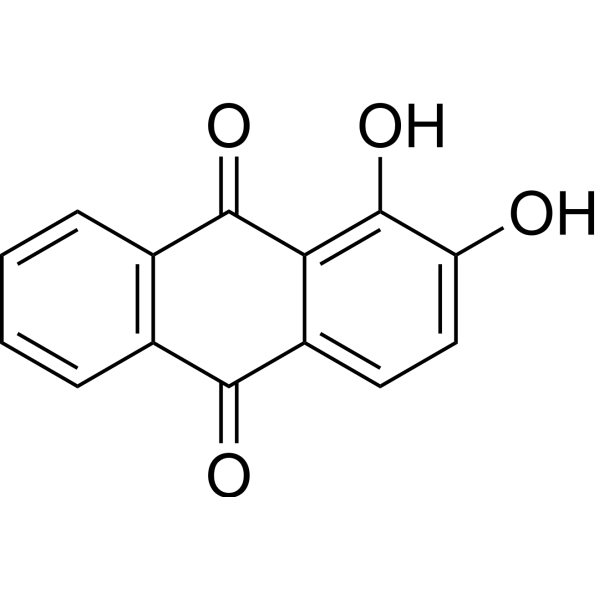

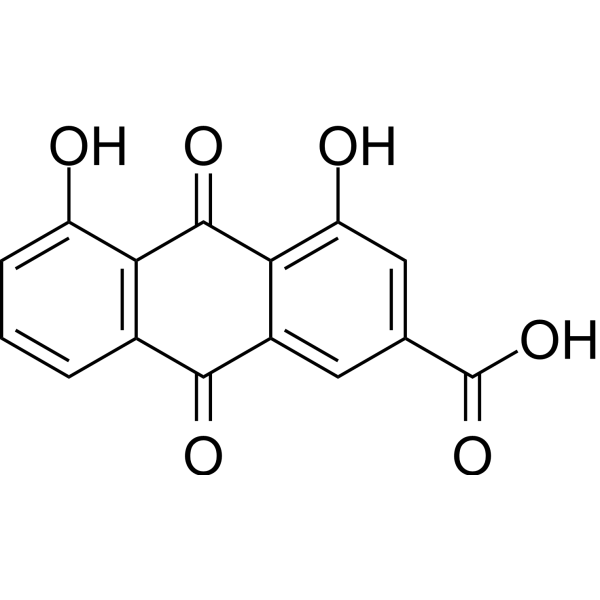
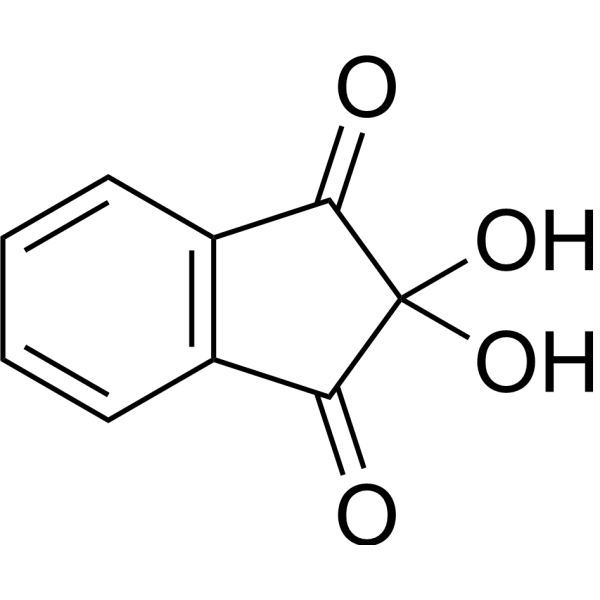

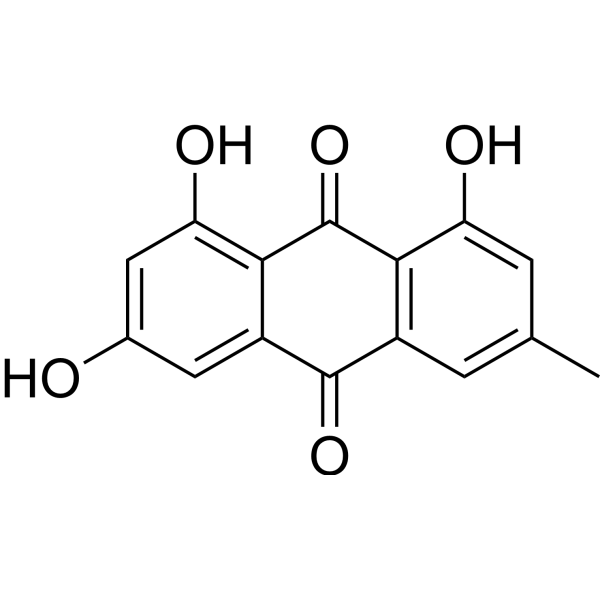
Publications Citing Use of MedChemExpress (MCE) Anthraquinone
More

Biological Activity
|
Cell Line

|
Type | Value | Description | References |
|---|---|---|---|---|
| A2780 | IC50 |
0.58 μM
Compound: 12
|
Antiproliferative activity against human A2780 cells after 2 days by alamar-blue assay
Antiproliferative activity against human A2780 cells after 2 days by alamar-blue assay
|
[PMID: 19028102] |
| AGS | IC50 |
>100 μM
Compound: 1B
|
Cytotoxicity against human AGS cells assessed as cell viability after 72 hrs by MTT assay
Cytotoxicity against human AGS cells assessed as cell viability after 72 hrs by MTT assay
|
[PMID: 23454511] |
| HeLa | IC50 |
>50 μM
Compound: 12
|
Inhibition of histidine-tagged mouse MKP1 catalytic domain expressed in human Hela cells
Inhibition of histidine-tagged mouse MKP1 catalytic domain expressed in human Hela cells
|
[PMID: 19028102] |
| HL-60 | IC50 |
>100 μM
Compound: 1B
|
Cytotoxicity against human HL60 cells assessed as cell viability after 72 hrs by MTT assay
Cytotoxicity against human HL60 cells assessed as cell viability after 72 hrs by MTT assay
|
[PMID: 23454511] |
| J82 | IC50 |
>100 μM
Compound: 1B
|
Cytotoxicity against human J82 cells assessed as cell viability after 72 hrs by MTT assay
Cytotoxicity against human J82 cells assessed as cell viability after 72 hrs by MTT assay
|
[PMID: 23454511] |
| MRC5 | IC50 |
>100 μM
Compound: 1B
|
Cytotoxicity against human MRC5 cells assessed as cell viability after 72 hrs by MTT assay
Cytotoxicity against human MRC5 cells assessed as cell viability after 72 hrs by MTT assay
|
[PMID: 23454511] |
| SK-MES-1 | IC50 |
>100 μM
Compound: 1B
|
Cytotoxicity against human SKMES1 cells assessed as cell viability after 72 hrs by MTT assay
Cytotoxicity against human SKMES1 cells assessed as cell viability after 72 hrs by MTT assay
|
[PMID: 23454511] |
Anthraquinone (0.2 mg/mL, 3 min) shows a strong antioxidant activity in vitro[2].
MedChemExpress (MCE) has not independently confirmed the accuracy of these methods. They are for reference only.


Chemical Information
-
CAS No. 84-65-1
-
Appearance Solid
-
Molecular Weight 208.22
-
Formula C14H8O2
-
Color Light yellow to yellow
-
SMILES
O=C1C2=C(C=CC=C2)C(C3=CC=CC=C13)=O
-
Structure Classification
-
Initial Source
-
Shipping
Room temperature in continental US; may vary elsewhere.
-
Storage
Powder -20°C 3 years 4°C 2 years In solvent -80°C 6 months -20°C 1 month


Publications (3)
-
Journal Impact Factor
-
Most Recent
-
Vet Microbiol
The Chinese medicine monomer Schisandrin C inhibits PRRSV infection by regulating the OGT-PI3K/AKT/mTOR signaling pathway. [Abstract]2026 May:316:110992. PMID: 41865607 -
Cancer Manag Res
Dihydrocapsaicin Secreted by RYK Silenced Bone Marrow-Derived Mesenchymal Stem Cells Triggers Apoptosis of Gastric Cancer Cells. [Abstract]2026 Mar 21:18:579598. PMID: 41890221 -


Solvent & Solubility
DMSO : 2 mg/mL (9.61 mM; ultrasonic and warming and heat to 60°C; Hygroscopic DMSO has a significant impact on the solubility of product, please use newly opened DMSO)
Please refer to the solubility information to select the appropriate solvent. Once prepared, please aliquot and store the solution to prevent product inactivation from repeated freeze-thaw cycles.
Storage method and period of stock solution: -80°C, 6 months; -20°C, 1 month. When stored at -80°C, please use it within 6 months. When stored at -20°C, please use it within 1 month.
Please refer to the solubility information to select the appropriate solvent. Once prepared, please aliquot and store the solution to prevent product inactivation from repeated freeze-thaw cycles.
Storage method and period of stock solution: -80°C, 6 months; -20°C, 1 month. When stored at -80°C, please use it within 6 months. When stored at -20°C, please use it within 1 month.
Concentration (start) × Volume (start) = Concentration (final) × Volume (final)


Purity & Documentation
-
Data Sheet (277 KB)
-
SDS (557 KB)
- English - EN (557 KB)
- Français - FR (557 KB)
- Deutsch - DE (557 KB)
- Norwegian - NO (557 KB)
- Español - ES (557 KB)
- Swedish - SV (557 KB)
- Italian - IT (557 KB)
- Korean - KR (557 KB)
- Portuguese - PT (557 KB)
-
Handling Instructions (2659 KB)
References


Complete Stock Solution Preparation Table
Please refer to the solubility information to select the appropriate solvent. Once prepared, please aliquot and store the solution to prevent product inactivation from repeated freeze-thaw cycles.
Storage method and period of stock solution: -80°C, 6 months; -20°C, 1 month. When stored at -80°C, please use it within 6 months. When stored at -20°C, please use it within 1 month.
| Optional Solvent | Concentration Solvent Mass | 1 mg | 5 mg | 10 mg | 25 mg |
|---|---|---|---|---|---|
| DMSO | 1 mM | 4.8026 mL | 24.0131 mL | 48.0261 mL | 120.0653 mL |
| 5 mM | 0.9605 mL | 4.8026 mL | 9.6052 mL | 24.0131 mL |


Anthraquinone Related Classifications
HY-N0354 Related Classifications
 Powered by Bioz