



Acetazolamide
Based on 15 publication(s) in Google Scholar
Acetazolamide is a carbonic anhydrase (CA) IX inhibitor with an IC50 of 30 nM for hCA IX. Acetazolamide has diuretic, antihypertensive and anti-gonococcal activities.
For research use only. We do not sell to patients.
- Purity: 99.85%
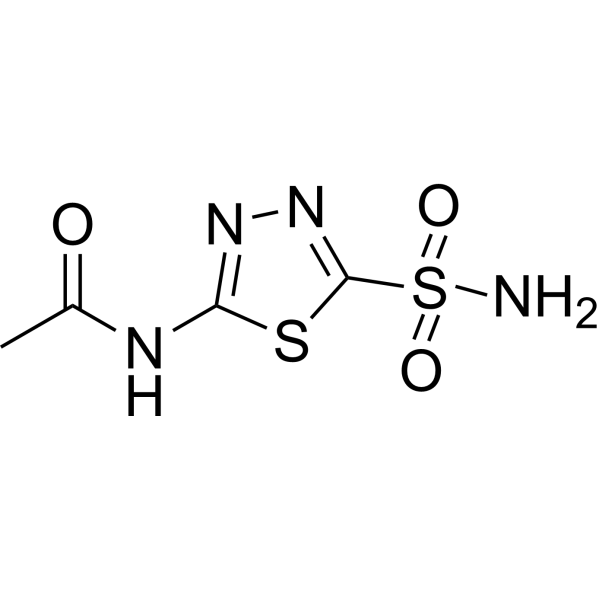
- CAS No.: 59-66-5
- Formula: C4H6N4O3S2
- Molecular Weight:222.25
-
Storage:Powder -20°C, 3 years , 4°C, 2 years ; In solvent -80°C, 1 year , -20°C, 6 months

To place orders, for customer services and technical support, please contact: MedChemExpress USA
Tel: 609-228-6898 E-mail: [email protected] [email protected]


-
 Biological Activity
-
Chemical Information
-
Solvent & Solubility
- Protocol
- Purity & Documentation
- References
-
 Help & FAQs
-

Anti-Cardiovascular Disease Compound Library
HY-L046
-
Antibacterial Compound Library
HY-L049
-
Anti-COVID-19 Compound Library
HY-L052
-
NMPA-Approved Drug Library
HY-L053
-
Orally Active Compound Library
HY-L061
-
FDA Approved & Pharmacopeial Drug Library
HY-L066
-
Drug-Induced Liver Injury (DILI) Compound Library
HY-L076
-
Rare Diseases Drug Library
HY-L102
-
Pediatric Drug Library
HY-L104
-
FDA-Approved Anticancer Drug Library
HY-L122
-
Human Metabolite Library
HY-L123
-
Anti-Prostate Cancer Compound Library
HY-L124
-
Off-patent Drug Library
HY-L141
-
Antihypertensive Compound Library
HY-L145
-
Metabolic Enzyme Compound Library
HY-L146
-
Cell Death Library
HY-L162
-
Bioactive Compound Library Max
HY-L181
-
MCE Bioactive Compound Library
HY-L001V
-
Drug Repurposing Compound Library Plus
HY-L035P
-
FDA-Approved Drug Library Plus
HY-L022P
-
FDA-Approved Drug Library Mini
HY-L022M
-
Bioactive Compound Library
HY-L001
-
High-Throughput Bioactive Compound Library
HY-L205
-
Mass Spectrometry Human Metabolite Library
HY-L215
-
Nephrotoxicity Compound Library
HY-L229
-
RNA Binding Bioactive Compound Library
HY-L248
-
Anti-Infection Compound Library
HY-L002
-
Immunology/Inflammation Compound Library
HY-L007
-
Metabolism/Protease Compound Library
HY-L012
-
FDA-Approved Drug Library
HY-L022
-
Anti-Cancer Compound Library
HY-L025
-
CNS-Penetrant Compound Library
HY-L028
-
Autophagy Compound Library
HY-L029
-
Drug Repurposing Compound Library
HY-L035


Publications Citing Use of MedChemExpress (MCE) Acetazolamide
More- ACS Environ Au. 2025 Aug 5;5(6):573-582. [Abstract]
- Antioxidants (Basel). 2026 Apr 22;15(5):525. [Abstract]
- Antioxidants (Basel). 2024 Apr 17;13(4):473. [Abstract]
- Cell Rep. 2023 May 17;42(5):112529. [Abstract]
- Anal Chem. 2025 Jun 3;97(21):11099-11109. [Abstract]
- Anal Chem. 2020 Jun 2;92(11):7657-7665. [Abstract]
- Plant Cell Environ. 2025 Sep;48(9):6704-6721. [Abstract]
- Int Immunopharmacol. 2025 Jun 17:158:114845. [Abstract]
- FASEB J. 2026 Jun 15;40(11):e71960. [Abstract]
- J Biol Chem. 2025 Mar;301(3):108303. [Abstract]
- J Pharm Biomed Anal. 2021 Feb 20:195:113870. [Abstract]
- Biochem Biophys Res Commun. 2025 Sep 19:785:152676. [Abstract]
- bioRxiv. 2023 Sep 8.
- Research Square Print. December 16th, 2022.
- Elife. 2018 Feb 2:7:e33432. [Abstract]
 Customer Validation & Images

-
WB
-
Bio/Physico-chemical Assay
-
Bio/Physico-chemical Assay
-
Bio/Physico-chemical Assay


Biological Activity
|
CA IX |
|
Cell Line

|
Type | Value | Description | References |
|---|---|---|---|---|
| HeLa | IC50 |
2.83 μM
Compound: AZA
|
Cytotoxicity against human HeLa cells assessed as reduction in cell viability after 48 hrs under hypoxia condition by MTT assay
Cytotoxicity against human HeLa cells assessed as reduction in cell viability after 48 hrs under hypoxia condition by MTT assay
|
[PMID: 31901743] |
| HeLa | IC50 |
7.82 μM
Compound: AZA
|
Cytotoxicity against human HeLa cells assessed as reduction in cell viability after 48 hrs under normaxia condition by MTT assay
Cytotoxicity against human HeLa cells assessed as reduction in cell viability after 48 hrs under normaxia condition by MTT assay
|
[PMID: 31901743] |
| HT-29 | IC50 |
>100 μM
Compound: AAZ
|
Cytotoxicity against human HT-29 cells after 96 hrs under hypoxic condition by MTT assay
Cytotoxicity against human HT-29 cells after 96 hrs under hypoxic condition by MTT assay
|
[PMID: 29649740] |
| HT-29 | IC50 |
>100 μM
Compound: AAZ
|
Cytotoxicity against human HT-29 cells after 96 hrs under normoxic condition by MTT assay
Cytotoxicity against human HT-29 cells after 96 hrs under normoxic condition by MTT assay
|
[PMID: 29649740] |
| HT-29 | IC50 |
53.78 μM
Compound: AAZ
|
Cytotoxicity in human HT-29 cells assessed as reduction in cell viability incubated for 24 hrs under hypoxic condition by MTT assay
Cytotoxicity in human HT-29 cells assessed as reduction in cell viability incubated for 24 hrs under hypoxic condition by MTT assay
|
[PMID: 31542715] |
| MDA-MB-231 | IC50 |
>100 μM
Compound: AAZ
|
Cytotoxicity against human MDA-MB-231 cells after 96 hrs under hypoxic condition by MTT assay
Cytotoxicity against human MDA-MB-231 cells after 96 hrs under hypoxic condition by MTT assay
|
[PMID: 29649740] |
| MDA-MB-231 | IC50 |
>100 μM
Compound: AAZ
|
Cytotoxicity against human MDA-MB-231 cells after 96 hrs under normoxic condition by MTT assay
Cytotoxicity against human MDA-MB-231 cells after 96 hrs under normoxic condition by MTT assay
|
[PMID: 29649740] |
| Oocyte | IC50 |
0.86 μM
Compound: 1
|
Inhibition of human aquaporin 4 M23 isoform expressed in Xenopus laevis oocytes
Inhibition of human aquaporin 4 M23 isoform expressed in Xenopus laevis oocytes
|
[PMID: 18178093] |
| Oocyte | IC50 |
0.9 μM
Compound: 1
|
Inhibition of human AQP4b-mediated water transport in Xenopus oocytes
Inhibition of human AQP4b-mediated water transport in Xenopus oocytes
|
[PMID: 17178220] |
| WI-38 | IC50 |
14.45 μM
Compound: AZA
|
Cytotoxicity against human WI-38 cells assessed as reduction in cell viability after 48 hrs by MTT assay
Cytotoxicity against human WI-38 cells assessed as reduction in cell viability after 48 hrs by MTT assay
|
[PMID: 31901743] |
Acetazolamide also inhibits hCA II with an IC50 of 130 nM[1].
Acetazolamide (Ace) is a small heteroaromatic sulfonamide that binds to various carbonic anhydrases with high affinity, acting as a carbonic anhydrase (CA) inhibitor[2].
Compared with the control group, the high Acetazolamide concentration (AceH, 50 nM), Cisplatin (Cis; 1 μg/mL) and Cis combined with the low Acetazolamide concentration (AceL, 10 nM) treatments significantly reduces viability of Hep-2 cells[2].
Treatment with the Acetazolamide/Cis combination significantly increases the expression levels of P53, as both AceL+Cis and AceH+Cis treatments result in significantly increased P53 protein expression levels compared with the control group. The Ace/Cis combination treatment significantly reduces the bcl-2/bax expression ratio, and increases the expression of caspase-3 protein, compared with the control group. AceL, AceH, Cis and AceL+Cis treatments significantly reduce the bcl-2/bax ratio compared with the control group[2].
Combined Ace and Cis treatment effectively promotes apoptosis in Hep-2 cells[2].
Combined treatment with Ace/Cis markedly decreases the expression of AQP1 mRNA in Hep-2 cells. Both AceH and AceL+Cis treatments decrease the expression of aquaporin-1 (AQP1) mRNA in Hep-2 cells compared with the control group[2].
MedChemExpress (MCE) has not independently confirmed the accuracy of these methods. They are for reference only.
Acetazolamide (40 mg/kg) and/or MS-275 treatment reduce expression of HIF1-α and CAIX in NB SH-SY5Y xenograft[3].
Acetazolamide (40 mg/kg), MS-275 and Acetazolamide+MS-275 reduce expression of mitotic and proliferative markers in NB SH-SY5Y xenografts[3].
Acetazolamide (50 mg/kg; PO, for 3 days) significantly reduces the gonococcal load in the vagina of infected mice by 90%[6].
MedChemExpress (MCE) has not independently confirmed the accuracy of these methods. They are for reference only.
| NCT Number | Sponsor | Condition | Start Date |
Phase
|
|---|---|---|---|---|
| NCT01329991 | Plexxikon| | 2011-05 | PHASE1 |


Chemical Information
-
CAS No. 59-66-5
-
Appearance Solid
-
Molecular Weight 222.25
-
Formula C4H6N4O3S2
-
Color White to off-white
-
SMILES
CC(NC1=NN=C(S(=O)(N)=O)S1)=O
-
Shipping
Room temperature in continental US; may vary elsewhere.
-
Storage
Powder -20°C 3 years 4°C 2 years In solvent -80°C 1 year -20°C 6 months


Publications (15)
-
Journal Impact Factor
-
Most Recent
-
ACS Environ Au
Machine Learning-Assisted Recognition of Environmental Sulfur-Containing Chemicals in Nontargeted Mass Spectrometry Analysis of Inadequate Mass Resolution. [Abstract]2025 Aug 5;5(6):573-582. PMID: 41277996 -
Antioxidants (Basel)
Thioamide Compound H0802 Enhances Hypoxia Tolerance by Mimicking Hypoxia-Adaptive Reprogramming of Glucose and Oxygen Metabolism. [Abstract]2026 Apr 22;15(5):525. PMID: 42193148 -
Antioxidants (Basel)
Redox Regulation of Phosphatase and Tensin Homolog by Bicarbonate and Hydrogen Peroxide: Implication of Peroxymonocarbonate in Cell Signaling. [Abstract]2024 Apr 17;13(4):473. PMID: 38671920
Acetazolamide purchased from MedChemExpress. Usage Cited in: Antioxidants (Basel). 2024 Apr 17;13(4):473. [Abstract]
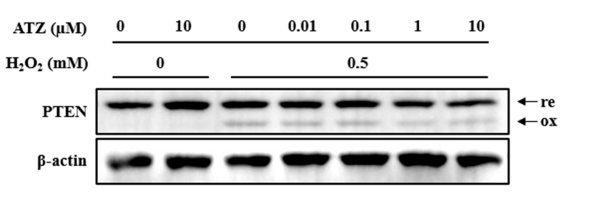
Effect of Acetazolamide, a CA inhibitor, on oxidation of PTEN by H2O2. HepG2 cells were pre-incubated in HCO3−-free media, supplemented with 0, 0.01, 0.1, 1, and 10 µM Acetazolamide, at 37 °C with 0.1% CO2 for 4 h. Then, they were changed to stimulation media with same components plus 0.5 mM H2O2. After 10 min, the reaction was terminated by NEM-containing lysis buffer. Western blot data with PTEN and β-actin antibodies are shown Acetazolamide considerably impeded PTEN oxidation in a dose-dependent manner.
Acetazolamide purchased from MedChemExpress. Usage Cited in: Antioxidants (Basel). 2024 Apr 17;13(4):473. [Abstract]
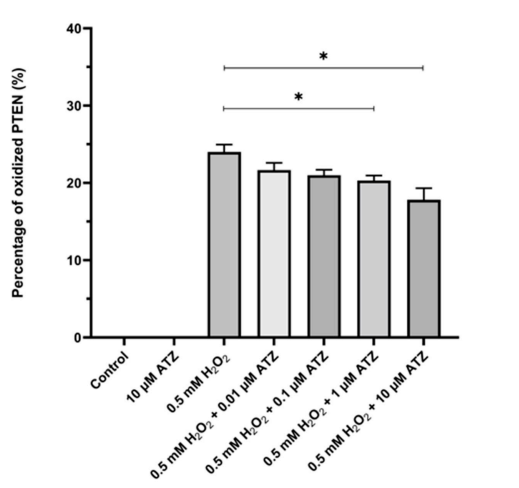
Effect of Acetazolamide, a CA inhibitor, on oxidation of PTEN by H2O2. HepG2 cells were pre-incubated in HCO3−-free media, supplemented with 0, 0.01, 0.1, 1, and 10 µM Acetazolamide, at 37 °C with 0.1% CO2 for 4 h. Then, they were changed to stimulation media with same components plus 0.5 mM H2O2. After 10 min, the reaction was terminated by NEM-containing lysis buffer. Western blot data with PTEN and β-actin antibodies are shown. Stars are considered as significances.
-
Cell Rep
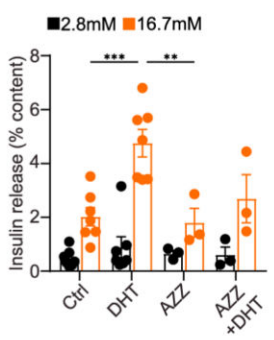
Architecture of androgen receptor pathways amplifying glucagon-like peptide-1 insulinotropic action in male pancreatic β cells. [Abstract]2023 May 17;42(5):112529. PMID: 37200193
Acetazolamide purchased from MedChemExpress. Usage Cited in: Cell Rep. 2023 May 17;42(5):112529. [Abstract]
GSIS was measured via static incubation in male human islets (n = 3–7 donors, 10 IEQ/condition measured in triplicate) cultured for 24 h with vehicle or DHT (10 nM) and then for 40 min in the presence or absence of a carbonic anhydrase inhibitor Acetazolamide (50 μM).
-
Anal Chem
Exposome-Scale Investigation of Cl-/Br-Containing Chemicals Using High-Resolution Mass Spectrometry, Multistage Machine Learning, and Cloud Computing. [Abstract]2025 Jun 3;97(21):11099-11109. PMID: 40401576 -
Anal Chem
Untargeted Defining Protein-Metabolites Interaction Based on Label-Free Kinetic Size Exclusion Chromatography-Mass Spectrometry. [Abstract]2020 Jun 2;92(11):7657-7665. PMID: 32384235 -
Plant Cell Environ
Gα Protein Mediates High-Concentration CO2-Induced Stomata Closure Through Interaction With Carbonic Anhydrase to Promote Guard Cell Hydrogen Peroxide Production in Arabidopsis. [Abstract]2025 Sep;48(9):6704-6721. PMID: 40421746 -
Int Immunopharmacol
Acetazolamide as an aquaporin 1 inhibitor mitigates rheumatoid arthritis by reducing angiogenesis via the modulation of the FAK-PI3K/Akt signaling pathway. [Abstract]2025 Jun 17:158:114845. PMID: 40359885 -
FASEB J
1-Naphthol Drives Liver Steatosis and Fibrosis via the CA3-CD36 Axis Independent of Obesity. [Abstract]2026 Jun 15;40(11):e71960. PMID: 42201771 -
J Biol Chem
Aquaporin 5 deficiency suppresses fatty acid oxidation and delays liver regeneration through the transcription factor PPAR. [Abstract]2025 Mar;301(3):108303. PMID: 39947476 -
J Pharm Biomed Anal
Screening method of mildronate and over 300 doping agents by reversed-phase liquid chromatography-high resolution mass spectrometry. [Abstract]2021 Feb 20:195:113870. PMID: 33453569 -
Biochem Biophys Res Commun
Glucose transports in the ileum: mechanism, regulation and physiological role of ileal glucose absorption. [Abstract]2025 Sep 19:785:152676. PMID: 41005286 -
-
-
Elife
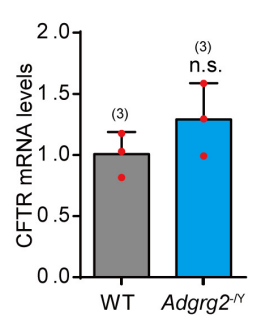
Gq activity- and β-arrestin-1 scaffolding-mediated ADGRG2/CFTR coupling are required for male fertility. [Abstract]2018 Feb 2:7:e33432. PMID: 29393851
Acetazolamide purchased from MedChemExpress. Usage Cited in: Elife. 2018 Feb 2:7:e33432. [Abstract]
Intracellular pH (pHi) of the ligated efferent ductules with or without Acetazolamide(500 μM) from WT mice and Adgrg2-/Y mice.


Solvent & Solubility
DMSO : 50 mg/mL (224.97 mM; Need ultrasonic; Hygroscopic DMSO has a significant impact on the solubility of product, please use newly opened DMSO)
H2O : < 0.1 mg/mL (insoluble)
Please refer to the solubility information to select the appropriate solvent. Once prepared, please aliquot and store the solution to prevent product inactivation from repeated freeze-thaw cycles.
Storage method and period of stock solution: -80°C, 1 year; -20°C, 6 months. When stored at -80°C, please use it within 1 year. When stored at -20°C, please use it within 6 months.
Please refer to the solubility information to select the appropriate solvent. Once prepared, please aliquot and store the solution to prevent product inactivation from repeated freeze-thaw cycles.
Storage method and period of stock solution: -80°C, 1 year; -20°C, 6 months. When stored at -80°C, please use it within 1 year. When stored at -20°C, please use it within 6 months.
Concentration (start) × Volume (start) = Concentration (final) × Volume (final)
Select the appropriate dissolution method based on your experimental animal and administration route.
- For the following dissolution methods, please ensure to first prepare a clear stock solution using an In Vitro approach and then sequentially add co-solvents:
- To ensure reliable experimental results, the clarified stock solution can be appropriately stored based on storage conditions. As for the working solution for In Vivo experiments, it is recommended to prepare freshly and use it on the same day.
- The percentages shown for the solvents indicate their volumetric ratio in the final prepared solution. If precipitation or phase separation occurs during preparation, heat and/or sonication can be used to aid dissolution.
Add each solvent one by one: 10% DMSO 40% PEG300 5% Tween-80 45% Saline
Solubility: ≥ 2.5 mg/mL (11.25 mM); Clear solution
This protocol yields a clear solution of ≥ 2.5 mg/mL (saturation unknown).
Taking 1 mL working solution as an example, add 100 μL DMSO stock solution (25.0 mg/mL) to 400 μL PEG300, and mix evenly; then add 50 μL Tween-80 and mix evenly; then add 450 μL Saline to adjust the volume to 1 mL.
Preparation of Saline: Dissolve 0.9 g sodium chloride in ddH₂O and dilute to 100 mL to obtain a clear Saline solution.
Add each solvent one by one: 10% DMSO 90% (20% SBE-β-CD in Saline)
Solubility: ≥ 2.5 mg/mL (11.25 mM); Clear solution
This protocol yields a clear solution of ≥ 2.5 mg/mL (saturation unknown).
Taking 1 mL working solution as an example, add 100 μL DMSO stock solution (25.0 mg/mL) to 900 μL 20% SBE-β-CD in Saline, and mix evenly.
Preparation of 20% SBE-β-CD in Saline (4°C, storage for one week): 2 g SBE-β-CD powder is dissolved in 10 mL Saline, completely dissolve until clear.
For the following dissolution methods, please prepare the working solution directly:
It is recommended to prepare fresh solutions and use them promptly within a short period of time.
The percentages shown for the solvents indicate their volumetric ratio in the final prepared solution. If precipitation or phase separation occurs during preparation, heat and/or sonication can be used to aid dissolution.
Add each solvent one by one: PBS
Solubility: 1.96 mg/mL (8.82 mM); Clear solution; Need ultrasonic and warming and heat to 60°C
Please enter the basic information of animal experiments:
-
-
-
-
Recommended: Prepare an additional quantity of animals to account for potential losses during experiments.
Please enter your animal formula composition:
-
%DMSO +
Recommended: Keep the proportion of DMSO in working solution below 2% if your animal is weak.
-
%+
-
+%Tween-80 + +
-
%Saline +
The co-solvents required include: DMSO, . All of co-solvents are available by MedChemExpress (MCE). , Tween 80. All of co-solvents are available by MedChemExpress (MCE).
Working solution concentration: 0.22 mg/mL
Method for preparing stock solution: mg drug dissolved in μL DMSO. Stock solution concentration: mg/mL.
1. Take μL DMSO stock solution;
2. Add μL .
μL , mix evenly;
3. Then add μL Tween 80, mix evenly;
4. Then add μL
Please ensure that the stock solution in the first step is dissolved to a clear state, and add co-solvents in sequence. You can use ultrasonic heating (ultrasonic cleaner, recommended frequency 20-40 kHz), vortexing, etc. to assist dissolution.

Protocol
Cell Viability Assay[2]
Cell line: Hep-2 cells and HUVECs
Concentration: 10 nM and 50 nM
Incubation time: 48 h
Assay: The cell viability of Hep-2 cells and HUVECs is measured by MTT assay. Hep-2 cells and HUVECs in logarithmic growth phase are plated in 96-well plates. Following 48 h of drug treatment as indicated, 200 µL MTT (5 mg/mL) is added to each well. Cells are incubated with the MTT solution at 37°C for 4 h. Then, 150 µL DMSO is added for 5 min. The optical density (OD) values are measured at 490 nm with a Versamax Microplate reader.
Note: Combined treatment effectively reduced viability in Hep-2 cells.
MedChemExpress (MCE) has not independently confirmed the accuracy of these methods. They are for reference only.
In vivo studies[3]
Animal model: 4-6 weeks-old female NOD/SCID mice
Dosage: 40 mg/kg, intraperitoneal injection, every day for 2 weeks
Administration: Mice are randomized into four groups (5 mice per group). The control and treatment groups receive intraperitoneal injections of vehicle (PBS) or Acetazolamide (40 mg/kg), MS-275 (20 mg/kg) or the combination, respectively, every day for 2 weeks. Experiments are terminated when tumor sizes exceed 2 cm3 in volume or animals show signs of morbidity. Tumor diameters are measured on a daily basis until termination.
Note: Inhibited tumor growth of NB xenografts with significant anti-tumor growth potentiation effect.
MedChemExpress (MCE) has not independently confirmed the accuracy of these methods. They are for reference only.


Purity & Documentation
-
Data Sheet (281 KB)
-
SDS (393 KB)
- English - EN (393 KB)
- Français - FR (393 KB)
- Deutsch - DE (393 KB)
- Norwegian - NO (393 KB)
- Español - ES (393 KB)
- Swedish - SV (393 KB)
- Italian - IT (393 KB)
- Korean - KR (393 KB)
- Portuguese - PT (393 KB)
-
Handling Instructions (2659 KB)
References
[1]. Hou Z, et al. Dual-tail approach to discovery of novel carbonic anhydrase IX inhibitors by simultaneously matching the hydrophobic and hydrophilic halves of the active site. Eur J Med Chem. 2017 May 26;132:1-10. [Content Brief]
[2]. Bayat Mokhtari R, et al. Acetazolamide potentiates the anti-tumor potential of HDACi, MS-275, in neuroblastoma. BMC Cancer. 2017 Feb 24;17(1):156. [Content Brief]
[3]. Gao H, et al. Combined treatment with acetazolamide and cisplatin enhances chemosensitivity in laryngeal carcinoma Hep-2 cells. Oncol Lett. 2018 Jun;15(6):9299-9306. [Content Brief]
[4]. Kassamali R, et al. Acetazolamide: a forgotten diuretic agent. Cardiol Rev. 2011 Nov-Dec;19(6):276-8. [Content Brief]
[5]. Jabeen E, et al. Interaction of antihypertensive acetazolamide with nonsteroidal anti-inflammatory drugs. J Photochem Photobiol B. 2013 Aug 5;125:155-63. [Content Brief]
[6]. Abutaleb NS, et al. In vivo efficacy of acetazolamide in a mouse model of Neisseria gonorrhoeae infection. Microb Pathog. 2022 Mar;164:105454. [Content Brief]


Complete Stock Solution Preparation Table
Please refer to the solubility information to select the appropriate solvent. Once prepared, please aliquot and store the solution to prevent product inactivation from repeated freeze-thaw cycles.
Storage method and period of stock solution: -80°C, 1 year; -20°C, 6 months. When stored at -80°C, please use it within 1 year. When stored at -20°C, please use it within 6 months.
| Optional Solvent | Concentration Solvent Mass | 1 mg | 5 mg | 10 mg | 25 mg |
|---|---|---|---|---|---|
| DMSO | 1 mM | 4.4994 mL | 22.4972 mL | 44.9944 mL | 112.4859 mL |
| 5 mM | 0.8999 mL | 4.4994 mL | 8.9989 mL | 22.4972 mL | |
| 10 mM | 0.4499 mL | 2.2497 mL | 4.4994 mL | 11.2486 mL | |
| 15 mM | 0.3000 mL | 1.4998 mL | 2.9996 mL | 7.4991 mL | |
| 20 mM | 0.2250 mL | 1.1249 mL | 2.2497 mL | 5.6243 mL | |
| 25 mM | 0.1800 mL | 0.8999 mL | 1.7998 mL | 4.4994 mL | |
| 30 mM | 0.1500 mL | 0.7499 mL | 1.4998 mL | 3.7495 mL | |
| 40 mM | 0.1125 mL | 0.5624 mL | 1.1249 mL | 2.8121 mL | |
| 50 mM | 0.0900 mL | 0.4499 mL | 0.8999 mL | 2.2497 mL | |
| 60 mM | 0.0750 mL | 0.3750 mL | 0.7499 mL | 1.8748 mL | |
| 80 mM | 0.0562 mL | 0.2812 mL | 0.5624 mL | 1.4061 mL | |
| 100 mM | 0.0450 mL | 0.2250 mL | 0.4499 mL | 1.1249 mL |


Acetazolamide Related Classifications
HY-B0782 Related Classifications
 Powered by Bioz