



Avutometinib
Based on 6 publication(s) in Google Scholar
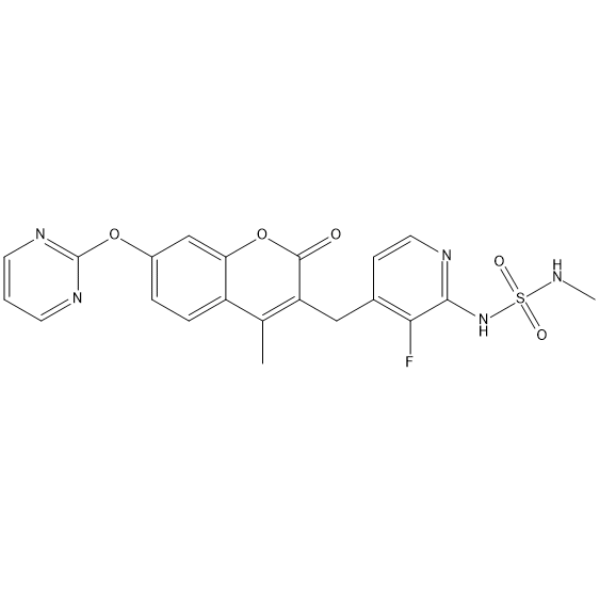
Avutometinib (Ro 5126766) is a first-in-class dual MEK/RAF inhibitor that allosterically inhibits BRAFV600E, CRAF, MEK, and BRAF (IC50: 8.2, 56, 160 nM, and 190 nM, respectively).
For research use only. We do not sell to patients.
- Purity : 99.43%
- CAS No.: 946128-88-7
- Formula: C21H18FN5O5S
- Molecular Weight:471.46
-
Storage:Powder -20°C, 3 years , 4°C, 2 years ; In solvent -80°C, 6 months , -20°C, 1 month

To place orders, for customer services and technical support, please contact: MedChemExpress USA
Tel: 609-228-6898 E-mail: [email protected] [email protected]


-
 Biological Activity
-
Chemical Information
-
Solvent & Solubility
- Purity & Documentation
- References
-
 Help & FAQs


-
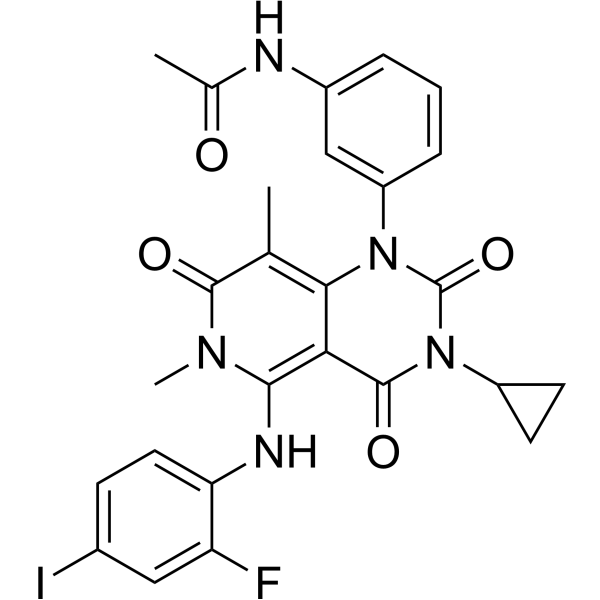
HY-10999
TrametinibMEK Inhibitor -
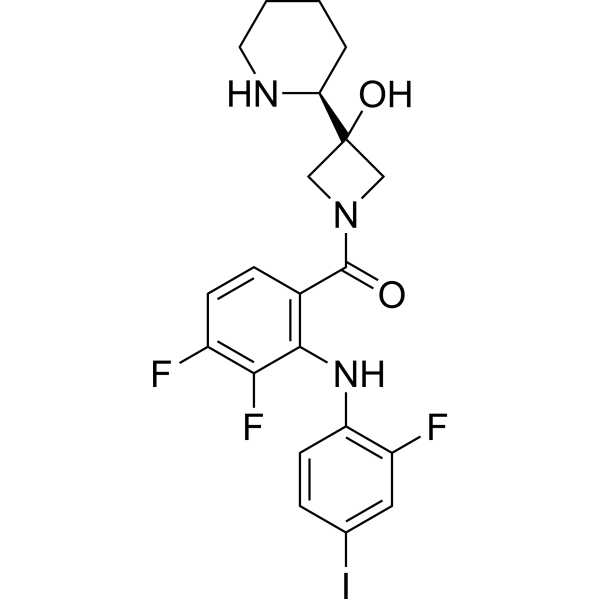
HY-13064
CobimetinibMEK1 Inhibitor -
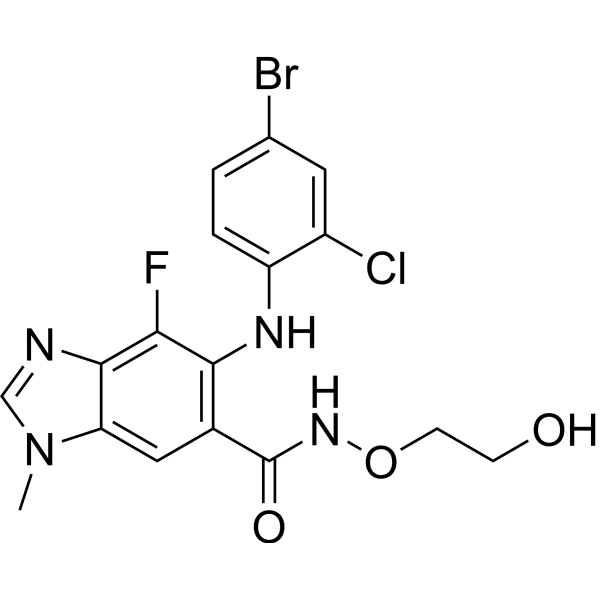
HY-50706
SelumetinibMEK1/2 Inhibitor -
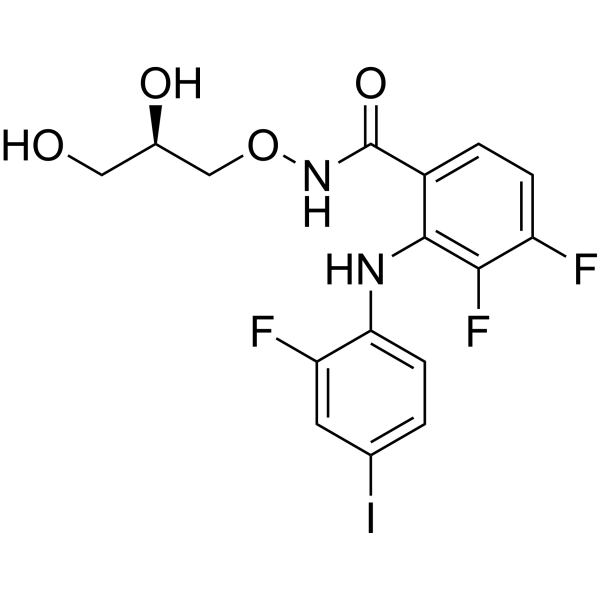
HY-10254
MirdametinibMEK Inhibitor -
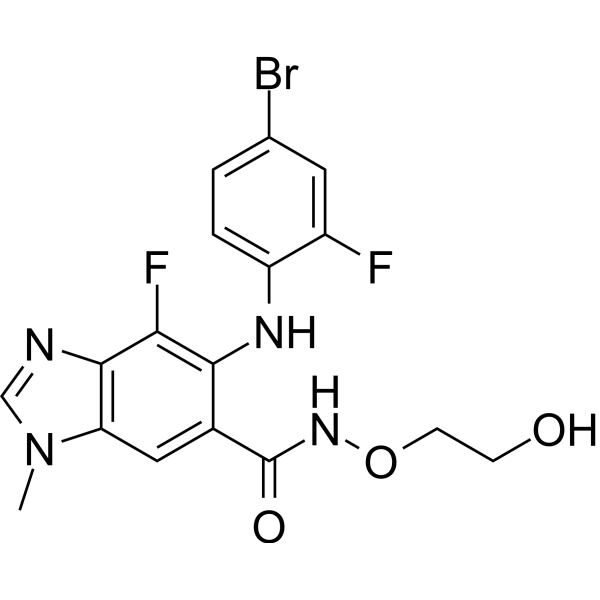
HY-15202
BinimetinibMEK1/2 Inhibitor -
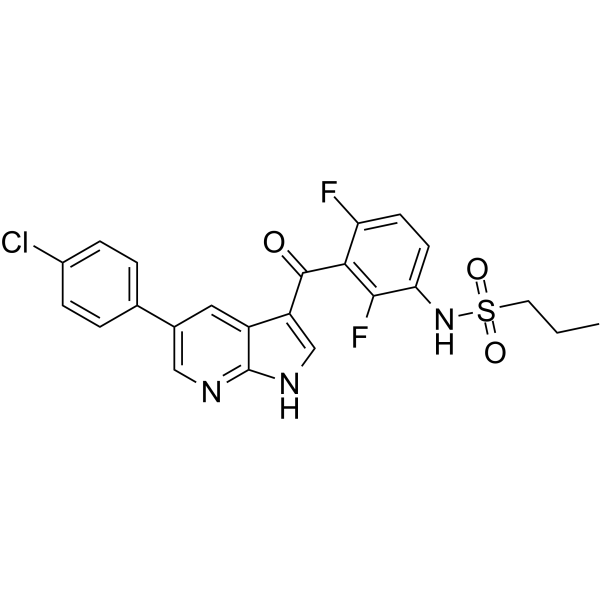
HY-12057
VemurafenibB-Raf Inhibitor -
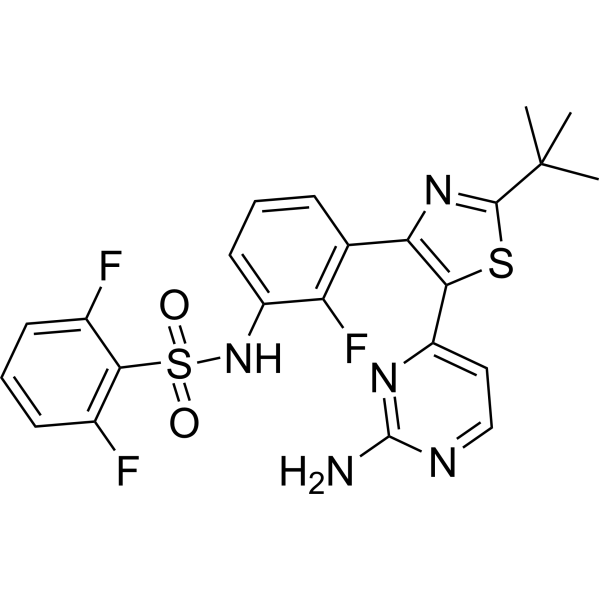
HY-14660
DabrafenibBRAF Inhibitor -
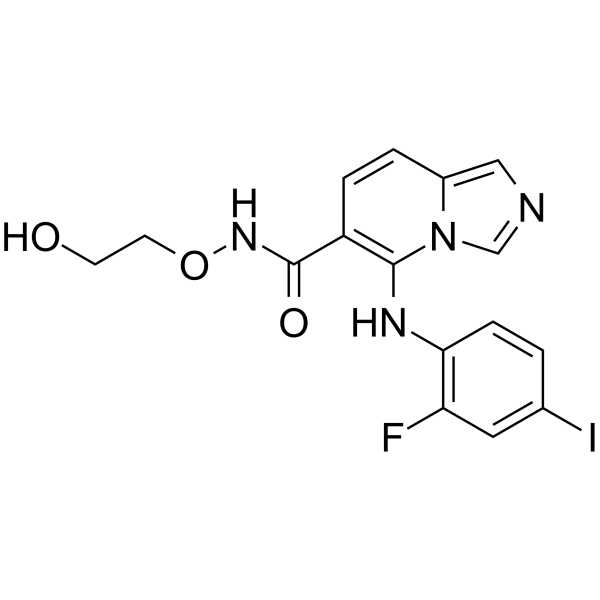
HY-15610
GDC-0623MEK1 Inhibitor -
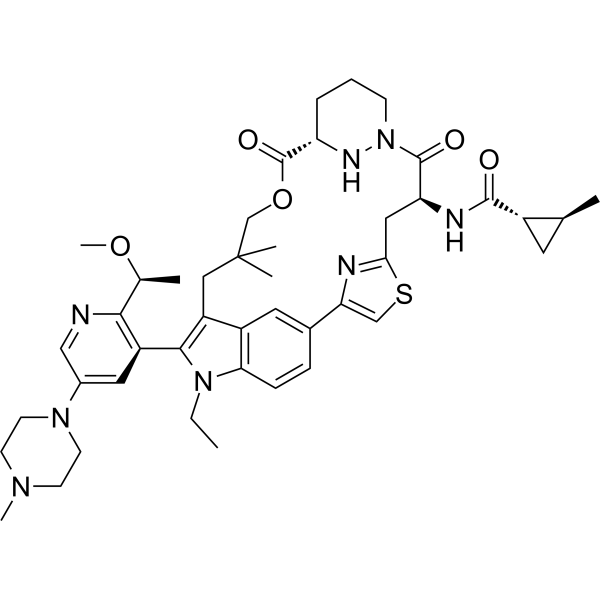
HY-148439
DaraxonrasibRAS(ON) Inhibitor -
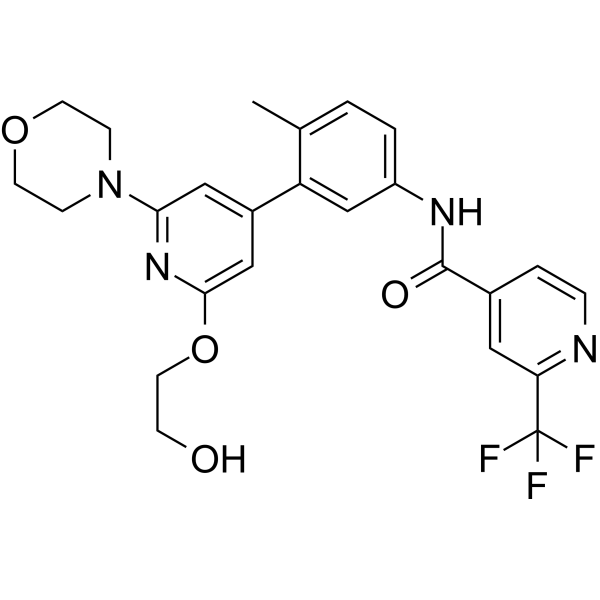
HY-112089
NaporafenibB/CRAF Inhibitor -
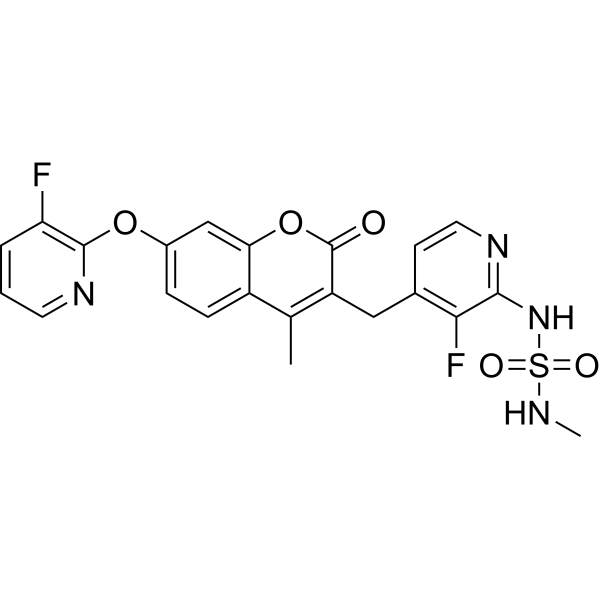
HY-158115
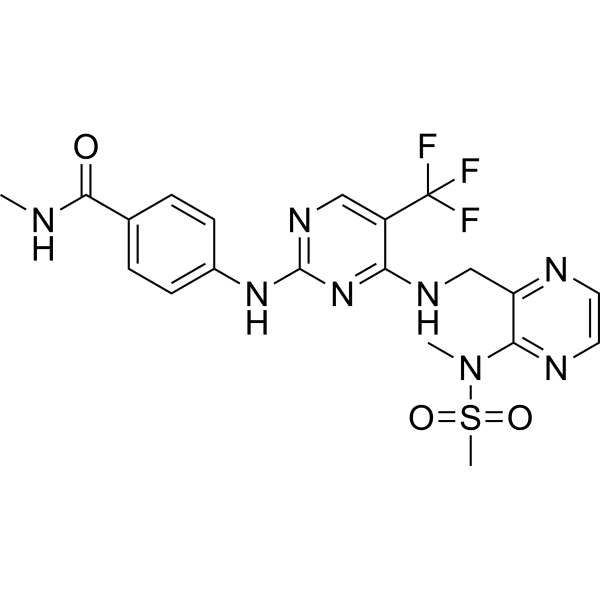
NST-628RAF Molecular Glue -
HY-12289
DefactinibFAK Inhibitor
Publications Citing Use of MedChemExpress (MCE) Avutometinib
More Customer Validation & Images

-
WB
-
Bio/Physico-chemical Assay
-
WB
-
Cell Proliferation/Viability Assay
All MEK Isoforms
More

Biological Activity
Description
IC50 & Target
[1]|
MEK 160 nM (IC50) |
BRafV600E 8.2 nM (IC50) |
Braf 190 nM (IC50) |
CRAF 56 nM (IC50) |
Cellular Effect
|
Cell Line

|
Type | Value | Description | References |
|---|---|---|---|---|
| A549 | GI50 |
3.23 μM
Compound: RO-5126766
|
Cytotoxicity against human A549 cells
Cytotoxicity against human A549 cells
|
[PMID: 34655985] |
| A549 | IC50 |
1.24 μM
Compound: 3; RO5126766
|
Antiproliferative activity against human A549 cells harboring KRAS G12S mutant assessed as inhibition of cell viability after 96 hrs by Celltiter-Glo assay
Antiproliferative activity against human A549 cells harboring KRAS G12S mutant assessed as inhibition of cell viability after 96 hrs by Celltiter-Glo assay
|
[PMID: 32305784] |
| C32 | ED50 |
0.09 mg/kg
Compound: 1, CH5126766/RO5126766
|
Antitumor activity against human C32 cells xenografted in po dosed BALB-nu/nu mouse assessed as tumor growth inhibition administered qd for 11 days
Antitumor activity against human C32 cells xenografted in po dosed BALB-nu/nu mouse assessed as tumor growth inhibition administered qd for 11 days
|
[PMID: 24900832] |
| C32 | IC50 |
47 nM
Compound: 1, CH5126766/RO5126766
|
Growth inhibition of human C32 cells harboring R-Raf V600E mutant
Growth inhibition of human C32 cells harboring R-Raf V600E mutant
|
[PMID: 24900832] |
| HCT-116 | GI50 |
3.23 μM
Compound: RO-5126766
|
Cytotoxicity against human HCT-116 cells
Cytotoxicity against human HCT-116 cells
|
[PMID: 34655985] |
| HCT-116 | IC50 |
0.053 μM
Compound: 3; RO5126766
|
Antiproliferative activity against human HCT116 cells harboring KRAS G13D mutant assessed as inhibition of cell viability after 96 hrs by Celltiter-Glo assay
Antiproliferative activity against human HCT116 cells harboring KRAS G13D mutant assessed as inhibition of cell viability after 96 hrs by Celltiter-Glo assay
|
[PMID: 32305784] |
| HCT-116 | IC50 |
0.739 μM
Compound: Avutometinib
|
Antiproliferative activity against human HCT-116 cells harboring KRAS G13D mutant incubated for 72 hrs by CCK8 assay
Antiproliferative activity against human HCT-116 cells harboring KRAS G13D mutant incubated for 72 hrs by CCK8 assay
|
[PMID: 39166848] |
| HCT-116 | IC50 |
277 nM
Compound: 1; VS6766
|
Antiproliferative activity against human HCT-116 cells harboring NRAS G13D mutant assessed as cell growth inhibition measured after 72 hrs by WST-8 assay
Antiproliferative activity against human HCT-116 cells harboring NRAS G13D mutant assessed as cell growth inhibition measured after 72 hrs by WST-8 assay
|
[PMID: 35849914] |
| HCT-116 | IC50 |
40 nM
Compound: 1, CH5126766/RO5126766
|
Inhibition of human HCT116 cell growth after 96 hrs by counting kit-8 analysis
Inhibition of human HCT116 cell growth after 96 hrs by counting kit-8 analysis
|
[PMID: 24900832] |
| HL-60 | IC50 |
0.006 μM
Compound: 3; RO5126766
|
Antiproliferative activity against human HL60 cells harboring NRAS K61L mutant assessed as inhibition of cell viability after 96 hrs by Celltiter-Glo assay
Antiproliferative activity against human HL60 cells harboring NRAS K61L mutant assessed as inhibition of cell viability after 96 hrs by Celltiter-Glo assay
|
[PMID: 32305784] |
| L02 | IC50 |
17.27 μM
Compound: 3; RO5126766
|
Cytotoxicity against human HL7702 cells assessed as reduction in cell viability after 96 hrs by Celltiter-Glo assay
Cytotoxicity against human HL7702 cells assessed as reduction in cell viability after 96 hrs by Celltiter-Glo assay
|
[PMID: 32305784] |
| MDA-MB-231 | IC50 |
0.17 μM
Compound: 3; RO5126766
|
Antiproliferative activity against human MDA-MB-231 cells harboring KRAS G13D/BRAF G464V mutant assessed as inhibition of cell viability after 96 hrs by Celltiter-Glo assay
Antiproliferative activity against human MDA-MB-231 cells harboring KRAS G13D/BRAF G464V mutant assessed as inhibition of cell viability after 96 hrs by Celltiter-Glo assay
|
[PMID: 32305784] |
| MIA PaCa-2 | IC50 |
0.115 μM
Compound: Avutometinib
|
Antiproliferative activity against human MIA PaCa-2 cells harboring KRAS G12C mutant incubated for 72 hrs by CCK8 assay
Antiproliferative activity against human MIA PaCa-2 cells harboring KRAS G12C mutant incubated for 72 hrs by CCK8 assay
|
[PMID: 39166848] |
| MIA PaCa-2 | IC50 |
40 nM
Compound: 1; VS6766
|
Antiproliferative activity against human MIA PaCa-2 cells harboring NRAS G12C mutant assessed as cell growth inhibition measured after 72 hrs by WST-8 assay
Antiproliferative activity against human MIA PaCa-2 cells harboring NRAS G12C mutant assessed as cell growth inhibition measured after 72 hrs by WST-8 assay
|
[PMID: 35849914] |
| SK-MEL-2 | IC50 |
28 nM
Compound: 1; VS6766
|
Antiproliferative activity against human SK-MEL-2 cells harboring NRAS Q61R mutant assessed as cell growth inhibition measured after 72 hrs by WST-8 assay
Antiproliferative activity against human SK-MEL-2 cells harboring NRAS Q61R mutant assessed as cell growth inhibition measured after 72 hrs by WST-8 assay
|
[PMID: 35849914] |
| SK-MEL-28 | IC50 |
65 nM
Compound: 1; VS6766
|
Antiproliferative activity against human SK-MEL-28 cells harboring BRAF V600E mutant assessed as cell growth inhibition measured after 72 hrs by WST-8 assay
Antiproliferative activity against human SK-MEL-28 cells harboring BRAF V600E mutant assessed as cell growth inhibition measured after 72 hrs by WST-8 assay
|
[PMID: 35849914] |
| SW480 | IC50 |
46 nM
Compound: 1; VS6766
|
Antiproliferative activity against human SW480 cells harboring NRAS G12V mutant assessed as cell growth inhibition measured after 72 hrs by WST-8 assay
Antiproliferative activity against human SW480 cells harboring NRAS G12V mutant assessed as cell growth inhibition measured after 72 hrs by WST-8 assay
|
[PMID: 35849914] |
| Vero | IC50 |
>50 μM
Compound: 3; RO5126766
|
Cytotoxicity against African green monkey Vero cells assessed as reduction in cell viability after 96 hrs by Celltiter-Glo assay
Cytotoxicity against African green monkey Vero cells assessed as reduction in cell viability after 96 hrs by Celltiter-Glo assay
|
[PMID: 32305784] |
In Vitro
Avutometinib (Ro 5126766) is an allosteric inhibitor that binds directly to MEK and prevents its phosphorylation by RAF through the formation of a stable RAF-MEK complex. Ro 5126766 inhibits both the phosphorylation of MEK by RAF and the activation of ERK by MEK. In cell-free MEK and RAF kinase assays, Avutometinib effectively inhibits activation of ERK2 by MEK1 with an IC50 of 160 nM (SD=±0.043) and inhibits the phosphorylation of MEK1 protein by BRAF (IC50=190 nM, SD=±0.003), BRAFV600E (IC50=8.2 nM, SD=±0.0015), and CRAF (IC50=56 nM, SD=±0.016). Avutometinib effectively inhibits both MEK and ERK phosphorylation in a panel of human tumor cell lines including KRAS/HRAS and BRAF mutant cell lines and KRAS/HRAS and BRAF wild-type cells[1]. In order to investigate whether the mevalonate pathway affects the sensitivity to MEK inhibitors, human breast cancer MDA-MB-231 cells harboring KRAS and BRAF mutations are treated Avutometinib, with or without statins, which inhibits HMG-CoA reductase, the rate-limiting enzyme in the mevalonate pathway. The combined treatment of Avutometinib with XU 62-320 demonstrates more significant reduction in cell growth in a dose-dependent manner than the single treatment of Avutometinib. The marked combined effects of Avutometinib at 40 nM and XU 62-320 at 0.3 μM is also confirmed on the suppression of the colony formation of the cells[2].
MedChemExpress (MCE) has not independently confirmed the accuracy of these methods. They are for reference only.
In Vivo
MedChemExpress (MCE) has not independently confirmed the accuracy of these methods. They are for reference only.
Clinical Trial
| NCT Number | Sponsor | Condition | Start Date |
Phase
|
|---|---|---|---|---|
| NCT01329991 | 2011-05 | PHASE1 |


Chemical Information
-
CAS No. 946128-88-7
-
Appearance Solid
-
Molecular Weight 471.46
-
Formula C21H18FN5O5S
-
Color White to yellow
-
SMILES
O=S(NC)(NC1=NC=CC(CC2=C(C)C3=CC=C(OC4=NC=CC=N4)C=C3OC2=O)=C1F)=O
-
Synonyms
Ro 5126766; CH5126766
-
Shipping
Room temperature in continental US; may vary elsewhere.
-
Storage
Powder -20°C 3 years 4°C 2 years In solvent -80°C 6 months -20°C 1 month


Publications (6)
-
Journal Impact Factor
-
Most Recent
-
Nat Cancer
The MEK-RAF molecular glue IK-595 has potent antitumor activity across RAS/MAPK pathway-altered cancers. [Abstract]2026 Jan;7(1):116-130. PMID: 41482524
Avutometinib purchased from MedChemExpress. Usage Cited in: Nat Cancer. 2026 Jan;7(1):116-130. [Abstract]
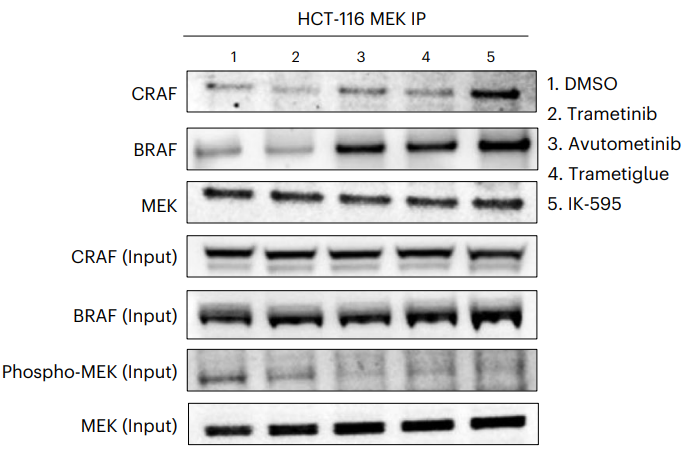
Western blot analysis of MEK immunoprecipitants depicting the modulation of MEK–BRAF and MEK–CRAF interactions in HCT-116 cells treated with DMSO, trametinib (10 nM), Avutometinib (30 nM), trametiglue (3 nM) or IK-595 (3 nM) for 4 h. A representative image of three independent experiments is shown.
Avutometinib purchased from MedChemExpress. Usage Cited in: Nat Cancer. 2026 Jan;7(1):116-130. [Abstract]
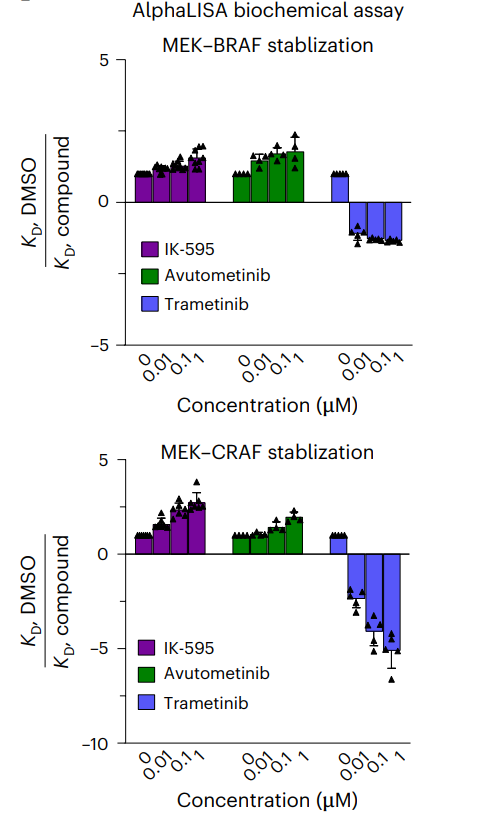
DMSO–inhibitor KD ratios obtained from an AlphaLISA biochemical assay measuring the interaction between MEK1 and BRAF (top) or CRAF (bottom) proteins following treatment with IK-595 (n = 1 sample per condition with nine biological replicates), trametinib (n = 1 sample per condition with five biological replicates) or Avutometinib (0.01-1 μM; 30 min) (n = 1 sample oer condition with four biological replicates). The results demonstrated that IK-595 and Avutometinib stabilized MEK1 with both BRAF and CRAF, whereas trametinib disrupted these interactions.
Avutometinib purchased from MedChemExpress. Usage Cited in: Nat Cancer. 2026 Jan;7(1):116-130. [Abstract]
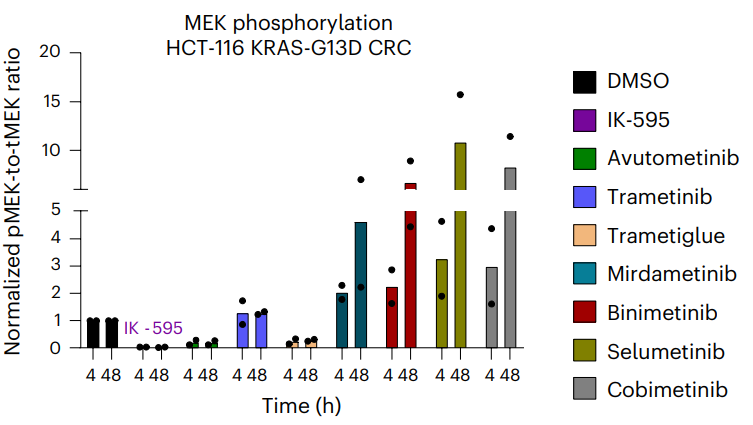
Western blot quantification of MEK phosphorylation normalized to total MEK protein levels in HCT-116 cells treated with DMSO, Avutometinib (30 nM), trametinib (10 nM), trametiglue (3 nM), mirdametinib (25 nM), binimetinib (50 nM), selumetinib (550 nM), cobimetinib (320 nM) or IK-595 (3 nM) for 4 or 48 h (n = 1 sample per condition in two biological replicates).
-
Nat Chem Biol
2026 May 12:10.1038/s41589-026-02212-2. PMID: 42120500 -
Clin Sci (Lond)
A pan-RAF inhibitor LY3009120 inhibits necroptosis by preventing phosphorylation of RIPK1 and alleviates dextran sulfate sodium-induced colitis. [Abstract]2019 Apr 16;133(8):919-932. PMID: 30944150 -
Sci Data
High-throughput drug screening identifies novel therapeutics for Low Grade Serous Ovarian Carcinoma. [Abstract]2024 Sep 19;11(1):1024. PMID: 39300112
Avutometinib purchased from MedChemExpress. Usage Cited in: Sci Data. 2024 Sep 19;11(1):1024. [Abstract]
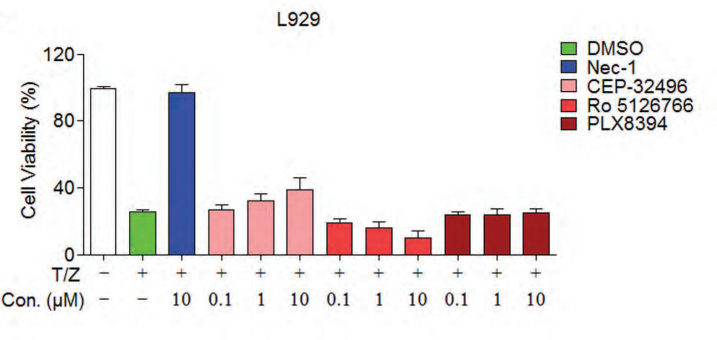
CEP-32496, Avutometinib (Ro 5126766) (0.1-10 μM; 1 h) and PLX8394 didn’t inhibit necroptosis in L929 cells. L929 or HT-29 cells were pretreated with DMSO or Nec-1 or indicated inhibitors for 1h, then stimulated with T/Z for 3 hours or T/S/Z for 8 hours, respectively. Then cell viability was determined by CCK8 assay.
-
-


Solvent & Solubility
In Vitro:
DMSO : 100 mg/mL (212.11 mM; Need ultrasonic; Hygroscopic DMSO has a significant impact on the solubility of product, please use newly opened DMSO)
Please refer to the solubility information to select the appropriate solvent. Once prepared, please aliquot and store the solution to prevent product inactivation from repeated freeze-thaw cycles.
Storage method and period of stock solution: -80°C, 6 months; -20°C, 1 month. When stored at -80°C, please use it within 6 months. When stored at -20°C, please use it within 1 month.
Please refer to the solubility information to select the appropriate solvent. Once prepared, please aliquot and store the solution to prevent product inactivation from repeated freeze-thaw cycles.
Storage method and period of stock solution: -80°C, 6 months; -20°C, 1 month. When stored at -80°C, please use it within 6 months. When stored at -20°C, please use it within 1 month.
Concentration (start) × Volume (start) = Concentration (final) × Volume (final)
In Vivo:
Select the appropriate dissolution method based on your experimental animal and administration route.
- For the following dissolution methods, please ensure to first prepare a clear stock solution using an In Vitro approach and then sequentially add co-solvents:
- To ensure reliable experimental results, the clarified stock solution can be appropriately stored based on storage conditions. As for the working solution for In Vivo experiments, it is recommended to prepare freshly and use it on the same day.
- The percentages shown for the solvents indicate their volumetric ratio in the final prepared solution. If precipitation or phase separation occurs during preparation, heat and/or sonication can be used to aid dissolution.
Add each solvent one by one: 10% DMSO 40% PEG300 5% Tween-80 45% Saline
Solubility: ≥ 2.5 mg/mL (5.30 mM); Clear solution
This protocol yields a clear solution of ≥ 2.5 mg/mL (saturation unknown).
Taking 1 mL working solution as an example, add 100 μL DMSO stock solution (25.0 mg/mL) to 400 μL PEG300, and mix evenly; then add 50 μL Tween-80 and mix evenly; then add 450 μL Saline to adjust the volume to 1 mL.
Preparation of Saline: Dissolve 0.9 g sodium chloride in ddH₂O and dilute to 100 mL to obtain a clear Saline solution.
Add each solvent one by one: 10% DMSO 90% (20% SBE-β-CD in Saline)
Solubility: ≥ 2.5 mg/mL (5.30 mM); Clear solution
This protocol yields a clear solution of ≥ 2.5 mg/mL (saturation unknown).
Taking 1 mL working solution as an example, add 100 μL DMSO stock solution (25.0 mg/mL) to 900 μL 20% SBE-β-CD in Saline, and mix evenly.
Preparation of 20% SBE-β-CD in Saline (4°C, storage for one week): 2 g SBE-β-CD powder is dissolved in 10 mL Saline, completely dissolve until clear.
In Vivo Dissolution Calculator
Please enter the basic information of animal experiments:
-
-
-
-
Recommended: Prepare an additional quantity of animals to account for potential losses during experiments.
Please enter your animal formula composition:
-
%DMSO +
Recommended: Keep the proportion of DMSO in working solution below 2% if your animal is weak.
-
%+
-
+%Tween-80 + +
-
%Saline +
The co-solvents required include: DMSO, . All of co-solvents are available by MedChemExpress (MCE). , Tween 80. All of co-solvents are available by MedChemExpress (MCE).
Working solution concentration: 0.22 mg/mL
Method for preparing stock solution: mg drug dissolved in μL DMSO. Stock solution concentration: mg/mL.
1. Take μL DMSO stock solution;
2. Add μL .
μL , mix evenly;
3. Then add μL Tween 80, mix evenly;
4. Then add μL
Please ensure that the stock solution in the first step is dissolved to a clear state, and add co-solvents in sequence. You can use ultrasonic heating (ultrasonic cleaner, recommended frequency 20-40 kHz), vortexing, etc. to assist dissolution.


Purity & Documentation
-
Data Sheet (291 KB)
-
SDS (396 KB)
- English - EN (396 KB)
- Français - FR (396 KB)
- Deutsch - DE (396 KB)
- Norwegian - NO (396 KB)
- Español - ES (396 KB)
- Swedish - SV (396 KB)
- Italian - IT (396 KB)
- Korean - KR (396 KB)
- Portuguese - PT (396 KB)
-
Handling Instructions (2659 KB)
References
[1]. Martinez-Garcia M, et al. First-in-human, phase I dose-escalation study of the safety, pharmacokinetics, and pharmacodynamics of RO5126766, a first-in-class dual MEK/RAF inhibitor in patients with solid tumors. Clin Cancer Res. 2012 Sep 1;18(17):4806-19. [Content Brief]
[2]. Iizuka-Ohashi M, et al. Blockage of the mevalonate pathway overcomes the apoptotic resistance to MEK inhibitors with suppressing the activation of Akt in cancer cells. Oncotarget. 2018 Apr 13;9(28):19597-19612. [Content Brief]
[3]. Ishii N, et al. Enhanced inhibition of ERK signaling by a novel allosteric MEK inhibitor, CH5126766, that suppresses feedback reactivation of RAF activity. Cancer Res. 2013 Jul 1;73(13):4050-4060. [Content Brief]


Complete Stock Solution Preparation Table
Please refer to the solubility information to select the appropriate solvent. Once prepared, please aliquot and store the solution to prevent product inactivation from repeated freeze-thaw cycles.
Storage method and period of stock solution: -80°C, 6 months; -20°C, 1 month. When stored at -80°C, please use it within 6 months. When stored at -20°C, please use it within 1 month.
| Optional Solvent | Concentration Solvent Mass | 1 mg | 5 mg | 10 mg | 25 mg |
|---|---|---|---|---|---|
| DMSO | 1 mM | 2.1211 mL | 10.6054 mL | 21.2107 mL | 53.0268 mL |
| 5 mM | 0.4242 mL | 2.1211 mL | 4.2421 mL | 10.6054 mL | |
| 10 mM | 0.2121 mL | 1.0605 mL | 2.1211 mL | 5.3027 mL | |
| 15 mM | 0.1414 mL | 0.7070 mL | 1.4140 mL | 3.5351 mL | |
| 20 mM | 0.1061 mL | 0.5303 mL | 1.0605 mL | 2.6513 mL | |
| 25 mM | 0.0848 mL | 0.4242 mL | 0.8484 mL | 2.1211 mL | |
| 30 mM | 0.0707 mL | 0.3535 mL | 0.7070 mL | 1.7676 mL | |
| 40 mM | 0.0530 mL | 0.2651 mL | 0.5303 mL | 1.3257 mL | |
| 50 mM | 0.0424 mL | 0.2121 mL | 0.4242 mL | 1.0605 mL | |
| 60 mM | 0.0354 mL | 0.1768 mL | 0.3535 mL | 0.8838 mL | |
| 80 mM | 0.0265 mL | 0.1326 mL | 0.2651 mL | 0.6628 mL | |
| 100 mM | 0.0212 mL | 0.1061 mL | 0.2121 mL | 0.5303 mL |


Avutometinib Related Classifications
HY-18652 Related Classifications
 Powered by Bioz