



Azathioprine sodium
Based on 8 publication(s) in Google Scholar
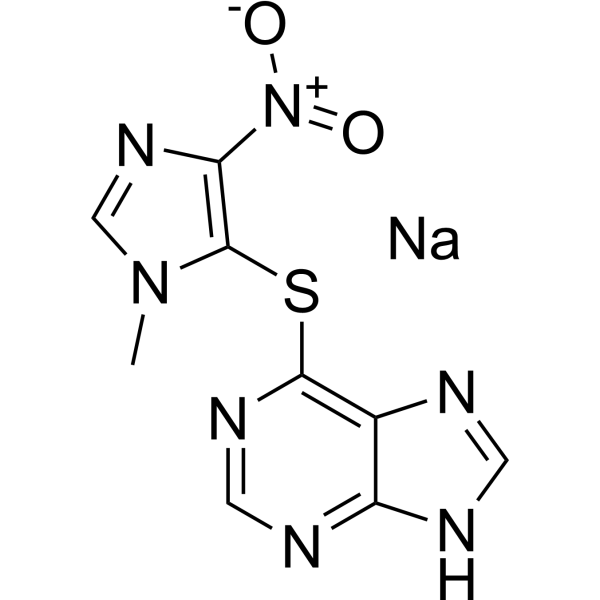
Azathioprine (BW 57-322) sodium is an orally active immunosuppressive agent. Azathioprine can be converted in vivo to the active metabolite 6-mercaptopurine (6-MP). Azathioprine has myelosuppressive effects and induces apoptosis.
For research use only. We do not sell to patients.
- CAS No.: 55774-33-9
- Formula: C9H7N7NaO2S
- Molecular Weight:300.25
-
Storage:
Please store the product under the recommended conditions in the Certificate of Analysis.

To place orders, for customer services and technical support, please contact: MedChemExpress USA
Tel: 609-228-6898 E-mail: [email protected] [email protected]


-
 Biological Activity
-
Chemical Information
- Protocols
- Purity & Documentation
- References
-
 Help & FAQs


Publications Citing Use of MedChemExpress (MCE) Azathioprine sodium
More- ACS Environ Au. 2025 Aug 5;5(6):573-582. [Abstract]
- Anal Chem. 2025 Jun 3;97(21):11099-11109. [Abstract]
- Cell Rep Methods. 2023 Oct 23;3(10):100599. [Abstract]
- APL Bioeng. 2023 Aug 11;7(3):036108. [Abstract]
- Comput Struct Biotechnol J. 2023 Feb 24:21:1907-1920. [Abstract]
- Biotechnol Bioeng. 2021 Dec;118(12):4687-4698. [Abstract]
- PLoS Negl Trop Dis. 2019 Aug 20;13(8):e0007681. [Abstract]
- European University of Valencia. 2025.
 Customer Validation & Images

-
Cell Imaging/Staining
-
Bio/Physico-chemical Assay
-
Bio/Physico-chemical Assay


Biological Activity
Description
In Vitro
Azathioprine (0-50 μM, 48 hours) sodium can induce severe intracellular GSH depletion with relevant concentrations in both primary rat and human hepatocytes[2].
MedChemExpress (MCE) has not independently confirmed the accuracy of these methods. They are for reference only. Further protocols information, click here.
-
Cell Line:Rat hepatocytes, Human hepatocytes
-
Concentration:0-50 μM
-
Incubation Time:24-48 hours
-
Result:Showed the decrease in cell viability and intracellular GSH levels in rat hepatocytes as low concentration of 0.5 μM but no significant decrease in cell viability at concentrations below 50 μM as well as GSH depletion was obviously noted at a concentration as low as 1 μM in human hepatocytes.
In Vivo
MedChemExpress (MCE) has not independently confirmed the accuracy of these methods. They are for reference only.
-
Animal Model:Outbred female CD-1 mice, Female ICR mice[3]
-
Dosage:25-400 mg/kg
-
Administration:Oral gavage; everyday; 10days
-
Result:Induced a decrease in erythrocyte-related parameters as well as leukocyte-related parameters in a dose-dependent manner. Induced 52.4%, 35.4%, 17.9%, 16.1% and 15.2% reduction in bone marrow cells at concentrations of 40, 60, 80, 100 and 120 mg/kg, respectively while fms-like tyrosine kinase-3(FLT-3) ligand (FL)-related cytokines were increased. Increased induction of apoptosis.


Chemical Information
-
CAS No. 55774-33-9
-
Molecular Weight 300.25
-
Formula C9H7N7NaO2S
-
SMILES
CN1C(SC2=C3N=CNC3=NC=N2)=C([N+]([O-])=O)N=C1.[Na]
-
Synonyms
BW 57-322 sodium
-
Shipping
Room temperature in continental US; may vary elsewhere.
-
Storage
Please store the product under the recommended conditions in the Certificate of Analysis.


Publications (8)
-
Journal Impact Factor
-
Most Recent
-
ACS Environ Au
Machine Learning-Assisted Recognition of Environmental Sulfur-Containing Chemicals in Nontargeted Mass Spectrometry Analysis of Inadequate Mass Resolution. [Abstract]2025 Aug 5;5(6):573-582. PMID: 41277996 -
Anal Chem
Exposome-Scale Investigation of Cl-/Br-Containing Chemicals Using High-Resolution Mass Spectrometry, Multistage Machine Learning, and Cloud Computing. [Abstract]2025 Jun 3;97(21):11099-11109. PMID: 40401576 -
Cell Rep Methods
RECOVER identifies synergistic drug combinations in vitro through sequential model optimization. [Abstract]2023 Oct 23;3(10):100599. PMID: 37797618 -
APL Bioeng
Fluid shear stress enhances natural killer cell's cytotoxicity toward circulating tumor cells through NKG2D-mediated mechanosensing. [Abstract]2023 Aug 11;7(3):036108. PMID: 37575881 -
Comput Struct Biotechnol J
Network Proximity-based computational pipeline identifies drug candidates for different pathological stages of Alzheimer's disease. [Abstract]2023 Feb 24:21:1907-1920. PMID: 36936813
Azathioprine sodium purchased from MedChemExpress. Usage Cited in: Comput Struct Biotechnol J. 2023 Feb 24:21:1907-1920. [Abstract]
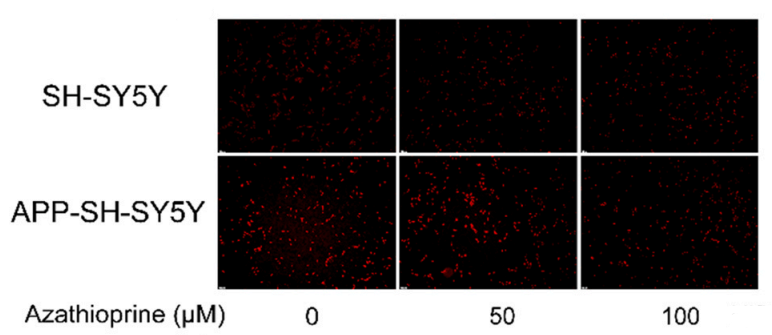
Among the five drug candidates, azathioprine treatment (50 or 100 μM) significantly decreased the ROS production.
Azathioprine sodium purchased from MedChemExpress. Usage Cited in: Comput Struct Biotechnol J. 2023 Feb 24:21:1907-1920. [Abstract]
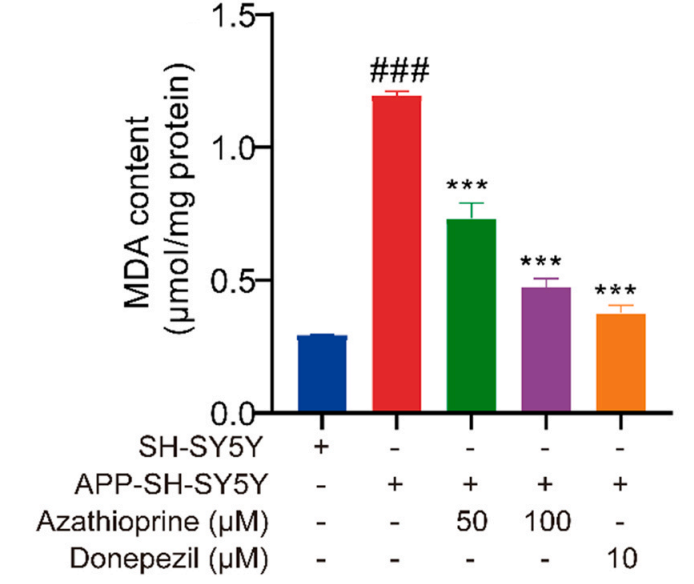
Treatment with 50 μM Azathioprine markedly decreased the MDA content, while 100 μM Azathioprine treatment showed a better effect on reducing MDA content.
Azathioprine sodium purchased from MedChemExpress. Usage Cited in: Comput Struct Biotechnol J. 2023 Feb 24:21:1907-1920. [Abstract]
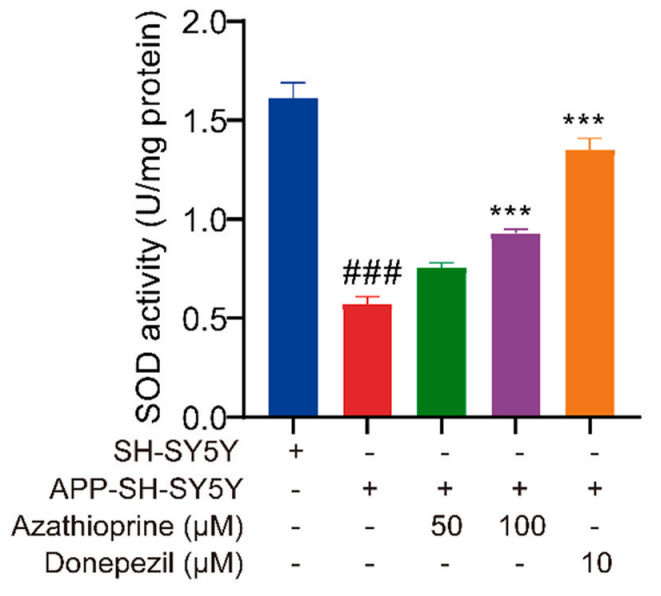
Treatment with 100 μM rather than 50 μM Azathioprine improved SOD activity in the APP-SH-SY5Y group, indicating that high-dose Azathioprine might exert antioxidative stress effects.
-
Biotechnol Bioeng
An integrated biomimetic array chip for establishment of collagen-based 3D primary human hepatocyte model for prediction of clinical drug-induced liver injury. [Abstract]2021 Dec;118(12):4687-4698. PMID: 34478150 -
PLoS Negl Trop Dis
Identification of anti-flaviviral drugs with mosquitocidal and anti-Zika virus activity in Aedes aegypti. [Abstract]2019 Aug 20;13(8):e0007681. PMID: 31430351 -

Protocols
-
Apoptosis
Apoptosis, also called programmed cell death, is generally characterized by distinct morphological characteristics.
-
TUNEL staining for apoptotic DNA fragmentation
TUNEL staining detects DNA strand breaks by using terminal deoxynucleotidyl transferase to add labeled nucleotides to exposed 3′-OH DNA termini, generating either microscopic staining in fixed cells or tissue sections, or fluorescence/cytometric signal in cell suspensions. TUNEL positivity reflects DNA fragmentation but should not be interpreted alone as definitive apoptosis, because TUNEL can also label necrotic, autolytic, mechanically damaged, or DNA-repair-associated DNA breaks.
-
Annexin V plus membrane-impermeant dye apoptosis staining
Annexin V-based apoptosis assays rely on the detection of phosphatidylserine (PS) externalization from the inner leaflet of the plasma membrane to the outer leaflet, an early biochemical hallmark of apoptosis. Fluorescently labeled Annexin V binds PS in a calcium-dependent manner, enabling identification of early apoptotic cells by flow cytometry or fluorescence microscopy. When combined with a membrane-impermeant DNA-binding dye (e. g. , propidium iodide), this approach allows discrimination between viable (Annexin V−/dye−), early apoptotic (Annexin V+/dye−), and late apoptotic or necrotic (Annexin V+/dye+) cell populations by assessing membrane integrity and PS exposure.
-
Apoptosis Solutions
Apoptosis is a regulated, generally non-lytic cell-death pathway that removes unwanted, damaged, infected, or abnormal cells through coordinated morphological changes, caspase activation, DNA fragmentation, and membrane remodeling. The intrinsic apoptosis pathway is controlled mainly by mitochondrial outer membrane permeabilization, BCL-2 family proteins, cytochrome c release, apoptosome formation, caspase-9 activation, and downstream executioner caspase-3/7 activation. The extrinsic apoptosis pathway is initiated by death receptors such as Fas, TNFR, and TRAIL receptors, which recruit adaptor proteins and activate caspase-8 before engaging executioner caspases or mitochondrial amplification through BID cleavage. Apoptosis is linked to many phenotypes, including cancer cell killing, tissue homeostasis, immune regulation, neurodegeneration, infection response, and treatment-induced cytotoxicity; unresolved questions include how apoptosis interacts with necroptosis, pyroptosis, ferroptos


Purity & Documentation
References
[1]. SoniaChavez-Alvarez, et al. Azathioprine: its uses in dermatology. An Bras Dermatol. 2020 Nov-Dec;95(6):731-736. [Content Brief]
[2]. Yue-Ting Wu, et al. Azathioprine hepatotoxicity and the protective effect of liquorice and glycyrrhizic acid. Phytother Res. 2006 Aug;20(8):640-5. doi: 10.1002/ptr.1920. [Content Brief]
[3]. Gemma Molyneux, et al. The haemotoxicity of azathioprine in repeat dose studies in the female CD-1 mouse. Int J Exp Pathol. 2008 Apr;89(2):138-58. [Content Brief]

Calculators
Concentration (start) × Volume (start) = Concentration (final) × Volume (final)


Azathioprine sodium Related Classifications
HY-B0256A Related Classifications
 Powered by Bioz