



Abacavir
Based on 9 publication(s) in Google Scholar
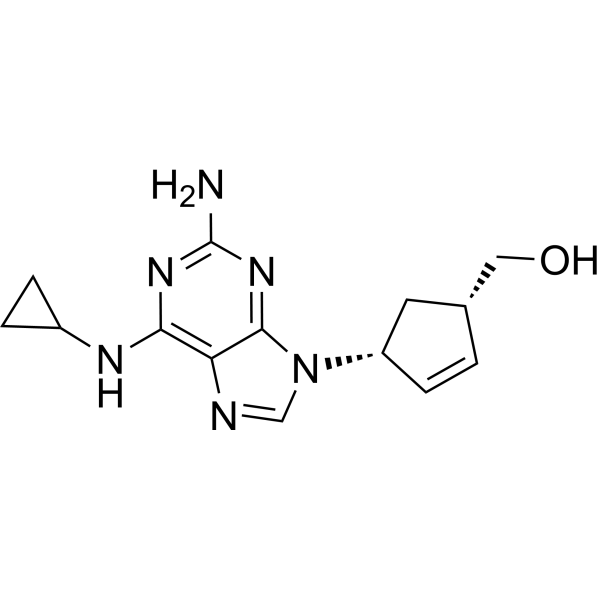
Abacavir is an orally active and competitive nucleoside reverse transcriptase inhibitor. Abacavir can inhibits the replication of HIV. Abacavir shows anticancer activity in prostate cancer cell lines. Abacavir can trespass the blood-brain-barrier and suppresses telomerase activity.
For research use only. We do not sell to patients.
- Purity : 99.88%
- CAS No.: 136470-78-5
- Formula: C14H18N6O
- Molecular Weight:286.34
-
Storage:Powder -20°C, 3 years , 4°C, 2 years ; In solvent -80°C, 2 years , -20°C, 1 year

To place orders, for customer services and technical support, please contact: MedChemExpress USA
Tel: 609-228-6898 E-mail: [email protected] [email protected]


-
 Biological Activity
-
Chemical Information
-
Solvent & Solubility
- Purity & Documentation
- References
-
 Help & FAQs


-
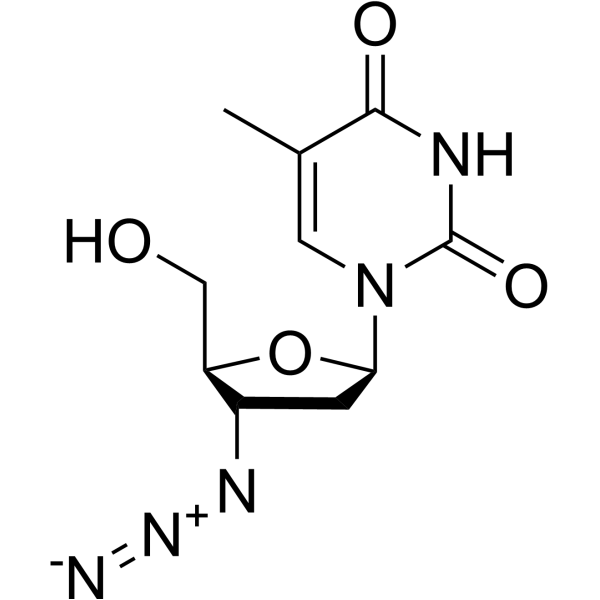
HY-17413
ZidovudineNucleoside Reverse Transcriptase Inhibitor -
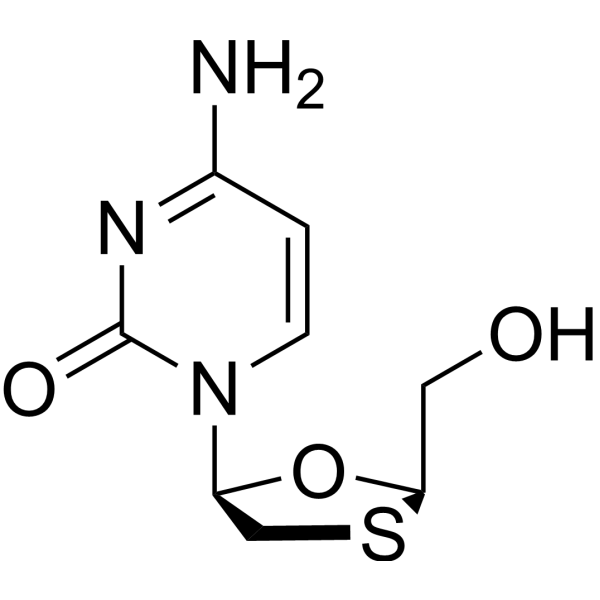
HY-B0250
LamivudineReverse Transcriptase Inhibitor -
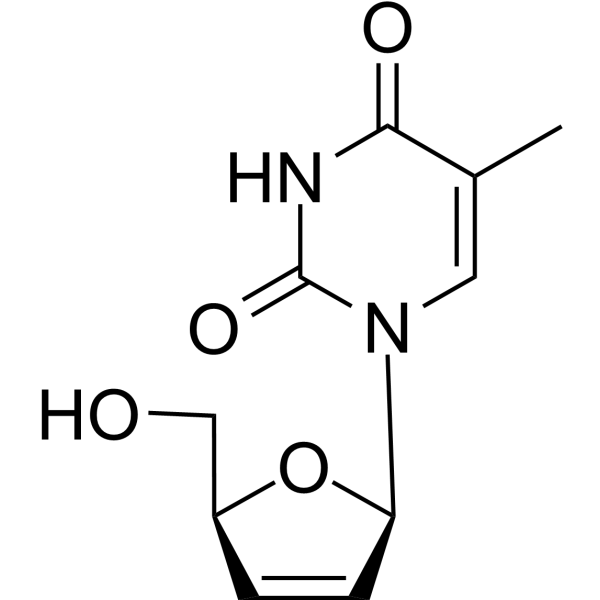
HY-B0116
StavudineNucleoside Reverse Transcriptase Inhibitor -
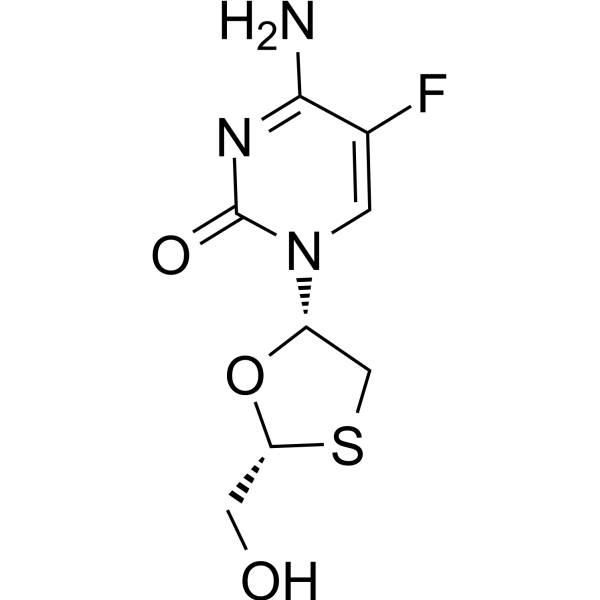
HY-17427
EmtricitabineNRT Inhibitor -
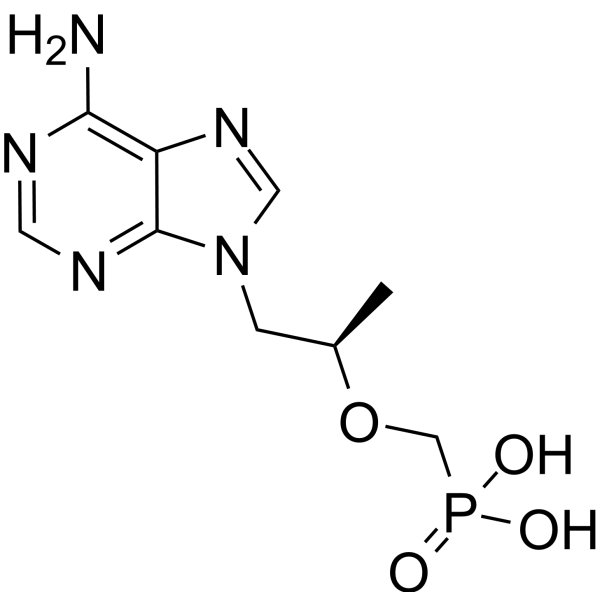
HY-13910
TenofovirNucleotide Reverse Transcriptase Inhibitor -
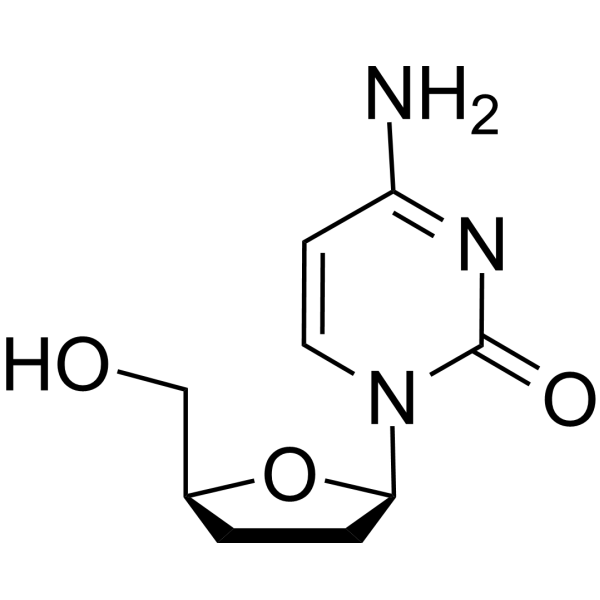
HY-17392
ZalcitabineReverse Transcriptase Inhibitor -
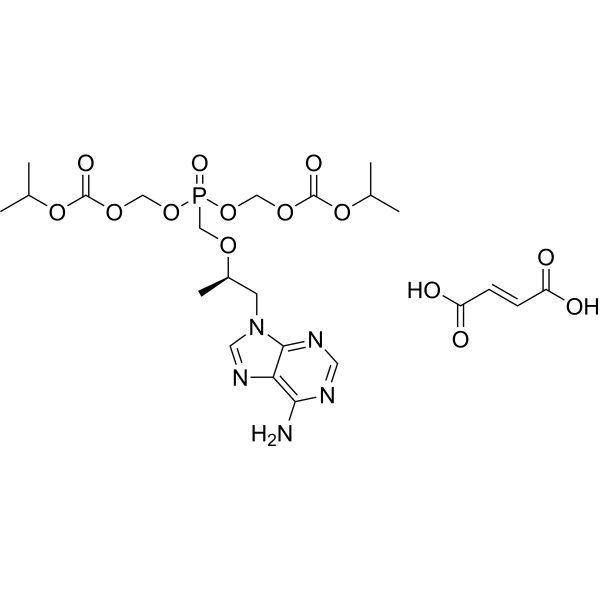
HY-13782
Tenofovir Disoproxil fumarateNucleotide Reverse Transcriptase Inhibitor -
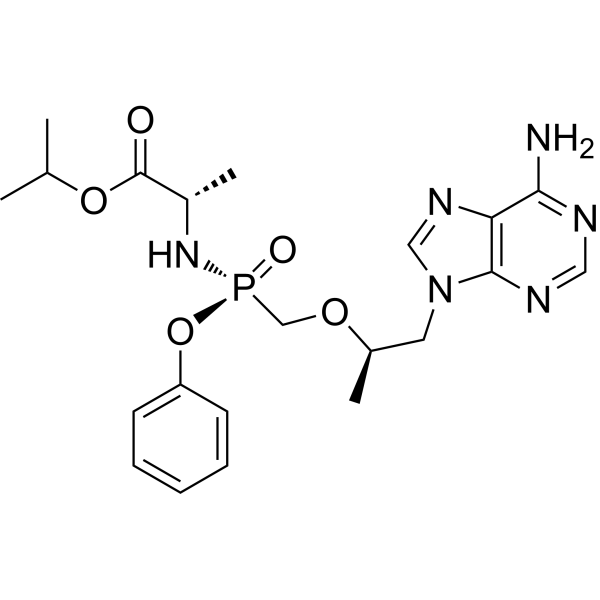
HY-15232
Tenofovir alafenamideReverse Transcriptase Inhibitor -
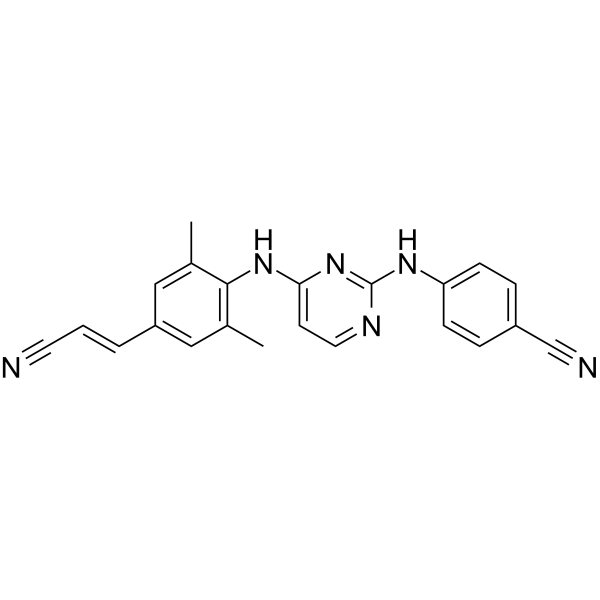
HY-10574
RilpivirineNNRTI -
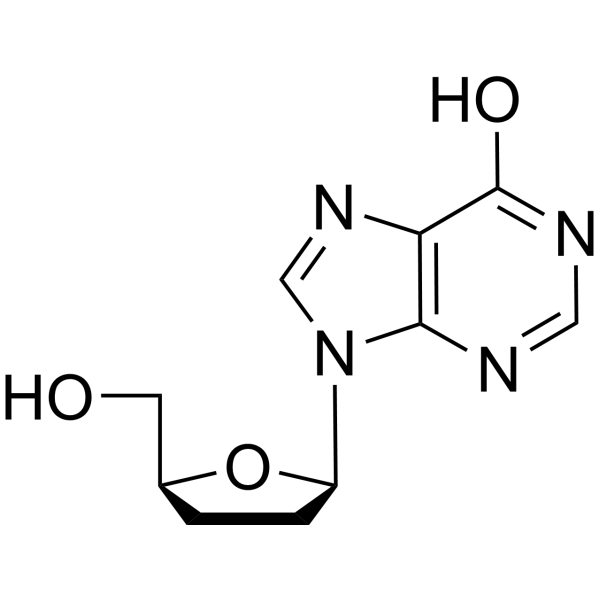
HY-B0249
DidanosineAnti-HIV Agent -
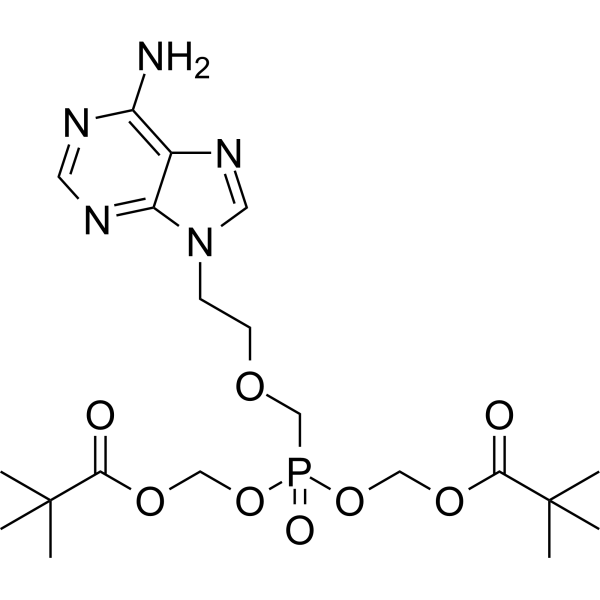
HY-B0255
Adefovir dipivoxilAdefovir Prodrug -
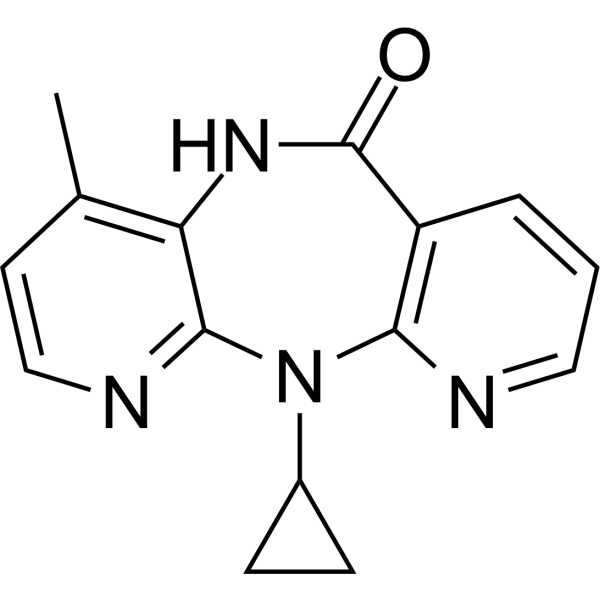
HY-10570
NevirapineHIV-1 Reverse Transcriptase Inhibitor
Publications Citing Use of MedChemExpress (MCE) Abacavir
More- Cancer Res. 2026 Jul 15;86(14):3588-3603. [Abstract]
- Adv Sci (Weinh). 2025 Jul;12(28):e2503579. [Abstract]
- Aging Cell. 2026 Jan 20;25(2):e70352.
- Int J Antimicrob Agents. 2019 Dec;54(6):814-819. [Abstract]
- ASN Neuro. 2026;18(1):2647877. [Abstract]
- Antiviral Res. 2023 Aug:216:105674. [Abstract]
- Virology. 2026 Jun 4:623:110991. [Abstract]
- bioRxiv. 2026 Jul 18.
- J Mol Liq. 2018 Feb;251:345-357.


Biological Activity
Description
Cellular Effect
|
Cell Line

|
Type | Value | Description | References |
|---|---|---|---|---|
| C3H/3T3 | CC50 |
>20 μM
Compound: 1
|
Cytostatic concentration required to inhibit C3H/3T3 cell proliferation
Cytostatic concentration required to inhibit C3H/3T3 cell proliferation
|
[PMID: 15887959] |
| C3H/3T3 | EC50 |
8.8 μM
Compound: 1
|
Effective concentration against murine moloney sarcoma virus in C3H/3T3 cells
Effective concentration against murine moloney sarcoma virus in C3H/3T3 cells
|
[PMID: 15887959] |
| CCRF-CEM | CC50 |
78 μM
Compound: 1
|
Cytostatic concentration required to inhibit CEM cell proliferation
Cytostatic concentration required to inhibit CEM cell proliferation
|
[PMID: 15887959] |
| CCRF-CEM | EC50 |
1.9 μM
Compound: 1
|
Effective concentration against human immunodeficiency virus type 1 in CEM cells
Effective concentration against human immunodeficiency virus type 1 in CEM cells
|
[PMID: 15887959] |
| CCRF-CEM | EC50 |
3 μM
Compound: 1
|
Effective concentration against human immunodeficiency virus type 2 (ROD) in CEM cells
Effective concentration against human immunodeficiency virus type 2 (ROD) in CEM cells
|
[PMID: 15887959] |
| CCRF-CEM | EC50 |
3 μM
Compound: 1
|
Effective concentration against human immunodeficiency virus type 2 in CEM cells
Effective concentration against human immunodeficiency virus type 2 in CEM cells
|
[PMID: 15887959] |
| CCRF-CEM | CC50 |
83 μM
Compound: Abacavir
|
Cytotoxicity against CEM cell line
Cytotoxicity against CEM cell line
|
[PMID: 16458506] |
| CCRF-CEM | EC50 |
1.6 μM
Compound: Abacavir
|
Antiviral activity against HIV1 replication in CEM cell line
Antiviral activity against HIV1 replication in CEM cell line
|
[PMID: 16458506] |
| CCRF-CEM | CC50 |
>250 μM
Compound: 11, ABC
|
Cytotoxicity against human CEM cells
Cytotoxicity against human CEM cells
|
[PMID: 24177359] |
| CCRF-CEM | EC50 |
18 μM
Compound: 11, ABC
|
Antiviral activity against HIV2 ROD infected in human CEM cells assessed as virus-induced giant cell formation after 4 days by microscopic analysis
Antiviral activity against HIV2 ROD infected in human CEM cells assessed as virus-induced giant cell formation after 4 days by microscopic analysis
|
[PMID: 24177359] |
| CCRF-CEM | EC50 |
23 μM
Compound: 11, ABC
|
Antiviral activity against HIV1 3B infected in human CEM cells assessed as virus-induced giant cell formation after 4 days by microscopic analysis
Antiviral activity against HIV1 3B infected in human CEM cells assessed as virus-induced giant cell formation after 4 days by microscopic analysis
|
[PMID: 24177359] |
| CCRF-CEM | IC50 |
>250 μM
Compound: 11, ABC
|
Cytostatic activity against human CEM cells assessed as growth inhibition after 3 days by particle counting analysis
Cytostatic activity against human CEM cells assessed as growth inhibition after 3 days by particle counting analysis
|
[PMID: 24177359] |
| HEL | CC50 |
200 μM
Compound: 1
|
Cytostatic concentration required to inhibit HEL cell proliferation
Cytostatic concentration required to inhibit HEL cell proliferation
|
[PMID: 15887959] |
| HeLa | IC50 |
170 μM
Compound: 11, ABC
|
Cytostatic activity against human HeLa cells assessed as growth inhibition after 3 days by particle counting analysis
Cytostatic activity against human HeLa cells assessed as growth inhibition after 3 days by particle counting analysis
|
[PMID: 24177359] |
| HepG2 | CC50 |
110 μM
Compound: 1
|
Cytostatic concentration required to inhibit Hep G2 cell proliferation
Cytostatic concentration required to inhibit Hep G2 cell proliferation
|
[PMID: 15887959] |
| HepG2 2.2.15 | EC50 |
5.6 μM
Compound: 1
|
Effective concentration against HBV in Hep G2.2.15 cells
Effective concentration against HBV in Hep G2.2.15 cells
|
[PMID: 15887959] |
| HepG2 2.2.15 | EC50 |
5.6 μM
Compound: 1
|
Effective concentration againstHBV in Hep G2.2.15 cells
Effective concentration againstHBV in Hep G2.2.15 cells
|
[PMID: 15887959] |
| L1210 | IC50 |
>250 μM
Compound: 11, ABC
|
Cytostatic activity against mouse L1210 cells assessed as growth inhibition after 2 days by particle counting analysis
Cytostatic activity against mouse L1210 cells assessed as growth inhibition after 2 days by particle counting analysis
|
[PMID: 24177359] |
| MT2 | CC50 |
190 μM
Compound: Abacavir
|
Cytotoxicity against human MT2 cells
Cytotoxicity against human MT2 cells
|
[PMID: 18029175] |
| MT2 | CC50 |
190 μM
Compound: 5, abacavir
|
Cytotoxicity against human MT2 cells after 5 days
Cytotoxicity against human MT2 cells after 5 days
|
[PMID: 19179082] |
| MT2 | EC50 |
0.32 μM
Compound: 5, abacavir
|
Antiviral activity against HIV1 3a infected human MT2 cells assessed as inhibition of viral-induced cytopathic effect after 3 days by XTT assay
Antiviral activity against HIV1 3a infected human MT2 cells assessed as inhibition of viral-induced cytopathic effect after 3 days by XTT assay
|
[PMID: 19179082] |
| MT4 | EC50 |
7.3 μM
Compound: 1
|
Effective concentration against human immunodeficiency virus type 2 in MT-4 cells
Effective concentration against human immunodeficiency virus type 2 in MT-4 cells
|
[PMID: 15887959] |
| PBL | EC50 |
0.2 μM
Compound: 1
|
Effective concentration against human immunodeficiency virus type 1 in PBL cells
Effective concentration against human immunodeficiency virus type 1 in PBL cells
|
[PMID: 15887959] |
In Vitro
Abacavir (15 and 150 μM, 0-120 h) inhibits cell growth, affects cell cycle progression, induces senescence and modulates LINE-1 mRNA expression in prostate cancer cell lines[1].
Abacavir (15 and 150 μM, 18 h) significantly reduces cell migration and inhibits cell invasion[1].
Abacavir induces fat apoptosis[4].
MedChemExpress (MCE) has not independently confirmed the accuracy of these methods. They are for reference only. .
-
Cell Line:PC3, LNCaP and WI-38
-
Concentration:15 and 150 μM
-
Incubation Time:0, 24, 48, 72 and 96 h
-
Result:Showed a dose-dependent growth inhibition on PC3 and LNCaP.
-
Cell Line:PC3 and LNCaP
-
Concentration:150 μM
-
Incubation Time:0, 18, 24, 48, 72, 96 and 120 h
-
Result:Caused a very high accumulation of cells in S phase in PC3 and LNCaP cells, and G2/M phase increment was observed in PC3 cells.
-
Cell Line:PC3 and LNCaP
-
Concentration:15 and 150 μM
-
Incubation Time:18 h
-
Result:Significantly reduced cell migration.
-
Cell Line:PC3 and LNCaP
-
Concentration:15 and 150 μM
-
Incubation Time:18 h
-
Result:Significantly inhibited cell invision.
In Vivo
Abacavir (50 mg/kg/d; i.p.; 14 d) with 0.1 mg/kg/d Decitabine (HY-A0004) enhances survival of high-risk medulloblastoma-bearing mice[3].
MedChemExpress (MCE) has not independently confirmed the accuracy of these methods. They are for reference only.
-
Animal Model:Male mice (9-weeks old, 22-30 g) - wild-type (WT) C57BL/6 or homozygous knockout (P2rx7 KO, B6.129P2-P2rx7tm1Gab/J)[2]
-
Dosage:2.5, 5 and 7.5 μg/mL, 100 μL or 100 and 200 mg/kg
-
Administration:Intrascrotal or oral administration for 4 h
-
Result:Dose-dependently promoted thrombus formation.
-
Animal Model:NSGTM mice, patient-derived xenograft (PDX) cells of non-WNT/non-SHH, Group 3 and of SHH/ TP53-mutated medulloblastoma[3]
-
Dosage:50 mg/kg/d with 0.1 mg/kg/d Decitabine
-
Administration:Intraperitoneal injection, daily for 14 days
-
Result:Inhibited tumor growth and enhanced mouse survival.
Clinical Trial
| NCT Number | Sponsor | Condition | Start Date |
Phase
|
|---|---|---|---|---|
| NCT01329991 | Plexxikon| | 2011-05 | PHASE1 |


Chemical Information
-
CAS No. 136470-78-5
-
Appearance Solid
-
Molecular Weight 286.34
-
Formula C14H18N6O
-
Color White to off-white
-
SMILES
NC1=NC(NC2CC2)=C3N=CN([C@H]4C=C[C@@H](CO)C4)C3=N1
-
Shipping
Room temperature in continental US; may vary elsewhere.
-
Storage
Powder -20°C 3 years 4°C 2 years In solvent -80°C 2 years -20°C 1 year


Publications (9)
-
Journal Impact Factor
-
Most Recent
-
Cancer Res
Targeting DOT1L Reactivates HERV-K to Drive Cell-Autonomous and Paracrine Senescence in Adenocarcinoma of the Esophagogastric Junction. [Abstract]2026 Jul 15;86(14):3588-3603. PMID: 42084229 -
Adv Sci (Weinh)
Neuronal FGF13 Inhibits Mitochondria-Derived Damage Signals to Prevent Neuroinflammation and Neurodegeneration in a Mouse Model of Parkinson's Disease. [Abstract]2025 Jul;12(28):e2503579. PMID: 40344619 -
-
Int J Antimicrob Agents
2019 Dec;54(6):814-819. PMID: 31479744 -
ASN Neuro
Exposure to Frontline Antiretroviral Dolutegravir Disrupts Oligodendrocyte Development Across Differentiation Stages. [Abstract]2026;18(1):2647877. PMID: 41904696 -
Antiviral Res
Seasonal coronavirus infections trigger NLRP3 inflammasome activation in macrophages but is therapeutically targetable. [Abstract]2023 Aug:216:105674. PMID: 37459896 -
Virology
Generation and evaluation of an EcoHIV mouse model to study HIV-1 integration and expression. [Abstract]2026 Jun 4:623:110991. PMID: 42320113 -
-


Solvent & Solubility
In Vitro:
DMSO : 100 mg/mL (349.24 mM; Need ultrasonic; Hygroscopic DMSO has a significant impact on the solubility of product, please use newly opened DMSO)
H2O : 2 mg/mL (6.98 mM; Need ultrasonic)
Please refer to the solubility information to select the appropriate solvent. Once prepared, please aliquot and store the solution to prevent product inactivation from repeated freeze-thaw cycles.
Storage method and period of stock solution: -80°C, 2 years; -20°C, 1 year. When stored at -80°C, please use it within 2 years. When stored at -20°C, please use it within 1 year.
* Note: If you choose water as the stock solution, please dilute it to the working solution, then filter and sterilize it with a 0.22 μm filter before use.
Please refer to the solubility information to select the appropriate solvent. Once prepared, please aliquot and store the solution to prevent product inactivation from repeated freeze-thaw cycles.
Storage method and period of stock solution: -80°C, 2 years; -20°C, 1 year. When stored at -80°C, please use it within 2 years. When stored at -20°C, please use it within 1 year.
* Note: If you choose water as the stock solution, please dilute it to the working solution, then filter and sterilize it with a 0.22 μm filter before use.
Concentration (start) × Volume (start) = Concentration (final) × Volume (final)
In Vivo:
Select the appropriate dissolution method based on your experimental animal and administration route.
- For the following dissolution methods, please ensure to first prepare a clear stock solution using an In Vitro approach and then sequentially add co-solvents:
- To ensure reliable experimental results, the clarified stock solution can be appropriately stored based on storage conditions. As for the working solution for In Vivo experiments, it is recommended to prepare freshly and use it on the same day.
- The percentages shown for the solvents indicate their volumetric ratio in the final prepared solution. If precipitation or phase separation occurs during preparation, heat and/or sonication can be used to aid dissolution.
Add each solvent one by one: 10% DMSO 40% PEG300 5% Tween-80 45% Saline
Solubility: ≥ 2.5 mg/mL (8.73 mM); Clear solution
This protocol yields a clear solution of ≥ 2.5 mg/mL (saturation unknown).
Taking 1 mL working solution as an example, add 100 μL DMSO stock solution (25.0 mg/mL) to 400 μL PEG300, and mix evenly; then add 50 μL Tween-80 and mix evenly; then add 450 μL Saline to adjust the volume to 1 mL.
Preparation of Saline: Dissolve 0.9 g sodium chloride in ddH₂O and dilute to 100 mL to obtain a clear Saline solution.
Add each solvent one by one: 10% DMSO 90% (20% SBE-β-CD in Saline)
Solubility: ≥ 2.5 mg/mL (8.73 mM); Clear solution
This protocol yields a clear solution of ≥ 2.5 mg/mL (saturation unknown).
Taking 1 mL working solution as an example, add 100 μL DMSO stock solution (25.0 mg/mL) to 900 μL 20% SBE-β-CD in Saline, and mix evenly.
Preparation of 20% SBE-β-CD in Saline (4°C, storage for one week): 2 g SBE-β-CD powder is dissolved in 10 mL Saline, completely dissolve until clear.
For the following dissolution methods, please prepare the working solution directly:
It is recommended to prepare fresh solutions and use them promptly within a short period of time.
The percentages shown for the solvents indicate their volumetric ratio in the final prepared solution. If precipitation or phase separation occurs during preparation, heat and/or sonication can be used to aid dissolution.
Add each solvent one by one: PBS
Solubility: 3.33 mg/mL (11.63 mM); Clear solution; Need ultrasonic and warming
In Vivo Dissolution Calculator
Please enter the basic information of animal experiments:
-
-
-
-
Recommended: Prepare an additional quantity of animals to account for potential losses during experiments.
Please enter your animal formula composition:
-
%DMSO +
Recommended: Keep the proportion of DMSO in working solution below 2% if your animal is weak.
-
%+
-
+%Tween-80 + +
-
%Saline +
The co-solvents required include: DMSO, . All of co-solvents are available by MedChemExpress (MCE). , Tween 80. All of co-solvents are available by MedChemExpress (MCE).
Working solution concentration: 0.22 mg/mL
Method for preparing stock solution: mg drug dissolved in μL DMSO. Stock solution concentration: mg/mL.
1. Take μL DMSO stock solution;
2. Add μL .
μL , mix evenly;
3. Then add μL Tween 80, mix evenly;
4. Then add μL
Please ensure that the stock solution in the first step is dissolved to a clear state, and add co-solvents in sequence. You can use ultrasonic heating (ultrasonic cleaner, recommended frequency 20-40 kHz), vortexing, etc. to assist dissolution.


Purity & Documentation
-
Data Sheet (279 KB)
-
SDS (419 KB)
- English - EN (419 KB)
- Français - FR (419 KB)
- Deutsch - DE (419 KB)
- Norwegian - NO (419 KB)
- Español - ES (419 KB)
- Swedish - SV (419 KB)
- Italian - IT (419 KB)
- Korean - KR (419 KB)
- Portuguese - PT (419 KB)
-
Handling Instructions (2659 KB)
References
[1]. Carlini F, et al. The reverse transcription inhibitor abacavir shows anticancer activity in prostate cancer cell lines. PLoS One. 2010 Dec 3;5(12):e14221. [Content Brief]
[2]. Collado-Diaz V, et al. Abacavir Induces Arterial Thrombosis in a Murine Model. J Infect Dis. 2018 Jun 20;218(2):228-233. [Content Brief]
[3]. Gringmuth M, et al. Enhanced Survival of High-Risk Medulloblastoma-Bearing Mice after Multimodal Treatment with Radiotherapy, Decitabine, and Abacavir. Int J Mol Sci. 2022 Mar 30;23(7):3815. [Content Brief]
[4]. McComsey GA, et al. Improvements in lipoatrophy, mitochondrial DNA levels and fat apoptosis after replacing stavudine with abacavir or zidovudine. AIDS. 2005 Jan 3;19(1):15-23. [Content Brief]


Complete Stock Solution Preparation Table
Please refer to the solubility information to select the appropriate solvent. Once prepared, please aliquot and store the solution to prevent product inactivation from repeated freeze-thaw cycles.
Storage method and period of stock solution: -80°C, 2 years; -20°C, 1 year. When stored at -80°C, please use it within 2 years. When stored at -20°C, please use it within 1 year.
| Optional Solvent | Concentration Solvent Mass | 1 mg | 5 mg | 10 mg | 25 mg |
|---|---|---|---|---|---|
| H2O / DMSO | 1 mM | 3.4924 mL | 17.4618 mL | 34.9235 mL | 87.3088 mL |
| 5 mM | 0.6985 mL | 3.4924 mL | 6.9847 mL | 17.4618 mL | |
| DMSO | 10 mM | 0.3492 mL | 1.7462 mL | 3.4924 mL | 8.7309 mL |
| 15 mM | 0.2328 mL | 1.1641 mL | 2.3282 mL | 5.8206 mL | |
| 20 mM | 0.1746 mL | 0.8731 mL | 1.7462 mL | 4.3654 mL | |
| 25 mM | 0.1397 mL | 0.6985 mL | 1.3969 mL | 3.4924 mL | |
| 30 mM | 0.1164 mL | 0.5821 mL | 1.1641 mL | 2.9103 mL | |
| 40 mM | 0.0873 mL | 0.4365 mL | 0.8731 mL | 2.1827 mL | |
| 50 mM | 0.0698 mL | 0.3492 mL | 0.6985 mL | 1.7462 mL | |
| 60 mM | 0.0582 mL | 0.2910 mL | 0.5821 mL | 1.4551 mL | |
| 80 mM | 0.0437 mL | 0.2183 mL | 0.4365 mL | 1.0914 mL | |
| 100 mM | 0.0349 mL | 0.1746 mL | 0.3492 mL | 0.8731 mL |
* Note: If you choose water as the stock solution, please dilute it to the working solution, then filter and sterilize it with a 0.22 μm filter before use.


Abacavir Related Classifications
HY-17423 Related Classifications
 Powered by Bioz