



Itacitinib adipate
Based on 23 publication(s) in Google Scholar
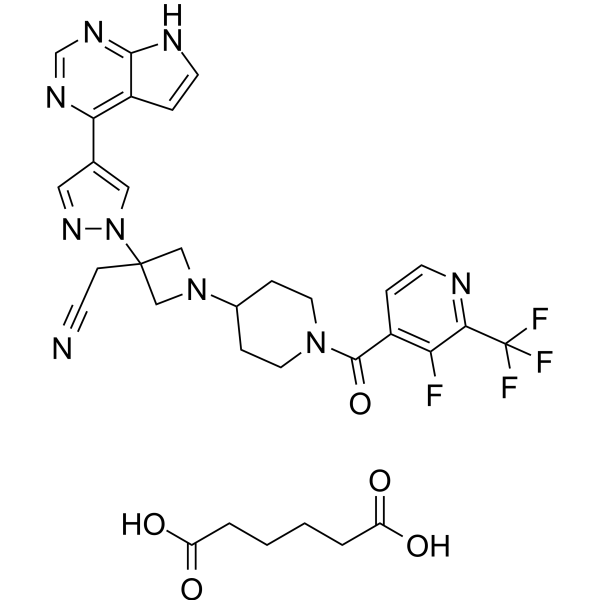
Itacitinib adipate (INCB039110 adipate) is an orally active JAK1-selective inhibitor. Itacitinib adipate inhibits IFN-γ-mediated phosphorylation of STAT1 and downstream pro-inflammatory signaling pathways. Itacitinib adipate reduces the frequency and number of splenic neutrophils in mouse models, downregulates the levels of pro-inflammatory cytokines and chemokines, and inhibits pro-inflammatory gene expression pathways. Itacitinib adipate improves survival rate and clinical scores in mouse models of hemophagocytic lymphohistiocytosis (HLH), and also suppresses metastasis in NSCLC models with high Rab1A expression. Itacitinib adipate can be used for research on hemophagocytic lymphohistiocytosis and non-small cell lung cancer.
Nur für Forschungszwecke. Wir verkaufen nicht an Patienten.
- Reinheit: 99.18%
- CAS. Nr.: 1334302-63-4
- Formel: C32H33F4N9O5
- Molecular Weight:699.66
-
Speicherung:
4°C, stored under nitrogen, away from moisture
* In solvent : -80°C, 6 months; -20°C, 1 month (stored under nitrogen, away from moisture)

To place orders, for customer services and technical support, please contact: MedChemExpress USA
Tel: 609-228-6898 E-mail: [email protected] [email protected]


-
 Biologische Aktivität
-
Chemical Information
-
Lösungsmittel & Löslichkeit
- Reinheit & Dokumentation
- Verweise
-
 Help & FAQs
-

Anti-Rheumatic Arthritis Compound Library
HY-L210
-
Posttranslational Modification Library
HY-L226
-
Epigenetics Compound Library
HY-L005
-
Immunology/Inflammation Compound Library
HY-L007
-
JAK/STAT Compound Library
HY-L008
-
Kinase Inhibitor Library
HY-L009
-
Protein Tyrosine Kinase Compound Library
HY-L016
-
Stem Cell Signaling Compound Library
HY-L017
-
Anti-Cancer Compound Library
HY-L025
-
Anti-Aging Compound Library
HY-L034
-
Differentiation Inducing Compound Library
HY-L038
-
Reprogramming Compound Library
HY-L039
-
Orally Active Compound Library
HY-L061
-
Anti-Breast Cancer Compound Library
HY-L074
-
Anti-Lung Cancer Compound Library
HY-L075
-
Anti-Pancreatic Cancer Compound Library
HY-L077
-
Anti-Blood Cancer Compound Library
HY-L079
-
Anti-Obesity Compound Library
HY-L087
-
Transcription Factor-Targeted Library
HY-L090
-
Anti-Liver Cancer Compound Library
HY-L101
-
Rare Diseases Drug Library
HY-L102
-
Anti-Prostate Cancer Compound Library
HY-L124
-
Cancer Stem Cells Compound Library
HY-L135
-
Autoimmune Disease Compound Library
HY-L156
-
Highly Selective Inhibitors Library
HY-L158
-
Anti-Hematopathy Compound Library
HY-L171
-
Multi-Target Compound Library
HY-L176
-
Bioactive Compound Library Max
HY-L181
-
MCE Bioactive Compound Library
HY-L001V
-
Bioactive Compound Library
HY-L001
-
Protein Kinase Compound Library
HY-L196
-
Cell Proliferation Compound Library
HY-L201
-
High-Throughput Bioactive Compound Library
HY-L205


Publications Citing Use of MedChemExpress (MCE) Itacitinib adipate
More- Nature. 2025 Jun;642(8066):201-211. [Abstract]
- Circulation. 2024 Oct 15;150(16):1302-1305. [Abstract]
- Nat Commun. 2025 Sep 29;16(1):8560. [Abstract]
- Oncogene. 2024 Oct;43(41):3062-3077. [Abstract]
- Leukemia. 2019 Aug;33(8):1964-1977. [Abstract]
- J Med Chem. 2024 Jun 27;67(12):10012-10024. [Abstract]
- JCI Insight. 2021 Apr 8;6(7):e142205. [Abstract]
- J Autoimmun. 2019 May:99:39-47. [Abstract]
- Mol Syst Biol. 2024 Jan;20(1):28-55. [Abstract]
- CNS Neurosci Ther. 2025 Sep;31(9):e70609. [Abstract]
- Biochem Pharmacol. 2025 Oct:240:117120. [Abstract]
- Biochem Pharmacol. 2020 Aug;178:114103. [Abstract]
- EMBO Rep. 2019 Jun;20(6):e47202. [Abstract]
- Cell Rep Methods. 2023 Oct 23;3(10):100599. [Abstract]
- Int Immunopharmacol. 2024 Jun 21:137:112523. [Abstract]
- J Immunol. 2023 Feb 1;210(3):229-244. [Abstract]
- J Leukoc Biol. 2022 Nov;112(5):1343-1356. [Abstract]
- Technol Cancer Res Treat. 2025 Jan-Dec:24:15330338251406931. [Abstract]
- Fundam Clin Pharmacol. 2021 Oct;35(5):919-929. [Abstract]
- Eur J Drug Metab Pharmacokinet. 2021 Sep;46(5):625-635. [Abstract]
- SSRN. 2026 May 21.
- bioRxiv. 2026 Mar 7.
- bioRxiv. 2025 February 21.


Biologische Aktivität
|
JAK1 |
STAT1 |
Itacitinib adipate (50-2500 nM; 1 h pretreatment) dose-dependently inhibits IFN-γ-induced STAT1 phosphorylation in bone marrow-derived macrophages, with significant suppression observed at 2500, 500, and 50 nM concentrations[1].
MedChemExpress (MCE) has not independently confirmed the accuracy of these methods. They are for reference only.
Itacitinib adipate (120 mg/kg; p.o.; twice daily; for 30 consecutive days) is well tolerated in untreated wild-type mice and effectively inhibits IFN-γ-induced STAT1 phosphorylation in vivo[1].
Itacitinib adipate (120 mg/kg; p.o.; twice daily; for 5 or 26 consecutive days) partially improves survival rate and clinical scores in a primary HLH mouse model, and exerts only mild effects on disease-related immune parameters and transcriptional profiles[1].
Itacitinib adipate (25 mg/kg; intraperitoneal injection; administration schedule consists of 9 cycles, with 5 consecutive days of dosing followed by 2 days of withdrawal per cycle, lasting for 2 months) significantly inhibits the metastasis of non-small cell lung cancer with high Rab1A expression in the xenograft model derived from the A549-Rab1A-OE cell line, reduces bioluminescence flux and the number of metastatic organs; it also significantly reduces the number of metastatic organs in the non-small cell lung cancer xenograft model derived from the H358 cell line[2].
MedChemExpress (MCE) has not independently confirmed the accuracy of these methods. They are for reference only.
-
Animal Model:C57BL/6J wildtype (sex- and age-matched, 8 to 12 weeks old; secondary HLH induced by intraperitoneal injection of CpG 1826 (HY-146245) and anti-IL-10 receptor antibody)[1]
-
Dosage:120 mg/kg
-
Administration:p.o.; twice daily; 5 or 6 days
-
Result:Markedly extended survival versus vehicle.
Lowered clinical scores with equivalent efficacy to ruxolitinib.
Exerted no beneficial effects on splenomegaly or thrombocytopenia, and aggravated anemia relative to vehicle.
Sharply lowered the proportion and count of splenic neutrophils (CD80+ neutrophils included).
Dropped serum CXCL10, IL-12(p70), IL-6, GM-CSF, MCP-1 and MIP1a concentrations significantly.
-
Animal Model:C57BL/6J Prf1tm1Sdz/J (perforin-deficient, sex- and age-matched, 8 to 12 weeks old; primary HLH induced by intraperitoneal infection with LCMV)[1]
-
Dosage:120 mg/kg
-
Administration:p.o.; twice daily; 5 or 26 days
-
Result:Partially elevated survival relative to vehicle.
Reduced clinical disease scores relative to vehicle.
Alleviated splenomegaly at day 9 post-infection, with no impact on anemia or thrombocytopenia.
Failed to lower serum IFN-γ, TNF and sCD25 concentrations.
Did not alter total, CD44+ effector or gp33-specific splenic CD8 T cell populations, nor suppress IFN-γ secretion from these cells.
Repressed proinflammatory (IL-2 STAT5, IFN-α, IFN-γ response) and heme metabolism pathways in splenic CD8 T cells.
Suppressed proinflammatory IL-6 JAK STAT3, IFN-α and IFN-γ response pathways while boosting Myc-driven proliferation and oxidative phosphorylation metabolism in splenic monocytes; each cell subset only presented 3 distinct differentially expressed genes versus vehicle.
-
Animal Model:C57BL/6J wildtype (sex- and age-matched, 8 to 12 weeks old)[1]
-
Dosage:120 mg/kg
-
Administration:p.o.; twice daily; 30 days
-
Result:Showed no significant untoward effects on clinical score, body weight, bone marrow cellularity, or peripheral blood cell counts compared to vehicle-treated controls.
Significantly decreased the percentage of pSTAT1+ F4/80+ peritoneal macrophages and the fold-change mean fluorescence intensity of pSTAT1 compared to vehicle-treated mice after IFN-γ stimulation.
-
Animal Model:BALB/c nude (male, 6-8 weeks old, inoculated via tail vein with luciferase-expressing A549-Rab1A-OE cells)
[2] -
Dosage:25 mg/kg
-
Administration:i.p.; 9 cycles of 5 consecutive days on medication followed by 2 consecutive days off; over 2 months
-
Result:Reduced total bioluminescence flux from a median of ~7.0 lg[p/s] in controls to ~6.0 lg[p/s].
Decreased the number of metastatic organs from a median of ~6 organs in controls to ~2 organs.
-
Animal Model:BALB/c nude (male, 6-8 weeks old, inoculated via tail vein with H358 cells)[2]
-
Dosage:25 mg/kg
-
Administration:i.p.; 9 cycles of 5 consecutive days on medication followed by 2 consecutive days off; over 2 months
-
Result:Decreased the number of metastatic organs from a median of ~6 organs in controls to ~2 organs.


Chemical Information
-
CAS. Nr. 1334302-63-4
-
Appearance Solid
-
Molecular Weight 699.66
-
Formel C32H33F4N9O5
-
Color White to off-white
-
SMILES
N#CCC1(N2N=CC(C3=C4C(NC=C4)=NC=N3)=C2)CN(C5CCN(C(C6=C(F)C(C(F)(F)F)=NC=C6)=O)CC5)C1.O=C(O)CCCCC(O)=O
-
Synonyms
INCB039110 adipate
-
Versand
Room temperature in continental US; may vary elsewhere.
-
Speicherung
4°C, stored under nitrogen, away from moisture
* In solvent : -80°C, 6 months; -20°C, 1 month (stored under nitrogen, away from moisture)


Publications (23)
-
Journal Impact Factor
-
Most Recent
-
Nature
2025 Jun;642(8066):201-211. PMID: 40269158 -
Circulation
Sustained but Decoyed Activation of the JAK1-STAT Pathway by Aberrant Protein Aggregation Exacerbates Proteotoxicity. [Abstract]2024 Oct 15;150(16):1302-1305. PMID: 39401278 -
Nat Commun
A loss-of-function human ADAR variant activates innate immune response and promotes bowel inflammation. [Abstract]2025 Sep 29;16(1):8560. PMID: 41022715 -
Oncogene
RBM12 drives PD-L1-mediated immune evasion in hepatocellular carcinoma by increasing JAK1 mRNA translation. [Abstract]2024 Oct;43(41):3062-3077. PMID: 39187545 -
Leukemia
Stem cell persistence in CML is mediated by extrinsically activated JAK1-STAT3 signaling. [Abstract]2019 Aug;33(8):1964-1977. PMID: 30842608 -
J Med Chem
Functional and Structural Characterization of Clinical-Stage Janus Kinase 2 Inhibitors Identifies Determinants for Drug Selectivity. [Abstract]2024 Jun 27;67(12):10012-10024. PMID: 38843875 -
JCI Insight
2021 Apr 8;6(7):e142205. PMID: 33830087 -
J Autoimmun
Autophagy promotes aortic adventitial fibrosis via the IL-6/Jak1 signaling pathway in Takayasu's arteritis. [Abstract]2019 May:99:39-47. PMID: 30765261 -
Mol Syst Biol
Illuminating phenotypic drug responses of sarcoma cells to kinase inhibitors by phosphoproteomics. [Abstract]2024 Jan;20(1):28-55. PMID: 38177929 -
CNS Neurosci Ther
Network Pharmacology-Based and Experimental Validation Elucidate the Target Mechanism of Vinorine in Ameliorating Secondary Brain Injury After Intracerebral Hemorrhage. [Abstract]2025 Sep;31(9):e70609. PMID: 40994248 -
Biochem Pharmacol
Dual inhibition of EGR1/STAT3 transcriptional hubs suppresses macrophage-driven liver fibrosis: A multi-omics-guided drug repurposing strategy. [Abstract]2025 Oct:240:117120. PMID: 40623460 -
Biochem Pharmacol
Combined anti-fibrotic and anti-inflammatory properties of JAK-inhibitors on macrophages in vitro and in vivo: Perspectives for scleroderma-associated interstitial lung disease. [Abstract]2020 Aug;178:114103. PMID: 32562787 -
EMBO Rep
Tau accumulation triggers STAT1-dependent memory deficits by suppressing NMDA receptor expression. [Abstract]2019 Jun;20(6):e47202. PMID: 31085626 -
Cell Rep Methods
RECOVER identifies synergistic drug combinations in vitro through sequential model optimization. [Abstract]2023 Oct 23;3(10):100599. PMID: 37797618 -
Int Immunopharmacol
APLNR inhibited nasopharyngeal carcinoma growth and immune escape by downregulating PD-L1. [Abstract]2024 Jun 21:137:112523. PMID: 38909500 -
J Immunol
IL-10 Negatively Controls the Primary T Cell Response of Tilapia by Triggering the JAK1/STAT3/SOCS3 Axis That Suppresses NF-κB and MAPK/ERK Signaling. [Abstract]2023 Feb 1;210(3):229-244. PMID: 36548476 -
J Leukoc Biol
2022 Nov;112(5):1343-1356. PMID: 35588262 -
Technol Cancer Res Treat
Combining Radiation and anti-PD-L1 Enhances the Antitumor Activity in Colorectal Cancer via IFN-γ-Dependent Activation of STAT1. [Abstract]2025 Jan-Dec:24:15330338251406931. PMID: 41406067 -
Fundam Clin Pharmacol
2021 Oct;35(5):919-929. PMID: 33523504 -
Eur J Drug Metab Pharmacokinet
Differential Inhibition of Equilibrative Nucleoside Transporter 1 (ENT1) Activity by Tyrosine Kinase Inhibitors. [Abstract]2021 Sep;46(5):625-635. PMID: 34275128 -
-
-


Lösungsmittel & Löslichkeit
DMSO : 100 mg/mL (142.93 mM; Need ultrasonic; Hygroscopic DMSO has a significant impact on the solubility of product, please use newly opened DMSO)
Please refer to the solubility information to select the appropriate solvent. Once prepared, please aliquot and store the solution to prevent product inactivation from repeated freeze-thaw cycles.
Storage method and period of stock solution: -80°C, 6 months; -20°C, 1 month (stored under nitrogen, away from moisture). When stored at -80°C, please use it within 6 months. When stored at -20°C, please use it within 1 month.
Please refer to the solubility information to select the appropriate solvent. Once prepared, please aliquot and store the solution to prevent product inactivation from repeated freeze-thaw cycles.
Storage method and period of stock solution: -80°C, 6 months; -20°C, 1 month (stored under nitrogen, away from moisture). When stored at -80°C, please use it within 6 months. When stored at -20°C, please use it within 1 month.
Konzentration (Stammlösung) × Volumen (Stammlösung) = Konzentration (Ziellösung) × Volumen (Ziellösung)
Select the appropriate dissolution method based on your experimental animal and administration route.
- For the following dissolution methods, please ensure to first prepare a clear stock solution using an In Vitro approach and then sequentially add co-solvents:
- To ensure reliable experimental results, the clarified stock solution can be appropriately stored based on storage conditions. As for the working solution for In Vivo experiments, it is recommended to prepare freshly and use it on the same day.
- The percentages shown for the solvents indicate their volumetric ratio in the final prepared solution. If precipitation or phase separation occurs during preparation, heat and/or sonication can be used to aid dissolution.
Add each solvent one by one: 10% DMSO 40% PEG300 5% Tween-80 45% Saline
Solubility: ≥ 2.5 mg/mL (3.57 mM); Clear solution
This protocol yields a clear solution of ≥ 2.5 mg/mL (saturation unknown).
Taking 1 mL working solution as an example, add 100 μL DMSO stock solution (25.0 mg/mL) to 400 μL PEG300, and mix evenly; then add 50 μL Tween-80 and mix evenly; then add 450 μL Saline to adjust the volume to 1 mL.
Preparation of Saline: Dissolve 0.9 g sodium chloride in ddH₂O and dilute to 100 mL to obtain a clear Saline solution.
Add each solvent one by one: 10% DMSO 90% (20% SBE-β-CD in Saline)
Solubility: ≥ 2.5 mg/mL (3.57 mM); Clear solution
This protocol yields a clear solution of ≥ 2.5 mg/mL (saturation unknown).
Taking 1 mL working solution as an example, add 100 μL DMSO stock solution (25.0 mg/mL) to 900 μL 20% SBE-β-CD in Saline, and mix evenly.
Preparation of 20% SBE-β-CD in Saline (4°C, storage for one week): 2 g SBE-β-CD powder is dissolved in 10 mL Saline, completely dissolve until clear.
Please enter the basic information of animal experiments:
-
-
-
-
Recommended: Prepare an additional quantity of animals to account for potential losses during experiments.
Please enter your animal formula composition:
-
%DMSO +
Recommended: Keep the proportion of DMSO in working solution below 2% if your animal is weak.
-
%+
-
+%Tween-80 + +
-
%Saline +
The co-solvents required include: DMSO, . All of co-solvents are available by MedChemExpress (MCE). , Tween 80. All of co-solvents are available by MedChemExpress (MCE).
Working solution concentration: 0.22 mg/mL
Method for preparing stock solution: mg drug dissolved in μL DMSO. Stock solution concentration: mg/mL. * In solvent : -80°C, 6 months; -20°C, 1 month (stored under nitrogen, away from moisture)
1. Take μL DMSO stock solution;
2. Add μL .
μL , mix evenly;
3. Then add μL Tween 80, mix evenly;
4. Then add μL
Please ensure that the stock solution in the first step is dissolved to a clear state, and add co-solvents in sequence. You can use ultrasonic heating (ultrasonic cleaner, recommended frequency 20-40 kHz), vortexing, etc. to assist dissolution.


Reinheit & Dokumentation
-
Data Sheet (289 KB)
-
SDS (453 KB)
- English - EN (453 KB)
- Français - FR (453 KB)
- Deutsch - DE (453 KB)
- Norwegian - NO (453 KB)
- Español - ES (453 KB)
- Swedish - SV (453 KB)
- Italian - IT (453 KB)
- Korean - KR (453 KB)
- Portuguese - PT (453 KB)
-
Handling Instructions (2659 KB)
Verweise
[1]. Keenan C, et al. Differential effects of itacitinib, fedratinib, and ruxolitinib in mouse models of hemophagocytic lymphohistiocytosis. Blood. 2024 Jun 06;143(23):2386-2400. [Content Brief]
[3]. Carmona-Rocha E, et al. New and Emerging Oral/Topical Small-Molecule Treatments for Psoriasis. Pharmaceutics. 2024 Feb 06;16(2):239. [Content Brief]


Complete Stock Solution Preparation Table
Please refer to the solubility information to select the appropriate solvent. Once prepared, please aliquot and store the solution to prevent product inactivation from repeated freeze-thaw cycles.
Storage method and period of stock solution: -80°C, 6 months; -20°C, 1 month (stored under nitrogen, away from moisture). When stored at -80°C, please use it within 6 months. When stored at -20°C, please use it within 1 month.
| Optional Solvent | Concentration Solvent Mass | 1 mg | 5 mg | 10 mg | 25 mg |
|---|---|---|---|---|---|
| DMSO | 1 mM | 1.4293 mL | 7.1463 mL | 14.2927 mL | 35.7316 mL |
| 5 mM | 0.2859 mL | 1.4293 mL | 2.8585 mL | 7.1463 mL | |
| 10 mM | 0.1429 mL | 0.7146 mL | 1.4293 mL | 3.5732 mL | |
| 15 mM | 0.0953 mL | 0.4764 mL | 0.9528 mL | 2.3821 mL | |
| 20 mM | 0.0715 mL | 0.3573 mL | 0.7146 mL | 1.7866 mL | |
| 25 mM | 0.0572 mL | 0.2859 mL | 0.5717 mL | 1.4293 mL | |
| 30 mM | 0.0476 mL | 0.2382 mL | 0.4764 mL | 1.1911 mL | |
| 40 mM | 0.0357 mL | 0.1787 mL | 0.3573 mL | 0.8933 mL | |
| 50 mM | 0.0286 mL | 0.1429 mL | 0.2859 mL | 0.7146 mL | |
| 60 mM | 0.0238 mL | 0.1191 mL | 0.2382 mL | 0.5955 mL | |
| 80 mM | 0.0179 mL | 0.0893 mL | 0.1787 mL | 0.4466 mL | |
| 100 mM | 0.0143 mL | 0.0715 mL | 0.1429 mL | 0.3573 mL |


Itacitinib adipate Related Classifications
HY-16997A Related Classifications
 Powered by Bioz