55 Results for "

lens

" in MedChemExpress (MCE) Product Catalog:
Products (55)

55 Results for "lens" in MCE Product Catalog:

11
11 Publications Verification
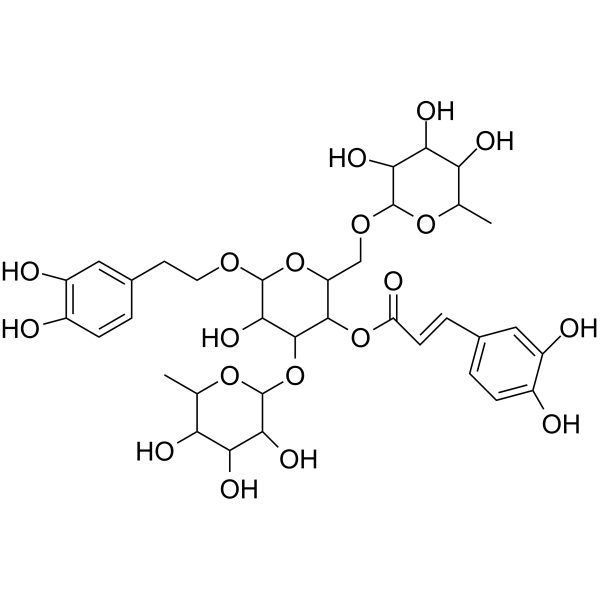
Art. -Nr.: HY-N0033
CAS. Nr.: 94079-81-9
Poliumoside, a caffeoylated phenylpropanoid glycoside, is isolated from Brandisia hancei stems and leaves. Poliumoside is an advanced glycation end product (AGE) formation and rat lens aldose reductase (RLAR) inhibitor, with IC50s of 19.69 and 8.47 μM, respectively. Poliumoside also has antiinflammatory and antioxidant activity .
loading...
    loading...
2
2 Cited Publications
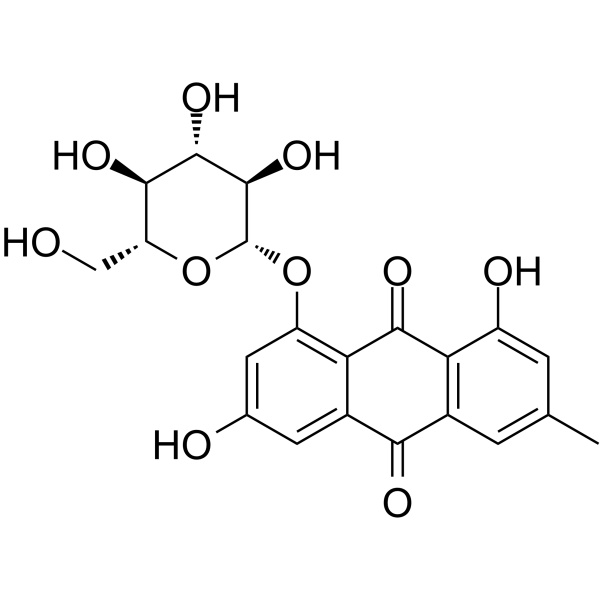
Art. -Nr.: HY-N0311
CAS. Nr.: 23313-21-5
Emodin-8-glucoside is an anthraquinone derivative that can be isolated from Aloe vera. Emodin-8-glucoside is the inhibitor for MAPK with an inhibition constant of 430.14 pM. Emodin-8-glucoside exhibits moderate inhibitory activity against rat lens aldose reductase (ALAR) and topoisomerases II with IC50s of 14.4 μM and 66 μM. Emodin-8-glucoside exhibits antioxidant, anti-inflammatory and anti-fibrotic activities. Emodin-8-glucoside can cross the blood brain barrier .
loading...
    loading...
1
1 Cited Publications
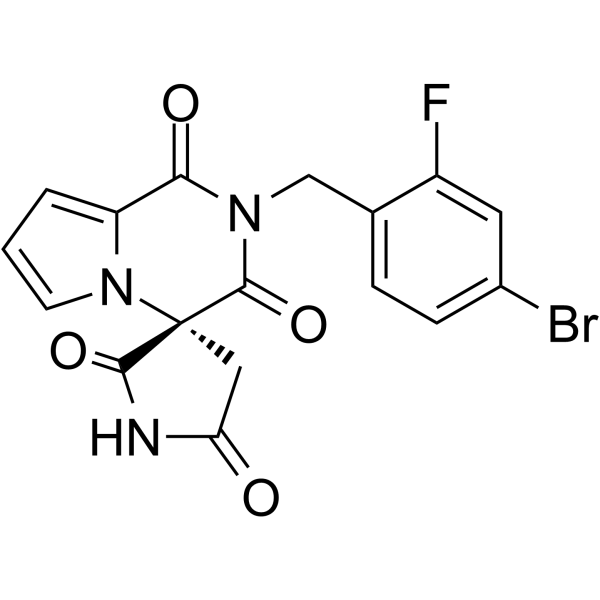
Art. -Nr.: HY-15314
CAS. Nr.: 147254-64-6
Reinheit:  96.10%
Synonyms: AS-3201
Target:  

Aldose Reductase

Forschungsgebiete:  

Neurological Disease Metabolic Disease

Ranirestat (AS-3201) potent and orally active aldose reductase (AR) inhibitor with IC50s of 11 nM and 15 nM for rat lens AR and recombinant human AR, respectively, and a Ki of 0.38 nM for recombinant human AR. Ranirestat has the potential for diabetic sensorimotor polyneuropathy treatment. Ranirestat also has a neuroprotective effect on diabetic retinas .
loading...
    loading...
1
1 Cited Publications
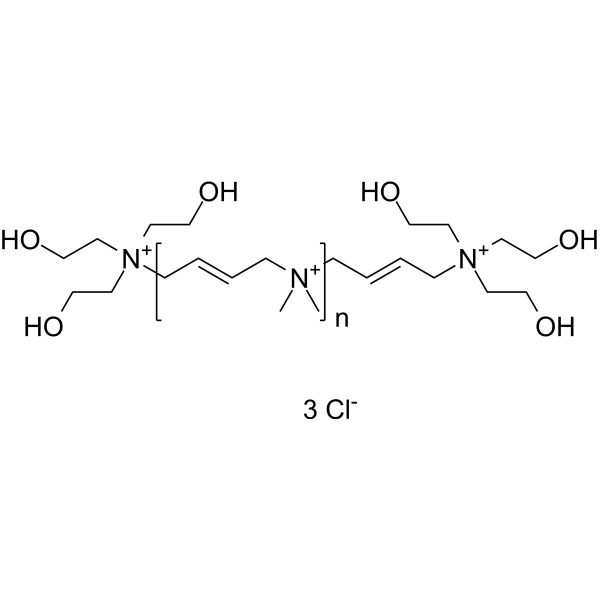
Art. -Nr.: HY-127032
CAS. Nr.: 75345-27-6
Reinheit:  ≥99.0%
Synonyms: Polidronium chloride
Forschungsgebiete:  

Infection

Polyquaternium-1 (Polidronium chloride; PQ-1) is an antimicrobial preservative and an activator of NF-κB. Polyquaternium-1 targets bacterial cell membranes, commonly used in ophthalmic surgery. Polyquaternium-1 adsorbs to the surface of microbial membranes through its polycationic properties, destroying membrane integrity and inducing potassium ion leakage, leading to bacterial death. Polyquaternium-1 exerts antimicrobial effects at a concentration of 0.001% and has low toxicity to mammalian cells. Polyquaternium-1 can be used to prepare products such as glaucoma eye drops (Travoprost preparations containing PQ-1), artificial tears, and contact lens solutions to reduce the ocular surface toxicity of traditional preservatives such as benzalkonium chloride (HY-B2232) .
loading...
    loading...
1
1 Cited Publications
Art. -Nr.: HY-D1005B
CAS. Nr.: 9003-11-6
Synonyms: PEG-PPG-PEG, 7700 (Average Mn)
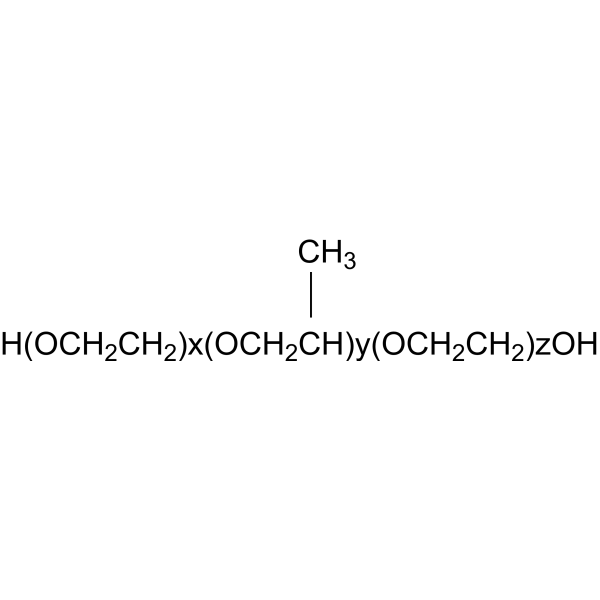
Poloxamer 237 (F87) (PEG-PPG-PEG, 7700 (Average Mn)) is an alcohol substance that acts as an oil-in-water emulsifier and solubilizer. Poloxamer 237 (F87) is used in the research of formulations such as contact lens care solutions and eye drops .
loading...
    loading...
1
1 Cited Publications
Art. -Nr.: HY-B0400B
CAS. Nr.: 50-70-4
Synonyms: Sorbito, for cell culture; D-Glucitol, for cell culture
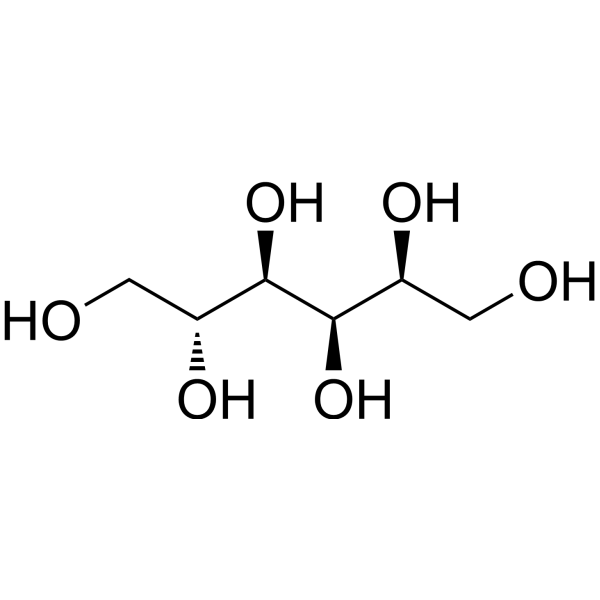
D-Sorbitol (D-Glucitol), for cell culture is a six-carbon sugar alcohol that can be used as a sugar substitute. D-Sorbitol, for cell culture serves as an osmotic regulator, cryoprotectant and carbon source in various plant and microbial cell culture media .
loading...
    loading...
1
1 Cited Publications
Art. -Nr.: HY-B1202
CAS. Nr.: 51411-04-2
Synonyms: AY-22284
Target:  

Aldose Reductase

Forschungsgebiete:  

Metabolic Disease

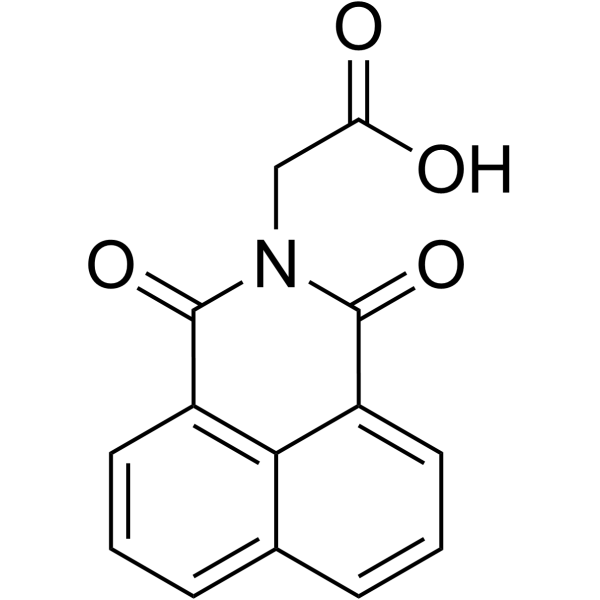
Alrestatin (AY-22284) is an aldose reductase inhibitor. Alrestatin reduces fructose levels in the uterine fluid of mice. Alrestatin interferes with sperm capacitation and impairs fertilization function in mice. Alrestatin decreases basal and tyramine-induced norepinephrine release in rat pancreatic specimens in vitro. Alrestatin enhances glucose- and arginine-stimulated insulin secretion in vivo. Alrestatin can be used in studies related to diabetes and reproductive diseases .
loading...
    loading...
1
1 Cited Publications
Art. -Nr.: HY-W039865
CAS. Nr.: 19879-84-6
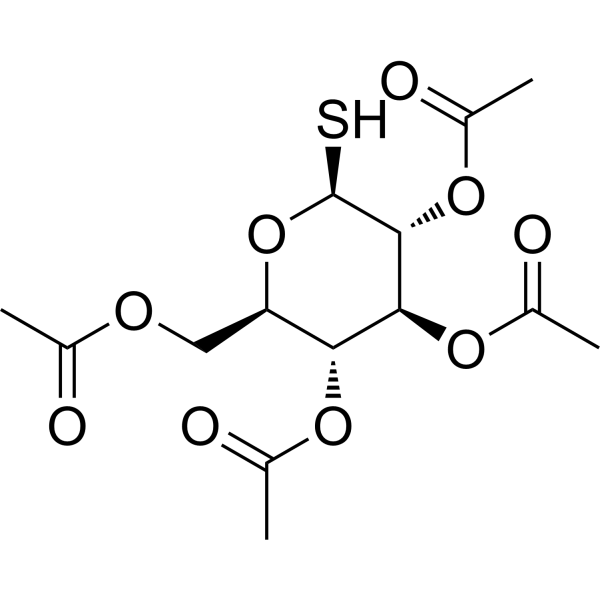
1-Thio-beta-D-glucose tetraacetate exhibits cytotoxicity in cells HeLa and human ocular lens epithelium CECH with IC50s of >250 and >200 μM. 1-Thio-beta-D-glucose tetraacetate reveals moderate anticancer property .
loading...
    loading...
Art. -Nr.: HY-112531
CAS. Nr.: 25249-16-5
Forschungsgebiete:  

Others

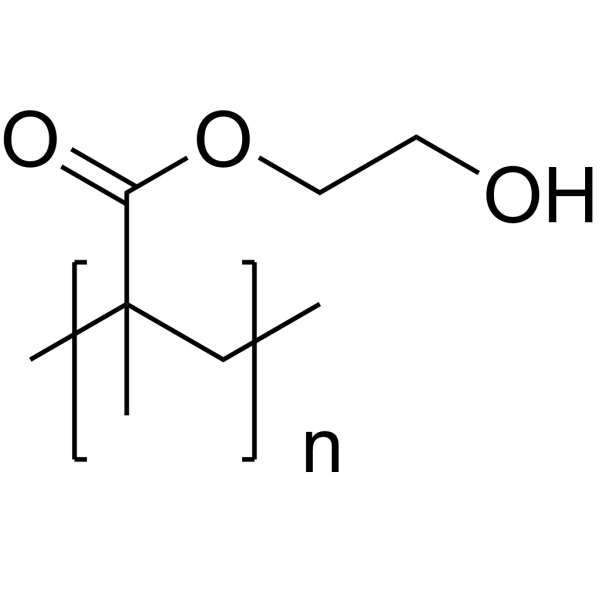
Poly(2-hydroxyethyl methacrylate) (MW 20000) is one of the most important hydrogels in the biomaterials world. Poly(2-hydroxyethyl methacrylate) is the basic component of contact lenses, and is also used in implantation of soft tissues, synthetic transplant for gristle and bone, regeneration of neurotic tissue, transmission of agent and etc .
loading...
    loading...
Art. -Nr.: HY-134633
CAS. Nr.: 1808266-58-1
Synonyms: EV 06 chloride; UNR 844 chloride
Target:  

Drug Intermediate

Forschungsgebiete:  

Neurological Disease

Alpha-lipoic acid choline ester (EV 06) chloride is choline ester of alpha-lipoic acid. Alpha-lipoic acid choline ester chloride reduces the disulfide bond level of lens proteins. Alpha-lipoic acid choline ester chloride improves lens elasticity. Alpha-lipoic acid choline ester chloride is hydrolyzed by ocular esterases to release alpha-lipoic acid and choline. Alpha-lipoic acid choline ester chloride is used for the research of presbyopia .
loading...
    loading...
Art. -Nr.: HY-112531A
CAS. Nr.: 25249-16-5
Forschungsgebiete:  

Others

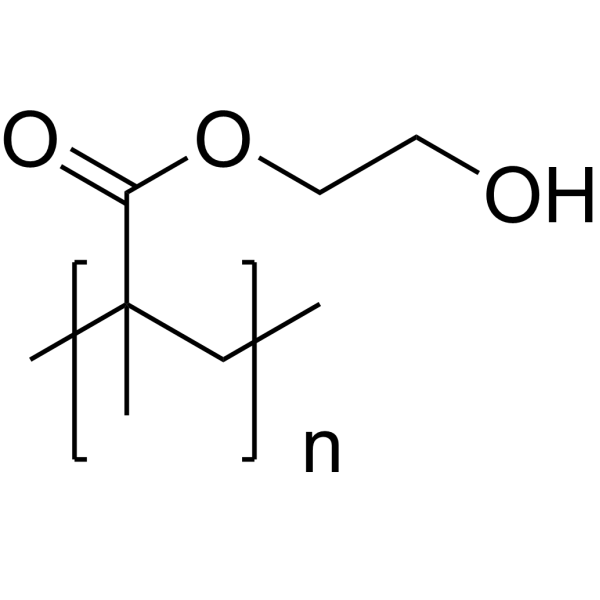
Poly(2-hydroxyethyl methacrylate) (MW 1000000) is one of the most important hydrogels in the biomaterials world. Poly(2-hydroxyethyl methacrylate) is the basic component of contact lenses, and is also used in implantation of soft tissues, synthetic transplant for gristle and bone, regeneration of neurotic tissue, transmission of agent and etc .
loading...
    loading...
Art. -Nr.: HY-112531B
CAS. Nr.: 25249-16-5
Forschungsgebiete:  

Others

Poly(2-hydroxyethyl methacrylate) (Mv 300000) is a biocompatible, optically transparent, hydrophilic, and non-degradable polymer with excellent cytocompatibility, eliciting a minimal immunological response from host tissue. Poly(2-hydroxyethyl methacrylate) (Mv 300000) can be used for different biomedical applications, such as bone tissue regeneration, wound dressings and drug delivery .
loading...
    loading...
Art. -Nr.: HY-108296
CAS. Nr.: 1043-21-6
Reinheit:  ≥95.0%
Synonyms: Catalin K
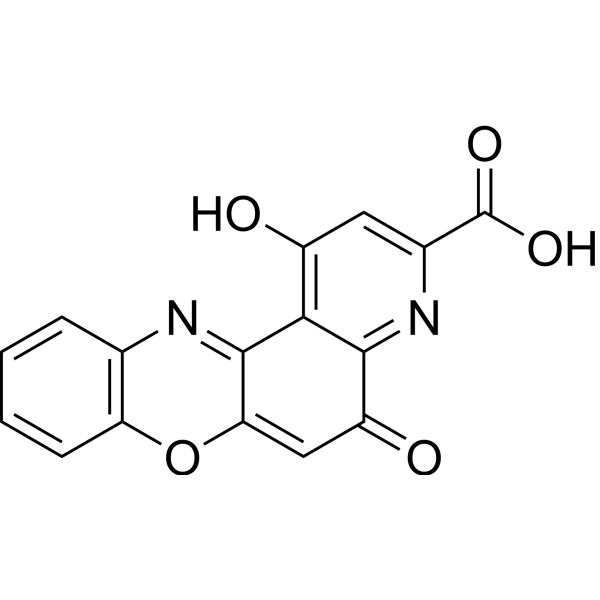
Pirenoxine (Catalin K) is an antioxidant with lens-protective activity. Pirenoxine inhibits lens sclerosis, prevents lipid peroxidation and suppresses lens protein opacification. Pirenoxine blocks benzoquinone acetic acid-induced cataract progression. Pirenoxine can be used in research related to presbyopia and cataracts .
loading...
    loading...
Art. -Nr.: HY-W014180
CAS. Nr.: 39145-52-3
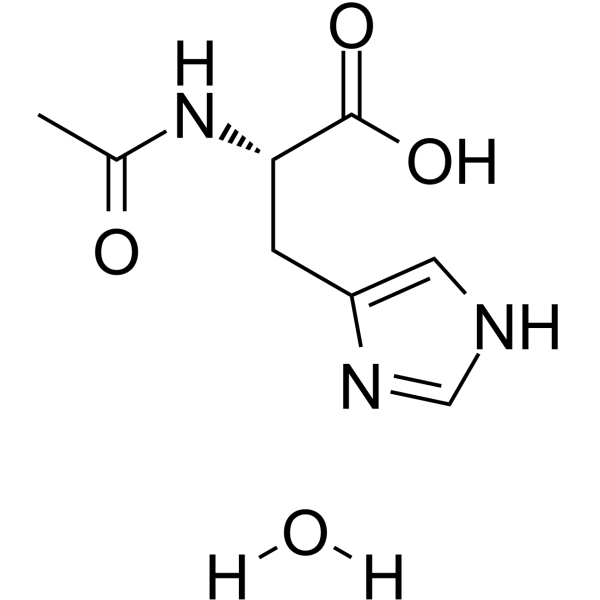
N-Acetyl-L-histidine monohydrate, a histidine derivative, is a prominent biomolecule in brain, retina and lens of poikilothermic vertebrates. N-Acetyl-L-histidine monohydrate has a role as an animal metabolite .
loading...
    loading...
Art. -Nr.: HY-W089777
CAS. Nr.: 2530-83-8
Synonyms: GPTMS
3-Glycidyloxypropyltrimethoxysilane (GPTMS) is a silicon source for the preparation of inorganic-organic hybrid polymers. 3-Glycidyloxypropyltrimethoxysilane can be used to prepare hard coatings of organic polymers, such as contact lens materials in the optical industry, as well as related materials in the fields of electronics, thin films, sensors, nanoimprinting, waveguides, and biology .
loading...
    loading...
Art. -Nr.: HY-NP087
Synonyms: LCA
Lens Culinaris Agglutinin (LCA) is a plant lectin that can be used as a probe to specifically bind biomolecules (such as polysaccharides, peptides, etc.).Lens Culinaris Agglutinin (LCA) is a biological material or organic compound that can be used in life science research .
loading...
    loading...
Art. -Nr.: HY-151231
CAS. Nr.: 18003-33-3
Reinheit:  98.15%
Target:  

Aldose Reductase

Forschungsgebiete:  

Neurological Disease Metabolic Disease

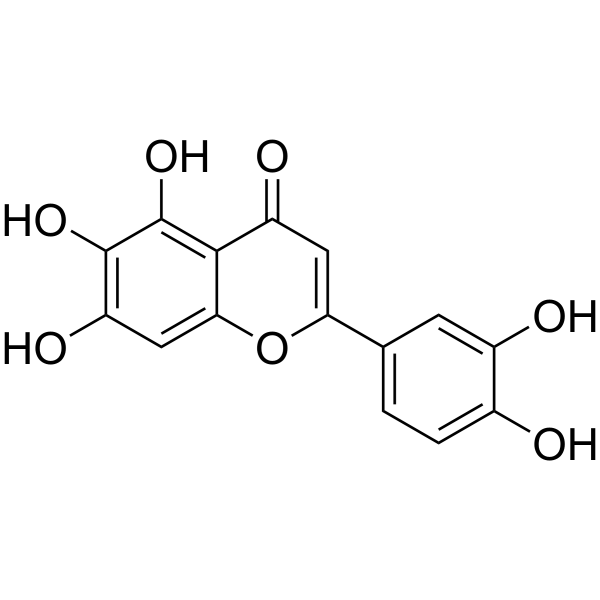
6-Hydroxyluteolin (Compound 17) is a flavonoid derivative and also an inhibitor of Aldose reductase, with an experimental -log IC50 value of 6.690. 6-Hydroxyluteolin can be isolated from the leaves of multiple plant families, including Plantaginaceae, Globulariaceae and Labiatae. 6-Hydroxyluteolin serves as a phylogenetic marker for higher plants. 6-Hydroxyluteolin can be used in the research of diabetic cataract .
loading...
    loading...
Art. -Nr.: HY-113033
CAS. Nr.: 124505-87-9
Pentosidine is a fluorescent advanced glycation end product (AGE) and cross-linker. Pentosidine is a fluorescent cross-linked structure formed by lysine and arginine in sugar oxidation reactions, and it is commonly found in collagen, skin, bone, lens and plasma proteins . Pentosidine is used in research related to type 1 diabetes, brown cataracts, rheumatoid arthritis, atherosclerosis and neurodegenerative diseases .
loading...
    loading...
Art. -Nr.: HY-NP0180
Synonyms: LCA (Biotinylated)
Lens Culinaris Agglutinin (LCA) Biotinylated is a plant lectin that can be used as a probe to specifically bind biomolecules (such as polysaccharides, peptides, etc.).Lens Culinaris Agglutinin (LCA) Biotinylated is a biological material or organic compound that can be used in life science research .
loading...
    loading...
Art. -Nr.: HY-131900
CAS. Nr.: 84477-87-2
Reinheit:  99.96%
Target:  

PKC PKA PKG Arp2/3 Complex

Forschungsgebiete:  

Others

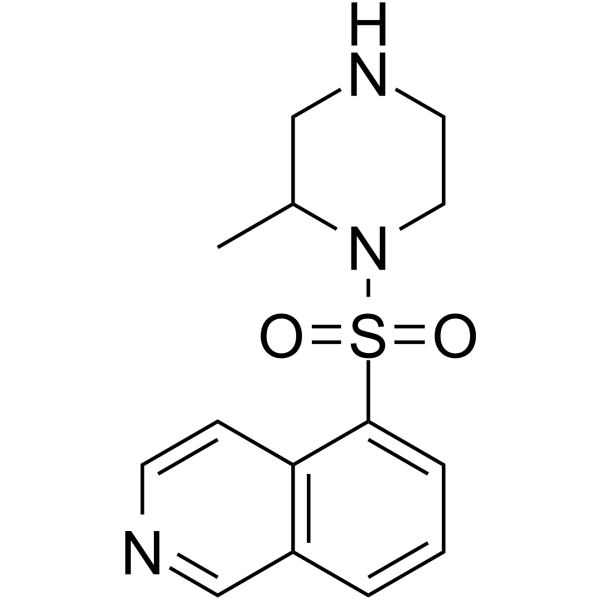
Protein kinase inhibitor H-7 is a selective inhibitor of PKC and cyclic nucleotide-dependent protein kinases, with a Ki value of 6.0 μM for rabbit protein kinase C, a Ki value of 3.0 μM for rabbit cAMP-dependent protein kinase, and a Ki value of 5.8 μM for porcine cGMP-dependent protein kinase. Protein kinase inhibitor H-7 has no effect on Ca 2+-calmodulin-dependent enzymes. Protein kinase inhibitor H-7 regulates the Actin cytoskeleton, inhibits contractility, disrupts stress fibers, induces protrusive activity, stabilizes intercellular junctions, and triggers rapid and reversible cytoskeletal reorganization. Protein kinase inhibitor H-7 serves as a research tool for elucidating the functions of protein kinase C-mediated signaling systems .
loading...
    loading...

