



Nastorazepide
Based on 1 publication(s) in Google Scholar
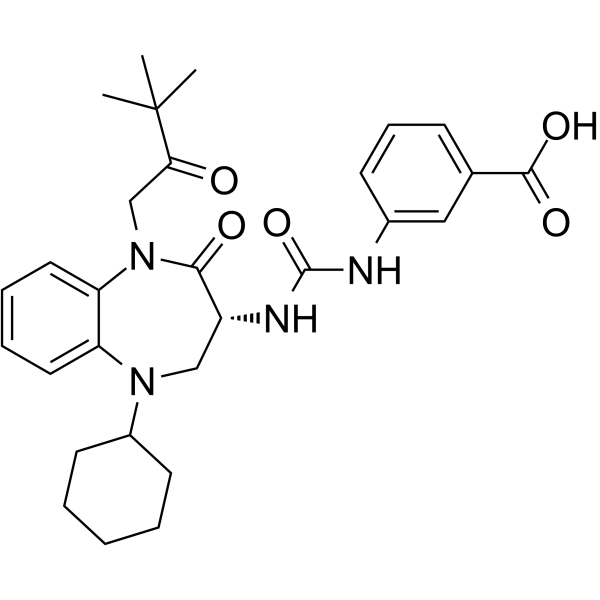
Nastorazepide (Z-360) is an orally active 1,5-benzodiazepine derivative and gastrin/CCK-2 receptor antagonist. Nastorazepide inhibits the specific binding of [3H]CCK-8 to the human CCK-2 receptor with a Ki value of 0.47 nM. Nastorazepide inhibits IL-1β, ephrin B1, VEGF, and HIF-1alpha, reduces Akt and NR2B phosphorylation. Nastorazepide has antitumor activity against pancreatic cancer. Nastorazepide inhibits colorectal cancer liver metastasis and relieves pain.
For research use only. We do not sell to patients.
- Purity : 99.95%
- CAS No.: 209219-38-5
- Formula: C29H36N4O5
- Molecular Weight:520.62
-
Storage:Powder -20°C, 3 years , 4°C, 2 years ; In solvent -80°C, 2 years , -20°C, 1 year

To place orders, for customer services and technical support, please contact: MedChemExpress USA
Tel: 609-228-6898 E-mail: [email protected] [email protected]


-
 Biological Activity
-
Chemical Information
-
Solvent & Solubility
- Protocols
- Purity & Documentation
- References
-
 Help & FAQs


-
HY-B1330
ProglumideCCK-A/B Receptors Antagonist -
HY-11077
SR 146131Cholecystokinin Receptor Agonist -
HY-128878
DexloxiglumideCCKR Inhibitor -
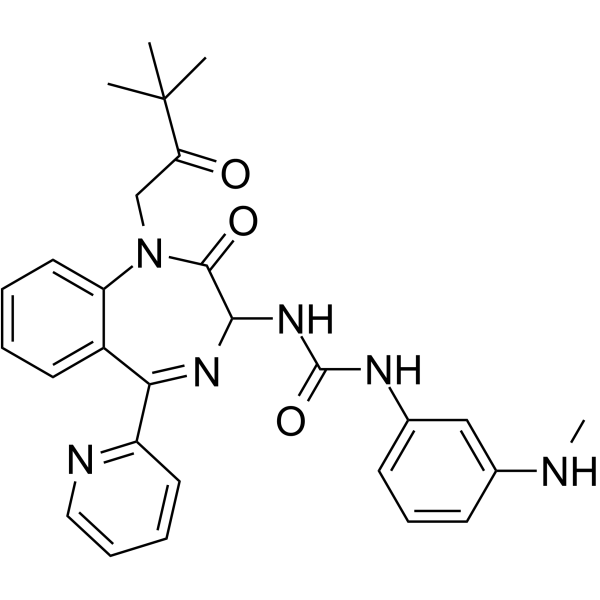
HY-U00360
(Rac)-Sograzepide -
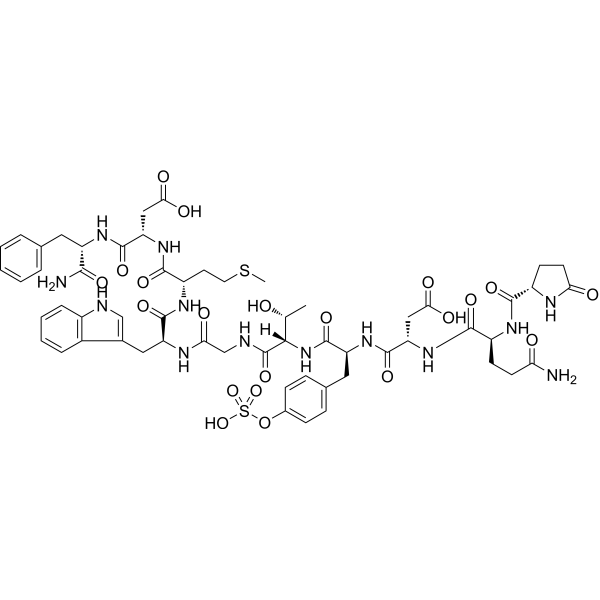
HY-A0190
CaeruleinCholecystokinin Receptor Agonist -
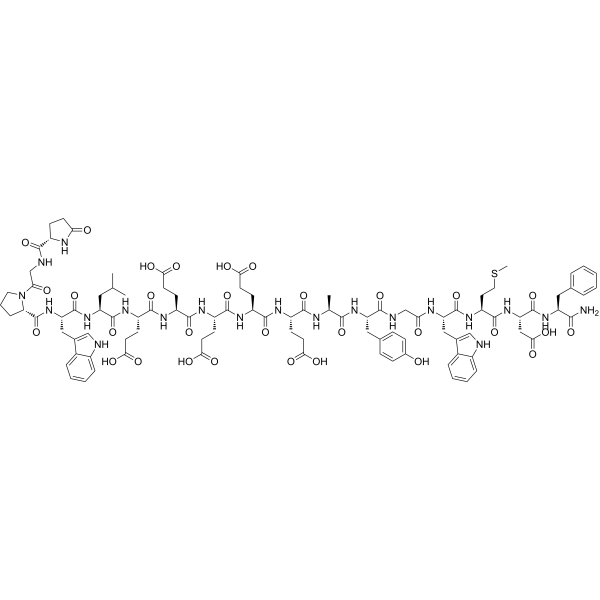
HY-P1097
Gastrin I, humanCCK2 Agonist -
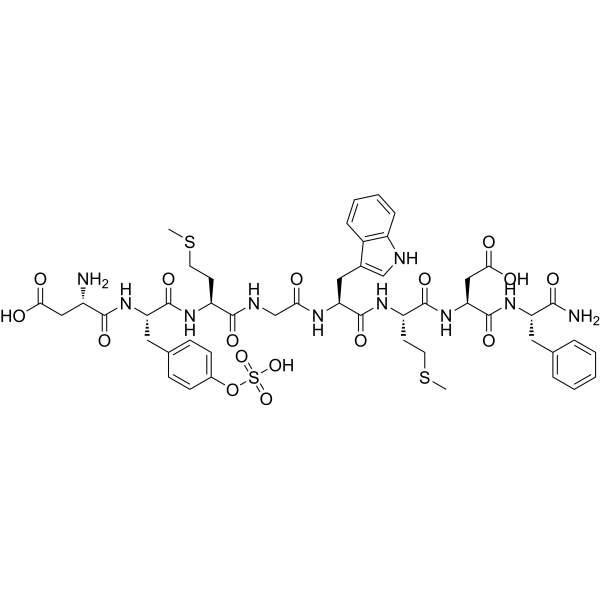
HY-P0093
SincalideAmino Acid Polypeptide Hormone Analogue -

HY-17617R
Nastorazepide (Standard)CCK-2 Receptor Antagonist -
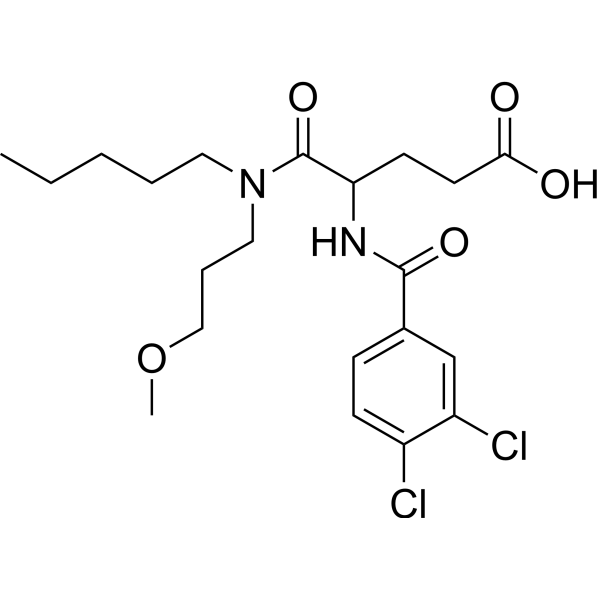
HY-B2154
LoxiglumideCholecystokinin Receptor Antagonist -
![[Leu15]-Gastrin I (human)](https://file.medchemexpress.com/product_pic/hy-p2671.gif)
HY-P2671
[Leu15]-Gastrin I (human)Peptide Hormone -
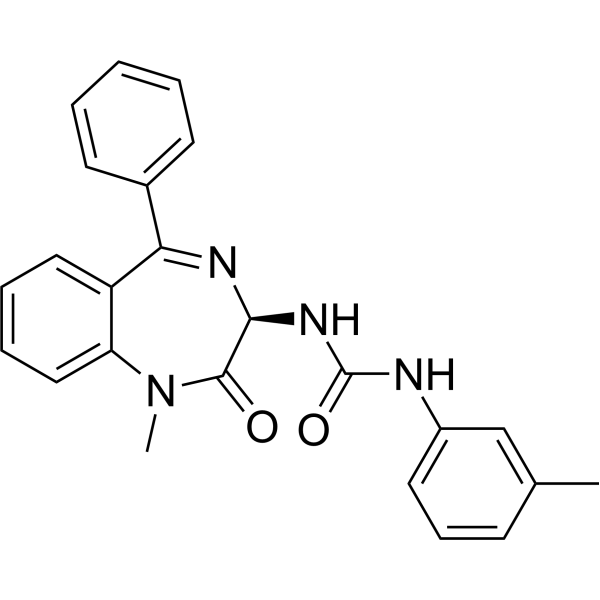
HY-106840
L-365260CCK-B Antagonist -
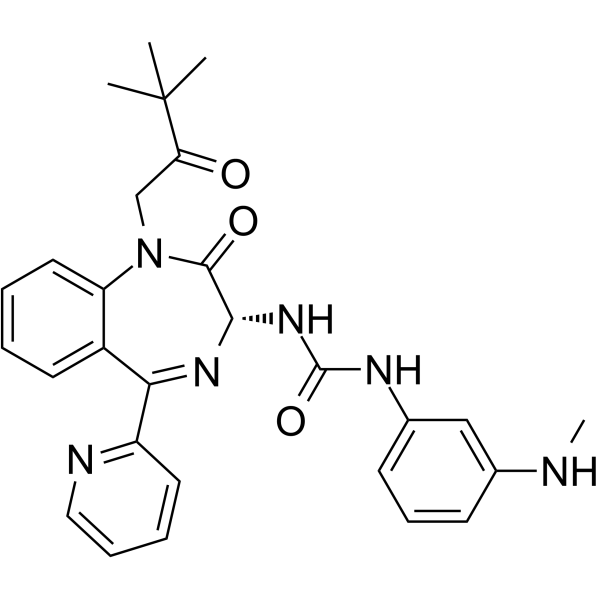
HY-14850
SograzepideGastrin/CCK-B Antagonist
Publications Citing Use of MedChemExpress (MCE) Nastorazepide
MoreAll VEGFR Isoforms
More

Biological Activity
Description
IC50 & Target
|
CCKBR |
In Vitro
Nastorazepide (Z-360) is an orally active 1,5-benzodiazepine derivative and gastrin/CCK-2 receptor antagonist. Nastorazepide inhibits the specific binding of [3H]CCK-8 to the human CCK-2 receptor with a Ki value of 0.47 nM. Nastorazepide inhibits IL-1β, ephrin B1, VEGF, and HIF-1alpha, reduces Akt and NR2B phosphorylation. Nastorazepide has antitumor activity against pancreatic cancer. Nastorazepide inhibits colorectal cancer liver metastasis and relieves pain[1][2][3][4][5][6][7].
MedChemExpress (MCE) has not independently confirmed the accuracy of these methods. They are for reference only.
In Vivo
Nastorazepide (3-100 mg/kg; p.o.; once daily) inhibits colorectal cancer liver metastasis in the C170HM2 mouse model, increases survival in the MGLVA1 ascites mouse model, and inhibits pancreatic tumor growth when combined with Gemcitabine in the PAN-1 orthotopic mouse model[3].
Nastorazepide (100 mg/kg; p.o.; once daily; 3 weeks) suppresses tumor growth in MIA PaCa-2-bearing mice via inhibition of Gastrin-induced anti-apoptotic effects[4].
Nastorazepide (30-300 mg/kg; p.o.; starting from day 7 and continuing until day 21 in the cancer pain model) can inhibit the late-phase nociceptive responses in the Formalin-induced pain model, produce an anti-allodynic effect in the cancer pain model[5].
Nastorazepide (100 mg/kg; p.o.; once daily; from day 7 to day 14) prevents up-regulation of ephrin B1 gene expression and phosphorylation of NR2B via suppression of IL-1β production in a cancer-induced pain model in mice[6].
MedChemExpress (MCE) has not independently confirmed the accuracy of these methods. They are for reference only.
-
Animal Model:BALB/c-nu/nuSlc nude mice (female, 7-week-old) with subcutaneous xenograft of MiaPaCa2 cells[2]
-
Dosage:10 mg/kg, 30 mg/kg, 100 mg/kg
-
Administration:Oral administration, once daily, for 21 days
-
Result:Significantly inhibited tumor growth of MiaPaCa2 subcutaneous xenografts in a dose-dependent manner.
Resulted in final tumor weight inhibition of 16.5%, 39.6%, and 41.7% at 10, 30, and 100 mg/kg, respectively.
-
Animal Model:
Clinical Trial
| NCT Number | Sponsor | Condition | Start Date |
Phase

|
|---|---|---|---|---|
| NCT01329991 | Plexxikon| | 2011-05 | PHASE1 |


Chemical Information
-
CAS No. 209219-38-5
-
Appearance Solid
-
Molecular Weight 520.62
-
Formula C29H36N4O5
-
Color White to off-white
-
SMILES
O=C(O)C1=CC=CC(NC(N[C@H]2C(N(CC(C(C)(C)C)=O)C3=CC=CC=C3N(C4CCCCC4)C2)=O)=O)=C1
-
Synonyms
Z-360
-
Shipping
Room temperature in continental US; may vary elsewhere.
-
Storage
Powder -20°C 3 years 4°C 2 years In solvent -80°C 2 years -20°C 1 year


Publications (1)
-
Journal Impact Factor
-
Most Recent


Solvent & Solubility
In Vitro:
DMSO : ≥ 32 mg/mL (61.47 mM; Hygroscopic DMSO has a significant impact on the solubility of product, please use newly opened DMSO)
* "≥" means soluble, but saturation unknown.
Please refer to the solubility information to select the appropriate solvent. Once prepared, please aliquot and store the solution to prevent product inactivation from repeated freeze-thaw cycles.
Storage method and period of stock solution: -80°C, 2 years; -20°C, 1 year. When stored at -80°C, please use it within 2 years. When stored at -20°C, please use it within 1 year.
Please refer to the solubility information to select the appropriate solvent. Once prepared, please aliquot and store the solution to prevent product inactivation from repeated freeze-thaw cycles.
Storage method and period of stock solution: -80°C, 2 years; -20°C, 1 year. When stored at -80°C, please use it within 2 years. When stored at -20°C, please use it within 1 year.
Concentration (start) × Volume (start) = Concentration (final) × Volume (final)
In Vivo:
Select the appropriate dissolution method based on your experimental animal and administration route.
- For the following dissolution methods, please ensure to first prepare a clear stock solution using an In Vitro approach and then sequentially add co-solvents:
- To ensure reliable experimental results, the clarified stock solution can be appropriately stored based on storage conditions. As for the working solution for In Vivo experiments, it is recommended to prepare freshly and use it on the same day.
- The percentages shown for the solvents indicate their volumetric ratio in the final prepared solution. If precipitation or phase separation occurs during preparation, heat and/or sonication can be used to aid dissolution.
Add each solvent one by one: 10% DMSO 90% (20% SBE-β-CD in Saline)
Solubility: 2.08 mg/mL (4.00 mM); Suspended solution; Need ultrasonic
This protocol yields a suspended solution of 2.08 mg/mL. Suspended solution can be used for oral and intraperitoneal injection.
Taking 1 mL working solution as an example, add 100 μL DMSO stock solution (20.8 mg/mL) to 900 μL 20% SBE-β-CD in Saline, and mix evenly.
Preparation of 20% SBE-β-CD in Saline (4°C, storage for one week): 2 g SBE-β-CD powder is dissolved in 10 mL Saline, completely dissolve until clear.
In Vivo Dissolution Calculator
Please enter the basic information of animal experiments:
-
-
-
-
Recommended: Prepare an additional quantity of animals to account for potential losses during experiments.
Please enter your animal formula composition:
-
%DMSO +
Recommended: Keep the proportion of DMSO in working solution below 2% if your animal is weak.
-
%+
-
+%Tween-80 + +
-
%Saline +
The co-solvents required include: DMSO, . All of co-solvents are available by MedChemExpress (MCE). , Tween 80. All of co-solvents are available by MedChemExpress (MCE).
Working solution concentration: 0.22 mg/mL
Method for preparing stock solution: mg drug dissolved in μL DMSO. Stock solution concentration: mg/mL.
1. Take μL DMSO stock solution;
2. Add μL .
μL , mix evenly;
3. Then add μL Tween 80, mix evenly;
4. Then add μL
Please ensure that the stock solution in the first step is dissolved to a clear state, and add co-solvents in sequence. You can use ultrasonic heating (ultrasonic cleaner, recommended frequency 20-40 kHz), vortexing, etc. to assist dissolution.


Purity & Documentation
-
Data Sheet (284 KB)
-
SDS (583 KB)
- English - EN (583 KB)
- Français - FR (583 KB)
- Deutsch - DE (583 KB)
- Norwegian - NO (583 KB)
- Español - ES (583 KB)
- Swedish - SV (583 KB)
- Italian - IT (583 KB)
- Korean - KR (583 KB)
- Portuguese - PT (583 KB)
-
Handling Instructions (2659 KB)
References
[1]. Kato H, et al. CCK-2/gastrin receptor signaling pathway is significant for gemcitabine-induced gene expression of VEGF in pancreatic carcinoma cells. Life Sci. 2011 Oct 24;89(17-18):603-8. [Content Brief]
[2]. Kawasaki D, et al. Effect of Z-360, a novel orally active CCK-2/gastrin receptor antagonist on tumor growth in human pancreatic adenocarcinoma cell lines in vivo and mode of action determinations in vitro. Cancer Chemother Pharmacol. 2008 Apr;61(5):883-92. [Content Brief]
[3]. Grabowska AM, et al. Pre-clinical evaluation of a new orally-active CCK-2R antagonist, Z-360, in gastrointestinal cancer models. Regul Pept. 2008 Feb 7;146(1-3):46-57. [Content Brief]
[4]. Shiomi Y, et al. Z-360 Suppresses Tumor Growth in MIA PaCa-2-bearing Mice via Inhibition of Gastrin-induced Anti-Apoptotic Effects. Anticancer Res. 2017 Aug;37(8):4127-4137. [Content Brief]
[5]. Yoshinaga K, et al. Pharmacological evaluation of analgesic effects of the cholecystokinin2 receptor antagonist Z-360 in mouse models of formalin- and cancer-induced pain. Biol Pharm Bull. 2010;33(2):244-8. [Content Brief]
[6]. Orikawa Y, et al. Z-360, a novel therapeutic agent for pancreatic cancer, prevents up-regulation of ephrin B1 gene expression and phosphorylation of NR2B via suppression of interleukin-1 β production in a cancer-induced pain model in mice. Mol Pain. 2010 Oct 28;6:72. [Content Brief]
[7]. Kobayashi N, et al. Z-360, a novel cholecystokinin-2/gastrin receptor antagonist, inhibits gemcitabine-induced expression of the vascular endothelial growth factor gene in human pancreatic cancer cells. Biol Pharm Bull. 2010;33(2):216-22. [Content Brief]


Complete Stock Solution Preparation Table
Please refer to the solubility information to select the appropriate solvent. Once prepared, please aliquot and store the solution to prevent product inactivation from repeated freeze-thaw cycles.
Storage method and period of stock solution: -80°C, 2 years; -20°C, 1 year. When stored at -80°C, please use it within 2 years. When stored at -20°C, please use it within 1 year.
| Optional Solvent | Concentration Solvent Mass | 1 mg | 5 mg | 10 mg | 25 mg |
|---|---|---|---|---|---|
| DMSO | 1 mM | 1.9208 mL | 9.6039 mL | 19.2079 mL | 48.0197 mL |
| 5 mM | 0.3842 mL | 1.9208 mL | 3.8416 mL | 9.6039 mL | |
| 10 mM | 0.1921 mL | 0.9604 mL | 1.9208 mL | 4.8020 mL | |
| 15 mM | 0.1281 mL | 0.6403 mL | 1.2805 mL | 3.2013 mL | |
| 20 mM | 0.0960 mL | 0.4802 mL | 0.9604 mL | 2.4010 mL | |
| 25 mM | 0.0768 mL | 0.3842 mL | 0.7683 mL | 1.9208 mL | |
| 30 mM | 0.0640 mL | 0.3201 mL | 0.6403 mL | 1.6007 mL | |
| 40 mM | 0.0480 mL | 0.2401 mL | 0.4802 mL | 1.2005 mL | |
| 50 mM | 0.0384 mL | 0.1921 mL | 0.3842 mL | 0.9604 mL | |
| 60 mM | 0.0320 mL | 0.1601 mL | 0.3201 mL | 0.8003 mL |


Nastorazepide Related Classifications
HY-17617 Related Classifications
 Powered by Bioz
Keywords