



Aminophylline
Based on 14 publication(s) in Google Scholar
Aminophylline is a competitive phosphodiesterase 3/4 (PDE3/4) inhibitor. Aminophylline also acts as an adenosine receptor antagonist. Aminophylline elevates intracellular cAMP levels via competitive inhibition of PDE3 and PDE4, antagonizes adenosine A1 receptor (ADORA1), regulates intracellular calcium signaling and synaptic vesicle cycling, upregulates the PPAR signaling pathway, and downregulates glutamatergic synaptic pathways simultaneously. Aminophylline can be used in research related to major depressive disorder, epilepsy, asthma, and chronic obstructive pulmonary disease (COPD).
Nos produits utilisent uniquement pour la recherche. Nous ne vendons pas aux patients.
- Pureté : 99.68%
- CAS No.: 317-34-0
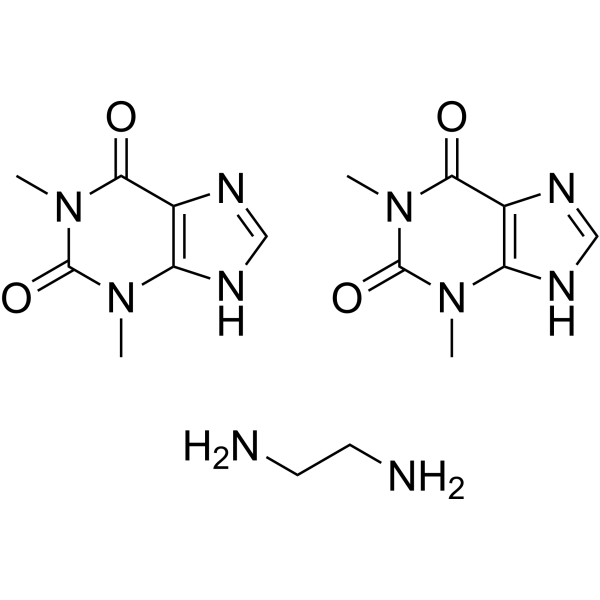
- Formule: C7H8N4O2·1/2C2H8N2
- Masse moléculaire:210.22
-
Stockage:
4°C, sealed storage, away from moisture and light
* In solvent : -80°C, 6 months; -20°C, 1 month (sealed storage, away from moisture and light)

To place orders, for customer services and technical support, please contact: MedChemExpress USA
Tel: 609-228-6898 E-mail: [email protected] [email protected]


-
 Activité biologique
-
Chemical Information
-
Solvant et solubilité
- Protocole
- Pureté et documentation
- Références
-
 Help & FAQs


-
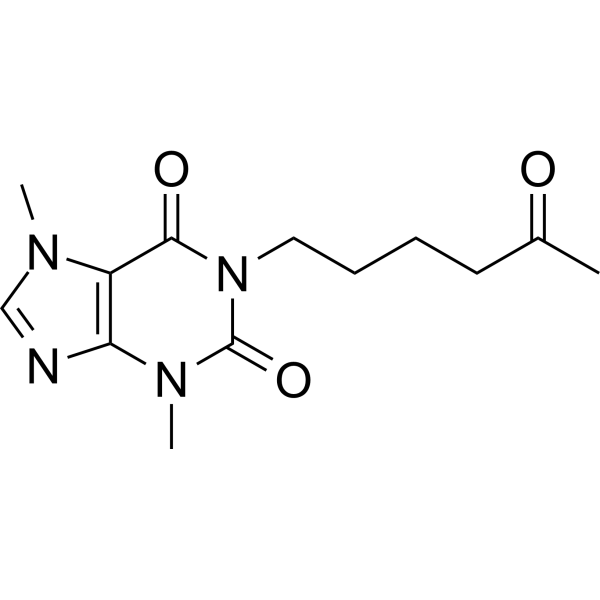
HY-B0715
PentoxifyllinePDE Inhibitor -
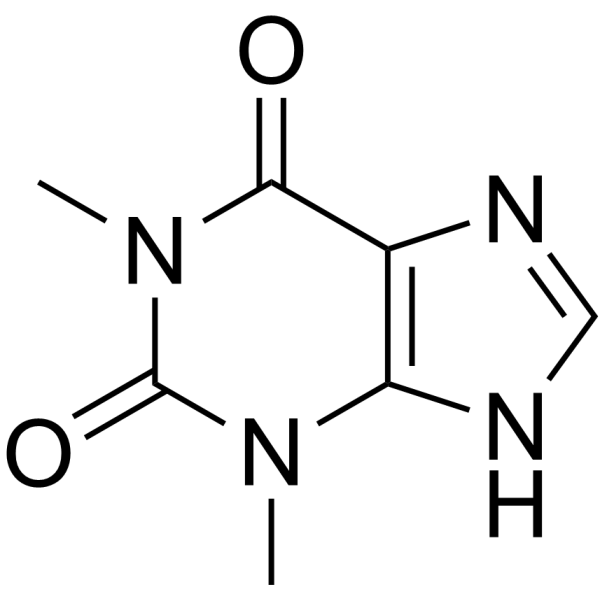
HY-B0809
TheophyllinePDE Inhibitor -
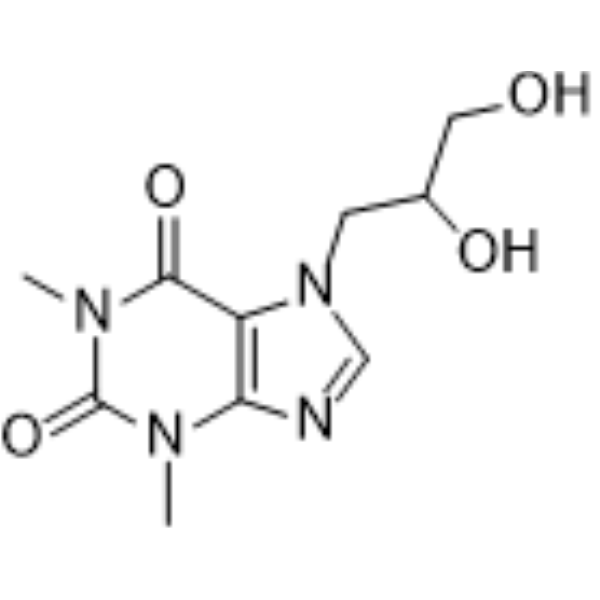
HY-B0128
DiphyllinePDE Inhibitor -
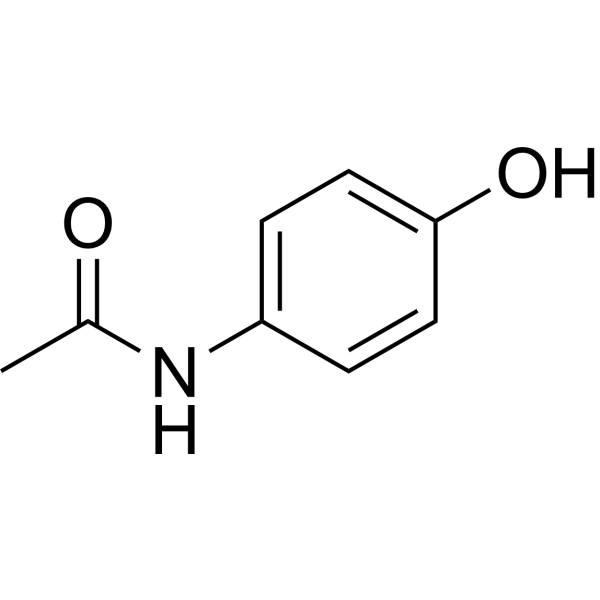
HY-66005
AcetaminophenCOX-2 Inhibitor -
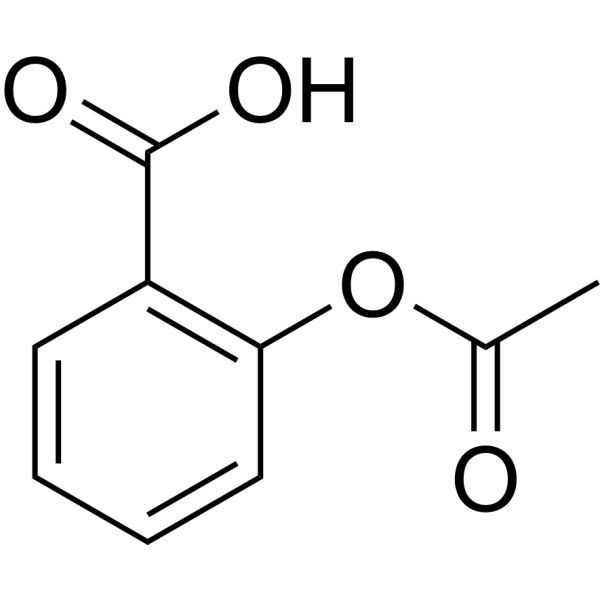
HY-14654
AspirinCOX Inhibitor -
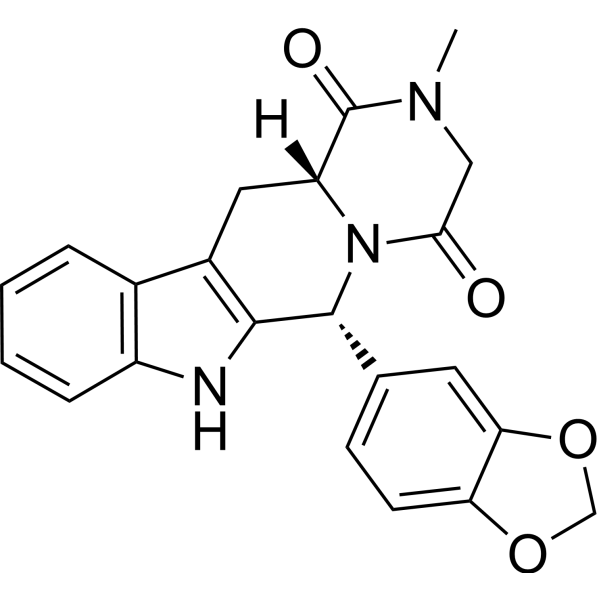
HY-90009A
TadalafilPDE5 Inhibitor -
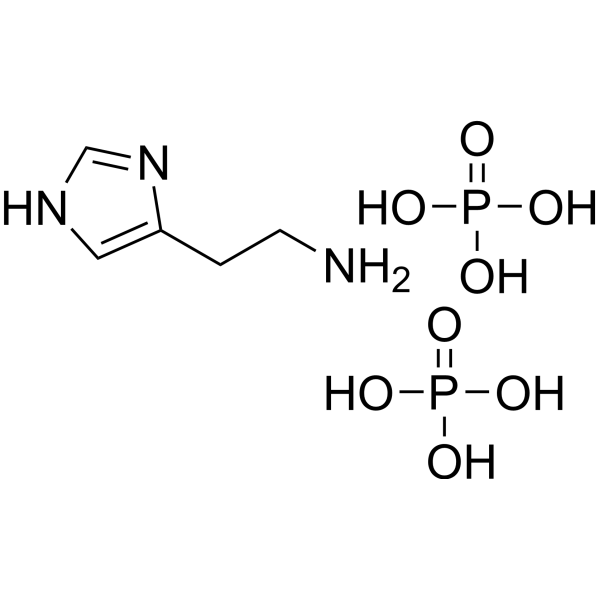
HY-A0129
Histamine phosphateNeurotransmitter -
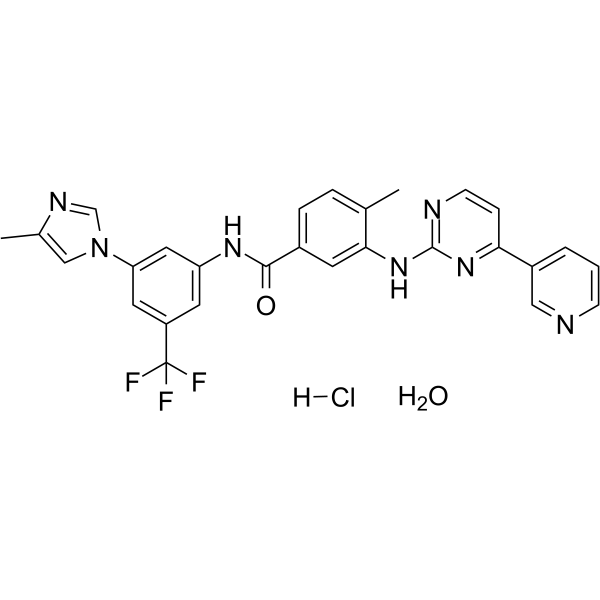
HY-10159A
Nilotinib monohydrochloride monohydrateTyrosine Kinase Inhibitor -
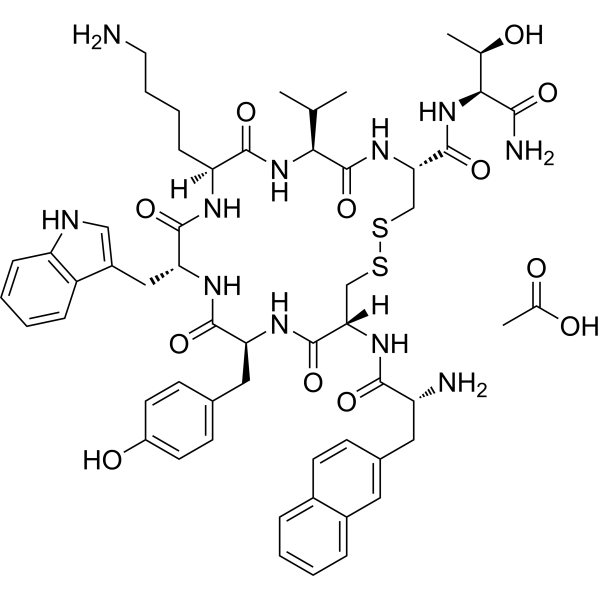
HY-P1959A
Lanreotide acetateAntineoplastic Agent -
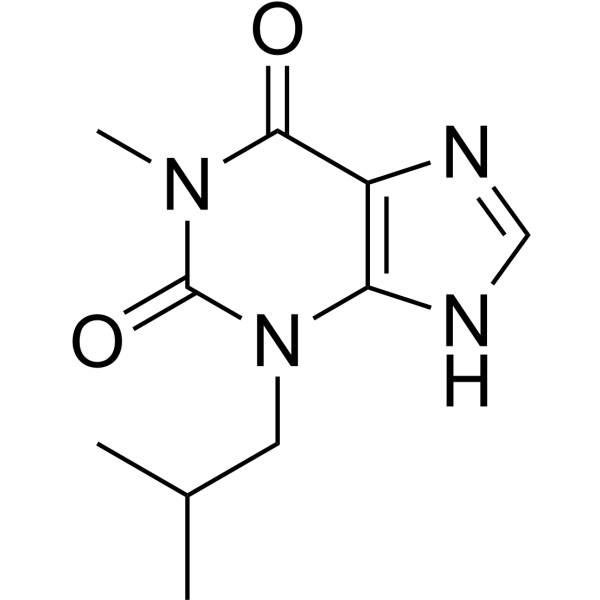
HY-12318
IBMXPDE Inhibitor -
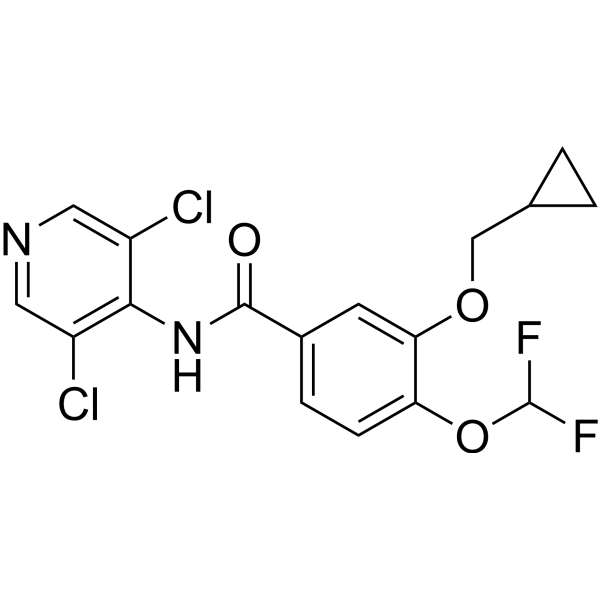
HY-15455
RoflumilastPDE4 Inhibitor -
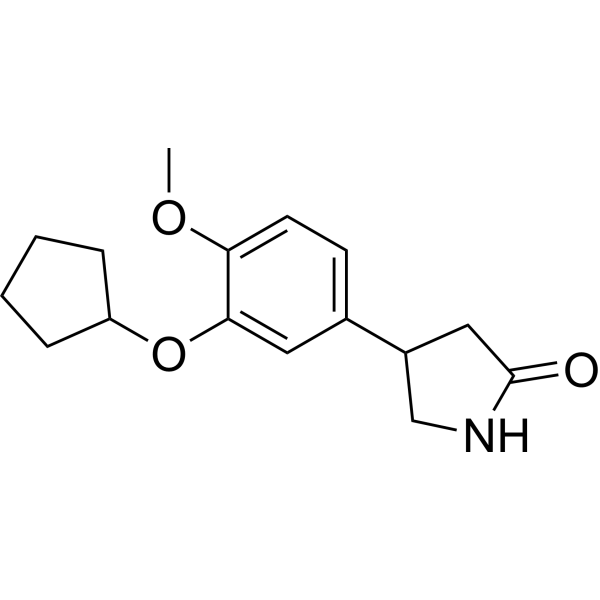
HY-16900
RolipramPDE4 Inhibitor
Publications Citing Use of MedChemExpress (MCE) Aminophylline
More- Nucleic Acids Res. 2026 Jun 8;54(11):gkag592. [Abstract]
- Cell Rep Med. 2023 Jun 20;4(6):101061. [Abstract]
- Cell Chem Biol. 2025 Sep 18;32(9):1140-1149.e3. [Abstract]
- Cell Rep Methods. 2023 Oct 23;3(10):100599. [Abstract]
- Int J Mol Sci. 2025 Nov 10;26(22):10883. [Abstract]
- Int J Mol Sci. 2024 Mar 3;25(5):2947. [Abstract]
- Int J Mol Sci. 2023 Jan 5;24(2):1019. [Abstract]
- Biol Proced Online. 2025 Jun 16;27(1):21. [Abstract]
- Drug Metab Dispos. 2026 Jul 14;54(8):100365.
- 3 Biotech. 2025 Apr;15(4):72. [Abstract]
- Pharmacol Res Perspect. 2020 Apr;8(2):e00575. [Abstract]
- Eur J Drug Metab Pharmacokinet. 2022 Sep;47(5):639-652. [Abstract]
- Exp Brain Res. 2024 Aug;242(8):1983-1998. [Abstract]
- Research Square Preprint. 2020 Oct.
 Customer Validation & Images

-
Flow Cytometry
-
Cell Proliferation/Viability Assay
-
WB
-
IF
-
Cell Imaging/Staining
Voir tous les produits spécifiques à Isoform Adenosine Receptor
More

Activité biologique
Description
IC50 & Target
[1]|
PDE3 |
PDE4 |
In Vitro
Aminophylline Dihydrate binds to PDE3, PDE4, ADORA1, and SERT with varying affinities, showing the strongest binding to PDE4 and weakest binding to ADORA1[1].
MedChemExpress (MCE) has not independently confirmed the accuracy of these methods. They are for reference only. Further protocols information, click here.
In Vivo
Aminophylline (50-100 mg/kg; i.p.; single administration; treatment 30 min prior to electroshock test) Dihydrate potently reduces the anti-electroconvulsive efficacy of most tested antiepileptic drugs in mice[2].
Aminophylline (7 mg/kg loading dose + 1.5 mg/kg/hr maintenance dose; i.v.; single continuous infusion; duration ≥ 1.5 h) Dihydrate increases minute ventilation, tidal volume, respiratory rate, parasternal muscle shortening, minute integrated electromyographic activity of the parasternal muscle, and parasternal muscle contractility in awake healthy dogs, while it does not alter tidal electromyographic activity and baseline muscle length of the parasternal muscle[6].
MedChemExpress (MCE) has not independently confirmed the accuracy of these methods. They are for reference only.
-
Animal Model:C57BL/6J (male, 7 weeks old, 20-25 g, chronic restraint stress-induced depressive-like behavior)[1]
-
Dosage:5 mg/kg; 10 mg/kg; 20 mg/kg
-
Administration:i.p.; daily; 15 days
-
Result:Attenuated depressive-like behavior in a dose-dependent manner.
Reduced immobility time significantly in the tail suspension test (TST) and forced swimming test (FST).
Increased total grooming time significantly in the sucrose splash test (SST).
-
Animal Model:Albino Swiss (male, 20-25 g, maximal electroconvulsions induced via corneal electrodes with 50 Hz alternating current for 0.2 s)[2]
-
Dosage:50 mg/kg; 100 mg/kg
-
Administration:i.p.; sigle dose; 30 min before electroconvulsion test
-
Result:Decreased the anticonvulsant efficacy of diazepam, diphenylhydantoin, phenobarbital, and valproate markedly.
Showed less effectiveness in reducing the action of carbamazepine and was inactive against acetazolamide.
-
Animal Model:Mongrel (young adult male, mean weight 30.6 kg, chronically implanted with sonomicrometry crystals and fine-wire EMG electrodes in the parasternal muscle)[6]
-
Dosage:7 mg/kg (loading dose); 1.5 mg/kg/hr (continuous infusion)
-
Administration:i.v.; single continuous infusion; data were recorded at least 1.5 hours after the start of drug administration
-
Result:Increased minute ventilation, tidal volume, and respiratory frequency significantly during resting and hypercapnic stimulated breathing.
Increased parasternal muscle shortening significantly without a corresponding increase in EMG activity.
Increased parasternal muscle contractility significantly.


Chemical Information
-
CAS No. 317-34-0
-
Appearance Solid
-
Masse moléculaire 210.22
-
Formule C7H8N4O2·1/2C2H8N2
-
Color White to off-white
-
SMILES
O=C(N1C)N(C)C2=C(N=CN2)C1=O.NCCN.[1/2]
-
Livraison
Room temperature in continental US; may vary elsewhere.
-
Stockage
4°C, sealed storage, away from moisture and light
* In solvent : -80°C, 6 months; -20°C, 1 month (sealed storage, away from moisture and light)


Publications (14)
-
Journal Impact Factor
-
Most Recent
-
Nucleic Acids Res
Enhancing small-molecule-mediated translational control through multivalent RNA aptamers. [Abstract]2026 Jun 8;54(11):gkag592. PMID: 42273917 -
Cell Rep Med
2023 Jun 20;4(6):101061. PMID: 37267943 -
Cell Chem Biol
Structural basis of adenosine 2A receptor-balanced signaling activation relies on allosterically mediated structural dynamics. [Abstract]2025 Sep 18;32(9):1140-1149.e3. PMID: 40925370 -
Cell Rep Methods
RECOVER identifies synergistic drug combinations in vitro through sequential model optimization. [Abstract]2023 Oct 23;3(10):100599. PMID: 37797618 -
Int J Mol Sci
Elucidating Circular Ribonucleic Acid Mechanisms Associated with Splicing Factor 3 Inhibition in Cervical Cancer. [Abstract]2025 Nov 10;26(22):10883. PMID: 41303368
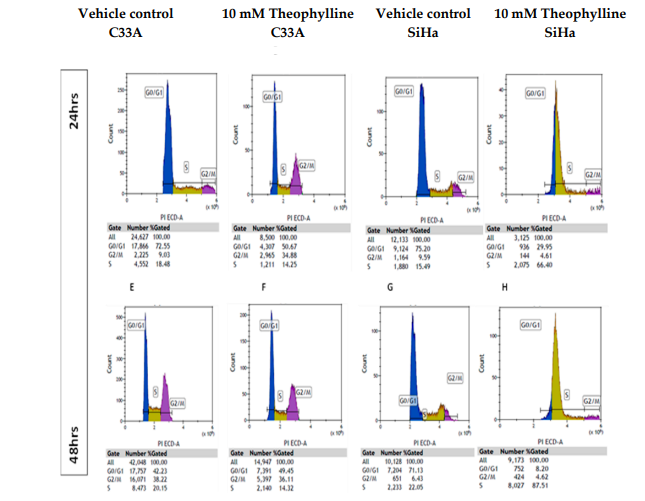
Aminophylline purchased from MedChemExpress. Usage Cited in: Int J Mol Sci. 2025 Nov 10;26(22):10883. [Abstract]
Flow cytometry analysis of cell cycle distribution in CCa cell lines C33A and SiHa following treatment with vehicle control or 10 mM Theophylline for 24 and 48 h.
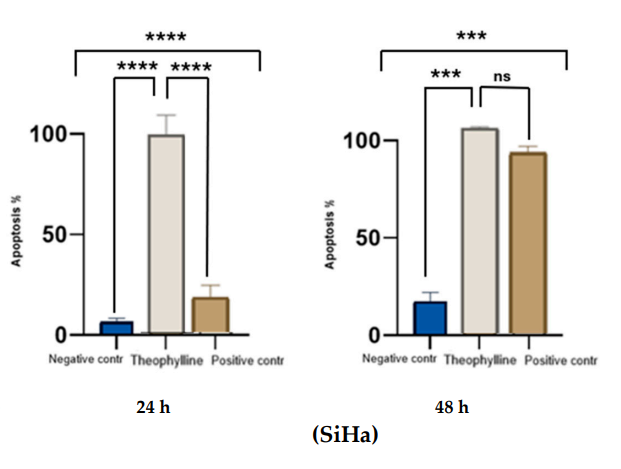
Aminophylline purchased from MedChemExpress. Usage Cited in: Int J Mol Sci. 2025 Nov 10;26(22):10883. [Abstract]
Bar graphs showing the apoptotic effects of 10 mM Theophylline on SiHa cells at 24 and 48 h.
-
Int J Mol Sci
Proanthocyanidins Ameliorate LPS-Inhibited Osteogenesis of PDLSCs by Restoring Lysine Lactylation. [Abstract]2024 Mar 3;25(5):2947. PMID: 38474198
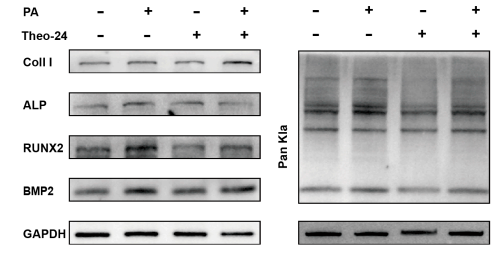
Aminophylline purchased from MedChemExpress. Usage Cited in: Int J Mol Sci. 2024 Mar 3;25(5):2947. [Abstract]
Theophylline (Theo-24). Western blotting shows the protein levels of COL-1, ALP, RUNX2, and BMP2 in PDLSCs after treatment with the indicated conditions.
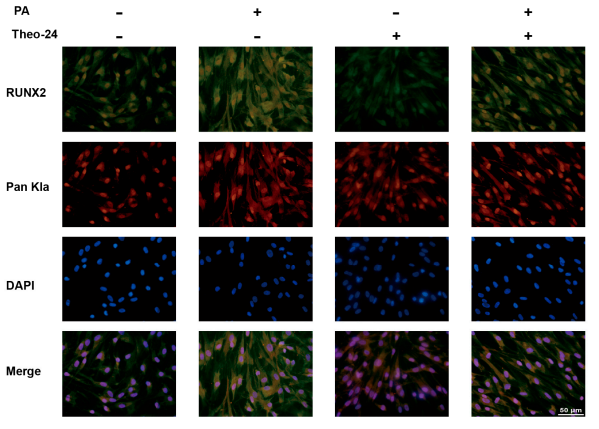
Aminophylline purchased from MedChemExpress. Usage Cited in: Int J Mol Sci. 2024 Mar 3;25(5):2947. [Abstract]
Theophylline (Theo-24). Immunofluorescence staining images showing the expression levels of RUNX2 (green) and Pan Kla (red) in PDLSCs treated with the conditions as shown. Cell nuclei were stained with DAPI (blue).
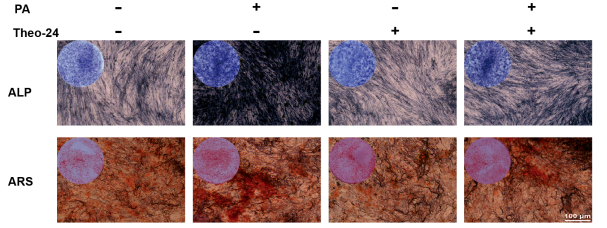
Aminophylline purchased from MedChemExpress. Usage Cited in: Int J Mol Sci. 2024 Mar 3;25(5):2947. [Abstract]
Theophylline (Theo-24). ALP staining at 7 days and ARS staining at 21 days of osteogenic induction in PDLSCs.
-
Int J Mol Sci
Theophylline Attenuates BLM-Induced Pulmonary Fibrosis by Inhibiting Th17 Differentiation. [Abstract]2023 Jan 5;24(2):1019. PMID: 36674533 -
Biol Proced Online
Establishment of a mouse lung cancer organoid model and its applications for therapeutic screening. [Abstract]2025 Jun 16;27(1):21. PMID: 40524168 -
-
3 Biotech
Triple regulation of oxidative-acetylation cycling pathways in COPD glucocorticoid resistance by HuaTanJiangQi capsules. [Abstract]2025 Apr;15(4):72. PMID: 40060290 -
Pharmacol Res Perspect
Applicability of free drug hypothesis to drugs with good membrane permeability that are not efflux transporter substrates: A microdialysis study in rats. [Abstract]2020 Apr;8(2):e00575. PMID: 32266794 -
Eur J Drug Metab Pharmacokinet
Evaluation of an Ussing Chamber System Equipped with Rat Intestinal Tissues to Predict Intestinal Absorption and Metabolism in Humans. [Abstract]2022 Sep;47(5):639-652. PMID: 35733077 -
Exp Brain Res
HDAC6 modulates the cognitive behavioral function and hippocampal tissue pathological changes of APP/PS1 transgenic mice through HSP90-HSF1 pathway. [Abstract]2024 Aug;242(8):1983-1998. PMID: 38935089 -


Solvant et solubilité
In Vitro:
DMSO : 14.29 mg/mL (67.98 mM; Need ultrasonic; Hygroscopic DMSO has a significant impact on the solubility of product, please use newly opened DMSO)
H2O : 6.25 mg/mL (29.73 mM; Need ultrasonic)
Please refer to the solubility information to select the appropriate solvent. Once prepared, please aliquot and store the solution to prevent product inactivation from repeated freeze-thaw cycles.
Storage method and period of stock solution: -80°C, 6 months; -20°C, 1 month (sealed storage, away from moisture and light). When stored at -80°C, please use it within 6 months. When stored at -20°C, please use it within 1 month.
* Note: If you choose water as the stock solution, please dilute it to the working solution, then filter and sterilize it with a 0.22 μm filter before use.
Please refer to the solubility information to select the appropriate solvent. Once prepared, please aliquot and store the solution to prevent product inactivation from repeated freeze-thaw cycles.
Storage method and period of stock solution: -80°C, 6 months; -20°C, 1 month (sealed storage, away from moisture and light). When stored at -80°C, please use it within 6 months. When stored at -20°C, please use it within 1 month.
* Note: If you choose water as the stock solution, please dilute it to the working solution, then filter and sterilize it with a 0.22 μm filter before use.
Concentration (start) × Volume (start) = Concentration (final) × Volume (final)
In Vivo:
Select the appropriate dissolution method based on your experimental animal and administration route.
- For the following dissolution methods, please ensure to first prepare a clear stock solution using an In Vitro approach and then sequentially add co-solvents:
- To ensure reliable experimental results, the clarified stock solution can be appropriately stored based on storage conditions. As for the working solution for In Vivo experiments, it is recommended to prepare freshly and use it on the same day.
- The percentages shown for the solvents indicate their volumetric ratio in the final prepared solution. If precipitation or phase separation occurs during preparation, heat and/or sonication can be used to aid dissolution.
Add each solvent one by one: 10% DMSO 40% PEG300 5% Tween-80 45% Saline
Solubility: 1.43 mg/mL (6.80 mM); Clear solution; Need ultrasonic
This protocol yields a clear solution of 1.43 mg/mL.
Taking 1 mL working solution as an example, add 100 μL DMSO stock solution (14.3 mg/mL) to 400 μL PEG300, and mix evenly; then add 50 μL Tween-80 and mix evenly; then add 450 μL Saline to adjust the volume to 1 mL.
Preparation of Saline: Dissolve 0.9 g sodium chloride in ddH₂O and dilute to 100 mL to obtain a clear Saline solution.
Add each solvent one by one: 10% DMSO 90% (20% SBE-β-CD in Saline)
Solubility: ≥ 1.43 mg/mL (6.80 mM); Clear solution
This protocol yields a clear solution of ≥ 1.43 mg/mL (saturation unknown).
Taking 1 mL working solution as an example, add 100 μL DMSO stock solution (14.3 mg/mL) to 900 μL 20% SBE-β-CD in Saline, and mix evenly.
Preparation of 20% SBE-β-CD in Saline (4°C, storage for one week): 2 g SBE-β-CD powder is dissolved in 10 mL Saline, completely dissolve until clear.
For the following dissolution methods, please prepare the working solution directly:
It is recommended to prepare fresh solutions and use them promptly within a short period of time.
The percentages shown for the solvents indicate their volumetric ratio in the final prepared solution. If precipitation or phase separation occurs during preparation, heat and/or sonication can be used to aid dissolution.
Add each solvent one by one: PBS
Solubility: 22 mg/mL (104.65 mM); Clear solution; Need ultrasonic
In Vivo Dissolution Calculator
Please enter the basic information of animal experiments:
-
-
-
-
Recommended: Prepare an additional quantity of animals to account for potential losses during experiments.
Please enter your animal formula composition:
-
%DMSO +
Recommended: Keep the proportion of DMSO in working solution below 2% if your animal is weak.
-
%+
-
+%Tween-80 + +
-
%Saline +
The co-solvents required include: DMSO, . All of co-solvents are available by MedChemExpress (MCE). , Tween 80. All of co-solvents are available by MedChemExpress (MCE).
Working solution concentration: 0.22 mg/mL
Method for preparing stock solution: mg drug dissolved in μL DMSO. Stock solution concentration: mg/mL. * In solvent : -80°C, 6 months; -20°C, 1 month (sealed storage, away from moisture and light)
1. Take μL DMSO stock solution;
2. Add μL .
μL , mix evenly;
3. Then add μL Tween 80, mix evenly;
4. Then add μL
Please ensure that the stock solution in the first step is dissolved to a clear state, and add co-solvents in sequence. You can use ultrasonic heating (ultrasonic cleaner, recommended frequency 20-40 kHz), vortexing, etc. to assist dissolution.

Protocole
-
Calcium Spark Assay
Calcium sparks are localized, transient increases in intracellular calcium concentration ([Ca2+]i) that occur in cardiac myocytes and represent elementary events underlying excitation-contraction coupling. These events are generated by the coordinated opening of clusters of ryanodine receptors (RyRs) on the sarcoplasmic reticulum membrane, leading to a brief release of Ca2+ into the cytosol. The detection and analysis of calcium sparks provide insights into the mechanisms of calcium handling and signaling in cardiac cells. Imaging techniques using fluorescent calcium indicators such as Fluo-3 are employed to visualize these subcellular calcium transients with high spatial and temporal resolution. The protocol is based on established methodologies described in primary literature for both experimental measurement and automated analysis of calcium sparks.
-
Ca2+ Staining Technique
Ca2+ staining is an experimental technique that utilizes specific fluorescent probes (such as Fluo-4 AM, Fura-2, etc.) to qualitatively or quantitatively detect dynamic changes in intracellular Ca2+ concentrations; this is achieved by monitoring the changes in fluorescent signals generated when these probes bind to free intracellular calcium ions. The underlying principle relies primarily on the presence of chelating groups within the probe's molecular structure that possess high affinity for calcium ions.


Pureté et documentation
-
Fiche technique (295 KB)
-
SDS (479 KB)
- English - EN (479 KB)
- Français - FR (479 KB)
- Deutsch - DE (479 KB)
- Norwegian - NO (479 KB)
- Español - ES (479 KB)
- Swedish - SV (479 KB)
- Italian - IT (479 KB)
- Korean - KR (479 KB)
- Portuguese - PT (479 KB)
-
Instruction de manipulation (2659 KB)
Références
[1]. Samante FI, et al. Potential antidepressant properties of aminophylline in male mice exposed to chronic restraint stress. Pharmacological reports : PR. 2026 Jun;78(3):748-761. [Content Brief]
[2]. Czuczwar SJ, et al. Effect of aminophylline on the protective action of common antiepileptic drugs against electroconvulsions in mice. Epilepsia. 1986;27(3):204-8. [Content Brief]
[3]. Mengozzi G, et al. Comparative bioavailability of two sustained-release theophylline formulations in the dog. Pharmacological research. 1998 Dec;38(6):481-5. [Content Brief]


Complete Stock Solution Preparation Table
Please refer to the solubility information to select the appropriate solvent. Once prepared, please aliquot and store the solution to prevent product inactivation from repeated freeze-thaw cycles.
Storage method and period of stock solution: -80°C, 6 months; -20°C, 1 month (sealed storage, away from moisture and light). When stored at -80°C, please use it within 6 months. When stored at -20°C, please use it within 1 month.
| Optional Solvent | Concentration Solvent Mass | 1 mg | 5 mg | 10 mg | 25 mg |
|---|---|---|---|---|---|
| H2O / DMSO | 1 mM | 4.7569 mL | 23.7846 mL | 47.5692 mL | 118.9230 mL |
| 5 mM | 0.9514 mL | 4.7569 mL | 9.5138 mL | 23.7846 mL | |
| 10 mM | 0.4757 mL | 2.3785 mL | 4.7569 mL | 11.8923 mL | |
| 15 mM | 0.3171 mL | 1.5856 mL | 3.1713 mL | 7.9282 mL | |
| 20 mM | 0.2378 mL | 1.1892 mL | 2.3785 mL | 5.9462 mL | |
| 25 mM | 0.1903 mL | 0.9514 mL | 1.9028 mL | 4.7569 mL | |
| DMSO | 30 mM | 0.1586 mL | 0.7928 mL | 1.5856 mL | 3.9641 mL |
| 40 mM | 0.1189 mL | 0.5946 mL | 1.1892 mL | 2.9731 mL | |
| 50 mM | 0.0951 mL | 0.4757 mL | 0.9514 mL | 2.3785 mL | |
| 60 mM | 0.0793 mL | 0.3964 mL | 0.7928 mL | 1.9821 mL |
* Note: If you choose water as the stock solution, please dilute it to the working solution, then filter and sterilize it with a 0.22 μm filter before use.


Aminophylline Related Classifications
HY-B0140 Related Classifications
 Powered by Bioz