



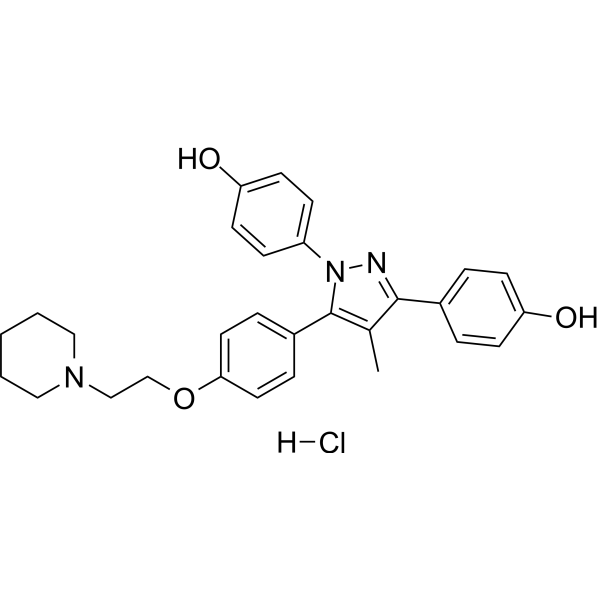
MPP hydrochloride
Based on 16 publication(s) in Google Scholar
MPP hydrochloride is a potent and selective ER (estrogen receptor) modulator. MPP hydrochloride induces significant apoptosis in the endometrial cancer and oLE cell lines. MPP hydrochloride reverses the the positive effects of beta-estradiol. MPP hydrochloride has mixed agonist/antagonist action on murine uterine ERalpha in vivo.
For research use only. We do not sell to patients.
- Purity: 99.25%
- CAS No.: 2863676-89-3
- Formula: C29H32ClN3O3
- Molecular Weight:506.04
-
Storage:
4°C, sealed storage, away from moisture
* In solvent : -80°C, 6 months; -20°C, 1 month (sealed storage, away from moisture)

To place orders, for customer services and technical support, please contact: MedChemExpress USA
Tel: 609-228-6898 E-mail: [email protected] [email protected]


-
 Biological Activity
-
Chemical Information
-
Solvent & Solubility
- Purity & Documentation
- References
-
 Help & FAQs


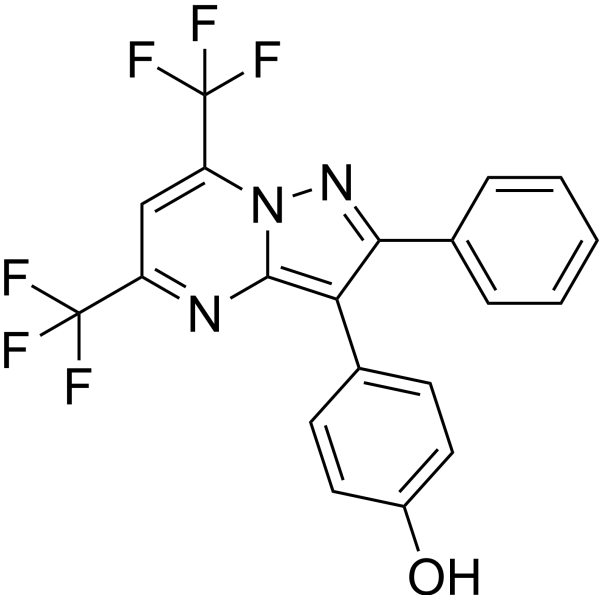
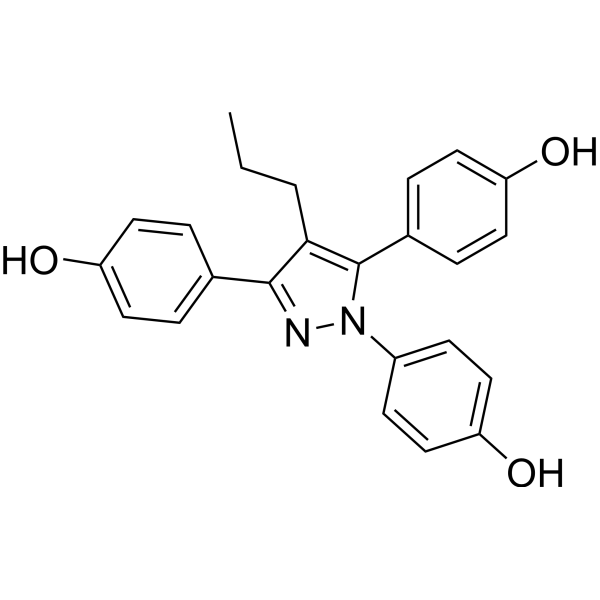
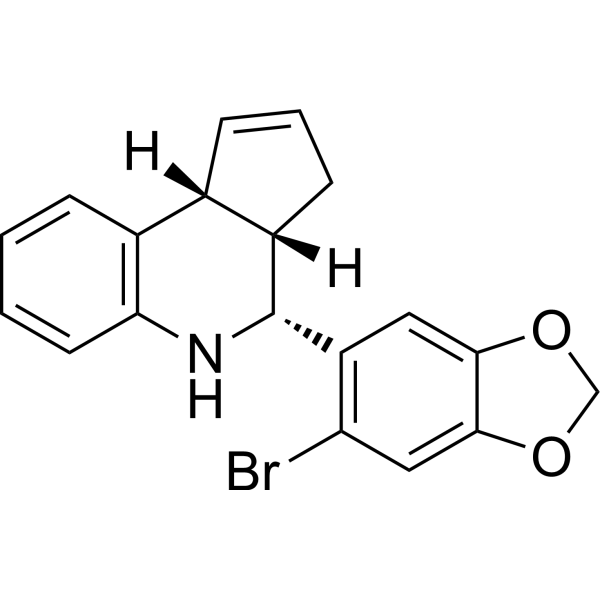
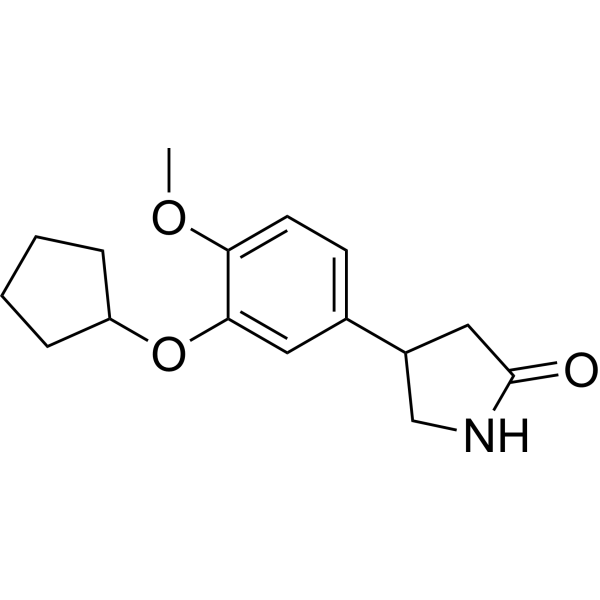
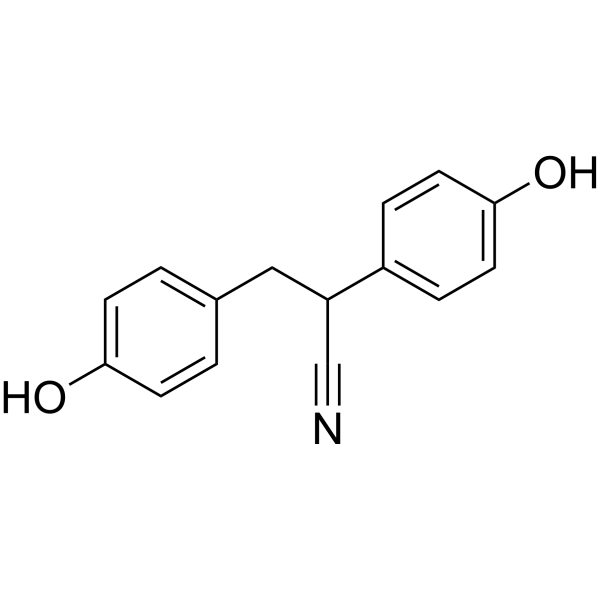
Publications Citing Use of MedChemExpress (MCE) MPP hydrochloride
More- Drug Resist Updat. 2023 Nov:71:101014. [Abstract]
- Phytomedicine. 2024 Jan:123:155218. [Abstract]
- Phytomedicine. 2022 May:99:154022. [Abstract]
- J Pharm Anal. 2025 Jul;15(7):101182. [Abstract]
- Ecotoxicol Environ Saf. 2023 Jul 1:259:115060. [Abstract]
- Biochem Pharmacol. 2025 Dec;242(Pt 4):117432. [Abstract]
- Biochem Pharmacol. 2024 Jul:225:116256. [Abstract]
- Cell Biol Toxicol. 2026 Feb 5;42(1):34. [Abstract]
- Biomolecules. 2023 Jul 10;13(7):1097. [Abstract]
- Mol Nutr Food Res. 2021 Sep;65(17):e2100070. [Abstract]
- Metab Brain Dis. 2022 Oct;37(7):2349-2362. [Abstract]
- J Pharm Pharmacol. 2026 Feb 7;78(2):rgag010. [Abstract]
- Brain Res. 2026 Feb 15:1873:150116. [Abstract]
- Biol Reprod. 2025 Jun 15;112(6):1114-1122. [Abstract]
- Food Chem Toxicol. 2023 Jun:176:113792. [Abstract]
- Eur J Inflamm. October 11, 2021.


Biological Activity
|
ERα |
ERβ |
MPP (1, 5, 10, 25, 50 and 100 μM; 24 h) decreases cell viability with an IC50 value of 20.01 μM in RL95-2 cells[1].
MPP dihydrochloride shows antiproliferative activity at a concentration of 10 μM in RL95-2 cells[1].
MPP dihydrochloride (20 μM; 24 h) reduces the phosphorylation of ERα, while it does not alter the phosphorylation of Akt. MPP dihydrochloride reduces the ratio of p-ERα/ERα[1].
MedChemExpress (MCE) has not independently confirmed the accuracy of these methods. They are for reference only.
-
Cell Line:RL95-2 endometrium cancer cells
-
Concentration:1, 5, 10, 25, 50 and 100 µM
-
Incubation Time:24 hours
-
Result:The treatment with 25 µM, 50 µM and 100 µM for 24 h decreased cell viability significantly. However, cell viability was not significantly changed by MPP dihydrochloride at concentration below 25 µM.
-
Cell Line:RL95-2 endometrium cancer cells
-
Concentration:10, 15, 20 and 25 µM
-
Incubation Time:72 hours
-
Result:Showed antiproliferative activity at a concentration of 10 μM.
-
Cell Line:RL95-2 endometrium cancer cells
-
Concentration:20 µM
-
Incubation Time:24 hours
-
Result:Reduced the phosphorylation of ERα, while it did not alter the phosphorylation of Akt. Reduced the ratio of p-ERα/ERα compared to the control group.
MedChemExpress (MCE) has not independently confirmed the accuracy of these methods. They are for reference only.
-
Animal Model:Male C57BL/6N mice at the age of 9-10 weeks[2]
-
Dosage:Low dose (20 μg/kg body weight) or high dose (200 μg/kg body weight)
-
Administration:Administered subcutaneously (s.c.) injected; injection volume of 5 mL/kg; 60 min before PPI testing
-
Result:Led to a dose-dependent attenuation of percent PPI. Pretreatment with 200 μg/kg reduced the mean percent PPI scores by ~30%.


Chemical Information
-
CAS No. 2863676-89-3
-
Appearance Solid
-
Molecular Weight 506.04
-
Formula C29H32ClN3O3
-
Color White to off-white
-
SMILES
OC1=CC=C(C2=NN(C3=CC=C(O)C=C3)C(C4=CC=C(OCCN5CCCCC5)C=C4)=C2C)C=C1.[H]Cl
-
Shipping
Room temperature in continental US; may vary elsewhere.
-
Storage
4°C, sealed storage, away from moisture
* In solvent : -80°C, 6 months; -20°C, 1 month (sealed storage, away from moisture)


Publications (16)
-
Journal Impact Factor
-
Most Recent
-
Drug Resist Updat
Cisplatin-activated ERβ/DCAF8 positive feedback loop induces chemoresistance in non-small cell lung cancer via PTEN/Akt axis. [Abstract]2023 Nov:71:101014. PMID: 37913652 -
Phytomedicine
Effects and mechanisms of frehmaglutin D and rehmaionoside C improve LPS-induced acute kidney injury through the estrogen receptor-mediated TLR4 pathway in vivo and in vitro. [Abstract]2024 Jan:123:155218. PMID: 37980806 -
Phytomedicine
Silibinin improves L-cell mass and function through an estrogen receptor-mediated antioxidative mechanism. [Abstract]2022 May:99:154022. PMID: 35255283 -
J Pharm Anal
Effect of cholesterol on distribution, cell uptake, and protein corona of lipid microspheres at sites of cardiovascular inflammatory injury. [Abstract]2025 Jul;15(7):101182. PMID: 40735031 -
Ecotoxicol Environ Saf
Bisphenol A interferes with lncRNA Fhadlos2 and RUNX3 association in adolescent mouse ovary. [Abstract]2023 Jul 1:259:115060. PMID: 37229876 -
Biochem Pharmacol
Formononetin alleviates corticosterone-induced myelin damage through activating ERα and promoting the differentiation of oligodendrocyte precursor cells in the prefrontal cortex. [Abstract]2025 Dec;242(Pt 4):117432. PMID: 41110491 -
Biochem Pharmacol
MICAL-L2, as an estrogen-responsive gene, is involved in ER-positive breast cancer cell progression and tamoxifen sensitivity via the AKT/mTOR pathway. [Abstract]2024 Jul:225:116256. PMID: 38729448 -
Cell Biol Toxicol
HUWE1 regulates mitophagy to protect dopaminergic neurons from 6-OHDA- and MPP⁺-induced neurotoxicity. [Abstract]2026 Feb 5;42(1):34. PMID: 41639490 -
Biomolecules
Active Estrogen-Succinate Metabolism Promotes Heme Accumulation and Increases the Proliferative and Invasive Potential of Endometrial Cancer Cells. [Abstract]2023 Jul 10;13(7):1097. PMID: 37509133 -
Mol Nutr Food Res
Diosmetin Protects Against Obesity and Metabolic Dysfunctions Through Activation of Adipose Estrogen Receptors in Mice. [Abstract]2021 Sep;65(17):e2100070. PMID: 34223710 -
Metab Brain Dis
A novel LINC00943/miR-671-5p/ELAVL1 ceRNA crosstalk regulates MPP+ toxicity in SK-N-SH cells. [Abstract]2022 Oct;37(7):2349-2362. PMID: 35779150 -
J Pharm Pharmacol
Formononetin attenuates corticosterone-induced depressive-like behaviors and neuronal damage via ERα/ERK-CREB-BDNF signaling pathway. [Abstract]2026 Feb 7;78(2):rgag010. PMID: 41697882 -
Brain Res
Ezetimibe mitigates microglial activation in Parkinson's disease via TLR4/JNK pathway inhibition: evidence from network pharmacology and experimental validation. [Abstract]2026 Feb 15:1873:150116. PMID: 41419122 -
Biol Reprod
SRA deficiency induces follicular dysplasia by disrupting the hypothalamic Kisspeptin-GPR54 system in mice. [Abstract]2025 Jun 15;112(6):1114-1122. PMID: 40057968 -
Food Chem Toxicol
BPA exposure enhances the metastatic aggression of ovarian cancer through the ERα/AKT/mTOR/HIF-1α signaling axis. [Abstract]2023 Jun:176:113792. PMID: 37080528 -


Solvent & Solubility
DMSO : 250 mg/mL (494.03 mM; Need ultrasonic; Hygroscopic DMSO has a significant impact on the solubility of product, please use newly opened DMSO)
Please refer to the solubility information to select the appropriate solvent. Once prepared, please aliquot and store the solution to prevent product inactivation from repeated freeze-thaw cycles.
Storage method and period of stock solution: -80°C, 6 months; -20°C, 1 month (sealed storage, away from moisture). When stored at -80°C, please use it within 6 months. When stored at -20°C, please use it within 1 month.
Please refer to the solubility information to select the appropriate solvent. Once prepared, please aliquot and store the solution to prevent product inactivation from repeated freeze-thaw cycles.
Storage method and period of stock solution: -80°C, 6 months; -20°C, 1 month (sealed storage, away from moisture). When stored at -80°C, please use it within 6 months. When stored at -20°C, please use it within 1 month.
Concentration (start) × Volume (start) = Concentration (final) × Volume (final)
Select the appropriate dissolution method based on your experimental animal and administration route.
- For the following dissolution methods, please ensure to first prepare a clear stock solution using an In Vitro approach and then sequentially add co-solvents:
- To ensure reliable experimental results, the clarified stock solution can be appropriately stored based on storage conditions. As for the working solution for In Vivo experiments, it is recommended to prepare freshly and use it on the same day.
- The percentages shown for the solvents indicate their volumetric ratio in the final prepared solution. If precipitation or phase separation occurs during preparation, heat and/or sonication can be used to aid dissolution.
Add each solvent one by one: 10% DMSO 40% PEG300 5% Tween-80 45% Saline
Solubility: ≥ 2.08 mg/mL (4.11 mM); Clear solution
This protocol yields a clear solution of ≥ 2.08 mg/mL (saturation unknown).
Taking 1 mL working solution as an example, add 100 μL DMSO stock solution (20.8 mg/mL) to 400 μL PEG300, and mix evenly; then add 50 μL Tween-80 and mix evenly; then add 450 μL Saline to adjust the volume to 1 mL.
Preparation of Saline: Dissolve 0.9 g sodium chloride in ddH₂O and dilute to 100 mL to obtain a clear Saline solution.
Add each solvent one by one: 10% DMSO 90% (20% SBE-β-CD in Saline)
Solubility: ≥ 2.08 mg/mL (4.11 mM); Clear solution
This protocol yields a clear solution of ≥ 2.08 mg/mL (saturation unknown).
Taking 1 mL working solution as an example, add 100 μL DMSO stock solution (20.8 mg/mL) to 900 μL 20% SBE-β-CD in Saline, and mix evenly.
Preparation of 20% SBE-β-CD in Saline (4°C, storage for one week): 2 g SBE-β-CD powder is dissolved in 10 mL Saline, completely dissolve until clear.
Please enter the basic information of animal experiments:
-
-
-
-
Recommended: Prepare an additional quantity of animals to account for potential losses during experiments.
Please enter your animal formula composition:
-
%DMSO +
Recommended: Keep the proportion of DMSO in working solution below 2% if your animal is weak.
-
%+
-
+%Tween-80 + +
-
%Saline +
The co-solvents required include: DMSO, . All of co-solvents are available by MedChemExpress (MCE). , Tween 80. All of co-solvents are available by MedChemExpress (MCE).
Working solution concentration: 0.22 mg/mL
Method for preparing stock solution: mg drug dissolved in μL DMSO. Stock solution concentration: mg/mL. * In solvent : -80°C, 6 months; -20°C, 1 month (sealed storage, away from moisture)
1. Take μL DMSO stock solution;
2. Add μL .
μL , mix evenly;
3. Then add μL Tween 80, mix evenly;
4. Then add μL
Please ensure that the stock solution in the first step is dissolved to a clear state, and add co-solvents in sequence. You can use ultrasonic heating (ultrasonic cleaner, recommended frequency 20-40 kHz), vortexing, etc. to assist dissolution.


Purity & Documentation
-
Data Sheet (280 KB)
-
SDS (252 KB)
- English - EN (252 KB)
- Français - FR (252 KB)
- Deutsch - DE (252 KB)
- Norwegian - NO (252 KB)
- Español - ES (252 KB)
- Swedish - SV (252 KB)
- Italian - IT (252 KB)
- Korean - KR (252 KB)
- Portuguese - PT (252 KB)
-
Handling Instructions (2659 KB)
References
[1]. Karaboğa Arslan AK, et al. α-Chaconine and α-Solanine Inhibit RL95-2 Endometrium Cancer Cell Proliferation by Reducing Expression of Akt (Ser473) and ERα (Ser167). Nutrients. 2018 May 25;10(6). pii: E672. [Content Brief]
[2]. Labouesse MA, et al. Effects of selective estrogen receptor alpha and beta modulators on prepulse inhibition in male mice. Psychopharmacology (Berl). 2015 Aug;232(16):2981-94. [Content Brief]
[3]. Davis AM, et al. The effects of the selective estrogen receptor modulators, methyl-piperidino-pyrazole (MPP), and raloxifene in normal and cancerous endometrial cell lines and in the murine uterus. Mol Reprod Dev. 2006 Aug;73(8):1034-44. [Content Brief]


Complete Stock Solution Preparation Table
Please refer to the solubility information to select the appropriate solvent. Once prepared, please aliquot and store the solution to prevent product inactivation from repeated freeze-thaw cycles.
Storage method and period of stock solution: -80°C, 6 months; -20°C, 1 month (sealed storage, away from moisture). When stored at -80°C, please use it within 6 months. When stored at -20°C, please use it within 1 month.
| Optional Solvent | Concentration Solvent Mass | 1 mg | 5 mg | 10 mg | 25 mg |
|---|---|---|---|---|---|
| DMSO | 1 mM | 1.9761 mL | 9.8806 mL | 19.7613 mL | 49.4032 mL |
| 5 mM | 0.3952 mL | 1.9761 mL | 3.9523 mL | 9.8806 mL | |
| 10 mM | 0.1976 mL | 0.9881 mL | 1.9761 mL | 4.9403 mL | |
| 15 mM | 0.1317 mL | 0.6587 mL | 1.3174 mL | 3.2935 mL | |
| 20 mM | 0.0988 mL | 0.4940 mL | 0.9881 mL | 2.4702 mL | |
| 25 mM | 0.0790 mL | 0.3952 mL | 0.7905 mL | 1.9761 mL | |
| 30 mM | 0.0659 mL | 0.3294 mL | 0.6587 mL | 1.6468 mL | |
| 40 mM | 0.0494 mL | 0.2470 mL | 0.4940 mL | 1.2351 mL | |
| 50 mM | 0.0395 mL | 0.1976 mL | 0.3952 mL | 0.9881 mL | |
| 60 mM | 0.0329 mL | 0.1647 mL | 0.3294 mL | 0.8234 mL | |
| 80 mM | 0.0247 mL | 0.1235 mL | 0.2470 mL | 0.6175 mL | |
| 100 mM | 0.0198 mL | 0.0988 mL | 0.1976 mL | 0.4940 mL |


MPP hydrochloride Related Classifications
HY-103454B Related Classifications
 Powered by Bioz