



4-Hydroxyestrone
Based on 1 publication(s) in Google Scholar
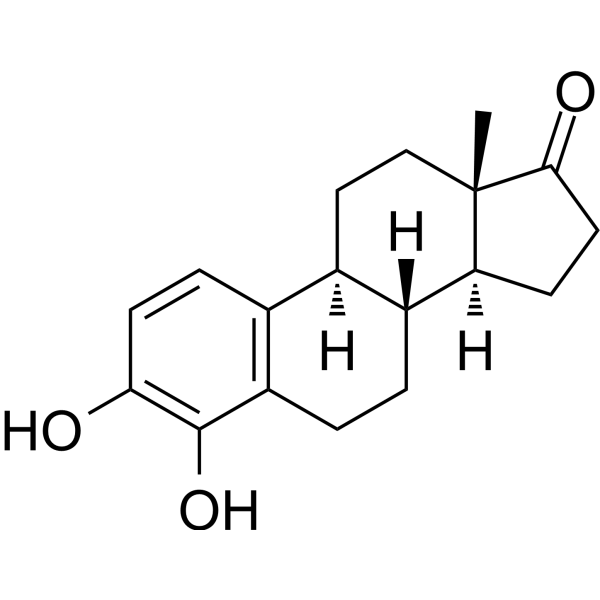
4-Hydroxyestrone (4-OHE1) is a brain-penetrant estrogen metabolite. 4-Hydroxyestrone shows neuroprotective effects involving increased cytoplasmic localization of p53 resulting from SIRT1-mediated p53 deacetylation. 4-Hydroxyestrone relies on PDI to mediate its protective effect against chemically induced ferroptosis in estrogen receptor-negative cancer cells. 4-Hydroxyestrone inhibits lipid peroxidation and lipid-ROS accumulation. 4-Hydroxyestrone blocks preovulatory luteinizing hormone surges in Rattus norvegicus. 4-Hydroxyestrone can be used for the researches of neurodegeneration, breast cancer and endocrine disease.
For research use only. We do not sell to patients.
- Purity : 98.77%
- CAS No.: 3131-23-5
- Formula: C18H22O3
- Molecular Weight:286.37
-
Storage:Powder -20°C, 3 years ; In solvent -80°C, 6 months , -20°C, 1 month

To place orders, for customer services and technical support, please contact: MedChemExpress USA
Tel: 609-228-6898 E-mail: [email protected] [email protected]


-
 Biological Activity
-
Chemical Information
-
Solvent & Solubility
- Protocols
- Purity & Documentation
- References
-
 Help & FAQs


-
HY-113251
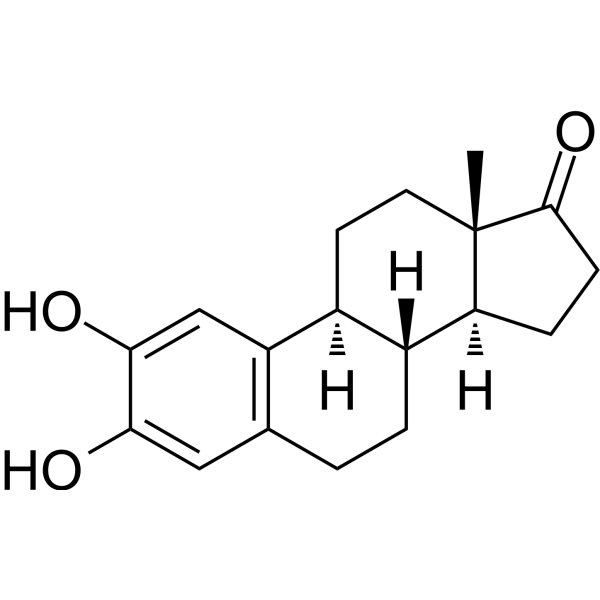
2-HydroxyestroneAntiestrogenic Agent -
HY-113344
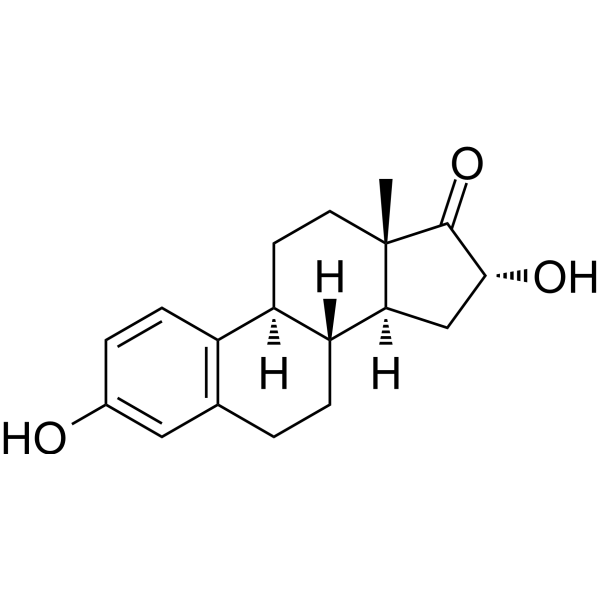
16α-HydroxyestroneEndogenous Metabolite -
HY-N0171A
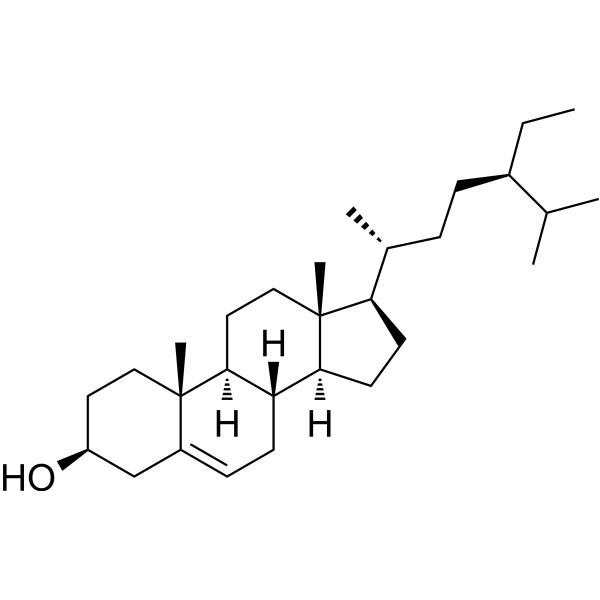
Beta-Sitosterol (purity>98%)Dietary Plant Sterols -
HY-B0141R
Estradiol (Standard) -
HY-12033
2-MethoxyestradiolSteroid Metabolite -
HY-N0171
Beta-Sitosterol (purity>80%)Anticancer Nutraceutical -
HY-124489
2-Hydroxyestradiol17β-Estradiol Metabolite -
HY-B0234R
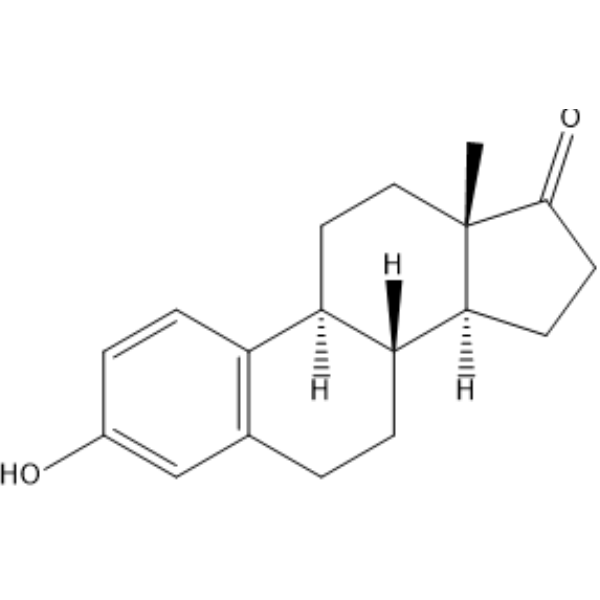
Estrone (Standard) -
HY-N0171R
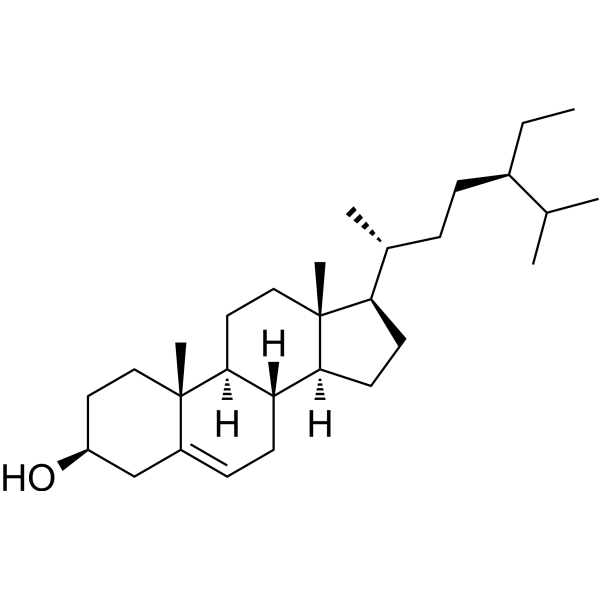
Beta-Sitosterol (Standard) -
HY-B0091
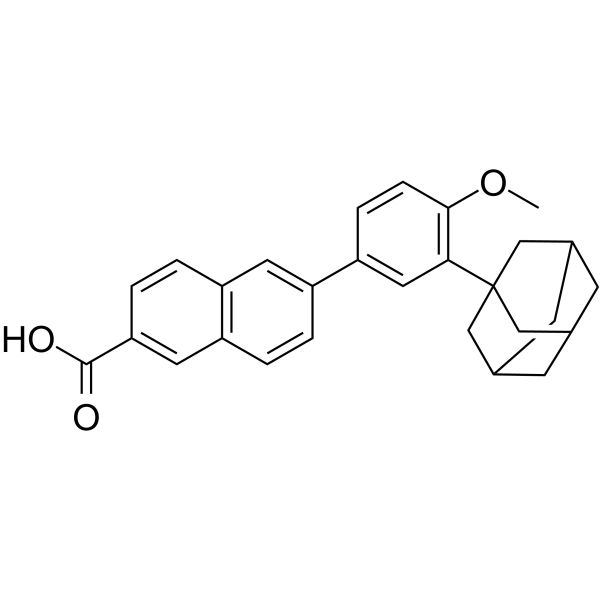
AdapaleneRAR Agonist -
HY-N0039
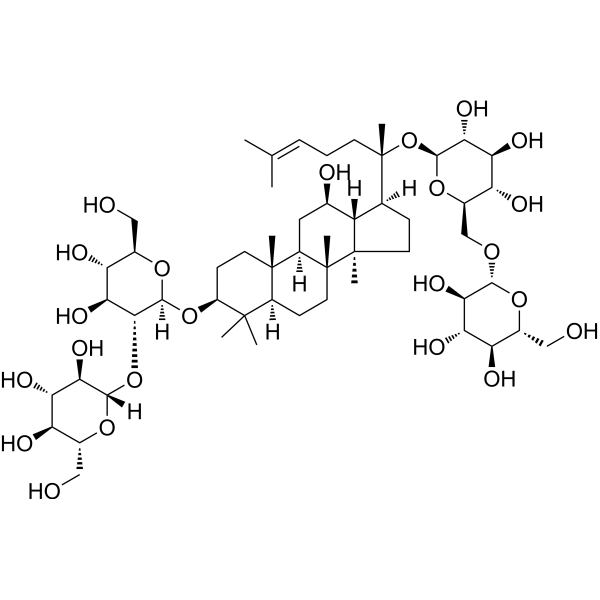
Ginsenoside Rb1Autophagy Inducer
Publications Citing Use of MedChemExpress (MCE) 4-Hydroxyestrone
MoreAll Endogenous Metabolite Isoforms
More

Biological Activity
Description
IC50 & Target
[1]|
SIRT1 |
In Vitro
4-Hydroxyestrone (2.5-10 μM; 24 h) strongly protects HT22 immortalized mouse hippocampal neuronal cells against glutamate-induced oxidative cell death[1].
4-Hydroxyestrone (5 μM; 4-24 h) induces cytoplasmic translocation of p-p53(Ser15) in HT22 immortalized mouse hippocampal neuronal cells treated with 5 mM glutamate, reversing glutamate-induced nuclear accumulation of p-p53(Ser15) over 4-24 hours[1].
4-Hydroxyestrone (5 μM; 4-24 h) promotes cytoplasmic accumulation of p-MDM2(Ser166) in HT22 immortalized mouse hippocampal neuronal cells treated with 5 mM glutamate, reversing glutamate-induced nuclear accumulation of p-MDM2(Ser166) over 4-24 hours[1].
4-Hydroxyestrone (5 μM; 24 h) inhibits glutamate-induced p53 transcriptional activity in HT22 immortalized mouse hippocampal neuronal cells by reducing GADD45α mRNA and protein levels, correlating with improved cell viability after 24-hour co-incubation[1].
4-Hydroxyestrone (5 μM) maintains SIRT1 protein levels and function in HT22 immortalized mouse hippocampal neuronal cells treated with 5 mM glutamate, mediating p53 deacetylation and cytoplasmic translocation to exert neuroprotection[1].
4-Hydroxyestrone (0.5-8 μM; 12-24 h) strongly protects estrogen receptor-negative MDA-MB-231 human breast cancer cells from Erastin (HY-15763)-induced ferroptotic cell death in a concentration-dependent manner[2].
4-Hydroxyestrone (1-8 μM; 24 h) strongly protects estrogen receptor-negative HCC1937 human breast cancer cells from Erastin + BSO (HY-106376)-induced ferroptotic cell death in a concentration-dependent manner[2].
4-Hydroxyestrone (4-8 μM; 12 h) abrogates Erastin-induced lipid peroxidation and lipid-ROS accumulation in estrogen receptor-negative MDA-MB-231 and HCC1937 human breast cancer cells[2].
4-Hydroxyestrone (0.0625-64 μM; 3 h) binds to PDI in live MDA-MB-231 human breast cancer cells, stabilizing the protein against thermal denaturation in a concentration-dependent manner[2].
4-Hydroxyestrone (10 μM) directly inhibits the catalytic activity of wild-type human PDI, but not PDIH256A mutant[2].
4-Hydroxyestrone (8 μM; 12 h) inhibits Erastin-induced iNOS dimerization and subsequent NO accumulation in estrogen receptor-negative MDA-MB-231 human breast cancer cells[2].
4-Hydroxyestrone (4-8 μM; 24 h) relies on PDI to mediate its protective effect against chemically induced ferroptosis in estrogen receptor-negative MDA-MB-231 and HCC1937 human breast cancer cells[2].
MedChemExpress (MCE) has not independently confirmed the accuracy of these methods. They are for reference only.
-
Cell Line:HT22 immortalized mouse hippocampal neuronal cells
-
Concentration:2.5 μM, 5 μM, 10 μM
-
Incubation Time:24 h
-
Result:Exhibited the strongest neuroprotective effect against glutamate-induced oxidative cell death among 25 tested estrogen metabolites, with a significantly greater protective effect than its parent hormone estrone.
Increased cell viability to ~60% of control at 2.5 μM, ~85% of control at 5 μM, and ~70% of control at 10 μM compared to glutamate-only treatment.
Almost completely abrogated glutamate-induced cell death as confirmed by flow cytometry with PI and annexin-V staining, with no alteration to the cell cycle.
-
Cell Line:HT22 immortalized mouse hippocampal neuronal cells
-
Concentration:5 μM
-
Incubation Time:4 h, 8 h, 12 h, 24 h
-
Result:Reversed glutamate-induced time-dependent increase in nuclear p-p53(Ser15) levels and decrease in cytosolic p-p53(Ser15) levels.
Increased cytosolic p-p53(Ser15) levels over time, while decreasing nuclear p-p53(Ser15) levels, with only <10% of cells showing nuclear p-p53(Ser15) staining at 24 hours.\nReversed glutamate-induced trend of declining cytoplasmic p-MDM2(Ser166) levels and increasing nuclear p-MDM2(Ser166) levels.
Caused a drastic increase in cytoplasmic p-MDM2(Ser166) levels at 24 hours, with almost all cells showing cytoplasmic p-MDM2(Ser166) staining, while nuclear p-MDM2(Ser166) levels remained low.
-
Cell Line:HCC1937 human breast cancer cells
-
Concentration:1, 2, 4, 8 μM; (HCC1937 cells with 20 μM Erastin + 40 μM BSO)
-
Incubation Time:24 h
-
Result:Showed protective effect against erastin + BSO-induced cell death in HCC1937 cells.
In Vivo
4-Hydroxyestrone (100 μg; i.v.; single injection) effectively inhibits the preovulatory LH surge in 86% of 4-day cycling rats when administered at 0900 h on proestrus, but is completely ineffective when given at 1000 h or 1200 h[3].
MedChemExpress (MCE) has not independently confirmed the accuracy of these methods. They are for reference only.
-
Animal Model:Sprague-Dawley (male, 250-270 g, Kainic acid-induced hippocampal oxidative damage)[1]
-
Dosage:10 µg/rat
-
Administration:s.c.; daily; 7 consecutive days
-
Result:Afforded almost complete neuroprotection of the hippocampal CA3 region.
Markedly reduced degenerating neurons (Fluoro-Jade B-positive) and TUNEL-positive apoptotic cells compared to rats treated with kainic acid alone.
Strongly prevented kainic acid-induced reduction in working memory, with protective effect markedly stronger than that of 17β-estradiol (HY-B0141) at the same dose.
-
Animal Model:Sprague-Dawley CD rats (adult female virgin, 250-300 g BW, consistent 4-day estrous cycles)[3]
-
Dosage:100 μg (0900 h administration); 100 μg (1000 h administration); 100 μg (1200 h administration)
-
Administration:i.v.; single injection
-
Result:Abolished the preovulatory LH surge in 6 of 7 rats, with a cumulative plasma LH concentration of 182 ng/mL between 1400-2000 h when administered at 0900 h.
Showed no effect on the LH surge, with 0 of 5 rats showing suppression at 1000 h or 1200 h; cumulative plasma LH levels were 1775 ng/mL (1000 h) and 1416 ng/mL (1200 h), not significantly different from vehicle controls.


Chemical Information
-
CAS No. 3131-23-5
-
Appearance Solid
-
Molecular Weight 286.37
-
Formula C18H22O3
-
Color Light yellow to yellow
-
SMILES
OC(C=C1)=C(O)C(CC[C@@]2([H])[C@]3([H])CC4)=C1[C@@]2([H])CC[C@]3(C)C4=O
-
Synonyms
4-OHE1
-
Structure Classification
-
Initial Source
-
Shipping
Room temperature in continental US; may vary elsewhere.
-
Storage
Powder -20°C 3 years In solvent -80°C 6 months -20°C 1 month


Publications (1)
-
Journal Impact Factor
-
Most Recent


Solvent & Solubility
In Vitro:
Methanol : ≥ 10 mg/mL (34.92 mM)
* "≥" means soluble, but saturation unknown.
Please refer to the solubility information to select the appropriate solvent. Once prepared, please aliquot and store the solution to prevent product inactivation from repeated freeze-thaw cycles.
Storage method and period of stock solution: -80°C, 6 months; -20°C, 1 month. When stored at -80°C, please use it within 6 months. When stored at -20°C, please use it within 1 month.
Please refer to the solubility information to select the appropriate solvent. Once prepared, please aliquot and store the solution to prevent product inactivation from repeated freeze-thaw cycles.
Storage method and period of stock solution: -80°C, 6 months; -20°C, 1 month. When stored at -80°C, please use it within 6 months. When stored at -20°C, please use it within 1 month.
Concentration (start) × Volume (start) = Concentration (final) × Volume (final)


Purity & Documentation
-
Data Sheet (289 KB)
-
SDS (396 KB)
- English - EN (396 KB)
- Français - FR (396 KB)
- Deutsch - DE (396 KB)
- Norwegian - NO (396 KB)
- Español - ES (396 KB)
- Swedish - SV (396 KB)
- Italian - IT (396 KB)
- Korean - KR (396 KB)
- Portuguese - PT (396 KB)
-
Handling Instructions (2659 KB)
References
[1]. Choi HJ, et al. 4-Hydroxyestrone, an Endogenous Estrogen Metabolite, Can Strongly Protect Neuronal Cells Against Oxidative Damage. Sci Rep. 2020;10(1):7283. Published 2020 Apr 29. [Content Brief]
[2]. Wang H, et al. Strong Protection by 4-Hydroxyestrone against Erastin-Induced Ferroptotic Cell Death in Estrogen Receptor-Negative Human Breast Cancer Cells: Evidence for Protein Disulfide Isomerase as a Mechanistic Target for Protection. Biochemistry. 2024;63(8):984-999. [Content Brief]
[3]. Okatani Y, et al. Effects of 2-hydroxyestradiol-17 beta, 2-hydroxyestradiol-17 alpha, and 4-hydroxyestrone on the preovulatory luteinizing hormone surge in the rat: agonist and antagonist actions. Endocrinology. 1984;115(3):1090-1094. [Content Brief]


Complete Stock Solution Preparation Table
Please refer to the solubility information to select the appropriate solvent. Once prepared, please aliquot and store the solution to prevent product inactivation from repeated freeze-thaw cycles.
Storage method and period of stock solution: -80°C, 6 months; -20°C, 1 month. When stored at -80°C, please use it within 6 months. When stored at -20°C, please use it within 1 month.
| Optional Solvent | Concentration Solvent Mass | 1 mg | 5 mg | 10 mg | 25 mg |
|---|---|---|---|---|---|
| Methanol | 1 mM | 3.4920 mL | 17.4599 mL | 34.9199 mL | 87.2996 mL |
| 5 mM | 0.6984 mL | 3.4920 mL | 6.9840 mL | 17.4599 mL | |
| 10 mM | 0.3492 mL | 1.7460 mL | 3.4920 mL | 8.7300 mL | |
| 15 mM | 0.2328 mL | 1.1640 mL | 2.3280 mL | 5.8200 mL | |
| 20 mM | 0.1746 mL | 0.8730 mL | 1.7460 mL | 4.3650 mL | |
| 25 mM | 0.1397 mL | 0.6984 mL | 1.3968 mL | 3.4920 mL | |
| 30 mM | 0.1164 mL | 0.5820 mL | 1.1640 mL | 2.9100 mL |


4-Hydroxyestrone Related Classifications
HY-W009300 Related Classifications
 Powered by Bioz
Keywords
- 4-Hydroxyestrone
- 3131-23-5
- 4-OHE1
- Endogenous Metabolite
- Estrogen Receptor/ERR
- Sirtuin
- MDM-2/p53
- PDI
- Ferroptosis
- Reactive Oxygen Species (ROS)
- inducible nitric oxide synthase (iNOS)
- protein disulfide isomerase (PDI)
- SIRT1
- Sprague-Dawley rats
- HT22 immortalized mouse hippocampal neuronal cells
- MDA-MB-231 human breast cancer cells
- p53
- oxidative neuronal damage
- HCC1937 human breast cancer cells
- ferroptotic cell death
- Inhibitor
- inhibitor
- inhibit