



Fenofibrate
Based on 36 publication(s) in Google Scholar
Fenofibrate is a selective PPARα agonist with an EC50 of 30 μM. Fenofibrate also inhibits human cytochrome P450 isoforms, with IC50s of 0.2, 0.7, 9.7, 4.8 and 142.1 μM for CYP2C19, CYP2B6, CYP2C9, CYP2C8, and CYP3A4, respectively.
Para uso exclusivo en investigación. No vendemos a pacientes.
- Pureza : 99.97%
- No. CAS: 49562-28-9
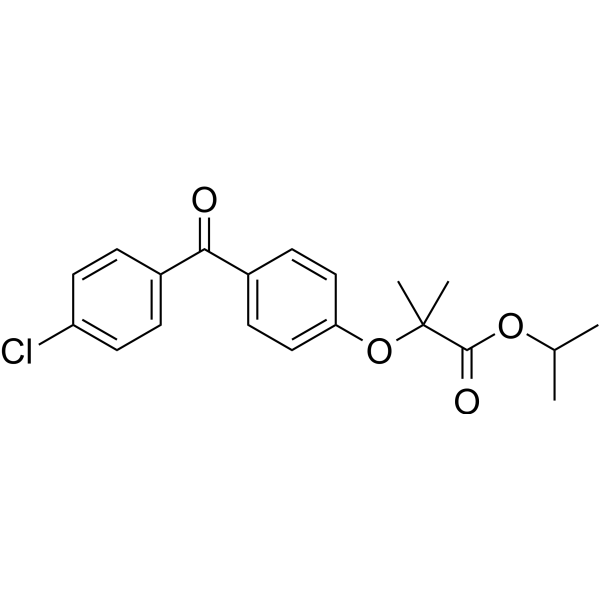
- Fòrmula: C20H21ClO4
- Peso molecular:360.83
-
Almacenamiento:Powder -20°C, 3 years , 4°C, 2 years ; In solvent -80°C, 1 year , -20°C, 6 months

To place orders, for customer services and technical support, please contact: MedChemExpress USA
Tel: 609-228-6898 E-mail: [email protected] [email protected]


-
 Actividad biológica
-
Chemical Information
-
Solvente y solubilidad
- Pureza y Documentación
- Referencias
-
 Help & FAQs


-
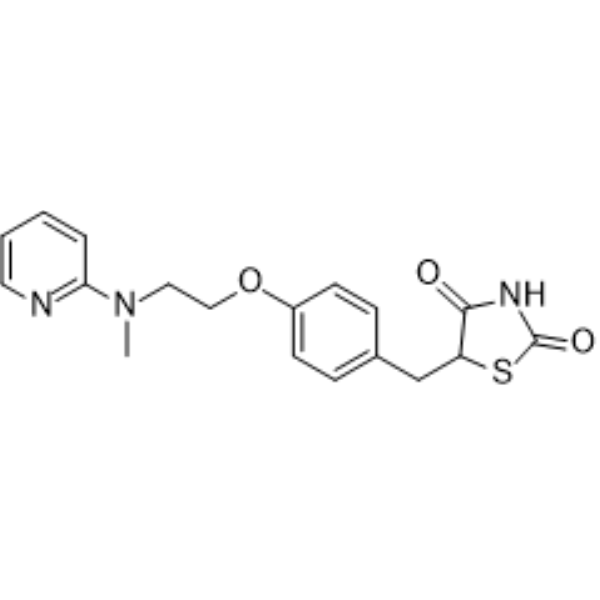
HY-17386
RosiglitazonePPARγ Agonist -
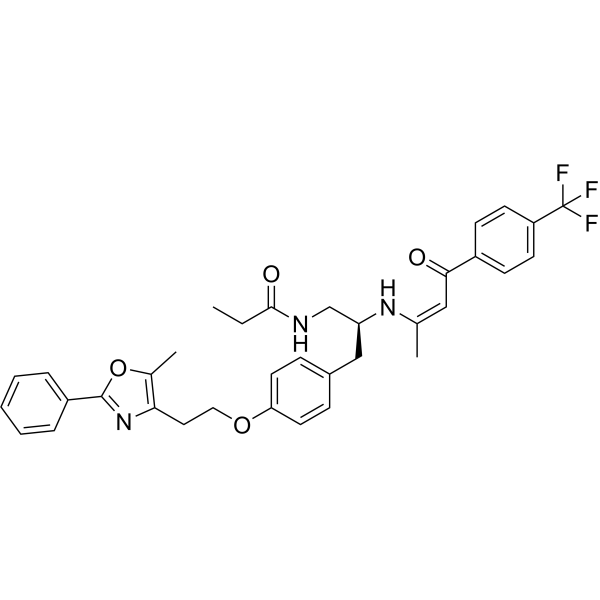
HY-15372
GW6471PPARα Antagonist -
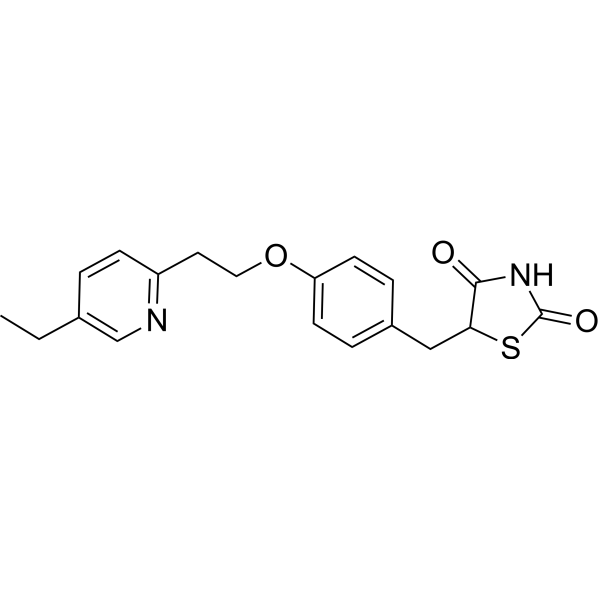
HY-13956
PioglitazonePPARγ Agonist -
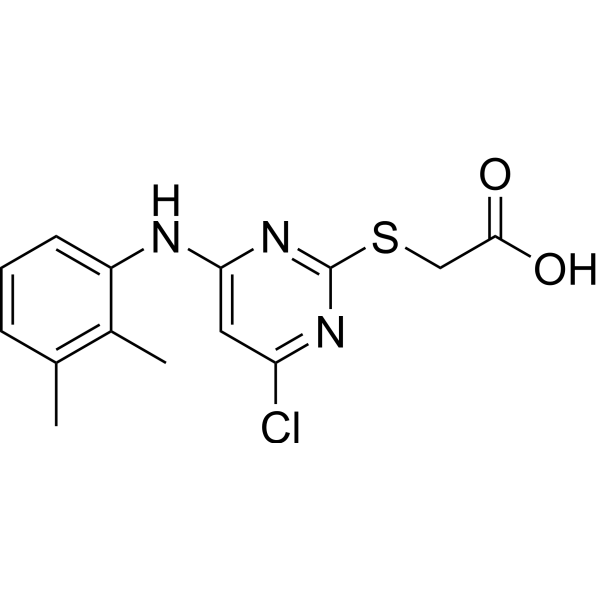
HY-16995
Pirinixic acidPPAR Agonist -
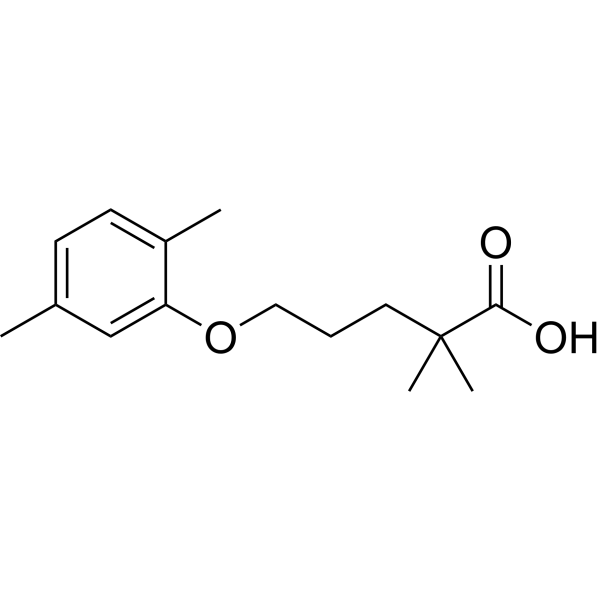
HY-B0258
GemfibrozilCytochrome P450 Inhibitor -
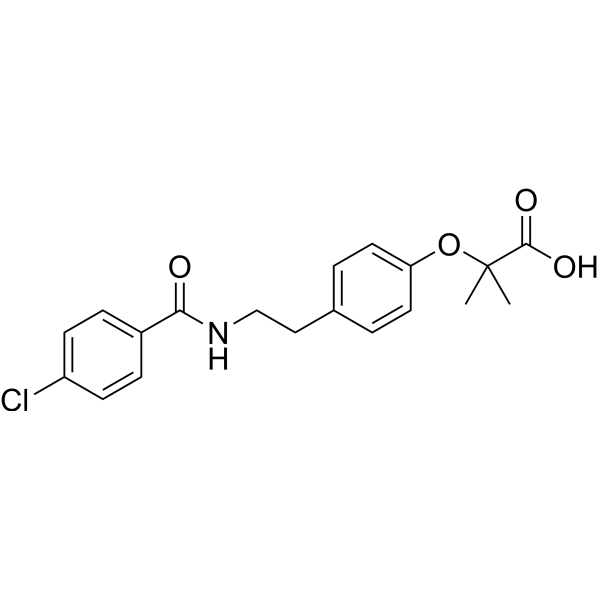
HY-B0637
BezafibratePPAR Agonist -
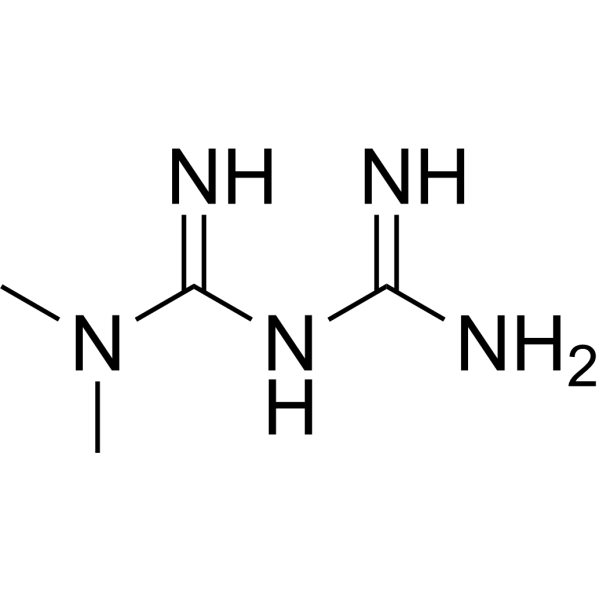
HY-B0627
MetforminAntihyperglycemic Agent -
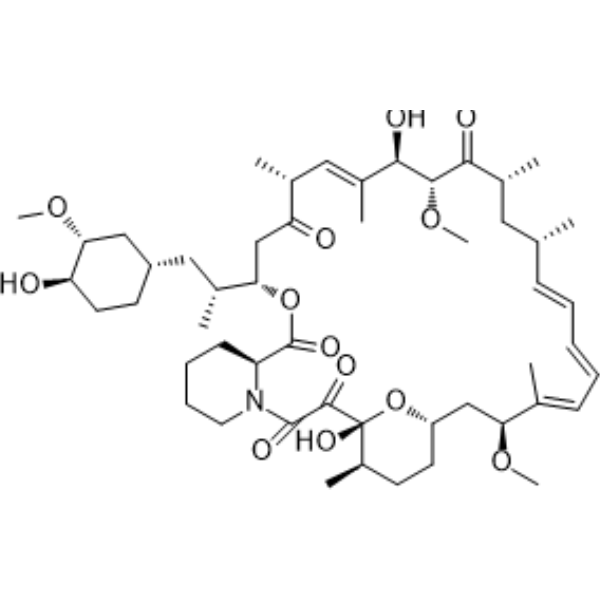
HY-10219
RapamycinmTOR Inhibitor -
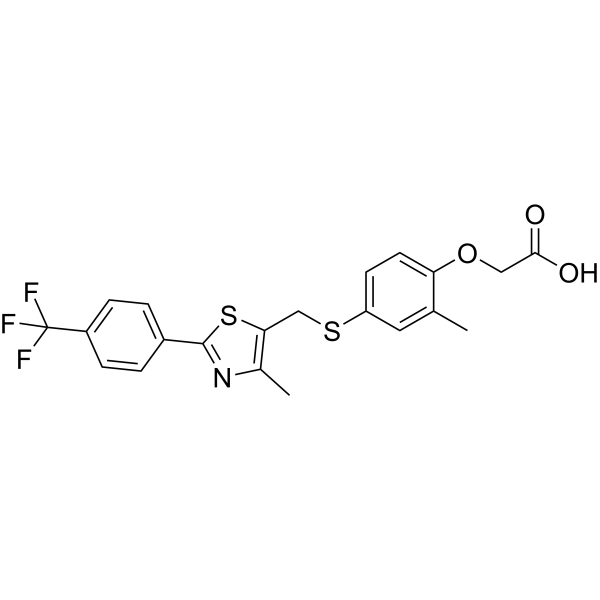
HY-10838
GW 501516PPARδ Agonist -
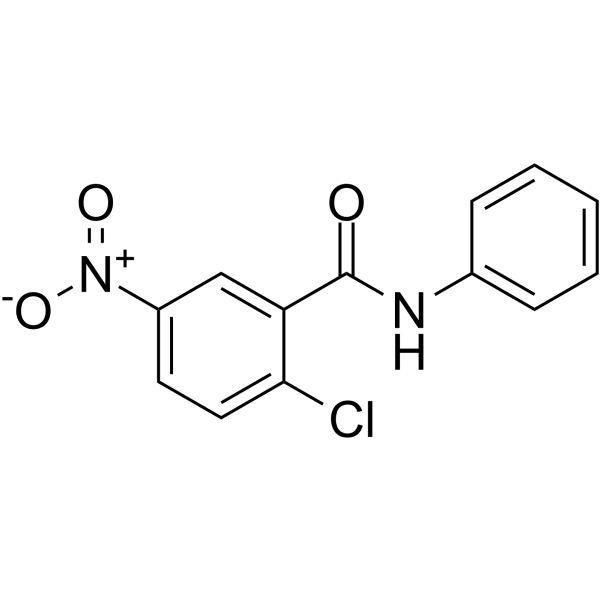
HY-16578
GW9662PPARγ Antagonist -
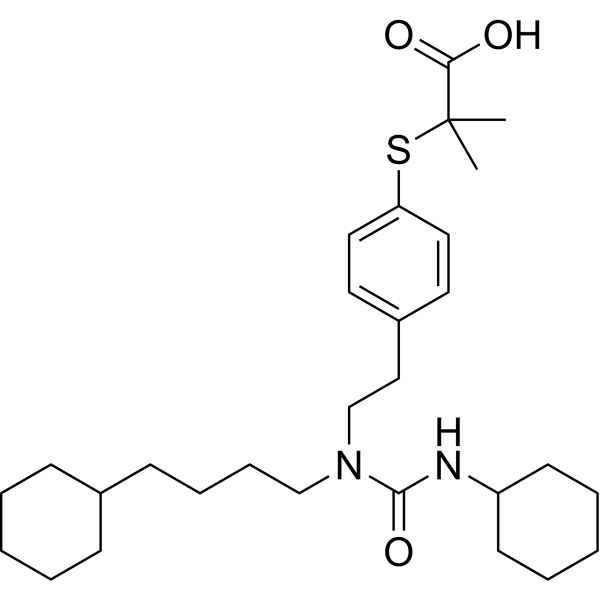
HY-13861
GW7647PPAR Agonist -
HY-B0287
ClofibratePPAR Agonist
Publications Citing Use of MedChemExpress (MCE) Fenofibrate
More- Cell Metab. 2025 Oct 22:S1550-4131(25)00396-1. [Abstract]
- Hepatology. 2018 Jul;68(1):289-303. [Abstract]
- Mol Cell. 2023 Dec 7;83(23):4370-4385.e9. [Abstract]
- Cardiovasc Diabetol. 2024 May 7;23(1):160. [Abstract]
- Adv Sci (Weinh). 2025 Jun;12(21):e2415846. [Abstract]
- Carbohydr Polym. 2025 Jan 1:347:122768. [Abstract]
- Phytomedicine. 2026 Jun 25:159:158496. [Abstract]
- Phytomedicine. 2025 Oct:146:157140. [Abstract]
- Phytomedicine. 2022 May 6;102:154147. [Abstract]
- Acta Pharmacol Sin. 2024 Jun;45(6):1316-1320. [Abstract]
- Acta Pharmacol Sin. 2022 Jan;43(1):167-176. [Abstract]
- Int J Biol Macromol. 2026 Apr:354:151281. [Abstract]
- Int J Mol Med. 2026 Apr;57(4):102. [Abstract]
- Cell Rep. 2025 Sep 30;44(10):116365. [Abstract]
- Cell Rep. 2025 Aug 12;44(8):116156. [Abstract]
- Biochem Pharmacol. 2025 Oct 18;243(Pt 1):117439. [Abstract]
- Eur J Pharmacol. 2023 May 15:947:175676. [Abstract]
- Pharmaceuticals (Basel). 2022 Mar 31;15(4):434. [Abstract]
- Int J Mol Sci. 2025 Nov 17;26(22):11099. [Abstract]
- Front Cell Dev Biol. 2021 Apr 15:9:665869. [Abstract]
- Bioorg Chem. 2026 Sep 5:179:110008. [Abstract]
- Biochim Biophys Acta Mol Basis Dis. 2025 Jan;1871(1):167510. [Abstract]
- Exp Neurol. 2025 Jul:389:115260. [Abstract]
- Cell Signal. 2026 Mar:139:112357. [Abstract]
- Mol Nutr Food Res. 2026 May;70(10):e70506. [Abstract]
- Viruses. 2022 May 31;14(6):1203. [Abstract]
- Nanotoxicology. 2020 Jun;14(5):667-682. [Abstract]
- Hum Exp Toxicol. 2021 Jul;40(7):1208-1221. [Abstract]
- Mol Pharmacol. 2025 May 16;107(7):100047. [Abstract]
- Biomed Chromatogr. 2026;40(2):e70323. [Abstract]
- SSRN. 2025 Sep 22.
- Seoul National University. 2025.
- SSRN. 2025 Aug 12.
- Heliyon. 2024 Oct 5;10(21):e38648. [Abstract]
- Environ Sci Pollut Res Int. 2023 Dec;30(60):125991-126008. [Abstract]
- Evid Based Complement Alternat Med. 2022 Jan 7:2022:1124901. [Abstract]
 Customer Validation & Images

-
Bio/Physico-chemical Assay
-
In Vivo Efficacy Study
-
WB
-
Histological Imaging/Staining
-
Bio/Physico-chemical Assay


Actividad biológica
Descripciòn
|
CYP2C19 0.2 μM (IC50) |
CYP2B6 0.7 μM (IC50) |
CYP2C9 9.7 μM (IC50) |
CYP2C8 4.8 μM (IC50) |
CYP3A4 142.1 μM (IC50) |
PPARα 30 μM (IC50) |
Cellular Effect
|
Cell Line

|
Type | Value | Description | References |
|---|---|---|---|---|
| A549 | IC50 |
15.9 μM
Compound: 24
|
Antiproliferative activity against human A549 cells after 120 hrs by MTT assay
Antiproliferative activity against human A549 cells after 120 hrs by MTT assay
|
[PMID: 16680159] |
| CHO-K1 | EC50 |
49 μM
Compound: Fenofibrate
|
In vitro effective concentration for agonist activity on rat Peroxisome proliferator activated receptor alpha-Gal4 chimeric receptor in transfected CHO-K1 cells
In vitro effective concentration for agonist activity on rat Peroxisome proliferator activated receptor alpha-Gal4 chimeric receptor in transfected CHO-K1 cells
|
[PMID: 12904063] |
| CHO-K1 | EC50 |
50 μM
Compound: Fenofibrate
|
In vitro effective concentration for agonist activity on dog Peroxisome proliferator activated receptor alpha-Gal4 chimeric receptor in transfected CHO-K1 cells
In vitro effective concentration for agonist activity on dog Peroxisome proliferator activated receptor alpha-Gal4 chimeric receptor in transfected CHO-K1 cells
|
[PMID: 12904063] |
| COS-1 | EC50 |
>5000 nM
Compound: Fenofibrate
|
Agonist activity at human PPARgamma receptor expressed in african green monkey COS1 cells co-transfected with fused yeast Gal4-DBD by transactivation assay
Agonist activity at human PPARgamma receptor expressed in african green monkey COS1 cells co-transfected with fused yeast Gal4-DBD by transactivation assay
|
[PMID: 19530681] |
| COS-1 | EC50 |
2 μM
Compound: Fenofibrate
|
Agonist activity at human PPARalpha receptor expressed in african green monkey COS1 cells co-transfected with fused yeast Gal4-DBD by transactivation assay
Agonist activity at human PPARalpha receptor expressed in african green monkey COS1 cells co-transfected with fused yeast Gal4-DBD by transactivation assay
|
[PMID: 19530681] |
| HEK293 | EC50 |
33.51 μM
Compound: Fenofibrate
|
Agonist activity at human PPARalpha expressed in HEK293 cells cotransfected with PPREx4-TK-luc assessed as activation of luciferase activity measured after 48 hrs by transactivation assay
Agonist activity at human PPARalpha expressed in HEK293 cells cotransfected with PPREx4-TK-luc assessed as activation of luciferase activity measured after 48 hrs by transactivation assay
|
[PMID: 23265844] |
| HepG2 | EC50 |
50 μM
Compound: 1
|
Transactivation of human GAL4-fused PPARalpha LBD expressed in human HepG2 cells after 24 hrs by renilla luciferase reporter gene assay
Transactivation of human GAL4-fused PPARalpha LBD expressed in human HepG2 cells after 24 hrs by renilla luciferase reporter gene assay
|
[PMID: 31320147] |
| LoVo | IC50 |
13.2 μM
Compound: 24
|
Antiproliferative activity against human LoVo cells after 120 hrs by MTT assay
Antiproliferative activity against human LoVo cells after 120 hrs by MTT assay
|
[PMID: 16680159] |
| MIA PaCa-2 | IC50 |
8.4 μM
Compound: 24
|
Antiproliferative activity against human MIAPaCa2cells after 120 hrs by MTT assay
Antiproliferative activity against human MIAPaCa2cells after 120 hrs by MTT assay
|
[PMID: 16680159] |
| PC-3 | IC50 |
18 μM
Compound: 24
|
Antiproliferative activity against human PC3 cells after 120 hrs by MTT assay
Antiproliferative activity against human PC3 cells after 120 hrs by MTT assay
|
[PMID: 16680159] |
| U-87MG ATCC | IC50 |
74.5 μM
Compound: 24
|
Antiproliferative activity against human U87MG cells after 120 hrs by MTT assay
Antiproliferative activity against human U87MG cells after 120 hrs by MTT assay
|
[PMID: 16680159] |
In Vitro
Fenofibrate is a relatively potent inhibitor of CYP2B6 (IC50=0.7±0.2 μM) and CYP2C19 (IC50=0.2±0.1 μM). Fenofibrate is also a moderate inhibitor of CYP2C8 (IC50=4.8±1.7 μM) and CYP2C9 (IC50=9.7 μM)[1]. Fenofibrate binds to and inhibits cytochrome P450 epoxygenase (CYP)2C with higher affinity than to PPARα. Fenofibrate is a well-known PPARα agonist, but an in vitro assessment of 209 frequently prescribed drugs and related xenobiotics suggests that Fenofibrate is also a potent inhibitor of cytochrome P450 epoxygenase (CYP)2C. The affinity of Fenofibrate to CYP2C is >10 times higher (EC50=2.39±0.4 μM) than to PPARα (EC50=30 μM). Fenofibrate at a low dose inhibits CYP2C8 activity without PPARα activation[2].
MedChemExpress (MCE) has not independently confirmed the accuracy of these methods. They are for reference only.
In Vivo
MedChemExpress (MCE) has not independently confirmed the accuracy of these methods. They are for reference only.


Chemical Information
-
No. CAS 49562-28-9
-
Appearance Solid
-
Peso molecular 360.83
-
Fòrmula C20H21ClO4
-
Color White to off-white
-
SMILES
CC(C)(OC1=CC=C(C(C2=CC=C(Cl)C=C2)=O)C=C1)C(OC(C)C)=O
-
Envío
Room temperature in continental US; may vary elsewhere.
-
Almacenamiento
Powder -20°C 3 years 4°C 2 years In solvent -80°C 1 year -20°C 6 months


Publications (36)
-
Journal Impact Factor
-
Most Recent
-
Cell Metab
The enedioic acid analog 326E alleviates metabolic dysfunction-associated steatohepatitis via dual targeting at ACLY and PPARα. [Abstract]2025 Oct 22:S1550-4131(25)00396-1. PMID: 41130202
Fenofibrate purchased from MedChemExpress. Usage Cited in: Cell Metab. 2025 Oct 22:S1550-4131(25)00396-1. [Abstract]
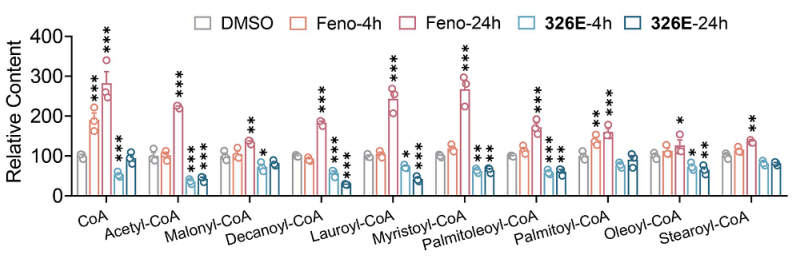
Acyl-CoA relative levels in mouse primary hepatocytes after 4 or 24 h treatment of 326E (100 μM) and Fenofibrate (100 μM).
Fenofibrate purchased from MedChemExpress. Usage Cited in: Cell Metab. 2025 Oct 22:S1550-4131(25)00396-1. [Abstract]
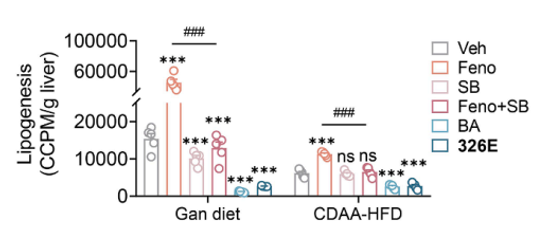
After 7-day oral treatment with Fenofibrate (40 mg/kg, calculated based on clinical dose), SB204990 (150 mg/kg), SB204990 (150 mg/kg) plus fenofibrate(40 mg/kg), BA (30 mg/kg), or 326E (30 mg/kg) in MASH mice (induced by Gan diet or CDAA-HFD), hepatic DNL was assessed by 14C-acetate tracing.
-
Hepatology
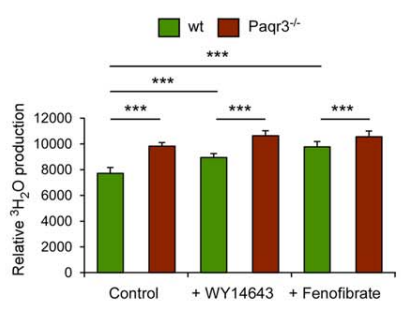
Hepatic PPARα function is controlled by polyubiquitination and proteasome-mediated degradation through the coordinated actions of PAQR3 and HUWE1. [Abstract]2018 Jul;68(1):289-303. PMID: 29331071
Fenofibrate purchased from MedChemExpress. Usage Cited in: Hepatology. 2018 Jul;68(1):289-303. [Abstract]
PAQR3 modulates fatty acid oxidation in hepatocytes. The cells in panel A were treated with WY14643 (30 lM) or Fenofibrate (50 lM) for 24 hours, followed by measurement of the fatty acid oxidation rate.
-
Mol Cell
CPT1A induction following epigenetic perturbation promotes MAVS palmitoylation and activation to potentiate antitumor immunity. [Abstract]2023 Dec 7;83(23):4370-4385.e9. PMID: 38016475 -
Cardiovasc Diabetol
Growth differentiation factor 11 regulates high glucose-induced cardiomyocyte pyroptosis and diabetic cardiomyopathy by inhibiting inflammasome activation. [Abstract]2024 May 7;23(1):160. PMID: 38715043 -
Adv Sci (Weinh)
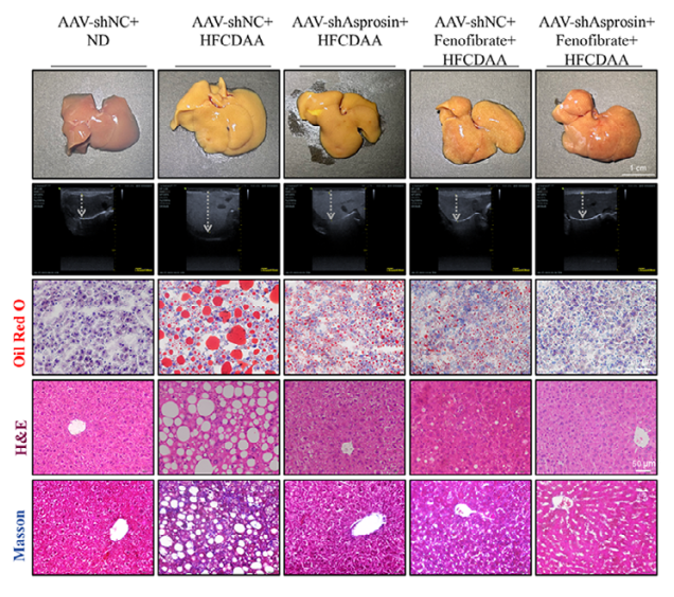
Asprosin-FABP5 Interaction Modulates Mitochondrial Fatty Acid Oxidation through PPARα Contributing to MASLD Development. [Abstract]2025 Jun;12(21):e2415846. PMID: 40231957
Fenofibrate purchased from MedChemExpress. Usage Cited in: Adv Sci (Weinh). 2025 Jun;12(21):e2415846. [Abstract]
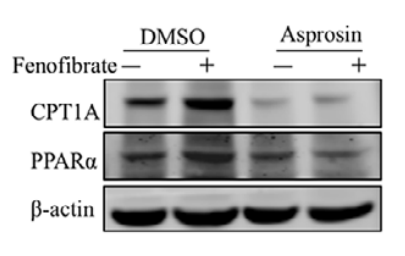
After treatment with asprosin overexpression plasmid for 24 h, primary hepatocytes were treated with Fenofibrate (100 μM) for 24 h. The protein level of PPARα was analyzed by Western blot.
Fenofibrate purchased from MedChemExpress. Usage Cited in: Adv Sci (Weinh). 2025 Jun;12(21):e2415846. [Abstract]
C57BL/6 J mice were fed on HFCDAA and treated with the indicated AAVs. After C57BL/6 J mice were fed on HFCDAA for 4 weeks, mice were injected with vehicle or Fenofibrate (100 mg/kg) for 4 weeks.
-
Carbohydr Polym
Reactive oxygen species-sensitive fenofibrate-loaded dextran nanoparticles in alleviation of osteoarthritis. [Abstract]2025 Jan 1:347:122768. PMID: 39486995 -
Phytomedicine
Jianpi Huayu decoction alleviates hepatic fibrosis involving coordinated modulation of PPARα-mediated lipid metabolic reprogramming and the ROCK pathway. [Abstract]2026 Jun 25:159:158496. PMID: 42407187 -
Phytomedicine
Geniposidic acid alleviated metabolic dysfunction-associated steatotic liver disease by exciting SIRT6 signaling. [Abstract]2025 Oct:146:157140. PMID: 40782762 -
Phytomedicine
An integrated network pharmacology and cell metabolomics approach to reveal the role of rhein, a novel PPARα agonist, against renal fibrosis by activating the PPARα-CPT1A axis. [Abstract]2022 May 6;102:154147. PMID: 35567992 -
Acta Pharmacol Sin
2024 Jun;45(6):1316-1320. PMID: 38459255 -
Acta Pharmacol Sin
PPARα agonist fenofibrate relieves acquired resistance to gefitinib in non-small cell lung cancer by promoting apoptosis via PPARα/AMPK/AKT/FoxO1 pathway. [Abstract]2022 Jan;43(1):167-176. PMID: 33772142 -
Int J Biol Macromol
Carnosine-modified gelatin-hyaluronic acid hydrogel comprising fenofibrate-loaded nanoparticles targeting chondrocyte ferroptosis and macrophage polarization for synergistic osteoarthritis therapy. [Abstract]2026 Apr:354:151281. PMID: 41812949 -
Int J Mol Med
Peroxisome proliferator‑activated receptor α regulates acesulfame‑K‑induced NAFLD via hepatic PLCβ: Foe and friend. [Abstract]2026 Apr;57(4):102. PMID: 41789618 -
Cell Rep
DUSP14 suppresses ferroptosis and promotes tumor progression of triple-negative breast cancer. [Abstract]2025 Sep 30;44(10):116365. PMID: 41032417 -
Cell Rep
Caveolin-1/PPARα axis suppresses T follicular helper cell response in primary Sjögren disease. [Abstract]2025 Aug 12;44(8):116156. PMID: 40802512 -
Biochem Pharmacol
Inhibition of RAGE-mediated inflammatory signaling by Boletus edulis Bull: Fr. Polysaccharide alleviates lipotoxicity-induced metabolic dysfunction. [Abstract]2025 Oct 18;243(Pt 1):117439. PMID: 41115475 -
Eur J Pharmacol
Ginsenoside Rb1 promotes the activation of PPARα pathway via inhibiting FADD to ameliorate heart failure. [Abstract]2023 May 15:947:175676. PMID: 37001580 -
Pharmaceuticals (Basel)
ZLN005 Alleviates In Vivo and In Vitro Renal Fibrosis via PGC-1α-Mediated Mitochondrial Homeostasis. [Abstract]2022 Mar 31;15(4):434. PMID: 35455432 -
Int J Mol Sci
2025 Nov 17;26(22):11099. PMID: 41303582 -
Front Cell Dev Biol
Enhancing Fatty Acid Catabolism of Macrophages Within Aberrant Breast Cancer Tumor Microenvironment Can Re-establish Antitumor Function. [Abstract]2021 Apr 15:9:665869. PMID: 33937269 -
Bioorg Chem
Euphorbia factor L3 ameliorates hepatic steatosis by activating LKB1-AMPK signaling pathway-regulated lipid metabolism. [Abstract]2026 Sep 5:179:110008. PMID: 42176359 -
Biochim Biophys Acta Mol Basis Dis
Pharmacological targeting of AMPK to restore glucose and fatty acid metabolism homeostasis attenuates transplanted kidney fibrosis. [Abstract]2025 Jan;1871(1):167510. PMID: 39278511 -
Exp Neurol
Triiodothyronine ameliorates S-ketamine-induced hypomyelination via the PPARα pathway in neonatal rat. [Abstract]2025 Jul:389:115260. PMID: 40246008 -
Cell Signal
Fenofibrate anti-RARα/RXRα dimerization to attenuate all-trans retinoic acid-induced hyperlipidemia and hepatic steatosis in mice. [Abstract]2026 Mar:139:112357. PMID: 41506518 -
Mol Nutr Food Res
Sesaminol Ameliorates Metabolic and Alcohol-Related Liver Injury by Activating the PPARα/Slc27a5 Axis-Driven Hepatic Fatty Acid β-Oxidation. [Abstract]2026 May;70(10):e70506. PMID: 42170787 -
Viruses
Paraoxonase-1 Facilitates PRRSV Replication by Interacting with Viral Nonstructural Protein-9 and Inhibiting Type I Interferon Pathway. [Abstract]2022 May 31;14(6):1203. PMID: 35746674 -
Nanotoxicology
Graphene oxide nanoparticles induce hepatic dysfunction through the regulation of innate immune signaling in zebrafish ( Danio rerio). [Abstract]2020 Jun;14(5):667-682. PMID: 32141807 -
Hum Exp Toxicol
2021 Jul;40(7):1208-1221. PMID: 33538198 -
Mol Pharmacol
Fenofibrate promotes erucic acid metabolism by peroxisome enzyme EHHADH activation alleviating high-fat diet-induced steatotic liver disease. [Abstract]2025 May 16;107(7):100047. PMID: 40516250 -
Biomed Chromatogr
Study on the Effect and Mechanism of Lomatogonium rotatum (L.) Fries ex Nym Extract on NAFLD Through Metabolomics. [Abstract]2026;40(2):e70323. PMID: 41532219 -
-
-
-
Heliyon
Shenmai injection improves lipid metabolism in post-myocardial infarction heart failure based on network pharmacology and experimental validation. [Abstract]2024 Oct 5;10(21):e38648. PMID: 39524885 -
Environ Sci Pollut Res Int
Lead exposure induced lipid metabolism disorders by regulating the lipophagy process in microglia. [Abstract]2023 Dec;30(60):125991-126008. PMID: 38008839 -
Evid Based Complement Alternat Med
Lanzhang Granules Ameliorate Nonalcoholic Fatty Liver Disease by Regulating the PPAR α Signaling Pathway. [Abstract]2022 Jan 7:2022:1124901. PMID: 35035496


Solvente y solubilidad
In Vitro:
DMSO : 100 mg/mL (277.14 mM; Need ultrasonic; Hygroscopic DMSO has a significant impact on the solubility of product, please use newly opened DMSO)
Please refer to the solubility information to select the appropriate solvent. Once prepared, please aliquot and store the solution to prevent product inactivation from repeated freeze-thaw cycles.
Storage method and period of stock solution: -80°C, 1 year; -20°C, 6 months. When stored at -80°C, please use it within 1 year. When stored at -20°C, please use it within 6 months.
Please refer to the solubility information to select the appropriate solvent. Once prepared, please aliquot and store the solution to prevent product inactivation from repeated freeze-thaw cycles.
Storage method and period of stock solution: -80°C, 1 year; -20°C, 6 months. When stored at -80°C, please use it within 1 year. When stored at -20°C, please use it within 6 months.
Concentration (start) × Volume (start) = Concentration (final) × Volume (final)
In Vivo:
Select the appropriate dissolution method based on your experimental animal and administration route.
- For the following dissolution methods, please ensure to first prepare a clear stock solution using an In Vitro approach and then sequentially add co-solvents:
- To ensure reliable experimental results, the clarified stock solution can be appropriately stored based on storage conditions. As for the working solution for In Vivo experiments, it is recommended to prepare freshly and use it on the same day.
- The percentages shown for the solvents indicate their volumetric ratio in the final prepared solution. If precipitation or phase separation occurs during preparation, heat and/or sonication can be used to aid dissolution.
Add each solvent one by one: 10% DMSO 40% PEG300 5% Tween-80 45% Saline
Solubility: ≥ 2.5 mg/mL (6.93 mM); Clear solution
This protocol yields a clear solution of ≥ 2.5 mg/mL (saturation unknown).
Taking 1 mL working solution as an example, add 100 μL DMSO stock solution (25.0 mg/mL) to 400 μL PEG300, and mix evenly; then add 50 μL Tween-80 and mix evenly; then add 450 μL Saline to adjust the volume to 1 mL.
Preparation of Saline: Dissolve 0.9 g sodium chloride in ddH₂O and dilute to 100 mL to obtain a clear Saline solution.
Add each solvent one by one: 10% DMSO 90% (20% SBE-β-CD in Saline)
Solubility: 2.5 mg/mL (6.93 mM); Suspended solution; Need ultrasonic
This protocol yields a suspended solution of 2.5 mg/mL. Suspended solution can be used for oral and intraperitoneal injection.
Taking 1 mL working solution as an example, add 100 μL DMSO stock solution (25.0 mg/mL) to 900 μL 20% SBE-β-CD in Saline, and mix evenly.
Preparation of 20% SBE-β-CD in Saline (4°C, storage for one week): 2 g SBE-β-CD powder is dissolved in 10 mL Saline, completely dissolve until clear.
For the following dissolution methods, please prepare the working solution directly:
It is recommended to prepare fresh solutions and use them promptly within a short period of time.
The percentages shown for the solvents indicate their volumetric ratio in the final prepared solution. If precipitation or phase separation occurs during preparation, heat and/or sonication can be used to aid dissolution.
Add each solvent one by one: Corn Oil
Solubility: 33.33 mg/mL (92.37 mM); Clear solution; Need ultrasonic
In Vivo Dissolution Calculator
Please enter the basic information of animal experiments:
-
-
-
-
Recommended: Prepare an additional quantity of animals to account for potential losses during experiments.
Please enter your animal formula composition:
-
%DMSO +
Recommended: Keep the proportion of DMSO in working solution below 2% if your animal is weak.
-
%+
-
+%Tween-80 + +
-
%Saline +
The co-solvents required include: DMSO, . All of co-solvents are available by MedChemExpress (MCE). , Tween 80. All of co-solvents are available by MedChemExpress (MCE).
Working solution concentration: 0.22 mg/mL
Method for preparing stock solution: mg drug dissolved in μL DMSO. Stock solution concentration: mg/mL.
1. Take μL DMSO stock solution;
2. Add μL .
μL , mix evenly;
3. Then add μL Tween 80, mix evenly;
4. Then add μL
Please ensure that the stock solution in the first step is dissolved to a clear state, and add co-solvents in sequence. You can use ultrasonic heating (ultrasonic cleaner, recommended frequency 20-40 kHz), vortexing, etc. to assist dissolution.


Pureza y Documentación
-
Ficha de datos (279 KB)
-
SDS (419 KB)
- English - EN (419 KB)
- Français - FR (419 KB)
- Deutsch - DE (419 KB)
- Norwegian - NO (419 KB)
- Español - ES (419 KB)
- Swedish - SV (419 KB)
- Italian - IT (419 KB)
- Korean - KR (419 KB)
- Portuguese - PT (419 KB)
-
Instrucciones de manejo (2659 KB)
Referencias
[1]. Schelleman H, et al. Pharmacoepidemiologic and in vitro evaluation of potential drug-drug interactions of sulfonylureas with fibrates and statins. Br J Clin Pharmacol. 2014 Sep;78(3):639-48. [Content Brief]
[2]. Gong Y, et al. Fenofibrate Inhibits Cytochrome P450 Epoxygenase 2C Activity to Suppress Pathological Ocular Angiogenesis. EBioMedicine. 2016 Sep 30. pii: S2352-3964(16)30448-0. [Content Brief]


Complete Stock Solution Preparation Table
Please refer to the solubility information to select the appropriate solvent. Once prepared, please aliquot and store the solution to prevent product inactivation from repeated freeze-thaw cycles.
Storage method and period of stock solution: -80°C, 1 year; -20°C, 6 months. When stored at -80°C, please use it within 1 year. When stored at -20°C, please use it within 6 months.
| Optional Solvent | Concentration Solvent Mass | 1 mg | 5 mg | 10 mg | 25 mg |
|---|---|---|---|---|---|
| DMSO | 1 mM | 2.7714 mL | 13.8569 mL | 27.7139 mL | 69.2847 mL |
| 5 mM | 0.5543 mL | 2.7714 mL | 5.5428 mL | 13.8569 mL | |
| 10 mM | 0.2771 mL | 1.3857 mL | 2.7714 mL | 6.9285 mL | |
| 15 mM | 0.1848 mL | 0.9238 mL | 1.8476 mL | 4.6190 mL | |
| 20 mM | 0.1386 mL | 0.6928 mL | 1.3857 mL | 3.4642 mL | |
| 25 mM | 0.1109 mL | 0.5543 mL | 1.1086 mL | 2.7714 mL | |
| 30 mM | 0.0924 mL | 0.4619 mL | 0.9238 mL | 2.3095 mL | |
| 40 mM | 0.0693 mL | 0.3464 mL | 0.6928 mL | 1.7321 mL | |
| 50 mM | 0.0554 mL | 0.2771 mL | 0.5543 mL | 1.3857 mL | |
| 60 mM | 0.0462 mL | 0.2309 mL | 0.4619 mL | 1.1547 mL | |
| 80 mM | 0.0346 mL | 0.1732 mL | 0.3464 mL | 0.8661 mL | |
| 100 mM | 0.0277 mL | 0.1386 mL | 0.2771 mL | 0.6928 mL |


Fenofibrate Related Classifications
HY-17356 Related Classifications
 Powered by Bioz