



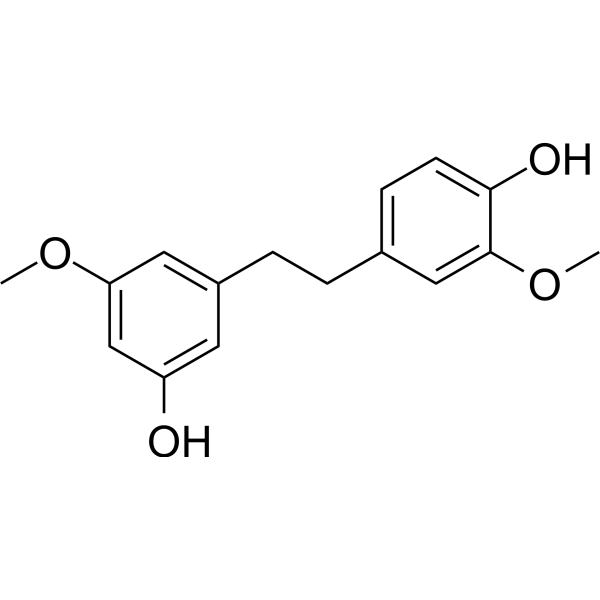
Gigantol
Based on 2 publication(s) in Google Scholar
Gigantol is an orally active bibenzyl compound. Gigantol targets MYC to promote its ubiquitin-proteasomal degradation and inhibit the growth of lung cancer cells. Gigantol exerts anti-lung cancer activity by inducing ferroptosis (Ferroptosis) via the SLC7A11-GPX4 axis. Gigantol restores the sensitivity of mcr-harboring multidrug-resistant bacteria to colistin. Gigantol ameliorates carbon tetrachloride-induced liver injury by inhibiting the activation of the JNK/cPLA2/12-LOX inflammatory pathway. Gigantol promotes cholesterol metabolism and progesterone biosynthesis in Leydig cells. Gigantol can be used in studies related to diseases such as lung cancer, multidrug-resistant Gram-negative bacterial infections, and acute liver injury.
For research use only. We do not sell to patients.
- Purity : 99.79%
- CAS No.: 83088-28-2
- Formula: C16H18O4
- Molecular Weight:274.31
-
Storage:Pure form -20°C, 3 years , 4°C, 2 years ; In solvent -80°C, 6 months , -20°C, 1 month

To place orders, for customer services and technical support, please contact: MedChemExpress USA
Tel: 609-228-6898 E-mail: [email protected] [email protected]


-
 Biological Activity
-
Chemical Information
-
Solvent & Solubility
- Protocols
- Purity & Documentation
- References
-
 Help & FAQs


Publications Citing Use of MedChemExpress (MCE) Gigantol
More

Biological Activity
Description
Cellular Effect
|
Cell Line

|
Type | Value | Description | References |
|---|---|---|---|---|
| A549 | IC50 |
>10 μM
Compound: 17
|
Cytotoxicity against human A549 cells assessed as decrease in cell viability after 6 days by MTT assay
Cytotoxicity against human A549 cells assessed as decrease in cell viability after 6 days by MTT assay
|
[PMID: 27310249] |
| Bel-7402 | IC50 |
13.01 μM
Compound: 2
|
Anti-cancer activity against human Bel-7402 cells
Anti-cancer activity against human Bel-7402 cells
|
[PMID: 32711292] |
| HCCLM3 | IC50 |
57.9 μM
Compound: 27
|
Antiproliferative activity against human HCCLM3 cells assessed as inhibition of cell growth measured after 48 hrs by MTT assay
Antiproliferative activity against human HCCLM3 cells assessed as inhibition of cell growth measured after 48 hrs by MTT assay
|
[PMID: 34931827] |
| HeLa | IC50 |
>10 μM
Compound: 17
|
Cytotoxicity against human HeLa cells assessed as decrease in cell viability after 6 days by MTT assay
Cytotoxicity against human HeLa cells assessed as decrease in cell viability after 6 days by MTT assay
|
[PMID: 27310249] |
| HepG2 | IC50 |
1.883 μM
Compound: 27
|
Antiproliferative activity against human HepG2 cells assessed as inhibition of cell growth measured after 48 hrs by MTT assay
Antiproliferative activity against human HepG2 cells assessed as inhibition of cell growth measured after 48 hrs by MTT assay
|
[PMID: 34931827] |
| HepG2 | IC50 |
9.3 μM
Compound: 2
|
Anti-cancer activity against human HepG2 cells
Anti-cancer activity against human HepG2 cells
|
[PMID: 32711292] |
| HL-60 | IC50 |
10.6 μM
Compound: 2
|
Anti-cancer activity against human HL-60 cells
Anti-cancer activity against human HL-60 cells
|
[PMID: 32711292] |
| K562 | IC50 |
63.9 μM
Compound: 2
|
Anti-cancer activity against human K562 cells
Anti-cancer activity against human K562 cells
|
[PMID: 32711292] |
| KB | IC50 |
61.9 μM
Compound: 2
|
Anti-cancer activity against human KB cells
Anti-cancer activity against human KB cells
|
[PMID: 32711292] |
| MCF7 | IC50 |
>10 μM
Compound: 17
|
Cytotoxicity against human MCF7 cells assessed as decrease in cell viability after 6 days by MTT assay
Cytotoxicity against human MCF7 cells assessed as decrease in cell viability after 6 days by MTT assay
|
[PMID: 27310249] |
| MCF7 | IC50 |
67.8 μM
Compound: 2
|
Anti-cancer activity against human MCF7 cells
Anti-cancer activity against human MCF7 cells
|
[PMID: 32711292] |
| NCI-H187 | IC50 |
235.26 μM
Compound: 2
|
Anti-cancer activity against human NCI-H187 cells
Anti-cancer activity against human NCI-H187 cells
|
[PMID: 32711292] |
| NCI-H460 | IC50 |
247.55 μM
Compound: 1
|
Cytotoxicity against human NCI-H460 cells assessed as cell viability for 24 hrs by MTT assay
Cytotoxicity against human NCI-H460 cells assessed as cell viability for 24 hrs by MTT assay
|
[PMID: 24844664] |
| NCI-H460 | IC50 |
76.89 μM
Compound: 2
|
Anti-cancer activity against human NCI-H460 cells
Anti-cancer activity against human NCI-H460 cells
|
[PMID: 32711292] |
| Neutrophil | IC50 |
2.1 μM
Compound: 33
|
Antiinflammatory activity in human neutrophils assessed as inhibition of FMLP/cytochalasin B-induced superoxide anion generation by measuring superoxide dismutase-inhibitable reduction of ferricytochrome c preincubated for 5 mins followed by FMLP/cytochal
Antiinflammatory activity in human neutrophils assessed as inhibition of FMLP/cytochalasin B-induced superoxide anion generation by measuring superoxide dismutase-inhibitable reduction of ferricytochrome c preincubated for 5 mins followed by FMLP/cytochal
|
[PMID: 27525452] |
| Neutrophil | IC50 |
3.2 μM
Compound: 33
|
Antiinflammatory activity in human neutrophils assessed as inhibition of fMLP/CB-induced elastase release using MeO-Suc-Ala-Ala-Pro-Val-p-nitroanilide as elastase substrate preincubated for 5 mins followed by fMLP/CB-induction
Antiinflammatory activity in human neutrophils assessed as inhibition of fMLP/CB-induced elastase release using MeO-Suc-Ala-Ala-Pro-Val-p-nitroanilide as elastase substrate preincubated for 5 mins followed by fMLP/CB-induction
|
[PMID: 27525452] |
| RAW | IC50 |
32.9 μM
Compound: 9
|
Inhibition of LPS and TNF-alpha-activated NO production in murine RAW 264.7 cells
Inhibition of LPS and TNF-alpha-activated NO production in murine RAW 264.7 cells
|
[PMID: 17253844] |
| RAW264.7 | IC50 |
>50 μM
Compound: 5
|
Antiinflammatory activity in mouse RAW264.7 cells assessed as inhibition of LPS-induced NO production
Antiinflammatory activity in mouse RAW264.7 cells assessed as inhibition of LPS-induced NO production
|
[PMID: 20483604] |
| SGC-7901 | IC50 |
17.38 μM
Compound: 2
|
Anti-cancer activity against human SGC-7901 cells
Anti-cancer activity against human SGC-7901 cells
|
[PMID: 32711292] |
| THP-1 | IC50 |
23.34 μM
Compound: 2
|
Anti-cancer activity against human THP-1 cells
Anti-cancer activity against human THP-1 cells
|
[PMID: 32711292] |
In Vitro
Gigantol (0-200 μM; 0-72 h) exhibits dose-dependent cytotoxicity and dose- and time-dependent antiproliferative effects against H460, A549 and H292 cells[1].
Gigantol (0-20 μM; 10 days) dose-dependently inhibits the colony-forming ability of H460, A549 and H292 cells[1].
Gigantol (5-20 μM; 24 h) dose-dependently downregulates MYC protein expression in human lung cancer cell lines H460, A549 and H292[1].
Gigantol (5-20 μM; 24 h) reduces the inactive phosphorylated Ser9 form of GSK3β in a dose-dependent manner (thereby enhancing GSK3β activity), without altering the total GSK3β levels in human lung cancer cell lines H460, A549 and H292[1].
Gigantol (20 μM; 15–90 min) significantly reduced the stability of MYC protein and shortened its half-life in H460, A549, and H292 human lung cancer cells when co-incubated with Cycloheximide (HY-12320) [1].
Gigantol (20 μM; 1 h) downregulates MYC expression and enhances the ubiquitination level of MYC in H460, A549 and H292 human lung cancer cells, whereas pretreatment with the proteasome inhibitor MG132 (HY-13259) reverses this effect, confirming that gigantol promotes proteasomal degradation of MYC[1].
Gigantol (50-150 μM; 24 h) dose-dependently increases the levels of ROS and Fe2+ in H460 and A549 human lung cancer cells, induces ferroptosis-related mitochondrial cristae loss, and reduces mitochondrial membrane potential in these cells[2].
Gigantol (50-150 μM; 24 h) dose-dependently enhances lipid peroxidation in human lung cancer cells H460 and A549[2].
Gigantol (50-150 μM; 24 h) reduces the protein expression levels of SLC7A11 and GPX4 in human lung cancer cells H460 and A549 in a dose-dependent manner[2].
Gigantol (50-150 μM; 24 h) reduces extracellular cystine uptake as well as intracellular cysteine and GSH levels, and increases intracellular glutamate and MDA levels in H460 and A549 human lung cancer cells[2].
Gigantol (32 μg/mL, serial dilution treatment; 18 h) exerts a synergistic effect with colistin to restore the sensitivity of colistin-resistant Gram-negative bacteria carrying the *mcr* gene (including *E. coli* B2, *Salmonella* 15E343 and *K. pneumoniae* 19-2-1) to colistin, with a FICI value ≤ 0.375. However, it does not enhance the activity of colistin against colistin-sensitive strains or *mcr*-negative strains[3].
Gigantol (10 μM; 4 h) upregulates genes associated with cholesterol and steroid biosynthesis/metabolism (Star, Lss, Idi1) in mouse MA-10 cells, increases lipid droplet accumulation in cells, and promotes progesterone production[5].
Gigantol (10-100 μM; 4 h) increases the basal StAR protein level and the transcriptional activity of AP-1 in mouse MA-10 Leydig cells[5].
Gigantol (100 μM; 4 h) reduces the viability of mouse MA-10 Leydig cells[5].
MedChemExpress (MCE) has not independently confirmed the accuracy of these methods. They are for reference only.
-
Cell Line:H460, A549, H292 cell lines
-
Concentration:0, 5, 10, 20, 50, 100, 200 μM
-
Incubation Time:24 h
-
Result:Caused significant dose-dependent toxic effects, reducing cell viability, at 50, 100, and 200 μM in all three cell lines.
Caused no significant reduction in cell viability at 5, 10, and 20 μM in any of the tested cell lines.
-
Cell Line:H460, A549, H292 cell lines
-
Concentration:5 μM; 10 μM; 20 μM
-
Incubation Time:24, 48, 72 h
-
Result:Significantly reduced proliferation after 24 h in H460 and A549 cells at 20 μM. Significantly suppressed proliferation after 72 h in H460 and A549 cells at 5 and 10 μM. Significantly reduced proliferation after 48 h in H292 cells at all tested concentrations (5, 10, 20 μM).
-
Cell Line:H460, A549, H292 cell lines
-
Concentration:5 μM; 10 μM; 20 μM
-
Incubation Time:24 h
-
Result:Dose-dependently reduced MYC protein levels.
Significantly reduced MYC levels in all three cell lines at 10 and 20 μM.
Significantly reduced MYC levels in H460 and A549 cells at 5 μM.
Dose-dependently reduced the level of inactive phosphorylated Ser9 GSK3β, with no significant effect on total GSK3β levels in all three cell lines.
Significantly reduced the ratio of phosphorylated to total GSK3β in a dose-dependent manner, indicating increased GSK3β activity.
-
Cell Line:H460, A549, H292 human lung carcinoma cell lines
-
Concentration:20 μM (gigantol); 5-20 μM (MG132)
-
Incubation Time:1 h
-
Result:Significantly reduced MYC protein levels when administered alone.
Induced MYC down-regulation that was reversed by pretreatment with 5-20 μM MG132 in all three cell lines.
-
Cell Line:H460, A549
-
Concentration:50-150 μM
-
Incubation Time:24 h
-
Result:Caused a concentration-dependent decrease in SLC7A11 and GPX4 protein expression in both H460 and A549 cells, with lower protein levels observed at higher concentrations compared to the control group.
-
Cell Line:H460, A549
-
Concentration:50, 100, 150 μM
-
Incubation Time:24 h
-
Result:Increased DCFH-DA and ferroOrange
fluorescent expression.
Decrease Mito-Tracker Red CMXRos fluorescent expression.
Increased C11 BODIPY 581/591 fluorescent ratio expression.
Caused a significant decrease in GPX4 fluorescence intensity in both H460 and A549 cells, indicating reduced GPX4 protein expression compared to the control group.
-
Cell Line:H460, A549
-
Concentration:50-150 μM
-
Incubation Time:24 h
-
Result:Caused a concentration-dependent decrease in intracellular GPX4 content.
-
Cell Line:mouse MA-10 Leydig cells
-
Concentration:10 μM
-
Incubation Time:4 h
-
Result:Increased Star gene expression in the absence of forskolin, and increased Lss gene expression. Showed a non-significant improvement in Nsdhl gene expression. Improved Idi1 gene expression in the presence of forskolin. Detected no significant changes in Fra2, Creb1, Mvd, Mvk, or Fdx1 gene expression.
-
Cell Line:mouse MA-10 Leydig cells
-
Concentration:10 μM
-
Incubation Time:4 h
-
Result:Significantly increased StAR protein levels when used alone.
-
Cell Line:mouse MA-10 Leydig cells
-
Concentration:10 μM
-
Incubation Time:4 h
-
Result:Increased progesterone production relative to untreated controls at 10 μM.
-
Cell Line:mouse MA-10 Leydig cells
-
Concentration:1-100 μM
-
Incubation Time:4 h
-
Result:Reduced cell viability relative to untreated controls at 100 μM.
Detected no significant changes in viability at 1 or 10 μM.
In Vivo
Gigantol (40 mg/kg; p.o.; once daily for 7 consecutive days) significantly alleviates CCl4-induced acute liver injury and hepatic inflammation in male ICR mice by inhibiting the JNK/cPLA2/12-LOX pathway, reducing the infiltration and activation of proinflammatory immune cells, and restoring the levels of arachidonic acid metabolites[4].
Gigantol (40 mg/kg; i.v.; once every 12 hours, 3 times total) significantly alleviates liver ischemia-reperfusion injury in male C57 mice by improving liver function and reducing pathological damage[4].
MedChemExpress (MCE) has not independently confirmed the accuracy of these methods. They are for reference only.
-
Animal Model:BALB/c-nu (female, subcutaneous H460 lung cancer tumor model)[2]
-
Dosage:30 mg/kg; 60 mg/kg
-
Administration:i.p.; daily; 12 days
-
Result:Significantly inhibited tumor volume and tumor weight relative to the control group. Showed no significant differences in mouse body weight relative to the control group. Induced no apparent treatment-related toxicity in heart, liver, spleen, lung, and kidney tissues (confirmed via hematoxylin-eosin staining).
-
Animal Model:ICR (male, 24-26 g, acute liver injury induced by subcutaneous CCl4 injection)[4]
-
Dosage:40 mg/kg
-
Administration:p.o.; daily; 7 days
-
Result:Reversed the CCl4-induced elevation of serum ALT and AST levels.
Reduced centrilobular necrosis, swelling, steatosis, and inflammatory infiltration in liver histology.
Decreased the proportion of M1 macrophages (CD86+/F4/80+) from 38.1% to 16.3%, and the proportion of neutrophil infiltration (CD11b+/Ly6G+) from 21.7% to 9.94%.
Inhibited the CCl4-induced elevation of p-JNK/JNK protein ratio, p-cPLA2/cPLA2 protein ratio, and PLA2 mRNA expression in liver tissue.
Reversed the CCl4-induced elevation of multiple hepatic arachidonic acid metabolites, particularly significantly reducing 12-HETE levels from 6.67-fold to 2.85-fold in the control group, while also reducing the levels of 11-HETE, 8-HETE, 5,6-DHET, and 8,9-DHET.
Significantly reduced the CCl4-induced increase in the expression levels of Alox12 and Alox15 mRNA in the liver, and reduced the protein expression of platelet- and leukocyte-type 12-lipoxygenase (12-LOX) in liver tissue.
-
Animal Model:C57 (male, 22-25 g, hepatic ischemia-reperfusion injury induced by 70% warm hepatic ischemia for 1 hour followed by 6 hours of reperfusion)[4]
-
Dosage:40 mg/kg
-
Administration:i.v.; 3 times at 12-hour intervals
-
Result:Reduced serum ALT and AST levels.
Improved liver histopathological changes (reduced centrilobular necrosis, tumefaction, and inflammatory infiltration) compared to the ischemia-reperfusion injury group.


Chemical Information
-
CAS No. 83088-28-2
-
Appearance Oil
-
Molecular Weight 274.31
-
Formula C16H18O4
-
Color Colorless to light yellow
-
SMILES
OC1=CC(CCC2=CC=C(C(OC)=C2)O)=CC(OC)=C1
-
Structure Classification
-
Initial Source
-
Shipping
Room temperature in continental US; may vary elsewhere.
-
Storage
Pure form -20°C 3 years 4°C 2 years In solvent -80°C 6 months -20°C 1 month


Publications (2)
-
Journal Impact Factor
-
Most Recent
-
-
Food Res Int
Glycyrrhiza uralensis Fisch: A novel source of analgesic activity through NaV1.8 sodium channel modulation. [Abstract]2025 Dec;222(Pt 1):117620. PMID: 41267240


Solvent & Solubility
In Vitro:
DMSO : 50 mg/mL (182.28 mM; Need ultrasonic; Hygroscopic DMSO has a significant impact on the solubility of product, please use newly opened DMSO)
Please refer to the solubility information to select the appropriate solvent. Once prepared, please aliquot and store the solution to prevent product inactivation from repeated freeze-thaw cycles.
Storage method and period of stock solution: -80°C, 6 months; -20°C, 1 month. When stored at -80°C, please use it within 6 months. When stored at -20°C, please use it within 1 month.
Please refer to the solubility information to select the appropriate solvent. Once prepared, please aliquot and store the solution to prevent product inactivation from repeated freeze-thaw cycles.
Storage method and period of stock solution: -80°C, 6 months; -20°C, 1 month. When stored at -80°C, please use it within 6 months. When stored at -20°C, please use it within 1 month.
Concentration (start) × Volume (start) = Concentration (final) × Volume (final)


Purity & Documentation
-
Data Sheet (293 KB)
-
SDS (252 KB)
- English - EN (252 KB)
- Français - FR (252 KB)
- Deutsch - DE (252 KB)
- Norwegian - NO (252 KB)
- Español - ES (252 KB)
- Swedish - SV (252 KB)
- Italian - IT (252 KB)
- Korean - KR (252 KB)
- Portuguese - PT (252 KB)
-
Handling Instructions (2659 KB)
References
[1]. Losuwannarak N, et al. Gigantol Targets MYC for Ubiquitin-proteasomal Degradation and Suppresses Lung Cancer Cell Growth. Cancer Genomics Proteomics. 2020;17(6):781-793. [Content Brief]
[2]. Chen P, et al. Gigantol exerts anti-lung cancer activity by inducing ferroptosis via SLC7A11-GPX4 axis. Biochem Biophys Res Commun. 2024;690:149274. [Content Brief]
[3]. Huang Y, et al. Gigantol restores the sensitivity of mcr carrying multidrug-resistant bacteria to colistin. Phytomedicine. 2023;117:154886. [Content Brief]
[4]. Xue Y, et al. Gigantol ameliorates CCl4-induced liver injury via preventing activation of JNK/cPLA2/12-LOX inflammatory pathway. Sci Rep. 2020 Dec 17;10(1):22265. [Content Brief]
[5]. Basque A, et al. Gigantol Improves Cholesterol Metabolism and Progesterone Biosynthesis in MA-10 Leydig Cells. Curr Issues Mol Biol. 2021;44(1):73-93. Published 2021 Dec 23. [Content Brief]


Complete Stock Solution Preparation Table
Please refer to the solubility information to select the appropriate solvent. Once prepared, please aliquot and store the solution to prevent product inactivation from repeated freeze-thaw cycles.
Storage method and period of stock solution: -80°C, 6 months; -20°C, 1 month. When stored at -80°C, please use it within 6 months. When stored at -20°C, please use it within 1 month.
| Optional Solvent | Concentration Solvent Mass | 1 mg | 5 mg | 10 mg | 25 mg |
|---|---|---|---|---|---|
| DMSO | 1 mM | 3.6455 mL | 18.2276 mL | 36.4551 mL | 91.1378 mL |
| 5 mM | 0.7291 mL | 3.6455 mL | 7.2910 mL | 18.2276 mL | |
| 10 mM | 0.3646 mL | 1.8228 mL | 3.6455 mL | 9.1138 mL | |
| 15 mM | 0.2430 mL | 1.2152 mL | 2.4303 mL | 6.0759 mL | |
| 20 mM | 0.1823 mL | 0.9114 mL | 1.8228 mL | 4.5569 mL | |
| 25 mM | 0.1458 mL | 0.7291 mL | 1.4582 mL | 3.6455 mL | |
| 30 mM | 0.1215 mL | 0.6076 mL | 1.2152 mL | 3.0379 mL | |
| 40 mM | 0.0911 mL | 0.4557 mL | 0.9114 mL | 2.2784 mL | |
| 50 mM | 0.0729 mL | 0.3646 mL | 0.7291 mL | 1.8228 mL | |
| 60 mM | 0.0608 mL | 0.3038 mL | 0.6076 mL | 1.5190 mL | |
| 80 mM | 0.0456 mL | 0.2278 mL | 0.4557 mL | 1.1392 mL | |
| 100 mM | 0.0365 mL | 0.1823 mL | 0.3646 mL | 0.9114 mL |


Gigantol Related Classifications
HY-N10549 Related Classifications
 Powered by Bioz
Keywords
- Gigantol
- 83088-28-2
- Ferroptosis
- c-Myc
- Glutathione Peroxidase
- JNK
- Reactive Oxygen Species (ROS)
- GSK-3
- bibenzyl compound
- H460 cells
- A549 cells
- H292 cells
- mouse MA-10 Leydig cells
- BALB/c-nu mice
- ICR mice
- C57 mice
- lung cancer
- multidrug-resistant Gram-negative bacterial infections
- acute liver injury
- Inhibitor
- inhibitor
- inhibit