



YM-750

Based on 1 Customer Validation
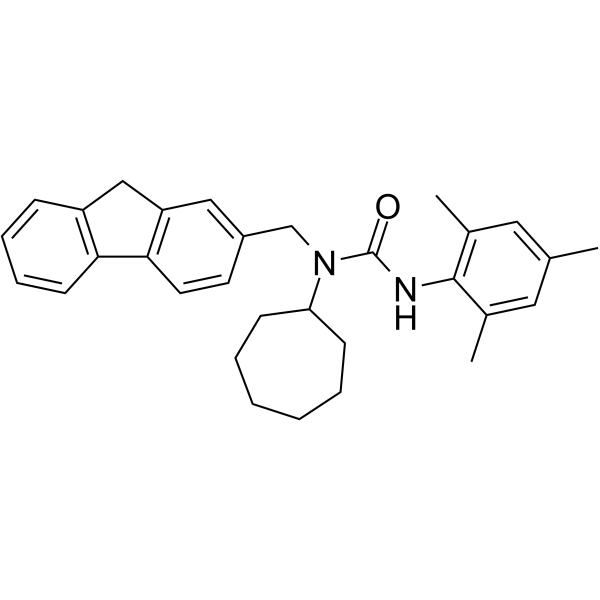
YM-750 is a potent acyl-CoA:cholesterol acyltransferase (ACAT) inhibitor (IC50=0.18 μM). ACAT catalyzes the formation of cholesteryl esters from cholesterol and long-chain fatty-acyl-coenzyme A.
For research use only. We do not sell to patients.
- Purity: 99.95%
- CAS No.: 138046-43-2
- Formula: C31H36N2O
- Molecular Weight:452.63
-
Storage:Powder -20°C, 3 years , 4°C, 2 years ; In solvent -80°C, 6 months , -20°C, 1 month

To place orders, for customer services and technical support, please contact: MedChemExpress USA
Tel: 609-228-6898 E-mail: [email protected] [email protected]


-
 Biological Activity
-
Chemical Information
-
Solvent & Solubility
- Purity & Documentation
- References
-
 Help & FAQs


-
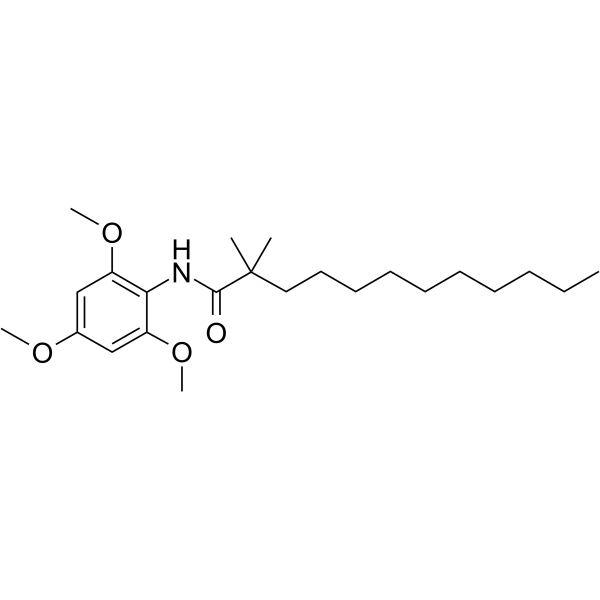
HY-107572
PD 128042
-
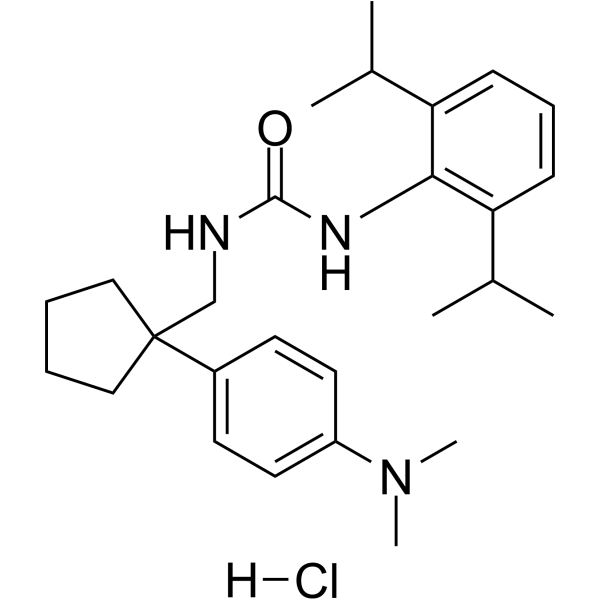
HY-100399A
Nevanimibe hydrochloride
-
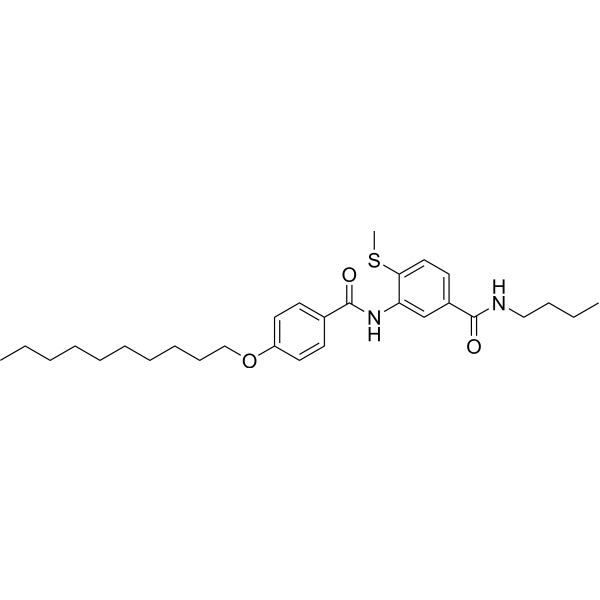
HY-16437
RP-64477
-
HY-101576
RP 70676
-
HY-107571
VULM 1457
-
HY-100400A
K-604 dihydrochloride
-
HY-50861
AZD3988
-
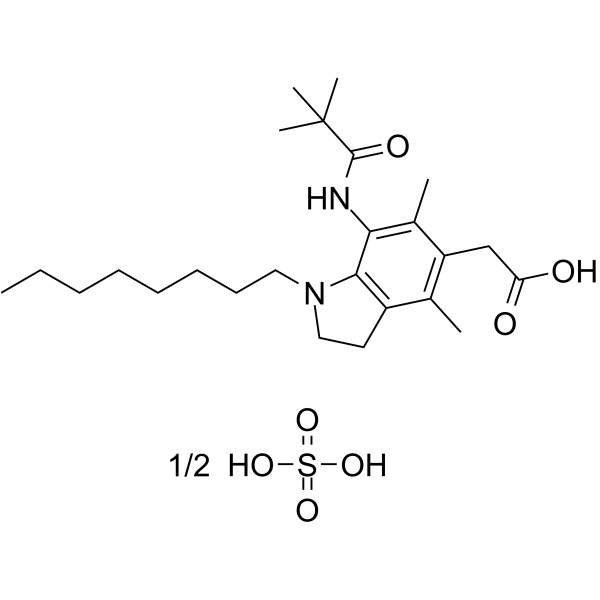
HY-100401A
Pactimibe sulfate
-
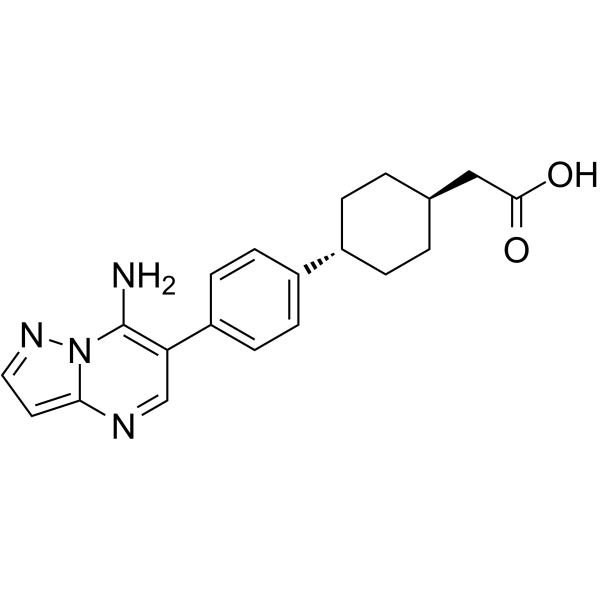
HY-15197
ABT-046
-
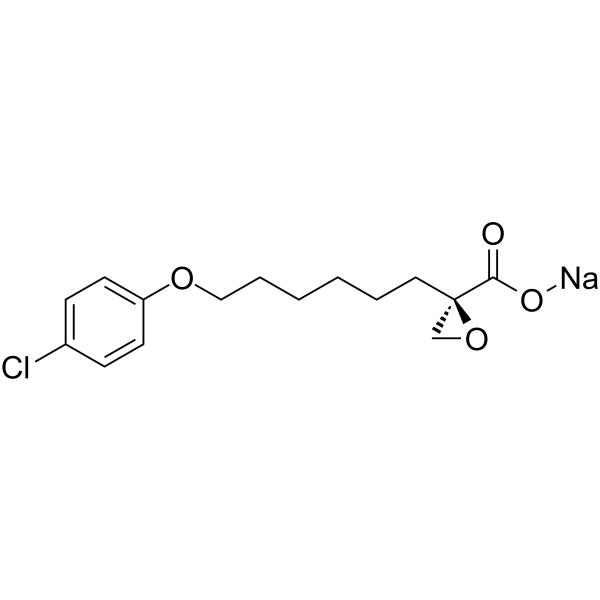
HY-50202A
Etomoxir sodium salt
-

HY-107396R
YM-750 (Standard)
-
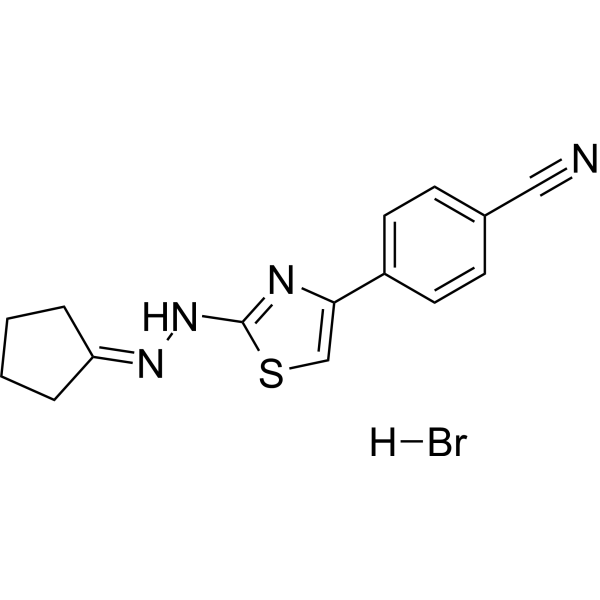
HY-16706A
Remodelin hydrobromide


Biological Activity
Foam cells accumulated esterified cholesterol (EC) for 24 h in the presence of acLDL without Cu2+, which is suppressed by KY-455 and YM-750[3].
MedChemExpress (MCE) has not independently confirmed the accuracy of these methods. They are for reference only.


Chemical Information
-
CAS No. 138046-43-2
-
Appearance Solid
-
Molecular Weight 452.63
-
Formula C31H36N2O
-
Color White to off-white
-
SMILES
O=C(NC1=C(C)C=C(C)C=C1C)N(C2CCCCCC2)CC3=CC(CC4=C5C=CC=C4)=C5C=C3
-
Shipping
Room temperature in continental US; may vary elsewhere.
-
Storage
Powder -20°C 3 years 4°C 2 years In solvent -80°C 6 months -20°C 1 month


Solvent & Solubility
DMSO : 100 mg/mL (220.93 mM; Need ultrasonic; Hygroscopic DMSO has a significant impact on the solubility of product, please use newly opened DMSO)
Please refer to the solubility information to select the appropriate solvent. Once prepared, please aliquot and store the solution to prevent product inactivation from repeated freeze-thaw cycles.
Storage method and period of stock solution: -80°C, 6 months; -20°C, 1 month. When stored at -80°C, please use it within 6 months. When stored at -20°C, please use it within 1 month.
Please refer to the solubility information to select the appropriate solvent. Once prepared, please aliquot and store the solution to prevent product inactivation from repeated freeze-thaw cycles.
Storage method and period of stock solution: -80°C, 6 months; -20°C, 1 month. When stored at -80°C, please use it within 6 months. When stored at -20°C, please use it within 1 month.
Concentration (start) × Volume (start) = Concentration (final) × Volume (final)
Select the appropriate dissolution method based on your experimental animal and administration route.
- For the following dissolution methods, please ensure to first prepare a clear stock solution using an In Vitro approach and then sequentially add co-solvents:
- To ensure reliable experimental results, the clarified stock solution can be appropriately stored based on storage conditions. As for the working solution for In Vivo experiments, it is recommended to prepare freshly and use it on the same day.
- The percentages shown for the solvents indicate their volumetric ratio in the final prepared solution. If precipitation or phase separation occurs during preparation, heat and/or sonication can be used to aid dissolution.
Please enter the basic information of animal experiments:
-
-
-
-
Recommended: Prepare an additional quantity of animals to account for potential losses during experiments.
Please enter your animal formula composition:
-
%DMSO +
Recommended: Keep the proportion of DMSO in working solution below 2% if your animal is weak.
-
%+
-
+%Tween-80 + +
-
%Saline +
The co-solvents required include: DMSO, . All of co-solvents are available by MedChemExpress (MCE). , Tween 80. All of co-solvents are available by MedChemExpress (MCE).
Working solution concentration: 0.22 mg/mL
Method for preparing stock solution: mg drug dissolved in μL DMSO. Stock solution concentration: mg/mL.
1. Take μL DMSO stock solution;
2. Add μL .
μL , mix evenly;
3. Then add μL Tween 80, mix evenly;
4. Then add μL
Please ensure that the stock solution in the first step is dissolved to a clear state, and add co-solvents in sequence. You can use ultrasonic heating (ultrasonic cleaner, recommended frequency 20-40 kHz), vortexing, etc. to assist dissolution.


Purity & Documentation
-
Data Sheet (274 KB)
-
SDS (393 KB)
- English - EN (393 KB)
- Français - FR (393 KB)
- Deutsch - DE (393 KB)
- Norwegian - NO (393 KB)
- Español - ES (393 KB)
- Swedish - SV (393 KB)
- Italian - IT (393 KB)
- Korean - KR (393 KB)
- Portuguese - PT (393 KB)
-
Handling Instructions (2659 KB)
References
[1]. Nagata Y, et al. N-[2-[N'-pentyl-(6,6-dimethyl-2,4-heptadiynyl)amino]ethyl]- (2-methyl-1-naphthylthio)acetamide (FY-087). A new acyl coenzyme a:cholesterol acyltransferase (ACAT) inhibitor of diet-induced atherosclerosis formation in mice. Biochem Pharmacol. 1995;49(5):643-651. [Content Brief]
[2]. Chang C, et al. Human acyl-CoA:cholesterol acyltransferase (ACAT) and its potential as a target for pharmaceutical intervention against atherosclerosis. Acta Biochim Biophys Sin (Shanghai). 2006;38(3):151-156. [Content Brief]
[3]. Miike T, et al. Effects of an anti-oxidative ACAT inhibitor on apoptosis/necrosis and cholesterol accumulation under oxidative stress in THP-1 cell-derived foam cells. Life Sci. 2008;82(1-2):79-84. [Content Brief]


Complete Stock Solution Preparation Table
Please refer to the solubility information to select the appropriate solvent. Once prepared, please aliquot and store the solution to prevent product inactivation from repeated freeze-thaw cycles.
Storage method and period of stock solution: -80°C, 6 months; -20°C, 1 month. When stored at -80°C, please use it within 6 months. When stored at -20°C, please use it within 1 month.
| Optional Solvent | Concentration Solvent Mass | 1 mg | 5 mg | 10 mg | 25 mg |
|---|---|---|---|---|---|
| DMSO | 1 mM | 2.2093 mL | 11.0466 mL | 22.0931 mL | 55.2328 mL |
| 5 mM | 0.4419 mL | 2.2093 mL | 4.4186 mL | 11.0466 mL | |
| 10 mM | 0.2209 mL | 1.1047 mL | 2.2093 mL | 5.5233 mL | |
| 15 mM | 0.1473 mL | 0.7364 mL | 1.4729 mL | 3.6822 mL | |
| 20 mM | 0.1105 mL | 0.5523 mL | 1.1047 mL | 2.7616 mL | |
| 25 mM | 0.0884 mL | 0.4419 mL | 0.8837 mL | 2.2093 mL | |
| 30 mM | 0.0736 mL | 0.3682 mL | 0.7364 mL | 1.8411 mL | |
| 40 mM | 0.0552 mL | 0.2762 mL | 0.5523 mL | 1.3808 mL | |
| 50 mM | 0.0442 mL | 0.2209 mL | 0.4419 mL | 1.1047 mL | |
| 60 mM | 0.0368 mL | 0.1841 mL | 0.3682 mL | 0.9205 mL | |
| 80 mM | 0.0276 mL | 0.1381 mL | 0.2762 mL | 0.6904 mL | |
| 100 mM | 0.0221 mL | 0.1105 mL | 0.2209 mL | 0.5523 mL |


YM-750 Related Classifications
HY-107396 Related Classifications
 Powered by Bioz