



Enalapril
Based on 13 publication(s) in Google Scholar
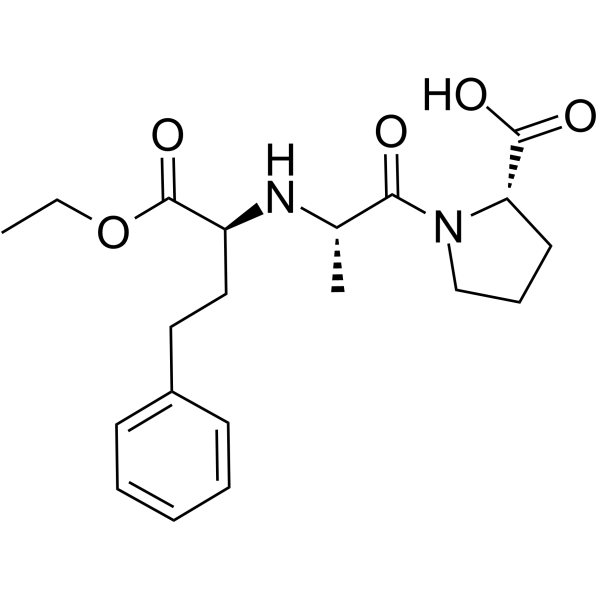
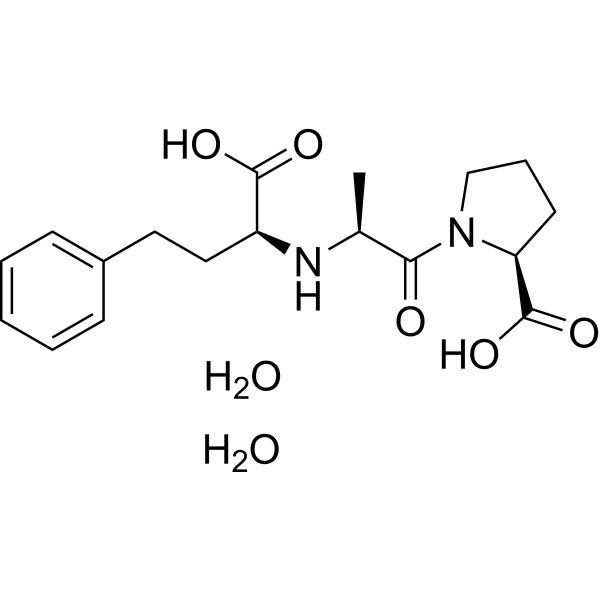
Enalapril (MK-421) is an orally active angiotensin-converting enzyme inhibitor. Enalapril blocks the conversion of angiotensin I to angiotensin II, regulates the renin-angiotensin system, reduces preload and afterload, and decreases plasma angiotensin II levels. Enalapril inhibits apoptosis, reduces nitric oxide metabolite levels, stabilizes endothelial cells, enhances endothelial antioxidant defense, scavenges reactive oxygen species (ROS), and alleviates neuronal damage. Enalapril attenuates glutathione depletion, protein/lipid oxidation, tissue damage, and type III collagen immunolabeling in organs of diabetic rats. Enalapril reduces systolic blood pressure and urinary albumin excretion, and delays the progression of diabetic cardiac/renal injury. Enalapril is used in research related to asymptomatic left ventricular dysfunction, congestive heart failure, Alzheimer's disease, diabetes mellitus, acute myocardial infarction, atrial fibrillation, hypertension, cerebral ischemia, chronic heart failure, and single-ventricle physiology.
For research use only. We do not sell to patients.
- Purity: 99.96%
- CAS No.: 75847-73-3
- Formula: C20H28N2O5
- Molecular Weight:376.45
-
Storage:
4°C, sealed storage, away from moisture
* In solvent : -80°C, 6 months; -20°C, 1 month (sealed storage, away from moisture)

To place orders, for customer services and technical support, please contact: MedChemExpress USA
Tel: 609-228-6898 E-mail: [email protected] [email protected]


-
 Biological Activity
-
Chemical Information
-
Solvent & Solubility
- Purity & Documentation
- References
-
 Help & FAQs


Publications Citing Use of MedChemExpress (MCE) Enalapril
More- Nat Commun. 2023 May 2;14(1):2523. [Abstract]
- Int J Nanomedicine. 2025 Oct 27:20:12993-13006. [Abstract]
- Environ Pollut. 2019 Apr:247:927-934. [Abstract]
- Toxicology. 2023 Mar 1:486:153442. [Abstract]
- Ren Fail. 2023;45(2):2253924. [Abstract]
- Toxicol Appl Pharmacol. 2026 Mar 27:511:117802. [Abstract]
- Cardiooncology. 2025 Nov 13;11(1):106. [Abstract]
- Toxicol Lett. 2019 Jul:309:42-50. [Abstract]
- Am J Transl Res. 2022 Jan 15;14(1):211-222. [Abstract]
- Int J Clin Exp Pathol. 2020 May 1;13(5):827-836. [Abstract]
- Elife. 2025 Aug 28:14:RP104774. [Abstract]
- bioRxiv. 2025 Jun 27:2025.06.24.660441. [Abstract]
- bioRxiv. 2024 November 28.


Biological Activity
|
ACE |
|
Cell Line

|
Type | Value | Description | References |
|---|---|---|---|---|
| CHO | IC50 |
4500 μM
Compound: Enalapril
|
TP_TRANSPORTER: inhibition of Gly-Sar uptake (Gly-Sar: 20 uM) in PEPT1-expressing CHO cells
TP_TRANSPORTER: inhibition of Gly-Sar uptake (Gly-Sar: 20 uM) in PEPT1-expressing CHO cells
|
[PMID: 10052994] |
| CHO | IC50 |
15 mM
Compound: Enalapril
|
TP_TRANSPORTER: inhibition of Gly-Sar uptake (Gly-Sar: 20 uM) in PEPT1-expressing CHO cells
TP_TRANSPORTER: inhibition of Gly-Sar uptake (Gly-Sar: 20 uM) in PEPT1-expressing CHO cells
|
[PMID: 9706043] |
| HEK293 | IC50 |
>500 μM
Compound: enalapril
|
Inhibition of human MATE1-mediated ASP+ uptake expressed in HEK293 cells after 1.5 mins by fluorescence assay
Inhibition of human MATE1-mediated ASP+ uptake expressed in HEK293 cells after 1.5 mins by fluorescence assay
|
[PMID: 23241029] |
Pretreatment with enalapril (50 µM; 24 h) significantly reduces AD serum-induced apoptosis in HUVECs, whereas post-treatment with the same concentration and duration does not provide this protective effect[3].
Enalapril (0.1-100.0 μM; 24 h) dose-dependently inhibits staurosporine-induced apoptosis in primary chick embryo telencephalon neurons, with significant reductions in apoptotic neuron percentages observed at all tested concentrations[8].
Both pretreatment and post-treatment with enalapril (50 µM; 24 h) significantly reduces elevated nitrite levels in HUVEC culture supernatants induced by exposure to AD patient sera[3].
Enalapril when incorporated with 10-20% (w/w) stearic acid into microcrystalline cellulose pellets as enalapril maleate significantly improves enalapril stability under accelerated 40°C/75% RH conditions for 91 days, reducing formation of the degradation products enalaprilate and diketopiperazine more effectively than conventional enalapril maleate or enalapril sodium salt pellets, while stearic acid destabilizes enalapril when combined with enalapril sodium salt in pellets[7].
Enalapril as enalapril maleate shows no significant interaction with stearic acid in 1:1 (w/w) binary mixtures, but as enalapril sodium salt interacts with stearic acid to reduce its thermal stability, lowering the onset temperature for diketopiperazine formation by ~22°C[7].
Enalapril when incorporated with 5% (w/w) crospovidone into microcrystalline cellulose pellets containing 10% (w/w) stearic acid enables enalapril release of 89.51% at 30 min, meeting USP immediate-release criteria[7].
Enalapril (0.1-100.0 μM; 24 h) dose-dependently protects primary chick embryo telencephalon neurons from glutamate- and Fe2+/3+-induced damage, with significant reductions in damaged neuron percentages observed at concentrations ≥0.1 μM for glutamate and ≥10.0 μM for Fe2+/3+[8].
Enalapril (0.1-100.0 μM; 3 h (Fe2+/3+, staurosporine); 1 h (glutamate)) dose-dependently reduces Fe2+/3+-, glutamate-, and staurosporine-induced mitochondrial reactive oxygen species generation in primary chick embryo telencephalon neurons, with significant reductions observed at concentrations ≥1.0 μM for all treatments[8].
MedChemExpress (MCE) has not independently confirmed the accuracy of these methods. They are for reference only.
-
Cell Line:Human umbilical vein endothelial cells (HUVECs)
-
Concentration:50 µM
-
Incubation Time:24 h
-
Result:Reduced AD serum-induced apoptosis from 47.78 to 26.6 in the pretreatment group, as measured by flow cytometry.
Did not reduce apoptosis in the post-treatment group, with a value of 56.87 (higher than the AD serum only group).
Reduced AD serum-induced apoptosis via Cell-Death Detection ELISA in the pretreatment group, while post-treatment showed a lesser reduction.
Enalapril (0.03 mg/kg; i.p.; single dose; 1 hour before permanent middle cerebral artery occlusion) significantly reduces cortical infarct area in male NMRI mice[8].
MedChemExpress (MCE) has not independently confirmed the accuracy of these methods. They are for reference only.
-
Animal Model:Sprague-Dawley (2-month-old male, 200 to 230 g, streptozotocin-induced diabetes mellitus)[4]
-
Dosage:20 mg/L
-
Administration:p.o.; continuous; 8 months
-
Result:Increased final body weight by 16% relative to streptozotocin-only rats.
Reduced systolic blood pressure by 12% relative to streptozotocin-only rats.
Increased creatinine clearance by 31% relative to streptozotocin-only rats.
Reduced urinary albumin excretion by 69% relative to streptozotocin-only rats.
Reduced heart fibrosis scores by 86% relative to streptozotocin-only rats.
Reduced glomerular kidney fibrosis scores by 70% relative to streptozotocin-only rats.
Reduced tubulointerstitial kidney fibrosis scores by 86% relative to streptozotocin-only rats.
Reduced liver fibrosis scores by 84% relative to streptozotocin-only rats.
Reduced liver fatty change scores by 73% relative to streptozotocin-only rats.
Reduced collagen III immunolabeling scores by 68% in the heart and 41% in the kidney relative to streptozotocin-only rats.
Restored kidney total glutathione to control levels, increased liver total glutathione from 164.2 to 558.0 nmol GSH Eq/g wet tissue, and increased heart total glutathione by 23% relative to controls.
Normalized glutathione redox status (GSH/GSSG) in the kidney and liver, and increased heart GSH/GSSG by 326% relative to streptozotocin-only rats.
Increased protein-associated sulfhydryl levels by 15% in the heart, 23% in the kidney, and 17% in the liver relative to streptozotocin-only rats.
Reduced heart thiobarbituric acid-reactive substances by 46% (restored to control levels) relative to streptozotocin-only rats.
Reduced fluorescent chromolipid levels by 32% in the heart and 31% in the kidney relative to streptozotocin-only rats.
-
Animal Model:NMRI mice (male, 20-40 g, permanent middle cerebral artery occlusion via electrocoagulation)[8]
-
Dosage:0.03 mg/kg
-
Administration:i.p.; single dose; 1 hour before middle cerebral artery occlusion
-
Result:Significantly reduced the cortical infarct area compared to vehicle-treated control animals.


Chemical Information
-
CAS No. 75847-73-3
-
Appearance Solid
-
Molecular Weight 376.45
-
Formula C20H28N2O5
-
Color White to off-white
-
SMILES
O=C(O)[C@H]1N(C([C@H](C)N[C@H](C(OCC)=O)CCC2=CC=CC=C2)=O)CCC1
-
Synonyms
MK-421
-
Shipping
Room temperature in continental US; may vary elsewhere.
-
Storage
4°C, sealed storage, away from moisture
* In solvent : -80°C, 6 months; -20°C, 1 month (sealed storage, away from moisture)


Publications (13)
-
Journal Impact Factor
-
Most Recent
-
Nat Commun
Reduced hepatic bradykinin degradation accounts for cold-induced BAT thermogenesis and WAT browning in male mice. [Abstract]2023 May 2;14(1):2523. PMID: 37130842 -
Int J Nanomedicine
Engineering Multifunctional Nanozymes to Reprogram Oxidative Stress and Inflammation in Chronic Wounds. [Abstract]2025 Oct 27:20:12993-13006. PMID: 41179976 -
Environ Pollut
Di-(2-ethylhexyl) phthalate induced an increase in blood pressure via activation of ACE and inhibition of the bradykinin-NO pathway. [Abstract]2019 Apr:247:927-934. PMID: 30823347 -
Toxicology
2023 Mar 1:486:153442. PMID: 36706861 -
Ren Fail
Crocin improves the renal autophagy in rat experimental membranous nephropathy via regulating the SIRT1/Nrf2/HO-1 signaling pathway. [Abstract]2023;45(2):2253924. PMID: 37724538 -
Toxicol Appl Pharmacol
Saikosaponin D protects against isoproterenol-induced kidney injury in rats by regulating the intrarenal renin-angiotensin system. [Abstract]2026 Mar 27:511:117802. PMID: 41903810 -
Cardiooncology
Breast cancer progression in the presence of treated and untreated left ventricular dysfunction. [Abstract]2025 Nov 13;11(1):106. PMID: 41233850 -
Toxicol Lett
Exposure to diisononyl phthalate induced an increase in blood pressure through activation of the ACE/ AT1R axis and inhibition of NO production. [Abstract]2019 Jul:309:42-50. PMID: 30940551 -
Am J Transl Res
Combination therapy with artemether and enalapril improves type 1 diabetic nephropathy through enhancing antioxidant defense. [Abstract]2022 Jan 15;14(1):211-222. PMID: 35173839 -
Int J Clin Exp Pathol
2020 May 1;13(5):827-836. PMID: 32509053 -
Elife
Enalapril mitigates senescence and aging-related phenotypes in human cells and mice via pSmad1/5/9-driven antioxidative genes. [Abstract]2025 Aug 28:14:RP104774. PMID: 40874922 -
bioRxiv
Flow-sensitive HEG1 controls eNOS activity to prevent endothelial dysfunction, hypertension, and atherosclerosis. [Abstract]2025 Jun 27:2025.06.24.660441. PMID: 40667131 -


Solvent & Solubility
DMSO : 100 mg/mL (265.64 mM; Need ultrasonic; Hygroscopic DMSO has a significant impact on the solubility of product, please use newly opened DMSO)
H2O : 50 mg/mL (132.82 mM; Need ultrasonic)
Please refer to the solubility information to select the appropriate solvent. Once prepared, please aliquot and store the solution to prevent product inactivation from repeated freeze-thaw cycles.
Storage method and period of stock solution: -80°C, 6 months; -20°C, 1 month (sealed storage, away from moisture). When stored at -80°C, please use it within 6 months. When stored at -20°C, please use it within 1 month.
* Note: If you choose water as the stock solution, please dilute it to the working solution, then filter and sterilize it with a 0.22 μm filter before use.
Please refer to the solubility information to select the appropriate solvent. Once prepared, please aliquot and store the solution to prevent product inactivation from repeated freeze-thaw cycles.
Storage method and period of stock solution: -80°C, 6 months; -20°C, 1 month (sealed storage, away from moisture). When stored at -80°C, please use it within 6 months. When stored at -20°C, please use it within 1 month.
* Note: If you choose water as the stock solution, please dilute it to the working solution, then filter and sterilize it with a 0.22 μm filter before use.
Concentration (start) × Volume (start) = Concentration (final) × Volume (final)
Select the appropriate dissolution method based on your experimental animal and administration route.
- For the following dissolution methods, please ensure to first prepare a clear stock solution using an In Vitro approach and then sequentially add co-solvents:
- To ensure reliable experimental results, the clarified stock solution can be appropriately stored based on storage conditions. As for the working solution for In Vivo experiments, it is recommended to prepare freshly and use it on the same day.
- The percentages shown for the solvents indicate their volumetric ratio in the final prepared solution. If precipitation or phase separation occurs during preparation, heat and/or sonication can be used to aid dissolution.
Add each solvent one by one: 10% DMSO 40% PEG300 5% Tween-80 45% Saline
Solubility: ≥ 5 mg/mL (13.28 mM); Clear solution
This protocol yields a clear solution of ≥ 5 mg/mL (saturation unknown).
Taking 1 mL working solution as an example, add 100 μL DMSO stock solution (50.0 mg/mL) to 400 μL PEG300, and mix evenly; then add 50 μL Tween-80 and mix evenly; then add 450 μL Saline to adjust the volume to 1 mL.
Preparation of Saline: Dissolve 0.9 g sodium chloride in ddH₂O and dilute to 100 mL to obtain a clear Saline solution.
Add each solvent one by one: 10% DMSO 90% (20% SBE-β-CD in Saline)
Solubility: ≥ 5 mg/mL (13.28 mM); Clear solution
This protocol yields a clear solution of ≥ 5 mg/mL (saturation unknown).
Taking 1 mL working solution as an example, add 100 μL DMSO stock solution (50.0 mg/mL) to 900 μL 20% SBE-β-CD in Saline, and mix evenly.
Preparation of 20% SBE-β-CD in Saline (4°C, storage for one week): 2 g SBE-β-CD powder is dissolved in 10 mL Saline, completely dissolve until clear.
Please enter the basic information of animal experiments:
-
-
-
-
Recommended: Prepare an additional quantity of animals to account for potential losses during experiments.
Working solution concentration: 0.22 mg/mL
This product has good water solubility, please refer to the measured solubility data in water/PBS/Saline for details.


Purity & Documentation
-
Data Sheet (289 KB)
-
SDS (394 KB)
- English - EN (394 KB)
- Français - FR (394 KB)
- Deutsch - DE (394 KB)
- Norwegian - NO (394 KB)
- Español - ES (394 KB)
- Swedish - SV (394 KB)
- Italian - IT (394 KB)
- Korean - KR (394 KB)
- Portuguese - PT (394 KB)
-
Handling Instructions (2659 KB)
References
[1]. Yusuf S, et al. Effect of enalapril on mortality and the development of heart failure in asymptomatic patients with reduced left ventricular ejection fractions. The New England journal of medicine. 1992 Sep 03;327(10):685-91. [Content Brief]
[3]. Meamar R, et al. Enalapril protects endothelial cells against induced apoptosis in Alzheimer's disease. Journal of research in medical sciences : the official journal of Isfahan University of Medical Sciences. 2013 Mar;18(Suppl 1):S1-5. [Content Brief]
[4]. de Cavanagh EM, et al. Enalapril attenuates oxidative stress in diabetic rats. Hypertension (Dallas, Tex. : 1979). 2001 Nov;38(5):1130-6. [Content Brief]
[6]. Sicouri S, et al. Antiarrhythmic effects of losartan and enalapril in canine pulmonary vein sleeve preparations. Journal of cardiovascular electrophysiology. 2011 Jun;22(6):698-705. [Content Brief]
[7]. Cunha TA, et al. Effect of stearic acid on enalapril stability and dissolution from multiparticulate solid dosage forms. AAPS PharmSciTech. 2013 Sep;14(3):1150-7. [Content Brief]
[8]. Ravati A, et al. Enalapril and moexipril protect from free radical-induced neuronal damage in vitro and reduce ischemic brain injury in mice and rats. European journal of pharmacology. 1999 May 28;373(1):21-33. [Content Brief]
[9]. Packer M, et al. Comparison of omapatrilat and enalapril in patients with chronic heart failure: the Omapatrilat Versus Enalapril Randomized Trial of Utility in Reducing Events (OVERTURE). Circulation. 2002 Aug 20;106(8):920-6. [Content Brief]
[10]. Hsu DT, et al. Enalapril in infants with single ventricle: results of a multicenter randomized trial. Circulation. 2010 Jul 27;122(4):333-40. [Content Brief]


Complete Stock Solution Preparation Table
Please refer to the solubility information to select the appropriate solvent. Once prepared, please aliquot and store the solution to prevent product inactivation from repeated freeze-thaw cycles.
Storage method and period of stock solution: -80°C, 6 months; -20°C, 1 month (sealed storage, away from moisture). When stored at -80°C, please use it within 6 months. When stored at -20°C, please use it within 1 month.
| Optional Solvent | Concentration Solvent Mass | 1 mg | 5 mg | 10 mg | 25 mg |
|---|---|---|---|---|---|
| H2O / DMSO | 1 mM | 2.6564 mL | 13.2820 mL | 26.5640 mL | 66.4099 mL |
| 5 mM | 0.5313 mL | 2.6564 mL | 5.3128 mL | 13.2820 mL | |
| 10 mM | 0.2656 mL | 1.3282 mL | 2.6564 mL | 6.6410 mL | |
| 15 mM | 0.1771 mL | 0.8855 mL | 1.7709 mL | 4.4273 mL | |
| 20 mM | 0.1328 mL | 0.6641 mL | 1.3282 mL | 3.3205 mL | |
| 25 mM | 0.1063 mL | 0.5313 mL | 1.0626 mL | 2.6564 mL | |
| 30 mM | 0.0885 mL | 0.4427 mL | 0.8855 mL | 2.2137 mL | |
| 40 mM | 0.0664 mL | 0.3320 mL | 0.6641 mL | 1.6602 mL | |
| 50 mM | 0.0531 mL | 0.2656 mL | 0.5313 mL | 1.3282 mL | |
| 60 mM | 0.0443 mL | 0.2214 mL | 0.4427 mL | 1.1068 mL | |
| 80 mM | 0.0332 mL | 0.1660 mL | 0.3320 mL | 0.8301 mL | |
| 100 mM | 0.0266 mL | 0.1328 mL | 0.2656 mL | 0.6641 mL |
* Note: If you choose water as the stock solution, please dilute it to the working solution, then filter and sterilize it with a 0.22 μm filter before use.


Enalapril Related Classifications
HY-B0331 Related Classifications
 Powered by Bioz
- Enalapril
- 75847-73-3
- MK-421
- MK421
- MK 421
- Angiotensin-converting Enzyme (ACE)
- Apoptosis
- Reactive Oxygen Species (ROS)
- male NMRI mice
- angiotensin II
- reactive oxygen species
- HUVECs
- angiotensin I
- renin-angiotensin system
- primary chick embryo telencephalon neurons
- angiotensin-converting enzyme
- streptozotocin-induced diabetic rats
- endothelial cells
- Inhibitor
- inhibitor
- inhibit