



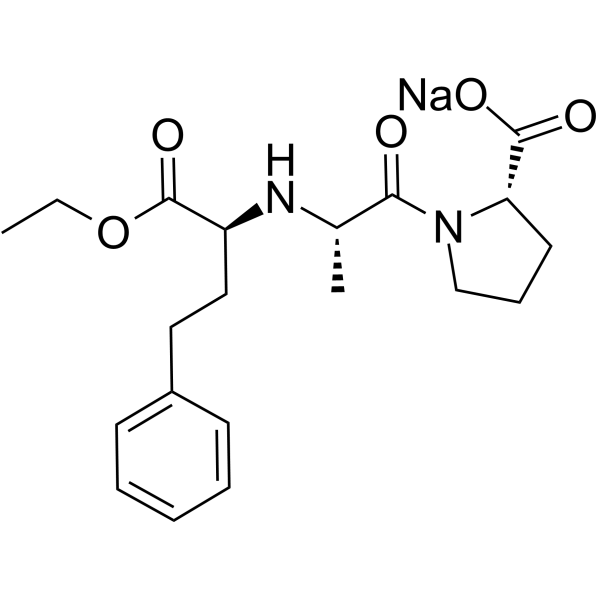
Enalapril sodium
Based on 6 publication(s) in Google Scholar
Enalapril sodium (MK-421 sodium) is an orally active angiotensin-converting enzyme inhibitor. Enalapril sodium blocks the conversion of angiotensin I to angiotensin II, regulates the renin-angiotensin system, reduces preload and afterload, and decreases plasma angiotensin II levels. Enalapril sodium inhibits apoptosis, reduces nitric oxide metabolite levels, stabilizes endothelial cells, enhances endothelial antioxidant defense, scavenges reactive oxygen species (ROS), and alleviates neuronal damage. Enalapril sodium attenuates glutathione depletion, protein/lipid oxidation, tissue damage, and type III collagen immunolabeling in organs of diabetic rats. Enalapril sodium reduces systolic blood pressure and urinary albumin excretion, and delays the progression of diabetic cardiac/renal injury. Enalapril sodium is used in research related to asymptomatic left ventricular dysfunction, congestive heart failure, Alzheimer's disease, diabetes mellitus, acute myocardial infarction, atrial fibrillation, hypertension, cerebral ischemia, chronic heart failure, and single-ventricle physiology.
For research use only. We do not sell to patients.
- CAS No.: 149404-21-7
- Formula: C20H27N2NaO5
- Molecular Weight:398.43
-
Storage:
Please store the product under the recommended conditions in the Certificate of Analysis.

To place orders, for customer services and technical support, please contact: MedChemExpress USA
Tel: 609-228-6898 E-mail: [email protected] [email protected]


-
 Biological Activity
-
Chemical Information
- Protocols
- Purity & Documentation
- References
-
 Help & FAQs


Publications Citing Use of MedChemExpress (MCE) Enalapril sodium
More- Nat Commun. 2023 May 2;14(1):2523. [Abstract]
- Ren Fail. 2023;45(2):2253924. [Abstract]
- Toxicol Appl Pharmacol. 2026 Mar 27:511:117802. [Abstract]
- Am J Transl Res. 2022 Jan 15;14(1):211-222. [Abstract]
- Int J Clin Exp Pathol. 2020 May 1;13(5):827-836. [Abstract]
- Elife. 2025 Aug 28:14:RP104774. [Abstract]


Biological Activity
Description
IC50 & Target
|
ACE |
In Vitro
Pretreatment with Enalapril (50 µM; 24 h) sodium significantly reduces AD serum-induced apoptosis in HUVECs, whereas post-treatment with the same concentration and duration does not provide this protective effect[3].
Enalapril (0.1-100.0 μM; 24 h) sodium dose-dependently inhibits staurosporine-induced apoptosis in primary chick embryo telencephalon neurons, with significant reductions in apoptotic neuron percentages observed at all tested concentrations[8].
Both pretreatment and post-treatment with Enalapril (50 µM; 24 h) sodium significantly reduces elevated nitrite levels in HUVEC culture supernatants induced by exposure to AD patient sera[3].
Enalapril sodium when incorporated with 10-20% (w/w) stearic acid into microcrystalline cellulose pellets as Enalapril maleate significantly improves Enalapril sodium stability under accelerated 40°C/75% RH conditions for 91 days, reducing formation of the degradation products Enalapril sodiumate and diketopiperazine more effectively than conventional Enalapril maleate or Enalapril sodium salt pellets, while stearic acid destabilizes Enalapril sodium when combined with Enalapril sodium salt in pellets[7].
Enalapril sodium as Enalapril maleate shows no significant interaction with stearic acid in 1:1 (w/w) binary mixtures, but as Enalapril sodium salt interacts with stearic acid to reduce its thermal stability, lowering the onset temperature for diketopiperazine formation by ~22°C[7].
Enalapril sodium when incorporated with 5% (w/w) crospovidone into microcrystalline cellulose pellets containing 10% (w/w) stearic acid enables Enalapril sodium release of 89.51% at 30 min, meeting USP immediate-release criteria[7].
Enalapril (0.1-100.0 μM; 24 h) sodium dose-dependently protects primary chick embryo telencephalon neurons from glutamate- and Fe2+/3+-induced damage, with significant reductions in damaged neuron percentages observed at concentrations ≥0.1 μM for glutamate and ≥10.0 μM for Fe2+/3+[8].
Enalapril (0.1-100.0 μM; 3 h (Fe2+/3+, staurosporine); 1 h (glutamate)) sodium dose-dependently reduces Fe2+/3+-, glutamate-, and staurosporine-induced mitochondrial reactive oxygen species generation in primary chick embryo telencephalon neurons, with significant reductions observed at concentrations ≥1.0 μM for all treatments[8].
MedChemExpress (MCE) has not independently confirmed the accuracy of these methods. They are for reference only. Further protocols information, click here.
-
Cell Line:Human umbilical vein endothelial cells (HUVECs)
-
Concentration:50 µM
-
Incubation Time:24 h
-
Result:Reduced AD serum-induced apoptosis from 47.78 to 26.6 in the pretreatment group, as measured by flow cytometry.
Did not reduce apoptosis in the post-treatment group, with a value of 56.87 (higher than the AD serum only group).
Reduced AD serum-induced apoptosis via Cell-Death Detection ELISA in the pretreatment group, while post-treatment showed a lesser reduction.
In Vivo
Enalapril (0.03 mg/kg; i.p.; single dose; 1 hour before permanent middle cerebral artery occlusion) sodium significantly reduces cortical infarct area in male NMRI mice[8].
MedChemExpress (MCE) has not independently confirmed the accuracy of these methods. They are for reference only.
-
Animal Model:Sprague-Dawley (2-month-old male, 200 to 230 g, streptozotocin-induced diabetes mellitus)[4]
-
Dosage:20 mg/L
-
Administration:p.o.; continuous; 8 months
-
Result:Increased final body weight by 16% relative to streptozotocin-only rats.
Reduced systolic blood pressure by 12% relative to streptozotocin-only rats.
Increased creatinine clearance by 31% relative to streptozotocin-only rats.
Reduced urinary albumin excretion by 69% relative to streptozotocin-only rats.
Reduced heart fibrosis scores by 86% relative to streptozotocin-only rats.
Reduced glomerular kidney fibrosis scores by 70% relative to streptozotocin-only rats.
Reduced tubulointerstitial kidney fibrosis scores by 86% relative to streptozotocin-only rats.
Reduced liver fibrosis scores by 84% relative to streptozotocin-only rats.
Reduced liver fatty change scores by 73% relative to streptozotocin-only rats.
Reduced collagen III immunolabeling scores by 68% in the heart and 41% in the kidney relative to streptozotocin-only rats.
Restored kidney total glutathione to control levels, increased liver total glutathione from 164.2 to 558.0 nmol GSH Eq/g wet tissue, and increased heart total glutathione by 23% relative to controls.
Normalized glutathione redox status (GSH/GSSG) in the kidney and liver, and increased heart GSH/GSSG by 326% relative to streptozotocin-only rats.
Increased protein-associated sulfhydryl levels by 15% in the heart, 23% in the kidney, and 17% in the liver relative to streptozotocin-only rats.
Reduced heart thiobarbituric acid-reactive substances by 46% (restored to control levels) relative to streptozotocin-only rats.
Reduced fluorescent chromolipid levels by 32% in the heart and 31% in the kidney relative to streptozotocin-only rats.
-
Animal Model:NMRI mice (male, 20-40 g, permanent middle cerebral artery occlusion via electrocoagulation)[8]
-
Dosage:0.03 mg/kg
-
Administration:i.p.; single dose; 1 hour before middle cerebral artery occlusion
-
Result:Significantly reduced the cortical infarct area compared to vehicle-treated control animals.
Clinical Trial
| NCT Number | Sponsor | Condition | Start Date |
Phase

|
|---|---|---|---|---|
| NCT01329991 | Plexxikon| | 2011-05 | PHASE1 |


Chemical Information
-
CAS No. 149404-21-7
-
Molecular Weight 398.43
-
Formula C20H27N2NaO5
-
SMILES
O=C(O[Na])[C@H]1N(C([C@H](C)N[C@H](C(OCC)=O)CCC2=CC=CC=C2)=O)CCC1
-
Synonyms
MK-421 sodium
-
Shipping
Room temperature in continental US; may vary elsewhere.
-
Storage
Please store the product under the recommended conditions in the Certificate of Analysis.


Publications (6)
-
Journal Impact Factor
-
Most Recent
-
Nat Commun
Reduced hepatic bradykinin degradation accounts for cold-induced BAT thermogenesis and WAT browning in male mice. [Abstract]2023 May 2;14(1):2523. PMID: 37130842 -
Ren Fail
Crocin improves the renal autophagy in rat experimental membranous nephropathy via regulating the SIRT1/Nrf2/HO-1 signaling pathway. [Abstract]2023;45(2):2253924. PMID: 37724538 -
Toxicol Appl Pharmacol
Saikosaponin D protects against isoproterenol-induced kidney injury in rats by regulating the intrarenal renin-angiotensin system. [Abstract]2026 Mar 27:511:117802. PMID: 41903810 -
Am J Transl Res
Combination therapy with artemether and enalapril improves type 1 diabetic nephropathy through enhancing antioxidant defense. [Abstract]2022 Jan 15;14(1):211-222. PMID: 35173839 -
Int J Clin Exp Pathol
2020 May 1;13(5):827-836. PMID: 32509053 -
Elife
Enalapril mitigates senescence and aging-related phenotypes in human cells and mice via pSmad1/5/9-driven antioxidative genes. [Abstract]2025 Aug 28:14:RP104774. PMID: 40874922

Protocols
-
Apoptosis
Apoptosis, also called programmed cell death, is generally characterized by distinct morphological characteristics.
-
TUNEL staining for apoptotic DNA fragmentation
TUNEL staining detects DNA strand breaks by using terminal deoxynucleotidyl transferase to add labeled nucleotides to exposed 3′-OH DNA termini, generating either microscopic staining in fixed cells or tissue sections, or fluorescence/cytometric signal in cell suspensions. TUNEL positivity reflects DNA fragmentation but should not be interpreted alone as definitive apoptosis, because TUNEL can also label necrotic, autolytic, mechanically damaged, or DNA-repair-associated DNA breaks.
-
Nephrotoxicity Study
This protocol assesses nephrotoxicity by combining functional kidney injury readouts, urinary/tissue injury biomarkers, and renal histopathology. Serum creatinine and BUN reflect impaired kidney function, while KIM-1, NGAL, clusterin, osteopontin, IL-18, cystatin C, nephrin, Oat5, urinary protein, glucose, and alkaline phosphatase have been used to detect tubular injury in cisplatin-, gentamicin-, and acetaminophen-induced nephrotoxicity models.
-
Annexin V plus membrane-impermeant dye apoptosis staining
Annexin V-based apoptosis assays rely on the detection of phosphatidylserine (PS) externalization from the inner leaflet of the plasma membrane to the outer leaflet, an early biochemical hallmark of apoptosis. Fluorescently labeled Annexin V binds PS in a calcium-dependent manner, enabling identification of early apoptotic cells by flow cytometry or fluorescence microscopy. When combined with a membrane-impermeant DNA-binding dye (e. g. , propidium iodide), this approach allows discrimination between viable (Annexin V−/dye−), early apoptotic (Annexin V+/dye−), and late apoptotic or necrotic (Annexin V+/dye+) cell populations by assessing membrane integrity and PS exposure.
-
ROS/oxidative-stress fluorescent staining
ROS/oxidative-stress fluorescent staining uses cell-permeant fluorogenic probes that become fluorescent after oxidation inside cells or tissues; commonly used examples include DCFH-DA/DCFDA for broad cellular oxidant detection, DHE for superoxide-related signal detection, MitoSOX for mitochondrial superoxide-related signal detection, and CellROX probes for oxidative-stress-associated fluorescence readouts. The assay detects probe oxidation rather than a single ROS species unless the probe and analysis method have been chemically validated for that species. DCFH-DA enters cells, is deacetylated by intracellular esterases to DCFH, and produces fluorescent DCF after oxidation, so the readout is used as an operational measure of total cellular oxidative stress rather than a species-specific ROS measurement. DHE and MitoSOX can report superoxide-related oxidation, but red fluorescence alone can include non-specific ethidium-like oxidation products; HPLC or optimized spectral approaches are
-
Endothelial Tube Formation Assay
Endothelial tube formation assay evaluates the ability of endothelial cells to attach, migrate, align, and organize into capillary-like networks when cultured on gelled basement membrane extract or Matrigel; the readout is the morphology and quantity of tube-like networks, which reflects an in vitro endothelial morphogenesis step related to angiogenesis. Basement membrane extract/Matrigel provides laminin-rich extracellular matrix cues that support endothelial differentiation into capillary-like structures, but it can contain biologically active growth factors, so growth-factor-reduced matrix is preferred when testing defined angiogenic stimulators or inhibitors.
-
Apoptosis Solutions
Apoptosis is a regulated, generally non-lytic cell-death pathway that removes unwanted, damaged, infected, or abnormal cells through coordinated morphological changes, caspase activation, DNA fragmentation, and membrane remodeling. The intrinsic apoptosis pathway is controlled mainly by mitochondrial outer membrane permeabilization, BCL-2 family proteins, cytochrome c release, apoptosome formation, caspase-9 activation, and downstream executioner caspase-3/7 activation. The extrinsic apoptosis pathway is initiated by death receptors such as Fas, TNFR, and TRAIL receptors, which recruit adaptor proteins and activate caspase-8 before engaging executioner caspases or mitochondrial amplification through BID cleavage. Apoptosis is linked to many phenotypes, including cancer cell killing, tissue homeostasis, immune regulation, neurodegeneration, infection response, and treatment-induced cytotoxicity; unresolved questions include how apoptosis interacts with necroptosis, pyroptosis, ferroptos
-
Research Protocol for Cardiovascular Diseases
Cardiovascular disease can be modeled as maladaptive cardiac remodeling, where ischemic injury or pressure overload activates inflammatory signaling, fibroblast activation, extracellular-matrix deposition, cardiomyocyte hypertrophy, vascular remodeling, and progressive ventricular dysfunction. The TGF-β/SMAD axis is a central profibrotic pathway after myocardial injury and pressure overload, while innate immune and cytokine pathways regulate leukocyte recruitment, scar formation, and adverse remodeling. Key unresolved questions include which inflammatory signals are reparative versus harmful, when fibrosis is protective versus maladaptive, and whether pathway inhibition improves function without weakening necessary infarct healing or compensatory remodeling.
-
Research Protocol for Metabolic Diseases
AMP-activated protein kinase, AMPK, is a conserved cellular energy sensor that responds to reduced cellular energy status and coordinates metabolism by increasing ATP-generating catabolic pathways while suppressing ATP-consuming anabolic processes. In metabolic disease research, the AMPK pathway is experimentally relevant because it regulates hepatic lipid synthesis, fatty acid oxidation, glucose production, skeletal-muscle glucose disposal, mTORC1-linked biosynthesis, autophagy, mitochondrial homeostasis, and whole-body energy balance. The central pathway logic is that energy stress, metformin, exercise-like stimulation, or direct AMPK activators increase AMPKα Thr172 phosphorylation and downstream substrate phosphorylation, including ACC and RAPTOR. Phosphorylation of ACC suppresses lipogenesis and supports fatty acid oxidation, whereas phosphorylation of RAPTOR suppresses mTORC1 signaling and links cellular energy status to growth and protein synthesis control. The pathway is linked
-
Alzheimer’s Disease Modeling
Alzheimer’s Disease (AD) is a neurodegenerative disorder characterized by a progressive decline in cognitive functions and loss of specific types of neurons and synapses. Alzheimer's symptoms can be simulated in mice by injecting drugs (such as Aβ) or genetically modified.


Purity & Documentation
References
[1]. Yusuf S, et al. Effect of enalapril on mortality and the development of heart failure in asymptomatic patients with reduced left ventricular ejection fractions. The New England journal of medicine. 1992 Sep 03;327(10):685-91. [Content Brief]
[3]. Meamar R, et al. Enalapril protects endothelial cells against induced apoptosis in Alzheimer's disease. Journal of research in medical sciences : the official journal of Isfahan University of Medical Sciences. 2013 Mar;18(Suppl 1):S1-5. [Content Brief]
[4]. de Cavanagh EM, et al. Enalapril attenuates oxidative stress in diabetic rats. Hypertension (Dallas, Tex. : 1979). 2001 Nov;38(5):1130-6. [Content Brief]
[6]. Sicouri S, et al. Antiarrhythmic effects of losartan and enalapril in canine pulmonary vein sleeve preparations. Journal of cardiovascular electrophysiology. 2011 Jun;22(6):698-705. [Content Brief]
[7]. Cunha TA, et al. Effect of stearic acid on enalapril stability and dissolution from multiparticulate solid dosage forms. AAPS PharmSciTech. 2013 Sep;14(3):1150-7. [Content Brief]
[8]. Ravati A, et al. Enalapril and moexipril protect from free radical-induced neuronal damage in vitro and reduce ischemic brain injury in mice and rats. European journal of pharmacology. 1999 May 28;373(1):21-33. [Content Brief]
[9]. Packer M, et al. Comparison of omapatrilat and enalapril in patients with chronic heart failure: the Omapatrilat Versus Enalapril Randomized Trial of Utility in Reducing Events (OVERTURE). Circulation. 2002 Aug 20;106(8):920-6. [Content Brief]
[10]. Hsu DT, et al. Enalapril in infants with single ventricle: results of a multicenter randomized trial. Circulation. 2010 Jul 27;122(4):333-40. [Content Brief]

Calculators
Concentration (start) × Volume (start) = Concentration (final) × Volume (final)


Enalapril sodium Related Classifications
HY-B0331B Related Classifications
 Powered by Bioz
Keywords
- Enalapril
- 149404-21-7
- MK-421
- MK421
- MK 421
- Angiotensin-converting Enzyme (ACE)
- Apoptosis
- Reactive Oxygen Species (ROS)
- male NMRI mice
- angiotensin II
- reactive oxygen species
- HUVECs
- angiotensin I
- renin-angiotensin system
- primary chick embryo telencephalon neurons
- angiotensin-converting enzyme
- streptozotocin-induced diabetic rats
- endothelial cells
- Inhibitor
- inhibitor
- inhibit