



Gandotinib
Based on 4 publication(s) in Google Scholar
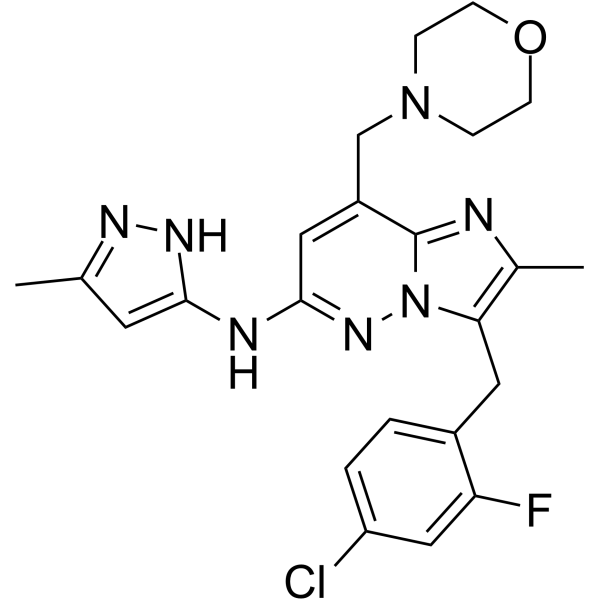
Gandotinib (LY2784544) is a potent JAK2 inhibitor with IC50 of 3 nM. Gandotinib (LY2784544) also inhibits FLT3, FLT4, FGFR2, TYK2, and TRKB with IC50 of 4, 25, 32, 44, and 95 nM.
연구목적의 판매만을 진행합니다. 환자를 대상으로 한 판매는 하지 않습니다.
- Purity : 99.86%
- CAS No.: 1229236-86-5
- 화학식: C23H25ClFN7O
- 분자량:469.94
-
보관:Powder -20°C, 3 years , 4°C, 2 years ; In solvent -80°C, 2 years , -20°C, 1 year

To place orders, for customer services and technical support, please contact: MedChemExpress USA
Tel: 609-228-6898 E-mail: [email protected] [email protected]


-
 Biological Activity
-
Chemical Information
-
용액&용해도
- 순도&문서
- References
-
 Help & FAQs


-
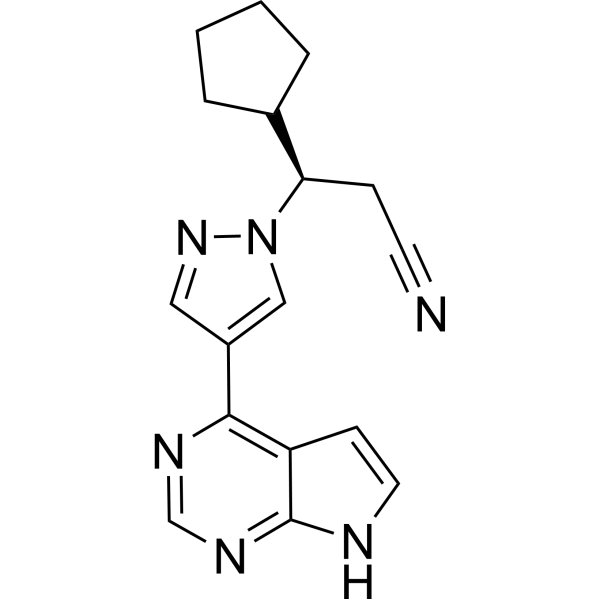
HY-50856
RuxolitinibJAK1/2 Inhibitor -
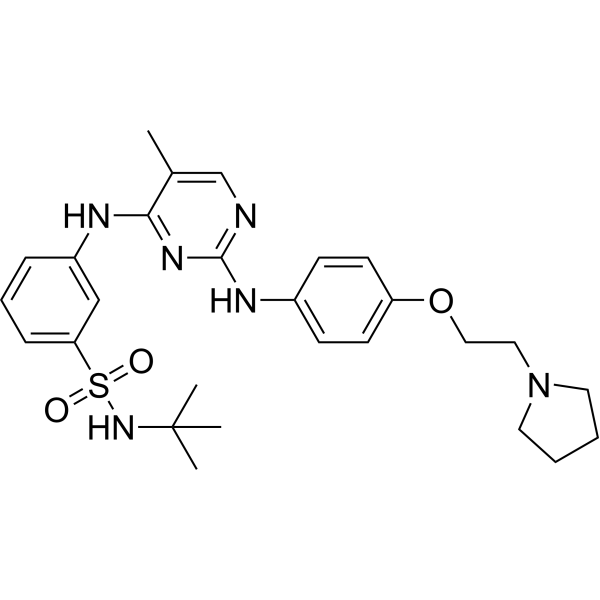
HY-10409
FedratinibJAK2 Inhibitor -
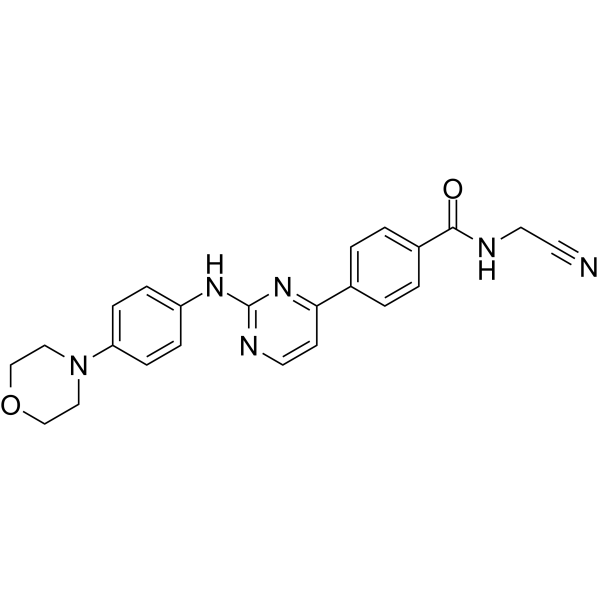
HY-10961
MomelotinibJAK1/2 Inhibitor -
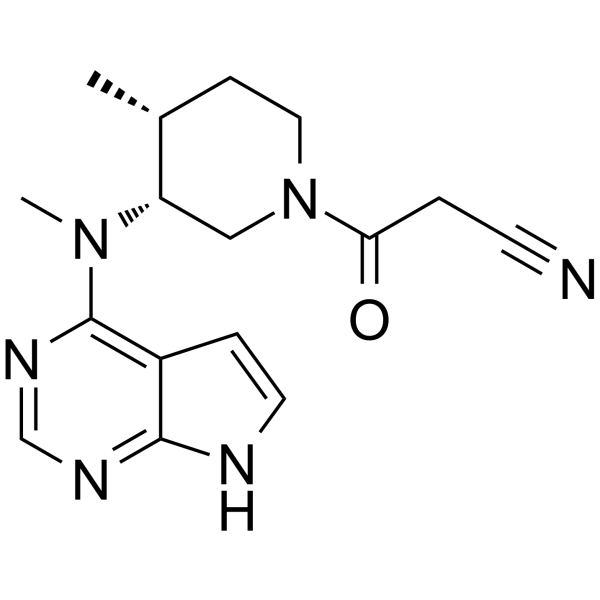
HY-40354
TofacitinibJAK1/JAK3 Inhibitor -
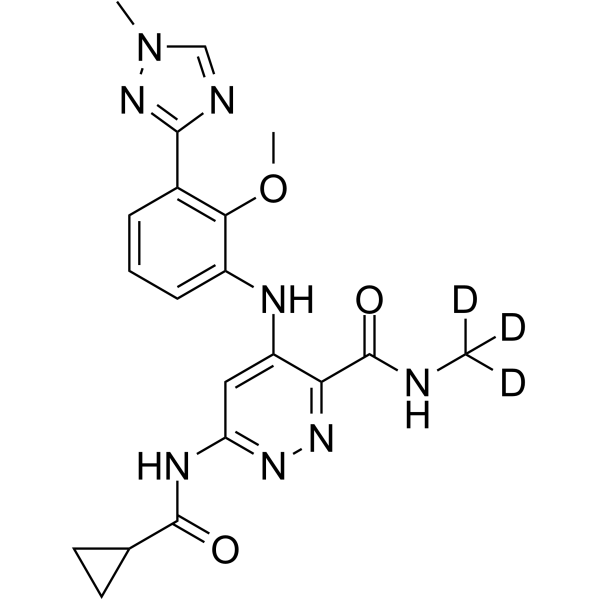
HY-117287
DeucravacitinibTYK2 Inhibitor -
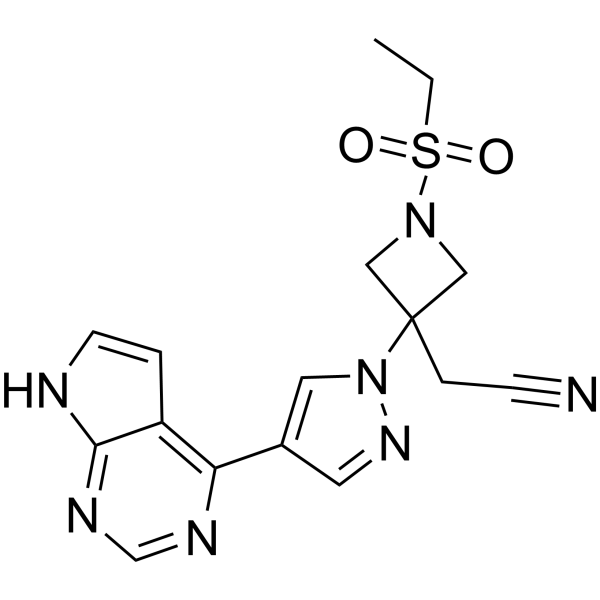
HY-15315
BaricitinibJAK1/2 Inhibitor -
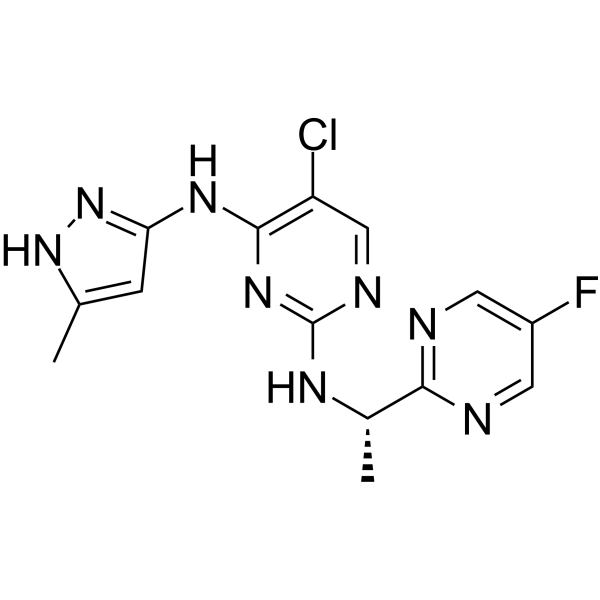
HY-10193
AZD-1480JAK1/2 Inhibitor -
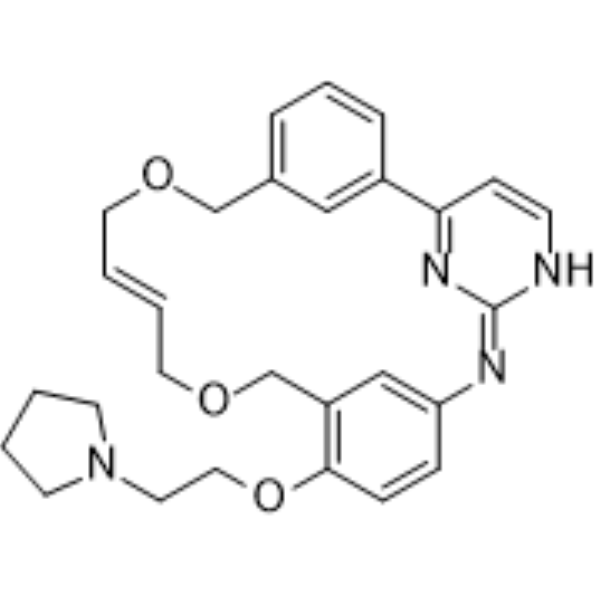
HY-16379
PacritinibJAK2/FLT3 Inhibitor -
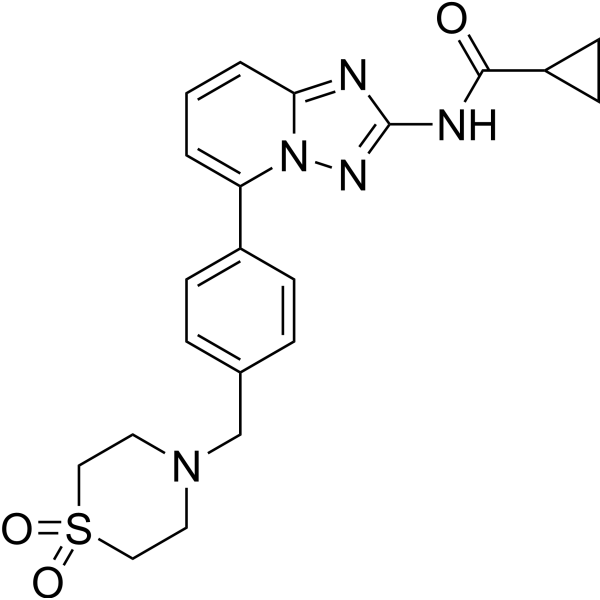
HY-18300
FilgotinibJAK1 Inhibitor -
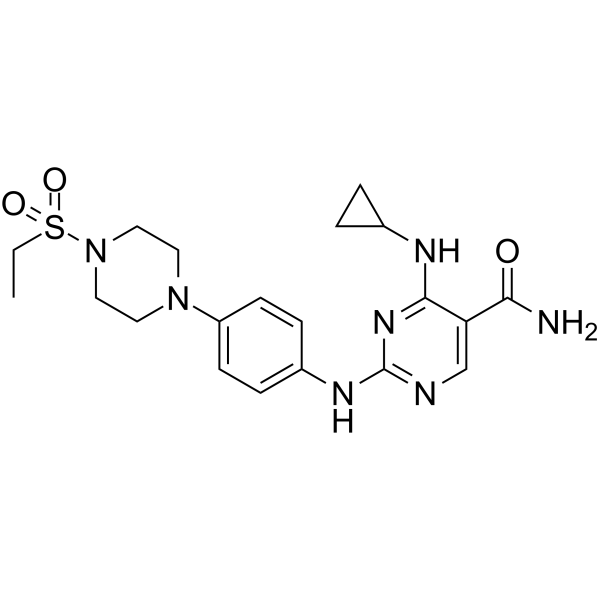
HY-15999
CerdulatinibTyk2 Inhibitor -
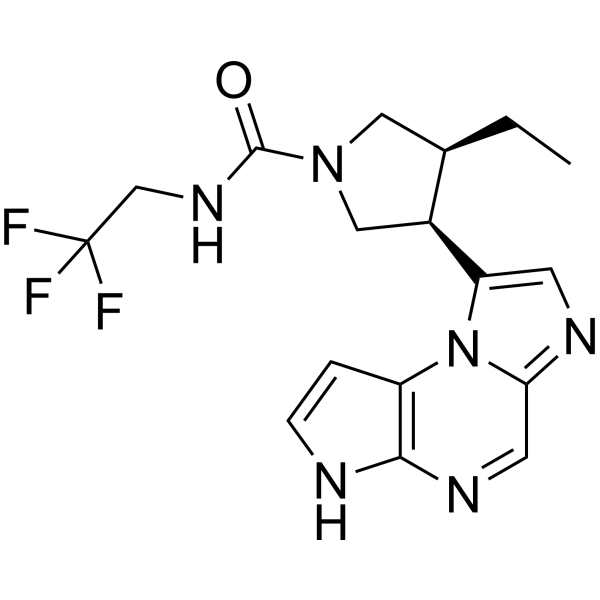
HY-19569
UpadacitinibJAK1 Inhibitor -
HY-19568
PeficitinibJAK Inhibitor
Publications Citing Use of MedChemExpress (MCE) Gandotinib
More Customer Validation & Images

-
WB
All VEGFR Isoforms
More

Biological Activity
제품 설명
IC50 & Target
[1]|
JAK2 3 nM (IC50) |
Tyk2 44 nM (IC50) |
JAK3 48 nM (IC50) |
FGFR2 32 nM (IC50) |
FGFR3 106 nM (IC50) |
Flt-4 25 nM (IC50) |
KDR 109 nM (IC50) |
FLT3 4 nM (IC50) |
TRKB 95 nM (IC50) |
ALK 138 nM (IC50) |
MUSK 147 nM (IC50) |
AURKA 168 nM (IC50) |
MAP3K9 299 nM (IC50) |
Cellular Effect
|
Cell Line

|
Type | Value | Description | References |
|---|---|---|---|---|
| BaF3 | IC50 |
1309 nM
Compound: 34
|
Inhibition of cell proliferation in IL-3 stimulated mouse BaF3 cells expressing wild-type JAK2
Inhibition of cell proliferation in IL-3 stimulated mouse BaF3 cells expressing wild-type JAK2
|
[PMID: 32120325] |
| BaF3 | IC50 |
55 nM
Compound: 34
|
Inhibition of cell proliferation in mouse BaF3 cells expressing JAK2 V617F mutant
Inhibition of cell proliferation in mouse BaF3 cells expressing JAK2 V617F mutant
|
[PMID: 32120325] |
In Vitro
Gandotinib (LY2784544), a potent, selective and ATP-competitive inhibitor of janus kinase 2 (JAK2) tyrosine kinase. LY2784544 effectively inhibits JAK2V617F-driven signaling and cell proliferation in Ba/F3 cells (IC50=20 and 55 nM, respectively). In comparison, Gandotinib (LY2784544) is much less potent at inhibiting interleukin-3-stimulated wild-type JAK2-mediated signaling and cell proliferation (IC50=1183 and 1309 nM, respectively). Gandotinib (LY2784544) potently inhibits the JAK2V617F signaling (IC50=20 nM) but, remarkably, shows very minimal activity against the IL-3-activated wild-type JAK2 signaling with an IC50 of 1183 nM. LY2784544 inhibits the proliferation of JAK2V617F-expressing cells (IC50=55 nM) and is markedly less potent as an inhibitor of the proliferation of IL-3-stimulated wild-type JAK2 expressing Ba/F3 cells (IC50=1309 nM). Gandotinib (LY2784544) is potent in the cell-based TF-1 JAK2 assay (IC50=45 nM) and had the desired threshold selectivity in the NK-92 JAK3/JAK1 heterodimer assay (942 nM)[1].
MedChemExpress (MCE) has not independently confirmed the accuracy of these methods. They are for reference only. .
In Vivo
MedChemExpress (MCE) has not independently confirmed the accuracy of these methods. They are for reference only.
Clinical Trial
| NCT Number | Sponsor | Condition | Start Date |
Phase
|
|---|---|---|---|---|
| NCT01329991 | Plexxikon| | 2011-05 | PHASE1 |


Chemical Information
-
CAS No. 1229236-86-5
-
Appearance Solid
-
분자량 469.94
-
화학식 C23H25ClFN7O
-
Color Light yellow to yellow
-
SMILES
CC1=NNC(NC2=NN3C(C(CN4CCOCC4)=C2)=NC(C)=C3CC5=CC=C(C=C5F)Cl)=C1
-
Synonyms
LY2784544
-
선적
Room temperature in continental US; may vary elsewhere.
-
보관
Powder -20°C 3 years 4°C 2 years In solvent -80°C 2 years -20°C 1 year


Publications (4)
-
Journal Impact Factor
-
Most Recent
-
Nat Commun
Human iPSC-based Modeling of Pulmonary Fibrosis Reveals p300/CBP Inhibition Suppresses Alveolar Transitional Cell State. [Abstract]2026 Feb 12;17(1):1214. PMID: 41680175 -
Sci Transl Med
PP2A inhibition is a druggable MEK inhibitor resistance mechanism in KRAS-mutant lung cancer cells. [Abstract]2018 Jul 18;10(450):eaaq1093. PMID: 30021885 -
Biol Pharm Bull
2019 Aug 1;42(8):1415-1418. PMID: 31167986
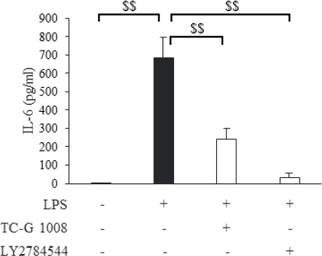
Gandotinib purchased from MedChemExpress. Usage Cited in: Biol Pharm Bull. 2019 Aug 1;42(8):1415-1418. [Abstract]
TC-G 1008 (10 μM) and LY2784544 (1 μM) suppress IL-6 production in U937 macrophage cells; culture supernatants were collected 6 h after LPS stimulation.
-


용액&용해도
In Vitro:
DMSO : 33.33 mg/mL (70.92 mM; Need ultrasonic; Hygroscopic DMSO has a significant impact on the solubility of product, please use newly opened DMSO)
Please refer to the solubility information to select the appropriate solvent. Once prepared, please aliquot and store the solution to prevent product inactivation from repeated freeze-thaw cycles.
Storage method and period of stock solution: -80°C, 2 years; -20°C, 1 year. When stored at -80°C, please use it within 2 years. When stored at -20°C, please use it within 1 year.
Please refer to the solubility information to select the appropriate solvent. Once prepared, please aliquot and store the solution to prevent product inactivation from repeated freeze-thaw cycles.
Storage method and period of stock solution: -80°C, 2 years; -20°C, 1 year. When stored at -80°C, please use it within 2 years. When stored at -20°C, please use it within 1 year.
Concentration (start) × Volume (start) = Concentration (final) × Volume (final)
In Vivo:
Select the appropriate dissolution method based on your experimental animal and administration route.
- For the following dissolution methods, please ensure to first prepare a clear stock solution using an In Vitro approach and then sequentially add co-solvents:
- To ensure reliable experimental results, the clarified stock solution can be appropriately stored based on storage conditions. As for the working solution for In Vivo experiments, it is recommended to prepare freshly and use it on the same day.
- The percentages shown for the solvents indicate their volumetric ratio in the final prepared solution. If precipitation or phase separation occurs during preparation, heat and/or sonication can be used to aid dissolution.
Add each solvent one by one: 10% DMSO 40% PEG300 5% Tween-80 45% Saline
Solubility: ≥ 2.5 mg/mL (5.32 mM); Clear solution
This protocol yields a clear solution of ≥ 2.5 mg/mL (saturation unknown).
Taking 1 mL working solution as an example, add 100 μL DMSO stock solution (25.0 mg/mL) to 400 μL PEG300, and mix evenly; then add 50 μL Tween-80 and mix evenly; then add 450 μL Saline to adjust the volume to 1 mL.
Preparation of Saline: Dissolve 0.9 g sodium chloride in ddH₂O and dilute to 100 mL to obtain a clear Saline solution.
In Vivo Dissolution Calculator
Please enter the basic information of animal experiments:
-
-
-
-
Recommended: Prepare an additional quantity of animals to account for potential losses during experiments.
Please enter your animal formula composition:
-
%DMSO +
Recommended: Keep the proportion of DMSO in working solution below 2% if your animal is weak.
-
%+
-
+%Tween-80 + +
-
%Saline +
The co-solvents required include: DMSO, . All of co-solvents are available by MedChemExpress (MCE). , Tween 80. All of co-solvents are available by MedChemExpress (MCE).
Working solution concentration: 0.22 mg/mL
Method for preparing stock solution: mg drug dissolved in μL DMSO. Stock solution concentration: mg/mL.
1. Take μL DMSO stock solution;
2. Add μL .
μL , mix evenly;
3. Then add μL Tween 80, mix evenly;
4. Then add μL
Please ensure that the stock solution in the first step is dissolved to a clear state, and add co-solvents in sequence. You can use ultrasonic heating (ultrasonic cleaner, recommended frequency 20-40 kHz), vortexing, etc. to assist dissolution.


순도&문서
-
Data Sheet (285 KB)
-
SDS (393 KB)
- English - EN (393 KB)
- Français - FR (393 KB)
- Deutsch - DE (393 KB)
- Norwegian - NO (393 KB)
- Español - ES (393 KB)
- Swedish - SV (393 KB)
- Italian - IT (393 KB)
- Korean - KR (393 KB)
- Portuguese - PT (393 KB)
-
Handling Instructions (2659 KB)
References


Complete Stock Solution Preparation Table
Please refer to the solubility information to select the appropriate solvent. Once prepared, please aliquot and store the solution to prevent product inactivation from repeated freeze-thaw cycles.
Storage method and period of stock solution: -80°C, 2 years; -20°C, 1 year. When stored at -80°C, please use it within 2 years. When stored at -20°C, please use it within 1 year.
| Optional Solvent | Concentration Solvent Mass | 1 mg | 5 mg | 10 mg | 25 mg |
|---|---|---|---|---|---|
| DMSO | 1 mM | 2.1279 mL | 10.6397 mL | 21.2793 mL | 53.1983 mL |
| 5 mM | 0.4256 mL | 2.1279 mL | 4.2559 mL | 10.6397 mL | |
| 10 mM | 0.2128 mL | 1.0640 mL | 2.1279 mL | 5.3198 mL | |
| 15 mM | 0.1419 mL | 0.7093 mL | 1.4186 mL | 3.5466 mL | |
| 20 mM | 0.1064 mL | 0.5320 mL | 1.0640 mL | 2.6599 mL | |
| 25 mM | 0.0851 mL | 0.4256 mL | 0.8512 mL | 2.1279 mL | |
| 30 mM | 0.0709 mL | 0.3547 mL | 0.7093 mL | 1.7733 mL | |
| 40 mM | 0.0532 mL | 0.2660 mL | 0.5320 mL | 1.3300 mL | |
| 50 mM | 0.0426 mL | 0.2128 mL | 0.4256 mL | 1.0640 mL | |
| 60 mM | 0.0355 mL | 0.1773 mL | 0.3547 mL | 0.8866 mL |


Gandotinib Related Classifications
HY-13034 Related Classifications
 Powered by Bioz