From 11:00 pm to 12:00 pm EST ( 8:00 pm to 9:00 pm PST ) on January 6th, the website will be under maintenance. We are sorry for the inconvenience. Please arrange your schedule properly.
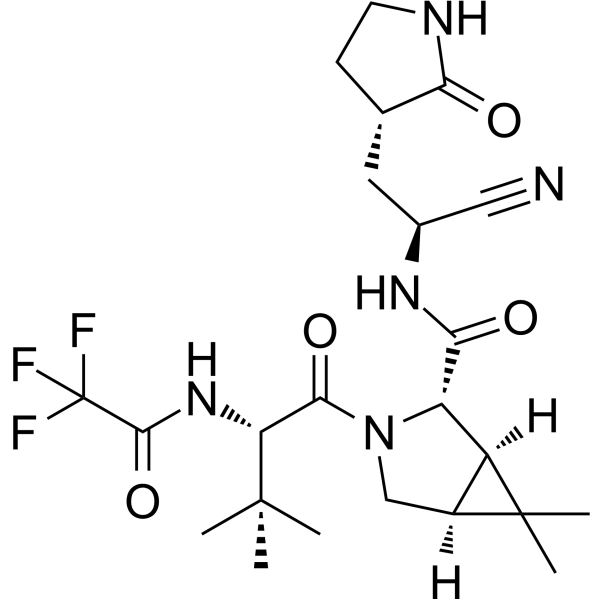
Nirmatrelvir (PF-07321332) is a potent and orally active SARS-CoV 3C-like protease (3CL PRO) inhibitor. Nirmatrelvir (PF-07321332) targets to the SARS-CoV-2 virus and can be used for COVID-19 research .
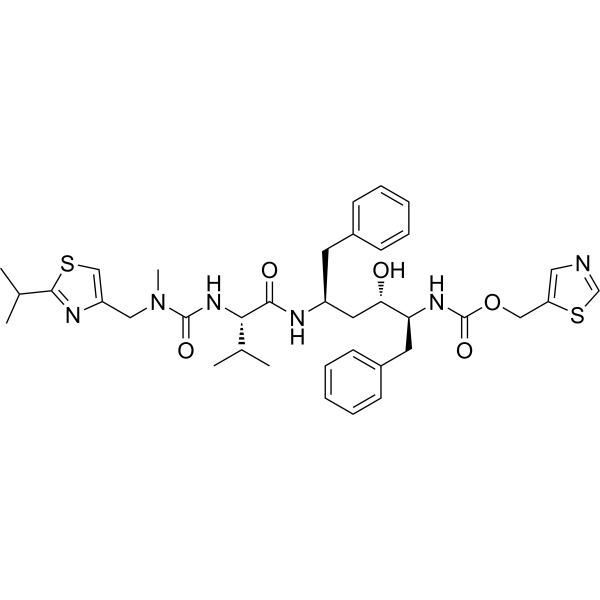
Ritonavir (ABT 538) is an inhibitor of HIV protease used to treat HIV infection and AIDS. Ritonavir is also a SARS-CoV 3CL pro inhibitor with an IC50 of 1.61 μM. Ritonavir (ABT 538) can penetrate the blood brain barrier (BBB) [3] .
Glecaprevir is a novel HCV NS3/4A protease inhibitor, with IC50 values ranging from 3.5 to 11.3 nM. Glecaprevir is also a SARS-CoV 3CL pro inhibitor with an IC50 of 4.09 μM .
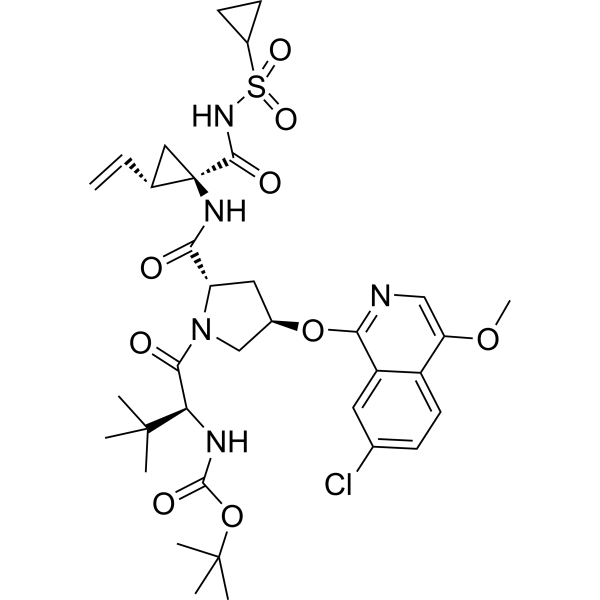
Asunaprevir (BMS-650032) is a potent and orally bioavailable hepatitis C virus (HCV) NS3 protease inhibitor, with IC50 of 0.2 nM-3.5 nM . Asunaprevir inhibits SARS-CoV-2 3CL pro activity .
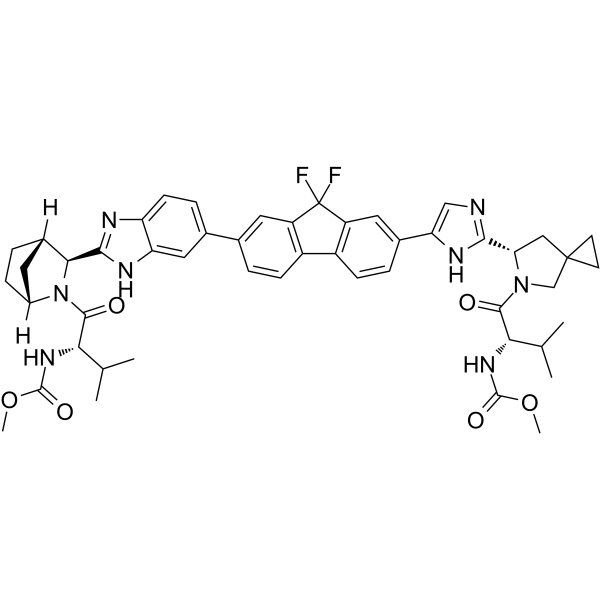
Ledipasvir (GS-5885) is an inhibitor of the hepatitis C virus NS5A, with EC50s of 34 pM and 4 pM against genotype 1a and 1b replicon, respectively. Ledipasvir is also a SARS-CoV 3CL pro inhibitor with an IC50 of 1.62 μM [3].
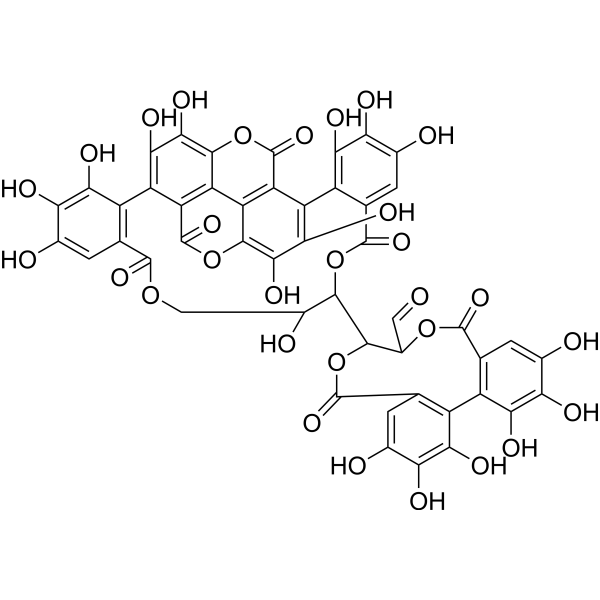
Punicalagin is a polyphenol ingredient isolated from Pomegranate (Punica granatum L.) or the leaves of Terminalia catappa L.. Punicalagin is a reversible and non-competitive 3CL pro inhibitor and inhibits SARS-CoV-2 replication in vitro. Punicalagin is an anti-hepatitis B virus (HBV) agent and has antioxidant, anti-inflammatory, and anticancer effects. Punicalagin has the potential for the research of COVID-19 [3].
Boceprevir (EBP 520) is a potent, highly selective, orally bioavailable HCV NS3 protease inhibitor with a Ki of 14 nM in both enzyme assay and an EC90 of 350 nM in cell-based replicon assay [3] . Boceprevir inhibits SARS-CoV-2 3CL pro activity .
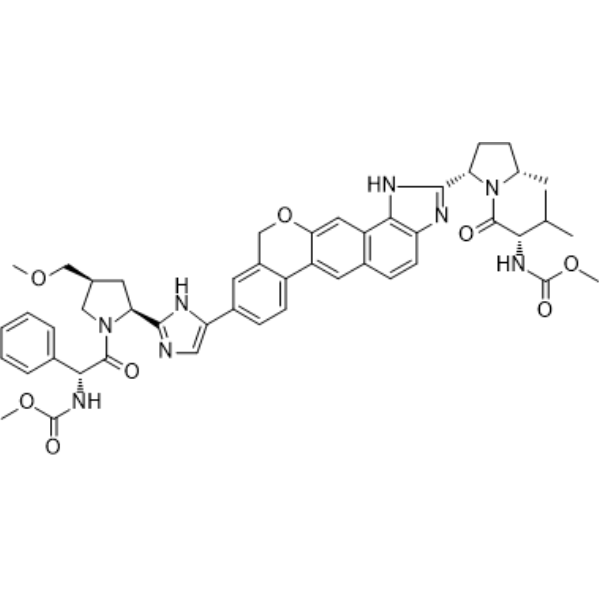
Velpatasvir (VEL, GS-5816) is a novel pan-genotypic hepatitis C virus (HCV) nonstructural protein 5A (NS5A) inhibitor with activity against genotype 1 (GT1) to GT6 HCV replicons. Velpatasvir is also a SARS-CoV 3CL pro inhibitor with an IC50 of 2.16 μM .
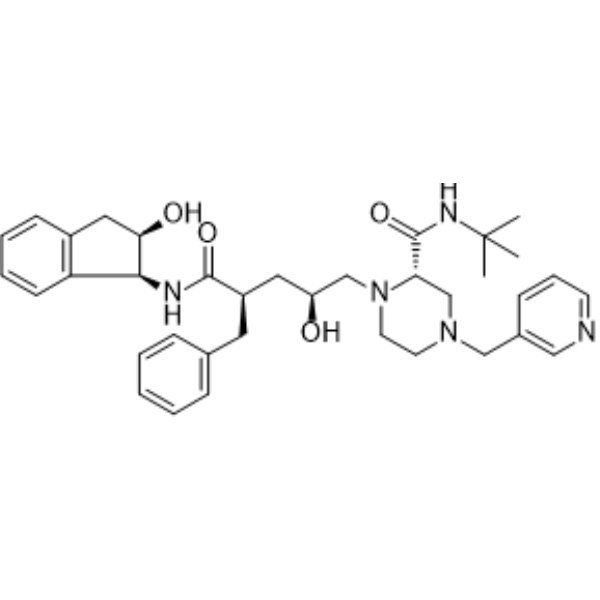
Indinavir (MK-639 free base) is an orally active and selective HIV-1 protease inhibitor with a Ki of 0.54 nM for PR. Indinavir exhibits anticancer activity by inhibiting the activation of MMPs-2 hydrolysis, anti-angiogenesis and inducing apoptosis. Indinavir is also a SARS-CoV 3CL pro inhibitor [3] .
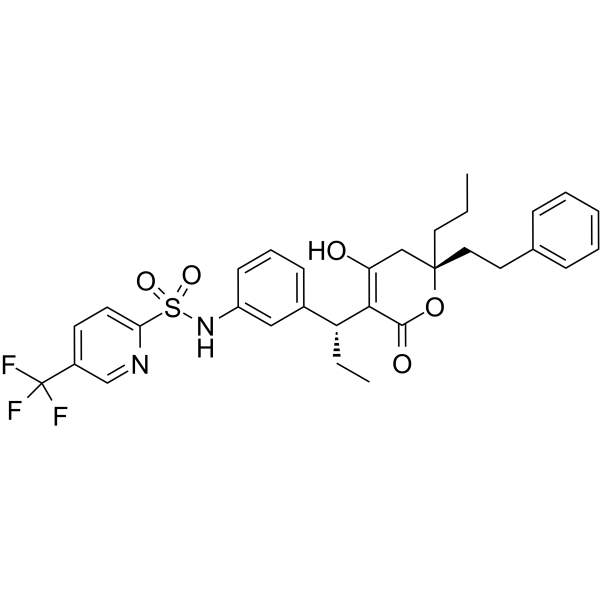
Tipranavir (PNU-140690) inhibits the enzymatic activity and dimerization of HIV-1 protease, exerts potent activity against multi-protease inhibitor (PI)-resistant HIV-1 isolates with IC50s of 66-410 nM . Tipranavir inhibits SARS-CoV-2 3CL pro activity [3].
PF-00835231 is a CoV-2 cysteine 3C-like protease (3CL pro) inhibitor, with IC50s of 0.27 nM and 4 nM for SARS CoV-2 and SARS CoV-1 3CL pro, respectively. PF-00835231 is developed for the research of anti-SARS-CoV-2/COVID-19. PF-00835231 can inhibit cell infections and also suppress infections in animal models [3].
Secutrelvir is an oral SARS-CoV-2 3C-like protease (3CLpro) inhibitor and antiviral agent, with IC50 values of 0.655 nM and 0.697 nM against SARS-CoV-2 3CLpro, respectively. Secutrelvir forms a reversible covalent bond with the catalytic cysteine C145 of SARS-CoV-2 3CLpro, thereby inhibiting viral replication. Secutrelvir exhibits activity against multiple SARS-CoV-2 variants and can be used in research related to coronavirus disease 2019 (COVID-19) [3].
Indinavir sulfate (MK-639) is an orally active and selective HIV-1 protease inhibitor with a Ki of 0.54 nM for PR. Indinavir sulfate exhibits anticancer activity by inhibiting the activation of MMPs-2 hydrolysis, anti-angiogenesis and inducing apoptosis. Indinavir sulfate is also a SARS-CoV 3CL pro inhibitor [3] .
Amprenavir (VX-478) is a HIV protease inhibitor (Ki=0.6 nM) used to treat HIV infection. Amprenavir is also a SARS-CoV 3CL pro inhibitor with an IC50 of 1.09 μM.
Walrycin B, an analogue of toxoflavin, is a potent SARS-CoV-2 3CL pro inhibitor with an IC50 of 0.26 μM. Walrycin B is a WalR response regulator inhibitor. Walrycin B has potent activity of inhibiting bacteria growth .
Lufotrelvir (PF-07304814), a phosphate proagent of PF-00835231, acts as a potent 3CLpro protease (Mpro) inhibitor with SARS-CoV-2 antiviral activity. Lufotrelvir binds and inhibits SARS-CoV-2 3CLpro activity with a Ki of 174nM. Lufotrelvir is promising single antiviral agent and also can be used for the research of combination with other antivirals that target other critical stages of the coronavirus life cycle.
PROTAC KRAS G12D degrader 2 is a peptidomimetic PROTAC specifically targeting the dimeric SARS-CoV-2 3CL Pro protein. PROTAC KRAS G12D degrader 2 inhibits SARS-CoV-2 3CLPro with an IC50 of 21.2 μM. PROTAC KRAS G12D degrader 2 specifically binds to the active site of SARS-CoV-2 3CL Pro. PROTAC KRAS G12D degrader 2 reduces protein levels of SARS-CoV-2 3CL Pro without affecting cell viability. PROTAC KRAS G12D degrader 2 can be used for the study of viral infections in Coronavirus genera .
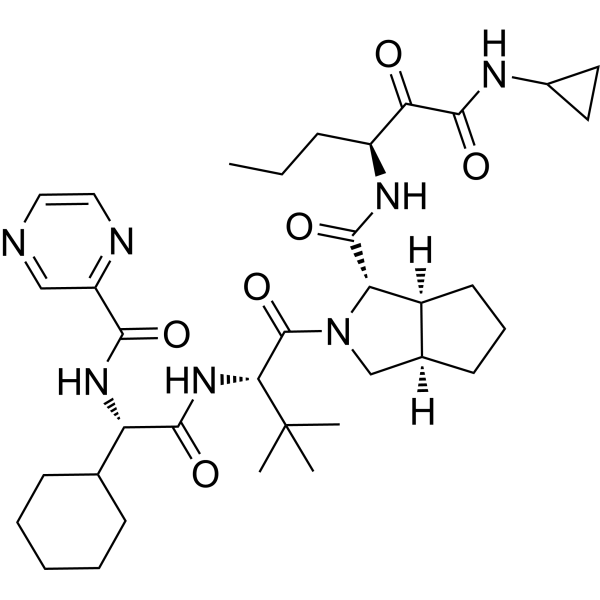
Narlaprevir (SCH 900518) is a selective and orally bioavailable NS3 protease inhibitor with a Ki value of 6 nM and an EC90 value of 40 nM . Narlaprevir also inhibits the HCV nonstructural protein 3 serine protease . Narlaprevir is also a SARS-CoV 3CL pro inhibitor with an IC50 of 2.3 μM [3].
YH-53 is a potent 3CL pro inhibitor with Ki values of 6.3 nM, 34.7 nM for SARS-CoV-1 3CL pro and SARS-CoV-2 3CL pro, respectively. YH-53 strongly blocks the SARS-CoV-2 replication. YH-53 is a peptidomimetic compound with a unique benzothiazolyl ketone. YH-53 has the potential for COVID-19 research .
Iscartrelvir (WU-04) is a non-covalent inhibitor of SARS-CoV-2, targeting the 3CLpro protein. Iscartrelvir has high inhibitory effect on the 3CLpro protein of 6 SARS-CoV-2 variants (Alpha, Beta, Gamma, Delta, Lambda and Omicron) and 2 coronaviruses (SARS-CoV and MERS-CoV) .
SCH-202676 is an allosteric modulator of G protein-coupled receptors (GPCRs) and adenosine receptor (AR). SCH-202676 has antiviral activity and inhibits 3CL pro in a time-dependent manner with an IC50 value of 0.655 µM [3] .
Ritonavir-d6 is the deuterium labeled Ritonavir. Ritonavir (ABT 538) is an inhibitor of HIV protease used to treat HIV infection and AIDS. Ritonavir is also a SARS-CoV 3CLpro inhibitor with an IC50 of 1.61 μM .
Ritonavir (Standard) is the analytical standard of Ritonavir. This product is intended for research and analytical applications. Ritonavir (ABT 538) is an inhibitor of HIV protease used to treat HIV infection and AIDS. Ritonavir is also a SARS-CoV 3CL pro inhibitor with an IC50 of 1.61 μM.
SCH-202676 hydrobromide is an allosteric modulator of G protein-coupled receptors (GPCRs) and adenosine receptor (AR). SCH-202676 hydrobromide has antiviral activity and inhibits 3CL pro in a time-dependent manner with an IC50 value of 0.655 μM [3] .
Ledipasvir (GS-5885) hydrochloride is an inhibitor of the hepatitis C virus NS5A, with EC50s of 34 pM and 4 pM against genotype 1a and 1b replicon, respectively. Ledipasvir hydrochloride is also a SARS-CoV 3CL pro inhibitor with an IC50 of 1.62 μM [3].
Isojacareubin can be isolated from Hypericum japonicum. Isojacareubin covalently inhibits SARS-CoV-2 3CLpro. Isojacareubin also has anti-helicobacter activity. Isojacareubin inhibits PKC, and suppresses hepatocellular carcinoma metastasis and induces apoptosis[3].
SARS-CoV-2 3CLpro-IN-6 is a reversible covalent inhibitor of SARS-CoV-2 3CL protease. SARS-CoV-2 3CLpro-IN-6 has potent inhibitory activity for SARS-CoV-2 3CL pro with an IC50 value of 4.9 μM. SARS-CoV-2 3CLpro-IN-6 can be used for the research of coronavirus disease 2019 (COVID-19) .
CCF0058981 (CCF981), 3-chlorophenyl analogue, is a noncovalent SARS-CoV-2 3CL pro (SC2) inhibitor with an IC50 of 68 nM. CCF0058981 inhibits SC1 (SARS-CoV-1 3CL pro) with an IC50 of 19 nM. CCF0058981 has antiviral efficacy and has the potential for COVID-19 research .
SARS-CoV-2 3CLpro-IN-13 is a potent SARS-CoV-2 3CL protease inhibitor with an IC50 value of 21 nM. SARS-CoV-2 3CLpro-IN-13 shows anti-coronavirus activity .
Nirmatrelvir (Standard) is the analytical standard of Nirmatrelvir. This product is intended for research and analytical applications. Nirmatrelvir (PF-07321332) is a potent and orally active SARS-CoV 3C-like protease (3CL PRO) inhibitor. Nirmatrelvir (PF-07321332) targets to the SARS-CoV-2 virus and can be used for COVID-19 research .
NIP-22c is a novel coronavirus 3CLpro inhibitor. The EC50 for Verona, Calu3, Caco2 and HBTEC-ALI were 4.6, 1.1, 0.1 and 0.6 μM, respectively. NIP-22c has antiviral activity .
INSCoV-614(1B) is a potent inhibitor of M pro(3CL pro). Proteases (PL pro and 3CL pro) are involved with transcription and replication of the virus. INSCoV-614(1B) has the potential for the research of SARS-CoV-2 infection (extracted from patent WO2021219089A1) .
SARS-CoV-2 3CLpro-IN-22 (Compound 17) is a cathepsin L (CTSL ) inhibitor with an IC50 value of 32.5 nM. SARS-CoV-2 3CLpro-IN-22 can be used for the study of SARS-CoV-2 virus .
ALG-097558 is an orally active 3CLpro inhibitor. ALG-097558 demonstrates pan-coronavirus activity against various SARS-CoV-2 variants as well as other human coronaviruses (HCoVs) such as SARS-CoV-1, α-HCoV 229E, and β-HCoV OC43. ALG-097558 demonstrates potent inhibition with IC50s of 2 nM (SARS-CoV-2 3CLpro) and 6 nM (229E 3CLpro). ALG-097558 demonstrates antiviral activity in the SARS-CoV-2 hamster infection model. ALG-097558 can be used for the study of viral infections[1].
MCA-AVLQSGFR-Lys(Dnp)-Lys-NH2 is a fluorescent substrate used for fluorescence resonance energy transfer (FRET) protease assays. This substrate is employed to measure the activity of SARS-CoV-2 3CLpro .
GRL-0496 is a potent chloropyridyl ester-derived SARS-CoV 3CLpro inhibitor, with an IC50 of 30 nM in both enzyme inhibitory and antiviral assays. GRL-0496 shows SARS-CoV antiviral activity, with an EC50 of 6.9 μM .
SARS-CoV-2 3CLpro probe-1 (Compound probe 3) is a selective and activity-based probe for the SARS-CoV-2 3CL protease. SARS-CoV-2 3CLpro probe-1 can detect endogenously expressed 3CLpro in SARS-CoV-2-infected cells .
SARS-CoV-2 3CLpro-IN-1 (Compound 14c) is a potent inhibitor of SARS-CoV-2 3CL pro. 3CL pro (main coronaviruses cysteine-protease) has been identified as a promising target for the development of antiviral agents. SARS-CoV-2 3CLpro-IN-1 has the potential for the research of infection diseases .
SARS-CoV-2 3CLpro-IN-5 is a covalent inhibitor of 3C-like protease (3CL pro). SARS-CoV-2 3CLpro-IN-5 has inhibitory activity for 3CL pro with an IC50 value of 3.8 nM. SARS-CoV-2 3CLpro-IN-5 has 9.0% oral bioavailability (BA). SARS-CoV-2 3CLpro-IN-5 can be used for the research of coronavirus disease 2019 (COVID-19) .
SARS-CoV-2 3CLpro-IN-27 (Compound 9H) is an inhibitor of SARS-CoV-2 3CL pro with an IC50 value of 21 nM. SARS-CoV-2 3CLpro-IN-27 exhibits excellent anti-SARS-CoV-2 replicon activity, demonstrating an EC50 value of 5 nM .
SARS-CoV-2 3CLpro-IN-21 (Compound D6) irreversibly and covalently inhibits SARS-CoV-2 3CL pro with an IC50 of 0.03 μM. SARS-CoV-2 3CLpro-IN-21 also inhibits SARS-CoV-13CL pro with an IC50 of 0.12μM .
Cinanserin (SQ 10643) is a potent and selective 5-HT2 antagonist with Ki values of 41, 3500 nM for 5-HT2, 5-HT1, respectively. Cinanserin also is a SARS-CoV 3CL pro inhibitor with an KD value of 49.4, 18.2 µM for SARS-CoV 3CL pro, HCoV-229E 3CL pro, respectively. Cinanserin reduces systemic burn edema levels [3].
D1N8 is a potent SARS-CoV-2 3CL pro inhibitor with an IC50 and CC50 values of 0.44 μM and >20 μM, respectively. D1N8 has the potential for the research of anti-SARS-CoV-2 agents targeting 3CL pro .
Antcin B is a SARS-CoV-2 3-chymotrypsin-like protease (3CL Pro) inhibitor. Antcin B binds to multiple key amino acid residues of 3CL Pro(such as Leu141, Asn142, Glu166, His163, etc.) through hydrogen bonds, salt bridges, and hydrophobic interactions, thereby inhibiting the activity of 3CL Pro, blocking the cleavage process of viral polyproteins, and suppressing the replication of the SARS-CoV-2 virus in host cells. Antcin B is promising for research of COVID-19 .
INSCoV-600K(1) is a potent inhibitor of M pro(3CL pro). Proteases (PL pro and 3CL pro) are involved with transcription and replication of the virus. INSCoV-600K(1) has the potential for the research of SARS-CoV-2 infection (extracted from patent WO2021219089A1) .
INSCoV-601I(1) is a potent inhibitor of M pro(3CL pro). Proteases (PL pro and 3CL pro) are involved with transcription and replication of the virus. INSCoV-601I(1) has the potential for the research of SARS-CoV-2 infection (extracted from patent WO2021219089A1) .
SARS-CoV-2 3CLpro-IN-16 (Compound 3a) is a covalent SARS-CoV-2 3CLpro inhibitor (IC50: 2.124 μM). SARS-CoV-2 3CLpro-IN-16 binds to the active site and forms a covalent bond with Cys145 of 3CLpro .
Antiviral agent 25 (compound 6g) is a new non-peptide analog covalent inhibitor of SARS-CoV-2 3CL pro. Antiviral agent 25 has a strong inhibitory effect on SARS-CoV-2 3CL pro and SARS-CoV-2 PL pro with IC50 values of 0.118 µM, 0.448 µM, respectively. Antiviral agent 25 has antiviral effect on SARS-CoV-2 with an EC50 value of 7.249 µM .
3CLPro-IN-3 (Compound A36) is an inhibitor for SARS-CoV-2 3CLpro with IC50 of 51.3 nM. 3CLPro-IN-3 exhibits antiviral activity against human coronavirus 229E, OC43 and mouse hepatitis virus MHV .
SARS-CoV-2 3CLpro-IN-31 (Compound 13c) is a potent SARS-CoV-2 3CL protease (3CLpro) inhibitor of with an IC50 value of 37.33 nM. SARS-CoV-2 3CLpro-IN-31 blocks viral polyprotein cleavage and inhibits SARS-CoV-2 replication. SARS-CoV-2 3CLpro-IN-31 is promising for research of SARS-CoV-2 infection .
SARS-CoV-2 3CLpro-IN-25 (compound 56) inhibits the SARS-CoV-2 3CLpro with the IC50 of 70 nM and displays antiviral activity in cells with the EC50 of 3.1 μM .
SARS-CoV-2 3CLpro-IN-15 (compound a) is a beta-nitrostyrene coronavirus SARS-CoV-2 inhibitor that targets the SARS-CoV-2 3CL protease (3CLpro). SARS-CoV-2 3CLpro-IN-15 inhibits viral replication and transcription and plays a key role in the discovery of anti-COVID-19 lead compounds .
SARS-CoV-2 3CLpro-IN-26 (Compound (S,R)-4y) is an allosteric inhibitor for SARS-CoV-2 3CLpro with an IC50 of 0.43 μM. SARS-CoV-2 3CLpro-IN-26 exhibits good cell permeability and is able to effectively cross the cell membrane, after co-incubation with Vero-E6 cells .
SARS-CoV-2 3CLpro-IN-2 (Compound 1) is a potent inhibitor of 3CL protease. SARS-CoV-2 3CLpro-IN-2 has the potential for the research of SARS-CoV-2 diseases .
SARS-CoV-2 3CLpro-IN-30 (compound 29) is a potent inhibitor of SARS-CoV-2 3CL protease (SARS-CoV-2 3CLpro), with the IC50 and EC50 of 0.04 and 0.3 μM .
Ritonavir- 13C3 is 13C labeled Ritonavir. Ritonavir (ABT 538) is an inhibitor of HIV protease used to treat HIV infection and AIDS. Ritonavir is also a SARS-CoV 3CL pro inhibitor with an IC50 of 1.61 μM .
SARS-CoV-2 3CLpro-IN-23 (Compound Cd3) is a compound that can be isolated from Citrus depressa. SARS-CoV-2 3CLpro-IN-23 has good inhibitory activity to the SARS-CoV-2 spike protein, with KD of 0.79 μM. SARS-CoV-2 3CLpro-IN-23 can bind to key amino acid residue, disrupting the formation of the spike protein and h-ACE2 complex .
SARS-CoV-2 3CLpro-IN-19 (Compound C5a) is a non-covalent, non-peptide SARS-CoV-2 3CLpro inhibitor (IC50s: 0.7 μM). SARS-CoV-2 3CLpro-IN-19 has broad-spectrum activity against Omicron subvariants (BA.5, BQ.1.1, and XBB.1.5) infection in human cells, with EC50 values between 30-69 nM .
Ritonavir-d8 is deuterated labeled Ritonavir (HY-90001). Ritonavir (ABT 538) is an inhibitor of HIV protease used to treat HIV infection and AIDS. Ritonavir is also a SARS-CoV 3CL pro inhibitor with an IC50 of 1.61 μM.
SARS-CoV-2 3CLpro-IN-33 (Compound 16) is an orally active SARS-CoV-2 3CL protease inhibitor, with an IC50 value of 1.5 nM. SARS-CoV-2 3CLpro-IN-33 shows excellent anti-SARS-CoV-2 viral activity in the HEK293T-AT cell model with an EC50 of 0.017 μM. SARS-CoV-2 3CLpro-IN-33 can be used for the study of COVID-19 infetction .
3CPLro-IN-1 (compound A17) is a potent and orally active inhibitor of SARS-CoV-2 3CLpro with an IC50 of 5.65 μM. 3-Chymotrypsin-like cysteine protease (3CLpro) is an indispensable protein in viral replication and represents an attractive agent target for fighting COVID-19 .
MERS-CoV-IN-2 (compound 3c) is a MERS-CoV 3CLpro inhibitor (IC50=17nM). MERS-CoV-IN-2 inhibits the activity of the 3CLpro enzyme by binding to the active site of the enzyme, specifically the S4 subsite, thereby exhibiting antiviral activity against SARS-CoV-2 and MERS-CoV .
3CPLro-IN-2 (compound C1) is a potent and orally active inhibitor of SARS-CoV-2 3CLpro with an IC50 and Ki of 1.55 and 6.09 μM, respectively. 3-Chymotrypsin-like cysteine protease (3CLpro) is an indispensable protein in viral replication and represents an attractive agent target for fighting COVID-19 .
(S)-ML188 is a SARS-CoV 3-chymotrypsin-like protease (3CLpro) inhibitor (IC50: 1.5 μM). (S)-ML188 has antiviral activity with an EC50 value of 12.9 μM against SARS-CoV. (S)-ML188 inhibits the activity of 3CLpro via non-covalent binding and can be used in the study of SARS-CoV .
VK13 (Compound 6) is a potent inhibitor of human cathepsin L (hCatL) with a Ki value of 0.55 nM and SARS-CoV-2 3CL pro(3CL-PR) with a Ki value of 2.6 nM. VK13 exhibits anti-CoV-2 activity with an EC50 of 1.25 μM .
Hydroxyethylamine (Compd VII) is a SARS-CoV-2 3CLpro inhibitor with an IC50 of ~10 μM in the spread assay. Hydroxyethylamine has potent antiviral activities .
Amprenavir- 13C6 (VX-478- 13C6) is 13C labeled Amprenavir. Amprenavir (VX-478) is a HIV protease inhibitor (Ki=0.6 nM) used to treat HIV infection. Amprenavir is also a SARS-CoV 3CL pro inhibitor with an IC50 of 1.09 μM.
SARS-CoV-2-IN-11 is a potent and nontoxic inhibitor of SARS-CoV-2 3CL protease(3CLpro) with an IC50 and EC50 of 0.17 and 1.45 nM, respectively. SARS-CoV-2 3C-like protease (3CLpro), an enzyme essential for viral replication, is an attractive target for intervention. SARS-CoV-2-IN-11 may lead to the emergence of effective SARS-CoV-2-specific antivirals .
SARS-CoV-2-IN-10 is a potent and nontoxic inhibitor of SARS-CoV-2 3CL protease(3CLpro) with an IC50 and EC50 of 0.13 and 1.03 nM, respectively. SARS-CoV-2 3C-like protease (3CLpro), an enzyme essential for viral replication, is an attractive target for intervention. SARS-CoV-2-IN-11 may lead to the emergence of effective SARS-CoV-2-specific antivirals .
SARS-CoV-2-IN-71 (compound 8h) is a potent inhibitor of SARS-CoV-2. SARS-CoV-2-IN-71 inhibits coronavirus replication at multiple stages. SARS-CoV-2-IN-71 displays anti-coronaviral effect by simultaneously acting on 3CL pro and TMPRSS2 .
SARS-CoV-IN-5 (compound 49) is a highly selective, nonpeptidic and noncovalent 3CL pro inhibitor with IC50s of 38 nM, 21.1 nM and 86 nM for 3CL pro of SARS-CoV-1, SARS-CoV-2, Bat coronavirus WIV1, respectively. SARS-CoV-IN-5 inhibits the replication of the SARS-CoV-2 delta variant with an EC50 of 0.272 μM. SARS-CoV-IN-5 significantly reduces the lung viral copies in a K18-hACE2 transgenic mouse model. SARS-CoV-IN-5 has good target-specific and potential broad-spectrum anticoronavirus activities against SARS-CoV-1, WIV1, MERS, HCoV-OC43, HCoV-229E, and HKU9 .
SARS 3CLpro-IN-1 (Compound 3b) is a SARS 3CL protease inhibitor with an IC50 value of 95 μM, as a specific stereo isomer
of the octahydroisochromene scaffold, directs the P1 site imidazole .
Indinavir sulfate ethanolate (MK-639 ethanolate) is an orally active and selective HIV-1 protease inhibitor with a Ki of 0.54 nM for PR. Indinavir sulfate ethanolate exhibits anticancer activity by inhibiting the activation of MMPs-2 hydrolysis, anti-angiogenesis and inducing apoptosis. Indinavir sulfate ethanolate is also a SARS-CoV 3CL pro inhibitor [3] .
Nirmatrelvir-d6 (PF-07321332-d6) is deuterium labeled Nirmatrelvir. Nirmatrelvir (PF-07321332) is a potent and orally active SARS-CoV 3C-like protease (3CL PRO) inhibitor. Nirmatrelvir (PF-07321332) targets to the SARS-CoV-2 virus and can be used for COVID-19 research .
Ledipasvir-d16 (GS-5885-d16) is deuterium labeled Ledipasvir. Ledipasvir (GS-5885) is an inhibitor of the hepatitis C virus NS5A, with EC50s of 34 pM and 4 pM against genotype 1a and 1b replicon, respectively. Ledipasvir is also a SARS-CoV 3CL pro inhibitor with an IC50 of 1.62 μM [3].
SARS-CoV-2 3CLpro-IN-34 (Compound 55) is a highly efficient non-covalent inhibitor of the SARS-CoV-2 3CL pro protease (b. SARS-CoV-2 3CL pro protease) with an IC50 of 1.9 μM. SARS-CoV-2 3CLpro-IN-34 can inhibit the 3CL pro protein of SARS-CoV-1, with its IC50 being 3.2 μM, and it shows high selectivity towards host cysteine proteases (such as cathepsins L/K and calpain). SARS-CoV-2 3CLpro-IN-34 exhibits antiviral activity in cells infected with SARS-CoV-2, with its EC50 being 25 μM, and it is not affected by P-gp inhibitors and shows no significant cytotoxicity. SARS-CoV-2 3CLpro-IN-34 can be used for research on SARS-CoV-2 infection .
CG-0988 is a selective SARS-CoV-23C-like protease (3CL pro) inhibitor with an IC50 of 8.5 nM. CG-0988 functionally inhibits SARS-CoV-2 3CL pro, blocks SARS-CoV-2 replication, and exerts antiviral activity against SARS-CoV-2 variants. CG-0988 can be used in research related to coronavirus disease 2019 (COVID-19) .
SARS-CoV-2 3CLpro-IN-37 is a non-covalent SARS-CoV-2 3CLpro inhibitor with an IC50 of 3.2 nM. SARS-CoV-2 3CLpro-IN-37 blocks the cleavage and replication of viral polyproteins. SARS-CoV-2 3CLpro-IN-37 is applicable to research related to COVID-19 .
SARS-CoV-2 3CLpro-IN-36 is a SARS-CoV-2 3CLpro inhibitor and antiviral agent with a human sub-micromolar IC50 against SARS-CoV-2 3CLpro.SARS-CoV-2 3CLpro-IN-36 forms a covalent bond with catalytic Cys145 of SARS-CoV-2 3CLpro; its tetrazole core occupies the S1 pocket and interacts with His163, while its chloroacetamide carbonyl forms hydrogen bonds with the backbone amides of Gly143 and Ser144 in the oxyanion hole.SARS-CoV-2 3CLpro-IN-36 reduces SARS-CoV-2 replication in infected cells.SARS-CoV-2 3CLpro-IN-36 can be used for the research of SARS-CoV-2 infection .
SARS-CoV-2 3CLpro-IN-35 is a SARS-CoV-2 3CLpro inhibitor with an IC50 of 0.15 μM. SARS-CoV-2 3CLpro-IN-35 inhibits the proliferation of bladder cancer cells, exerts anti-SARS-CoV-2 activity, and exhibits low cytotoxicity in fibroblasts. SARS-CoV-2 3CLpro-IN-35 is applicable to research related to SARS-CoV-2 infection and bladder cancer .
GC813 is a MERS-CoV 3CL protease(3CLpro) and MERS-CoV main protease (Mpro) inhibitor.GC813 can be used for the research of middle east respiratory syndrome .
Telaprevir (VX-950) is a highly selective, reversible, and potent peptidomimetic inhibitor of the HCV NS3-4A protease, the steady-state inhibitory constant (Ki) of Telaprevir is 7 nM against a genotype 1 (H strain) NS3 protease domain plus a NS4A cofactor peptide [3]. Telaprevir inhibits SARS-CoV-2 3CL pro activity .
Velpatasvir (Standard) is the analytical standard of Velpatasvir. This product is intended for research and analytical applications. Velpatasvir (VEL, GS-5816) is a novel pan-genotypic hepatitis C virus (HCV) nonstructural protein 5A (NS5A) inhibitor with activity against genotype 1 (GT1) to GT6 HCV replicons. Velpatasvir is also a SARS-CoV 3CL pro inhibitor with an IC50 of 2.16 μM .
Boceprevir (Standard) is the analytical standard of Boceprevir. This product is intended for research and analytical applications. Boceprevir (EBP 520) is a potent, highly selective, orally bioavailable HCV NS3 protease inhibitor with a Ki of 14 nM in both enzyme assay and an EC90 of 350 nM in cell-based replicon assay [3] . Boceprevir inhibits SARS-CoV-2 3CL pro activity .
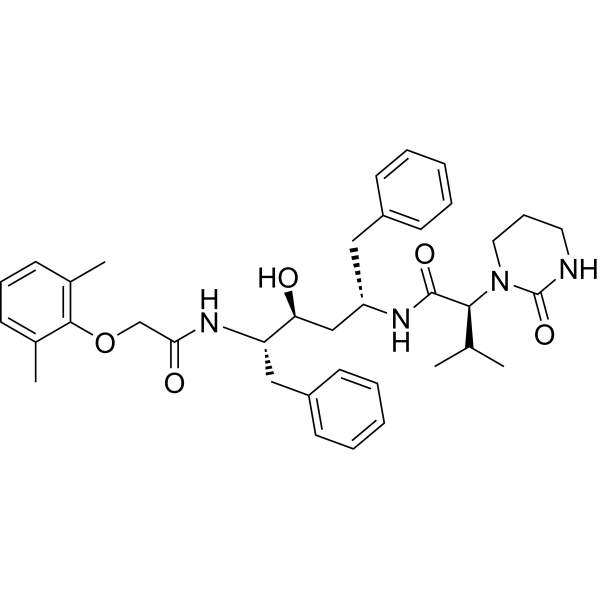
Lopinavir (ABT-378) is a highly potent, selective peptidomimetic inhibitor of the HIV-1 protease, with Kis of 1.3 to 3.6 pM for wild-type and mutant HIV protease. Lopinavir acts by arresting maturation of HIV-1 thereby blocking its infectivity . Lopinavir is also a SARS-CoV 3CL pro inhibitor with an IC50 of 14.2 μM [3].
Ritonavir- 13C,d3 is the 13C- and deuterium labeled Ritonavir. Ritonavir (ABT 538) is an inhibitor of HIV protease used to treat HIV infection and AIDS. Ritonavir is also a SARS-CoV 3CLpro inhibitor with an IC50 of 1.61 μM.
Amprenavir-d4-1 is deuterium labeled Amprenavir. Amprenavir (VX-478) is a HIV protease inhibitor (Ki=0.6 nM) used to treat HIV infection. Amprenavir is also a SARS-CoV 3CLpro inhibitor with an IC50 of 1.09 μM.
Amprenavir-d4 is the deuterium labeled Amprenavir. Amprenavir (VX-478) is a HIV protease inhibitor (Ki=0.6 nM) used to treat HIV infection. Amprenavir is also a SARS-CoV 3CLpro inhibitor with an IC50 of 1.09 μM .
Amprenavir (Standard) is the analytical standard of Amprenavir. This product is intended for research and analytical applications. Amprenavir (VX-478) is a HIV protease inhibitor (Ki=0.6 nM) used to treat HIV infection. Amprenavir is also a SARS-CoV 3CLpro inhibitor with an IC50 of 1.09 μM.
GC376 (sodium) (Standard) is the analytical standard of GC376 (sodium) (HY-100721). This product is intended for research and analytical applications. GC376 sodium is a 3CLpro inhibitor; inhibits the replication of viruses TGEV, FIPV and PTV with IC50 values of 0.15, 0.2 and 0.15 μM, respectively.
(±)-Tuaimenal A ((+)-1) is a secondary metabolite and a derivative of Sesamol (HY-N1417). (±)-Tuaimenal A has potent inhibitory activity against SARS-CoV-2 3CLpro with an IC50 of 33.3 μM. (±)-Tuaimenal A can be used for SARS-CoV-2 infection research .
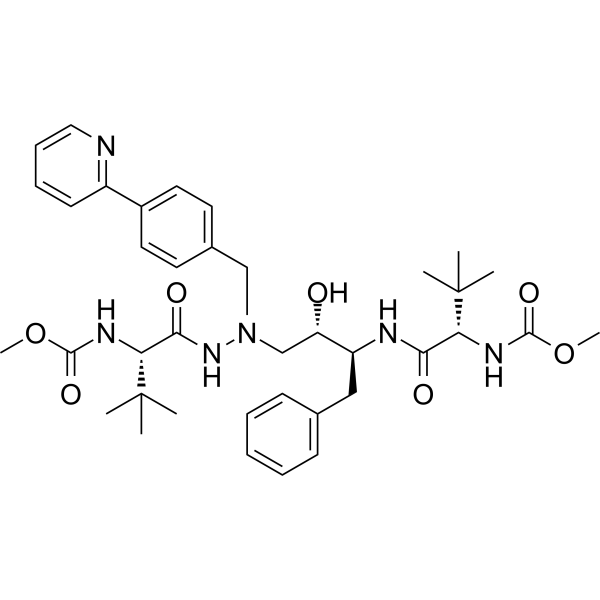
Atazanavir (BMS-232632) is a highly selective and orally active HIV-1 protease inhibitor . Atazanavir is a substrate and inhibitor of CYP3A4, and an inhibitor of P-glycoprotein (P-gp). Atazanavir is also a SARS-CoV 3CL pro inhibitor with an IC50 of 3.49 μM. Atazanavir inhibits cardiac fibrosis, hyperlipidemia and induces malignant glioma death [3] .
MI-30 is an orally active SARS-CoV-23CLpro inhibitor (IC50 = 17.2 nM). MI-30 reduces viral load and lung lesions in a mouse model of SARS-CoV-2 infection. MI-30 may be used in coronavirus infection research .
Tipranavir-d7 is deuterated labeled Tipranavir (HY-15148). Tipranavir (PNU-140690) inhibits the enzymatic activity and dimerization of HIV-1 protease, exerts potent activity against multi-protease inhibitor (PI)-resistant HIV-1 isolates with IC50s of 66-410 nM . Tipranavir inhibits SARS-CoV-2 3CL pro activity [3].
Tipranavir (Standard) is the analytical standard of Tipranavir. This product is intended for research and analytical applications. Tipranavir (PNU-140690) inhibits the enzymatic activity and dimerization of HIV-1 protease, exerts potent activity against multi-protease inhibitor (PI)-resistant HIV-1 isolates with IC50s of 66-410 nM . Tipranavir inhibits SARS-CoV-2 3CL pro activity [3].
Glecaprevir (Standard) is the analytical standard of Glecaprevir. This product is intended for research and analytical applications. Glecaprevir is a novel HCV NS3/4A protease inhibitor, with IC50 values ranging from 3.5 to 11.3 nM. Glecaprevir is also a SARS-CoV 3CLpro inhibitor with an IC50 of 4.09 μM .
Grazoprevir sodium salt (MK-5172 sodium salt) is a selective inhibitor of Hepatitis C virus NS3/4a protease with broad activity across genotypes and resistant variants, with Kis of 0.01 nM (gt1b), 0.01 nM (gt1a), 0.08 nM (gt2a), 0.15 nM (gt2b), 0.90 nM (gt3a), respectively . Grazoprevir sodium salt inhibits SARS-CoV-2 3CL pro activity [3].
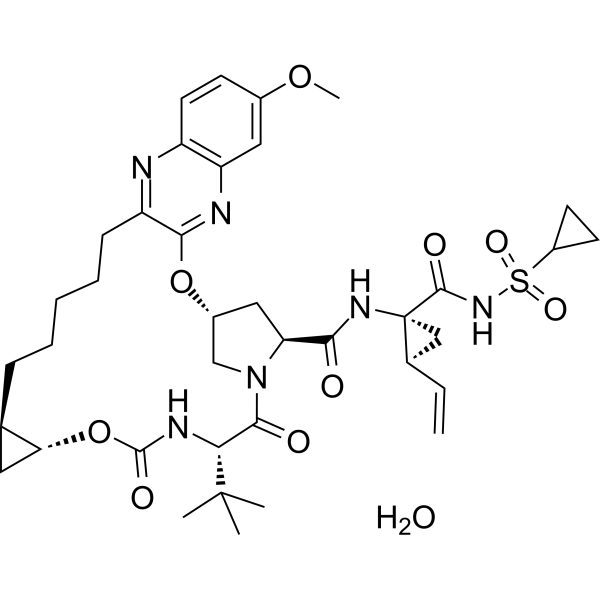
Grazoprevir hydrate (MK-5172 hydrate) is a selective inhibitor of Hepatitis C virus NS3/4a protease with broad activity across genotypes and resistant variants, with Kis of 0.01 nM (gt1b), 0.01 nM (gt1a), 0.08 nM (gt2a), 0.15 nM (gt2b), 0.90 nM (gt3a), respectively . Grazoprevir hydrate inhibits SARS-CoV-2 3CL pro activity [3].
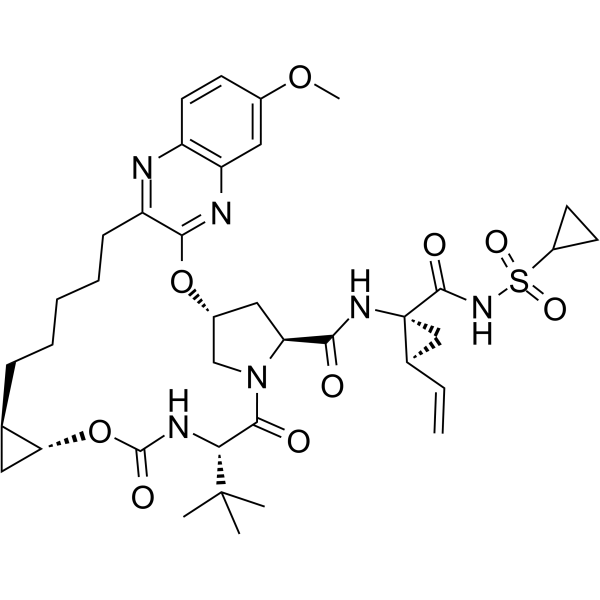
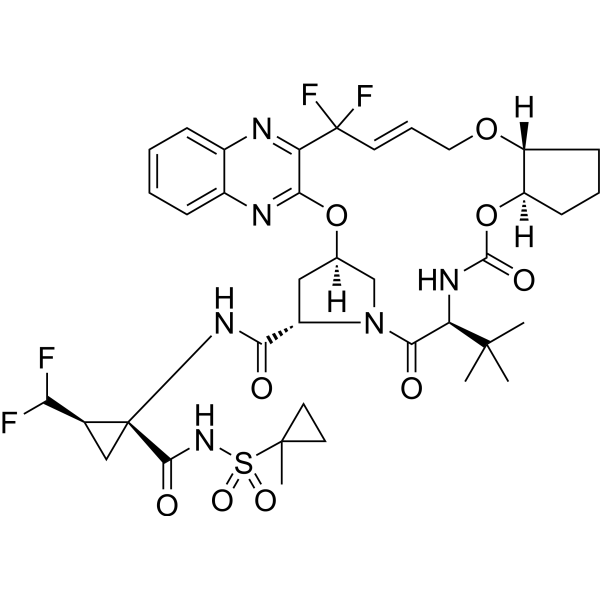
Grazoprevir (MK-5172) is a selective inhibitor of Hepatitis C virus NS3/4a protease with broad activity across genotypes and resistant variants, with Kis of 0.01 nM (gt1b), 0.01 nM (gt1a), 0.08 nM (gt2a), 0.15 nM (gt2b), 0.90 nM (gt3a), respectively . Grazoprevir inhibits SARS-CoV-2 3CL pro activity [3].
Velpatasvir-d3(GS-5816-d3) is deuterium labeled Velpatasvir. Velpatasvir (VEL, GS-5816) is a novel pan-genotypic hepatitis C virus (HCV) nonstructural protein 5A (NS5A) inhibitor with activity against genotype 1 (GT1) to GT6 HCV replicons. Velpatasvir is also a SARS-CoV 3CL pro inhibitor with an IC50 of 2.16 μM [3].
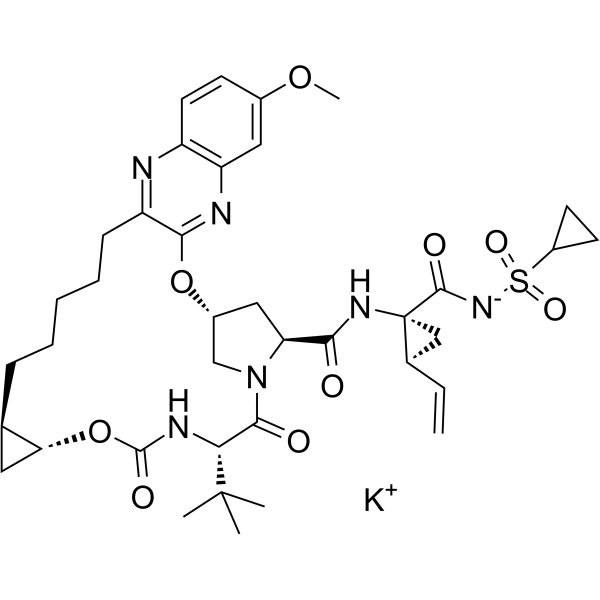
Grazoprevir potassium salt (MK-5172 potassium salt) is a selective inhibitor of Hepatitis C virus NS3/4a protease with broad activity across genotypes and resistant variants, with Kis of 0.01 nM (gt1b), 0.01 nM (gt1a), 0.08 nM (gt2a), 0.15 nM (gt2b), 0.90 nM (gt3a), respectively . Grazoprevir potassium salt inhibits SARS-CoV-2 3CL pro activity [3].
MAC-5576 is a SARS-CoV-2 3CL protease inhibitor, with an IC50 of 81 nM. MAC-5576 also inhibits 3CLpro (IC50=0.5 μM), HAV 3Cpro (IC50=0.5 μM), and thrombin (IC50=13 μM) .
Ledipasvir-d6 is the deuterium labeled Ledipasvir. Ledipasvir (GS-5885) is an inhibitor of the hepatitis C virus NS5A, with EC50s of 34 pM and 4 pM against genotype 1a and 1b replicon, respectively. Ledipasvir is also a SARS-CoV 3CLpro inhibitor with an IC50 of 1.62 μM [3].
Asunaprevir (Standard) is the analytical standard of Asunaprevir. This product is intended for research and analytical applications. Asunaprevir (BMS-650032) is a potent and orally bioavailable hepatitis C virus (HCV) NS3 protease inhibitor, with IC50 of 0.2 nM-3.5 nM . Asunaprevir inhibits SARS-CoV-2 3CLpro activity .
Walrycin B (Standard) is the analytical standard of Walrycin B. This product is intended for research and analytical applications. Walrycin B, an analogue of toxoflavin, is a potent SARS-CoV-2 3CLpro inhibitor with an IC50 of 0.26 μM. Walrycin B is a WalR response regulator inhibitor. Walrycin B has potent activity of inhibiting bacteria growth[1][2].
Merbromin is a mixed inhibitor of the 3-chymotrypsin-like protease (3CLpro) of SARS-CoV-2, with an IC50 of 2.7 μM. Merbromin effectively inhibits the replication of the Zika virus (ZIKV) and shows anti-ZIKV activity by inhibiting ZIKVpro. Merbromin can also be used as a topical disinfectant for cuts and scrapes, and it serves as a biological dye .
Boceprevir-d9 is the deuterium labeled Boceprevir. Boceprevir (EBP 520) is a potent, highly selective, orally bioavailable HCV NS3 protease inhibitor with a Ki of 14 nM in both enzyme assay and an EC90 of 350 nM in cell-based replicon assay [3] . Boceprevir inhibits SARS-CoV-2 3CLpro activity .
Lopinavir-d7 is deuterated labeled Lopinavir (HY-14588). Lopinavir (ABT-378) is a highly potent, selective peptidomimetic inhibitor of the HIV-1 protease, with Kis of 1.3 to 3.6 pM for wild-type and mutant HIV protease. Lopinavir acts by arresting maturation of HIV-1 thereby blocking its infectivity . Lopinavir is also a SARS-CoV 3CL pro inhibitor with an IC50 of 14.2 μM [3].
Lopinavir (Standard) is the analytical standard of Lopinavir. This product is intended for research and analytical applications. Lopinavir (ABT-378) is a highly potent, selective peptidomimetic inhibitor of the HIV-1 protease, with Kis of 1.3 to 3.6 pM for wild-type and mutant HIV protease. Lopinavir acts by arresting maturation of HIV-1 thereby blocking its infectivity . Lopinavir is also a SARS-CoV 3CL pro inhibitor with an IC50 of 14.2 μM [3].
Ibuzatrelvir (PF-07817883), a second-generation, orally bioavailable, is SARS-CoV-2 main protease (M pro and 3CL pro) inhibitor with improved metabolic stability. Ibuzatrelvir has demonstrated pan-human coronavirus antiviral activity and off-target selectivity profile in vitro and in preclinical animal studies. Ibuzatrelvir is well tolerated with a safety profile similar to placebo and prevents viral infection and transmission. Ibuzatrelvir can be used to inhibit COVID-19 [3] .
Atazanavir (Standard) is the analytical standard of Atazanavir. This product is intended for research and analytical applications. Atazanavir (BMS-232632) is a highly selective and orally active HIV-1 protease inhibitor . Atazanavir is a substrate and inhibitor of CYP3A4, and an inhibitor of P-glycoprotein (P-gp). Atazanavir is also a SARS-CoV 3CL pro inhibitor with an IC50 of 3.49 μM. Atazanavir inhibits cardiac fibrosis, hyperlipidemia and induces malignant glioma death [3] .
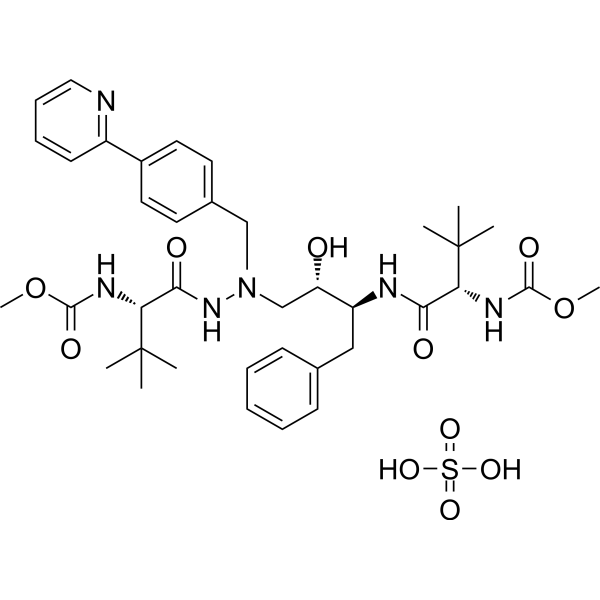
Atazanavir (BMS-232632) sulfate is a highly selective and orally active HIV-1 protease inhibitor with blood-brain barrier permeability. Atazanavir sulfate is a substrate and inhibitor of CYP3A4, and an inhibitor of P-glycoprotein (P-gp). Atazanavir sulfate is also a SARS-CoV 3CL pro inhibitor with an IC50 of 3.49 μM. Atazanavir sulfate inhibits cardiac fibrosis, hyperlipidemia and induces malignant glioma death [3] .
(S)-Velpatasvir- 13C,d3 ((S)-GS-5816- 13C,d3) is 13C labeled Velpatasvir. Velpatasvir (VEL, GS-5816) is a novel pan-genotypic hepatitis C virus (HCV) nonstructural protein 5A (NS5A) inhibitor with activity against genotype 1 (GT1) to GT6 HCV replicons. Velpatasvir is also a SARS-CoV 3CL pro inhibitor with an IC50 of 2.16 μM .
rel-Ritonavir-d6 (rel-ABT 538-d6) is the deuterium labeled rel-Ritonavir. rel-Ritonavir is a relative configuration of Ritonavir (HY-90001). Ritonavir (ABT 538) is an inhibitor of HIV protease used to study of HIV infection and AIDS. Ritonavir is also a SARS-CoV 3CLpro inhibitor with an IC50 of 1.61 μM .
SARS-CoV MPro-IN-1 is a SARS-CoV-2 3CLpro covalent inhibitor, with an IC50 of 40 nM. SARS-CoV MPro-IN-1 shows good anti-SARS-CoV-2-infection activity in cell culture with an EC50 of 0.33 μM. SARS-CoV MPro-IN-1 has the potential for COVID-19 research .
Narlaprevir (Standard) is the analytical standard of Narlaprevir. This product is intended for research and analytical applications. Narlaprevir (SCH 900518) is a selective and orally bioavailable NS3 protease inhibitor with a Ki value of 6 nM and an EC90 value of 40 nM . Narlaprevir also inhibits the HCV nonstructural protein 3 serine protease . Narlaprevir is also a SARS-CoV 3CLpro inhibitor with an IC50 of 2.3 μM [3].
CMX990 is a SARS-CoV-2 3CL protease inhibitor. The EC90s for inhibiting SARS-CoV-2 were 9.6 nM and 101 nM in human bronchial epithelial cells (HBECs) and HeLa-ACE2 cells, respectively. CMX990 has good ADME and pharmacokinetic properties .
Velpatasvir- 13C,d3 (GS-5816- 13C,d3) is 13C and deuterium labeled Velpatasvir. Velpatasvir (VEL, GS-5816) is a novel pan-genotypic hepatitis C virus (HCV) nonstructural protein 5A (NS5A) inhibitor with activity against genotype 1 (GT1) to GT6 HCV replicons. Velpatasvir is also a SARS-CoV 3CL pro inhibitor with an IC50 of 2.16 μM [3].
Indinavir- 13C4, 15N (MK-639 (free base)- 13C4, 15N) is 13C and 15N labeled Indinavir. Indinavir (MK-639 free base) is an orally active and selective HIV-1 protease inhibitor with a Ki of 0.54 nM for PR. Indinavir exhibits anticancer activity by inhibiting the activation of MMPs-2 hydrolysis, anti-angiogenesis and inducing apoptosis. Indinavir is also a SARS-CoV 3CL pro inhibitor [3] .
Z-LVG-CHN2 is a cell-permeable and irreversible inhibitor of cysteine proteinase. Z-LVG-CHN2 is a tripeptide derivative and mimics part of the human cysteine proteinase-binding center. Z-LVG-CHN2 displays an inhibition on HSV whereas no significant effect on poliovirus replication. Z-LVG-CHN2 effectively blocks SARS-COV-2 replication (EC50=190 nM) via inhibition of SARS-COV-2 3CL pro protease [3].
Atazanavir-d24 (BMS-232632-d24) is deuterium labeled Atazanavir. Atazanavir (BMS-232632) is a highly selective and orally active HIV-1 protease inhibitor . Atazanavir is a substrate and inhibitor of CYP3A4, and an inhibitor of P-glycoprotein (P-gp). Atazanavir is also a SARS-CoV 3CL pro inhibitor with an IC50 of 3.49 μM. Atazanavir inhibits cardiac fibrosis, hyperlipidemia and induces malignant glioma death [3] .
Catechin-5-O-gallate is a bioactive substance. Catechin-5-O-gallate can be isolated from bioactive Himalayan plants. Catechin-5-O-gallate is predicted to be a P-glycoprotein inhibitor, and binds to SARS-CoV-23CLpro, PLpro and RdRp. Catechin-5-O-gallate can be used in studies related to COVID-19 .
Atazanavir-d6 is deuterium labeled Atazanavir. Atazanavir (BMS-232632), a highly selective HIV-1 protease inhibitor, is the first protease inhibitor approved for once-daily administration . Atazanavir (BMS-232632) is a substrate and inhibitor of CYP3A4, and an inhibitor and inducer of P-glycoprotein (P-gp) . Atazanavir is also a SARS-CoV 3CLpro inhibitor with an IC50 of 3.49 μM [3].
Atazanavir-d5 is the deuterium labeled Atazanavir. Atazanavir (BMS-232632), a highly selective HIV-1 protease inhibitor, is the first protease inhibitor approved for once-daily administration . Atazanavir (BMS-232632) is a substrate and inhibitor of CYP3A4, and an inhibitor and inducer of P-glycoprotein (P-gp) . Atazanavir is also a SARS-CoV 3CLpro inhibitor with an IC50 of 3.49 μM [3].
Atazanavir-d9 is the deuterium labeled Atazanavir. Atazanavir (BMS-232632), a highly selective HIV-1 protease inhibitor, is the first protease inhibitor approved for once-daily administration . Atazanavir (BMS-232632) is a substrate and inhibitor of CYP3A4, and an inhibitor and inducer of P-glycoprotein (P-gp) . Atazanavir is also a SARS-CoV 3CLpro inhibitor with an IC50 of 3.49 μM [3].
Punicalagin (Standard) is the analytical standard of Punicalagin. This product is intended for research and analytical applications. Punicalagin is a polyphenol ingredient isolated from Pomegranate (Punica granatum L.) or the leaves of Terminalia catappa L.. Punicalagin is a reversible and non-competitive 3CLpro inhibitor and inhibits SARS-CoV-2 replication in vitro. Punicalagin is an anti-hepatitis B virus (HBV) agent and has antioxidant, anti-inflammatory, and anticancer effects. Punicalagin has the potential for the research of COVID-19 [3].
Telaprevir-d4 is the deuterium labeled Telaprevir. Telaprevir (VX-950) is a highly selective, reversible, and potent peptidomimetic inhibitor of the HCV NS3-4A protease, the steady-state inhibitory constant (Ki) of Telaprevir is 7 nM against a genotype 1 (H strain) NS3 protease domain plus a NS4A cofactor peptide [3]. Telaprevir inhibits SARS-CoV-2 3CLpro activity .
Atazanavir (sulfate) (Standard) is the analytical standard of Atazanavir (sulfate). This product is intended for research and analytical applications. Atazanavir (BMS-232632) sulfate, a highly selective HIV-1 protease inhibitor, is the first protease inhibitor approved for once-daily administration . Atazanavir sulfate is a substrate and inhibitor of CYP3A4, and an inhibitor and inducer of P-glycoprotein (P-gp) . Atazanavir sulfate is also a SARS-CoV 3CLpro inhibitor with an IC50 of
3.49 μM [3].
Naldemedine (S-297995) tosylate is an orally active μ-opioid receptor antagonist (PAMORA) . Naldemedine tosylate shows potent binding affinities (Ki=0.34, 0.43, 0.94 nM, respectively) and antagonist activities (IC50=25.57, 7.09, 16.1 nM, respectively) for recombinant human μ-, δ-, and κ- opioid receptors . Naldemedine can be used in opioid-induced constipation (OIC) research . Naldemedine tosylate is predicted to bind to 3CL pro encoded by SARS-CoV2 genome [3].
Naldemedine (S-297995) is an orally active μ-opioid receptor antagonist (PAMORA) . Naldemedine shows potent binding affinities (Ki=0.34, 0.43, 0.94 nM, respectively) and antagonist activities (IC50=25.57, 7.09, 16.1 nM, respectively) for recombinant human μ-, δ-, and κ- opioid receptors . Naldemedine can be used in opioid-induced constipation (OIC) research . Naldemedine is predicted to bind to 3CL pro encoded by SARS-CoV2 genome [3].
(rel)-Lopinavir-d8 ((rel)-ABT-378-d8) is the deuterium labeled Lopinavir (HY-14588) . Lopinavir (ABT-378) is a highly potent, selective peptidomimetic inhibitor of the HIV-1 protease, with Kis of 1.3 to 3.6 pM for wild-type and mutant HIV protease. Lopinavir acts by arresting maturation of HIV-1 thereby blocking its infectivity [3]. Lopinavir is also a SARS-CoV 3CL pro inhibitor with an IC50 of 14.2 μM .
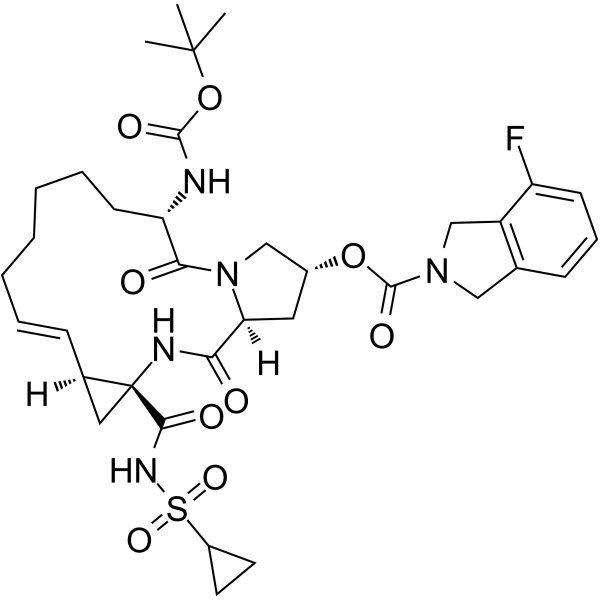
Paritaprevir (ABT-450) is a potent, orally active and antiviral non-structural protein 3/4A (NS3/4A) protease inhibitor with EC50s of 1 and 0.21 nM against HCV 1a and 1b, respectively. Paritaprevir is also a SARS-CoV3CL pro inhibitor with an IC50 of 1.31 μM. Paritaprevir is metabolized primarily by cytochrome P450 (CYP) 3A. The plasma concentration and half-life of Paritaprevir can be enhanced by Ritonavir (a CYP450 inhibitor) [3] .
SARS-CoV-2-IN-107 (Compound A7) is the inhibitor for SARS-CoV-2 3CLpro with an IC50 of 261.3 nM. SARS-CoV-2-IN-107 inhibits the SARS-CoV-2 replication with an EC50 of 11.7 μM. SARS-CoV-2-IN-107 exhibits anti-inflammatory activity with a NO inhibition rate of 68.6% in LPS (HY-D1056)-stimulated RAW264.7 macrophages .
Telaprevir (Standard) is the analytical standard of Telaprevir. This product is intended for research and analytical applications. Telaprevir (VX-950) is a highly selective, reversible, and potent peptidomimetic inhibitor of the HCV NS3-4A protease, the steady-state inhibitory constant (Ki) of Telaprevir is 7 nM against a genotype 1 (H strain) NS3 protease domain plus a NS4A cofactor peptide [3]. Telaprevir inhibits SARS-CoV-2 3CLpro activity .
Lopinavir-d8 (ABT-378-d8) is the deuterium labeled Lopinavir. Lopinavir (ABT-378) is a highly potent, selective peptidomimetic inhibitor of the HIV-1 protease, with Kis of 1.3 to 3.6 pM for wild-type and mutant HIV protease. Lopinavir acts by arresting maturation of HIV-1 thereby blocking its infectivity . Lopinavir is also a SARS-CoV 3CLpro inhibitor with an IC50 of 14.2 μM [3].
Paritaprevir (ABT-450) dihydrate is a potent, orally active and antiviral non-structural protein 3/4A (NS3/4A) protease inhibitor with EC50s of 1 and 0.21 nM against HCV 1a and 1b, respectively. Paritaprevir dihydrate is also a SARS-CoV3CL pro inhibitor with an IC50 of 1.31 μM. Paritaprevir dihydrate is metabolized primarily by cytochrome P450 (CYP) 3A. The plasma concentration and half-life of Paritaprevir dihydrate can be enhanced by Ritonavir (a CYP450 inhibitor) [3] .
Methyl rosmarinate is an orally active hydroxycinnamic acid. Methyl rosmarinate exhibits an IC50 of 24.70 μM and a Ki of 15.29 μM against PTP1B, an IC50 of 41.46 μg/mL against BChE, a Ki of 0.61 mM against mushroom tyrosinase, and an IC50 of 2.50 μM against SARS-CoV-23CLpro. Methyl rosmarinate downregulates the phosphorylation levels of ERK, JNK, p38, Smad2 and Smad3. Methyl rosmarinate activates erythrocyte BPGM and promotes the production of 2,3-BPG. Methyl rosmarinate induces apoptosis of fibroblasts. Methyl rosmarinate prolongs the survival time of hypoxic mice. Methyl rosmarinate improves insulin sensitivity. Methyl rosmarinate binds to SARS-CoV-2 3CLpro and inhibits viral replication. Methyl rosmarinate induces glioblastoma cell death. Methyl rosmarinate activates the TGR5/AMPK axis and reduces the levels of ROS and MDA. Methyl rosmarinate shows inhibitory activity against MMP-1. Methyl rosmarinate can be used in research related to pulmonary fibrosis, hypoxia-induced injury, type 2 diabetes, Alzheimer's disease, hyperpigmentation disorders, COVID-19, glioblastoma and myocardial ischemia-reperfusion injury [3] .
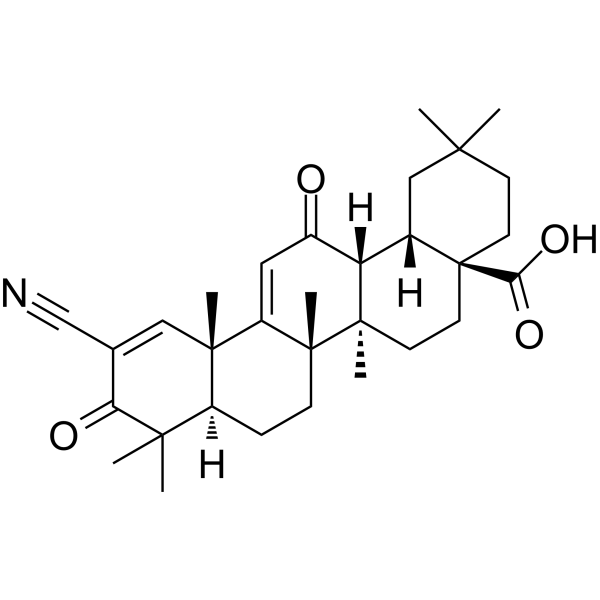
Bardoxolone (CDDO; RTA 401) is a Nrf2 activator. Bardoxolone shows anti-SARS-CoV-2 3CLpro with IC50 of 27.99 μM. Bardoxolone activates the Nrf2 pathway and inhibits the NF-κB pathway. Bardoxolone can induce cells differentiation, apoptosis and shows antiproliferative activity against cancer cells. Bardoxolone can increase ROS and decrease intracellular GSH levels.Bardoxolone inhibits Z-VAD-FMK (HY-16658B)-induced necroptosis. Bardoxolone can be used for the research of cancer, inflammation and infection, such as SARS-CoV infection and glioblastoma [3].
Z-L(D-Val)G-CHN2 is the isoform of Z-LVG-CHN2 (HY-108137). Z-LVG-CHN2 is a cell-permeable and irreversible inhibitor of cysteine proteinase. Z-LVG-CHN2 is a tripeptide derivative and mimics part of the human cysteine proteinase-binding center. Z-LVG-CHN2 displays an inhibition on HSV whereas no significant effect on poliovirus replication. Z-LVG-CHN2 effectively blocks SARS-COV-2 replication (EC50=190 nM) via inhibition of SARS-COV-2 3CL pro protease [3].
Imidazole (Glyoxaline; 1,3-Diaza-2,4-cyclopentadiene) is a heterocyclic aromatic compound. Imidazole bearing molecules have been used as corrosion, acetylcholinesterase (AChEI) and xanthine oxidase (XO) inhibitors, performing biological activities such as antifungal, antituberculosis, anti-inflammatory, antioxidant, and analgesic, amongst many others. Imidazole inhibits the enzymatic conversion of the endoperoxides (PGG2 and PGH2) to thromboxane A2 by platelet microsomes. Imidazole derivatives exhibits inhibition on SARS-CoV-2 3CL Pro enzyme, which is promising for research in the field of Alzheimer’s disease, gout, COVID-19 and thrombo-embolic disease [3].
Paritaprevir (Standard) is the analytical standard of Paritaprevir. This product is intended for research and analytical applications. Paritaprevir (ABT-450) is a potent, orally active and antiviral non-structural protein 3/4A (NS3/4A) protease inhibitor with EC50s of 1 and 0.21 nM against HCV 1a and 1b, respectively. Paritaprevir is also a SARS-CoV 3CLpro inhibitor with an IC50 of 1.31 μM. Paritaprevir is metabolized primarily by cytochrome P450 (CYP) 3A. The plasma concentration and half-life of Paritaprevir can be enhanced by Ritonavir (a CYP450 inhibitor) [3] .
Z-LVG-CHN2 (Standard) is the analytical standard of Z-LVG-CHN2 (HY-108137). This product is intended for research and analytical applications. Z-LVG-CHN2 is a cell-permeable and irreversible inhibitor of cysteine proteinase. Z-LVG-CHN2 is a tripeptide derivative and mimics part of the human cysteine proteinase-binding center. Z-LVG-CHN2 displays an inhibition on HSV whereas no significant effect on poliovirus replication. Z-LVG-CHN2 effectively blocks SARS-COV-2 replication (EC50=190 nM) via inhibition of SARS-COV-2 3CL pro protease [3].
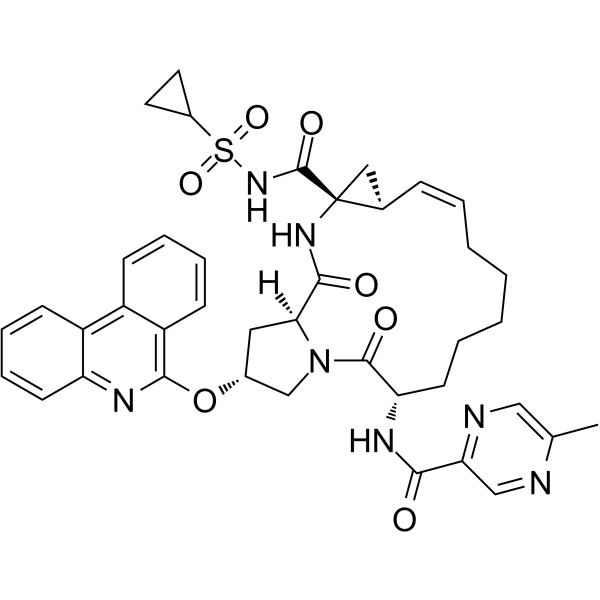
Danoprevir (ITMN-191) is an orally active NS3/4A protease inhibitor for hepatitis C virus (HCV) with an IC50 of 0.29 nM and is selective for NS3/4A over a panel of 53 proteases (IC50 higher than 10 μM). Danoprevir (ITMN-191) inhibits HCV genotypes 1a, 1b, 4, 5, and 6 (IC50s=0.2-0.4 nM) as well as 2b and 3a (IC50s=1.6, 3.5 nM) . Danoprevir is also a SARS-CoV 3CL pro inhibitor with an IC50 of 0.05 μM [3].
Imidazole- 15N2 (Glyoxaline- 15N2) is 15N labeled Imidazole. Imidazole (Glyoxaline; 1,3-Diaza-2,4-cyclopentadiene) is a heterocyclic aromatic compound. Imidazole bearing molecules have been used as corrosion, acetylcholinesterase (AChEI) and xanthine oxidase (XO) inhibitors, performing biological activities such as antifungal, antituberculosis, anti-inflammatory, antioxidant, and analgesic, amongst many others. Imidazole inhibits the enzymatic conversion of the endoperoxides (PGG2 and PGH2) to thromboxane A2 by platelet microsomes. Imidazole derivatives exhibits inhibition on SARS-CoV-2 3CL Pro enzyme, which is promising for research in the field of Alzheimer’s disease, gout, COVID-19 and thrombo-embolic disease [3] .
Imidazole (Standard) is the analytical standard of Imidazole. This product is intended for research and analytical applications. Imidazole (Glyoxaline; 1,3-Diaza-2,4-cyclopentadiene) is a heterocyclic aromatic compound. Imidazole bearing molecules have been used as corrosion, acetylcholinesterase (AChEI) and xanthine oxidase (XO) inhibitors, performing biological activities such as antifungal, antituberculosis, anti-inflammatory, antioxidant, and analgesic, amongst many others. Imidazole inhibits the enzymatic conversion of the endoperoxides (PGG2 and PGH2) to thromboxane A2 by platelet microsomes. Imidazole derivatives exhibits inhibition on SARS-CoV-2 3CLPro enzyme, which is promising for research in the field of Alzheimer’s disease, gout, COVID-19 and thrombo-embolic disease [3].
Danoprevir (Standard) is the analytical standard of Danoprevir (HY-10238). This product is intended for research and analytical applications. Danoprevir (ITMN-191) is an orally active NS3/4A protease inhibitor for hepatitis C virus (HCV) with an IC50 of 0.29 nM and is selective for NS3/4A over a panel of 53 proteases (IC50 higher than 10 μM). Danoprevir (ITMN-191) inhibits HCV genotypes 1a, 1b, 4, 5, and 6 (IC50s=0.2-0.4 nM) as well as 2b and 3a (IC50s=1.6, 3.5 nM) . Danoprevir is also a SARS-CoV 3CLpro inhibitor with an IC50 of 0.05 μM [3].
Merbromin is a mixed inhibitor of the 3-chymotrypsin-like protease (3CLpro) of SARS-CoV-2, with an IC50 of 2.7 μM. Merbromin effectively inhibits the replication of the Zika virus (ZIKV) and shows anti-ZIKV activity by inhibiting ZIKVpro. Merbromin can also be used as a topical disinfectant for cuts and scrapes, and it serves as a biological dye .
SARS-CoV-2 3CLpro probe-1 (Compound probe 3) is a selective and activity-based probe for the SARS-CoV-2 3CL protease. SARS-CoV-2 3CLpro probe-1 can detect endogenously expressed 3CLpro in SARS-CoV-2-infected cells .
Imidazole (Glyoxaline; 1,3-Diaza-2,4-cyclopentadiene) is a heterocyclic aromatic compound. Imidazole bearing molecules have been used as corrosion, acetylcholinesterase (AChEI) and xanthine oxidase (XO) inhibitors, performing biological activities such as antifungal, antituberculosis, anti-inflammatory, antioxidant, and analgesic, amongst many others. Imidazole inhibits the enzymatic conversion of the endoperoxides (PGG2 and PGH2) to thromboxane A2 by platelet microsomes. Imidazole derivatives exhibits inhibition on SARS-CoV-2 3CL Pro enzyme, which is promising for research in the field of Alzheimer’s disease, gout, COVID-19 and thrombo-embolic disease [3].
Imidazole (Standard) is the analytical standard of Imidazole. This product is intended for research and analytical applications. Imidazole (Glyoxaline; 1,3-Diaza-2,4-cyclopentadiene) is a heterocyclic aromatic compound. Imidazole bearing molecules have been used as corrosion, acetylcholinesterase (AChEI) and xanthine oxidase (XO) inhibitors, performing biological activities such as antifungal, antituberculosis, anti-inflammatory, antioxidant, and analgesic, amongst many others. Imidazole inhibits the enzymatic conversion of the endoperoxides (PGG2 and PGH2) to thromboxane A2 by platelet microsomes. Imidazole derivatives exhibits inhibition on SARS-CoV-2 3CLPro enzyme, which is promising for research in the field of Alzheimer’s disease, gout, COVID-19 and thrombo-embolic disease [3].
MCA-AVLQSGFR-Lys(Dnp)-Lys-NH2 is a fluorescent substrate used for fluorescence resonance energy transfer (FRET) protease assays. This substrate is employed to measure the activity of SARS-CoV-2 3CLpro .
Punicalagin is a polyphenol ingredient isolated from Pomegranate (Punica granatum L.) or the leaves of Terminalia catappa L.. Punicalagin is a reversible and non-competitive 3CL pro inhibitor and inhibits SARS-CoV-2 replication in vitro. Punicalagin is an anti-hepatitis B virus (HBV) agent and has antioxidant, anti-inflammatory, and anticancer effects. Punicalagin has the potential for the research of COVID-19 [3].
Atazanavir (BMS-232632) is a highly selective and orally active HIV-1 protease inhibitor . Atazanavir is a substrate and inhibitor of CYP3A4, and an inhibitor of P-glycoprotein (P-gp). Atazanavir is also a SARS-CoV 3CL pro inhibitor with an IC50 of 3.49 μM. Atazanavir inhibits cardiac fibrosis, hyperlipidemia and induces malignant glioma death [3] .
Atazanavir (BMS-232632) sulfate is a highly selective and orally active HIV-1 protease inhibitor with blood-brain barrier permeability. Atazanavir sulfate is a substrate and inhibitor of CYP3A4, and an inhibitor of P-glycoprotein (P-gp). Atazanavir sulfate is also a SARS-CoV 3CL pro inhibitor with an IC50 of 3.49 μM. Atazanavir sulfate inhibits cardiac fibrosis, hyperlipidemia and induces malignant glioma death [3] .
Methyl rosmarinate is an orally active hydroxycinnamic acid. Methyl rosmarinate exhibits an IC50 of 24.70 μM and a Ki of 15.29 μM against PTP1B, an IC50 of 41.46 μg/mL against BChE, a Ki of 0.61 mM against mushroom tyrosinase, and an IC50 of 2.50 μM against SARS-CoV-23CLpro. Methyl rosmarinate downregulates the phosphorylation levels of ERK, JNK, p38, Smad2 and Smad3. Methyl rosmarinate activates erythrocyte BPGM and promotes the production of 2,3-BPG. Methyl rosmarinate induces apoptosis of fibroblasts. Methyl rosmarinate prolongs the survival time of hypoxic mice. Methyl rosmarinate improves insulin sensitivity. Methyl rosmarinate binds to SARS-CoV-2 3CLpro and inhibits viral replication. Methyl rosmarinate induces glioblastoma cell death. Methyl rosmarinate activates the TGR5/AMPK axis and reduces the levels of ROS and MDA. Methyl rosmarinate shows inhibitory activity against MMP-1. Methyl rosmarinate can be used in research related to pulmonary fibrosis, hypoxia-induced injury, type 2 diabetes, Alzheimer's disease, hyperpigmentation disorders, COVID-19, glioblastoma and myocardial ischemia-reperfusion injury [3] .
Punicalagin (Standard) is the analytical standard of Punicalagin. This product is intended for research and analytical applications. Punicalagin is a polyphenol ingredient isolated from Pomegranate (Punica granatum L.) or the leaves of Terminalia catappa L.. Punicalagin is a reversible and non-competitive 3CLpro inhibitor and inhibits SARS-CoV-2 replication in vitro. Punicalagin is an anti-hepatitis B virus (HBV) agent and has antioxidant, anti-inflammatory, and anticancer effects. Punicalagin has the potential for the research of COVID-19 [3].
Isojacareubin can be isolated from Hypericum japonicum. Isojacareubin covalently inhibits SARS-CoV-2 3CLpro. Isojacareubin also has anti-helicobacter activity. Isojacareubin inhibits PKC, and suppresses hepatocellular carcinoma metastasis and induces apoptosis[3].
Antcin B is a SARS-CoV-2 3-chymotrypsin-like protease (3CL Pro) inhibitor. Antcin B binds to multiple key amino acid residues of 3CL Pro(such as Leu141, Asn142, Glu166, His163, etc.) through hydrogen bonds, salt bridges, and hydrophobic interactions, thereby inhibiting the activity of 3CL Pro, blocking the cleavage process of viral polyproteins, and suppressing the replication of the SARS-CoV-2 virus in host cells. Antcin B is promising for research of COVID-19 .
Atazanavir (Standard) is the analytical standard of Atazanavir. This product is intended for research and analytical applications. Atazanavir (BMS-232632) is a highly selective and orally active HIV-1 protease inhibitor . Atazanavir is a substrate and inhibitor of CYP3A4, and an inhibitor of P-glycoprotein (P-gp). Atazanavir is also a SARS-CoV 3CL pro inhibitor with an IC50 of 3.49 μM. Atazanavir inhibits cardiac fibrosis, hyperlipidemia and induces malignant glioma death [3] .
Atazanavir (sulfate) (Standard) is the analytical standard of Atazanavir (sulfate). This product is intended for research and analytical applications. Atazanavir (BMS-232632) sulfate, a highly selective HIV-1 protease inhibitor, is the first protease inhibitor approved for once-daily administration . Atazanavir sulfate is a substrate and inhibitor of CYP3A4, and an inhibitor and inducer of P-glycoprotein (P-gp) . Atazanavir sulfate is also a SARS-CoV 3CLpro inhibitor with an IC50 of
3.49 μM [3].
SARS-CoV-2 3CLpro/3C-like protease Protein (Tag Free) is a viral cysteine protease that plays a crucial role in the co-translational proteolytic processing of coronavirus polyproteins. Since no homologous proteins with similar cleavage sites exist in the human body, SARS-CoV-2 3CLpro/3C-like protease Protein (Tag Free) is a high-quality target for the development of drugs related to COVID-19. SARS-CoV-2 3CLpro/3C-like protease Protein (Tag Free) is a recombinant, SARS-CoV-2 3CLpro/3C-like protease Protein (Tag Free) expressed by E.coli.
SARS-CoV-2 3CLpro/3C-like protease is a viral cysteine protease that plays a crucial role in the co-translational proteolytic processing of coronavirus polyproteins. Since no homologous proteins with similar cleavage sites exist in the human body, SARS-CoV-2 3CLpro/3C-like protease is a high-quality target for the development of drugs related to COVID-19. SARS-CoV-2 3CLpro/3C-like protease protein is a recombinant, untagged SARS-CoV-2 3CLpro/3C-like protease protein expressed by E.coli.
Ritonavir-d6 is the deuterium labeled Ritonavir. Ritonavir (ABT 538) is an inhibitor of HIV protease used to treat HIV infection and AIDS. Ritonavir is also a SARS-CoV 3CLpro inhibitor with an IC50 of 1.61 μM .
Atazanavir-d6 is deuterium labeled Atazanavir. Atazanavir (BMS-232632), a highly selective HIV-1 protease inhibitor, is the first protease inhibitor approved for once-daily administration . Atazanavir (BMS-232632) is a substrate and inhibitor of CYP3A4, and an inhibitor and inducer of P-glycoprotein (P-gp) . Atazanavir is also a SARS-CoV 3CLpro inhibitor with an IC50 of 3.49 μM [3].
Velpatasvir-d3(GS-5816-d3) is deuterium labeled Velpatasvir. Velpatasvir (VEL, GS-5816) is a novel pan-genotypic hepatitis C virus (HCV) nonstructural protein 5A (NS5A) inhibitor with activity against genotype 1 (GT1) to GT6 HCV replicons. Velpatasvir is also a SARS-CoV 3CL pro inhibitor with an IC50 of 2.16 μM [3].
Ledipasvir-d6 is the deuterium labeled Ledipasvir. Ledipasvir (GS-5885) is an inhibitor of the hepatitis C virus NS5A, with EC50s of 34 pM and 4 pM against genotype 1a and 1b replicon, respectively. Ledipasvir is also a SARS-CoV 3CLpro inhibitor with an IC50 of 1.62 μM [3].
Atazanavir-d9 is the deuterium labeled Atazanavir. Atazanavir (BMS-232632), a highly selective HIV-1 protease inhibitor, is the first protease inhibitor approved for once-daily administration . Atazanavir (BMS-232632) is a substrate and inhibitor of CYP3A4, and an inhibitor and inducer of P-glycoprotein (P-gp) . Atazanavir is also a SARS-CoV 3CLpro inhibitor with an IC50 of 3.49 μM [3].
Telaprevir-d4 is the deuterium labeled Telaprevir. Telaprevir (VX-950) is a highly selective, reversible, and potent peptidomimetic inhibitor of the HCV NS3-4A protease, the steady-state inhibitory constant (Ki) of Telaprevir is 7 nM against a genotype 1 (H strain) NS3 protease domain plus a NS4A cofactor peptide [3]. Telaprevir inhibits SARS-CoV-2 3CLpro activity .
Lopinavir-d8 (ABT-378-d8) is the deuterium labeled Lopinavir. Lopinavir (ABT-378) is a highly potent, selective peptidomimetic inhibitor of the HIV-1 protease, with Kis of 1.3 to 3.6 pM for wild-type and mutant HIV protease. Lopinavir acts by arresting maturation of HIV-1 thereby blocking its infectivity . Lopinavir is also a SARS-CoV 3CLpro inhibitor with an IC50 of 14.2 μM [3].
Ritonavir- 13C3 is 13C labeled Ritonavir. Ritonavir (ABT 538) is an inhibitor of HIV protease used to treat HIV infection and AIDS. Ritonavir is also a SARS-CoV 3CL pro inhibitor with an IC50 of 1.61 μM .
Ritonavir-d8 is deuterated labeled Ritonavir (HY-90001). Ritonavir (ABT 538) is an inhibitor of HIV protease used to treat HIV infection and AIDS. Ritonavir is also a SARS-CoV 3CL pro inhibitor with an IC50 of 1.61 μM.
Amprenavir- 13C6 (VX-478- 13C6) is 13C labeled Amprenavir. Amprenavir (VX-478) is a HIV protease inhibitor (Ki=0.6 nM) used to treat HIV infection. Amprenavir is also a SARS-CoV 3CL pro inhibitor with an IC50 of 1.09 μM.
Nirmatrelvir-d6 (PF-07321332-d6) is deuterium labeled Nirmatrelvir. Nirmatrelvir (PF-07321332) is a potent and orally active SARS-CoV 3C-like protease (3CL PRO) inhibitor. Nirmatrelvir (PF-07321332) targets to the SARS-CoV-2 virus and can be used for COVID-19 research .
Ledipasvir-d16 (GS-5885-d16) is deuterium labeled Ledipasvir. Ledipasvir (GS-5885) is an inhibitor of the hepatitis C virus NS5A, with EC50s of 34 pM and 4 pM against genotype 1a and 1b replicon, respectively. Ledipasvir is also a SARS-CoV 3CL pro inhibitor with an IC50 of 1.62 μM [3].
Ritonavir- 13C,d3 is the 13C- and deuterium labeled Ritonavir. Ritonavir (ABT 538) is an inhibitor of HIV protease used to treat HIV infection and AIDS. Ritonavir is also a SARS-CoV 3CLpro inhibitor with an IC50 of 1.61 μM.
Amprenavir-d4-1 is deuterium labeled Amprenavir. Amprenavir (VX-478) is a HIV protease inhibitor (Ki=0.6 nM) used to treat HIV infection. Amprenavir is also a SARS-CoV 3CLpro inhibitor with an IC50 of 1.09 μM.
Amprenavir-d4 is the deuterium labeled Amprenavir. Amprenavir (VX-478) is a HIV protease inhibitor (Ki=0.6 nM) used to treat HIV infection. Amprenavir is also a SARS-CoV 3CLpro inhibitor with an IC50 of 1.09 μM .
Tipranavir-d7 is deuterated labeled Tipranavir (HY-15148). Tipranavir (PNU-140690) inhibits the enzymatic activity and dimerization of HIV-1 protease, exerts potent activity against multi-protease inhibitor (PI)-resistant HIV-1 isolates with IC50s of 66-410 nM . Tipranavir inhibits SARS-CoV-2 3CL pro activity [3].
Boceprevir-d9 is the deuterium labeled Boceprevir. Boceprevir (EBP 520) is a potent, highly selective, orally bioavailable HCV NS3 protease inhibitor with a Ki of 14 nM in both enzyme assay and an EC90 of 350 nM in cell-based replicon assay [3] . Boceprevir inhibits SARS-CoV-2 3CLpro activity .
Lopinavir-d7 is deuterated labeled Lopinavir (HY-14588). Lopinavir (ABT-378) is a highly potent, selective peptidomimetic inhibitor of the HIV-1 protease, with Kis of 1.3 to 3.6 pM for wild-type and mutant HIV protease. Lopinavir acts by arresting maturation of HIV-1 thereby blocking its infectivity . Lopinavir is also a SARS-CoV 3CL pro inhibitor with an IC50 of 14.2 μM [3].
(S)-Velpatasvir- 13C,d3 ((S)-GS-5816- 13C,d3) is 13C labeled Velpatasvir. Velpatasvir (VEL, GS-5816) is a novel pan-genotypic hepatitis C virus (HCV) nonstructural protein 5A (NS5A) inhibitor with activity against genotype 1 (GT1) to GT6 HCV replicons. Velpatasvir is also a SARS-CoV 3CL pro inhibitor with an IC50 of 2.16 μM .
rel-Ritonavir-d6 (rel-ABT 538-d6) is the deuterium labeled rel-Ritonavir. rel-Ritonavir is a relative configuration of Ritonavir (HY-90001). Ritonavir (ABT 538) is an inhibitor of HIV protease used to study of HIV infection and AIDS. Ritonavir is also a SARS-CoV 3CLpro inhibitor with an IC50 of 1.61 μM .
Velpatasvir- 13C,d3 (GS-5816- 13C,d3) is 13C and deuterium labeled Velpatasvir. Velpatasvir (VEL, GS-5816) is a novel pan-genotypic hepatitis C virus (HCV) nonstructural protein 5A (NS5A) inhibitor with activity against genotype 1 (GT1) to GT6 HCV replicons. Velpatasvir is also a SARS-CoV 3CL pro inhibitor with an IC50 of 2.16 μM [3].
Indinavir- 13C4, 15N (MK-639 (free base)- 13C4, 15N) is 13C and 15N labeled Indinavir. Indinavir (MK-639 free base) is an orally active and selective HIV-1 protease inhibitor with a Ki of 0.54 nM for PR. Indinavir exhibits anticancer activity by inhibiting the activation of MMPs-2 hydrolysis, anti-angiogenesis and inducing apoptosis. Indinavir is also a SARS-CoV 3CL pro inhibitor [3] .
Atazanavir-d24 (BMS-232632-d24) is deuterium labeled Atazanavir. Atazanavir (BMS-232632) is a highly selective and orally active HIV-1 protease inhibitor . Atazanavir is a substrate and inhibitor of CYP3A4, and an inhibitor of P-glycoprotein (P-gp). Atazanavir is also a SARS-CoV 3CL pro inhibitor with an IC50 of 3.49 μM. Atazanavir inhibits cardiac fibrosis, hyperlipidemia and induces malignant glioma death [3] .
Atazanavir-d5 is the deuterium labeled Atazanavir. Atazanavir (BMS-232632), a highly selective HIV-1 protease inhibitor, is the first protease inhibitor approved for once-daily administration . Atazanavir (BMS-232632) is a substrate and inhibitor of CYP3A4, and an inhibitor and inducer of P-glycoprotein (P-gp) . Atazanavir is also a SARS-CoV 3CLpro inhibitor with an IC50 of 3.49 μM [3].
(rel)-Lopinavir-d8 ((rel)-ABT-378-d8) is the deuterium labeled Lopinavir (HY-14588) . Lopinavir (ABT-378) is a highly potent, selective peptidomimetic inhibitor of the HIV-1 protease, with Kis of 1.3 to 3.6 pM for wild-type and mutant HIV protease. Lopinavir acts by arresting maturation of HIV-1 thereby blocking its infectivity [3]. Lopinavir is also a SARS-CoV 3CL pro inhibitor with an IC50 of 14.2 μM .
Imidazole- 15N2 (Glyoxaline- 15N2) is 15N labeled Imidazole. Imidazole (Glyoxaline; 1,3-Diaza-2,4-cyclopentadiene) is a heterocyclic aromatic compound. Imidazole bearing molecules have been used as corrosion, acetylcholinesterase (AChEI) and xanthine oxidase (XO) inhibitors, performing biological activities such as antifungal, antituberculosis, anti-inflammatory, antioxidant, and analgesic, amongst many others. Imidazole inhibits the enzymatic conversion of the endoperoxides (PGG2 and PGH2) to thromboxane A2 by platelet microsomes. Imidazole derivatives exhibits inhibition on SARS-CoV-2 3CL Pro enzyme, which is promising for research in the field of Alzheimer’s disease, gout, COVID-19 and thrombo-embolic disease [3] .
SARS-CoV-2 3CLpro probe-1 (Compound probe 3) is a selective and activity-based probe for the SARS-CoV-2 3CL protease. SARS-CoV-2 3CLpro probe-1 can detect endogenously expressed 3CLpro in SARS-CoV-2-infected cells .
SARS-CoV-2 3CLpro-IN-26 (Compound (S,R)-4y) is an allosteric inhibitor for SARS-CoV-2 3CLpro with an IC50 of 0.43 μM. SARS-CoV-2 3CLpro-IN-26 exhibits good cell permeability and is able to effectively cross the cell membrane, after co-incubation with Vero-E6 cells .
Inquiry Online
Your information is safe with us. * Required Fields.
Western blot analysis of extracts from THP-1(lane 2(20μg), Jurkat (lane 3(20μg) and NIH3T3(lane 4(20μg) using FOXO1A (HY-P80132) Rabbit mAb. Proteins were transferred
to a PVDF membrane and blocked with 5% non-fat milk in TBST for 2 hour at room temperature. The primary antibody (1/1000) and Loading control antibody (Beta Actin, HY-P80438, 1/10000) was
used in 5% non-fat milk in TBST at 4°C overnight. Goat Anti-Mouse/Rabbit IgG-HRP Secondary Antibody (1/10000) was used for 1 hour at room temperature.
Western blot analysis of extracts from THP-1(lane 2(20μg), Jurkat (lane 3(20μg) and NIH3T3(lane 4(20μg) using FOXO1A (HY-P80132) Rabbit mAb. Proteins were transferred
to a PVDF membrane and blocked with 5% non-fat milk in TBST for 2 hour at room temperature. The primary antibody (1/1000) and Loading control antibody (Beta Actin, HY-P80438, 1/10000) was
used in 5% non-fat milk in TBST at 4°C overnight. Goat Anti-Mouse/Rabbit IgG-HRP Secondary Antibody (1/10000) was used for 1 hour at room temperature.
Western blot analysis of extracts from THP-1(lane 2(20μg), Jurkat (lane 3(20μg) and NIH3T3(lane 4(20μg) using FOXO1A (HY-P80132) Rabbit mAb. Proteins were transferred
to a PVDF membrane and blocked with 5% non-fat milk in TBST for 2 hour at room temperature. The primary antibody (1/1000) and Loading control antibody (Beta Actin, HY-P80438, 1/10000) was
used in 5% non-fat milk in TBST at 4°C overnight. Goat Anti-Mouse/Rabbit IgG-HRP Secondary Antibody (1/10000) was used for 1 hour at room temperature.
Western blot analysis of extracts from THP-1(lane 2(20μg), Jurkat (lane 3(20μg) and NIH3T3(lane 4(20μg) using FOXO1A (HY-P80132) Rabbit mAb. Proteins were transferred
to a PVDF membrane and blocked with 5% non-fat milk in TBST for 2 hour at room temperature. The primary antibody (1/1000) and Loading control antibody (Beta Actin, HY-P80438, 1/10000) was
MedchemExpress Validation 03
Western blot analysis of extracts from THP-1(lane 2(20μg), Jurkat (lane 3(20μg) and NIH3T3(lane 4(20μg) using FOXO1A (HY-P80132) Rabbit mAb. Proteins were transferred
MedchemExpress Validation 04
Western blot analysis of extracts from THP-1(lane 2(20μg), Jurkat (lane 3(20μg) and NIH3T3(lane 4(20μg) using FOXO1A (HY-P80132) Rabbit mAb. Proteins were transferred
to a PVDF membrane and blocked with 5% non-fat milk in TBST for 2 hour at room temperature. The primary antibody (1/1000) and Loading control antibody (Beta Actin, HY-P80438, 1/10000) was
used in 5% non-fat milk in TBST at 4°C overnight. Goat Anti-Mouse/Rabbit IgG-HRP Secondary Antibody (1/10000) was used for 1 hour at room temperature.
MedchemExpress Validation
Western blot analysis of extracts from THP-1(lane 2(20μg), Jurkat (lane 3(20μg) and NIH3T3(lane 4(20μg) using FOXO1A (HY-P80132) Rabbit mAb. Proteins were transferred
to a PVDF membrane and blocked with 5% non-fat milk in TBST for 2 hour at room temperature. The primary antibody (1/1000) and Loading control antibody (Beta Actin, HY-P80438, 1/10000) was
used in 5% non-fat milk in TBST at 4°C overnight. Goat Anti-Mouse/Rabbit IgG-HRP Secondary Antibody (1/10000) was used for 1 hour at room temperature.
Western blot analysis of extracts from THP-1(lane 2(20μg), Jurkat (lane 3(20μg) and NIH3T3(lane 4(20μg) using FOXO1A (HY-P80132) Rabbit mAb. Proteins were transferred
to a PVDF membrane and blocked with 5% non-fat milk in TBST for 2 hour at room temperature. The primary antibody (1/1000) and Loading control antibody (Beta Actin, HY-P80438, 1/10000) was
used in 5% non-fat milk in TBST at 4°C overnight. Goat Anti-Mouse/Rabbit IgG-HRP Secondary Antibody (1/10000) was used for 1 hour at room temperature.
MedchemExpress Validation
Western blot analysis of extracts from THP-1(lane 2(20μg), Jurkat (lane 3(20μg) and NIH3T3(lane 4(20μg) using FOXO1A (HY-P80132) Rabbit mAb. Proteins were transferred
to a PVDF membrane and blocked with 5% non-fat milk in TBST for 2 hour at room temperature. The primary antibody (1/1000) and Loading control antibody (Beta Actin, HY-P80438, 1/10000) was
used in 5% non-fat milk in TBST at 4°C overnight. Goat Anti-Mouse/Rabbit IgG-HRP Secondary Antibody (1/10000) was used for 1 hour at room temperature.
MedchemExpress Validation
Western blot analysis of extracts from THP-1(lane 2(20μg), Jurkat (lane 3(20μg) and NIH3T3(lane 4(20μg) using FOXO1A (HY-P80132) Rabbit mAb. Proteins were transferred
to a PVDF membrane and blocked with 5% non-fat milk in TBST for 2 hour at room temperature. The primary antibody (1/1000) and Loading control antibody (Beta Actin, HY-P80438, 1/10000) was
used in 5% non-fat milk in TBST at 4°C overnight. Goat Anti-Mouse/Rabbit IgG-HRP Secondary Antibody (1/10000) was used for 1 hour at room temperature.
MedchemExpress Validation
Western blot analysis of extracts from THP-1(lane 2(20μg), Jurkat (lane 3(20μg) and NIH3T3(lane 4(20μg) using FOXO1A (HY-P80132) Rabbit mAb. Proteins were transferred
to a PVDF membrane and blocked with 5% non-fat milk in TBST for 2 hour at room temperature. The primary antibody (1/1000) and Loading control antibody (Beta Actin, HY-P80438, 1/10000) was
used in 5% non-fat milk in TBST at 4°C overnight. Goat Anti-Mouse/Rabbit IgG-HRP Secondary Antibody (1/10000) was used for 1 hour at room temperature.
MedchemExpress Validation
Western blot analysis of extracts from THP-1(lane 2(20μg), Jurkat (lane 3(20μg) and NIH3T3(lane 4(20μg) using FOXO1A (HY-P80132) Rabbit mAb. Proteins were transferred
to a PVDF membrane and blocked with 5% non-fat milk in TBST for 2 hour at room temperature. The primary antibody (1/1000) and Loading control antibody (Beta Actin, HY-P80438, 1/10000) was
used in 5% non-fat milk in TBST at 4°C overnight. Goat Anti-Mouse/Rabbit IgG-HRP Secondary Antibody (1/10000) was used for 1 hour at room temperature.
MedchemExpress Validation
Western blot analysis of extracts from THP-1(lane 2(20μg), Jurkat (lane 3(20μg) and NIH3T3(lane 4(20μg) using FOXO1A (HY-P80132) Rabbit mAb. Proteins were transferred
to a PVDF membrane and blocked with 5% non-fat milk in TBST for 2 hour at room temperature. The primary antibody (1/1000) and Loading control antibody (Beta Actin, HY-P80438, 1/10000) was
used in 5% non-fat milk in TBST at 4°C overnight. Goat Anti-Mouse/Rabbit IgG-HRP Secondary Antibody (1/10000) was used for 1 hour at room temperature.
MedchemExpress Validation
Western blot analysis of extracts from THP-1(lane 2(20μg), Jurkat (lane 3(20μg) and NIH3T3(lane 4(20μg) using FOXO1A (HY-P80132) Rabbit mAb. Proteins were transferred
to a PVDF membrane and blocked with 5% non-fat milk in TBST for 2 hour at room temperature. The primary antibody (1/1000) and Loading control antibody (Beta Actin, HY-P80438, 1/10000) was
used in 5% non-fat milk in TBST at 4°C overnight. Goat Anti-Mouse/Rabbit IgG-HRP Secondary Antibody (1/10000) was used for 1 hour at room temperature.
MedChemExpress values your privacy and your trust is important to us. We use cookies to enhance your website experience. Some cookies are necessary to run the website.
Privacy and Cookie Policy

