Search Result
Results for "
ABCG2 inhibitor
" in MedChemExpress (MCE) Product Catalog:
6
Isotope-Labeled Compounds
| Cat. No. |
Nombre del producto |
Target |
Áreas de investigación |
Chemical Structure |
-
- HY-10010
-
|
|
BCRP
|
Cancer
|
|
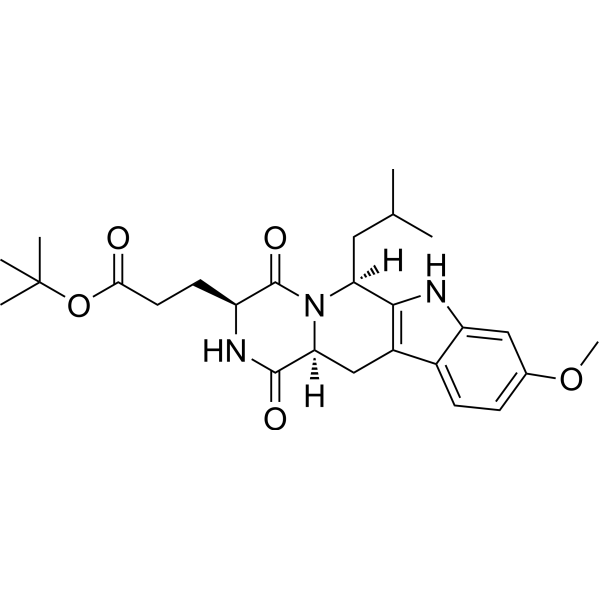
Ko 143 is a potent and selective ATP-binding cassette subfamily G member 2 (ABCG2/BCRP) inhibitor. Ko 143 displays >200-fold selectivity over P-gp and MRP-1 transporters .
|
-
-
- HY-101570
-
|
Peposertib; M3814
|
DNA-PK
BCRP
|
Cancer
|
|
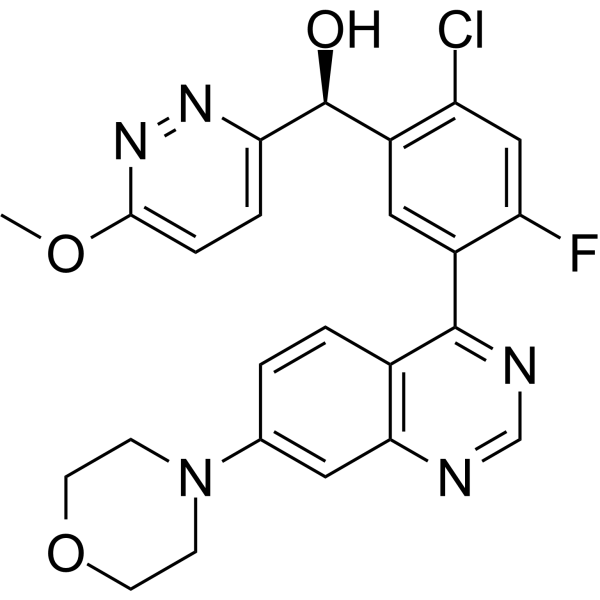
Nedisertib (Peposertib) is an orally active selective DNA-dependent protein kinase (DNA-PK) inhibitor with an IC50 value of less than 3 nM. Nedisertib also acts as a modulator of ABCG2, capable of reversing ABCG2-mediated multidrug resistance (MDR), thus providing new strategies for combination therapy. By inhibiting DNA double-strand break repair, Nedisertib can enhance the efficacy of chemotherapy and radiotherapy. Nedisertib exhibits antitumor activity .
|
-
-
- HY-10440
-
-
-
- HY-101561
-
|
BLU-285
|
c-Kit
PDGFR
|
Cancer
|
|
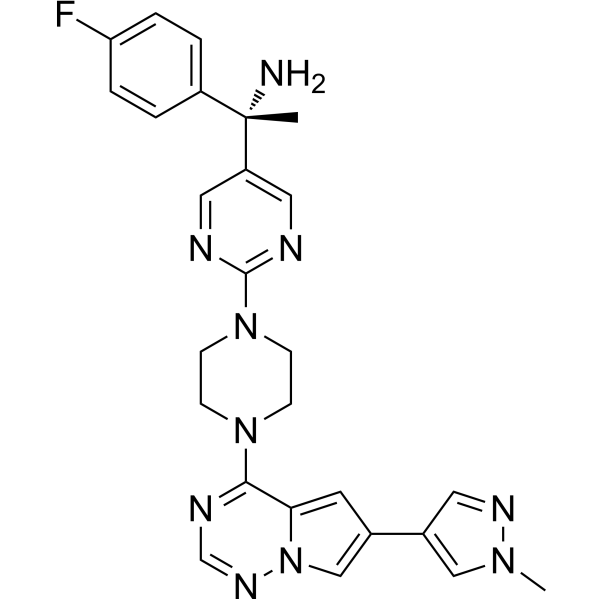
Avapritinib (BLU-285) is a highly potent, selective, and orally active KIT and PDGFRA activation loop mutant kinases inhibitor with IC50s of 0.27 and 0.24 nM for KIT D816V and PDGFRA D842V, respectively. Avapritinib (BLU-285) binds the active conformation of the kinase and shows antitumor activity. Avapritinib (BLU-285) attenuates the transport function of both ABCB1 and ABCG2 .
|
-
-
- HY-109061
-
|
YH25448; GNS-1480
|
Apoptosis
Akt
TRP Channel
EGFR
ERK
|
Infection
Neurological Disease
Metabolic Disease
Cancer
|
|
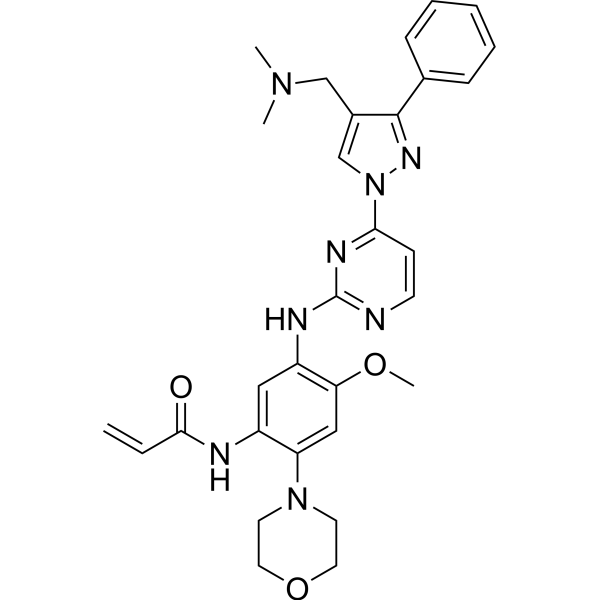
Lazertinib (YH25448; GNS-1480) is an orally active, blood-brain barrier permeable third-generation EGFR tyrosine kinase inhibitor, as well as an ABCB1/ABCG2 inhibitor and a TRPA1 activator. Lazertinib exhibits IC50 values of 0.4 mM and 0.2 mM against human ABCB1 and ABCG2, respectively. By inhibiting mutant EGFR signaling, EGFR phosphorylation and the downstream ERK/AKT pathway, as well as upregulating surface expression of EGFR/MET, Lazertinib induces cell cycle arrest, apoptosis, spontaneous calcium responses, hyperexcitability of dorsal root ganglion (DRG) neurons, and TRPA1-dependent pain-like behaviors. Lazertinib competitively binds to the substrate-binding sites of ABCB1/ABCG2, stimulates their ATPase activity without altering their expression or plasma membrane localization, thereby enhancing ADCC activity, acting as a chemosensitizer, and reversing ABCB1-mediated multidrug resistance. It exerts antitumor activity as a single agent or in combination with other drugs. Lazertinib is applicable to research related to non-small cell lung cancer, multidrug-resistant cancers, and paresthesia .
|
-
-
- HY-N2143
-
-
-
- HY-12758
-
|
|
BCRP
|
Cancer
|
|
YHO-13351 is an orally active ABCG2 inhibitor . YHO-13351 modulates the function of ABCG2, blocks BCRP-mediated compound efflux, downregulates the expression of breast cancer resistance protein at the post-transcriptional level, and reverses ABCG2-associated tolerance. YHO-13351 restores the toxicity of SN-38 to SN-38-resistant cancer cells and sensitizes cancer cells to Irinotecan. YHO-13351 is a water-soluble prodrug that is rapidly converted to YHO-13177 (HY-12757) in mice. YHO-13351 prolongs the median survival time of mice bearing cancer cell xenografts when combined with IMMU-132. YHO-13351 extends the survival time of tumor-bearing mice and inhibits the growth of xenograft tumors when combined with Irinotecan. YHO-13351 can be used for the research of breast cancer, gastric cancer, BCRP-mediated drug-resistant cancers, and cervical cancer .
|
-
-
- HY-109061B
-
|
YH25448 mesylate; GNS-1480 mesylate
|
TRP Channel
EGFR
Akt
ERK
Apoptosis
|
Cancer
|
|
Lazertinib (YH25448; GNS-1480) mesylate is an orally active, blood-brain barrier permeable third-generation EGFR tyrosine kinase inhibitor, as well as an ABCB1/ABCG2 inhibitor and a TRPA1 activator. Lazertinib mesylate exhibits IC50 values of 0.4 mM and 0.2 mM against human ABCB1 and ABCG2, respectively. By inhibiting mutant EGFR signaling, EGFR phosphorylation and the downstream ERK/AKT pathway, as well as upregulating surface expression of EGFR/MET, Lazertinib mesylate induces cell cycle arrest, apoptosis, spontaneous calcium responses, hyperexcitability of dorsal root ganglion (DRG) neurons, and TRPA1-dependent pain-like behaviors. Lazertinib mesylate competitively binds to the substrate-binding sites of ABCB1/ABCG2, stimulates their ATPase activity without altering their expression or plasma membrane localization, thereby enhancing ADCC activity, acting as a chemosensitizer, and reversing ABCB1-mediated multidrug resistance. It exerts antitumor activity as a single agent or in combination with other drugs. Lazertinib mesylate is applicable to research related to non-small cell lung cancer, multidrug-resistant cancers, and paresthesia .
|
-
-
- HY-12757
-
|
|
BCRP
|
Cancer
|
|
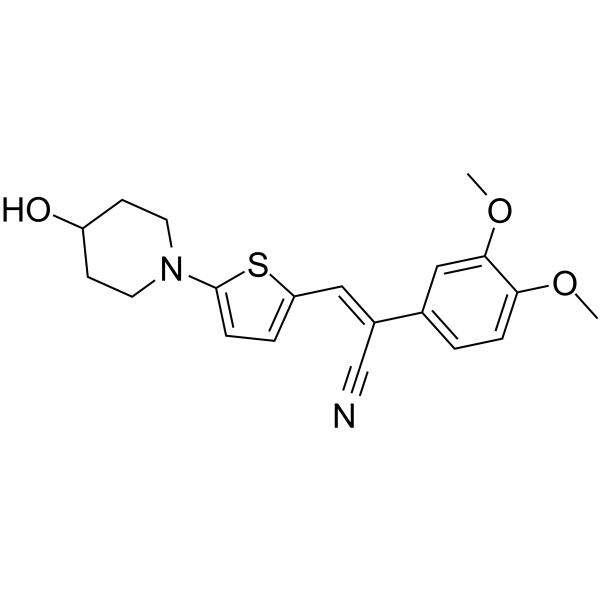
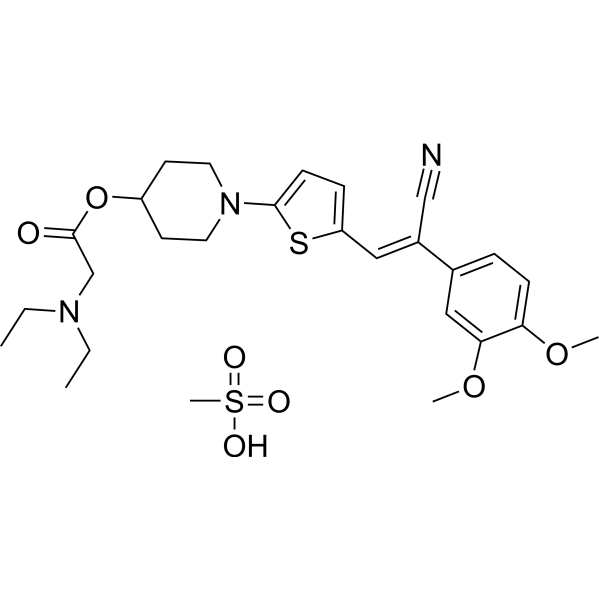
YHO-13177, a acrylonitrile derivative, is an orally active, potent and specific inhibitor of breast cancer resistance protein (BCRP) and ABCG2 with an IC50 value of 10 nM. YHO-13177 potentiates the cytotoxicity of SN-38 in HCT116 and A549 cells that express BCRP. YHO-13177 combined with Irinotecan (HY-16562) significantly suppresses the tumor growth in an HCT116/BCRP xenograft model .
|
-
-
- HY-136450
-
|
TCBZ-SO
|
Parasite
BCRP
|
Infection
Cancer
|
|
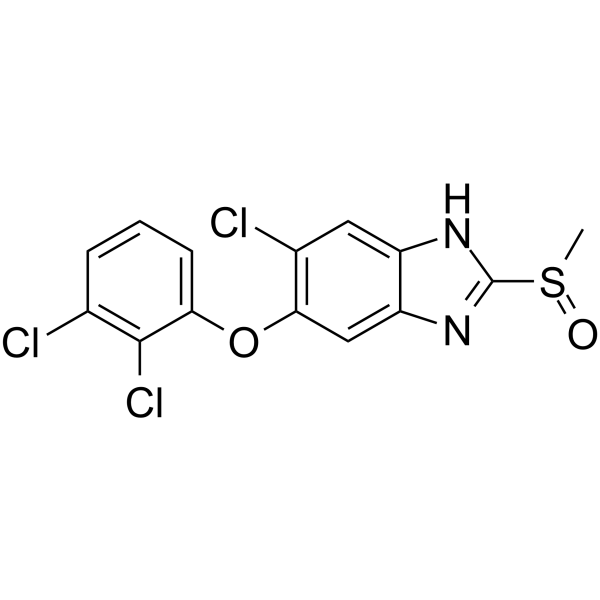
Triclabendazole sulfoxide (TCBZ-SO) is an orally active ABCG2 inhibitor with antiparasitic activity. Triclabendazole sulfoxide inhibits ABCG2-mediated active efflux and ATPase activity. Triclabendazole sulfoxide increases the intracellular accumulation of Mitoxantrone (HY-13502). Triclabendazole sulfoxide reduces the apical-directed transepithelial transport of Nitrofurantoin and Danofloxacin, while increasing their basolateral-directed transepithelial transport. Triclabendazole sulfoxide elevates the plasma levels of sulfasalazine in wild-type mice. Triclabendazole sulfoxide decreases ABCG2-mediated secretion of Nitrofurantoin into milk in wild-type lactating mice. Triclabendazole sulfoxide can be used in the research of insecticidal agents and cancers such as breast cancer .
|
-
-
- HY-146676
-
|
|
BCRP
|
Cancer
|
|
UR-MB108 is a selective ABCG2 inhibitor with an IC50 value of 79 nM. UR-MB108 acts as a potent inhibitor of ABCG2 transport and ATPase activity. UR-MB108 can be used in cancer-related research .
|
-
-
- HY-113805
-
|
|
P-glycoprotein
|
Cancer
|
|
MC70 is a potent and non-selective P-glycoprotein (P-gp) inhibitor with an EC50 of 0.69 µM. MC70 is an ABC transporters inhibitor and anticancer agent. MC70 interacts with ABCB1, ABCG2 and ABCC1 .
|
-
-
- HY-100933
-
-
-
- HY-111678
-
|
CID44640177; SID 88095709
|
BCRP
|
Cancer
|
|
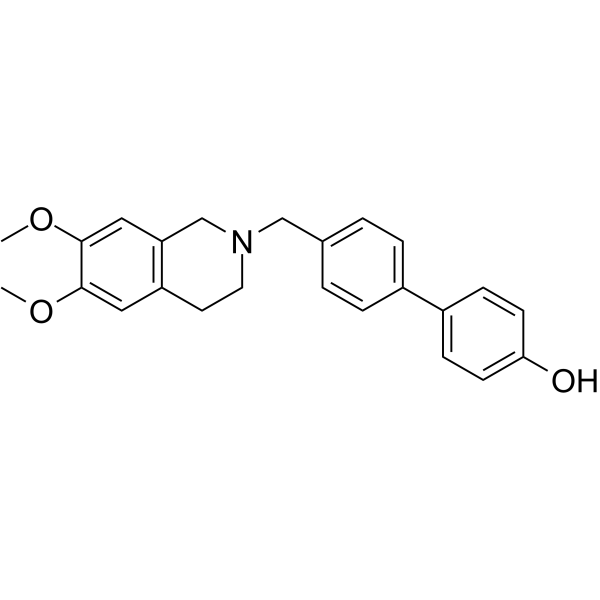
ML230 (CID44640177; SID 88095709) is a selective inhibitor of ATP-binding cassette (ABC) transporter ABCG2, and 36-fold selective for ABCG2 over ABCB1 with EC50s values of 0.13 μM and 4.65 μM, respectively .
|
-
-
- HY-18010
-
|
|
Btk
BCRP
|
Inflammation/Immunology
|
|
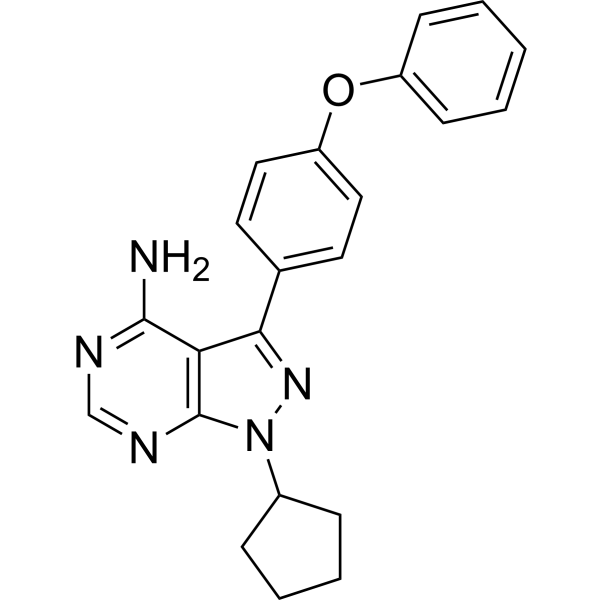
PCI 29732 is a potent, orally active, reversible BTK inhibitor with Ki app values of 8.2, 4.6, and 2.5 nM for BTK, Lck and Lyn, respectively. PCI 29732 shows only modest inhibitory activity against Itk, another Tec family kinase. PCI 29732 inhibits the function of ABCG2 by competitively binding to the ATP-binding site of ABCG2 .
|
-
-
- HY-101570G
-
|
Peposertib; M3814
|
DNA-PK
BCRP
|
Cancer
|
|
Nedisertib (GMP) (Peposertib (GMP)) is Nedisertib (HY-101570) produced by using GMP guidelines. GMP small molecules works appropriately as an auxiliary reagent for cell therapy manufacture. Nedisertib is an orally active selective DNA-dependent protein kinase (DNA-PK) inhibitor with an IC50 value of less than 3 nM. Nedisertib also acts as a modulator of ABCG2, capable of reversing ABCG2-mediated multidrug resistance (MDR), thus providing new strategies for combination therapy. By inhibiting DNA double-strand break repair, Nedisertib can enhance the efficacy of chemotherapy and radiotherapy. Nedisertib exhibits antitumor activity .
|
-
-
- HY-112505
-
|
|
BCRP
|
Cancer
|
|
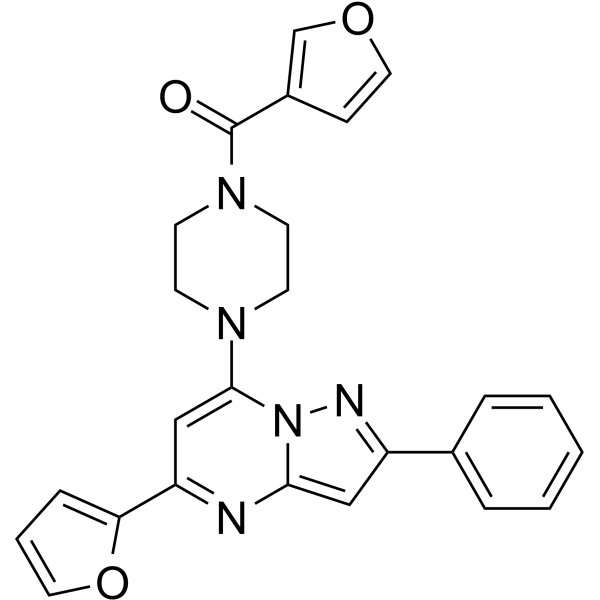
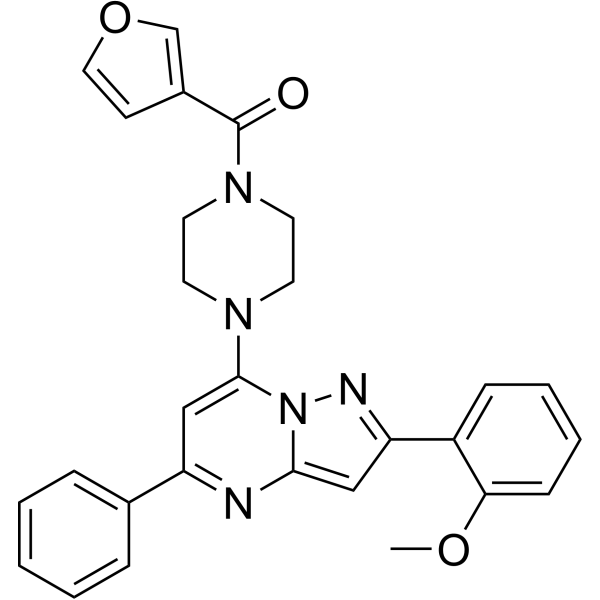
Efflux inhibitor-1 (compound 2) is a pyrazolo[1,5-a]pyrimidine efflux inhibitor. Efflux inhibitor-1 selectively targets toward ABCG2/BCRP over ABCB1 with IC50s of 0.45 μM and 2.17 μM, respectively .
|
-
-
- HY-17648
-
|
|
BCRP
|
Cancer
|
|
MBL-II-141 is potent ABCG2 inhibitor with an IC50 of 0.11 μM. MBL-II-141 inhibits the transport function of ABCG2 in a non-competitive manner, preventing ABCG2 from pumping substrates (such as Irinotecan (HY-16562)) out of the cells, thereby increasing the accumulation of drugs within the cells. MBL-II-141 has no effect on ABCB1 (P-gp) and ABCC1 (MRP1) and has extremely low cytotoxicity (IG50 > 100 μM). MBL-II-141 can be used for the study of multidrug resistance (MDR) cancers .
|
-
-
- HY-168573
-
|
|
BCRP
|
Cancer
|
|
AZ99 (compound 7) is a potent ABCG2 inhibitor. AZ99 inhibits ABCG2-mediated transport of estrone-3-sulfate (E1S) into proteoliposomes and ABCG2 ATPase activity .
|
-
-
- HY-174435
-
|
|
P-glycoprotein
|
Cancer
|
|
ABCB1/ABCG2-IN-1 (Compound (S,Z)-4b) is an inhibitor of ABCB1 and ABCB2 transporters. ABCB1/ABCG2-IN-1 shows moderate activity in SW620M, -V, and –Mito variants (IC50 ≈ 50 μM). ABCB1/ABCG2-IN-1 affects methotrexate resistance in vitro. ABCB1/ABCG2-IN-1 can be studied in anticancer research .
|
-
-
- HY-155652
-
|
|
BCRP
|
Cancer
|
|
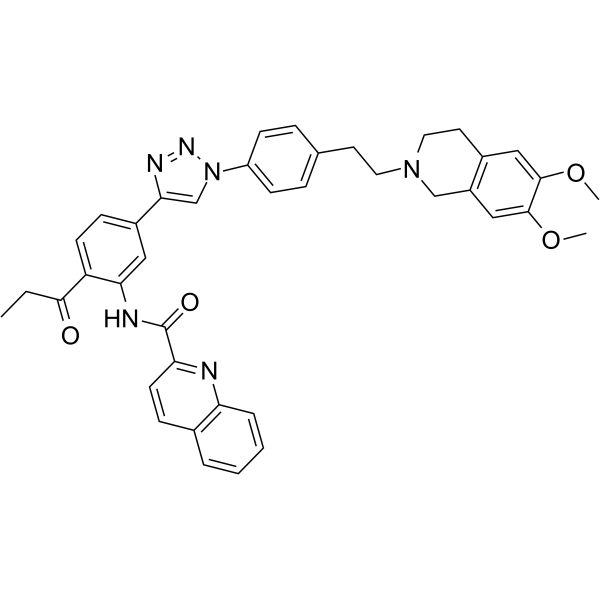
ABCG2-IN-1 (compound K2), a Ko143 analog, is an orally active ABCG2 inhibitor with an IC50 of 0.13 μM. ABCG2-IN-1 has favorable oral pharmacokinetic profiles in mice .
|
-
-
- HY-178100
-
|
|
PARP
BCRP
|
Cancer
|
|
PARP1-IN-45 (Compound 15) is a PARP1 inhibitor with an IC50 of 17 nM. PARP1-IN-45 effectively stimulates ATPase activity of ABCG2. PARP1-IN-45 can be used for cancers like ovarian cancer research .
|
-
-
- HY-10440R
-
|
GDC-0449 (Standard)
|
Reference Standards
Hedgehog
Autophagy
|
Cancer
|
|
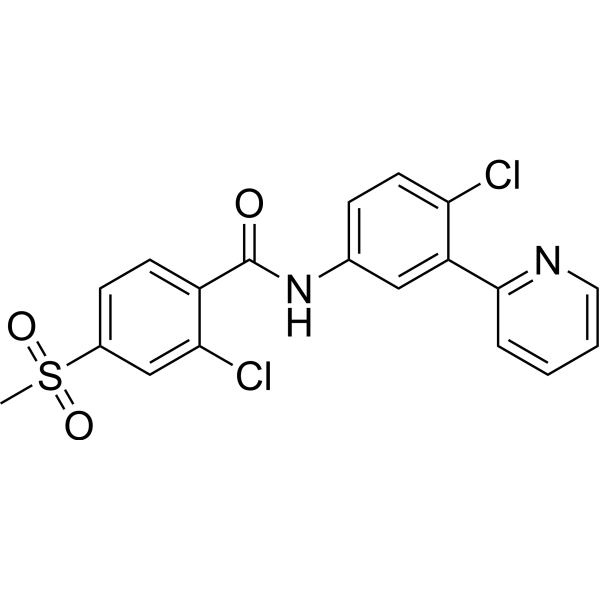
Vismodegib (Standard) is the analytical standard of Vismodegib. This product is intended for research and analytical applications. Vismodegib (GDC-0449) is a BBB-permeable and orally active hedgehog pathway inhibitor with an IC50 of 3 nM. Vismodegib also inhibits P-gp, ABCG2 with IC50 values of 3.0 μM and 1.4 μM, respectively .
|
-
-
- HY-144305
-
|
|
URAT1
GLUT
|
Infection
|
|
KPH2f is a safe, orally active, and effective dual URAT1/GLUT9 inhibitor with IC50s of 0.24 μM and 9.37 μM for URAT1 and GLUT9, respectively. KPH2f shows little effects on OAT1 and ABCG2 (IC50=32.14 and 26.74 μM) .
|
-
-
- HY-101561R
-
|
BLU-285 (Standard)
|
Reference Standards
c-Kit
PDGFR
|
Cancer
|
|
Avapritinib (Standard) is the analytical standard of Avapritinib. This product is intended for research and analytical applications. Avapritinib (BLU-285) is a highly potent, selective, and orally active KIT and PDGFRA activation loop mutant kinases inhibitor with IC50s of 0.27 and 0.24 nM for KIT D816V and PDGFRA D842V, respectively. Avapritinib (BLU-285) binds the active conformation of the kinase and shows antitumor activity. Avapritinib (BLU-285) attenuates the transport function of both ABCB1 and ABCG2 .
|
-
-
- HY-119724
-
|
|
BCRP
|
Cancer
|
|
ABCG2-IN-3 (Compound 52) is a selective inhibitor for breast cancer resistance protein (ABCG2), with an IC50 of 0.238 µM. ABCG2-IN-3 reverses the ABCG2-mediated resistance toward SN-38 and inhibit the ATPase activity .
|
-
-
- HY-178386
-
|
|
BCRP
|
Cancer
|
|
ABCG2-IN-5 (Compound 10) is a is a selective ABCG2 inhibitor, with an IC50 of 0.34 µM. ABCG2-IN-5 can be used for the study of ABCG2-overexpressing tumors such as non-small cell lung cancer (NSCLC) .
|
-
-
- HY-W754911
-
|
BLU-285-d3
|
Isotope-Labeled Compounds
PDGFR
c-Kit
|
Cancer
|
|
Avapritinib-d3 (BLU-285-d3) is deuterium labeled Avapritinib. Avapritinib (BLU-285) is a highly potent, selective, and orally active KIT and PDGFRA activation loop mutant kinases inhibitor with IC50s of 0.27 and 0.24 nM for KIT D816V and PDGFRA D842V, respectively. Avapritinib (BLU-285) binds the active conformation of the kinase and shows antitumor activity. Avapritinib (BLU-285) attenuates the transport function of both ABCB1 and ABCG2 .
|
-
-
- HY-155653
-
|
|
BCRP
|
Cancer
|
|
ABCG2-IN-2 is a potent ABCG2 inhibitor with favorable oral pharmacokinetic profiles in mice. ABCG2-IN-2 can be used for the research of tumor multidrug resistance (MDR) and erythropoietic protoporphyria (EPP) .
|
-
-
- HY-170396
-
|
|
BCRP
|
Inflammation/Immunology
|
|
ABCG2-IN-4 (Compound K31) is an orally active inhibitor for ABCG2, which reduces the release of Protoporphyrin IX (PPIX) (HY-B1247) from erythrocytes into plasma, and prevents the reduces phototoxicity. ABCG2-IN-4 exhibits anti-inflammatory and antioxidant activity in mouse models .
|
-
-
- HY-149469
-
|
|
BCRP
|
Cancer
|
|
BCRP/ABCG2-IN-1 is the inhibitor of breast cancer resistance protein (BCRP/ABCG2), with IC50 of 5.98 μM, that can be used in multidrug resistance of breast cancer .
|
-
-
- HY-136450R
-
|
TCBZ-SO (Standard)
|
Reference Standards
Parasite
BCRP
|
Infection
|
|
Triclabendazole sulfoxide (Standard) is the analytical standard of Triclabendazole sulfoxide. This product is intended for research and analytical applications. Triclabendazole sulfoxide (TCBZ-SO) is an orally active ABCG2 inhibitor with antiparasitic activity. Triclabendazole sulfoxide inhibits ABCG2-mediated active efflux and ATPase activity. Triclabendazole sulfoxide increases the intracellular accumulation of Mitoxantrone (HY-13502). Triclabendazole sulfoxide reduces the apical-directed transepithelial transport of Nitrofurantoin and Danofloxacin, while increasing their basolateral-directed transepithelial transport. Triclabendazole sulfoxide elevates the plasma levels of sulfasalazine in wild-type mice. Triclabendazole sulfoxide decreases ABCG2-mediated secretion of Nitrofurantoin into milk in wild-type lactating mice. Triclabendazole sulfoxide can be used in the research of insecticidal agents and cancers such as breast cancer .
|
-
-
- HY-136450S
-
|
TCBZ-SO-d3
|
Isotope-Labeled Compounds
Parasite
BCRP
|
Infection
|
|
Triclabendazole sulfoxide-d3 is the deuterium labeled Triclabendazole sulfoxide. Triclabendazole sulfoxide (TCBZ-SO) is an orally active ABCG2 inhibitor with antiparasitic activity. Triclabendazole sulfoxide inhibits ABCG2-mediated active efflux and ATPase activity. Triclabendazole sulfoxide increases the intracellular accumulation of Mitoxantrone (HY-13502). Triclabendazole sulfoxide reduces the apical-directed transepithelial transport of Nitrofurantoin and Danofloxacin, while increasing their basolateral-directed transepithelial transport. Triclabendazole sulfoxide elevates the plasma levels of sulfasalazine in wild-type mice. Triclabendazole sulfoxide decreases ABCG2-mediated secretion of Nitrofurantoin into milk in wild-type lactating mice. Triclabendazole sulfoxide can be used in the research of insecticidal agents and cancers such as breast cancer .
|
-
-
- HY-156092
-
|
|
BCRP
Apoptosis
|
Cancer
|
|
Antitumor photosensitizer-4 (compound 10b) is a potent tyrosine kinase inhibitor (TKI) targeting ABCG2. Antitumor photosensitizer-4 is a photosensitizer (PS) consisting of a conjugate of dasatinib (HY-10181) and imatinib (HY-15463). Antitumor photosensitizer-4 induces apoptosis and ROS production and exhibits strong phototoxicity to HepG2 and B16-F10 cells .
|
-
-
- HY-136450S1
-
|
TCBZ-SO-13C,d3
|
Isotope-Labeled Compounds
Parasite
BCRP
|
Infection
|
|
Triclabendazole sulfoxide- 13C,d3 is the 13C- and deuterium labeled Triclabendazole sulfoxide. Triclabendazole sulfoxide (TCBZ-SO) is an orally active ABCG2 inhibitor with antiparasitic activity. Triclabendazole sulfoxide inhibits ABCG2-mediated active efflux and ATPase activity. Triclabendazole sulfoxide increases the intracellular accumulation of Mitoxantrone (HY-13502). Triclabendazole sulfoxide reduces the apical-directed transepithelial transport of Nitrofurantoin and Danofloxacin, while increasing their basolateral-directed transepithelial transport. Triclabendazole sulfoxide elevates the plasma levels of sulfasalazine in wild-type mice. Triclabendazole sulfoxide decreases ABCG2-mediated secretion of Nitrofurantoin into milk in wild-type lactating mice. Triclabendazole sulfoxide can be used in the research of insecticidal agents and cancers such as breast cancer .
|
-
-
- HY-122416
-
|
Lonchocarpol A; Senegalensin
|
BCRP
|
Metabolic Disease
Cancer
|
|
6,8-Diprenylnaringenin (Lonchocarpol A; Senegalensin), a hop prenylflavonoid, is a inhibitor of breast cancer resistance protein (BCRP/ABCG2). 6,8-Diprenylnaringenin inhibits ABCG2-mediated efflux of Mitoxantrone, and 3H-Methotrexate transport (IC50=0.41 μM) in HEK293 cells. 6,8-Diprenylnaringenin exhibits some estrogenicity, but its potency is less than 1% of that of 8-Prenylnaringenin .
|
-
-
- HY-129301
-
|
|
BCRP
|
Cancer
|
|
CCTA-1523 is a potent, selective, reversible and orally active ABCG2 inhibitor. CCTA-1523 shows cytotoxicity. CCTA-1523 shows anticancer activity .
|
-
-
- HY-N2651
-
|
|
BCRP
|
Cancer
|
|
5,7,3'-Trihydroxy-4'-Methoxy-8-prenylflavanone (compound 1), a flavonoid, is a potent ABCG2 inhibitor with an IC50 of 6.6 μM .
|
-
-
- HY-168572
-
|
|
BCRP
|
Cancer
|
|
MZ82, Ko 143 (HY-10010) derivative, is a ATP-binding cassette subfamily G member 2 (ABCG2/BCRP) inhibitor with the IC50 of ~23 nM. MZ82 not only shows greatly improved metabolic stability over Ko 143 (HY-10010) in liver microsomes but also in mice, and is able to penetrate into the brain .
|
-
-
- HY-W705354
-
|
|
Isotope-Labeled Compounds
Hedgehog
Autophagy
|
Cancer
|
|
Vismodegib-d4 is deuterium labeled Vismodegib. Vismodegib (GDC-0449) is an orally active hedgehog pathway inhibitor with an IC50 of 3 nM. Vismodegib also inhibits P-gp, ABCG2 with IC50 values of 3.0 μM and 1.4 μM, respectively .
|
-
-
- HY-W716916
-
|
|
Isotope-Labeled Compounds
|
Cancer
|
|
Vismodegib-d7 is deuterium labeled Vismodegib. Vismodegib (GDC-0449) is an orally active hedgehog pathway inhibitor with an IC50 of 3 nM. Vismodegib also inhibits P-gp, ABCG2 with IC50 values of 3.0 μM and 1.4 μM, respectively .
|
-
-
- HY-W082856A
-
|
|
BCRP
|
Cancer
|
|
Butein tetramethyl ether (Compound 20) is a potent and selective breast cancer resistance protein/ATP-binding cassette subfamily G member 2 (BCRP/ABCG2) inhibitor. Butein tetramethyl ether has inhibitory potencies against MCF-7 MX and MDCK BCRP cells with IC50 values of 2.2 and 1.03 μM, respectively. Butein tetramethyl ether is promising for research of cancers .
|
-
-
- HY-181803
-
|
|
BCRP
|
Cancer
|
|
MRS8432 is an ABCG2 modulator with an EC50 of 7.5 nM against human ABCG2. MRS8432 activates ABCG2 ATPase activity. MRS8432 partially inhibits ABCG2-mediated substrate transport. MRS8432 is applicable to research related to cancer multidrug resistance .
|
-
-
- HY-181802
-
|
|
BCRP
|
Cancer
|
|
MRS8431 is an ABCG2 inhibitor with a IC50 of 160 nM against human ABCG2. MRS8432 partially inhibits ABCG2-mediated substrate transport. MRS8432 is applicable to research related to cancer multidrug resistance .
|
-
-
- HY-181804
-
|
|
BCRP
P-glycoprotein
|
Cancer
|
|
MRS8288 is a ABCG2 and P-glycoprotein inhibitor, with an IC50 of 0.96 μM against ABCG2 and an IC50 of 1.39 μM against P-glycoprotein. MRS8288 inhibits the ATPase activity of ABCG2 and P-glycoprotein, and suppresses ABCG2-mediated substrate transport. MRS8288 is applicable for cancer research .
|
-
-
- HY-181731S
-
|
|
Isotope-Labeled Compounds
|
Others
|
|
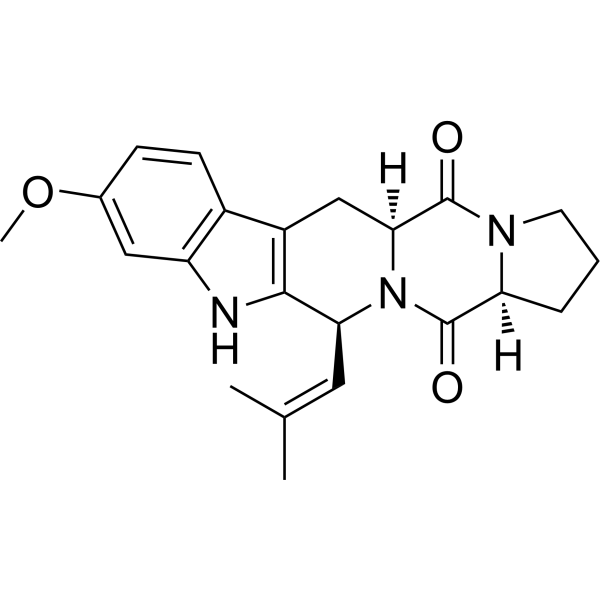
(R,S,R)-Altenuene- 13C15 is the 13C-labeled (R,S,R)-Altenuene. Fumitremorgin C is a potent and selective ABCG2/BRCP inhibitor.
|
-
-
- HY-101570R
-
|
Peposertib (Standard); M3814 (Standard)
|
DNA-PK
Reference Standards
BCRP
|
Cancer
|
|
Nedisertib (Standard) is the analytical standard of Nedisertib (HY-101570). This product is intended for research and analytical applications. Nedisertib (Peposertib) is an orally active selective DNA-dependent protein kinase (DNA-PK) inhibitor with an IC50 value of less than 3 nM. Nedisertib also acts as a modulator of ABCG2, capable of reversing ABCG2-mediated multidrug resistance (MDR), thus providing new strategies for combination therapy. By inhibiting DNA double-strand break repair, Nedisertib can enhance the efficacy of chemotherapy and radiotherapy. Nedisertib exhibits antitumor activity .
|
-
-
- HY-109061A
-
|
YH25448 mesylate hydrate; GNS-1480 mesylate hydrate
|
Apoptosis
Akt
TRP Channel
EGFR
ERK
|
Cancer
|
|
Lazertinib (YH25448; GNS-1480) mesylate hydrate is an orally active, blood-brain barrier permeable third-generation EGFR tyrosine kinase inhibitor, as well as an ABCB1/ABCG2 inhibitor and a TRPA1 activator. Lazertinib mesylate hydrate exhibits IC50 values of 0.4 mM and 0.2 mM against human ABCB1 and ABCG2, respectively. By inhibiting mutant EGFR signaling, EGFR phosphorylation and the downstream ERK/AKT pathway, as well as upregulating surface expression of EGFR/MET, Lazertinib mesylate hydrate induces cell cycle arrest, apoptosis, spontaneous calcium responses, hyperexcitability of dorsal root ganglion (DRG) neurons, and TRPA1-dependent pain-like behaviors. Lazertinib mesylate hydrate competitively binds to the substrate-binding sites of ABCB1/ABCG2, stimulates their ATPase activity without altering their expression or plasma membrane localization, thereby enhancing ADCC activity, acting as a chemosensitizer, and reversing ABCB1-mediated multidrug resistance. It exerts antitumor activity as a single agent or in combination with other drugs. Lazertinib mesylate hydrate is applicable to research related to non-small cell lung cancer, multidrug-resistant cancers, and paresthesia .
|
-
-
- HY-10010R
-
|
|
BCRP
Reference Standards
|
Cancer
|
|
Ko 143 (Standard) is the analytical standard of Ko 143 (HY-10010). This product is intended for research and analytical applications. Ko 143 is a potent and selective ATP-binding cassette subfamily G member 2 (ABCG2/BCRP) inhibitor. Ko 143 displays >200-fold selectivity over P-gp and MRP-1 transporters .
|
-
-
- HY-118083
-
|
MRS923
|
BCRP
|
Cancer
|
|
Pentamethoxymorin (MRS923) is a selective breast cancer resistance protein (BCRP/ABCG2) inhibitor. Pentamethoxymorin shows selectivity for BCRP over P-gp and MRP1. Pentamethoxymorin inhibits MDCK BCRP cells with IC50 vaues of 5.98 μM and 5.94 μM in Hoechst 33342 (HY-15559) assay and Pheophorbide A (HY-125665) assay, respectively. Pentamethoxymorin can be used for the study of ccancer .
|
-
- HY-182000
-
|
|
Xanthine Oxidase
BCRP
GLUT
|
Metabolic Disease
|
|
Xanthine oxidase-IN-23 (Compound BPF) is an orally active, reversible, mixed-type Xanthine oxidase inhibitor with an IC50 of 3.33 μM. Xanthine oxidase-IN-23 directly binds to XOD in a reversible mixed-type manner to inhibit its catalytic activity. Xanthine oxidase-IN-23 upregulates ABCG2 and downregulates GLUT9 to promote renal urate excretion. Xanthine oxidase-IN-23 reduces serum urate levels and improves renal function in hyperuricemic mice. Xanthine oxidase-IN-23 can be used in the research of hyperuricemia .
|
-
| Cat. No. |
Nombre del producto |
Category |
Target |
Chemical Structure |
| Cat. No. |
Nombre del producto |
Chemical Structure |
-
- HY-W754911
-
|
|
|
Avapritinib-d3 (BLU-285-d3) is deuterium labeled Avapritinib. Avapritinib (BLU-285) is a highly potent, selective, and orally active KIT and PDGFRA activation loop mutant kinases inhibitor with IC50s of 0.27 and 0.24 nM for KIT D816V and PDGFRA D842V, respectively. Avapritinib (BLU-285) binds the active conformation of the kinase and shows antitumor activity. Avapritinib (BLU-285) attenuates the transport function of both ABCB1 and ABCG2 .
|
-
-
- HY-136450S
-
|
|
|
Triclabendazole sulfoxide-d3 is the deuterium labeled Triclabendazole sulfoxide. Triclabendazole sulfoxide (TCBZ-SO) is an orally active ABCG2 inhibitor with antiparasitic activity. Triclabendazole sulfoxide inhibits ABCG2-mediated active efflux and ATPase activity. Triclabendazole sulfoxide increases the intracellular accumulation of Mitoxantrone (HY-13502). Triclabendazole sulfoxide reduces the apical-directed transepithelial transport of Nitrofurantoin and Danofloxacin, while increasing their basolateral-directed transepithelial transport. Triclabendazole sulfoxide elevates the plasma levels of sulfasalazine in wild-type mice. Triclabendazole sulfoxide decreases ABCG2-mediated secretion of Nitrofurantoin into milk in wild-type lactating mice. Triclabendazole sulfoxide can be used in the research of insecticidal agents and cancers such as breast cancer .
|
-
-
- HY-136450S1
-
|
|
|
Triclabendazole sulfoxide- 13C,d3 is the 13C- and deuterium labeled Triclabendazole sulfoxide. Triclabendazole sulfoxide (TCBZ-SO) is an orally active ABCG2 inhibitor with antiparasitic activity. Triclabendazole sulfoxide inhibits ABCG2-mediated active efflux and ATPase activity. Triclabendazole sulfoxide increases the intracellular accumulation of Mitoxantrone (HY-13502). Triclabendazole sulfoxide reduces the apical-directed transepithelial transport of Nitrofurantoin and Danofloxacin, while increasing their basolateral-directed transepithelial transport. Triclabendazole sulfoxide elevates the plasma levels of sulfasalazine in wild-type mice. Triclabendazole sulfoxide decreases ABCG2-mediated secretion of Nitrofurantoin into milk in wild-type lactating mice. Triclabendazole sulfoxide can be used in the research of insecticidal agents and cancers such as breast cancer .
|
-
-
- HY-W705354
-
|
|
|
Vismodegib-d4 is deuterium labeled Vismodegib. Vismodegib (GDC-0449) is an orally active hedgehog pathway inhibitor with an IC50 of 3 nM. Vismodegib also inhibits P-gp, ABCG2 with IC50 values of 3.0 μM and 1.4 μM, respectively .
|
-
-
- HY-W716916
-
|
|
|
Vismodegib-d7 is deuterium labeled Vismodegib. Vismodegib (GDC-0449) is an orally active hedgehog pathway inhibitor with an IC50 of 3 nM. Vismodegib also inhibits P-gp, ABCG2 with IC50 values of 3.0 μM and 1.4 μM, respectively .
|
-
-
- HY-181731S
-
|
|
|
(R,S,R)-Altenuene- 13C15 is the 13C-labeled (R,S,R)-Altenuene. Fumitremorgin C is a potent and selective ABCG2/BRCP inhibitor.
|
-
| Cat. No. |
Nombre del producto |
Target |
Áreas de investigación |
Chemical Structure |
-
- HY-101570G
-
|
Peposertib; M3814
|
DNA-PK
BCRP
|
Cancer
|
|
Nedisertib (GMP) (Peposertib (GMP)) is Nedisertib (HY-101570) produced by using GMP guidelines. GMP small molecules works appropriately as an auxiliary reagent for cell therapy manufacture. Nedisertib is an orally active selective DNA-dependent protein kinase (DNA-PK) inhibitor with an IC50 value of less than 3 nM. Nedisertib also acts as a modulator of ABCG2, capable of reversing ABCG2-mediated multidrug resistance (MDR), thus providing new strategies for combination therapy. By inhibiting DNA double-strand break repair, Nedisertib can enhance the efficacy of chemotherapy and radiotherapy. Nedisertib exhibits antitumor activity .
|
-
Your information is safe with us. * Required Fields.
Inquiry Information
- Nombre del producto:
- Cat. No.:
- Cantidad:
- MCE Japan Authorized Agent:

