



330786-25-9
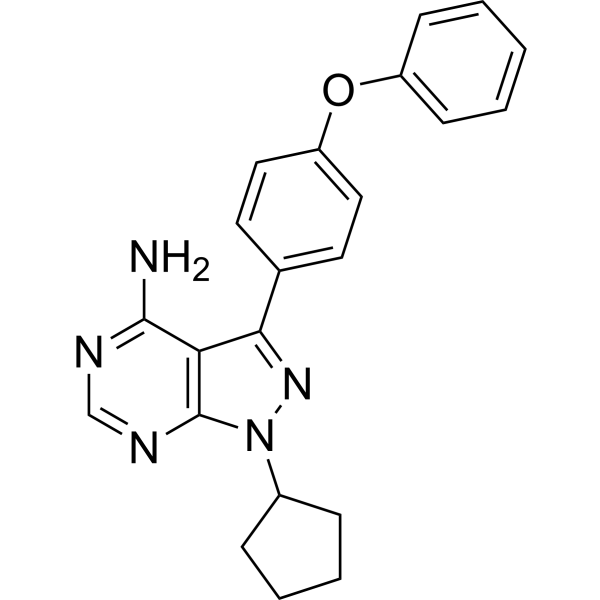
Chemical Structure
PCI 29732
- CAS No.: 330786-25-9
- Formula:C22H21N5O
- Molecular Weight:371.44
IUPAC Name: 1-cyclopentyl-3-(4-phenoxyphenyl)-1H-pyrazolo[3,4-d]pyrimidin-4-amine
InChIKey: GMJUPMONHWAZCP-UHFFFAOYSA-N
SMILES: NC1=NC=NC2=C1C(C3=CC=C(OC4=CC=CC=C4)C=C3)=NN2C5CCCC5
Biological Activity: PCI 29732 is a potent, orally active, reversible BTK inhibitor with Kiapp values of 8.2, 4.6, and 2.5 nM for BTK, Lck and Lyn, respectively. PCI 29732 shows only modest inhibitory activity against Itk, another Tec family kinase. PCI 29732 inhibits the function of ABCG2 by competitively binding to the ATP-binding site of ABCG2[1][2].
| Cat. No. | Product Name | Purity | Description | Pricing | |||||||||||||||||||
|---|---|---|---|---|---|---|---|---|---|---|---|---|---|---|---|---|---|---|---|---|---|---|---|
|
|
PCI 29732 | 99.59% | PCI 29732 is a potent, orally active, reversible BTK inhibitor with Kiapp values of 8.2, 4.6, and 2.5 nM for BTK, Lck and Lyn, respectively. PCI 29732 shows only modest inhibitory activity against Itk, another Tec family kinase. PCI 29732 inhibits the function of ABCG2 by competitively binding to the ATP-binding site of ABCG2. | ||||||||||||||||||||
|
loading...
/
|
|||||||||||||||||||||||
-
Similarity Score 0.87
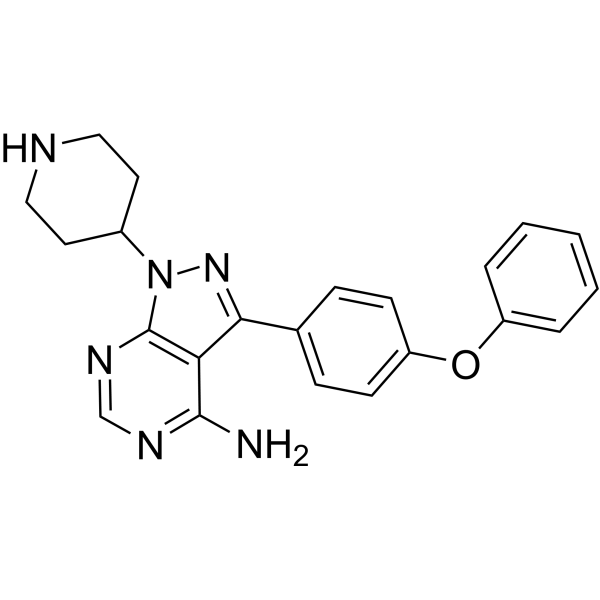 HY-150885BTK ligand 1
-
Similarity Score 0.86
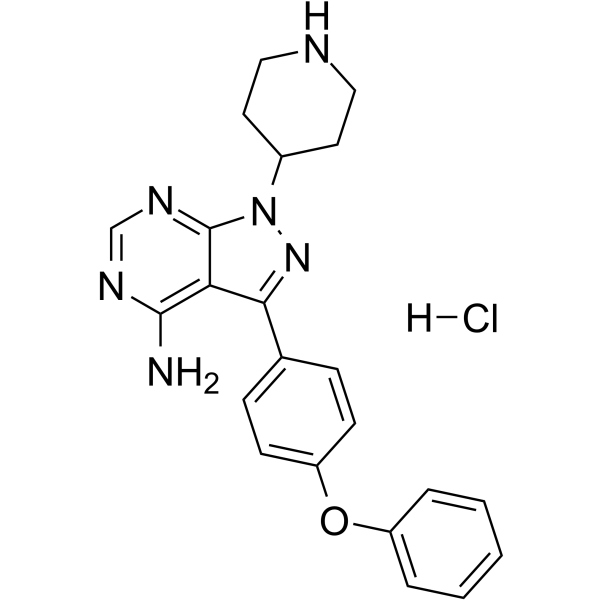 HY-130983N-piperidine Ibrutinib hydrochloride
-
Similarity Score 0.86
 HY-158318NUDT5/14 antagonist 1
-
Similarity Score 0.85
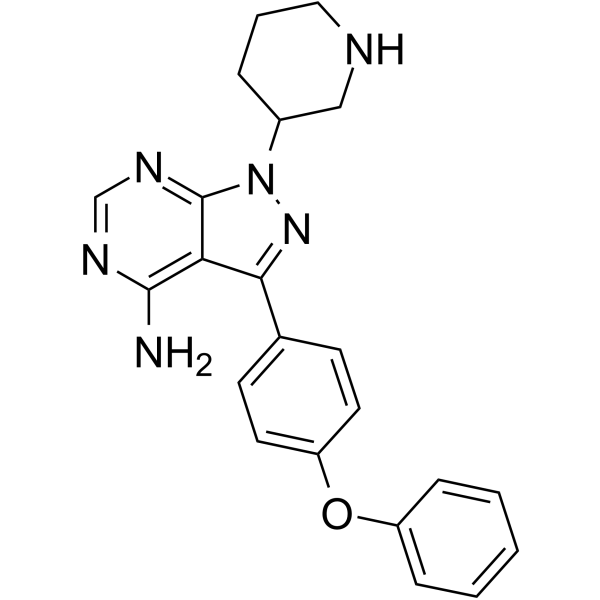 HY-13036(Rac)-IBT6A
-
Similarity Score 0.85
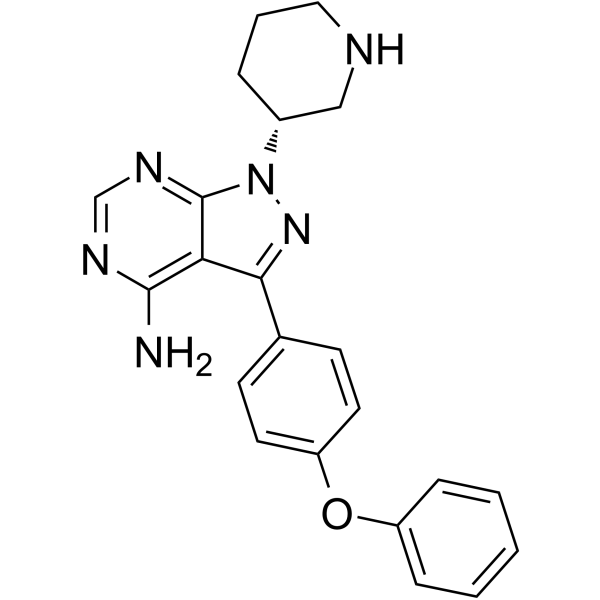 HY-13036AIBT6A
-
Similarity Score 0.85
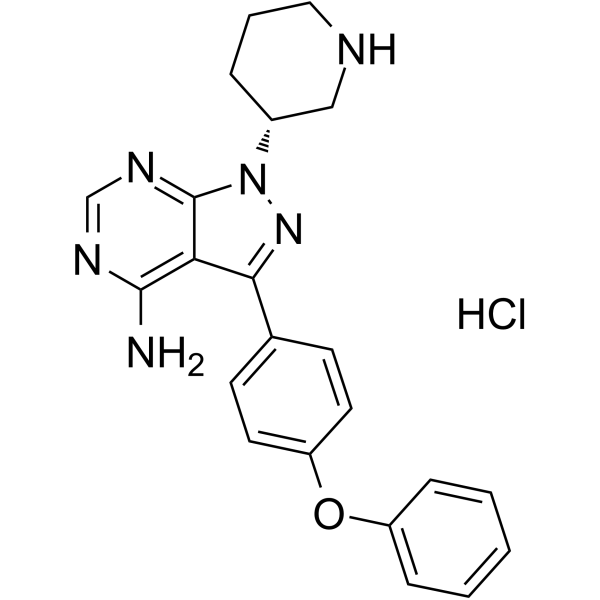 HY-13036BIBT6A hydrochloride
-
Similarity Score 0.85
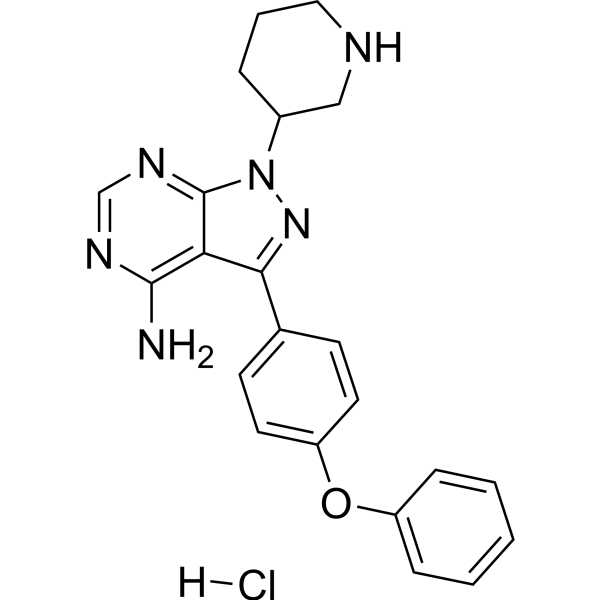 HY-13036C(Rac)-IBT6A hydrochloride
-
Similarity Score 0.80
 HY-Z5026Ibrutinib impurity 11
-
Similarity Score 0.78
 HY-15809(Rac)-Ibrutinib alkyne
-

Explore the MedChemAI to find more analogs


References
- [1]. Pan Z, et al. Discovery of selective irreversible inhibitors for Bruton's tyrosine kinase. ChemMedChem. 2007 Jan;2(1):58-61. [Content Brief]
- [2]. Ge C, et al. PCI29732, a Bruton's Tyrosine Kinase Inhibitor, Enhanced the Efficacy of Conventional Chemotherapeutic Agents in ABCG2-Overexpressing Cancer Cells. Cell Physiol Biochem. 2018;48(6):2302-2317. [Content Brief]



