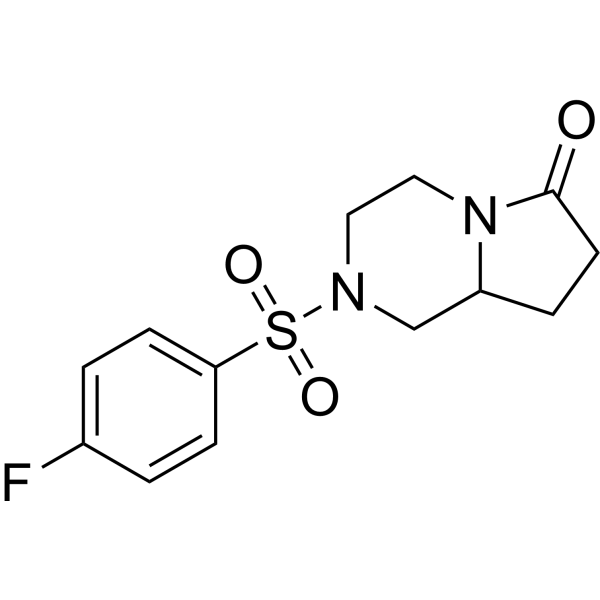
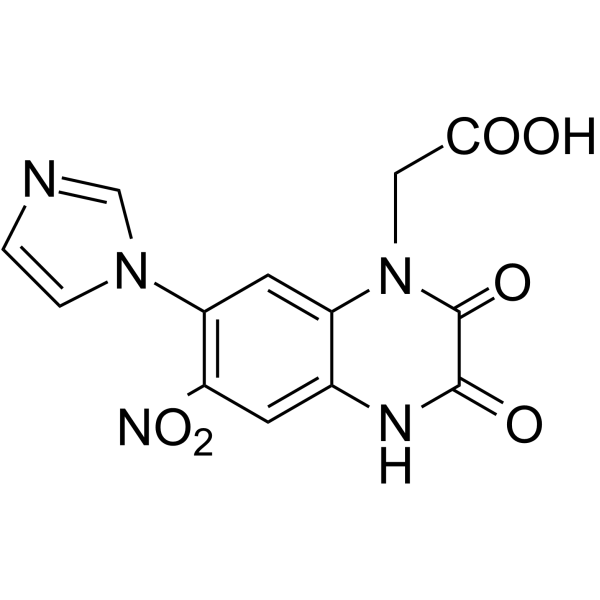
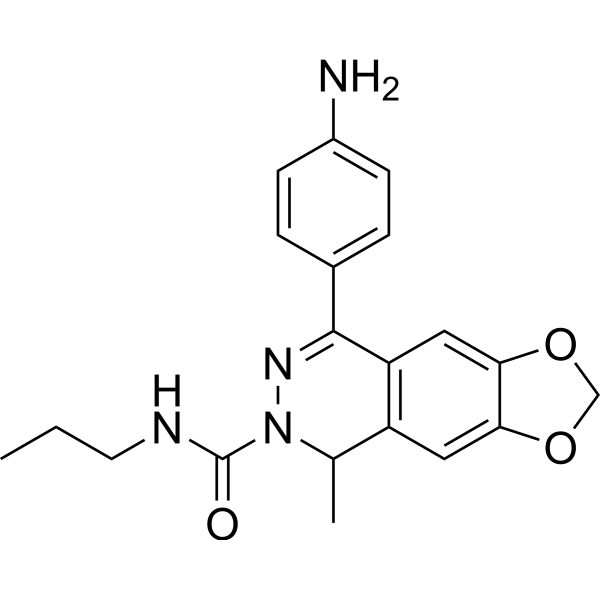
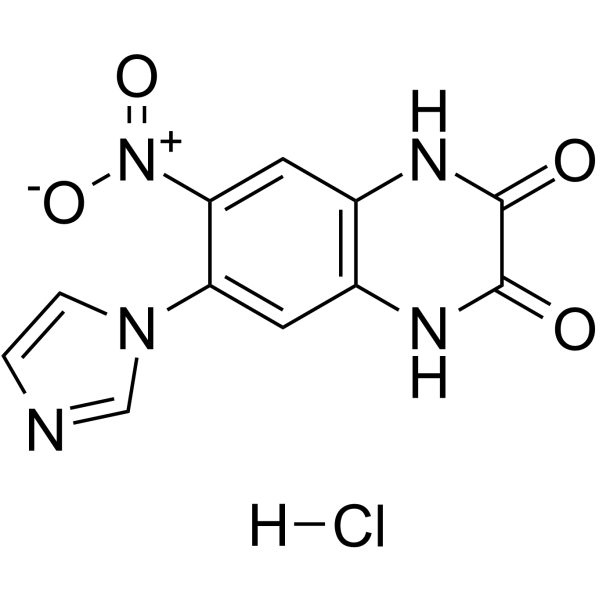
Search Result
Results for "
AMPA antagonist
" in MedChemExpress (MCE) Product Catalog:
2
Isotope-Labeled Compounds
| Cat. No. |
Nombre del producto |
Target |
Áreas de investigación |
Chemical Structure |
-
- HY-15068
-
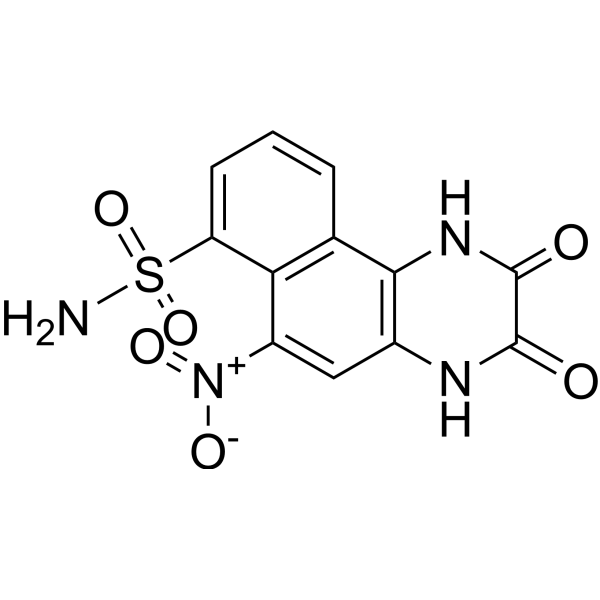
NBQX
Maximum Cited Publications
20 Publications Verification
FG9202
|
iGluR
|
Neurological Disease
|
|
NBQX (FG9202) is a highly selective and competitive AMPA receptor antagonist. NBQX has neuroprotective and anticonvulsant activity .
|
-
-
- HY-15066
-
|
FG9065
|
iGluR
|
Neurological Disease
|
|
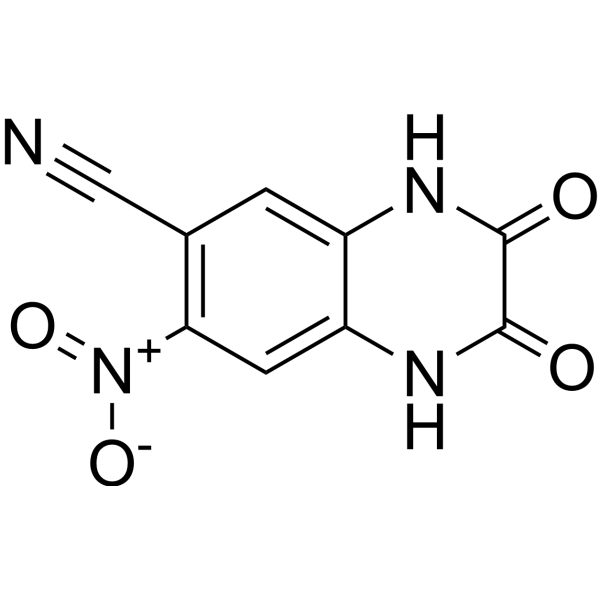
CNQX (FG9065) is a potent and competitive AMPA/kainate receptor antagonist with IC50s of 0.3 μM and 1.5 μM, respectively. CNQX is a competitive non-NMDA receptor antagonist . CNQX blocks the expression of fear-potentiated startle in rats .
|
-
-
- HY-B0122
-
-
-
- HY-15067
-
|
FG 9041
|
iGluR
|
Cancer
|
|
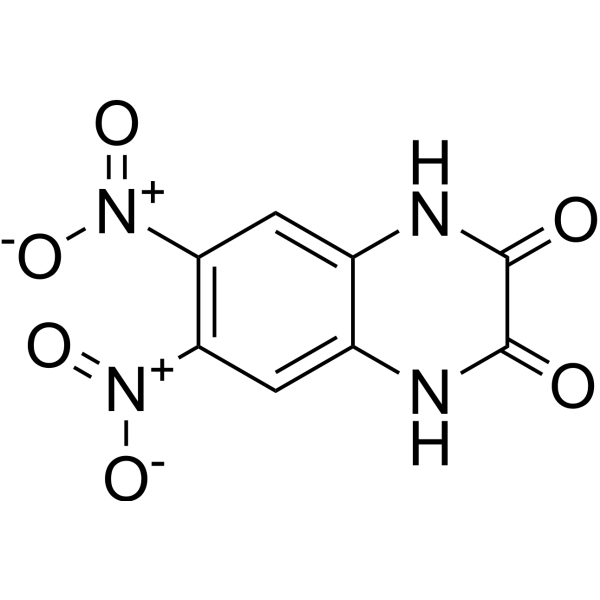
DNQX (FG 9041), a quinoxaline derivative, is a selective, potent competitive non-NMDA glutamate receptor antagonist (IC50s = 0.5, 2 and 40 μM for AMPA, kainate and NMDA receptors, respectively) .
|
-
-
- HY-15068A
-
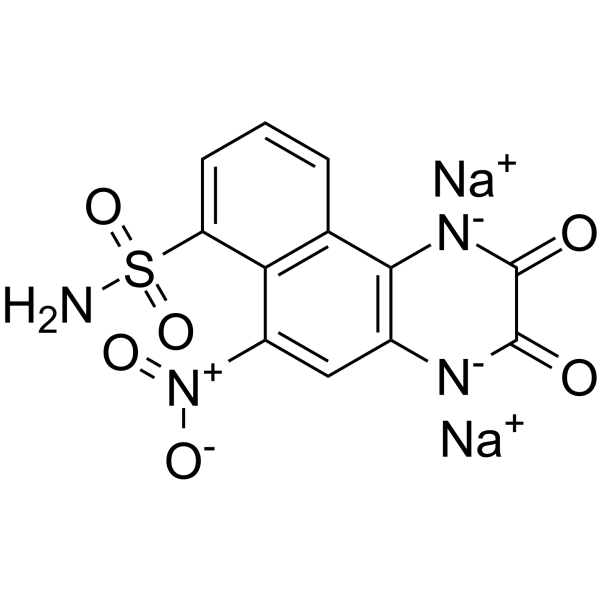
NBQX disodium
Maximum Cited Publications
20 Publications Verification
FG9202 disodium
|
iGluR
|
Neurological Disease
|
|
NBQX disodium (FG9202 disodium) is a highly selective and competitive AMPA receptor antagonist. NBQX disodium has neuroprotective and anticonvulsant activity .
|
-
-
- HY-15066A
-
|
FG9065 disodium
|
iGluR
|
Neurological Disease
|
|
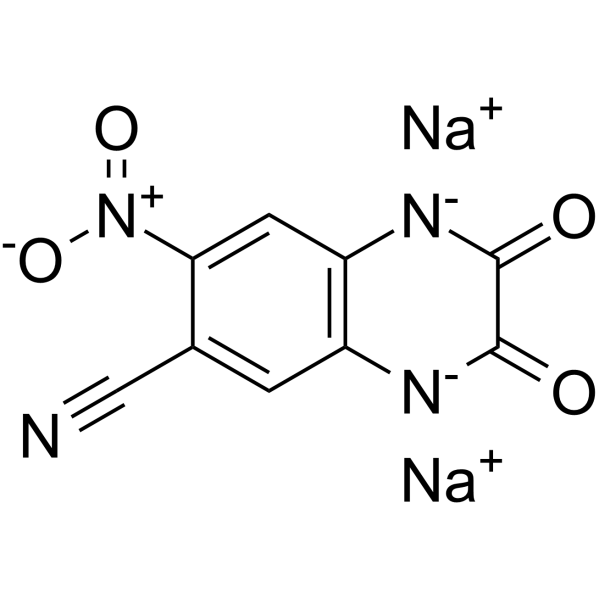
CNQX disodium (FG9065 disodium) is a potent and competitive AMPA/kainate receptor antagonist with IC50s of 0.3 μM and 1.5 μM, respectively. CNQX disodium is a competitive non-NMDA receptor antagonist . CNQX disodium blocks the expression of fear-potentiated startle in rats .
|
-
-
- HY-106467B
-
|
|
iGluR
|
Neurological Disease
|
|
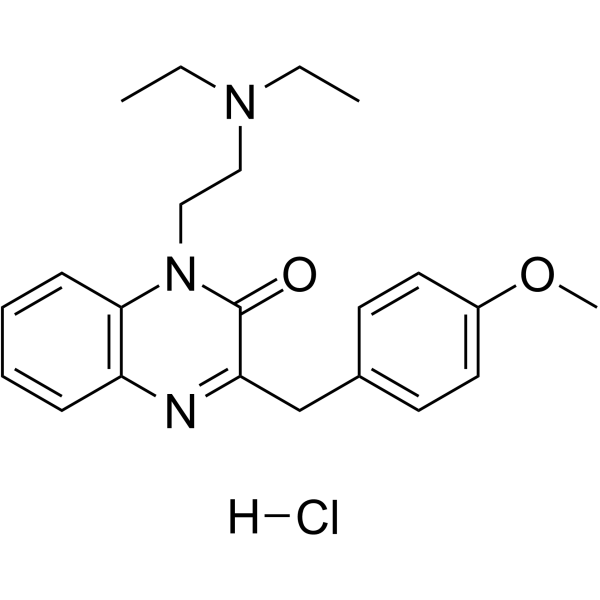
Caroverine hydrochloride is a potent, competitive and reversible antagonist of NMDA and AMPA glutamate receptor. Caroverine hydrochloride is also an antioxidant and calcium-blocking agent that exhibits vasorelaxant action. Caroverine hydrochloride can be used for the research of inner ear tinnitus .
|
-
-
- HY-12506A
-
|
1-Naphthylacetyl spermine trihydrochloride
|
iGluR
|
Neurological Disease
|
|
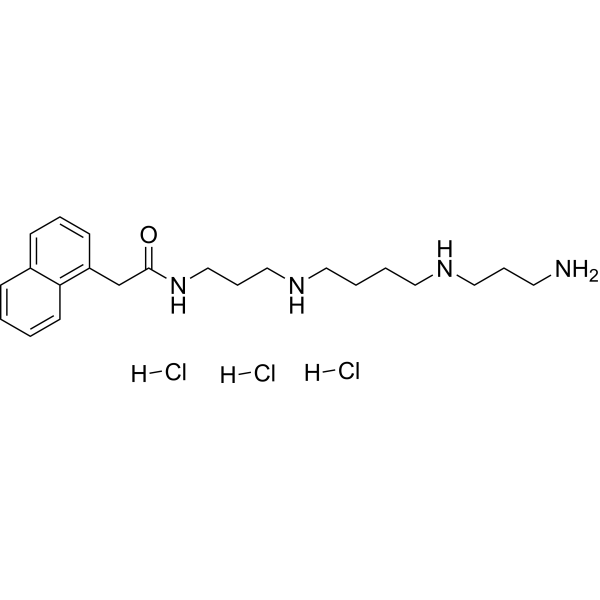
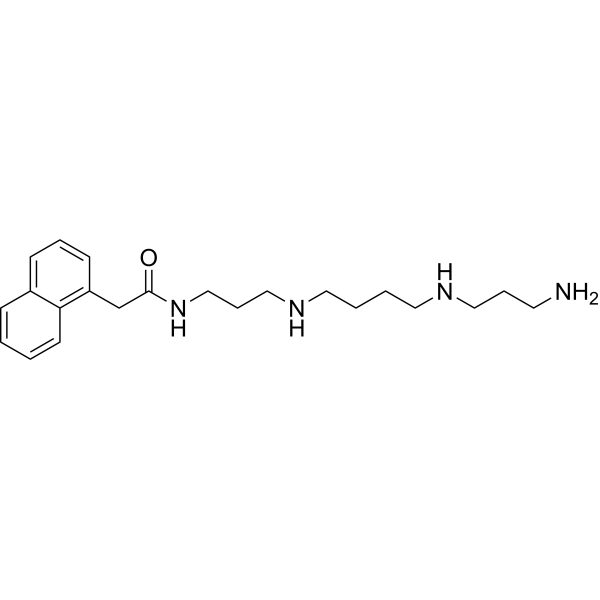
Naspm trihydrochloride (1-Naphthylacetyl spermine trihydrochloride), a synthetic analogue of Joro spider toxin, is a calcium permeable AMPA (CP-AMPA) receptors antagonist.
|
-
-
- HY-12506
-
|
1-Naphthylacetyl spermine
|
iGluR
|
Neurological Disease
|
|
Naspm (1-Naphthyl acetyl spermine), a synthetic analogue of Joro spider toxin, is a calcium permeable AMPA (CP-AMPA) receptors antagonist.
|
-
-
- HY-15069
-
|
ZK200775; MPQX
|
iGluR
|
Neurological Disease
|
|
Fanapanel (ZK200775) is a highly selective AMPA/kainate antagonist with little activity against NMDA; have Ki values of 3.2 nM, 100 nM, and 8.5 μM against quisqualate, kainate, and NMDA, respectively.
|
-
-
- HY-103234A
-
|
|
iGluR
|
Neurological Disease
|
|
GYKI 52466 dihydrochloride is an orally active, highly selective and noncompetitive AMPA/kainate receptor antagonist with the IC50 values of 7.5 and 11μM, respectively. GYKI 52466 dihydrochloride has good blood brain barrier permeability and anticonvulsant effect. GYKI 52466 dihydrochloride can be used in Parkinson's disease research .
|
-
-
- HY-125931
-
|
DM232
|
iGluR
|
Neurological Disease
Inflammation/Immunology
|
|
Unifiram (DM232) is a AMPA receptor activator and cognitive enhancer. Unifiram activates the AMPA-mediated neurotransmission system. Unifiram reverses NBQX-induced amnesia in the passive avoidance test in mice. Unifiram reverses the antagonistic effect of kynurenic acid on NMDA-mediated [ 3H]NA release in rat hippocampal slices. Unifiram enhances excitatory synaptic transmission in the rat hippocampus in vitro. Unifiram can be used in studies related to amnesia and cognitive dysfunction, including age-related memory decline, neurodegenerative diseases such as Alzheimer's disease or Parkinson's disease, multiple sclerosis, schizophrenia, and attention deficit hyperactivity disorder .
|
-
-
- HY-108707
-
|
|
iGluR
|
Neurological Disease
|
|
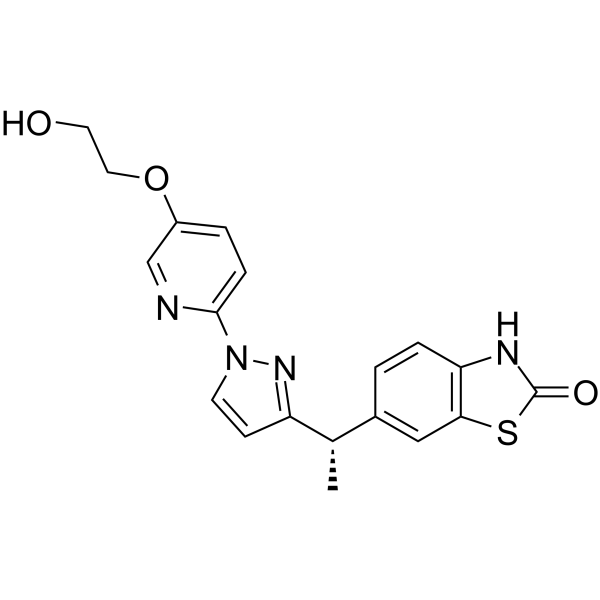
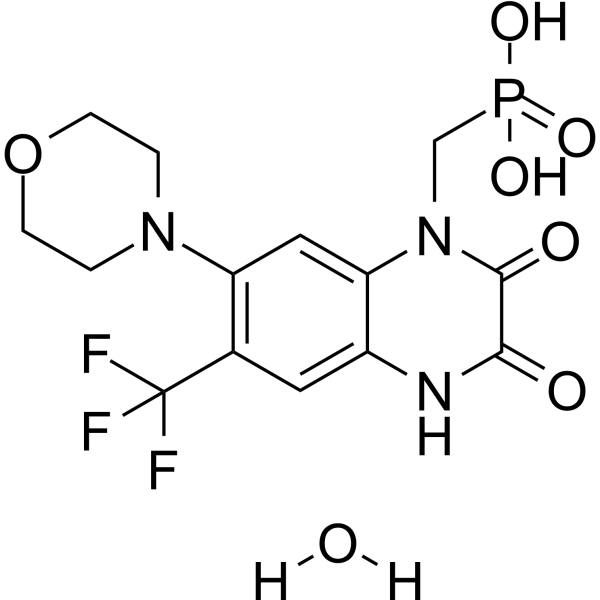
LY3130481 is an orally available AMPA receptor antagonist, selectively inhibiting the IC50 value of AMPA/TARP γ-8 at 65 nM. LY3130481 has anticonvulsant, antiepileptic, and pain-relieving effects .
|
-
-
- HY-18663
-
|
|
iGluR
|
Neurological Disease
|
|
CP-465022 is a potent, and selective noncompetitive AMPA receptor antagonist with anticonvulsant activity. CP-465022 is against Kainate-induced response with an IC50 of 25 nM in rat cortical neurons. CP-465022 provides a new tool to investigate the role of AMPA receptors in physiological and pathophysiological processes .
|
-
-
- HY-103228
-
|
LY300168 hydrochloride
|
iGluR
|
Neurological Disease
|
|
GYKI 53655 (LY300168) hydrochloride is an α-amino-3-hydroxy-5-methylisoxazole-4-propionic acid (AMPA) antagonist.
|
-
-
- HY-15072
-
|
YM 872
|
iGluR
|
Metabolic Disease
|
|
Zonampanel (YM 872) is a selective antagonist of the glutamate receptor subtype, α-amino-3-hydroxy-5-methylisoxazole-4-propionic acid (AMPA) receptor.
|
-
-
- HY-18689
-
|
|
iGluR
|
Neurological Disease
|
|
SYM2206 is a potent and non-competitive AMPA receptor antagonist, with an IC50 of 1.6 μM. SYM2206 blocks Nav1.6-mediated persistent currents .
|
-
-
- HY-103233
-
|
FG 9041 disodium salt
|
iGluR
|
Cancer
|
|
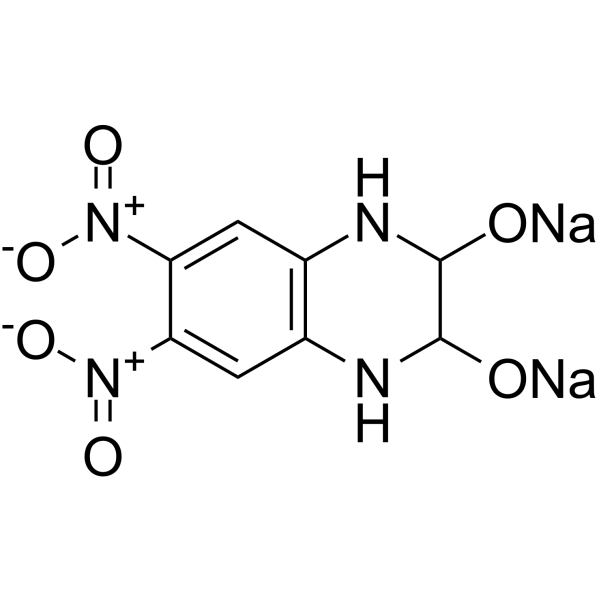
DNQX (FG 9041) disodium salt, a quinoxaline derivative, is a selective, potent competitive non-NMDA glutamate receptor antagonist (IC50s = 0.5, 2 and 40 μM for AMPA, kainate and NMDA receptors, respectively) .
|
-
-
- HY-15071
-
|
|
iGluR
|
Neurological Disease
|
|
YM90K is a potent and selective AMPA receptor antagonist with a Ki of 84 nM. YM90K is less potent in inhibiting kainate (Ki of 2.2 μM) and NMDA (Ki of 37 μM) receptors. YM90K has neuroprotective actions .
|
-
-
- HY-121964
-
|
|
iGluR
|
Neurological Disease
|
|
Cis-piperidine-2,3-dicarboxylic acid is a non-specific antagonist of NMDA, AMPA and kainate ionotropic receptors and a partial agonist for NMDA receptors. Cis-piperidine-2,3-dicarboxylic acid can be used in blocking general excitatory synaptic transmissions .
|
-
-
- HY-15069A
-
|
ZK200775 hydrate; MPQX hydrate
|
iGluR
|
Neurological Disease
|
|
Fanapanel hydrate (ZK200775 hydrate) is a highly selective AMPA/kainate antagonist with little activity against NMDA; have Ki values of 3.2 nM, 100 nM, and 8.5 μM against quisqualate, kainate, and NMDA, respectively.
|
-
-
- HY-107606A
-
|
|
iGluR
|
Neurological Disease
|
|
UBP301 hydrochloride is a potent and selective antagonist of kainate receptor with IC50 and KD of 164 μM and 5.94 μM, respectively. UBP301 hydrochloride has ~30-fold selectivity of kainate receptor over AMPA receptor. UBP301 hydrochloride is the derivative of willardiine .
|
-
-
- HY-B0122R
-
|
McN 4853 (Standard); RWJ 17021 (Standard)
|
Reference Standards
iGluR
GABA Receptor
Sodium Channel
Calcium Channel
Potassium Channel
Carbonic Anhydrase
|
Neurological Disease
|
|
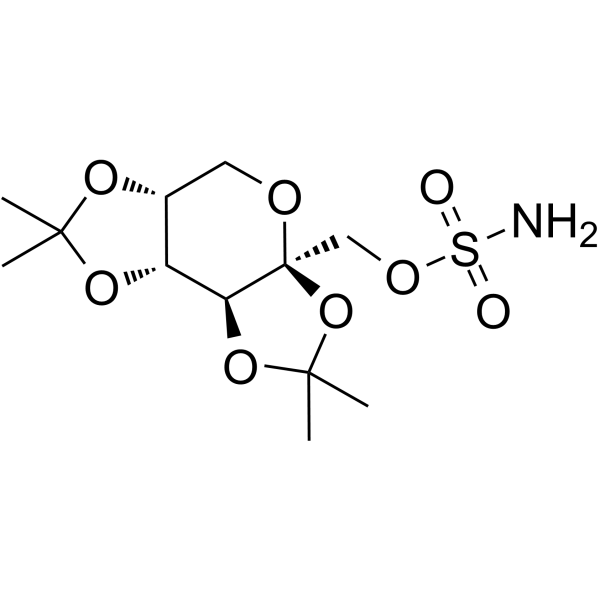
Topiramate (Standard) is the analytical standard of Topiramate. This product is intended for research and analytical applications. Topiramate (McN 4853) is a broad-spectrum antiepileptic agent. Topiramate is a GluR5 receptor antagonist. Topiramate produces its antiepileptic effects through enhancement of GABAergic activity, inhibition of kainate/AMPA receptors, inhibition of voltage-sensitive sodium and calcium channels, increases in potassium conductance, and inhibition of carbonic anhydrase .
|
-
-
- HY-19433A
-
|
|
iGluR
|
Neurological Disease
|
|
(S)-ATPO is the (S)-enantiomer of ATPO, which is a competitive antagonist at GluR1-4 (AMPA-preferring) receptors .
|
-
-
- HY-105860
-
|
BGG 492
|
iGluR
|
Neurological Disease
|
|
Selurampanel (BGG 492) is an orally active and competitive AMPA receptor antagonist with an IC50 of 190 nM. Selurampanel has reasonable blood-brain barrier penetration. Selurampanel can be used for epilepsy research .
|
-
-
- HY-19432
-
|
|
iGluR
|
Neurological Disease
|
|
UBP-282 is a potent, selective and competitive AMPA and kainate receptor antagonist. UBP-282 inhibits the fast component of the dorsal root-evoked ventral root potential (fDR-VRP) with an IC50 value of 10.3 μM. UBP-282 antagonizes kainate-induced depolarisations of dorsal roots with a pA2 value of 4.96 .
|
-
-
- HY-B0122S
-
-
-
- HY-136905
-
|
|
iGluR
|
Others
|
|
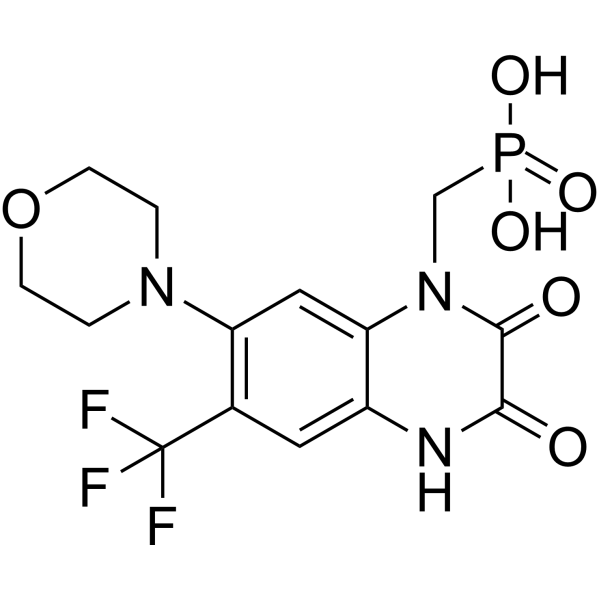
AMPA receptor antagonist-2 (example 23) is an AMPA receptor antagonist .
|
-
-
- HY-145959
-
|
|
iGluR
|
Neurological Disease
|
|
AMPA receptor antagonist-3 is an AMPA receptor antagonist extracted from patent US20070027143A1. AMPA receptor antagonist-3 can be used for the research of central nervous system disorders .
|
-
-
- HY-114975
-
|
|
iGluR
|
Neurological Disease
|
|
EGIS-8332 is a non-competitive AMPA receptor antagonist. EGIS-8332 inhibits AMPA currents in rat cerebellar Purkinje cells and inhibited the AMPA- and Quisqualate-induced excitotoxicity in primary cultures of telencephalon neurons (IC50 = 5.1-9.0 μM). EGIS-8332 exhibits anticonvulsant and neuroprotective effects. EGIS-8332 can be used for the research of neurological disease .
|
-
-
- HY-176297
-
|
|
AMPK
iGluR
|
Neurological Disease
|
|
Tezampanel etibutil is an orally active AMPA/GluR antagonist. Tezampanel etibutil can be used in the research of pain, migraine, and neurological disorders .
|
-
-
- HY-136844
-
|
GYKI 53655
|
iGluR
|
Neurological Disease
|
|
LY 300168 (GYKI 53655) is a non-competitive, blood-brain-barrier permeable AMPA receptor antagonist. LY 300168 attenuates hippocampal injury. LY 300168 blocks the sound-induced clonic and tonic convulsions .
|
-
-
- HY-15068AR
-
|
FG9202 disodium (Standard)
|
iGluR
Reference Standards
|
Neurological Disease
|
|
NBQX (disodium) (Standard) is the analytical standard of NBQX (disodium). This product is intended for research and analytical applications. NBQX disodium (FG9202 disodium) is a highly selective and competitive AMPA receptor antagonist. NBQX disodium has neuroprotective and anticonvulsant activity .
|
-
-
- HY-110234
-
|
McN 4853 D12 ; RWJ 17021 D12
|
iGluR
GABA Receptor
Sodium Channel
Calcium Channel
Potassium Channel
Carbonic Anhydrase
|
Neurological Disease
|
|
Topiramate D12 (McN 4853 D12) is a deuterium labeled Topiramate. Topiramate is a broad-spectrum antiepileptic agent. Topiramate is a GluR5 receptor antagonist. Topiramate produces its antiepileptic effects through enhancement of GABAergic activity, inhibition of kainate/AMPA receptors, inhibition of voltage-sensitive sodium and calcium channels, increases in potassium conductance, and inhibition of carbonic anhydrase .
|
-
-
- HY-100785A
-
|
γDGG acetate; γ-D-Glutamylglycine acetate
|
iGluR
|
Neurological Disease
|
|
gamma-DGG acetate (γDGG acetate) is a competitive AMPA receptor blocker. gamma-DGG acetate is also a reversible Excitatory post-synaptic potentials (e.p.s.p.s) antagonist .
|
-
-
- HY-124539
-
|
|
iGluR
|
Neurological Disease
|
|
ZK 187638 is an AMPA receptor antagonist. ZK 187638 antagonizes the kainate-induced currents in cultured hippocampal neurons with an IC50 of 3.4 μM in a noncompetitive fashion .
|
-
-
- HY-W922811
-
|
|
iGluR
|
Neurological Disease
|
|
DL-Willardiine is an AMPA antagonist with an IC50 of 2 μM. DL-Willardiine can be utilized in psychotropic cccccc research .
|
-
-
- HY-139350
-
|
|
iGluR
|
Neurological Disease
|
|
AMPA receptor antagonist-1 (Example 143) is an AMPA receptor antagonist. AMPA receptor antagonist-1 can be used in the research of neurological disorders .
|
-
-
- HY-100815
-
|
|
iGluR
|
Neurological Disease
|
|
(R)-AMPA is an inactive AMPA receptor ligand that inhibits the release of excitatory amino acids from neurons. (R)-AMPA is inactive in experiments that enhance the release of [3H]D-aspartate induced by electrical stimulation. (R)-AMPA is inhibited by competitive and noncompetitive AMPA receptor selective antagonists in response to AMPA and glutamate .
|
-
-
- HY-15070
-
-
-
- HY-129030
-
|
|
iGluR
|
Neurological Disease
|
|
BDZ-g is a potent, selective antagonist of AMPA receptor. BDZ-g has the potential for the research of various neurological disorders involving excessive activity of AMPA receptors .
|
-
-
- HY-15073
-
-
-
- HY-107519
-
|
|
iGluR
|
Neurological Disease
|
|
(R)-3,4-DCPG is an AMPA and NMDA antagonist with a Kd of 77 μM for AMPA. (R)-3,4-DCPG complete antagonizes the NMDA-induced depolarization at a concentration of 500 μM. (R)-3,4-DCPG exhibits a weak antagonistic effect on kainate-induced depolarizations .
|
-
-
- HY-106039
-
|
|
iGluR
|
Neurological Disease
|
|
LY 215490 is a selective, competitive AMPA receptor antagonist against AMPA, CGSl9755 and kainate with IC50 values of 4.8, 26.4 and 247 μM, respectively. LY 215490 shows neuroprotective effects in focal ischaemia .
|
-
-
- HY-118814
-
|
|
iGluR
|
Neurological Disease
|
|
YM928 is an orally active and noncompetitive α-Amino-3-hydroxy-5-methyl-4-isoxazolepropionic acid (AMPA) receptor antagonist. YM928 inhibits AMPA receptor-mediated toxicity in primary rat hippocampal cultures with an IC50 value of 2 μM. YM928 blocks AMPA-induced intracellular calcium influx with an IC50 value of 3 μM and antagonizes AMPA-induced inward currents with an IC50 value of 1 μM. YM928 is promising for research of neurological disorders .
|
-
-
- HY-107603
-
|
|
MOFs
iGluR
|
Neurological Disease
|
|
NS3763 is a selective and noncompetitive GLUK5 receptor antagonist with an IC50 of 1.6 µM. NS3763 does not show significant antagonistic properties on GLUK6, AMPA or NMDA receptors .
|
-
-
- HY-18663B
-
|
|
iGluR
|
Neurological Disease
|
|
CP-465022 hydrochloride is a potent, and selective noncompetitive AMPA receptor antagonist with anticonvulsant activity. CP-465022 is against Kainate-induced response with an IC50 of 25 nM in rat cortical neurons. CP-465022 provides a new tool to investigate the role of AMPA receptors in physiological and pathophysiological processes .
|
-
-
- HY-18663A
-
|
|
iGluR
|
Neurological Disease
|
|
CP-465022 Maleate is a potent, and selective noncompetitive AMPA receptor antagonist with anticonvulsant activity. CP-465022 is against Kainate-induced response with an IC50 of 25 nM in rat cortical neurons. CP-465022 provides a new tool to investigate the role of AMPA receptors in physiological and pathophysiological processes .
|
-
-
- HY-117176
-
|
|
iGluR
|
Neurological Disease
|
|
KRP-199 (compound 14h) is an α-amino-3-hydroxy-5-methylisoxazolepropionic acid receptor (AMPA-R) antagonist (Ki=16 nM) with high potency and selectivity for AMPA-R in vitro and good neuroprotective effects in vivo. KRP-199 can be used in the study of neurodegenerative diseases .
|
-
-
- HY-107518
-
|
(R,S)-3,4-DCPG
|
iGluR
|
Neurological Disease
|
|
(R,S)-3,4-Dicarboxyphenylglycine ((RS)-3,4-DCPG) is an AMPA receptor antagonist. (R,S)-3,4-Dicarboxyphenylglycine antagonizes AMPA-mediated depolarization of motor neurons in neonatal rats. (R,S)-3,4-Dicarboxyphenylglycine can be used in the study of neurological diseases .
|
-
- HY-15068R
-
|
FG9202 (Standard)
|
iGluR
Reference Standards
|
Neurological Disease
|
|
NBQX (Standard) is the analytical standard of NBQX. This product is intended for research and analytical applications. NBQX (FG9202) is a highly selective and competitive AMPA receptor antagonist. NBQX has neuroprotective and anticonvulsant activity .
|
-
- HY-106467
-
|
|
iGluR
|
Neurological Disease
|
|
Caroverine is a potent, competitive and reversible antagonist of NMDA and AMPA glutamate receptor. Caroverine is also an antioxidant and calcium-blocking agent that exhibits vasorelaxant action. Caroverine can be used for the research of inner ear tinnitus .
|
-
- HY-15076
-
|
NS-1209 sodium
|
iGluR
|
Neurological Disease
|
|
SPD-502 sodium is a novel glutamate antagonist with potential neuroprotective properties, particularly in brain ischemia. It selectively targets the AMPA receptor, showing high affinity (IC50 = 0.043 μM) and competitive inhibition of AMPA-induced effects in rat cortical membranes and cultured mouse cortical neurons. In vivo, SPD-502 sodium effectively blocks AMPA-evoked spike activity in the hippocampus after intravenous administration, significantly increasing the seizure threshold in mice and demonstrating robust protection against ischemia-induced damage to hippocampal neurons in gerbils. These findings suggest SPD-502 sodium may be promising for studying neurodegenerative conditions associated with glutamate excitotoxicity .
|
-
- HY-15074
-
|
NS-1209
|
iGluR
|
Neurological Disease
|
|
SPD-502 is a novel glutamate antagonist with potential neuroprotective properties, particularly in brain ischemia. It selectively targets the AMPA receptor, showing high affinity (IC50 = 0.043 μM) and competitive inhibition of AMPA-induced effects in rat cortical membranes and cultured mouse cortical neurons. In vivo, SPD-502 effectively blocks AMPA-evoked spike activity in the hippocampus after intravenous administration, significantly increasing the seizure threshold in mice and demonstrating robust protection against ischemia-induced damage to hippocampal neurons in gerbils. These findings suggest SPD-502 may be promising for studying neurodegenerative conditions associated with glutamate excitotoxicity .
|
-
- HY-15078
-
|
(R)-SPD502
|
iGluR
|
Neurological Disease
|
|
NS1219 ((R)-SPD502) is the isomer of NS 1209 HY-15074. NS1209 is a selective AMPA receptor antagonist with neuroprotective activity. NS1209 can be used for the research of stroke, neuropathic pain and epilepsy .
|
-
- HY-107606
-
|
|
iGluR
|
Neurological Disease
|
|
UBP301 is a potent and selective antagonist of kainate receptor with IC50 and KD of 164 μM and 5.94 μM, respectively. UBP301 has ∼30-fold selectivity of kainate receptor over AMPA receptor. UBP301 is the derivative of willardiine .
|
-
- HY-15066R
-
|
FG9065 (Standard)
|
iGluR
Reference Standards
|
Neurological Disease
|
|
CNQX (Standard) is the analytical standard of CNQX. This product is intended for research and analytical applications. CNQX (FG9065) is a potent and competitive AMPA/kainate receptor antagonist with IC50s of 0.3 μM and 1.5 μM, respectively. CNQX is a competitive non-NMDA receptor antagonist . CNQX blocks the expression of fear-potentiated startle in rats .
|
-
- HY-107605
-
|
|
iGluR
|
Neurological Disease
|
|
UBP296 is a potent and selective antagonist of GLUK5-containing kainate receptor in the spinal cord. UBP296 reversibly blocks ATPA-induced depressions of synaptic transmission, and affects AMPA receptor-mediated synaptic transmission directly in rat hippocampal slices .
|
-
- HY-19435A
-
|
|
iGluR
Cytochrome P450
|
Neurological Disease
|
|
GYKI-47261 dihydrochloride is a competitive, orally active, and selective AMPA receptor antagonist with an IC50 of 2.5 μM. GYKI-47261 has broad spectrum anticonvulsive activity and neuroprotective effects. GYKI-47261 dihydrochloride is also a potent inducer of CYP2E1 .
|
-
- HY-19435
-
|
|
iGluR
Cytochrome P450
|
Neurological Disease
|
|
GYKI-47261 is a competitive, orally active, and selective AMPA receptor antagonist with an IC50 of 2.5 μM. GYKI-47261 has broad spectrum anticonvulsive activity and neuroprotective effects. GYKI-47261 is also a potent inducer of CYP2E1 .
|
-
- HY-103234
-
|
|
iGluR
|
Neurological Disease
|
|
GYKI 52466 is an orally active, highly selective and noncompetitive AMPA/kainate receptor antagonist with the IC50 values of 7.5 and 11μM, respectively. GYKI 52466 has good blood brain barrier permeability and anticonvulsant effect. GYKI 52466 can be used in Parkinson's disease research .
|
-
- HY-103234B
-
|
|
iGluR
|
Neurological Disease
|
|
GYKI 52466 hydrochloride is an orally active, highly selective and noncompetitive AMPA/kainate receptor antagonist with the IC50 values of 7.5 and 11μM, respectively. GYKI 52466 hydrochloride has good blood brain barrier permeability and anticonvulsant effect. GYKI 52466 hydrochloride can be used in Parkinson's disease research .
|
-
- HY-106467BR
-
|
|
Reference Standards
iGluR
|
Neurological Disease
|
|
Caroverine (hydrochloride) (Standard) is the analytical standard of Caroverine (hydrochloride). This product is intended for research and analytical applications. Caroverine hydrochloride is a potent, competitive and reversible antagonist of NMDA and AMPA glutamate receptor. Caroverine hydrochloride is also an antioxidant and calcium-blocking agent that exhibits vasorelaxant action. Caroverine hydrochloride can be used for the research of inner ear tinnitus .
|
-
- HY-B0122A
-
|
McN 4853 lithium; RWJ 17021 lithium
|
iGluR
GABA Receptor
Sodium Channel
Calcium Channel
Potassium Channel
Carbonic Anhydrase
|
Neurological Disease
|
|
Topiramate (McN 4853) lithium is a broad-spectrum antiepileptic agent. Topiramate lithium is a GluR5 receptor antagonist. Topiramate produces its antiepileptic effects through enhancement of GABAergic activity, inhibition of kainate/AMPA receptors, inhibition of voltage-sensitive sodium and calcium channels, increases in potassium conductance, and inhibition of carbonic anhydrase .
|
-
- HY-124160
-
|
|
iGluR
|
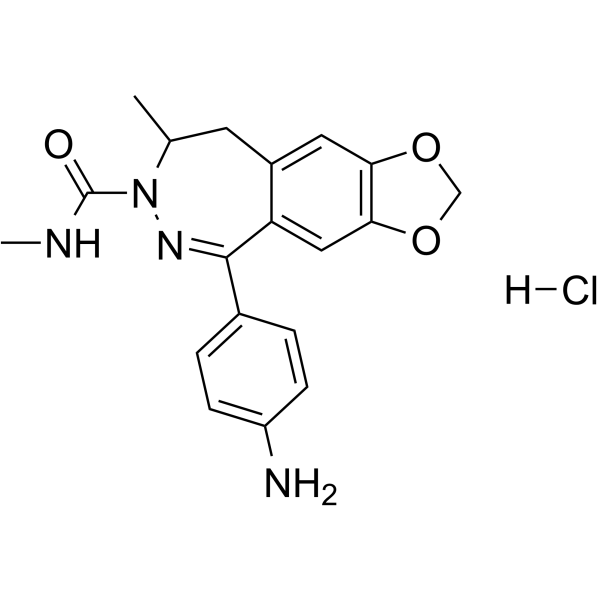
Neurological Disease
|
|
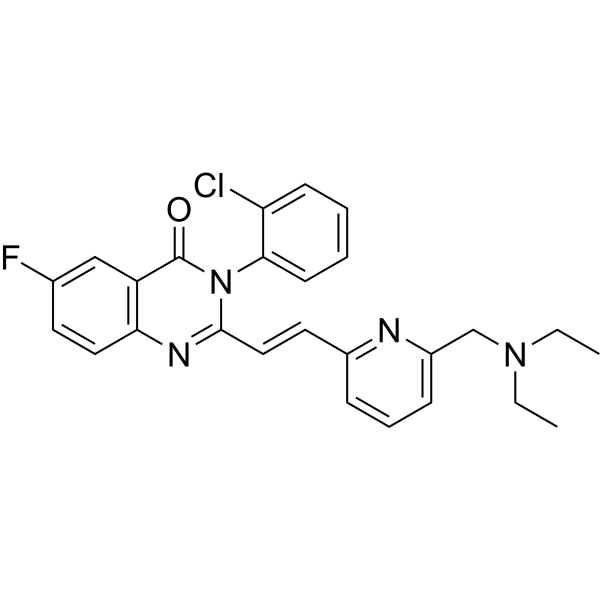
JNJ-56022486 is an orally active and potent negative AMPA receptor modulator (Ki=19 nM) selective for?TARP-γ8. JNJ-56022486 is also a TARP-γ8 receptor antagonist, with blood?brain?barrier (BBB) permeability. JNJ-56022486 can be used for research of Epilepsy .
|
-
- HY-B0122S1
-
-
- HY-103234AR
-
|
|
Reference Standards
iGluR
|
Neurological Disease
|
|
GYKI 52466 (dihydrochloride) (Standard) is the analytical standard of GYKI 52466 (dihydrochloride). This product is intended for research and analytical applications. GYKI 52466 dihydrochloride is an orally active, highly selective and noncompetitive AMPA/kainate receptor antagonist with the IC50 values of 7.5 and 11μM, respectively. GYKI 52466 dihydrochloride has good blood brain barrier permeability and anticonvulsant effect. GYKI 52466 dihydrochloride can be used in Parkinson's disease research .
|
-
- HY-100781
-
|
D-APB; D-2-Amino-4-phosphonobutyric acid
|
iGluR
|
Neurological Disease
|
|
D-AP4 (D-APB; D-2-Amino-4-phosphonobutyric acid), a phosphono analogue of glutamate, is an NMDA broad spectrum excitatory amino acid receptor antagonist. D-AP4 also is an agonist for a quisqualate-sensitized AP6 site in hippocampus. D-AP4 inhibits AMPA receptor-stimulated 57Co 2+ influx in cultured cerebellar granule cells (IC50 ≥ 100 μM) .
|
-
- HY-110234R
-
|
McN 4853 D12 (Standard); RWJ 17021 D12 (Standard)
|
Reference Standards
iGluR
GABA Receptor
Sodium Channel
Calcium Channel
Potassium Channel
Carbonic Anhydrase
|
Neurological Disease
|
|
Topiramate D12 (Standard) is the analytical standard of Topiramate D12. This product is intended for research and analytical applications. Topiramate D12 (McN 4853 D12) is a deuterium labeled Topiramate. Topiramate is a broad-spectrum antiepileptic agent. Topiramate is a GluR5 receptor antagonist. Topiramate produces its antiepileptic effects through enhancement of GABAergic activity, inhibition of kainate/AMPA receptors, inhibition of voltage-sensitive sodium and calcium channels, increases in potassium conductance, and inhibition of carbonic anhydrase .
|
-
- HY-182410
-
|
|
iGluR
|
Neurological Disease
|
|
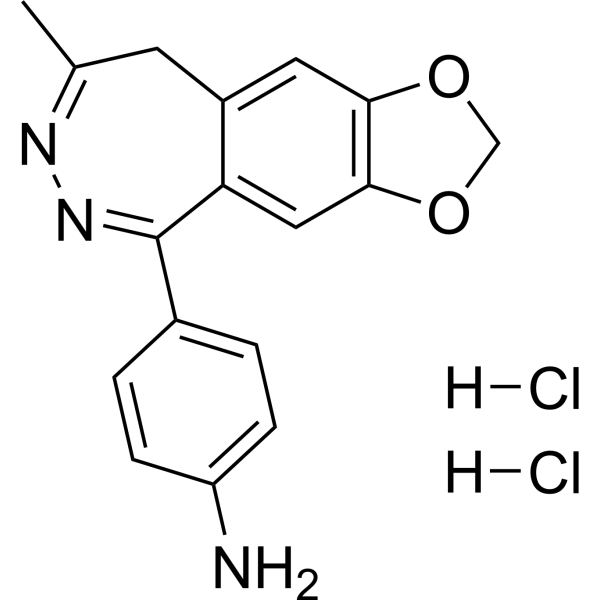
EGIS-9637 is a non-competitive AMPA antagonist and acylated dihydro-2,3-benzodiazepine class member .
|
-
- HY-116244
-
|
|
iGluR
|
Cardiovascular Disease
Neurological Disease
|
|
Ro 48-8587 is a selective AMPA receptor antagonist with an IC50 of 8 nM. Ro 48-8587 functionally inhibits AMPA receptor activity, blocks AMPA-induced depolarization of rat cortical wedges. Ro 48-8587 can be used for the research of ischaemia and seizures .
|
-
- HY-108707R
-
|
|
Reference Standards
iGluR
|
Neurological Disease
|
|
LY3130481 (Standard) is the analytical standard of LY3130481 (HY-108707). This product is intended for research and analytical applications. LY3130481 is an orally available AMPA receptor antagonist, selectively inhibiting the IC50 value of AMPA/TARP γ-8 at 65 nM. LY3130481 has anticonvulsant, antiepileptic, and pain-relieving effects .
|
-
- HY-103228R
-
|
LY300168 hydrochloride (Standard)
|
Reference Standards
iGluR
|
Neurological Disease
|
|
GYKI 53655 hydrochloride (Standard) is the analytical standard of GYKI 53655 hydrochloride (HY-103228). This product is intended for research and analytical applications. GYKI 53655 (LY300168) hydrochloride is an α-amino-3-hydroxy-5-methylisoxazole-4-propionic acid (AMPA) antagonist.
|
-
- HY-15067R
-
|
FG 9041 (Standard)
|
iGluR
Reference Standards
|
Cancer
|
|
DNQX (Standard) is the analytical standard of DNQX. This product is intended for research and analytical applications. DNQX (FG 9041), a quinoxaline derivative, is a selective, potent competitive non-NMDA glutamate receptor antagonist (IC50s = 0.5, 2 and 40 μM for AMPA, kainate and NMDA receptors, respectively) .
|
-
- HY-15080
-
|
LY 293606
|
iGluR
|
Cardiovascular Disease
Neurological Disease
|
|
GYKI 53405 is a non-competitive, orally active AMPA receptor antagonist. GYKI 53405 shows no significant binding affinity for GABAA, GABAB or benzodiazepine receptors. GYKI 53405 increases self-grooming behavior, induces wet dog-like shakes, reduces spontaneous activity, produces anxiolytic-like behavior, reverses the anxiogenic effect induced by mCPP, inhibits locomotor activity, suppresses sound-induced and maximal electroshock-induced seizures, prolongs survival in global cerebral ischemia models, and exhibits sustained anticonvulsant effects at doses below the sedation threshold. GYKI 53405 can be used in research related to absence epilepsy, anxiety disorders and global cerebral ischemia .
|
-
| Cat. No. |
Nombre del producto |
Chemical Structure |
-
- HY-B0122S
-
|
|
|
Topiramate-13C6 (McN 4853-13C6) is the 13C labeled isotope of Topiramate (HY-B0122). Topiramate (McN 4853) is a broad-spectrum antiepileptic agent. Topiramate is a GluR5 receptor antagonist. Topiramate produces its antiepileptic effects through enhancement of GABAergic activity, inhibition of kainate/AMPA receptors, inhibition of voltage-sensitive sodium and calcium channels, increases in potassium conductance, and inhibition of carbonic anhydrase .
|
-
-
- HY-B0122S1
-
|
|
|
Topiramate- 13C (McN 4853- 13C) is 13C labeled Topiramate. Topiramate (McN 4853) is a broad-spectrum antiepileptic agent. Topiramate is a GluR5 receptor antagonist. Topiramate produces its antiepileptic effects through enhancement of GABAergic activity, inhibition of kainate/AMPA receptors, inhibition of voltage-sensitive sodium and calcium channels, increases in potassium conductance, and inhibition of carbonic anhydrase .
|
-
Your information is safe with us. * Required Fields.
Inquiry Information
- Nombre del producto:
- Cat. No.:
- Cantidad:
- MCE Japan Authorized Agent:

