1. Search Result
Search Result
Results for "

ATP-binding residues

" in MedChemExpress (MCE) Product Catalog:
Cat. No. Product Name Target Research Areas Chemical Structure
  • HY-108659

    P2Y Receptor Inflammation/Immunology
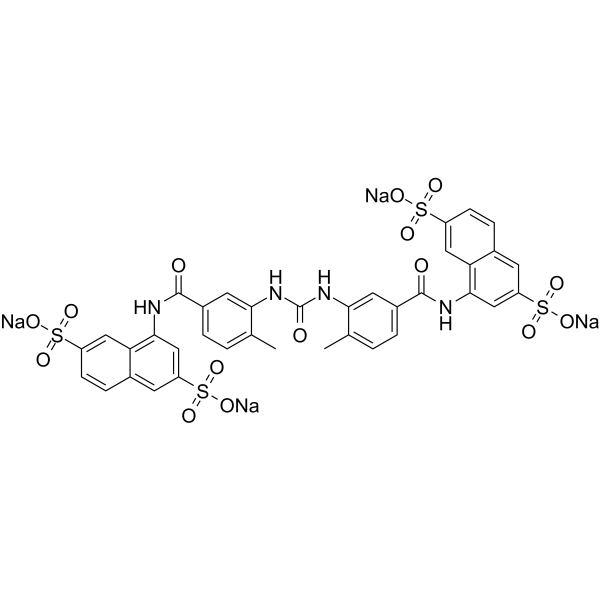
    NF340 is a P2Y11 receptor inhibitor with a pIC50 of 7.3-7.7 against human P2Y11 receptor, and it exhibits high selectivity over other P2Y family receptors. NF340 binds to the ATP-binding amino acid residues of the P2Y11 receptor to inhibit its activity, block nociceptive activity, and reduce spinal dorsal horn P2Y11 receptor upregulation induced by spinal cord injury. NF340 attenuates the NFκB signaling pathway activated by IL-1β by decreasing IκBα phosphorylation, nuclear p65 accumulation and NFκB promoter activity. NF340 inhibits IL-1β-induced pro-inflammatory cytokine expression, reduces intracellular ROS and 4-HNE levels, and suppresses IL-1β-induced matrix metalloproteinase expression in primary fibroblast-like synoviocytes. NF340 inhibits ATP-induced elevation of intracellular calcium 2+ concentration and cell migration in human hepatocellular carcinoma cells. NF340 is applicable to the research of neuropathic pain, myocardial ischemia/reperfusion injury, inflammatory pain, rheumatoid arthritis and hepatocellular carcinoma .
    NF340
  • HY-156028

    Parasite Infection
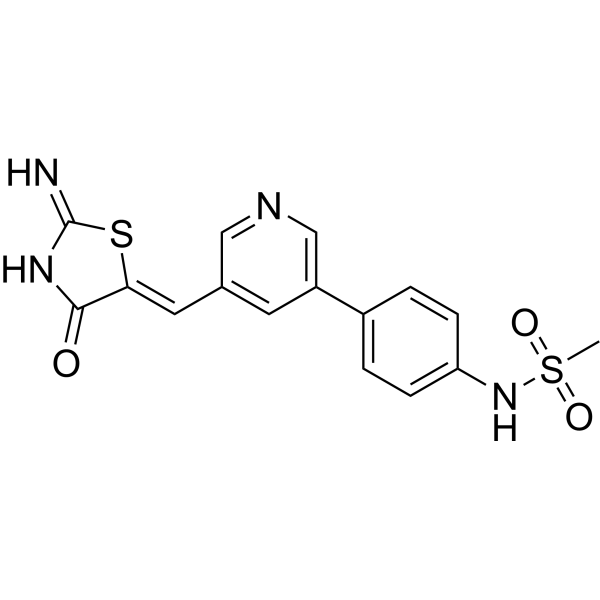
    FIKK9.1-IN-1 (Compound 1) is a FIKK9.1 inhibitor. FIKK9.1-IN-1 interacts with the ATP?binding residues in FIKK9.1. FIKK9.1-IN-1 is an antimalarial agent (IC50: 2.68 μg/mL) and disrupts the parasite life cycle and leads to the death of parasites .
    FIKK9.1-IN-1
  • HY-123650

    5'-p-Fluorosulfonylbenzoyladenosine

    Biochemical Assay Reagents Cancer
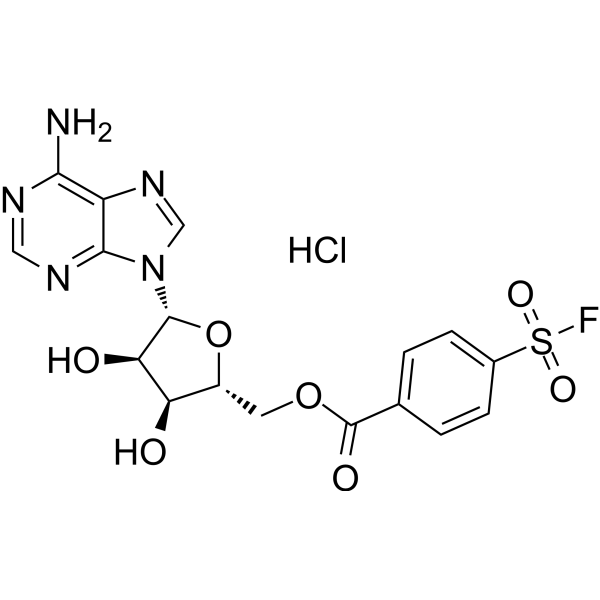
    FSBA (5'-p-Fluorosulfonylbenzoyladenosine) hydrochloride is a covalent modifier and affinity labeling reagent for adenine nucleotide-binding proteins. FSBA hydrochloride covalently attaches to the nucleotide-binding sites of pyruvate kinase, glutamate dehydrogenase, and p56 lck, and to a lysine residue in the ATP-binding site of cAMP-dependent protein kinase, causing loss of enzymatic activity. FSBA hydrochloride can be used for the research of T lymphoma .
    FSBA hydrochloride
  • HY-12491

    PI3K Apoptosis Cancer
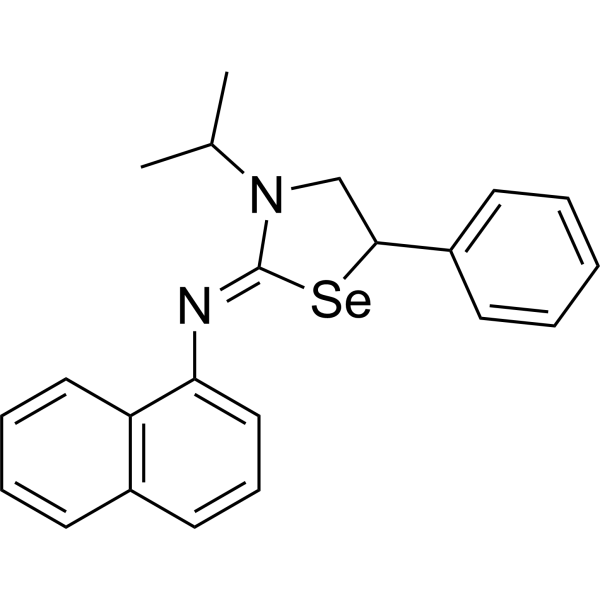
    PIK-C98 is a potent and selective PI3K inhibitor, with IC50s of 0.59, 1.64, 3.65, and 0.74 μM for α, β, δ, and γ isoforms, respectively. PIK-C98 inhibits all class I PI3Ks but has no effects on AKT or mTOR activity. PIK-C98 interferes with the ATP-binding pockets of PI3Ks by forming H-bonds and arene-H interactions with specific amino acid residues. PIK-C98 induces apoptosis by inhibiting PI3K. PIK-C98 can be used for the research of multiple myeloma .
    PIK-C98
  • HY-181173

    VEGFR Cancer
    VEGFR-2-IN-80 is a VEGFR-2 inhibitor with an IC50 of 2.206 μM. VEGFR-2-IN-80 interacts with ATP-binding residues of VEGFR-2 to inhibit its kinase activity. VEGFR-2-IN-80 suppresses formation of capillary-like networks, exerts cytotoxic effects against various human cancer cells, and suppresses growth of HCT116 xenografts. VEGFR-2-IN-80 can be used for the research of colorectal cancer .
    VEGFR-2-IN-80
  • HY-182281

    FLT3 STAT Akt ERK Apoptosis Cancer
    FLT3-IN-41 is a highly potent FLT3 inhibitor. The IC50 values of FLT3-IN-41 against human FLT3-ITD and FLT3-WT are 3.16 nM and 294.7 nM, respectively. By binding to the ATP-binding pockets of FLT3-ITD and FLT3-WT and forming hydrogen bonds with hinge region residues and Phe830, FLT3-IN-41 inhibits the STAT5, Akt and Erk signaling pathways. FLT3-IN-41 induces G2/M phase arrest and promotes apoptosis in FLT3-ITD-positive acute myeloid leukemia cells, exhibiting significant antiproliferative activity. FLT3-IN-41 serves as a valuable tool for the study of acute myeloid leukemia .
    FLT3-IN-41
  • HY-182306

    VEGFR Cardiovascular Disease
    VEGFR-2 ligand-1, Sorafenib (HY-10201) derivative, is a vascular endothelial growth factor receptor 2 (VEGFR2) ligand. VEGFR-2 ligand-1 binds to the ATP-binding pocket of VEGFR2, forms hydrophobic contacts and hydrogen bonds with key binding-site residues. VEGFR-2 ligand-1 can be used for the research angiogenesis-related pathologies .
    VEGFR-2 ligand-2
  • HY-116053

    HSP Neurological Disease
    PU-11 is a Hsp90α/Hsp90β inhibitor with IC50 values of 18.6 μM and 89.8 μM and Kd values of 2 and 4.2 μM. PU-11 binds to the ATP-binding pocket of Hsp90α and Hsp90β and displays selective binding preference for Hsp90α over Hsp90β, mediated by the nonconserved Hsp90α Ser52 residue. PU-11 can be used for the research of neurodegenerative disorders .
    PU-11
  • HY-182764A

    CDK Cancer
    CDK11-IN-1 hydrochloride is a potent, highly selective, and orally active CDK11 inhibitor with an IC50 of 4 nM, showing 32.5-fold and 2700-fold selectivity over CDK7 and CDK9, respectively. CDK11-IN-1 hydrochloride binds competitively to the ATP-binding pocket of CDK11 and forms a hydrogen bond with the hinge region residue Val163. It inhibits tumor cell proliferation and exhibits antitumor activity in lung cancer xenograft models. CDK11-IN-1 hydrochloride can be used for studies on the pathophysiology of CDK11-mediated tumors, as well as research on malignant tumors such as lung cancer .
    CDK11-IN-1 hydrochloride
  • HY-183373

    EGFR PARP Cancer
    EGFR/PARP-1-IN-1 is a dual EGFR and PARP-1 inhibitor with IC50 values of 64 nM and 12 nM, respectively. EGFR/PARP-1-IN-1 binds to the ATP-binding pocket of EGFR and interacts with the catalytic domain of PARP-1, inhibiting kinase and enzymatic activity via hydrogen bond formation with key residues in both targets. EGFR/PARP-1-IN-1 induces apoptosis through the endogenous mitochondrial pathway, arrests the cell cycle at the G2 phase, and inhibits cell proliferation. EGFR/PARP-1-IN-1 can be used for research on triple-negative breast cancer .
    EGFR/PARP-1-IN-1
  • HY-182763

    EGFR Raf Caspase Apoptosis Bcl-2 Family Cancer
    EGFR/BRAFV600E-IN-7 is a dual EGFR and BRAF V600E kinase inhibitor with human IC50 values of 0.12 μM, 0.80 μM, 1.20 μM for EGFR and 0.05 μM, 0.22 μM, 0.78 μM for BRAF V600E.EGFR/BRAFV600E-IN-7 interacts with key ATP-binding site residues of EGFR and BRAF V600E, including hydrogen bonding with EGFR Met769 and BRAF V600E Cys532.EGFR/BRAFV600E-IN-7 induces apoptosis via caspase-3/8/9 activation, modulates Bax and Bcl-2 expression, scavenges free radicals, and exhibits antiproliferative activity against human cancer cell lines.EGFR/BRAFV600E-IN-7 displays drug-likeness with no PAINS/Brenk structural alerts per in silico predictions.EGFR/BRAFV600E-IN-7 can be used for the research of colon cancer, pancreatic cancer, lung cancer, breast cancer .
    EGFR/BRAFV600E-IN-7

Inquiry Online

Your information is safe with us. * Required Fields.

Salutation


Country or Region *

Applicant Name *


Organization Name *

Department *


Email Address *


Product Name *

Cat. No.


Requested quantity *

Phone Number *


Remarks

Inquiry Online

Inquiry Information

Product Name:
Cat. No.:
Quantity:
MCE Japan Authorized Agent:

