







35 Results for "

Alpha-helical

" in MedChemExpress (MCE) Product Catalog:
Products (35)

35 Results for "Alpha-helical" in MCE Product Catalog:

2
2 Cited Publications
Cat. No.: HY-N6708
CAS No.: 27061-78-5
Alamethicin is a linear 20-amino acid antibiotic, which can induce voltage-gated conductance in model and cell membranes. Alamethicin exhibits antimicrobial activity against Gram-positive bacteria, but not Gram-negative bacteria. Alamethicin can form an amphipathic α-helical structure in biological membranes .
loading...
    loading...
Cat. No.: HY-P5366
Target:  

Liposome

Research Areas:  

Others

PEP1 is an amphipathic α-helical peptide containing 31 residues. The interaction of PEP1 with POPC-supported lipid bilayers (SLBs) is concentration-dependent: at low concentrations, it inserts into SLBs to generate compressive stress; at medium concentrations, it saturates the membrane surface to maintain constant stress; and at high concentrations, it solubilizes SLBs. PEP1 can be used for research on the mechanism of membrane-peptide interactions .
loading...
    loading...
Cat. No.: HY-P1294
CAS No.: 90880-23-2
Target:  

CRFR

Research Areas:  

Neurological Disease

α-Helical CRF(9-41) is a competitive CRF2 receptor antagonist with KB of ~100 nM. α-Helical CRF(9-41) is also a partial agonist of CRF1 receptor with an EC50 of 140 nM .
loading...
    loading...
Cat. No.: HY-P5284
CAS No.: 1613231-49-4
Target:  

Peptides

Research Areas:  

Others

RALA peptide is a cationic amphiphilic delivery agent targeting cell membranes, which forms nanoparticles through electrostatic interactions with anionic drugs. RALA peptide has pH-responsive binding properties, which can enhance the α-helical conformation in an acidic environment and destroy the endosomal membrane, promote the release of drugs into the cytoplasm, and exert efficient intracellular delivery activity. RALA peptide can be used in cancer research (enhancing the activity of bisphosphonates against prostate cancer and breast cancer cells) and bone tissue engineering (promoting osteoblast collagen deposition and extracellular matrix mineralization) .
loading...
    loading...
Cat. No.: HY-P1629
CAS No.: 188713-69-1
Research Areas:  

Infection

Temporin A is a short alpha-helical antimicrobial peptide isolated from the skin of the frog Rana temporaria. Temporin A is effective against a broad spectrum of Gram-positive bacteria. Temporin A interacts directly with the cell membrane of the microorganism and it is non-toxic to erythrocytes at concentrations that are antimicrobial. Temporin A also has antifungal activities (against yeast-like Candida albicans) .
loading...
    loading...
Cat. No.: HY-P10531
CAS No.: 2413353-86-1
Target:  

Peptides

Research Areas:  

Others

ALFA-tag is a small and stable α-helical structure composed of 15 amino acids. ALFA-tag is highly hydrophilic and can be placed at the N-terminus, C-terminus, or between two independently folded domains of the target protein without affecting the function of the protein. ALFA-tag is widely used as an epitope tag and is used for the detection and manipulation of proteins in living cells .
loading...
    loading...
Cat. No.: HY-P4371
CAS No.: 177942-21-1
Research Areas:  

Inflammation/Immunology

Hel 13-5 is a monomeric, lipophilic, basic amphipathic α-helical synthetic peptide composed of 18 amino acid residues. Hel 13-5 is designed as a substitute for proteins in artificial pulmonary surfactants, and it mimics the interaction between the N-terminal fragment of human pulmonary surfactant protein B and lipids. Hel 13-5 can bind to phospholipids for the development of pulmonary surfactant model systems. Hel 13-5 can be used in studies related to respiratory distress syndrome .
loading...
    loading...
Cat. No.: HY-P5557
CAS No.: 1429184-62-2
Target:  

Bacterial Necroptosis

Research Areas:  

Infection Inflammation/Immunology

TP4 (Nile tilapia piscidin) is an orally active amphipathic α-helical cationic antimicrobial peptide. TP4 (Nile tilapia piscidin) exerts broad-spectrum bactericidal activity against Gram-positive and Gram-negative bacteria by disrupting cell membrane structures, and also exhibits certain hemolytic activity. TP4 (Nile tilapia piscidin) regulates the innate immune system and enhances the expression of lysozymes, cytokines and antioxidant enzymes to resist bacterial infection. TP4 (Nile tilapia piscidin) also stimulates the proliferation of keratinocytes and fibroblasts, and significantly promotes the healing of wounds infected with MRSA. TP4 (Nile tilapia piscidin) can be used in research related to bacterial infection, peritonitis, wound healing and other fields .
loading...
    loading...
Cat. No.: HY-P2530
CAS No.: 187987-64-0
Target:  

Peptides

Research Areas:  

Others

KALA is an amphiphilic peptide that forms an α-helical structure at physiological pH. KALA modifies a plasmid DNA-encapsulating liposomal membrane and is used as a fusogenic peptide in order to achieve effective liver targeting and transfection of DNA via galactose receptors .
loading...
    loading...
Cat. No.: HY-P1294A
Target:  

CRFR

Research Areas:  

Neurological Disease

α-Helical CRF(9-41) TFA is a competitive CRF2 receptor antagonist with KB of ~100 nM. α-Helical CRF(9-41) TFA is also a partial agonist of CRF1 receptor with an EC50 of 140 nM .
loading...
    loading...
Cat. No.: HY-W006886
CAS No.: 945212-26-0
Research Areas:  

Others

Fmoc-(R)-2-(7-octenyl) Ala-OH is an unnatural Fmoc-protected amino acid and modification module. Fmoc-(R)-2-(7-octenyl) Ala-OH serves as a key building block for all-hydrocarbon cross-linking modification of antimicrobial peptides, and facilitates the generation of stapled peptide derivatives. When introduced into specific sites of the parent peptide, Fmoc-(R)-2-(7-octenyl) Ala-OH effectively increases the α-helix content of the peptide chain, thereby significantly enhancing its antimicrobial activity and proteolytic stability. Fmoc-(R)-2-(7-octenyl) Ala-OH is widely used in research on bacterial infections and the development of related antimicrobial agents . Stapled peptide is a specially chemically modified polypeptide. It locks the peptide chain into a stable α-helical structure by introducing a "staple"-like chemical bridge (usually an all-carbon backbone) at specific positions of the peptide chain.
loading...
    loading...
Cat. No.: HY-P3169
CAS No.: 99658-03-4
Target:  

CRFR

Research Areas:  

Inflammation/Immunology

α-Helical Corticotropin Releasing Factor (9-41) is a corticotropin releasing factor (CRF) antagonist. α-Helical Corticotropin Releasing Factor (9-41) decreases plasma growth hormone (GH) values in vivo .
loading...
    loading...
Cat. No.: HY-P4084
CAS No.: 406482-85-7
Target:  

Peptides

Research Areas:  

Others

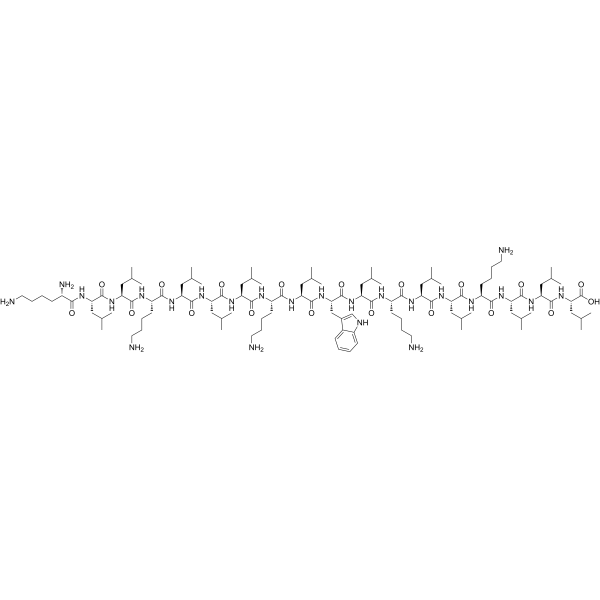
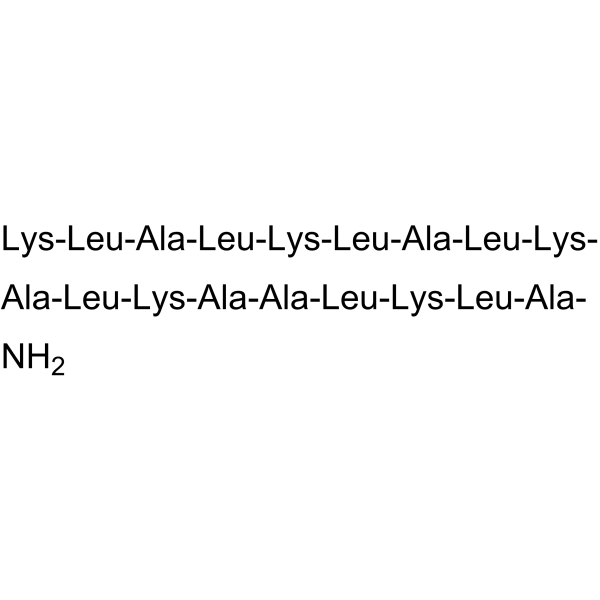
KLA seq is a cell-penetrating α-helical amphipathic model peptide .
loading...
    loading...
Cat. No.: HY-P4084A
Target:  

Peptides

Research Areas:  

Others

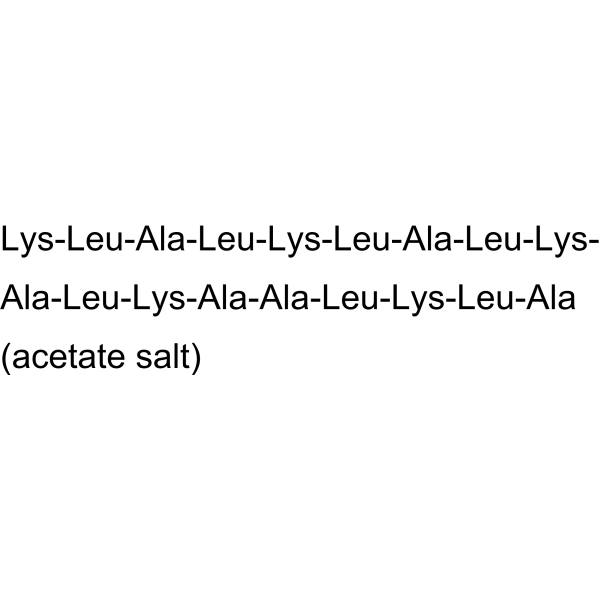
KLA seq acetate is a cell membrane-penetrating α-helical amphipathic model peptide. KLA seq acetate conjugates peptide nucleic acids (PNAs) for delivery to mammalian cells. KLA seq acetate covalently links targeted mRNA and fluorescein to form a delivery system that has low re-export and is less resistant to serum effects .
loading...
    loading...
Cat. No.: HY-P4371A
Target:  

Peptides

Research Areas:  

Others

Hel 13-5 TFA is a monomeric synthetic peptide based on the N-terminal fragment of human SP-B. Hel 13-5 TFA is mainly α-helical and consists of 13 hydrophobic amino acid residues and 5 hydrophilic amino acid residues. Hel 13-5 TFA can be combined with phospholipids for the development of a model system for pulmonary surfactant .
loading...
    loading...
Cat. No.: HY-P3683
CAS No.: 158535-55-8
Target:  

CRFR

Research Areas:  

Endocrinology

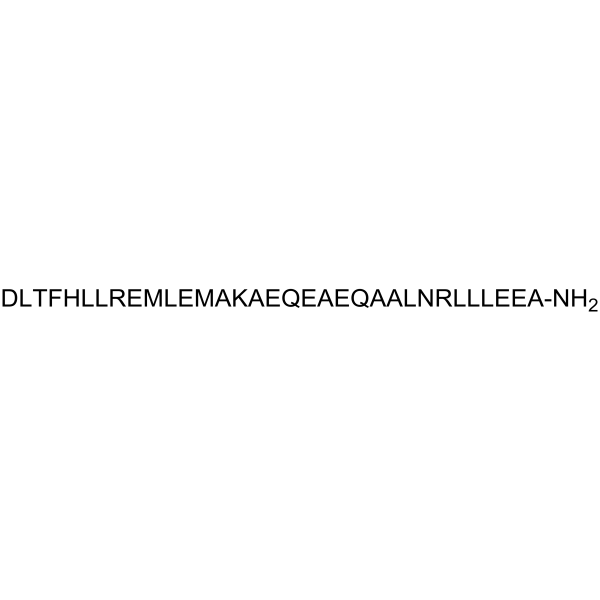
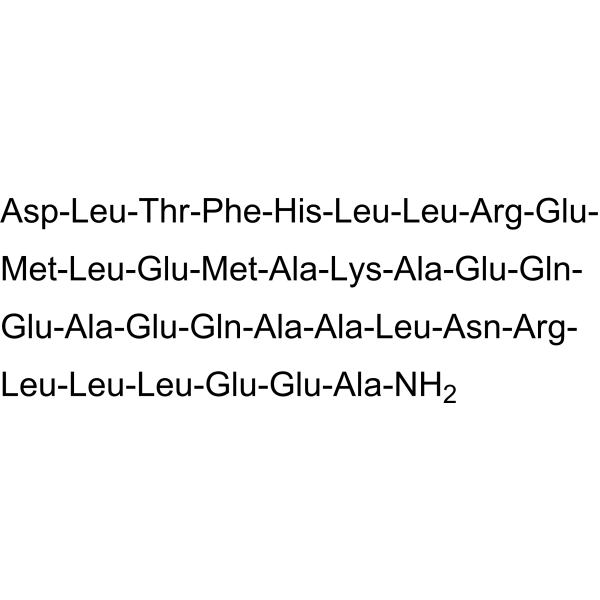
a-Helical Corticotropin Releasing Factor (12-41) is a 30 amino acids long, α-helical analogue of corticotropin releasing factor/hormone. Corticotropin releasing factor (CRF) is a hypothalamic hormone, which stimulates the secretion of adrenocorticotrophic hormone (ACTH). a-Helical Corticotropin Releasing Factor (12-41) would suppress the stimulatory effect .
loading...
    loading...
Cat. No.: HY-P2170
CAS No.: 316805-65-9
Synonyms: XOMA-629
Target:  

Antibiotic Bacterial

Research Areas:  

Infection Inflammation/Immunology

XMP-629 (XOMA-629), a cationic α-helical peptide, is a potent endotoxin inhibitor. XMP-629 exhibits broad-spectrum antimicrobial activity via an immunomodulatory mechanism. XOMA 629 has antimicrobial activity against Propionibacterium acnes, Staphylococcus aureus and Streptococcus pyogenesand .
loading...
    loading...
Cat. No.: HY-P2266
CAS No.: 1453222-26-8
Research Areas:  

Cancer

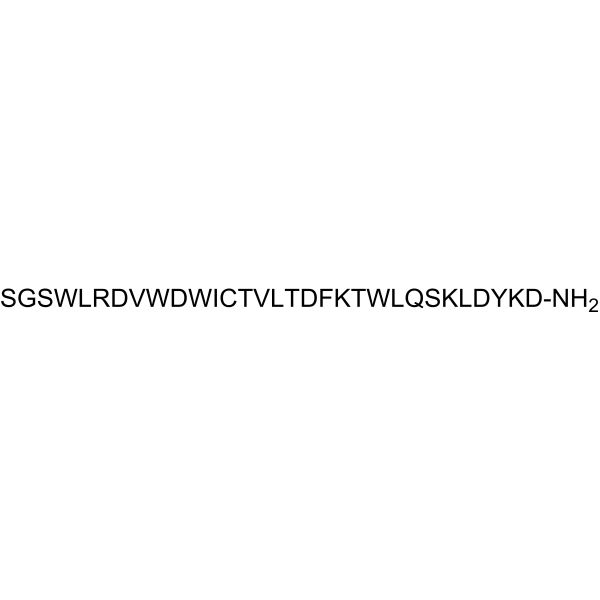
SAH-EZH2, a stable EZH2 α-helical peptide, is an EZH2/EED interaction inhibitor. SAH-EZH2 targets native embryonic ectoderm development (EED), disturbs its interactions with EZH1 and EZH2, and selectively decreases trimethylation of H3K27 .
loading...
    loading...
Cat. No.: HY-P5286
CAS No.: 184870-30-2
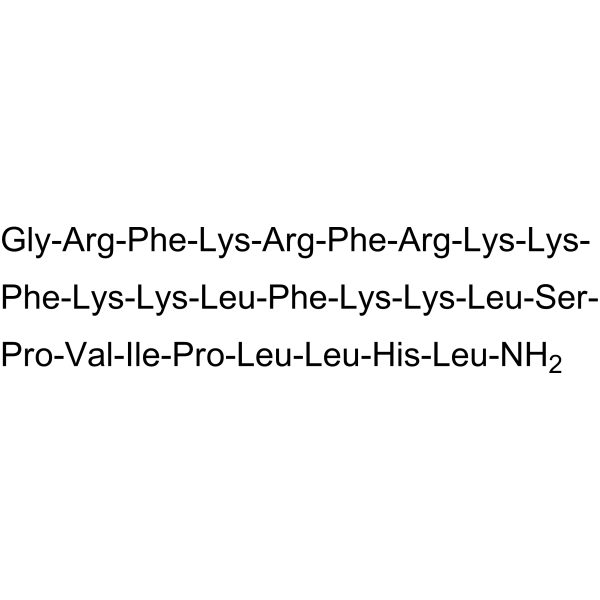
BMAP-27 is a cationic amphipathic α-helical antimicrobial peptide with anticancer activity. BMAP-27 disrupts the integrity and permeability of cell membranes, leading to the leakage of intracellular DNA, proteins and alkaline phosphatase. BMAP-27 increases intracellular ROS levels and reduces plasma endotoxin and TNF-α concentrations. BMAP-27 can be used in studies related to Salmonella infection, breast cancer, lung cancer and obstructive jaundice .
loading...
    loading...
Cat. No.: HY-P10614
CAS No.: 300349-78-4
Target:  

Apoptosis Bcl-2 Family

Research Areas:  

Cancer

Bid BH3 peptide is a pro-apoptotic peptide derived from the Bid protein. Through its α-helical conformation, Bid BH3 peptide inserts into the hydrophobic grooves of anti-apoptotic Bcl-2 family proteins (Bcl-xl, Bcl-2, Bcl-w and Bax), competitively displaces and releases the pro-apoptotic proteins Bax/Bak, thereby initiating mitochondrial outer membrane permeabilization (MOMP) and the caspase cascade for apoptosis. Bid BH3 peptide can be used in cancer-related research .
loading...
    loading...

