1. Search Result
Search Result
Results for "

B/Cdc2

" in MedChemExpress (MCE) Product Catalog:

22

Inhibitors & Agonists

4

Natural
Products

1

Recombinant Proteins

Cat. No. Product Name Target Research Areas Chemical Structure
  • HY-B0294
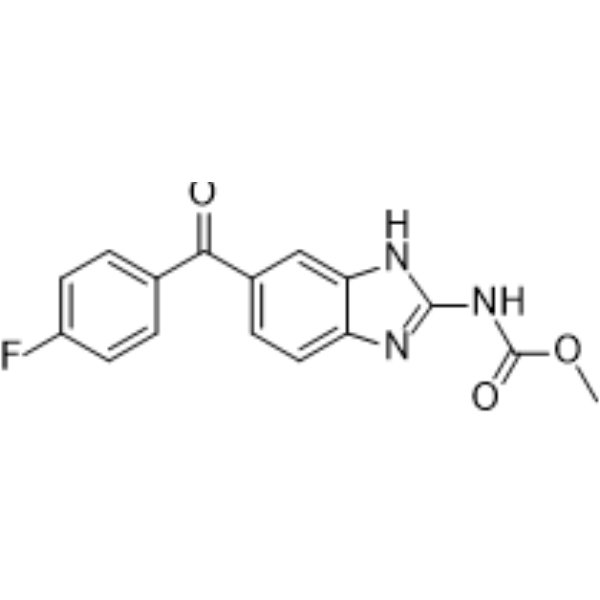
    Flubendazole
    Maximum Cited Publications
    8 Publications Verification

    Parasite Microtubule/Tubulin STAT MDM-2/p53 Apoptosis Autophagy Infection Cancer
    Flubendazole is an anthelmintic drug based on altering microtubule structure, inhibition of tubulin polymerization and disruption of microtubule function. Flubendazole induces apoptosis in human colorectal cancer (CRC) by blocking the STAT3 signaling axis and activation of autophagy. Flubendazole induces P53 expression and reduced Cyclin B1 and p-cdc2 expression. Flubendazole is an antitumor agent. Flubendazole can be used for worm and intestinal parasites .
    Flubendazole
  • HY-172085

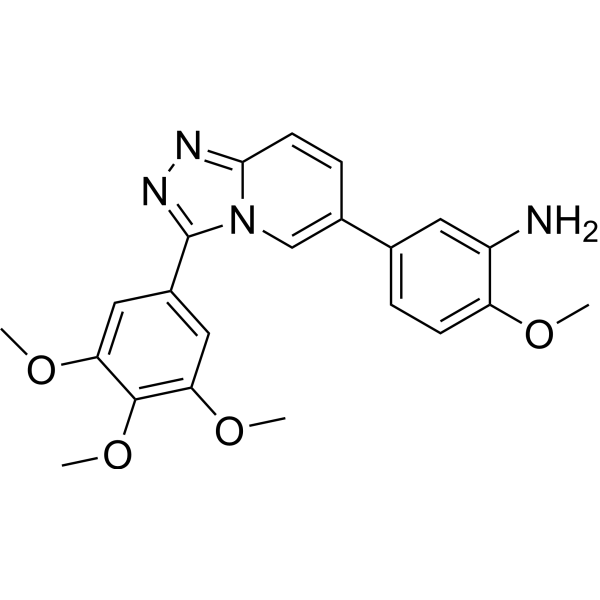
    IFNAR DNA/RNA Synthesis c-Myc CDK Cancer
    SH514 is an orally active IRF4 inhibitor (IC50 = 2.63 μM). SH514 binds to the IRF4-DBD domain, thereby inhibiting the interaction of IRF4 protein with DNA (KD = 1.28 μM). SH514 can inhibit the proliferation of IRF4-high-expressing NCI-H929 and MM.1R cells, and displays no cytotoxicity for normal cells. SH514 significantly downregulates the expression of IRF4 downstream target genes concentration-dependently. SH514 inhibits the expression of cell cycle-related proteins CDC2, Cyclin B1, Cyclin D1, Cyclin E1, and CMYC in Multiple Myeloma cells. SH514 can induce DNA damage and increase the expression of γH2AX. SH514 effectively inhibits the proliferation of multiple myeloma tumors .
    SH514
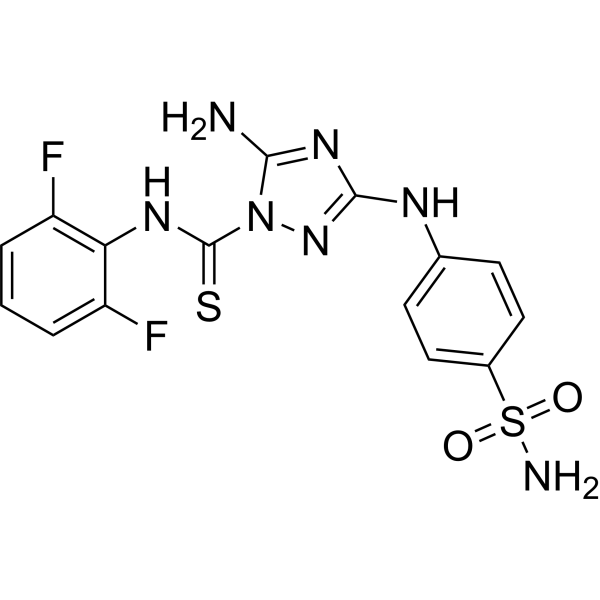
  • HY-112296
    T025
    4 Publications Verification

    CDK Apoptosis DYRK Cancer
    T025 is an orally active and highly potent inhibitor of Cdc2-like kinase (CLKs), with Kd values of 4.8, 0.096, 6.5, 0.61, 0.074, 1.5 and 32 nM for CLK1, CLK2, CLK3, CLK4, DYRK1A, DYRK1B and DYRK2, respectively. T025 induces caspase-3/7-mediated cell apoptosis. T025 reduces CLK-dependent phosphorylation. T025 exerts anti-proliferative activities in both hematological and solid cancer cell lines (IC50 values: 30-300 nM). T025 has an anti-tumor efficiency, mainly for MYC-driven disease research .
    T025
  • HY-N0417
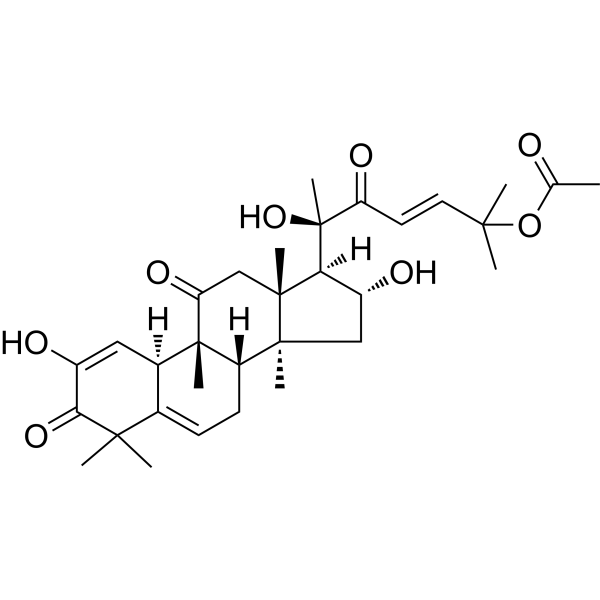
    Cucurbitacin E
    5+ Cited Publications

    α-Elaterin; α-Elaterine

    CDK Autophagy PANoptosis Metabolic Disease Inflammation/Immunology Cancer
    Cucurbitacin E is a CDK1 inhibitor that significantly inhibits the activity of the cyclin B1/CDC2 complex. Cucurbitacin E also induces PANoptosis in adrenocortical carcinoma cells in a ZBP1-dependent manner. Cucurbitacin E exhibits synergistic effects with Mitotane (HY-13690); when used in combination, they effectively eliminate tumors .
    Cucurbitacin E
  • HY-18299A
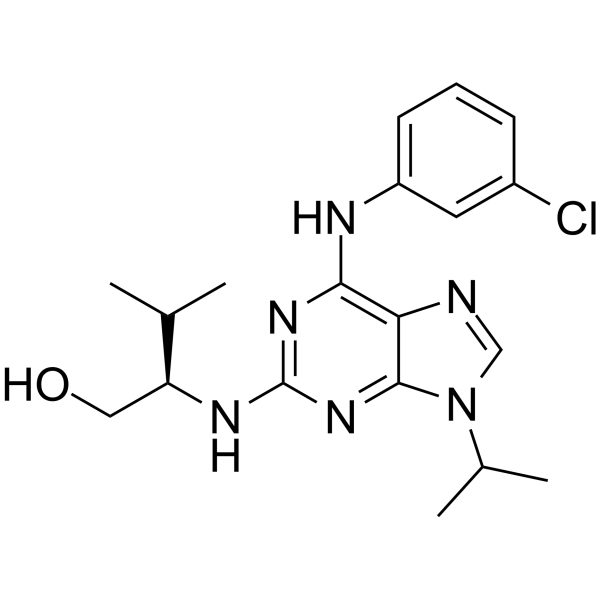
    Purvalanol A
    4 Publications Verification

    NG-60

    CDK Autophagy Apoptosis Cancer
    Purvalanol A is a potent CDK inhibitor, which inhibits cdc2-cyclin B, cdk2-cyclin A, cdk2-cyclin E, cdk4-cyclin D1, and cdk5-p35 with IC50s of 4, 70, 35, 850, 75 nM, resepctively.
    Purvalanol A
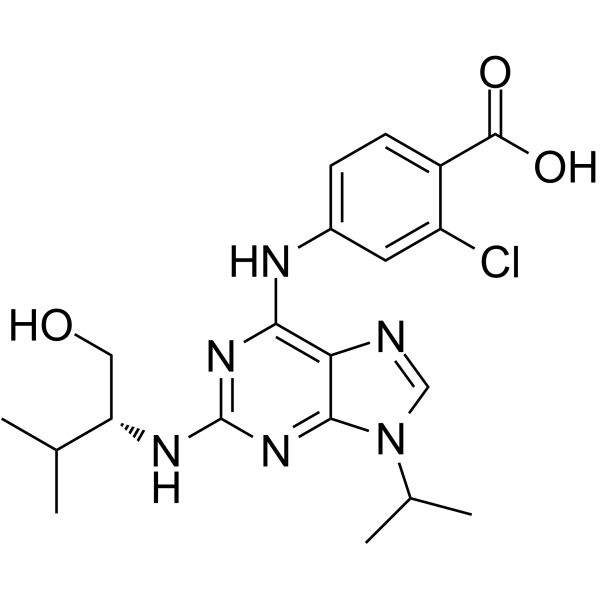
  • HY-18299
    Purvalanol B
    2 Publications Verification

    NG 95

    CDK Parasite Infection Cancer
    Purvalanol B (NG 95) is a potent, selective, reversible and ATP-competitive inhibitor CDK, with IC50s of 6 nM, 6 nM, 9 nM, 6 nM for cdc2-cyclin B, CDK2-cyclin A, CDK2-cyclin E and CDK5-p35, respectively. Purvalanol B shows selectivity for CDK over a range of other protein kinases (IC50>1000 nM). Purvalanol B inhibits the growth a chloroquine-resistant strain of P. falciparum .
    Purvalanol B
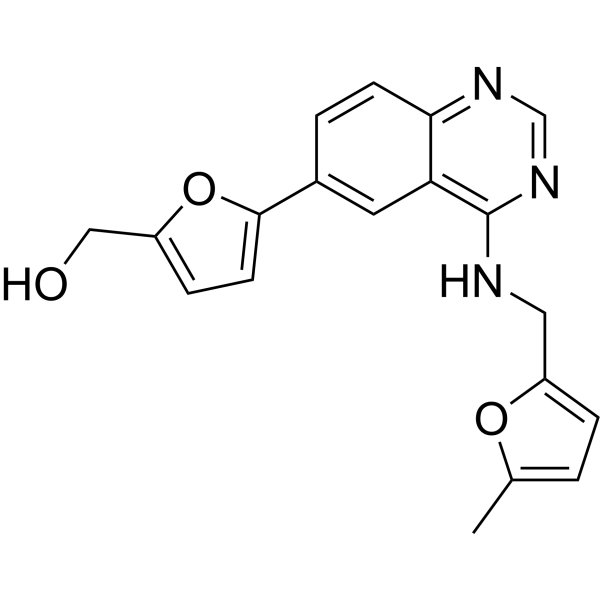
  • HY-15951

    CID44968231; NCGC00188654

    CDK DYRK Cancer
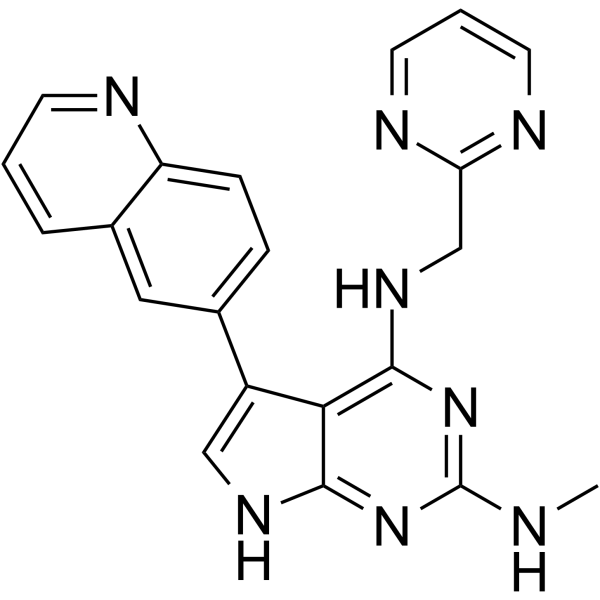
    ML167 is a highly selective Cdc2-like kinase 4 (Clk4) inhibitor with IC50 of 136 nM, >10-fold selectivity for closely related kinases Clk1, Clk2, Clk3 and Dyrk1A/1B .
    ML167
  • HY-103647

    CDK VEGFR GSK-3 Cancer
    K00546 is a potent CDK1 and CDK2 inhibitor with IC50s of 0.6 nM and 0.5 nM for CDK1/cyclin B and CDK2/cyclin A, respectively. K00546 is also a potent CDC2-like kinase 1 (CLK1) and CLK3 inhibitor with IC50s of 8.9 nM and 29.2 nM, respectively .
    K00546
  • HY-W011428
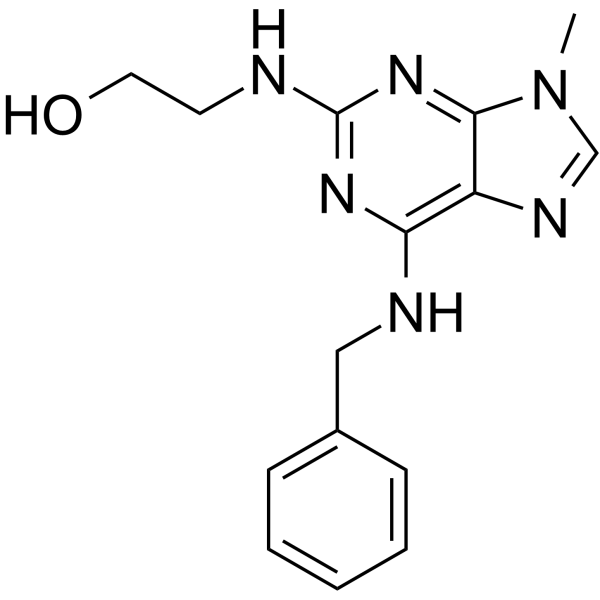
    Olomoucine
    1 Publications Verification

    CDK Others Cancer
    Olomoucine is an ATP competitive inhibitor of CDKs. Olomoucine is a purine (HY-34431) derivative and inhibits CDC2/cyclin B, Cdk2/cyclin A, Cdk2/cyclin E (both IC50=7 μM), CDK/p35 kinase (IC50=3 μM) and ERK1/p44 MAP kinase (IC50=25 μM) . Olomoucine regulates cell cycle and shows anti-melanin tumor activity .
    Olomoucine
  • HY-146817

    Microtubule/Tubulin Apoptosis Cancer
    Tubulin polymerization-IN-11 is a potent tubulin polymerization inhibitor with an IC50 value of 3.4 μM. Tubulin polymerization-IN-11 shows antiproliferative activity. Tubulin polymerization-IN-11 induces Apoptosis and cell cycle arrest at G2/M phase. Tubulin polymerization-IN-11 decreases the expression of cyclin B1, p-cdc2, and Bcl-2 protein levels and increases the expression of cleaved PARP .
    Tubulin polymerization-IN-11
  • HY-B0294R

    Reference Standards Parasite Microtubule/Tubulin STAT MDM-2/p53 Apoptosis Autophagy Infection Cancer
    Flubendazole (Standard) is the analytical standard of Flubendazole. This product is intended for research and analytical applications. Flubendazole is an anthelmintic drug based on altering microtubule structure, inhibition of tubulin polymerization and disruption of microtubule function. Flubendazole induces apoptosis in human colorectal cancer (CRC) by blocking the STAT3 signaling axis and activation of autophagy. Flubendazole induces P53 expression and reduced Cyclin B1 and p-cdc2 expression. Flubendazole is an antitumor agent. Flubendazole can be used for worm and intestinal parasites .
    Flubendazole (Standard)
  • HY-N0417R

    α-Elaterin (Standard); α-Elaterine (Standard)

    Reference Standards CDK Autophagy PANoptosis Cancer
    Cucurbitacin E (Standard) is the analytical standard of Cucurbitacin E. This product is intended for research and analytical applications. Cucurbitacin E is a natural compound which from Cucurbitaceae plants. Cucurbitacin E significantly suppresses the activity of the cyclin B1/CDC2 complex.
    Cucurbitacin E (Standard)
  • HY-W011428R

    Reference Standards CDK Others Cancer
    Olomoucine is an ATP competitive inhibitor of CDKs. Olomoucine is a purine (HY-34431) derivative and inhibits CDC2/cyclin B, Cdk2/cyclin A, Cdk2/cyclin E (both IC50=7 μM), CDK/p35 kinase (IC50=3 μM) and ERK1/p44 MAP kinase (IC50=25 μM) . Olomoucine regulates cell cycle and shows anti-melanin tumor activity .
    Olomoucine (Standard)
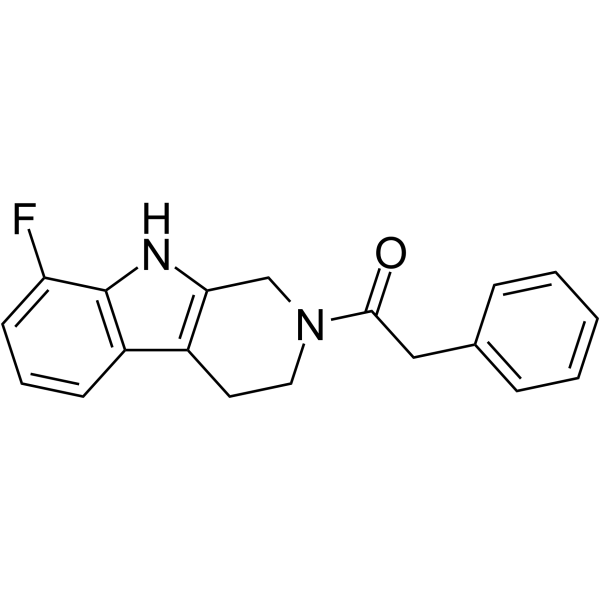
  • HY-175261

    CDK Wee1 Checkpoint Kinase (Chk) Cancer
    DHI1 is an anti-leukemia agent with high selectivity for Jurkat (IC50 = 21.83 μM) and HL-60 (IC50 = 19.14 μM) leukemia cells and has low toxicity to non-cancerous cells. DHI1 can induce G2/M phase cell arrest in Jurkat and HL-60 leukemia cells, as well as S phase arrest in HL-60 cells, and has significant effects on cell cycle signaling molecules Wee1, cyclin B1, cdc2 on Tyr15, and Chk1. DHI1 inhibits the migration and invasion of Jurkat and HL-60 cells by disrupting cytoskeletal actin filaments. DHI1 can be used to study hematological malignancies .
    DHI1
  • HY-150592

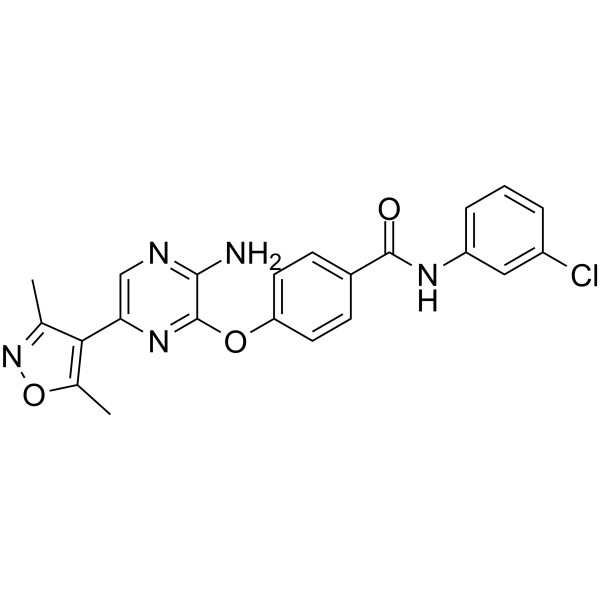
    Aurora Kinase Cancer
    Aurora kinase-IN-2 (compound 12Aj) is a potent Aurora kinase inhibitor with IC50 values of 90 and 152 nM for Aurora A and Aurora B. Aurora kinase-IN-2 arrests cell cycle at G2/M phase by regulating cyclin B1 and cdc2. Aurora kinase-IN-2 can be used for cancer research .
    Aurora kinase-IN-2
  • HY-18299AR

    NG-60 (Standard)

    CDK Autophagy Apoptosis Reference Standards Cancer
    Purvalanol A (Standard) is the analytical standard of Purvalanol A. This product is intended for research and analytical applications. Purvalanol A is a potent CDK inhibitor, which inhibits cdc2-cyclin B, cdk2-cyclin A, cdk2-cyclin E, cdk4-cyclin D1, and cdk5-p35 with IC50s of 4, 70, 35, 850, 75 nM, resepctively.
    Purvalanol A (Standard)
  • HY-119948

    Cyclin G-associated Kinase (GAK) MDM-2/p53 Cancer
    AKCI is a type of AURKC-IκBα interaction inhibitor, with an IC50 value of 24.9 μM. In MDA-MB-231 cells, AKCI can induce G2/M cell cycle arrest by regulating the p53/p21/CDC2/cyclin B1 pathway, inhibit cell migration and invasion, and reduce colony formation and tumor growth. AKCI can be used for research on breast cancer .
    AKCI
  • HY-143660

    Microtubule/Tubulin Apoptosis Cancer
    LG308 is a novel synthetic compound with antimicrotubule activity. LG308 induces mitotic phase arrest and inhibits G2/M progression significantly which is associated with the upregulation of cyclin B1 and mitotic marker MPM-2 and the dephosphorylation of cdc2. LG308 also induces apoptosis and cell death. LG308 significantly suppresses tumor growth. LG308 with antimitotic activity has the potential for the research of prostate cancer .
    LG308
  • HY-103647R

    Reference Standards CDK VEGFR GSK-3 Cancer
    K00546 (Standard) is the analytical standard of K00546 (HY-103647). This product is intended for research and analytical applications. K00546 is a potent CDK1 and CDK2 inhibitor with IC50s of 0.6 nM and 0.5 nM for CDK1/cyclin B and CDK2/cyclin A, respectively. K00546 is also a potent CDC2-like kinase 1 (CLK1) and CLK3 inhibitor with IC50s of 8.9 nM and 29.2 nM, respectively .
    K00546 (Standard)
  • HY-N18301

    ATM/ATR Checkpoint Kinase (Chk) MDM-2/p53 E1/E2/E3 Enzyme CDK Mitosis Reactive Oxygen Species (ROS) Apoptosis Cancer
    Americanin A is a Neolignan. Americanin A can be isolated from the seeds of Phytolacca americana. Americanin A activates ATM and ATR, initiating the subsequent signal transduction cascades that include Chk1, Chk2, and tumor suppressor p53. Americanin A targets selectively Skp2 for degradation and thereby stabilizes p27. Americanin A suppresses the activity of Cyclin B1 and its partner cdc2 to prevent entry into Mitosis. Americanin A induces Apoptosis by producing excessive ROS. Americanin A has anti-cancer activity against colorectal cancer .
    Americanin A
  • HY-N13201

    Apoptosis CDK Cancer
    12-Deoxyphorbol 13-palmitate is a traditional Chinese medicine monomer with antitumor activity that can be isolated from the root of Euphorbia fischeriana. 12-Deoxyphorbol 13-palmitate induces gastric cancer cell cycle arrest and apoptosis by regulating key cell cycle regulators such as cyclin Bcyclin A and CDC2. In addition, 12-Deoxyphorbol 13-palmitate can significantly weaken APOL2–SERCA2–PERK–HES1 signaling and slow liver fibrosis by targeting APOL2 .
    12-Deoxyphorbol 13-palmitate
  • HY-180190

    Microtubule/Tubulin Bcl-2 Family MDM-2/p53 CDK Apoptosis Cancer
    Tubulin polymerization-IN-85 (Compound C21) is a tubulin polymerization inhibitor (IC50 = 1.59 μM) targeting the colchicine binding site. Tubulin polymerization-IN-85 can cause cancer cells G2/M phase arrest and induce apoptosis. Tubulin polymerization-IN-85 downregulates the expression of Bcl-2, Bcl-xl, Mcl-1, Cyclin B1, cdc25, cdc2 protein and upregulates P53, P21, Bad and Bax levels. Tubulin polymerization-IN-85 can be used for the research of cancer, such as cervical cancer .
    Tubulin polymerization-IN-85

Inquiry Online

Your information is safe with us. * Required Fields.

Salutation


Country or Region *

Applicant Name *


Organization Name *

Department *


Email Address *


Product Name *

Cat. No.


Requested quantity *

Phone Number *


Remarks

Inquiry Online

Inquiry Information

Product Name:
Cat. No.:
Quantity:
MCE Japan Authorized Agent:

