13 Results for "

BV2 mouse microglial cells

" in MedChemExpress (MCE) Product Catalog:
Products (13)

13 Results for "BV2 mouse microglial cells" in MCE Product Catalog:

2
2 Cited Publications
Cat. No.: HY-N10424
CAS No.: 600-76-0
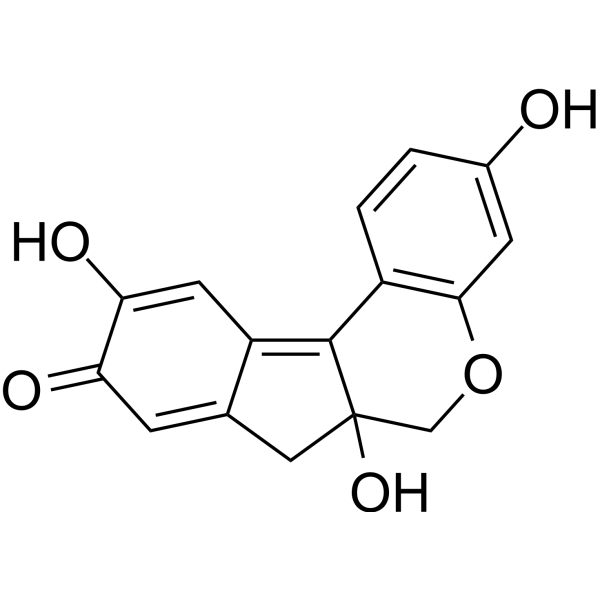
Brazilein is a compound with anti-inflammatory and neuroprotective activities, with an IC50 of 500 μM against guinea pig Na +,K +-ATPase. Brazilein reduces iNOS mRNA expression, thereby inhibiting nitric oxide production in immune cells. Brazilein suppresses inflammatory responses by reducing the mRNA expression of TNF-α and IL-6, but has no effect on IL-1β expression. Brazilein reduces the cerebral infarction volume and improves the neurological function scores of rats with cerebral ischemia-reperfusion injury. Brazilein induces apoptosis of splenic lymphocytes in mice. Brazilein inhibits humoral immune responses in mice, and causes thymus and spleen atrophy as well as body weight loss in mice. Brazilein also possesses antimalarial and antibacterial activities. Brazilein is also a red dye. Brazilein can be used in studies related to the infection, nervous system, cardiovascular system and inflammatory diseases .
loading...
    loading...
Cat. No.: HY-164288
CAS No.: 2287331-29-5
Synonyms: TDI-006570
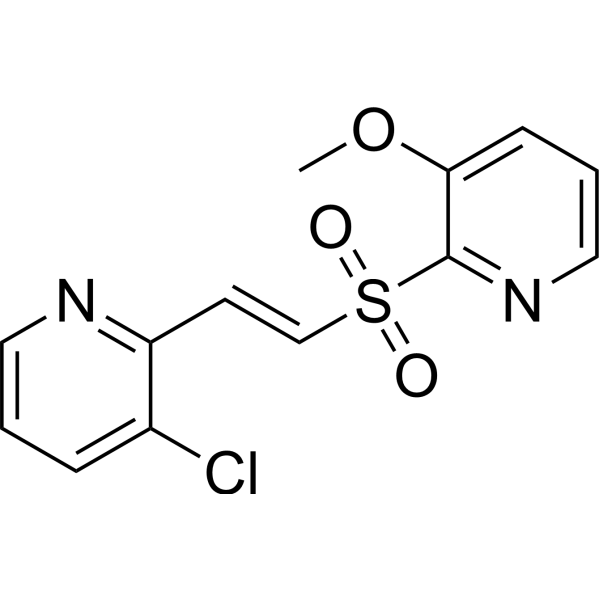
TDI-6570 (TDI-006570) is a blood-brain barrier-permeable, orally active cGAS inhibitor with an IC50 of 1.64 μM. TDI-6570 exhibits high gastrointestinal absorption and a long brain half-life in mice, and shows no toxicity to primary neurons. By inhibiting the cGAS-STING-IFN signaling pathway, TDI-6570 reduces STING levels and the activation of TBK1, blocks double-stranded DNA-induced cGAS activation and downstream interferon-stimulated gene expression, thereby reducing tau protein spread and improving synaptic loss. TDI-6570 reverses memory deficits, increases the amplitude of long-term potentiation, enhances the MEF2C transcriptional network, restores PSD-95 and vGAT punctate structures, and significantly improves cognitive resilience. TDI-6570 can be applied to the research of Alzheimer's disease, Parkinson's disease, systemic lupus erythematosus, as well as various central nervous system and autoimmune diseases .
loading...
    loading...
Cat. No.: HY-N3463
CAS No.: 5835-26-7
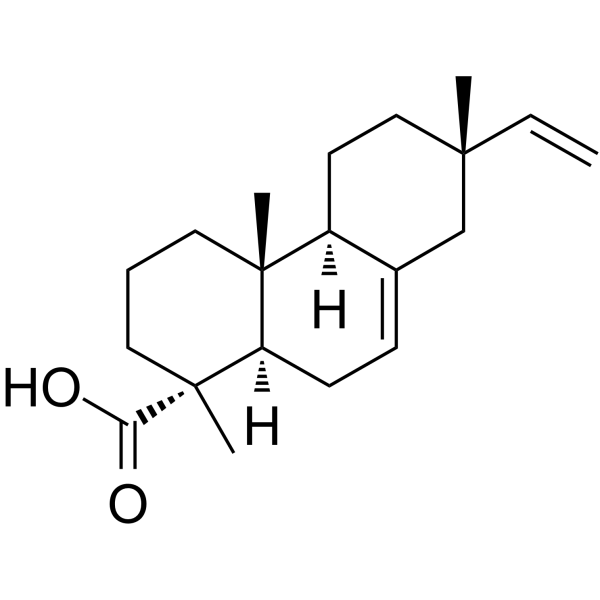
Isopimaric acid is a coniferous tree defense compound. Isopimaric acid binds to AKT and inhibits mTOR phosphorylation, thereby regulating the AKT/mTOR pathway. Isopimaric acid inhibits oxidative stress, inflammation, microglial migration, apoptosis, autophagic flux, ornithine decarboxylase activity, breast cancer proliferation and metastasis, and fungal spore germination. Isopimaric acid also induces M2 microglial polarization, mitochondrial damage, ROS accumulation, starvation-induced colon cancer cell apoptosis, and breast cancer cell cycle arrest. Isopimaric acid activates potassium channels, regulates sodium channels and calcium channels, reduces myocardial excitability, and improves arrhythmia. Isopimaric acid acts as an oxidative substrate for CYP6BW1/3, down-regulates PINK1/Parkin, and regulates calcium homeostasis, oxidative phosphorylation, EMT, and the Wnt pathway. Isopimaric acid exhibits activity against drug-resistant Staphylococcus aureus, repels feeding, and promotes the growth of rice seedlings. Isopimaric acid is suitable for research related to epilepsy, tumors, drug-resistant bacterial infections, atrial fibrillation, hypertension, hyperlipidemia, pulmonary tuberculosis, etc .
loading...
    loading...
Cat. No.: HY-112847B
CAS No.: 1212012-37-7
Synonyms: (E/Z)-Sulfo-N-succinimidyl oleate sodium
(E/Z)-Sulfosuccinimidyl oleate sodium is the racemate of (E)-Sulfosuccinimidyl oleate sodium and (Z)-Sulfosuccinimidyl oleate sodium. Sulfosuccinimidyl oleate sodium (Sulfo-N-succinimidyl oleate sodium) is a long-chain fatty acid that inhibits fatty acid transport into cells. Sulfosuccinimidyl oleate sodium is a potent and irreversible inhibitor of the mitochondrial respiratory chain. Sulfosuccinimidyl oleate sodium binds to the CD36 receptor on the surface of microglial cells. Sulfosuccinimidyl oleate sodium exhibits anti-inflammatory effects .
loading...
    loading...
Cat. No.: HY-177531
CAS No.: 2796227-17-1
S-Ac7-DOG is a cationic lipid with biodegradability, low immunogenicity and high nucleic acid transfection capacity, which is commonly used to construct lipid nanoparticles for nucleic acid molecule delivery. S-Ac7-DOG can bind to mRNA, microRNA and self-amplifying RNA through electrostatic interaction. Lipid nanoparticles formed by S-Ac7-DOG enter cells via an energy-dependent endocytic pathway, release nucleic acid cargos, induce antigen-specific CD8 + T cell responses, promote the generation of precursor memory T cells, and regulate neuroinflammatory pathways. S-Ac7-DOG can be used in the research of retinal diseases, neuroinflammation and cancer .
loading...
    loading...
Cat. No.: HY-155572
Target:  

Keap1-Nrf2

Research Areas:  

Inflammation/Immunology

Nrf2 activator-8 (compound 10e) is a Nrf2 activator (EC50=37.9 nM). Nrf2 activator-8 exhibits remarkable antioxidant and anti-inflammatory effects in BV-2 microglial cells. Nrf2 activator-8 can significantly restore spatial memory deficits in a mouse model of lipopolysaccharide (LPS)-induced neuroinflammation .
loading...
    loading...
Cat. No.: HY-N0894A
CAS No.: 408324-14-1
Synonyms: (3R,5R)-Hexahydrobisdemethoxycurcumin
(3R,5R)-Octahydrocurcumin (Compound 7) is gut microbial metabolite of Curcumin (HY-N0005). (3R,5R)-Octahydrocurcumin exhibits neuroprotective efficacy against Aβ25-35-induced cell damage in SH-SY5Y, and anti-inflammatory activity against LPS-stimulated mouse microglial BV-2 .
loading...
    loading...
Cat. No.: HY-168091
CAS No.: 2585015-90-1
YM-I-26 is a selective NLRP3 inflammasome inhibitor. YM-I-26 enhances the phagocytosis of β-amyloid protein by mouse microglial BV2 cells and inhibits the production of IL-1β and IL-10. YM-I-26 can be used to study the immunomodulatory activity associated with inflammation .
loading...
    loading...
Cat. No.: HY-172598
CAS No.: 3075750-60-3
Synonyms: Keap1-Nrf2-IN-28
SG16 (Keap1-Nrf2-IN-28) is an orally active Keap1-Nrf2 inhibitor. SG16 disrupts the binding of Keap1 to Nrf2, promotes the nuclear translocation of Nrf2, upregulates the downstream antioxidant proteins HO-1 and GCLM, and simultaneously inhibits microglial overactivation and proinflammatory cytokine secretion. By activating the Nrf2 pathway, SG16 can be used in studies on oxidative stress, ischemic stroke and acute liver injury .
loading...
    loading...
Cat. No.: HY-181743
CAS No.: 3124796-49-9
Piezo1 agonist 2 (Compound PD2) is a blood-brain barrier-permeable Piezo1 agonist and Jedi2 (HY-131018) conjugate that utilizes LAT1. Piezo1 agonist 2 releases Jedi2 in mice. Piezo1 agonist 2 can be used for the research of neurodegenerative diseases .
loading...
    loading...
Cat. No.: HY-181612
COX-2/CaV2.2-IN-1 is an orally active and selective dual COX-2/CaV2.2 inhibitor, exhibiting a COX-2 IC50 of 0.26 μM and a CaV2.2 IC50 of 0.29 μM. COX-2/CaV2.2-IN-1 suppresses inflammatory responses and inflammatory mediator (IL-6, TNF-α, NO) production. COX-2/CaV2.2-IN-1 produces pronounced analgesic effects in diverse models of inflammatory, neuropathic, and visceral pain. COX-2/CaV2.2-IN-1 can be used for the research of chronic pain .
loading...
    loading...
Cat. No.: HY-183593
CAS No.: 3027375-00-1
Research Areas:  

Neurological Disease

SHIP1-IN-1 is an orally active, blood-brain barrier-permeable SHIP1 ligand. SHIP1-IN-1 exhibits IC50 values of 384 μM and 177 μM against human SHIP1, and an IC50 value of 379 μM against murine SHIP1. SHIP1-IN-1 alters the binding state of SHIP1 to phosphatidylinositol membranes, and regulates phosphoinositide pools and phosphorylated AKT levels. SHIP1-IN-1 enhances the uptake of myelin/membrane fragments and amyloid proteins by microglia, alters gene expression and reduces IL-1β levels. SHIP1-IN-1 can be used in studies related to Alzheimer's disease .
loading...
    loading...
Cat. No.: HY-W283930
CAS No.: 132858-26-5
YHV98-4 is a selective, blood-brain barrier-permeable Hv1 inhibitor with an IC50 of 0.7 μM. YHV98-4 reduces ROS production and restores the SHP-1-pAKT signaling pathway. YHV98-4 decreases the spread of hyperphosphorylated Tau protein. YHV98-4 alleviates inflammation and produces analgesic effects. YHV98-4 improves cognitive function in mouse models of Alzheimer's disease. YHV98-4 can be used in research related to inflammatory pain, neuropathic pain and Alzheimer's disease .
loading...
    loading...
  • 1

