14 Results for "

Bladder pain

" in MedChemExpress (MCE) Product Catalog:
Products (14)

14 Results for "Bladder pain" in MCE Product Catalog:

2
2 Cited Publications
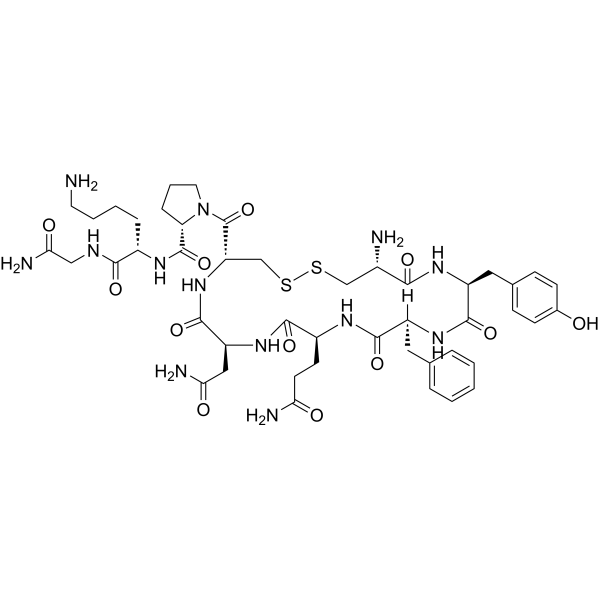
Cat. No.: HY-P0004
CAS No.: 50-57-7
Synonyms: Lysine vasopressin; [Lys8]-Vasopressin
Lysipressin (Lysine vasopressin ; [Lys8]-Vasopressin ) is a neurohypophyseal nonapeptide with dual cardiovascular regulatory activities of peripheral pressor action and central hypotensive action, and it also regulates pain perception in the body. Lysipressin is an Oxytocin Receptor agonist, with a Ki value of 10.2 nM for porcine OT receptor. Lysipressin stimulates contraction of rabbit bladder smooth muscle via V1-vasopressin receptor. The central hypotensive effect of Lysipressin depends on the sympathetic tone pathway. Lysipressin dose-dependently prolongs tail-flick latency in rats, producing a stable central antinociceptive effect. Lysipressin can be used in studies related to cardiovascular regulation, hypertension and pain .
loading...
    loading...
2
2 Cited Publications
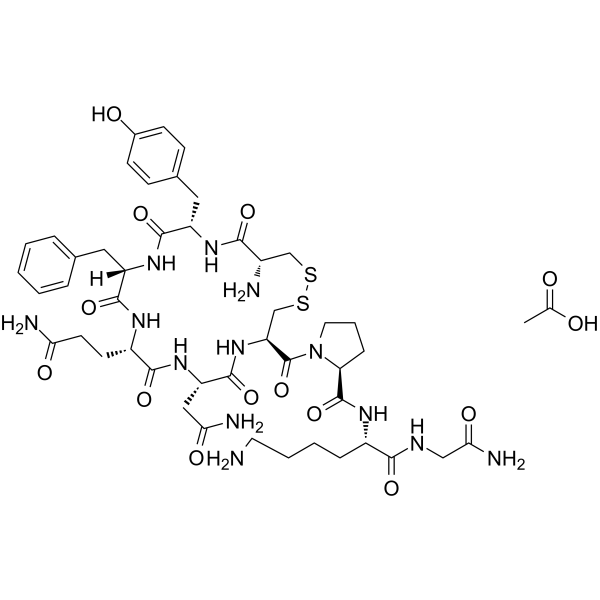
Cat. No.: HY-P0004A
CAS No.: 83968-49-4
Synonyms: Lysine vasopressin acetate; [Lys8]-Vasopressin acetate
Lysipressin acetate (Lysine vasopressin acetate; [Lys8]-Vasopressin acetate) is a neurohypophyseal nonapeptide with dual cardiovascular regulatory activities of peripheral pressor action and central hypotensive action, and it also regulates pain perception in the body. Lysipressin acetate is an Oxytocin Receptor agonist, with a Ki value of 10.2 nM for porcine OT receptor. Lysipressin acetate stimulates contraction of rabbit bladder smooth muscle via V1-vasopressin receptor. The central hypotensive effect of Lysipressin acetate depends on the sympathetic tone pathway. Lysipressin acetate dose-dependently prolongs tail-flick latency in rats, producing a stable central antinociceptive effect. Lysipressin acetate can be used in studies related to cardiovascular regulation, hypertension and pain .
loading...
    loading...
1
1 Cited Publications
Cat. No.: HY-N5084
CAS No.: 205370-59-8
Pinocembrin 7-O-[3''-O-galloyl-4'',6''-hexahydroxydiphenoyl]-β-D-glucoside is a TRPV1 antagonist and HDAC7 inhibitor. Pinocembrin 7-O-[3''-O-galloyl-4'',6''-hexahydroxydiphenoyl]-β-D-glucoside blocks TRPV1-mediated calcium influx, suppresses phosphorylation of p65, IκBα, p38, JNK, and ERK1/2, inhibiting NF-κB and MAPK signaling cascades. Pinocembrin 7-O-[3''-O-galloyl-4'',6''-hexahydroxydiphenoyl]-β-D-glucoside reduces production and gene expression of pro-inflammatory cytokines IL-1β, IL-6, and TNF-α. Pinocembrin 7-O-[3''-O-galloyl-4'',6''-hexahydroxydiphenoyl]-β-D-glucoside exhibits potent analgesic activity, elevates thermal pain threshold and mechanical pain threshold in murine models. Pinocembrin 7-O-[3''-O-galloyl-4'',6''-hexahydroxydiphenoyl]-β-D-glucoside restores CD8 + T cell infiltration into bladder cancer tumors and improves bladder cancer immunotherapy efficacy. Pinocembrin 7-O-[3''-O-galloyl-4'',6''-hexahydroxydiphenoyl]-β-D-glucoside can be used for the researches of painand bladder cancer .
loading...
    loading...
1
1 Cited Publications
Cat. No.: HY-17509
CAS No.: 169590-41-4
Synonyms: SC 046; SC 46; SC 59046
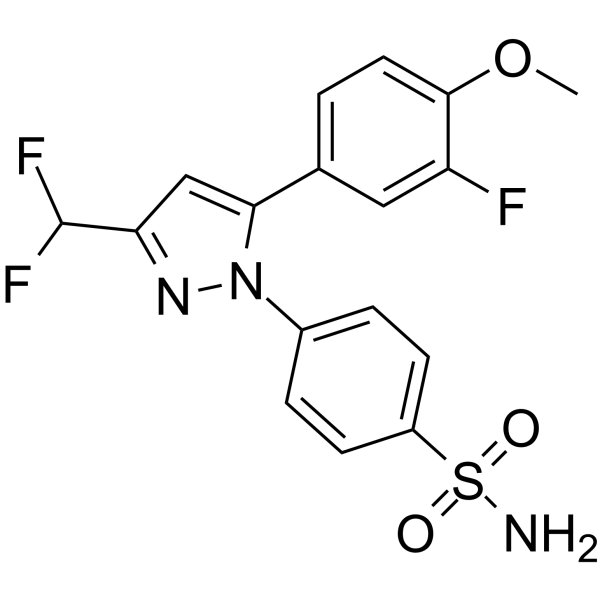
Deracoxib (SC 046; SC 59046), an orally active COX-2 inhibitor, is a veterinary nonsteroidal anti-inflammatory agent used exclusively in dogs. Deracoxib inhibits the COX-2 enzyme to reduce the production of prostaglandins, effectively controlling pain and inflammation after canine soft tissue surgery. Deracoxib reduces the inhibition of COX-1 and lowers the risk of gastrointestinal side effects. Deracoxib induces tumor cell cycle arrest and apoptosis, and shows anti-tumor activity in canine osteosarcoma, breast tumors and bladder transitional cell carcinomas .
loading...
    loading...
Cat. No.: HY-N2571
CAS No.: 476-69-7
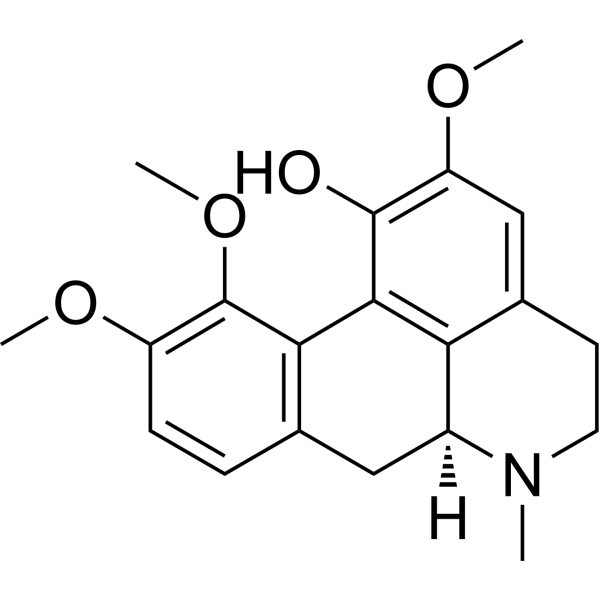
Corydine is a HIV-1 reverse transcriptase inhibitor and μ-opioid receptor (MOR) agonist, with an IC50 of 356.7 μg/mL against HIV-1 reverse transcriptase, an EC50 of 0.51 μM for MOR, and a Ki of 2.82 μM for MOR. Corydine produces antinociceptive effects by inhibiting acetic acid-induced writhing behavior in a MOR-dependent manner. Corydine inhibits the proliferation of cancer cells, mitogen-stimulated lymphocytes and IL-2-dependent cells. Corydine can be used in studies related to human immunodeficiency virus infection, visceral pain, leukemia, melanoma, bladder cancer and colon adenocarcinoma .
loading...
    loading...
Cat. No.: HY-108960
CAS No.: 149017-66-3
Research Areas:  

Neurological Disease

PPADS is a P2X receptor (P2X Receptor) antagonist and a reversible competitive antagonist of NAADP receptors, with IC50 values of 68 nM (P2X1) and 214 nM (P2X3), respectively. PPADS alleviates pain-related behaviors in the central and peripheral nervous systems of mice after peripheral neuropathy, inhibits the overproduction of IL-1β, IL-6, iNOS and nNOS, and suppresses the hydrolytic activity of extracellular ATPase. PPADS blocks ATP-mediated inward currents on recombinant rat P2X1 and P2X3 receptors, and inhibits purinergic nerve stimulation-induced contraction of rabbit bladder detrusor muscle. PPADS is applicable to research related to neuropathic pain .
loading...
    loading...
Cat. No.: HY-17509S
CAS No.: 2012598-48-8
Synonyms: SC 046-d3; SC 46-d3; SC 59046-d3
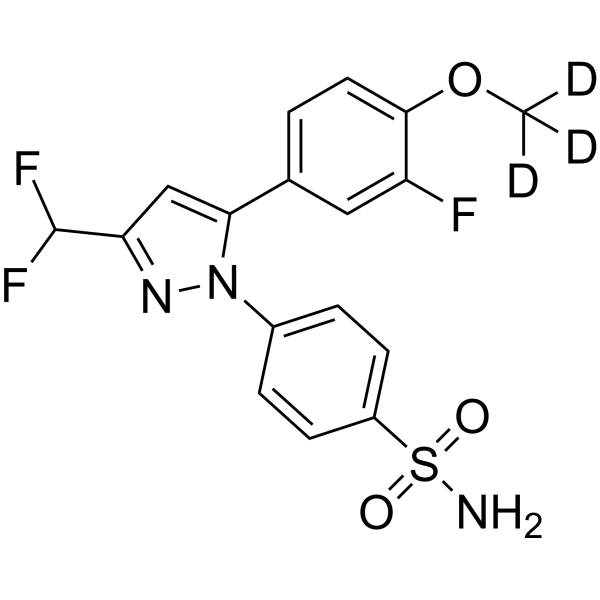
Deracoxib-d3 (SC 046-d3; SC 59046-d3) is the deuterium labeled Deracoxib (HY-17509). Deracoxib, an orally active COX-2 inhibitor, is a veterinary nonsteroidal anti-inflammatory agent used exclusively in dogs. Deracoxib inhibits the COX-2 enzyme to reduce the production of prostaglandins, effectively controlling pain and inflammation after canine soft tissue surgery. Deracoxib reduces the inhibition of COX-1 and lowers the risk of gastrointestinal side effects. Deracoxib induces tumor cell cycle arrest and apoptosis, and shows anti-tumor activity in canine osteosarcoma, breast tumors and bladder transitional cell carcinomas.
loading...
    loading...
Cat. No.: HY-110198
CAS No.: 459841-96-4
Research Areas:  

Inflammation/Immunology

ONO-8130 is an orally active and selective prostanoid EP1 receptor antagonist. ONO-8130 blocks phosphorylation of ERK in the L6 spinal cord. ONO-8130 relieves bladder pain in mice with cyclophosphamide-induced cystitis. ONO-8130 can be used for interstitial cystitis research .
loading...
    loading...
Cat. No.: HY-161682
CAS No.: 2654791-96-3
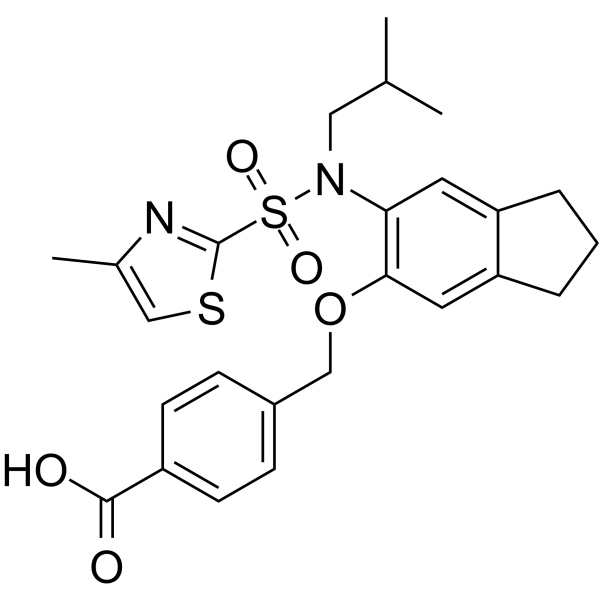
GPR84 antagonist 9 is an orally active GPR84 antagonist with an IC50 value of 12 nM. By antagonizing the GPR84 receptor, GPR84 antagonist 9 blocks immune cell migration, M1 polarization, and the release of inflammatory factors (IL1β/TNFα) induced by medium-chain free fatty acids (MCFFAs) and other substances, thereby comprehensively inhibiting inflammatory and fibrotic responses. GPR84 antagonist 9 can be used in the research of inflammation-driven pain disorders, including neuropathic pain disorders, Fabry disease, gout, and bladder pain syndrome .
loading...
    loading...
Cat. No.: HY-169115
CAS No.: 313651-33-1
Target:  

Calcium Channel

Research Areas:  

Inflammation/Immunology

PD-0299685 is a potent Ca 2+ channel α2δ ligand. PD-0299685 is promising for research of refractory genito-urinary pain and interstitial cystitis/bladder pain syndrome .
loading...
    loading...
Cat. No.: HY-P0004R
CAS No.: 50-57-7
Synonyms: Lysine vasopressin (Standard); [Lys8]-Vasopressin (Standard)
Lysipressin (Standard) is the analytical standard of Lysipressin (HY-P0004). This product is intended for research and analytical applications. Lysipressin (Lysine vasopressin ; [Lys8]-Vasopressin ) is a neurohypophyseal nonapeptide with dual cardiovascular regulatory activities of peripheral pressor action and central hypotensive action, and it also regulates pain perception in the body. Lysipressin is an Oxytocin Receptor agonist, with a Ki value of 10.2 nM for porcine OT receptor. Lysipressin stimulates contraction of rabbit bladder smooth muscle via V1-vasopressin receptor. The central hypotensive effect of Lysipressin depends on the sympathetic tone pathway. Lysipressin dose-dependently prolongs tail-flick latency in rats, producing a stable central antinociceptive effect. Lysipressin can be used in studies related to cardiovascular regulation, hypertension and pain .
loading...
    loading...
Cat. No.: HY-17509R
CAS No.: 169590-41-4
Synonyms: SC 046 (Standard); SC 46 (Standard); SC 59046 (Standard)
Deracoxib (SC 046; SC 59046) (Standard) is the analytical standard of Deracoxib (HY-17509). This product is intended for research and analytical applications. Deracoxib, an orally active COX-2 inhibitor, is a veterinary nonsteroidal anti-inflammatory agent used exclusively in dogs. Deracoxib inhibits the COX-2 enzyme to reduce the production of prostaglandins, effectively controlling pain and inflammation after canine soft tissue surgery. Deracoxib reduces the inhibition of COX-1 and lowers the risk of gastrointestinal side effects. Deracoxib induces tumor cell cycle arrest and apoptosis, and shows anti-tumor activity in canine osteosarcoma, breast tumors and bladder transitional cell carcinomas
loading...
    loading...
Cat. No.: HY-W703540
CAS No.: 1794780-24-7
Synonyms: SC 046-d4; SC 46-d4; SC 59046-d4
Deracoxib-d4 (SC 046-d4; SC 59046--d4) is deuterium labeled Deracoxib (HY-17509). Deracoxib, an orally active COX-2 inhibitor, is a veterinary nonsteroidal anti-inflammatory agent used exclusively in dogs. Deracoxib inhibits the COX-2 enzyme to reduce the production of prostaglandins, effectively controlling pain and inflammation after canine soft tissue surgery. Deracoxib reduces the inhibition of COX-1 and lowers the risk of gastrointestinal side effects. Deracoxib induces tumor cell cycle arrest and apoptosis, and shows anti-tumor activity in canine osteosarcoma, breast tumors and bladder transitional cell carcinomas.
loading...
    loading...
Cat. No.: HY-183056
P2X3 antagonist 40 is a P2X3 antagonist with a human P2X3 receptor pIC50 < 4.52. P2X3 antagonist 40 can be used for research on ATP-mediated proinflammatory fingerprint, including overactive bladder, pain, and chronic cough .
loading...
    loading...
  • 1