
4 Results for "

C-terminal segment

" in MedChemExpress (MCE) Product Catalog:
Products (4)

4 Results for "C-terminal segment" in MCE Product Catalog:

Cat. No.: HY-W140249
CAS No.: 112173-48-5
Target:  

Peptides

Research Areas:  

Cardiovascular Disease

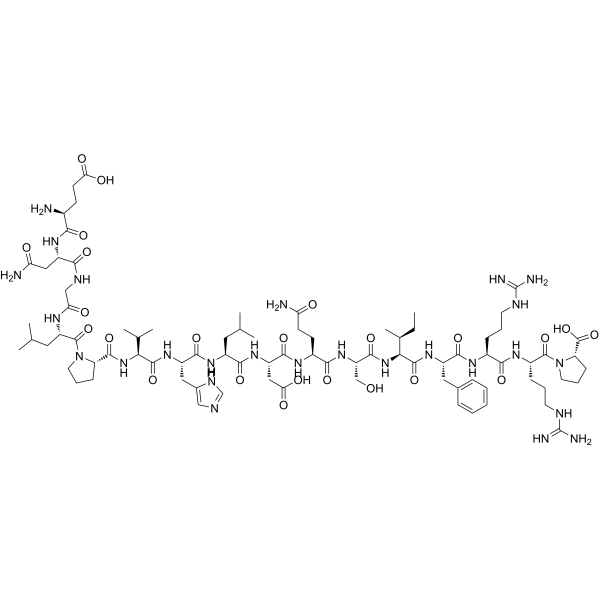
Angiogenin Fragment (108-123) is a C-terminal segment 108-123 of Angiogenin that inhibits the enzymatic and biological activities of Angiogenin .
loading...
    loading...
Cat. No.: HY-P1817
CAS No.: 144025-82-1
Target:  

PACAP Receptor

Research Areas:  

Cardiovascular Disease

PACAP-38 (16-38), human, mouse, rat is a peptide fragment encompassing the C-terminal 16-38 segment of PACAP (1-38), human, ovine, rat (HY-P0221). PACAP-38 (16-38), human, mouse, rat lacks the N-terminal 1-15 receptor activation core, but retains the ability to bind to the PAC/VPAC receptor family (PAC1/VPAC1/VPAC2 receptor). PACAP-38 (16-38), human, mouse, rat promotes histamine release and exerts a certain degree of hypotensive effect .
loading...
    loading...
Cat. No.: HY-P5519
CAS No.: 77568-41-3
Target:  

Peptides

Research Areas:  

Others

[Thr28, Nle31]-Cholecystokinin (25-33) is a biological active peptide. (Cholecystokinin (CCK) acts both as a hormone and a neurotransmitter and is found in the GI system and the central nervous system. It is a satiety peptide that inhibits food intake.This Cholecystokinin (CCK) analog retains all the bioactivities of CCK8, but was found to be remarkably more stable in acidic media and unaffected by air oxidation due to Met replacements (Thr 28 and Nle31 were substituted for Methionine). The predominant conformation contains a gamma-turn centered on Thr4, separated by Gly5 from a helical segment that comprises the C-terminal residues.)
loading...
    loading...
Cat. No.: HY-P1817A
Target:  

PACAP Receptor

Research Areas:  

Cardiovascular Disease

PACAP-38 (16-38), human, mouse, rat acetate is a peptide fragment encompassing the C-terminal 16-38 segment of PACAP (1-38), human, ovine, rat (HY-P0221). PACAP-38 (16-38), human, mouse, rat acetate lacks the N-terminal 1-15 receptor activation core, but retains the ability to bind to the PAC/VPAC receptor family (PAC1/VPAC1/VPAC2 receptor). PACAP-38 (16-38), human, mouse, rat acetate promotes histamine release and exerts a certain degree of hypotensive effect .
loading...
    loading...

