1. Search Result
Search Result
Results for "

CAPAN-1

" in MedChemExpress (MCE) Product Catalog:

31

Inhibitors & Agonists

1

Biochemical Assay Reagents

1

Peptides

1

Inhibitory Antibodies

Cat. No. Product Name Target Research Areas Chemical Structure
  • HY-101570
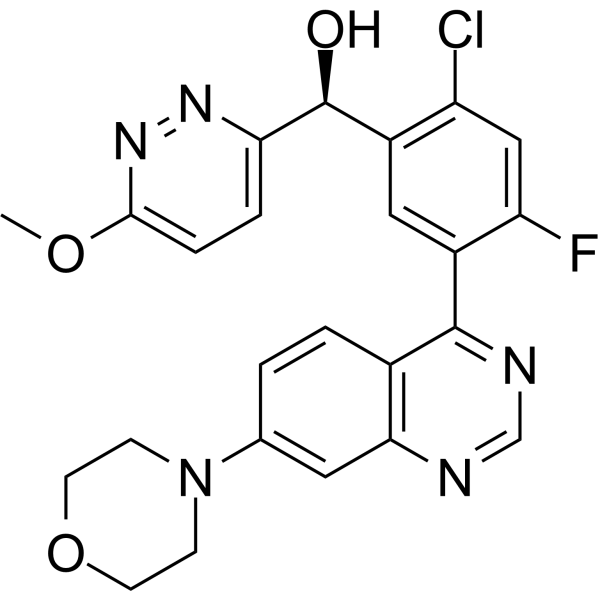
    Nedisertib
    25+ Cited Publications

    Peposertib; M3814

    DNA-PK BCRP Cancer
    Nedisertib (Peposertib) is an orally active selective DNA-dependent protein kinase (DNA-PK) inhibitor with an IC50 value of less than 3 nM. Nedisertib also acts as a modulator of ABCG2, capable of reversing ABCG2-mediated multidrug resistance (MDR), thus providing new strategies for combination therapy. By inhibiting DNA double-strand break repair, Nedisertib can enhance the efficacy of chemotherapy and radiotherapy. Nedisertib exhibits antitumor activity [1] .
    Nedisertib
  • HY-10617A
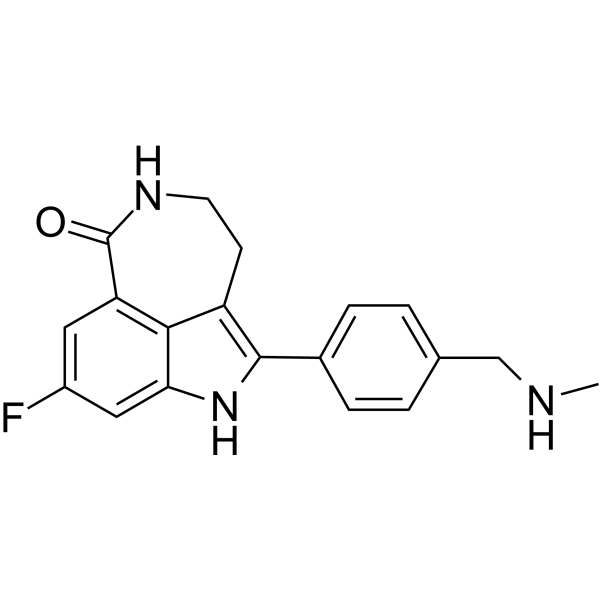
    Rucaparib
    Maximum Cited Publications
    47 Publications Verification

    AG014699; PF-01367338

    PARP Cancer
    Rucaparib (AG014699) is an orally active, potent inhibitor of PARP proteins (PARP-1, PARP-2 and PARP-3) with a Ki of 1.4 nM for PARP1. Rucaparib is a modest hexose-6-phosphate dehydrogenase (H6PD) inhibitor. Rucaparib has the potential for castration-resistant prostate cancer (CRPC) research [1] .
    Rucaparib
  • HY-173629

    Ras Apoptosis Cancer
    RMC-5127 is a small molecule inhibitor that binds to GTP-targeted KRAS G12V, with oral bioavailability and blood-brain barrier permeability. RMC-5127 inhibits the activities of the RAS and MAPK pathways, suppresses the proliferation of KRAS G12V-mutant cancer cells and induces their apoptosis. RMC-5127 can be used for the research of KRAS G12V-mutant non-small cell lung cancer, pancreatic ductal adenocarcinoma, colorectal cancer and intracranial KRAS G12V tumors [1].
    RMC-5127
  • HY-10617
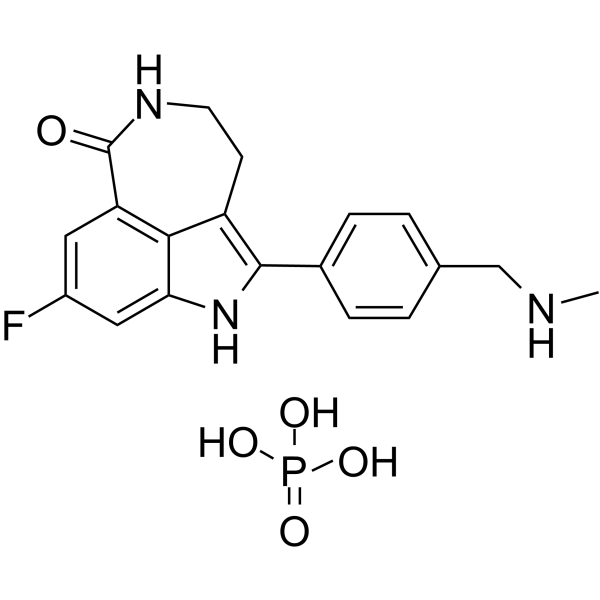
    Rucaparib phosphate
    45+ Cited Publications

    AG-014699 phosphate; PF-01367338 phosphate

    PARP Cancer
    Rucaparib (AG014699) phosphate is an orally active, potent inhibitor of PARP proteins (PARP-1, PARP-2 and PARP-3) with a Ki of 1.4 nM for PARP1. Rucaparib phosphate is a modest hexose-6-phosphate dehydrogenase (H6PD) inhibitor. Rucaparib phosphate has the potential for castration-resistant prostate cancer (CRPC) research [1] .
    Rucaparib phosphate
  • HY-139156
    SK-575
    5 Publications Verification

    PROTACs PARP Cancer
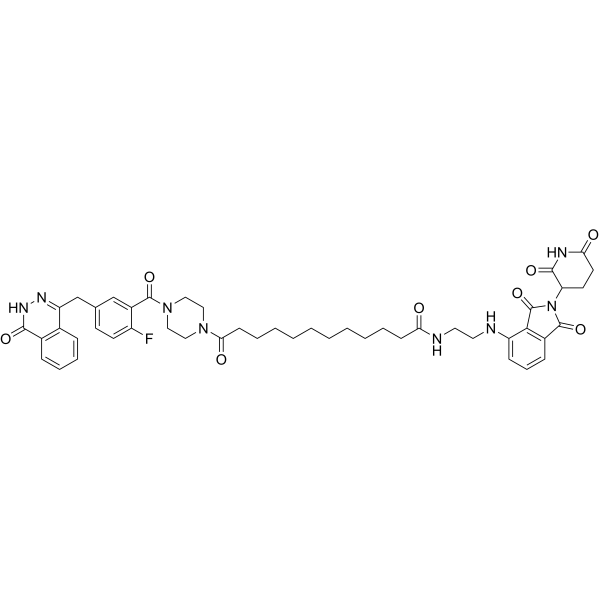
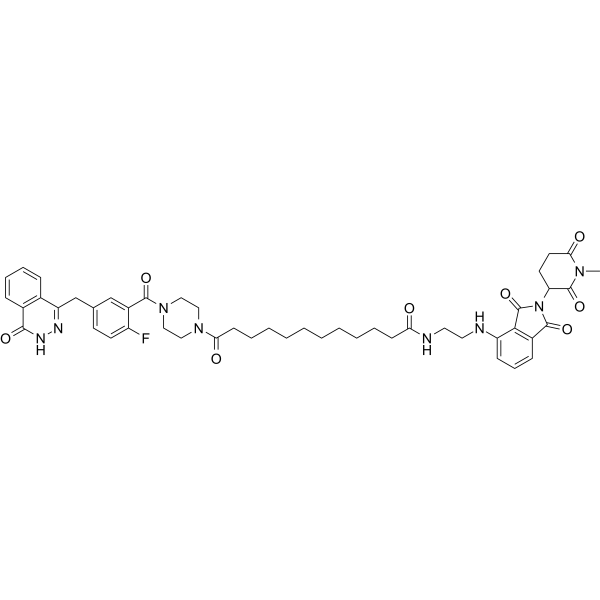
    SK-575 is a highly potent and specific proteolysis-targeting chimera (PROTAC) degrader of PARP1, with an IC50 of 2.30 nM. SK-575 potently inhibits the growth of cancer cells bearing BRCA1/2 mutations [1].
    SK-575
  • HY-164899

    2-aminopyridine-3-carboxylic acid imidazolide

    Transmembrane Glycoprotein Cancer
    2A3 (2-aminopyridine-3-carboxylic acid imidazolide) is a T cell activator that specifically binds to CEACAM6 and CEACAM5. 2A3 exhibits enzymatic activity that catalyzes the glucuronidation of specific substrates (e.g., 1-naphthol), and possesses significant cytotoxic activity. When integrated into CAR T cells or used alone, 2A3 acts by inducing cytokine release, degranulation, and direct cytotoxicity. 2A3 kills pancreatic and breast cancer cells with high target antigen expression in vitro, and significantly inhibits the growth of pancreatic cancer xenografts in vivo. 2A3 broadly targets malignant tumors with overexpressed CEACAM5, CEACAM6, or co-expressed both, and shows high expression mainly in tissues such as the liver and colon. 2A3 serves as an important research tool for the immunotherapy of pancreatic and breast cancer [1] . 2A3 is a novel SHAPE reagent, which can be used for the analysis of RNA structure both in vitro and in vivo . 2A3 is an electrophilic chemical probe that acylates the 2'-OH in the RNA backbone. 2A3 can be used for RNA SHAPE-MaP experiments and is capable of analyzing the RNA secondary structures at single nucleotide resolution.
    2A3
  • HY-102003
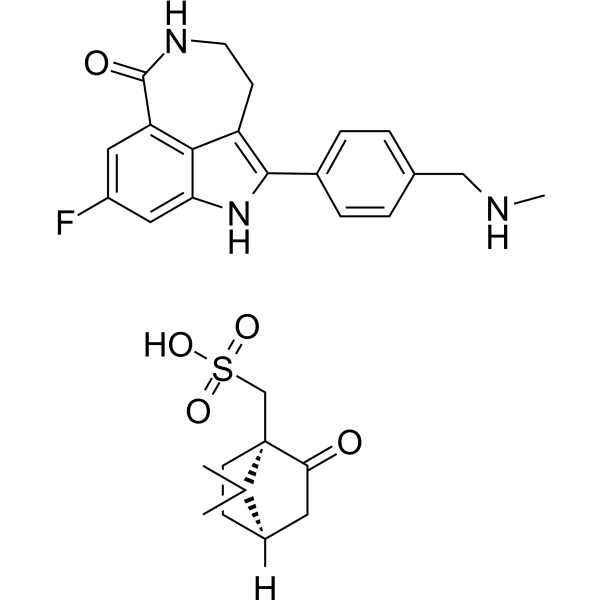
    Rucaparib monocamsylate
    35+ Cited Publications

    AG014699 monocamsylate; PF-01367338 monocamsylate

    PARP Cancer
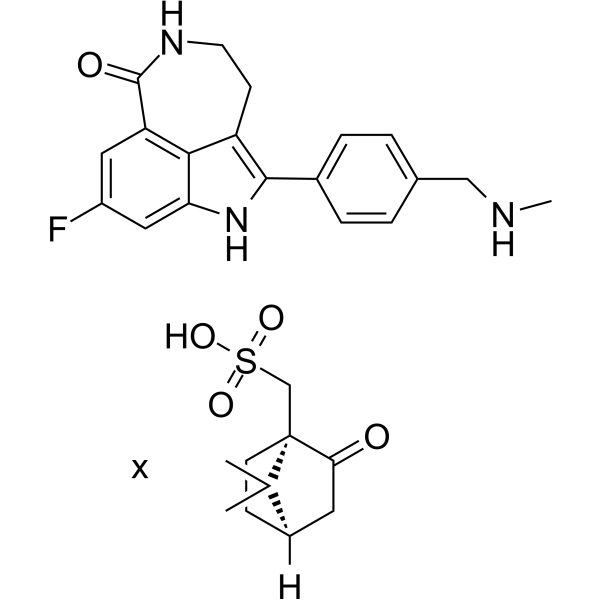
    Rucaparib (AG014699) monocamsylate is an orally active, potent inhibitor of PARP proteins (PARP-1, PARP-2 and PARP-3) with a Ki of 1.4 nM for PARP1. Rucaparib monocamsylate is a modest hexose-6-phosphate dehydrogenase (H6PD) inhibitor. Rucaparib monocamsylate has the potential for castration-resistant prostate cancer (CRPC) research [1] .
    Rucaparib monocamsylate
  • HY-W250574

    NOTA-bis(t-Butyl ester)

    Biochemical Assay Reagents Radionuclide-Drug Conjugates (RDCs) Drug Derivative Cancer
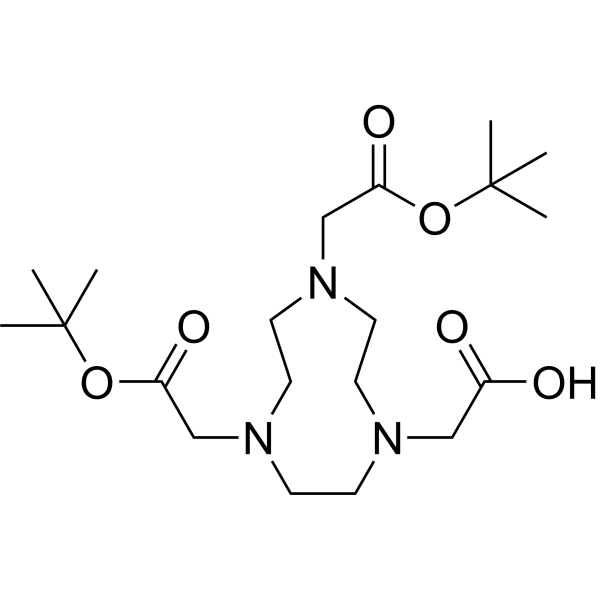
    NOTA-bis (tBu) ester is a derivative of NOTA (HY-134418). NOTA-bis (tBu) ester is radiolabeled with 68Ga to form ZD2-( 68Ga-NOTA) after conjugation with ZD2. ZD2-( 68Ga-NOTA) can be used for PET imaging studies of pancreatic cancer [1].
    NOTA-bis(tBu)ester
  • HY-159480

    Src ATM/ATR Apoptosis mTOR AMPK Cancer
    AD1058 is an orally active, selective, and BBB-permeable inhibitor of ATR (IC50: 1.6 nM). AD1058 exhibits anticancer activity by inhibiting tumor cell proliferation, inducing cell cycle arrest, and promoting apoptosis. AD1058 is suitable for research on advanced malignancies and brain metastases [1].
    AD1058
  • HY-155993

    PARP Cancer
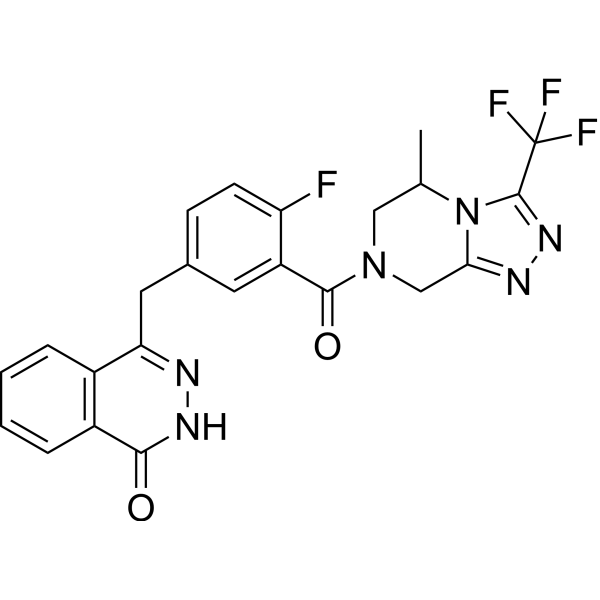
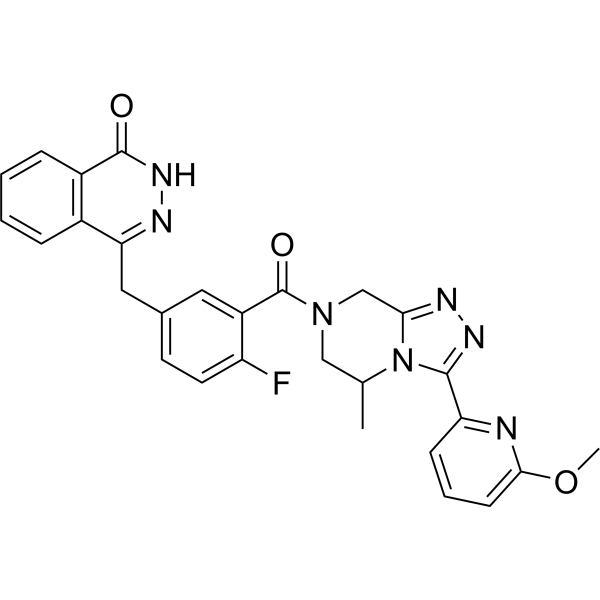
    YCH1899 is an orally active PARP inhibitor, with an IC50< 0.001 nM for PARP1/2. YCH1899 exhibits distinct antiproliferation activity against Olaparib (HY-10162)-resistant and Talazoparib (HY-16106)-resistant Capan-1 cells (Capan-1/OP and Capan-1/TP cells) , with IC50 values of 0.89 and 1.13 nM, respectively. YCH1899 has acceptable pharmacokinetic properties in rats [1].
    YCH1899
  • HY-115552

    PARP Cancer
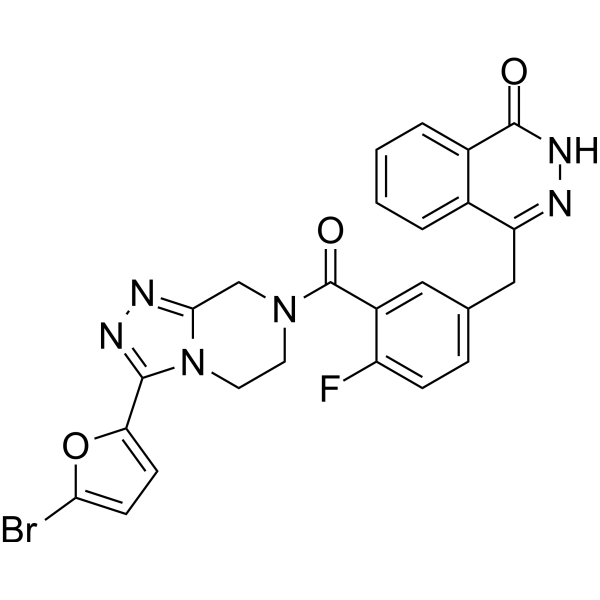
    Simmiparib is a highly potent and orally active PARP1 and PARP2 inhibitor with IC50 values of 1.75 nM and 0.22 nM, respectively. Simmiparib has more potent PARP1/2 inhibition than its parent Olaparib (HY-10162). Simmiparib induces DNA double-strand breaks (DSB) accumulation and G2/M arrest in homologous recombination repair (HR)-deficient cells, thereby inducing apoptosis. Simmiparib exhibits remarkable anticancer activities in cells and nude mice bearing xenografts [1].
    Simmiparib
  • HY-108436

    Phosphodiesterase (PDE) Cancer
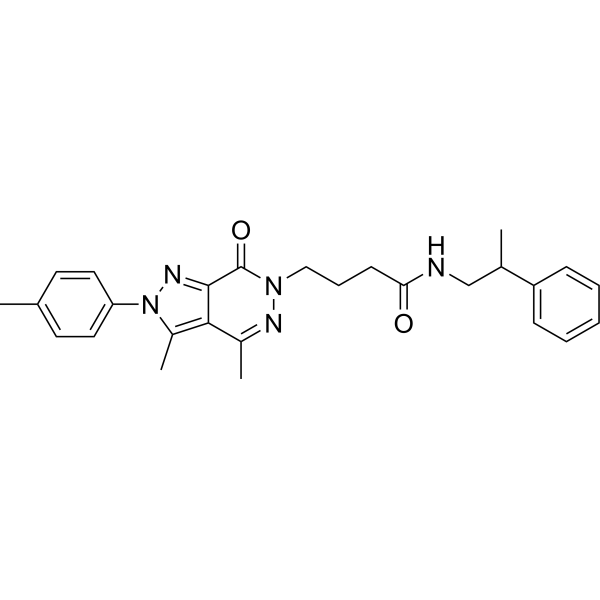
    Deltazinone 1, a pyrazolopyridazinone, is a highly selective PDEδ inhibitor with a KD of 8 nM. Deltazinone 1 inhibits the PDEδ-Ras interaction. Deltazinone 1 shows a dose-dependent inhibitory response on proliferation in oncogenic KRas-dependent cell lines [1] .
    Deltazinone 1
  • HY-102003A

    AG014699 camsylate; PF-01367338 camsylate

    PARP Cancer
    Rucaparib (AG014699) camsylate is an orally active, potent inhibitor of PARP proteins (PARP-1, PARP-2 and PARP-3) with a Ki of 1.4 nM for PARP1. Rucaparib camsylate is a modest hexose-6-phosphate dehydrogenase (H6PD) inhibitor. Rucaparib camsylate has the potential for castration-resistant prostate cancer (CRPC) research [1] .
    Rucaparib camsylate
  • HY-112806

    Drug-Linker Conjugates for ADC HDAC EGFR Microtubule/Tubulin Cancer
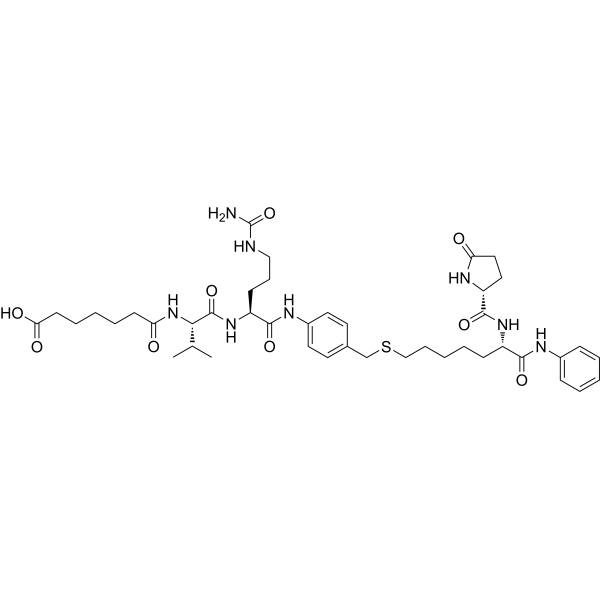
    ST8155AA1 is a part of antibody agent conjugates (ADCs) charged with HDAC inhibitor. ST8155AA1 induces α-tubulin, histone H3/H4 acetylation via direct enzymatic inhibition. ST8155AA1 recognizes and binds EGFR, undergoes internalization into EGFR-expressing tumor cells. ST8155AA1 inhibits cancer cell proliferation and exerts activity in mouse tumor models. ST8155AA1 can be used for the research of non-small cell lung cancer [1].
    ST8155AA1
  • HY-155766

    PARP Apoptosis Cancer
    PARP1-IN-14 (compound 19k) is a potent PARP1 inhibitor, with an IC50 of 0.6 ± 0.1 nM. PARP1-IN-14 exhibits antiproliferative effect against both MDA-MB-436 (BRCA1 −/−) and Capan-1 (BRCA2 −/−) cells with IC50 values below 0.3 nM [1].
    PARP1-IN-14
  • HY-163817

    PARP Cancer
    PARP1/2-IN-3 (Compound 29) is an orally active inhibitor for PARP 1 and PARP 2 with IC50 of 0.2235 nM and <0.001 nM. PARP1/2-IN-3 inhibits the proliferation of Capan-1 wildtype, AZD2281 or BMN673 resistant cells with IC50 of 1.82-9.98 nM. PARP1/2-IN-3 exhibits antitumor efficacy in mice [1].
    PARP1/2-IN-3
  • HY-14687

    (rac)-BMN-673; (rac)-LT-673

    PARP Cancer
    (rac)-Talazoparib ((rac)-BMN-673) (Compound 47) is the orally active inhibitor for PARP1/2 with Ki of 1.2 nM and 0.87 nM. (rac)-Talazoparib inhibits cellular PARylation with an EC50 of 2.51 nM. (rac)-Talazoparib causes the accumulation of DNA damage, inhibits proliferation of BRCA1/2-mutated MX-1 cell and Capan-1 cell with IC50 of 0.3 nM and 5 nM. (rac)-Talazoparib exhibits antitumor efficacy in mouse models [1].
    (rac)-Talazoparib
  • HY-161934

    PARP Reactive Oxygen Species (ROS) Apoptosis Cancer
    PARP1-IN-27 (Compound 9B) is the inhibitor for PARP1 and PARP2, with IC50 of 2.53 nM and 6.45 nM in cell SUM149PT. PARP1-IN-27 inhibits the proliferation of BRCA-mutated cancer cells SUM149PT, HCC1937 and Capan-1, with IC50 of 0.62, 1.91 and 4.26 μM respectively. PARP1-IN-27 aggravates DNA double-strand breaks, increases ROS generation, arrests cell cycle at G2/M phase, and induces apoptosis in SUM149PT [1].
    PARP1-IN-27
  • HY-147101

    PARP Cancer
    SK-575-NEG (compound 28), a methylation counterpart of SK-575, is synthesized by methylation of the amino group of piperidine-2,6-dione in SK-575 as an control compound. SK-575-NEG is strongly bound to PARP1, with an IC50 of 2.64 nM. SK-575-NEG was completely ineffective in inducing PARP1 degradation in MDA-MB-436 and Capan-1 cells at concentrations up to 1 μM [1].
    SK-575-NEG
  • HY-163715

    FAK Cancer
    Antitumor agent-165 (Compound 10l) is a potent focal adhesion kinase (FAK) inhibitor. Antitumor agent-165 exhibits effective antiproliferative activity against CAPAN-1, PANC-1, PATU-T, SUIT-2, BxPC-3, PDAC-3 and PANC-1 GR with IC50s in the range of 1.04-3.44 μM [1].
    Antitumor agent-165
  • HY-168721

    Microtubule/Tubulin Cancer
    Tubulin inhibitor 48 (compound 16) is an anti-cancer agent targeting tubulin. Tubulin inhibitor 48 has an IC50 of 0.1 and 0.07 μM for LN-229 and Capan-1 cell, respectively [1].
    Tubulin inhibitor 48
  • HY-10617AR

    AG014699 (Standard); PF-01367338 (Standard)

    Reference Standards PARP Cancer
    Rucaparib (Standard) is the analytical standard of Rucaparib. This product is intended for research and analytical applications. Rucaparib (AG014699) is an orally active, potent inhibitor of PARP proteins (PARP-1, PARP-2 and PARP-3) with a Ki of 1.4 nM for PARP1. Rucaparib is a modest hexose-6-phosphate dehydrogenase (H6PD) inhibitor. Rucaparib has the potential for castration-resistant prostate cancer (CRPC) research [1] .
    Rucaparib (Standard)
  • HY-150765

    PARP Apoptosis Cancer
    PARP1-IN-12 is a potent PARP1 inhibitor with an IC50 of 2.99 nM. PARP1-IN-12 exhibits antiproliferative activity, can induce cell apoptosis and cause cycle arrest at G2/M phase. PARP1-IN-12 also can induce DNA double strand breaks (DSBs) in BRCA-deficient cells [1].
    PARP1-IN-12
  • HY-10617R

    AG-014699 phosphate (Standard); PF-01367338 phosphate (Standard)

    Reference Standards PARP Cancer
    Rucaparib (phosphate) (Standard) is the analytical standard of Rucaparib (phosphate). This product is intended for research and analytical applications. Rucaparib (AG014699) phosphate is an orally active, potent inhibitor of PARP proteins (PARP-1, PARP-2 and PARP-3) with a Ki of 1.4 nM for PARP1. Rucaparib phosphate is a modest hexose-6-phosphate dehydrogenase (H6PD) inhibitor. Rucaparib phosphate has the potential for castration-resistant prostate cancer (CRPC) research [1] .
    Rucaparib phosphate (Standard)
  • HY-151372

    PKD Cancer
    Protein kinase D inhibitor 1 (compound 17m) is a pan-PKD inhibitor, with IC50 values ranging from 17 to 35 nM. Protein kinase D inhibitor 1 inhibits PKD-dependent cortactin phosphorylation [1].
    Protein kinase D inhibitor 1
  • HY-101570R

    Peposertib (Standard); M3814 (Standard)

    DNA-PK Reference Standards BCRP Cancer
    Nedisertib (Standard) is the analytical standard of Nedisertib (HY-101570). This product is intended for research and analytical applications. Nedisertib (Peposertib) is an orally active selective DNA-dependent protein kinase (DNA-PK) inhibitor with an IC50 value of less than 3 nM. Nedisertib also acts as a modulator of ABCG2, capable of reversing ABCG2-mediated multidrug resistance (MDR), thus providing new strategies for combination therapy. By inhibiting DNA double-strand break repair, Nedisertib can enhance the efficacy of chemotherapy and radiotherapy. Nedisertib exhibits antitumor activity [1] .
    Nedisertib (Standard)
  • HY-102003R

    AG014699 monocamsylate (Standard); PF-01367338 monocamsylate (Standard)

    Reference Standards PARP Cancer
    Rucaparib monocamsylate (Standard) is the analytical standard of Rucaparib monocamsylate (HY-102003). This product is intended for research and analytical applications. Rucaparib (AG014699) monocamsylate is an orally active, potent inhibitor of PARP proteins (PARP-1, PARP-2 and PARP-3) with a Ki of 1.4 nM for PARP1. Rucaparib monocamsylate is a modest hexose-6-phosphate dehydrogenase (H6PD) inhibitor. Rucaparib monocamsylate has the potential for castration-resistant prostate cancer (CRPC) research [1] .
    Rucaparib monocamsylate (Standard)
  • HY-179614

    PARP DNA/RNA Synthesis Apoptosis CDK Bcl-2 Family Cancer
    PARP1-IN-50 is a selective and orally active PARP-1 inhibitor with an IC50 of 64.98 nM. PARP1-IN-50 can inhibit PAR formation and induce DNA double strand breaks, thereby causing DNA damage. PARP1-IN-50 can induce G2/M phase arrest and cancer cells apoptosis. PARP1-IN-50 demonstrates significant antiproliferative activity against various cancer cells. PARP1-IN-50 can be used for the research of cancer, such as breast cancer [1].
    PARP1-IN-50
  • HY-183013

    PROTACs PARP Apoptosis Cancer
    PROTAC PARP2 degrader-1 is an orally active PARP2 PROTAC degrader with a DC50 of 2 μM. PROTAC PARP2 degrader-1 potently inhibits the enzymatic activities of PARP1 (IC50 = 2.74 nM) and PARP2 (IC50 = 0.32 nM), with approximately 10-fold higher selectivity for PARP2. PROTAC PARP2 degrader-1 induces cell cycle arrest and apoptosis, and exhibits significant anti-tumor efficacy in mouse models. PROTAC PARP2 degrader-1 can be used for the research of triple-negative breast cancer [1].
    PROTAC PARP2 degrader-1
  • HY-P11785

    Claudin Cancer
    Cpe30 MT2 is a short peptide that binds tightly junction protein Claudin‑4 (CLDN4) with high affinity, with a Kd value of 1.97 nM. Cpe30 MT2 can be used for the synthesis of PET molecular imaging probes targeting pancreatic cancer [1].
    Cpe30 MT2
  • HY-P992180

    Ferroptosis Inflammation/Immunology Cancer
    AMB8LK is a human monoclonal antibody targeting H-ferritin, with specificity for tumor-associated heterologous ferritin. AMB8LK specifically recognizes and binds to H-ferritin overexpressed on the surface of tumor cells. AMB8LK can be used in research related to cancer and immune diseases [1].
    AMB8LK

Inquiry Online

Your information is safe with us. * Required Fields.

Salutation


Country or Region *

Applicant Name *


Organization Name *

Department *


Email Address *


Product Name *

Cat. No.


Requested quantity *

Phone Number *


Remarks

Inquiry Online

Inquiry Information

Product Name:
Cat. No.:
Quantity:
MCE Japan Authorized Agent:

