
1. Search Result
Search Result
Results for "

CD14

" in MedChemExpress (MCE) Product Catalog:

21

Inhibitors & Agonists

1

Fluorescent Dye

2

Biochemical Assay Reagents

4

Inhibitory Antibodies

1

Natural
Products

8

Recombinant Proteins

7

Antibodies

4

Oligonucleotides

Cat. No. Product Name Target Research Areas Chemical Structure
  • HY-N9965
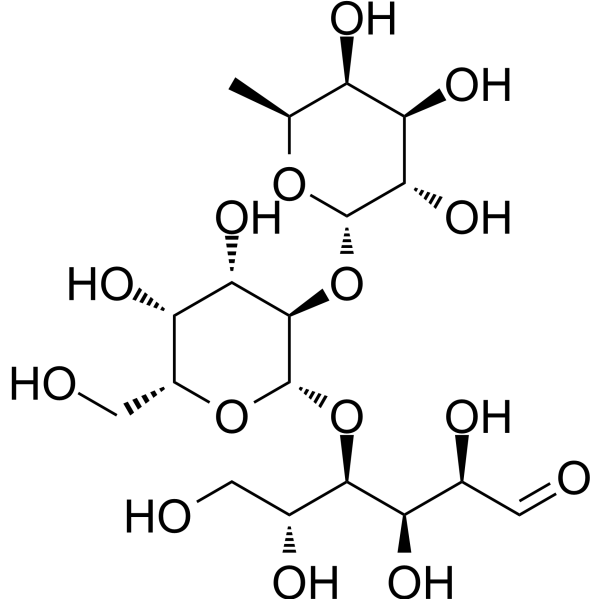
    2'-Fucosyllactose
    4 Publications Verification

    2'-FL

    TNF Receptor Interleukin Related Infection Inflammation/Immunology
    2'-Fucosyllactose (2'-FL) is an oligosaccharide that could be derived from human milk. 2'-Fucosyllactose regulates the expression of CD14, alleviates colitis and regulates the gut microbiome. 2'-Fucosyllactose stimulates T cells to increase IFN-γ production and decreases IL-6, IL-17, and TNF-α production of cytokines .
    2'-Fucosyllactose
  • HY-W251428

    Egg PG

    Biochemical Assay Reagents Others
    Phosphatidylglycerols (PG) is a selective inhibitor targeting the TLR4 accessory protein CD14/MD-2 complex, inhibiting LPS or virus (such as RSV)-mediated inflammatory signaling pathways through competitive binding. Phosphatidylglycerols directly bind to viral particles to block infection, inhibit COX-2 expression to reduce the release of inflammatory factors (IL-6, IL-8), and improve oxidative stress by regulating mitochondrial membrane phospholipid remodeling. Phosphatidylglycerols can be taken orally or by inhalation and can be used in the study of chronic inflammatory diseases (such as atherosclerosis) and respiratory viral infections (such as RSV) .
    Phosphatidylglycerols (egg) sodium salt
  • HY-P99008
    Atibuclimab
    2 Publications Verification

    IC14

    Toll-like Receptor (TLR) Infection Neurological Disease Inflammation/Immunology
    Atibuclimab (IC14), is a chimeric monoclonal antibody directed against CD14 and is composed of murine variable and human IgG4 Fc regions. Atibuclimab attenuates Lipopolysaccharides (HY-D1056) (LPS)-induced symptoms and strongly inhibits LPS-induced proinflammatory cytokine release, while only delaying the release of the anti-inflammatory cytokines soluble TNF receptor type I and IL-1 receptor antagonist. Atibuclimab can be used for the research of amyotrophic lateral sclerosis, sepsis, community-acquired pneumonia, or acute lung injury .
    Atibuclimab
  • HY-135750
    VAF347
    3 Publications Verification

    Aryl Hydrocarbon Receptor Inflammation/Immunology
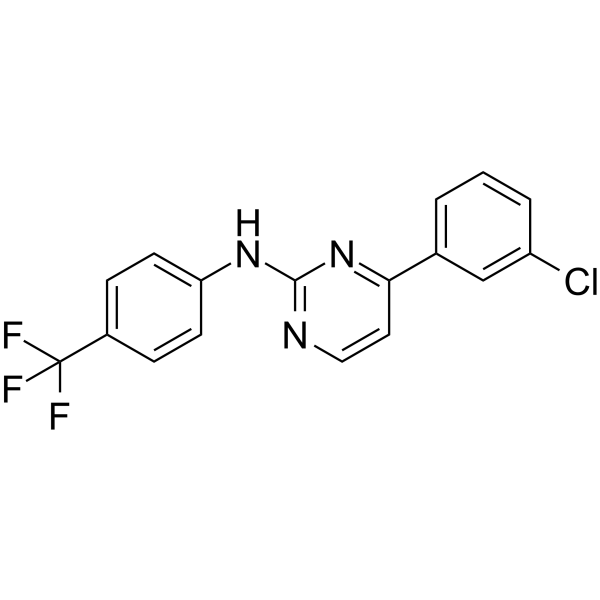
    VAF347 is a cell permeable and highly affinity aryl hydrocarbon receptor (AhR) agonist and induces AhR signaling. VAF347 inhibits the development of CD14 +CD11b + monocytes from granulo-monocytic (GM stage) precursors. VAF347 has anti-inflammatory effects .
    VAF347
  • HY-W040255

    PGPC

    Ferroptosis FABP Caspase Interleukin Related Apoptosis Inflammation/Immunology
    1-Palmitoyl-2-glutaryl-sn-glycero-3-phosphocholine is an oxidized phospholipid. 1-Palmitoyl-2-glutaryl-sn-glycero-3-phosphocholine reduces the viability of HUVECs, increases the levels of ferrous ions and lipid peroxidation, promotes the production of superoxide anions, and decreases the levels of glutathione and GPX4 in cells. 1-Palmitoyl-2-glutaryl-sn-glycero-3-phosphocholine upregulates the mRNA and protein levels of FABP3 in HUVECs, impairs mitochondrial membrane potential, and induces ferroptosis-related changes as well as mitochondrial dysfunction and damage. 1-Palmitoyl-2-glutaryl-sn-glycero-3-phosphocholine activates caspase-11 and promotes the continuous release of IL-1β from macrophages and dendritic cells. 1-Palmitoyl-2-glutaryl-sn-glycero-3-phosphocholine inhibits the proliferation of aortic smooth muscle cells and induces apoptosis in these cells. 1-Palmitoyl-2-glutaryl-sn-glycero-3-phosphocholine is applicable to relevant research on atherosclerosis .
    1-Palmitoyl-2-glutaryl-sn-glycero-3-phosphocholine
  • HY-129684

    Toll-like Receptor (TLR) Infection Inflammation/Immunology
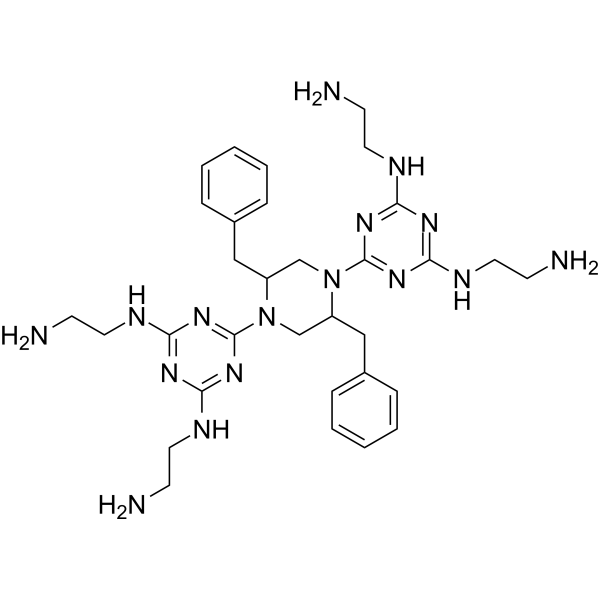
    IAXO-101 iodide is a TLR4/CD14 blocker. IAXO-101 iodide can inhibit the innate immune pathway of CD14. IAXO-101 iodide is capable of improving the recording performance of intracortical microelectrodes in mice. IAXO-101 iodide can also partially alleviate fetal growth restriction, placental vascular damage, and reduce the level of the inflammatory factor TNF-α in pregnant mice infected with malaria. IAXO-101 iodide can be used in the research of gestational malaria and inflammatory diseases .
    IAXO-101 iodide
  • HY-RS02189

    Small Interfering RNA (siRNA) Others

    CD14 Human Pre-designed siRNA Set A contains three designed siRNAs for CD14 gene (Human), as well as a negative control, a positive control, and a FAM-labeled negative control.

    CD14 Human Pre-designed siRNA Set A
    CD14 Human Pre-designed siRNA Set A
  • HY-RS23162

    Small Interfering RNA (siRNA) Others

    Cd14 Rat Pre-designed siRNA Set A contains three designed siRNAs for Cd14 gene (Rat), as well as a negative control, a positive control, and a FAM-labeled negative control.

    Cd14 Rat Pre-designed siRNA Set A
    Cd14 Rat Pre-designed siRNA Set A
  • HY-RS16726

    Small Interfering RNA (siRNA) Others

    Cd14 Mouse Pre-designed siRNA Set A contains three designed siRNAs for Cd14 gene (Mouse), as well as a negative control, a positive control, and a FAM-labeled negative control.

    Cd14 Mouse Pre-designed siRNA Set A
    Cd14 Mouse Pre-designed siRNA Set A
  • HY-P991004

    LB-101

    CD47 PD-1/PD-L1 Cancer
    Itanistomig (LB-101) is a tetravalent bispecific antibody targeting PD-L1 and CD47. Itanistomig blocks PD-L1 and achieves tumor enrichment through binding to PD-L1, and also exerts conditional CD47 blocking activity via cleavage of the hinge linker in the PD-L1-positive tumor microenvironment. Itanistomig induces antibody-dependent cellular phagocytosis in human CD14 + cells and drives tumor regression. Itanistomig can be used in research related to solid tumors .
    Itanistomig
  • HY-101132A

    Toll-like Receptor (TLR) Inflammation/Immunology
    (Rac)-VB-201 is the racemate of VB-201, an oxidized phospholipid small molecule that inhibits CD14- and toll-like receptor 2-dependent innate cell activation and suppresses atherosclerosis .
    (Rac)-VB-201
  • HY-151399

    Bacterial Infection
    Antimicrobial agent-5 is an potent antimicrobial agent, and displays excellent cell selectivity against Gram-negative bacteria and Gram-positive bacteria. Antimicrobial agent-5 blocks the interaction between LPS and CD14/TLR4 receptor, and shows anti-inflammatory activity against LPS-induced inflammation .
    Antimicrobial agent-5
  • HY-P991845

    Toll-like Receptor (TLR) Inflammation/Immunology
    Anti-CD14 Antibody (UCHM-1) reacts with the human CD14. Anti-CD14 Antibody (UCHM-1) recognizes a cell surface glycoprotein expressed on most peripheral blood monocytes. Recommend Isotype Controls: Mouse IgG2a kappa, Isotype Control (HY-P99978) .
    Anti-CD14 Antibody (UCHM-1)
  • HY-101132

    Endogenous Metabolite Inflammation/Immunology
    VB-201 is an oxidized phospholipid small molecule with anti-inflammatory activity. VB-201 inhibits CD14- and Toll-like receptor 2-dependent innate cell activation. VB-201 limits the progression of atherosclerosis and can be used to study atherosclerosis .
    VB-201
  • HY-169067

    Mtx-C

    DNA/RNA Synthesis p38 MAPK Bacterial Infection Cancer
    10-Methoxy-canthin-6-one (Mtx-C) is analkaloid derivative. 10-Methoxy-canthin-6-one can induce DNA damage by intercalating into DNA. 10-Methoxy-canthin-6-one can inhibit cancer cells proliferation, cause G2/M phase arrest and induce myeloid differentiation. T10-Methoxy-canthin-6-one can upregulate the expression of myeloperoxidase, CD15, CD11b, and CD14, as well as activation of p38 MAPK. 10-Methoxy-canthin-6-one also exhibits anti-bacterial activity. 10-Methoxy-canthin-6-one can be used for the researches of cancer and infection, such as acute myeloid leukemias (AML) .
    10-Methoxy-canthin-6-one
  • HY-D3334

    Fluorescent Dye CD74 Others
    PE-CF594 is a labeled monoclonal antibody conjugate that specifically binds to HLA-DR on the surface of monocytes and B cells, while acting as a signal attenuator. Through steric hindrance and a possible fluorescence resonance energy transfer mechanism, PE-CF594 specifically reduces the fluorescence intensity of PE-CD124 staining, but does not interfere with the staining of other PE-labeled antibodies such as CD40, CD4 or CD14. PE-CF594 can also be used to detect the emission signal of mt-Keima after excitation with a 561-nm laser, thereby effectively evaluating mitophagy activity .
    PE-CF594
  • HY-RS09127

    Small Interfering RNA (siRNA) Others

    NDUFA2 Human Pre-designed siRNA Set A contains three designed siRNAs for NDUFA2 gene (Human), as well as a negative control, a positive control, and a FAM-labeled negative control.

    NDUFA2 Human Pre-designed siRNA Set A
    NDUFA2 Human Pre-designed siRNA Set A
  • HY-161901

    E1/E2/E3 Enzyme Inflammation/Immunology
    BC-1293 is an inhibitor for E3 ligase subunit FBXO24. BC-1293 disrupts the interaction between FBXO24 and aspartyl-tRNA synthetase (DARS2) and increases the level of DARS2. BC-1293 increases levels of IL-1β, IL-9, MIP-2, and TNF α, and exhibits immunostimulatory activity in mice .
    BC-1293
  • HY-178049A

    STING Cardiovascular Disease
    UM-259 hydrochloride is a STING inhibitor with activity against both murine and human STING (including the STING R232 mutant). UM-259 hydrochloride inhibits STING-dependent signaling pathways, blocks STING oligomerization, and acts on human primary CD14 + monocytes. UM-259 hydrochloride can be used for research on amyotrophic lateral sclerosis, lupus erythematosus, Aicardi-Goutières syndrome, and infant-onset STING-associated vasculopathy .
    UM-259 hydrochloride
  • HY-P992435

    TNF Receptor Cancer
    OX118 is a fully human, ADCC-enhanced monoclonal antibody targeting OX40L, the recommended isotype control is HY-P99001. OX118 blocks OX40L, suppresses effector T-cell proliferation, expands regulatory T-cell populations, and reduces bystander activation across natural killer cells, B cells, and CD14+ monocytes. OX118 can be used for the research of graft-versus-host disease .
    OX118
  • HY-182019

    HDAC SHMT Apoptosis Reactive Oxygen Species (ROS) Ferroptosis Cancer
    HDAC11-IN-5 is a selective, potent and orally active HDAC11 inhibitor with an IC50 of 0.021 μM. HDAC11-IN-5 increases fatty acylation levels of substrate SHMT2 in AML cells. HDAC11-IN-5 induces apoptosis, G1 phase cell cycle arrest, ferroptosis, ROS production and terminal myeloid differentiation in AML cells. HDAC11-IN-5 demonstrates anti-tumor potency in an MLL-AF9-induced mouse AML model. HDAC11-IN-5 can be used for the research of cancer, such as acute myeloid leukemia .
    HDAC11-IN-5

Inquiry Online

Your information is safe with us. * Required Fields.

Salutation


Country or Region *

Applicant Name *


Organization Name *

Department *


Email Address *


Product Name *

Cat. No.


Requested quantity *

Phone Number *


Remarks

Inquiry Online

Inquiry Information

Product Name:
Cat. No.:
Quantity:
MCE Japan Authorized Agent:

