27 Results for "

CHS

" in MedChemExpress (MCE) Product Catalog:
Products (27)

27 Results for "CHS" in MCE Product Catalog:

102
102 Publications Verification
Cat. No.: HY-66019
CAS No.: 3326-32-7
Synonyms: Fluorescein 5-isothiocyanate
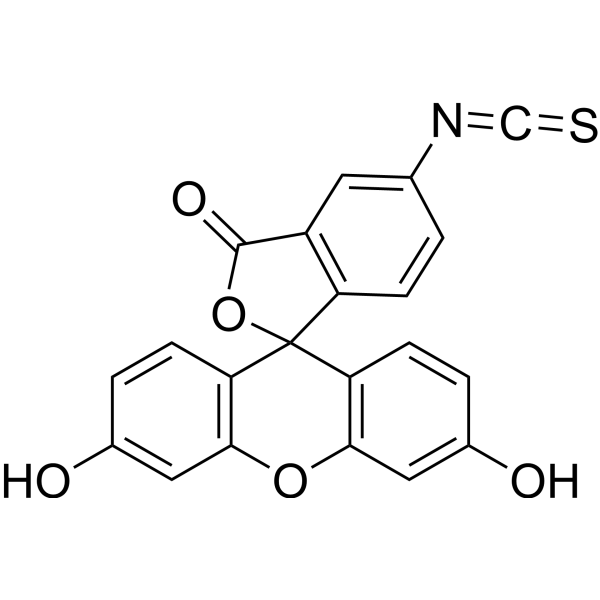
FITC (Fluorescein Isothiocyanate), is one of the green fluorescein derivatives widely used in biology. FITC has the characteristics of high absorptivity and excellent fluorescence quantum yield. The isothiocyanate group of FITC can be combined with amino, sulfhydryl, imidazole, tyrosyl, carbonyl and other groups on the protein, so as to achieve protein labeling including antibodies and lectins. In addition to its use as a protein marker, FITC can also be used as a fluorescent protein tracer to rapidly identify pathogens by labeling antibodies, or for microsequencing of proteins and peptides (HPLC). The maximum excitation wavelength of FITC is 494 nm. Once excited, it fluoresces yellow-green at a maximum emission wavelength of 520 nm. In addition, FITC is also a hapten that can induce contact hypersensitivity (CHS) and induce an atopic dermatitis model .
loading...
    loading...
4
4 Cited Publications
Cat. No.: HY-10079
CAS No.: 200484-11-3
Purity:  99.28%
Synonyms: GMX1778
Target:  

NAMPT Apoptosis

Research Areas:  

Cancer

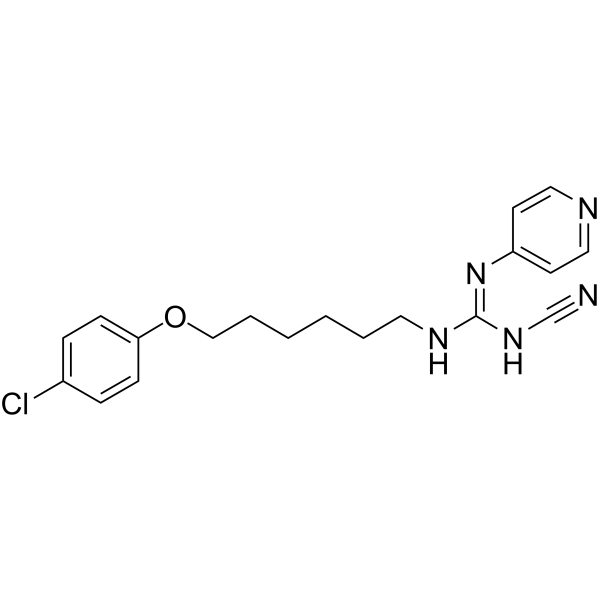
CHS-828 (GMX1778) is a competitive inhibitor of nicotinamide phosphoribosyltransferase (NAMPT), with an IC50 less than 25 nM. CHS-828 (GMX1778) exerts a cytotoxic effect by decreasing the cellular level of NAD + and exhibits a potent anticancer activity .
loading...
    loading...
Cat. No.: HY-W010800A
CAS No.: 102601-49-0
Synonyms: Cholesterol hydrogen succinate Tris salt; CHS-Tris
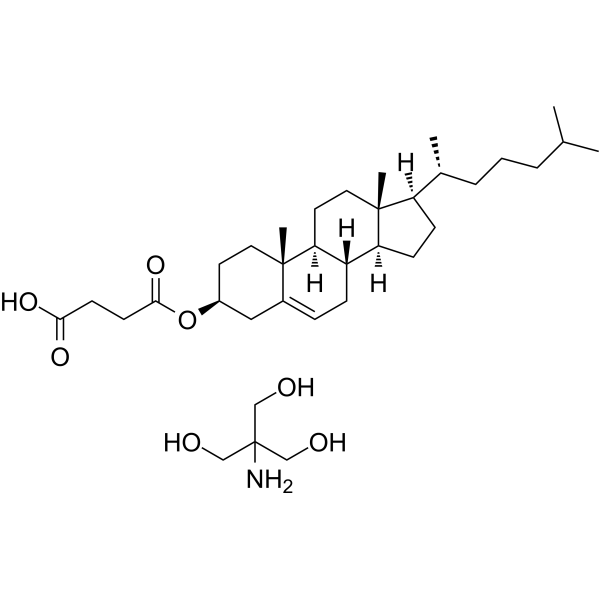
Cholesterol hemisuccinate (Cholesterol hydrogen succinate) Tris salt is a compound with hepatoprotective and anticancer activity. Cholesterol hemisuccinate Tris salt inhibits Acetaminophen (AAP) (HY-66005) hepatotoxicity, and prevents AAP-induced hepatic apoptosis and necrosis. Cholesterol hemisuccinate Tris salt inhibits DNA polymerase and DNA topoisomerase to inhibit DNA replication and repair and cell division. Cholesterol hemisuccinate Tris salt inhibits tumor growth. Cholesterol hemisuccinate Tris salt can be used for buffer preparation .
loading...
    loading...
Cat. No.: HY-DY1007
CAS No.: 3326-32-7
FITC (Fluorescein Isothiocyanate) (solution) , is one of the green fluorescein derivatives widely used in biology. FITC has the characteristics of high absorptivity and excellent fluorescence quantum yield. The isothiocyanate group of FITC can be combined with amino, sulfhydryl, imidazole, tyrosyl, carbonyl and other groups on the protein, so as to achieve protein labeling including antibodies and lectins. In addition to its use as a protein marker, FITC can also be used as a fluorescent protein tracer to rapidly identify pathogens by labeling antibodies, or for microsequencing of proteins and peptides (HPLC). The maximum excitation wavelength of FITC is 494 nm. Once excited, it fluoresces yellow-green at a maximum emission wavelength of 520 nm. In addition, FITC is also a hapten that can induce contact hypersensitivity (CHS) and induce an atopic dermatitis model .
Solvent and concentration: DMSO: 20 mM
The 1 mL volume is defined as the base specification. All larger sizes correspond to incremental volumes of this base.
loading...
    loading...
Cat. No.: HY-P991061
CAS No.: 3024486-14-1
Synonyms: CHS-114; SRF-114

Target:  

CCR

Research Areas:  

Cancer

Tagmokitug (CHS-114; SRF-114) is a fully human IgG1 antibody targeting CCR8. Tagmokitug selectively binds to human CCR8 (Kd = 502 pM) and mediates the death of CCR8-expressing cells via antibody-dependent cellular cytotoxicity and antibody-dependent cellular phagocytosis. Tagmokitug selectively eliminates intratumoral regulatory T cells, induces tumor growth inhibition, remodels the tumor immune microenvironment, and promotes the differentiation of cytotoxic CD8 + T cell subsets. Tagmokitug can be used for the research of solid tumors .
loading...
    loading...
Cat. No.: HY-123813
CAS No.: 1226686-36-7
Purity:  98.73%
Target:  

CXCR Arrestin

Research Areas:  

Cancer

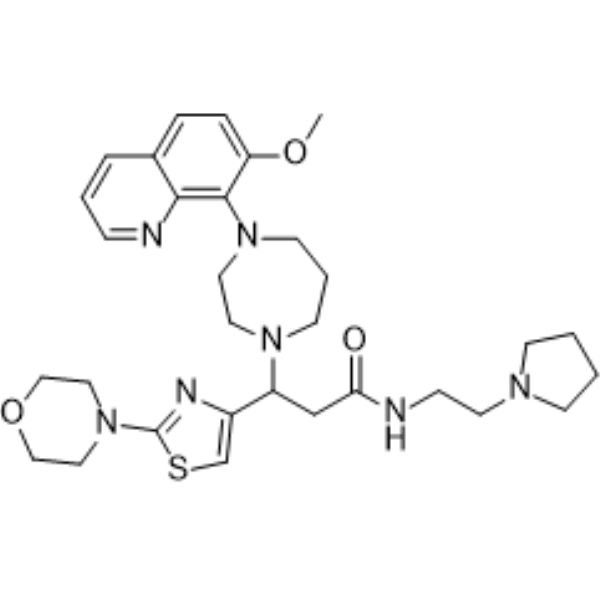
CCX-777 is an orthosteric binder and partial agonist of CXCR7/ACKR3. CCX-777 induces the recruitment of β-arrestin 2 and affects the rebinding of chemokines to ACKR3. CCX-777 functions to stabilize the ACKR3 receptor and promotes the formation of a monodisperse, stable complex of the receptor in DDM/CHS micelles. CCX-777 is widely used in cancer-related research .
loading...
    loading...
Cat. No.: HY-13706A
CAS No.: 627865-18-3
Purity:  ≥95.0%
Synonyms: TM30089
Research Areas:  

Inflammation/Immunology

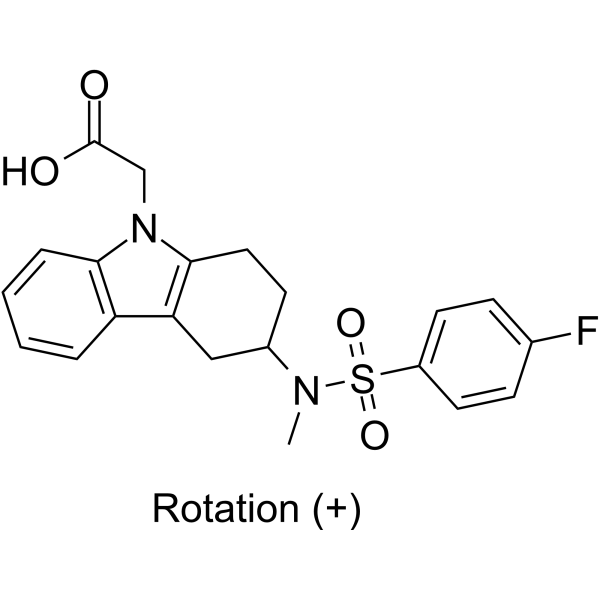
CAY10471 (TM30089) is a potent, selective, and orally active prostaglandin D2 receptor CRTH2 antagonist. CAY10471 attenuates the progression of tubulointerstitial fibrosis and chronic contact hypersensitivity (CHS) in animal model .
loading...
    loading...
Cat. No.: HY-134098
CAS No.: 6938-94-9
Purity:  ≥98.0%
Synonyms: Adipic acid diisopropyl ester
Research Areas:  

Others

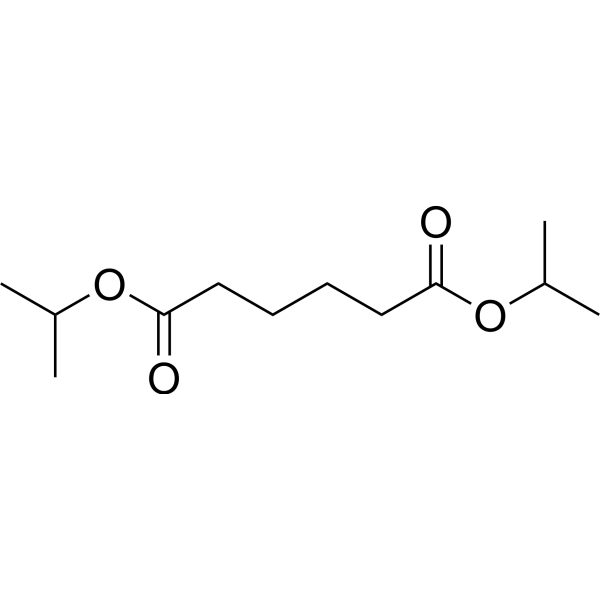
Diisopropyl adipate is an alternative plasticizer and a TRPA1 activator. Diisopropyl adipate activates TRPA1 and enhances FITC-induced contact hypersensitivity (CHS).Diisopropyl adipate also serves as an ingredient in cosmetics and drug formulations topically applied to the skin. Diisopropyl adipate can be used as an excipient, such as emollients, plasticizers. Pharmaceutical excipients, or pharmaceutical auxiliaries, refer to other chemical substances used in the pharmaceutical process other than pharmaceutical ingredients. Pharmaceutical excipients generally refer to inactive ingredients in pharmaceutical preparations, which can improve the stability, solubility and processability of pharmaceutical preparations. Pharmaceutical excipients also affect the absorption, distribution, metabolism, and elimination (ADME) processes of co-administered drugs .
loading...
    loading...
Cat. No.: HY-125147
CAS No.: 1375557-33-7
Target:  

NAMPT

Research Areas:  

Cancer

A-1293201 is a substrate-independent NAMPT inhibitor with antitumor activity. A-1293201 effectively reduces the total cellular NAD +/NADH (NADt) level, subsequently leading to ATP depletion and cancer cell death. In addition, A-1293201 can effectively overcome the acquired resistance mechanism of the NAMPT Y18 mutant to CHS-828 (HY-10079) .
loading...
    loading...
Cat. No.: HY-P990997
CAS No.: 2935485-57-5

Target:  

Inhibitory Antibodies

Research Areas:  

Inflammation/Immunology

HY-P990997 is an F4+ enterotoxigenic Escherichia coli (ETEC) FaeG-targeting (VH-h-CH2-CH3-CHS) dimer type chimeric antibody .
loading...
    loading...
Cat. No.: HY-144391
CAS No.: 2763387-69-3
Target:  

Fungal

Research Areas:  

Inflammation/Immunology

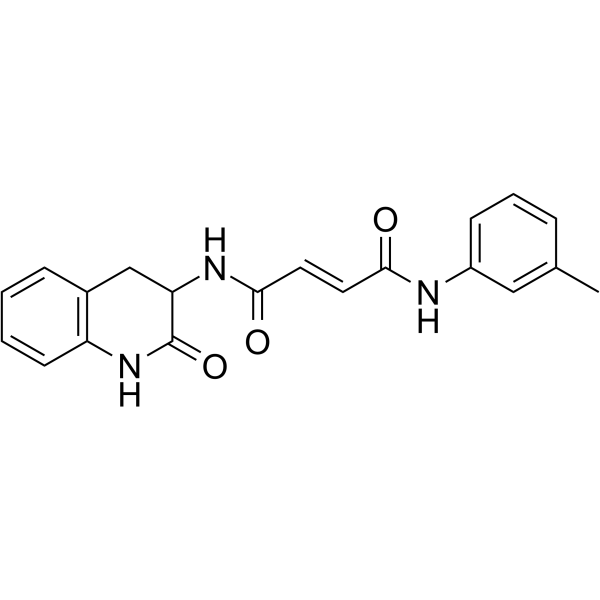
Chitin synthase inhibitor 1 is a potent and selective chitin synthase (CHS) inhibitor (IC50=0.12 mM). Chitin synthase inhibitor 1 has potent antifungal activity against drug-resistant fungi variants .
loading...
    loading...
Cat. No.: HY-116730
CAS No.: 886755-63-1
Research Areas:  

Others

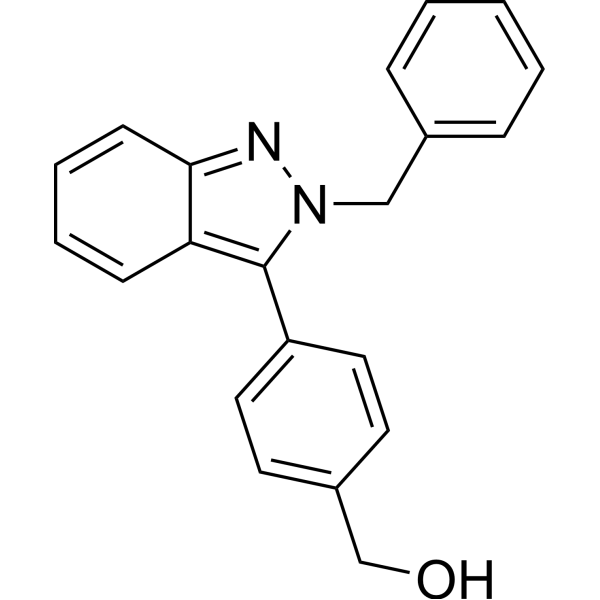
CHS-111 is a benzyl indazole inhibitor of superoxide anion O 2- generation. CHS-111 inhibits the cell migration, and reduces the formyl-Met-Leu-Phe- but not phorbol ester-stimulated phospholipase D activity, with the IC50 of 3.9 μM .
loading...
    loading...
Cat. No.: HY-163673
CAS No.: 2688785-30-8
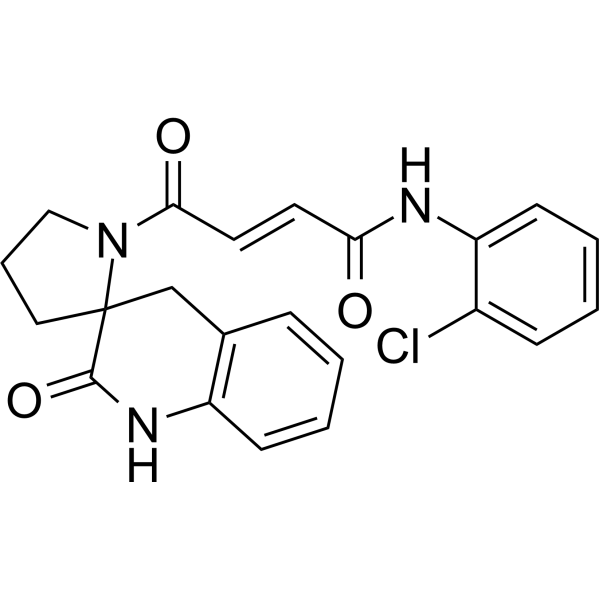
Glucocorticoid receptor modulator 4 (Compound DL5) is a conjugate of a linker and a glucocorticoid receptor modulator. Glucocorticoid receptor modulator 4 exhibits GRE Reporter activity in mTNF expressing K562 cell with an EC50 of 40 μM. Glucocorticoid receptor modulator 4 binds with an anti-tumor necrosis factor (TNF) antibody, and exhibits anti-inflammtory activity against arthritis in mouse models .
loading...
    loading...
Cat. No.: HY-150583
CAS No.: 2416338-24-2
Target:  

Fungal

Research Areas:  

Inflammation/Immunology

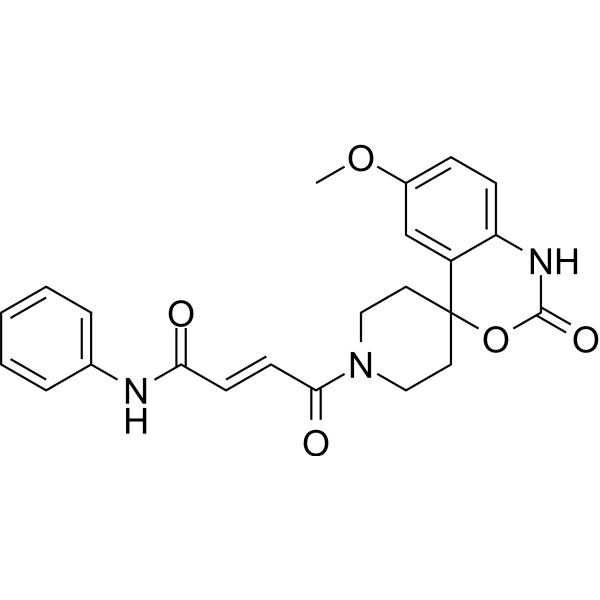
Chitin synthase inhibitor 2 (compound 2b) is a potent inhibitor of chitin synthase with the IC50 value of 0.09 mM and the Ki value of 0.12 mM. Chitin synthase inhibitor 2 has antimicrobial activities in vitro and shows synergistic or additive effects with fluconazole or polyoxin B .
loading...
    loading...
Cat. No.: HY-10079R
CAS No.: 200484-11-3
Synonyms: GMX1778 (Standard)
Research Areas:  

Cancer

CHS-828 (Standard) is the analytical standard of CHS-828. This product is intended for research and analytical applications. CHS-828 (GMX1778) is a competitive inhibitor of nicotinamide phosphoribosyltransferase (NAMPT), with an IC50 less than 25 nM. CHS-828 (GMX1778) exerts a cytotoxic effect by decreasing the cellular level of NAD+ and exhibits a potent anticancer activity .
loading...
    loading...
Cat. No.: HY-10079A
CAS No.: 1160589-73-0
Synonyms: GMX1778 (nicotinate)
Target:  

NAMPT Apoptosis

Research Areas:  

Cancer

CHS-828 nicotinate is a competitive inhibitor of nicotinamide phosphoribosyltransferase (NAMPT), with an IC50 less than 25 nM. CHS-828 nicotinate (GMX1778) exerts a cytotoxic effect by decreasing the cellular level of NAD + and exhibits a potent anticancer activity .
loading...
    loading...
Cat. No.: HY-RS07928
Research Areas:  

Others

LYST Human Pre-designed siRNA Set A contains three designed siRNAs for LYST gene (Human), as well as a negative control, a positive control, and a FAM-labeled negative control.

loading...
    loading...
Cat. No.: HY-151418
CAS No.: 3033645-31-4
Target:  

Fungal

Research Areas:  

Infection

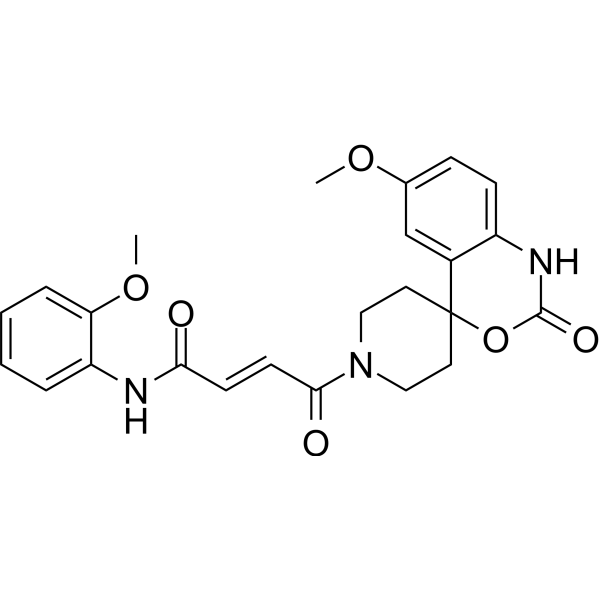
Chitin synthase inhibitor 8 is a chitin synthase (CHS) inhibitor with broad-spectrum antifungal activity. Chitin synthase inhibitor 8 can be used in the research of fungi infection .
loading...
    loading...
Cat. No.: HY-151419
CAS No.: 2725074-96-2
Target:  

Fungal

Research Areas:  

Infection

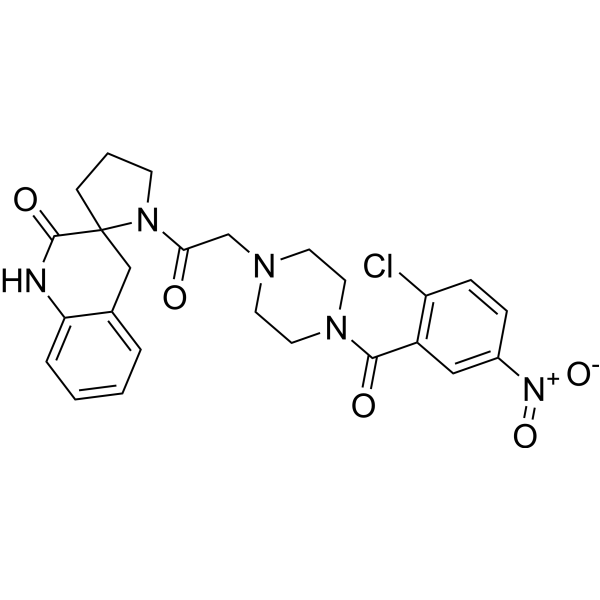
Chitin synthase inhibitor 9 is a chitin synthase (CHS) inhibitor with broad-spectrum antifungal activity. Chitin synthase inhibitor 9 can be used in the research of fungi infection .
loading...
    loading...
Cat. No.: HY-149585
CAS No.: 2922114-19-8
Target:  

Fungal

Research Areas:  

Infection

Chitin synthase inhibitor 14 (compound 4n) is chitin synthase (CHS) inhibitor. Chitin synthase inhibitor 14 has antifungal activity while possessed the potency against drug-resistant fungal variants .
loading...
    loading...

