


1100 Results for "

COL-I

" in MedChemExpress (MCE) Product Catalog:
Products (1100)

1100 Results for "COL-I" in MCE Product Catalog:

582
582 Publications Verification
Cat. No.: HY-D1056
Synonyms: LPS, from Escherichia COLi (O55:B5)
Lipopolysaccharides, from E. coli O55:B5 (LPS, from Escherichia coli (O55:B5)) are endotoxins and TLR4 activators extracted from Escherichia coli (E. coli O55:B5) and are classified as S (smooth) type LPS. Lipopolysaccharides, from E. coli O55:B5 possess the typical three-part structure: O-antigen, core oligosaccharide, and lipid A. Lipopolysaccharides, from E. coli O55:B5 activate TLR-4 in immune cells, exhibit high pyrogenicity, and demonstrate dose and serotype specificity. Lipopolysaccharides, from E. coli O55:B5 can be widely used to induce cellular inflammation and establish animal models related to inflammation .
It is recommended to prepare a solution with concentration ≥2 mg/mL. Vortex thoroughly for more than 10 minutes. Due to the adsorption characteristics of LPS, silanized container or low adsorption centrifuge tubes should be used for aliquoting and storage, and mix thoroughly before use.
loading...
    loading...
49
49 Cited Publications
Cat. No.: HY-B0117
CAS No.: 220620-09-7
Synonyms: GAR-936
Category:  

Microorganisms

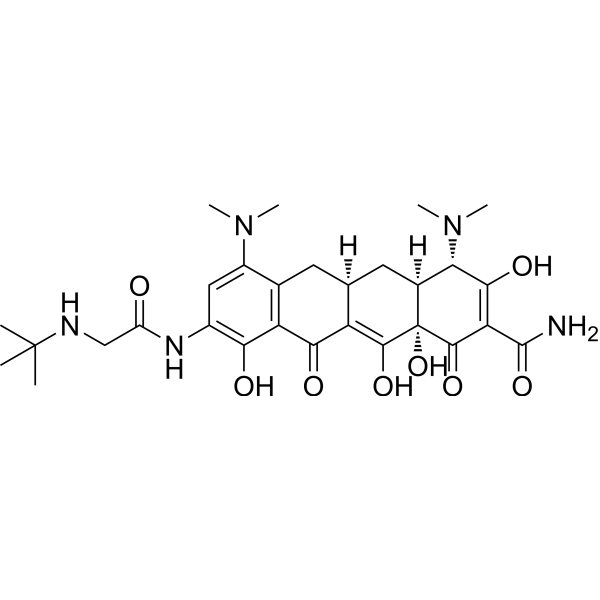
Tigecycline (GAR-936) is a broad-spectrum glycylcycline antibiotic. The mean inhibitory concentration (MIC) of Tigecycline for E. coli (MG1655 strain) is approximately 125 ng/mL . MIC50 and MIC90 are 1 and 2 mg/L for Acinetobacter baumannii (A. baumannii), respectively .
loading...
    loading...
49
49 Cited Publications
Cat. No.: HY-B0117A
CAS No.: 197654-04-9
Synonyms: GAR-936 hydrochloride
Research Areas:  

Infection Cancer

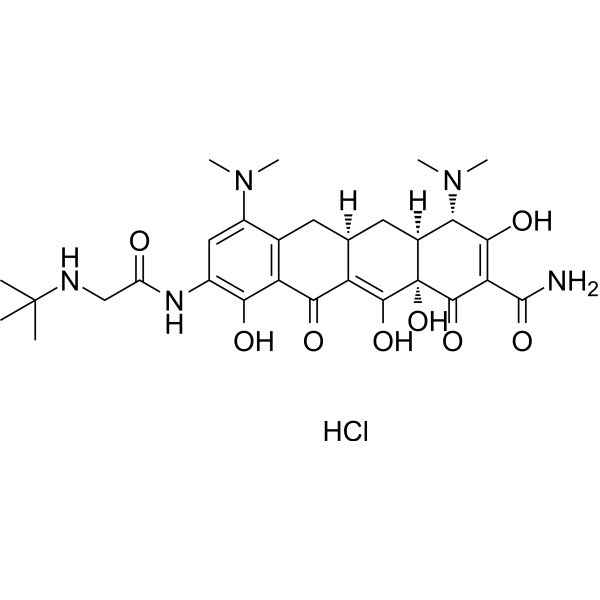
Tigecycline hydrochloride (GAR-936 hydrochloride) is a broad-spectrum glycylcycline antibiotic. The mean inhibitory concentration (MIC) of Tigecycline for E. coli (MG1655 strain) is approximately 125 ng/mL . MIC50 and MIC90 are 1 and 2 mg/L for Acinetobacter baumannii (A. baumannii), respectively .
loading...
    loading...
49
49 Cited Publications
Cat. No.: HY-B0117D
CAS No.: 1229002-07-6
Synonyms: GAR-936 hydrate
Research Areas:  

Infection Cancer

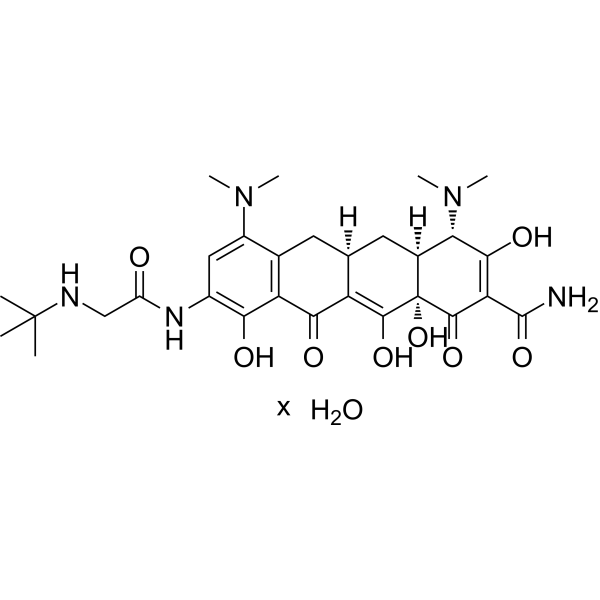
Tigecycline (GAR-936) hydrate is a broad-spectrum glycylcycline antibiotic. The mean inhibitory concentration (MIC) of Tigecycline hydrate for E. coli (MG1655 strain) is approximately 125 ng/mL . MIC50 and MIC90 are 1 and 2 mg/L for Acinetobacter baumannii (A. baumannii), respectively .
loading...
    loading...
49
49 Cited Publications
Cat. No.: HY-B0117C
Synonyms: GAR-936 tetramesylate
Research Areas:  

Infection Cancer

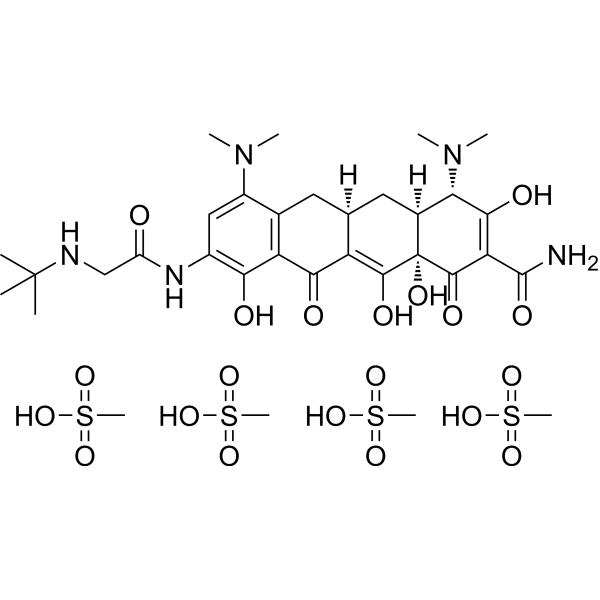
Tigecycline tetramesylate (GAR-936 tetramesylate) is a broad-spectrum glycylcycline antibiotic. The mean inhibitory concentration (MIC) of Tigecycline for E. coli (MG1655 strain) is approximately 125 ng/mL . MIC50 and MIC90 are 1 and 2 mg/L for Acinetobacter baumannii (A. baumannii), respectively .
loading...
    loading...
21
21 Cited Publications
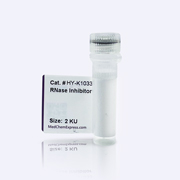
Cat. No.: HY-K1033

RNase Inhibitor is a 50 kDa recombinant protein expressed in E.coli, and can specifically inhibit RNase A, B and C. The 10 KU volume is defined as the base specification. All larger sizes correspond to incremental volumes of this base.

loading...
    loading...
10
10 Cited Publications
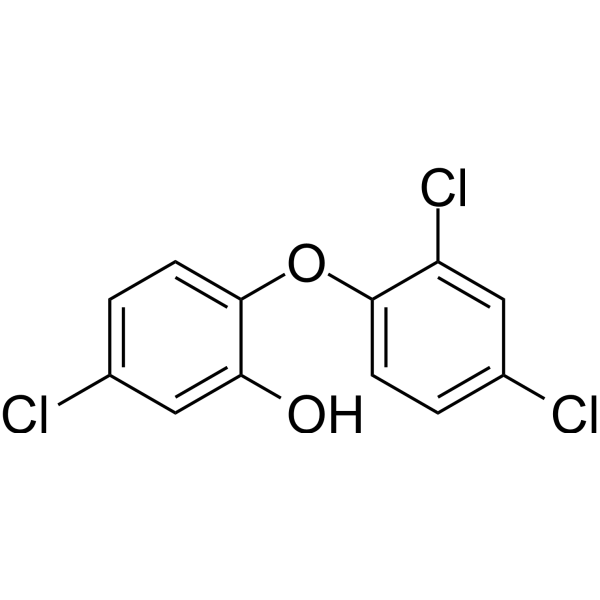
Cat. No.: HY-B1119
CAS No.: 3380-34-5
Triclosan is a broad-spectrum antibacterial agent that inhibits bacterial fatty acid synthesis at the enoyl-acyl carrier protein reductase (FabI) step. Triclosan inhibits E. coli enoyl-acyl carrier protein reductase (FabI) and FabI containing a glycine-to-valine substitution at position 93 (FabIG93V) with IC50s of 2 µM and 10 µM, respectively. Triclosan causes apoptotic effect in cultured rat neural stem cells (NSC). Triclosan exacerbates colitis and colitis-associated colorectal tumorigenesis in animal models .
loading...
    loading...
9
9 Cited Publications
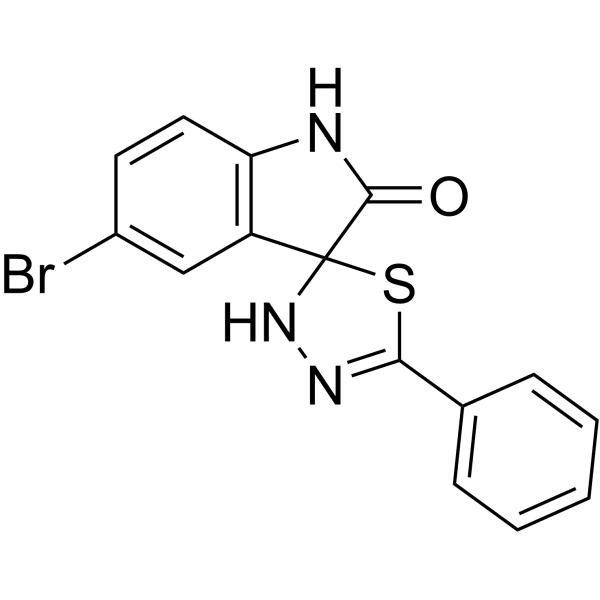
Cat. No.: HY-116788
CAS No.: 297180-15-5
Purity:  99.75%
Target:  

Bacterial

Research Areas:  

Infection

Lipofermata is a fatty acid transport protein 2 (FATP2) inhibitor. Lipofermata shows fatty acid transport inhibition with an IC50 of 4.84 μM in Caco-2 cells. Lipofermata, an analog of spiro-indoline-thadiazole, shows zinc-specific suppression of antibacterial activity. Lipofermata perturbs zinc homeostasis in E. coli K-12 with a MIC of 16 μM .
loading...
    loading...
9
9 Cited Publications
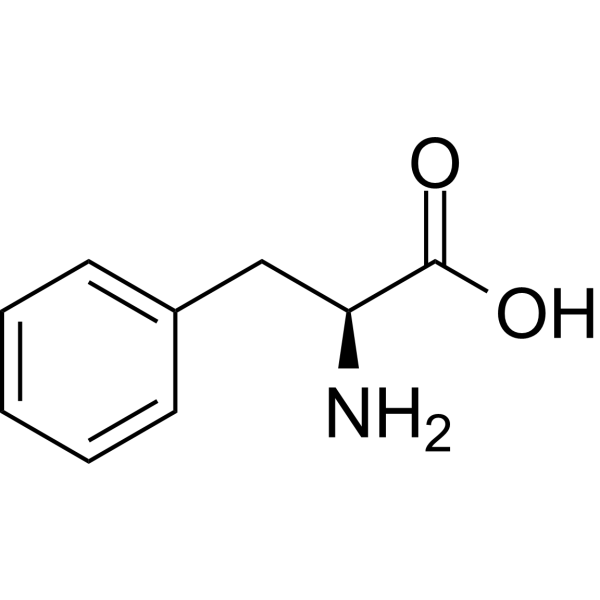
Cat. No.: HY-N0215
CAS No.: 63-91-2
Synonyms: (S)-2-Amino-3-phenylpropionic acid
L-Phenylalanine ((S)-2-Amino-3-phenylpropionic acid) is an essential amino acid isolated from Escherichia coli. L-Phenylalanine is a α2δ subunit of voltage-dependent Ca + channels antagonist with a Ki of 980 nM. L-phenylalanine is a competitive antagonist for the glycine- and glutamate-binding sites of N-methyl-D-aspartate receptors (NMDARs) (KB of 573 μM ) and non-NMDARs, respectively. L-Phenylalanine is widely used in the production of food flavors and pharmaceuticals .
loading...
    loading...
8
8 Cited Publications
Cat. No.: HY-15930
CAS No.: 54827-17-7
Synonyms: BM blue; Sure Blue TMB
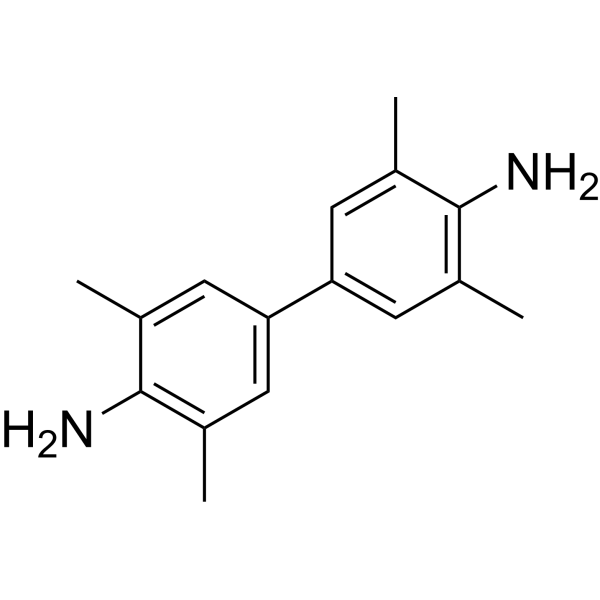
TMB is a non-toxic, non-mutagenic, colorless dye that is also used as a chromogenic agent in enzyme detection systems based on horseradish peroxidase (HRP). TMB can function as a photoacoustic probe for reactive oxygen and nitrogen species (ROS/RNS), reacting with hypochlorite, hydrogen peroxide, singlet oxygen, and nitrogen dioxide to produce blue oxidation products. TMB can detect the singlet oxygen produced by the outer membrane of Escherichia coli ATCC 25922 .
loading...
    loading...
8
8 Cited Publications
Cat. No.: HY-15930A
CAS No.: 64285-73-0
Synonyms: BM blue dihydrochloride; Sure Blue TMB dihydrochloride
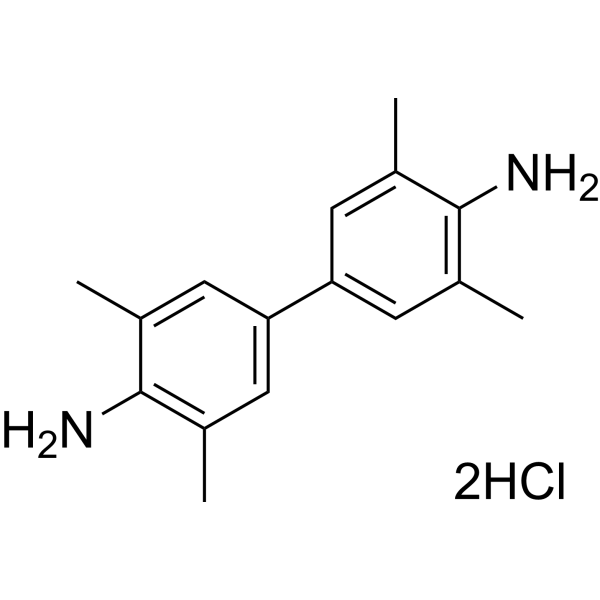
TMB dihydrochloride is the dihydrochloride form of TMB (HY-15930). TMB dihydrochloride is a non-toxic, non-mutagenic, colorless dye that is also used as a chromogenic agent in enzyme detection systems based on horseradish peroxidase (HRP). TMB dihydrochloride can function as a photoacoustic probe for reactive oxygen and nitrogen species (ROS/RNS), reacting with hypochlorite, hydrogen peroxide, singlet oxygen, and nitrogen dioxide to produce blue oxidation products. TMB dihydrochloride can detect the singlet oxygen produced by the outer membrane of Escherichia coli ATCC 25922 .
loading...
    loading...
8
8 Cited Publications
Cat. No.: HY-15930B
CAS No.: 207738-08-7
Synonyms: Sure Blue TMB dihydrochloride x.hydrate
TMB (dihydrochloride x.hydrate) is the dihydrochloride x hydrate form of TMB (HY-15930). TMB (dihydrochloride x.hydrate) is a non-toxic, non-mutagenic, colorless dye that is also used as a chromogenic agent in enzyme detection systems based on horseradish peroxidase (HRP). TMB (dihydrochloride x.hydrate) can function as a photoacoustic probe for reactive oxygen and nitrogen species (ROS/RNS), reacting with hypochlorite, hydrogen peroxide, singlet oxygen, and nitrogen dioxide to produce blue oxidation products. TMB (dihydrochloride x.hydrate) can detect the singlet oxygen produced by the outer membrane of Escherichia coli ATCC 25922 .
loading...
    loading...
8
8 Cited Publications
Cat. No.: HY-15930C
CAS No.: 54827-18-8
Synonyms: BM blue monosulfate; Sure Blue TMB monosulfate
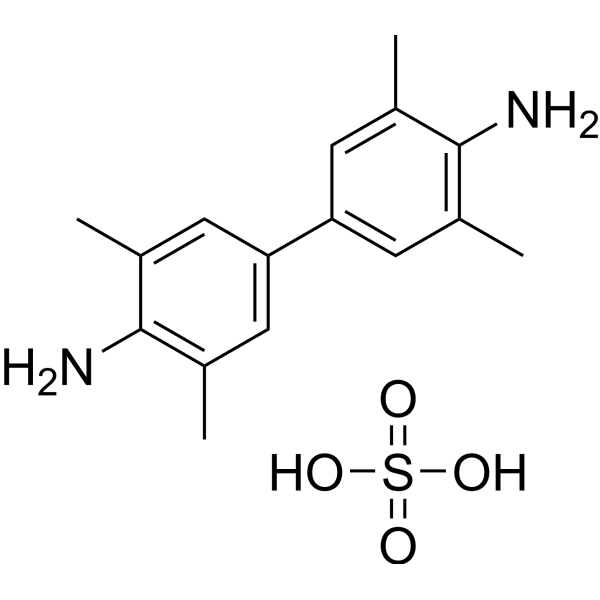
TMB monosulfate is the monosulfate form of TMB (HY-15930). TMB monosulfate is a non-toxic, non-mutagenic, colorless dye that is also used as a chromogenic agent in enzyme detection systems based on horseradish peroxidase (HRP). TMB monosulfate can function as a photoacoustic probe for reactive oxygen and nitrogen species (ROS/RNS), reacting with hypochlorite, hydrogen peroxide, singlet oxygen, and nitrogen dioxide to produce blue oxidation products. TMB monosulfate can detect the singlet oxygen produced by the outer membrane of Escherichia coli ATCC 25922 .
loading...
    loading...
7
7 Cited Publications
Cat. No.: HY-108467
CAS No.: 926281-37-0
Synonyms: Nahlsgen
Research Areas:  

Cardiovascular Disease

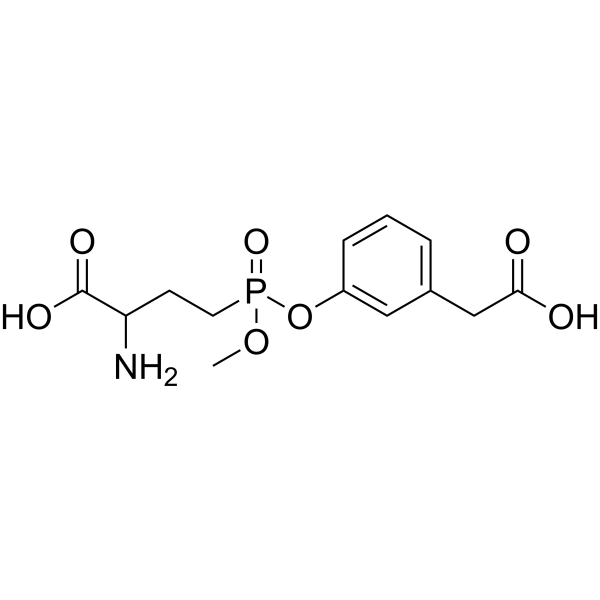
GGsTop (Nahlsgen) is a potent, non-toxic, highly selective and irreversible γ-GGT inhibitor, with a Ki of 170 μM for Human GGT. GGsTop shows a pKa of 9.71, also exhibits Kons of 150 and 51 M -1 s -1 against E.coli GGT and human GGT, respectively. GGsTop protects hepatic ischemia-reperfusion injury in rat model .
loading...
    loading...
6
6 Cited Publications
Cat. No.: HY-D1056A1
Synonyms: LPS, from Escherichia COLi (O111:B4)
Lipopolysaccharides, from E. coli O111:B4 (LPS, from Escherichia coli (O111:B4)) are endotoxins and TLR4 activators extracted from Escherichia coli (E. coli O111:B4) and are classified as S (smooth) type LPS. Lipopolysaccharides (LPS), from E. coli O111:B4 possess the typical three-part structure: O-antigen, R3-type core oligosaccharide, and lipid A. Lipopolysaccharides (LPS), from E. coli O111:B4 activate TLR-4 in immune cells and can cause significant gastric diseases. Lipopolysaccharides (LPS), from E. coli O111:B4 can be used to induce cellular inflammation and establish animal models related to inflammation .
It is recommended to prepare a solution with concentration ≥2 mg/mL. Vortex thoroughly for more than 10 minutes. Due to the adsorption characteristics of LPS, silanized container or low adsorption centrifuge tubes should be used for aliquoting and storage, and mix thoroughly before use.
loading...
    loading...
6
6 Cited Publications
Cat. No.: HY-N0771
CAS No.: 73-32-5
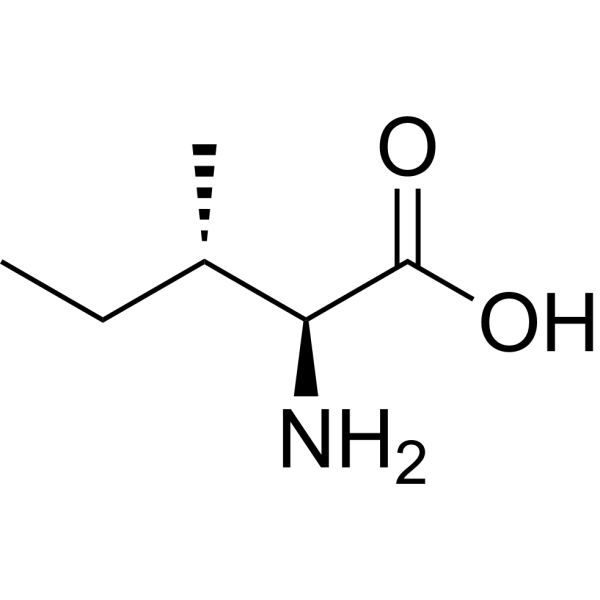
L-Isoleucine is an orally active branched chain amino acid, which is the L-enantiomer of isoleucine. L-Isoleucine has a role as a Saccharomyces cerevisiae metabolite, an Escherichia coli metabolite, a plant metabolite, a human metabolite, an algal metabolite and a mouse metabolite. L-Isoleucine regulates the inflammatory response to protect against pathogens in vivo and in vitro .
loading...
    loading...
5
5 Cited Publications
Cat. No.: HY-17010
CAS No.: 224452-66-8
Synonyms: SB-275833
Target:  

Bacterial Antibiotic

Research Areas:  

Infection Cancer

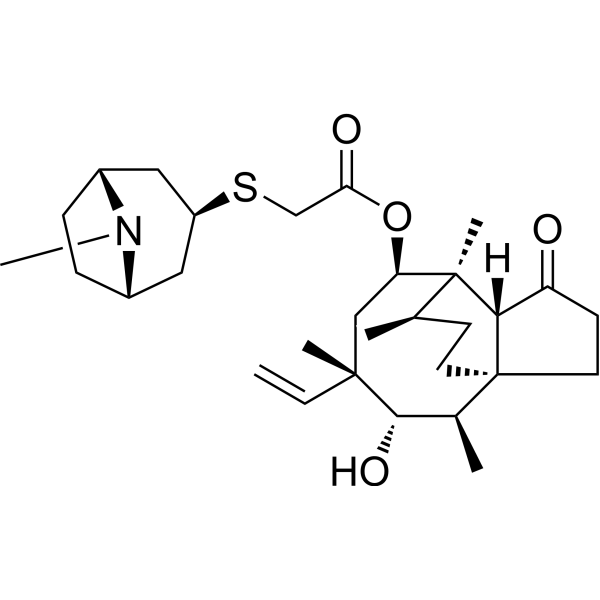
Retapamulin (SB-275833) is a topical antibiotic that binds Staphylococcus aureus and E. coli ribosomes with a Kd of 3 nM. Retapamulin can be used in researches of atopic dermatitis and prostate cancer .
loading...
    loading...
5
5 Cited Publications
Cat. No.: HY-P2764
CAS No.: 9000-95-7
Target:  

NTPDase

Research Areas:  

Inflammation/Immunology

Apyrase is an Nucleoside triphosphate diphosphohydrolase (NTPDase). Apyrase can hydrolyze extracellular adenosine triphosphate (ATP) and adenosine diphosphate (ADP). Apyrase can inhibit Stx2 toxin release of enterohemorrhagic Escherichia coli (EHEC) infection and protect the intestinal barrier function. Apyrase can be used for the research of infection and inflammation, such as hemorrhagic colitis .
loading...
    loading...
5
5 Cited Publications
Cat. No.: HY-P3152
CAS No.: 9013-20-1
Streptavidin is a ~60 kDa homotetramer. Streptavidin binds four molecules of biotin with the highest affinity. The binding affinity of biotin to streptavidin is one of the highest reported for a non-covalent interaction to date, with a KD ~0.01 pM . Streptavidin has an immunosuppressive role .
This product is a Streptavidin protein recombinantly expressed in an E. coli expression system.
loading...
    loading...
4
4 Cited Publications
Cat. No.: HY-10581A
CAS No.: 121577-32-0
Purity:  99.89%
Synonyms: AM-1155 hydrochloride; BMS-206584 hydrochloride; PD135432 hydrochloride
Research Areas:  

Infection

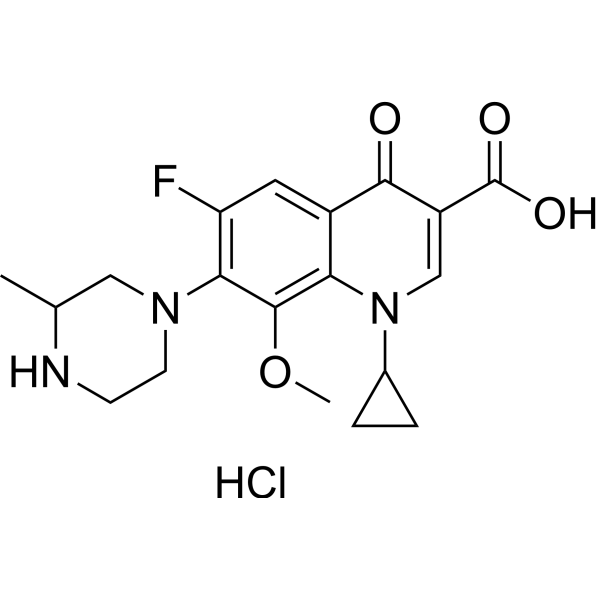
Gatifloxacin hydrochloride (AM-1155; BMS-206584; PD135432) is a potent fluoroquinolone antibiotic with broad-spectrum antibacterial activity. Gatifloxacin hydrochloride inhibits bacterial type II topoisomerases (IC50=13.8 μg/ml for S. aureus topoisomerase IV) and E. coli DNA gyrase (IC50 = 0.109 μg/ml) . Gatifloxacin hydrochloride can be used to treat bacterial conjunctivitis in vivo.
loading...
    loading...

